
Marketplace as a strategic marketing channel
It is worth viewing a marketplace as a strategic marketing channel, because it delivers on goals across the entire buying journey: from discovery and reach-building to conversion. In practice, this means that entering Allegro or Amazon can serve not only sales, but also strengthening brand recognition, collecting reviews and verifying demand for new SKU. This is particularly important when the customer compares products “side by side” and makes a decision based on the title, images and attributes. If you are asking whether a marketplace “pays off” without image-building ambitions, the answer is yes — because visibility and reviews directly translate into conversion and subsequent scale.
A marketplace and your own store serve different functions, which is why a hybrid strategy often works better than an “either–or” choice. A D2C store provides greater control over margin and data, while a marketplace offers ready-made demand and a product search engine, which usually translates into sales more quickly. To reduce price cannibalisation and friction with distributors, it is worth segmenting the assortment: list bestsellers and easy-to-compare variants on the marketplace, and develop bundles, personalisation or limited editions in D2C (e.g. bundle 3+1). This approach also makes it easier to assess which SKU have the potential for further scaling.
A successful marketplace entry strategy usually works in a test–scale–defend structure, because data from the first few weeks helps you avoid costly mistakes. At the start, it is often enough to test demand: 10–30 SKU, 2–4 weeks of observation, a minimal Ads budget and rapid listing improvements before you freeze capital in larger stock levels and automations. Unit economics are also crucial: calculate margin after the sales commission (often 8–15% depending on the category), fulfilment, returns and advertising (ACOS/TACOS), setting a target TACOS (e.g. 8–15%) and minimum contribution margin per unit. Without these calculations, it is easy to “buy sales” with advertising that looks good in turnover, but does not stack up at profitability level.
- 01Discovery and reachBuilding brand recognition
- 02Reviews and demand validationCollecting reviews, testing SKU
- 03Conversion and salesVisibility drives sales
- 04Hybrid strategyMarketplace complements the store
A marketplace is not just sales, but the whole journey from image to conversion.
Choosing a platform: Allegro or Amazon?
The choice between Allegro and Amazon depends primarily on the target market and your operational readiness to meet the platform’s standards. Allegro is often the most natural direction when you are targeting sales in Poland and want to launch listings quickly, using local demand. Amazon makes particular sense for a cross-border strategy (especially DE/FR/IT/ES), but it usually requires more efficient logistics, compliance being fully in place and often Brand Registry to make full use of its marketing potential. In both cases, the decision is worth basing on data on demand, competition and costs, rather than relying on intuition alone.
The platform is easiest to choose when you compare several criteria affecting marketing performance and implementation risk. The points below organise the most important differences in the approach to launch and later scaling:
- Market and launch speed: Allegro usually generates sales in Poland more quickly, while Amazon better supports cross-border, but requires earlier process preparation.
- Competition and listing strength: on Allegro you check the number of offers, prices, reviews and parameters in filters, and on Amazon additionally the number of reviews, BSR, content quality (e.g. A+) and CPC levels in Sponsored Products.
- Demand and seasonality: base decisions on keyword trends (e.g. Google Trends), sales history and search volume in marketplace tools, planning stock and budgets in advance (e.g. 6–10 weeks before the season).
- Category requirements and compliance: some categories require documents or have restrictions (e.g. gated categories on Amazon), and non-compliance can end in listings or account being blocked.
The marketing potential of a given category is best considered in terms of whether you can build an advantage without entering a price war. Standardised and impulse-bought products often involve high CPC and low loyalty, which makes them harder to scale through advertising alone. The offers that “carry” best are those with a clear reason to buy that can be shown in the listing (e.g. compatibility, ergonomics, certification), because then you can increase CTR and CVR through the quality of presentation rather than just lowering the price. If you do not have reviews at the start, plan to collect them in line with the rules, because without social proof conversion is usually noticeably lower on both platforms.
Optimising the offer: SEO, listing and UX
Optimising a marketplace offer is about arranging the title, parameters and content so that the product is both easy to find and simple to compare against the competition. The title should answer the intent “will this fit my use case?” and include the product type, a key parameter and compatibility (e.g. “HEPA filter for Xiaomi Mi Air Purifier 3H”). On Amazon, it is worth prioritising clarity rather than stuffing in keywords, while on Allegro compliance with parameters is crucial, because filters have a strong impact on visibility. In practice, it is often the title that is the first element to lift CTR, if it matches the customer’s language and needs.
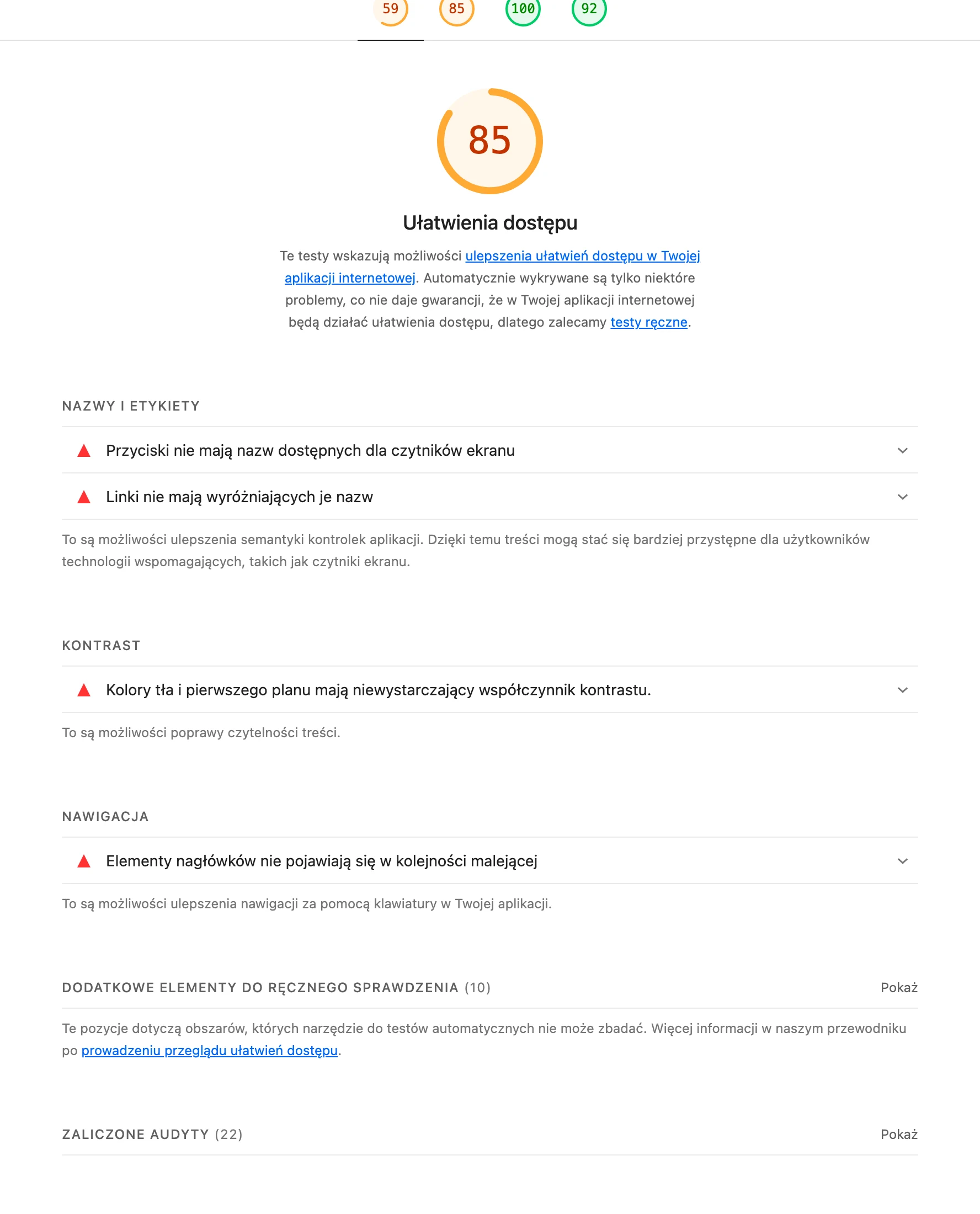
The strongest “lever” for visibility remains parameters and attributes, because they determine traffic from filters and match to queries. On Allegro, missing parameters can cut off a significant share of visits, while on Amazon attributes affect indexing and result relevance. The priority is to complete the fields that act as filters in a given category (e.g. size, material, power, compatibility) and EAN/GTIN codes where they are required. If you have limited time, start with “filterable” attributes, because they increase organic reach the fastest without increasing the advertising budget.
Higher conversion from a listing most often comes from the quality of the images and description, which remove uncertainty and reduce the number of returns. In addition to the packshot, it is worth adding contextual photos and infographics showing scale, dimensions and what’s included in the set, because the customer wants to see the use case and know “what they’ll get”. The description should directly answer the questions “what is it?”, “who is it for?” and “what does it not do?”, which reduces complaints and returns. Where it is critical, state compatibility, connector versions and limitations (e.g. “does not support USB-C PD”) so you are not selling on assumptions.
A better UX and more stable rankings are also influenced by a well-organised catalogue and by moving customer questions into the offer content. Combining variants (e.g. colour/size) allows you to gather reviews in one place and makes the purchase decision easier, instead of dispersing sales across many almost identical offers. In the FAQ section and in the description, it is worth documenting the answers that come up most often in customer support, because this raises CVR and reduces the number of enquiries. If the question “does it fit model X?” keeps coming back, adding a compatibility list in the first lines of the description and on the parameter graphic usually closes the key purchase barrier.
- 01Intent-led titleType, parameter, compatibility.
- 02Key parametersFiltering and matching.
- 03Clarity and CTRCustomer language, not words.
Arranging the title and parameters so the product is easy to find, compare and отвечает to customer needs.
Advertising and promotions: Allegro Ads and Amazon Ads
Advertising and promotions on Allegro and Amazon make sense when they support sales and increase the offer’s visibility in search results at the same time. In Allegro Ads, you will most often use Sponsored Offers campaigns (boosting position in search) and display ads within the Allegro ecosystem. In Amazon Ads, the basis for scaling is Sponsored Products for product queries, while Sponsored Brands builds recognition and can direct traffic to the Store. Amazon Sponsored Display supports remarketing by reaching people who visited the product page, making it easier to “win back” the undecided.
It is worth structuring the campaign so that you can control queries and limit budget burn on irrelevant traffic. For clarity and better performance control, divide the activity into separate segments:
- brand, non-brand, competitor and long-tail campaigns,
- separate campaigns for top SKU,
- on Amazon, broad/phrase/exact match types and negative keywords,
- on Allegro, segmentation by category and margin (CPC differs between niches).
The effectiveness of ads is easiest to assess through ACOS, ROAS and TACOS metrics, because they show different views of profitability. ACOS shows whether the campaign “holds up” on sales from ads, but it does not take into account the impact on organic performance. TACOS (ad spend / total sales) helps assess whether the advertising is working for the whole business, and its decline while sales rise often signals an increase in organic visibility. If you want to measure the impact of ads sensibly despite limited marketplace attribution, compare TACOS over time and run periodic “on/off” tests, rather than basing decisions solely on ACOS.
Promotions (coupons, deals, strikethrough prices) can improve CTR, but at the same time they reduce margin and attract more price-sensitive customers. On Allegro, promotional mechanisms and highlighting usually work best when the offer already has solid reviews and well-prepared delivery, and a favourable moment is either a seasonal rise in demand or a product launch after gathering minimal social proof. On Amazon, you have to keep a close eye on Buy Box, because if you do not win it, clicks from Sponsored Products may not translate into sales, which the competition will take over on the same ASIN. In practice, the source of the “traffic but no sales” situation is often price, delivery time (Prime), stock levels or seller metrics affecting Buy Box.
It is worth managing advertising budgets from test to scale so that decisions are based on data, not one-off sales spikes. In the testing phase, set a daily budget so that you collect meaningful data (e.g. PLN 50–150 per day on Allegro for several SKUs; on Amazon, depending on the market and CPC, often more) and assess results after 7–14 days. In the scaling stage, shift budget to campaigns with better TACOS, and switch off weaker SKUs or improve them at offer level (images, price, variant). At the same time, remember that advertising increases exposure, but over the longer term it is the quality of the listing and the sales and service history that stabilise performance.
Logistics and customer service as an element of marketing
Logistics and customer service are part of marketing on a marketplace because they translate into conversion, ratings and the offer’s position in the results. In practice, the customer evaluates not only the product, but also the delivery time and predictability, as well as the quality of contact after purchase. On Amazon, choosing FBA can increase the chances of Prime and improve conversion, although it comes with fulfilment and storage costs and requires stock planning. At the start, FBM or your own warehouse is often cheaper at low volume, but FBA more often “delivers” marketing results thanks to speed and confidence in delivery.
On Allegro, participation in Smart. works in a similar marketing way to Prime, because users expect fast and convenient delivery. If an offer loses out despite a good price, a common reason is longer delivery time, a lack of preferred options (e.g. parcel lockers) or weaker delivery ratings. These elements are not “just operational”, because in real offer comparisons they become part of the competitive advantage. On a marketplace, delivery can be as important a buying argument as price, because it is visible directly in the offer comparison.
Customer service SLA and order fulfilment quality affect account performance, and indirectly also marketing results. Fast replies, a low complaint rate and no delays build trust and stabilise sales, whereas cancellations and disputes pull down seller metrics. You will reduce returns without bending the rules not by complicating the process, but by using a precise description, “to scale” photos and clear compatibility information. In the clothing category, the size chart and context (e.g. a photo on a model) should be treated as a tool for reducing returns, not as an add-on to the description.
Packing and the post-delivery experience genuinely affect reviews, because feedback often refers to the condition of the parcel and the completeness of the set. Standards such as proper protection, void fill, pick-and-pack checklists or “fragile” labels can reduce damage and improve the average rating. As order volumes grow, manual handling starts to generate overselling and delays, which is why integrations (e.g. BaseLinker, Apilo, Sellasist) make scaling easier by automating stock levels, invoices and shipments. Well-designed operational processes also help maintain consistent standards for the offer, delivery and communication.
Stock management is also an element of marketing, because advertising without inventory ends in wasted budget or a drop in position after out-of-stock, especially on Amazon. A practical rule for top SKUs is to keep cover for 30–60 days and a separate buffer for the season and delivery delays (lead time). Equally important is a quality policy: frequent quality complaints can trigger alerts and listing suspensions on Amazon, while on Allegro they lower seller ratings. After-sales support, despite limits on customer data, still builds loyalty through the quality of support and education (e.g. an instruction leaflet in the parcel with a link to the knowledge base in line with platform rules).
- 01Marketing foundationLogistics and service build conversion.
- 02Amazon FBA / PrimeSpeed, trust, higher conversion.
- 03Allegro Smart!Expectation of convenience and fast delivery.
- 04Final effectBetter ratings, positions and sales.
Key takeaway: Efficient logistics are not just a cost, but an investment in marketing and customer trust.
Analytics and optimisation based on data
Analytics and optimisation on a marketplace are based on decisions driven by funnel KPIs, not solely by sales level. When you are deciding what to improve, you first read the funnel: low CTR suggests a problem with the thumbnail, title or price, while low CVR points to barriers in the content, reviews, delivery or price versus the competition. On Amazon, you analyse sessions and unit session percentage, and on Allegro, impressions, clicks and sales from seller tools and Ads campaigns. First determine whether it is the click that is “leaking” (CTR) or the decision (CVR), because that leads to different corrective actions.
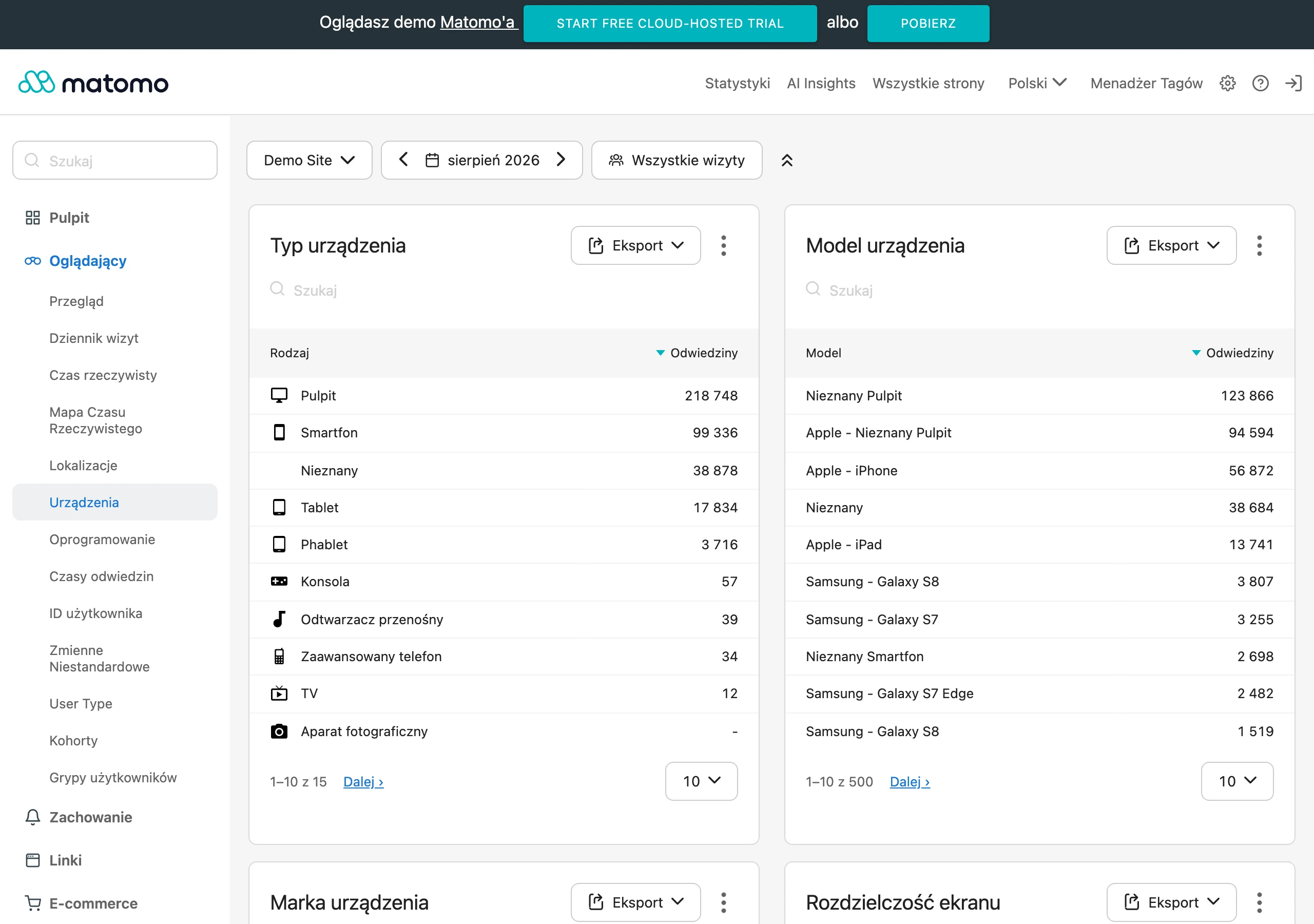
Measurement on a marketplace has its attribution limitations, which means that some effects of marketing activities remain “hidden” (e.g. advertising supports organic). To assess impact sensibly, compare TACOS over time and use periodic tests (switch on/off) rather than relying solely on campaign results. In practice, it also helps to compare cohorts of SKUs with similar seasonality so that natural fluctuations in demand are not mistaken for the effect of optimisation. This approach brings order to budgetary and product decisions.
A/B tests on a marketplace should be run methodically, because only then do they not turn into guesswork. The first image, title, price, variant layout and product bundles are usually worth testing, with the key rule being to change one thing at a time. To make the result genuinely comparable, keep the conditions constant and measure the effects for 7–14 days, taking seasonality and the impact of advertising into account. This makes it quicker to assess whether the barrier is at the “entry” stage of the offer, or only at the decision stage.
In advertising, a significant part of the spend can drift to irrelevant queries, so regularly review search term reports and add exclusions. On Amazon, the Search Term Report and negative keywords are used for this, and on Allegro, structuring campaigns and excluding segments with low conversion lifts ROAS without having to reduce scale. If you see lots of clicks and little sales, the most common reasons are a mismatch of keywords, a price that is too high compared with the market, or a problem with delivery and reviews. It is worth doing this diagnosis cyclically, because the mix of queries changes with competition and the season.
Scaling requires constant reporting and quick operational and marketing decisions per SKU. The minimum rhythm is a weekly update for Ads and stock levels, plus a monthly profitability summary (sales, margin after costs, Ads spend, TACOS, returns, out-of-stock, ratings). Price monitoring and repricing help maintain competitiveness without manual “clicking”, and on Amazon they additionally affect the Buy Box, while on Allegro they affect position in sorting and the customer’s decision when comparing offers. When developing your assortment, also use signals from the data: a high number of views and a low CVR is a sign that demand exists, but the offer is not delivering (e.g. via the parameter, price or content), and analysis of reviews suggests what to improve fastest in the description, graphics and the next product batch.
Brand management and marketplace-related risks
Brand management on a marketplace comes down to maintaining real control over content, compliance and account security, because this directly translates into continuity of sales and marketing activities. On Amazon, the tool that strengthens this control is Brand Registry, which provides, among other things, more efficient management of listing content, reporting of infringements and access to brand solutions. On Allegro, consistency remains key, meaning uniform naming, coherent visual identity and fixed offer standards. If you want to limit impersonation of the brand and “spoiling” of content or pricing, the priority is brand registration/protection, as well as constant monitoring and rapid reporting of infringements.
The risk of account suspensions on platforms most often results from policy breaches, prohibited claims (e.g. medical), missing required certificates or IP infringements in images and descriptions. To avoid operating blindly, maintain an organised document repository (e.g. CE, declarations of conformity, SDS for chemicals), use your own materials and avoid promises that cannot be reliably substantiated. In practice, product compliance is often checked automatically or following reports, while the consequences are immediate (removal of the offer, suspension of sales). The safest rule for communication on a product page is: do not declare anything you cannot support with documentation.
Risk control also includes formalities and processes, because cross-border marketplace selling imposes tax discipline and order in operations. Selling in the EU may require OSS/IOSS and correct VAT rate configuration and reporting, and failing to meet these obligations increases the risk of blocked payouts and problems during inspections. Then there is account security: 2FA, user roles and regular access audits reduce the risk of account takeover or costly mistakes when making changes to offers and campaigns. It is also worth having a crisis plan for negative reviews, mass returns and batch defects: pausing ads on the SKU, collecting evidence (e.g. batch numbers), launching replacements/refunds and updating the listing and quality process.
Integrating marketplace with other marketing channels
Integrating marketplace with other marketing channels is about linking activities in such a way that they mutually reinforce brand visibility and organic sales. A marketplace works most effectively as part of a broader set-up in which social proof (reviews) increases credibility in Meta/Google ads, while social campaigns increase branded searches on Allegro and Amazon. The condition is consistency of communication: the same product names and the same USPs in the offers and in materials outside the platform. If you run external campaigns, make sure the names and differentiators are consistent, because this makes it easier for the customer to find exactly the same product in the marketplace search engine.
Assessing whether integration is actually delivering results should be based on observing outcomes during periods supported by external campaigns. In practice, you compare the dynamics of brand queries and organic sales at a time when you are simultaneously running activities outside the marketplace. This measurement method is particularly helpful when you do not have full attribution, and part of the impact of activities “feeds through” into the platform’s organic results. The most useful control question is: after external support, is interest in the brand and the share of organic sales increasing, rather than only sales from paid clicks.
In an omnichannel framework, this also means operational and product order, so that the customer gets a consistent experience regardless of the touchpoint with the brand. If you drive traffic to the marketplace, ensure consistency in how the offer is presented (naming, USPs) and in the elements that build credibility in the product comparison engine, such as reviews and service standards. This means that campaigns in external channels do not “bounce off” inconsistent messages, but strengthen the purchase decision at the place where the user ultimately compares offers. This approach also makes it easier to plan future activities, because over time it becomes clear which products react most strongly to growth in branded searches and support from campaigns outside the platform.
FAQ
Frequently asked questions
How does a marketplace support marketing beyond selling alone?
It helps build brand awareness, collect reviews and test demand for new SKU. It also affects conversion, because customers compare offers directly in search results.
Is it better to sell only on a marketplace, or combine it with your own store?
The article suggests that a hybrid approach often works better. A marketplace gives ready-made demand and faster sales, while a D2C store offers greater control over margin and customer data.
When is it worth entering Allegro, and when Amazon?
Allegro is usually the natural choice for selling in Poland and for a quick launch of offers. Amazon makes more sense for a cross-border strategy, but it requires better logistics and tight compliance.
How do you assess whether a marketplace offer will be profitable?
You need to calculate the margin after commission, fulfilment, returns and advertising. It is also important to set a target TACOS and the minimum contribution margin per unit.
What most improves an offer's visibility on a marketplace?
The title, parameters and attributes matter most, because they affect filtering, indexing and result relevance. Good images, a clear description and complete compatibility information also help.
Why do logistics and customer service affect marketing results?
Because they translate into conversion, reviews and the offer’s position in results. Fast delivery, a low complaint rate and no delays build trust and stabilise sales.