
A marketing agency is judged by whether it delivers business results, not by how elegantly the report or presentation looks. What matters is practice: whether it can diagnose the problem, implement the right actions, measure them sensibly and draw decisions from the data that genuinely change something. This is not a game of one channel. It is work on dependencies, often spread over a period longer than one monthly report. The most important thing is the full chain of evidence: the business goal, measurement, the actions taken, the change in the funnel and the real impact on leads, sales or acquisition cost. Only then can you see the difference between effectiveness and a well-told story. And that is not a cliché. That perspective is simply fairer, because it shows both the end result and the quality of the process that leads to it.
What assessing a marketing agency’s work by results involves
Assessing an agency’s work by results is simple in definition, but demanding in execution. You check what was done, how it was measured and what impact it had on the outcome, instead of scoring the communication itself, the pace of meetings or the aesthetics of the slides. Slides alone do not sell. A regular rhythm of summaries, efficient status updates and audience growth may look good, but the question is: did these actions improve what actually matters to the business.
The basic unit of assessment should not be a single campaign. What matters is the whole chain of dependencies: the goal, the metrics, the source data, the actions, the outcome and the decision on what we do next. If a company wants more high-quality leads, the report should show not only clicks or CTR, but also traffic quality, conversion rate, lead status and acquisition cost. If you cannot connect the agency’s actions with a specific change in the funnel or business result, the assessment is incomplete. Because then we are assessing the narrative, not the result.
In practice, you need to ruthlessly separate output metrics from vanity metrics. Google rankings, number of sessions, ad impressions or reach can be useful diagnostically, but on their own they are not proof of effectiveness. The data make one thing clear: what matters is whether sales, the number of accepted leads, the share of non-brand traffic with purchase intent, or the cost wasted on ineffective segments is falling. Instead of “there is more”, we want to know “is it better”.
A good assessment also takes into account the role of the channel in the sales funnel. SEO, content, paid campaigns, e-mail marketing or UX do not always “close” the conversion in a last-click model, but they should improve specific stages of the user journey. Not everything has to be the finish. Something can be a solid start, middle stage or catalyst for the decision. The agency should be able to show which stage of the funnel it improves and on the basis of which data this is visible.
The quality of the working process itself is also important. An effective agency works with hypotheses, runs tests, prioritises tasks and can justify why a given action made business sense, rather than just “looking good” in the plan. That makes a difference. It makes it possible to assess not only whether the result appeared, but also whether it was the effect of methodical work, rather than a series of coincidences that happened to work out.
The current context of measuring agency effectiveness
Today, evaluating an agency’s effectiveness is no longer a simple table. A user jumps between many touchpoints before buying or submitting a form, so one report from an advertising platform or even GA4 alone rarely completes the picture. The key is to combine data from analytics, CRM, advertising platforms, Search Console and often also the sales system. Only then can you see what is actually driving the result.
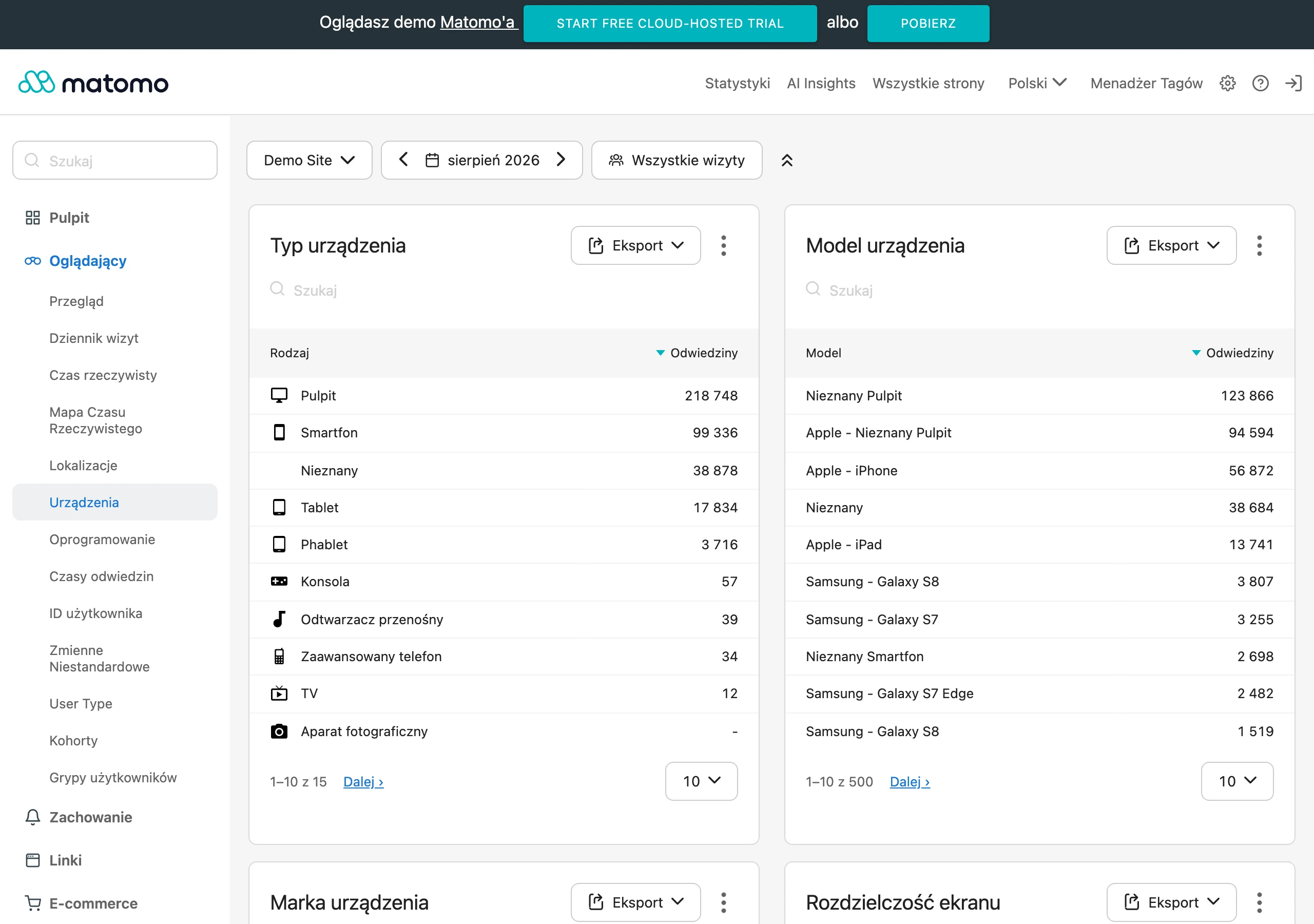
The biggest problem is attribution. The limitations of cookies, marketing consents and cross-device tracking do their part, which means not every result can be assigned to a single channel with 100% certainty. In practice, this means one thing: it is not worth assessing an agency solely on the last-click model, because it may understate the contribution of channels that support the buying decision. The question is whether we are looking at the customer journey or only at the last step.
In paid campaigns and in SEO, the gap between the result “in the tool” and the result “in the business” is becoming increasingly visible. A campaign may have a low cost per click and a high CTR, while at the same time delivering poor-quality leads. SEO visibility can also grow, but if it grows on purely informational topics, with no purchase intent, sales may not even notice it. And that is not a cliché, but everyday life in reports.
The quality of data and technical implementations is becoming increasingly important. Incorrect GA4 configuration, badly set up events, lack of conversion deduplication, incorrect UTMs, no call tracking or no offline data import can completely distort the assessment of results. Before you assess the effectiveness of the actions, check whether you are measuring them correctly at all. Because when measurement is flawed, the whole discussion about “effectiveness” becomes a bit of theatre.
There is one more catch: automation and AI tools are changing the way reporting works. The number of creatives, texts or ad variants generated on its own does not prove anything. What matters is whether these materials were aligned with the objective, properly implemented and whether they genuinely increased traffic quality, conversion or lowered acquisition cost. Instead of production “by the kilo”, what counts is impact on the funnel.
How practical assessment of a marketing agency’s work works
Practical assessment of an agency’s work starts with checking the full chain. The business goal, the measurement method, the actions taken, the change in the funnel and the impact on the result. Only this kind of setup makes it possible to distinguish real improvement from a nicely described report. If the agency shows only the final numbers and you cannot trace where they came from, the assessment is by definition incomplete. First you need to know what problem the agency was meant to solve, and only then look at the results.
The first step is to establish what the real outcome of the collaboration is. For one company it will be the number of accepted leads, for another the acquisition cost, sales from SEO or improved form conversion. Only then do you choose supporting metrics such as CTR, CPC, sessions or rankings. They are meant to support the diagnosis, not replace the business outcome. Instead of fetishising secondary metrics, you need a simple logic of cause and effect.
The second step is a data and access audit. First, check whether the agency worked with correctly configured sources: GA4, Google Tag Manager, Search Console, CRM, the advertising system, call tracking or offline data import. If measurement is flawed, you first assess fixing the analytics, not campaign effectiveness. Otherwise it is very easy to praise or criticise the agency on the basis of figures that were skewed from the start.
The next stage is to establish the baseline. You compare the results before the collaboration with the period after implementation, but taking seasonality, changes in budget, prices, offer, product availability and work done on the client side into account. Without this perspective, assessment turns into a lottery. And then the rise or fall gets pinned on the agency’s account, even though in reality it resulted from completely different factors.
Then comes the time to assess the specific actions carried out by the agency. I am not interested in a description like “we carried out optimisation”, but in a hard list of changes: campaign restructure, ad tests, fixes on the landing page, technical SEO fixes, a new content plan, audience segmentation, email automations or changes in forms. The question is what exactly was touched and why. Good assessment always connects these actions with the problem they were meant to solve, instead of leaving them as loose activities.
The list alone is not enough. You also need to check the quality of those moves and the logic of the decisions, because otherwise we confuse “a lot of work” with “good work”. If the problem was a low conversion rate, sensible work will focus on the site, the message, the form and performance speed, not just pumping traffic. A good agency can show the hypothesis, implementation and result, not just say it “worked”.
In practice, assessing the impact on individual funnel stages is also crucial. At the top of the funnel, you look at traffic quality and audience fit; in the middle, at transitions to offer pages, micro-conversions and engagement; and at the bottom, at leads, sales, cost and time to conversion. And that is where the difference between marketing and fireworks becomes clear. This is particularly important in SEO, content marketing, email marketing and UX, because these areas do not always close the sale directly, but they should improve a specific stage of the user journey.
You also need to compare the result with the actual scope of cooperation. You do not hold the agency responsible for areas it did not manage, but you also do not let poor results hide behind side tasks, because that is a convenient smokescreen. If the agency was responsible for paid campaigns and the main problem turned out to be a broken form, the assessment should separate campaign management quality from the site’s technical problems. Not “everyone is at fault”, but precisely: who is responsible for what.
Finally, check whether the agency optimised activities or merely maintained them. What matters is whether it switched off ineffective segments, shifted budget, updated content, improved weak pages, identified technical errors and responded to CRM data. Constant active optimisation is usually more valuable than an impressive report from one good month. Because in marketing, process wins, not a one-off hit.
The final element is reporting and the business decision. The report should tie together data from several sources, show changes over time, explain the causes of deviations and end with a simple recommendation: continue, change strategy, narrow the scope or end the collaboration. If, after correct measurement and real implementations, there is still no improvement in the key stage of the funnel, the quality of the presentation alone is no argument for continuing the topic.
What to check when assessing an agency’s effectiveness
When assessing an agency’s effectiveness, what matters are the data, the actions actually carried out, the impact on the funnel and the link to the business result. That means checking not only the report, but also the data sources, CRM, website implementations and the logic of decisions made along the way. Most mistakes come from assessing an agency by intermediary metrics or by the narrative from the meeting alone. If you cannot connect the agency’s actions with lead quality, sales or acquisition cost, the assessment is simply too shallow.
- Ask for a list of completed actions broken down into analysis, implementation, testing, optimisation and recommendations.
- Check the KPI map assigned to the funnel, not just one table with channel results.
- Compare data from advertising platforms with GA4, Search Console, CRM and the number of real enquiries.
- Verify conversion definitions, UTMs, deduplication, integration of forms, phone calls and offline data.
- Assess lead quality in the CRM: accepted, rejected, mismatched, unanswered, closed as a sale.
- Check whether the agency flagged problems with UX, forms, mobile usability, speed and offer content.
- See whether there was a backlog of tasks with priorities, rather than a random set of activities.
Lead quality is particularly important, because it is usually what exposes the difference between a good marketing result and a good business result. A campaign can generate plenty of forms. But if the sales team rejects most of the contacts, the agency is not delivering value. That is why it is crucial to look at lead statuses in the CRM, not just their number in the advertising system or in GA4.
Let’s look at it differently: did the agency look beyond the channel itself. If it runs ads but does not flag problems with the landing page, form, purchase path or offer content, it may be missing the main reason for poor results. In practice, an effective agency does not stop at “setting up a campaign”, but identifies blockers that damage conversion and follows through on removing them.
A good test of the quality of work is the prioritisation approach. The agency should be able to show which activities had the greatest potential impact, what was implemented first and what the findings from the tests were. If all tasks look equally important, it usually means there is no real decision-making process. And then the report is just a story, not a tool.
- A warning sign is a report without access to source data or without a clear definition of conversion.
- The problem is that brand and non-brand traffic are not separated, which blurs the real impact of the activities.
- An obsession with reach, clicks or rankings is concerning when it does not translate into leads, sales or acquisition cost.
- A bad sign. There is no information about tests, errors, rejected hypotheses and conclusions.
- Also be cautious when every drop is explained by seasonality, but without comparative data and without a response plan.
Decisions like a simple scorecard. Assess separately the data accuracy, the quality of the work delivered, the impact on the funnel, the impact on business performance and the quality of operational collaboration, because only this separation shows where the real problem lies. Instead of pretty slides — a cool-headed calculation. This structure reduces the risk that a good presentation will mask a weak process or, conversely, that weaker communication will hide well-executed work.
If you want to assess an agency fairly, gather the basic documents too: the action plan, scope of responsibilities, KPI dashboard, change log for the site and campaigns, test results, analytics audit and lead export from the CRM. This is not bureaucracy, but evidence material, without which it is easy to confuse traffic with results. Only on the basis of such material can you make a sensible decision about continuing, adjusting the scope or ending the cooperation. Without it, it is easy to assess the form rather than the effect.
What decisions to make based on the assessment results
The result of the assessment should lead to decisions, not impressions. On this basis you decide whether to continue, correct, narrow, expand or end the cooperation, but the key issue is whether the agency is improving the critical stage of the funnel and whether it is doing so on reliable data. The question is: do we trust the measurement. If there is no certainty about the measurement, you first fix the analytics and only then assess the effectiveness of the activities. Incorrect data can make a good agency look bad or a weak one look good.
It is worth continuing the cooperation when a consistent chain is visible. This is about correct measurement, completed actions, sensible change logic and improvement in the business result or the funnel stage for which the agency is responsible, rather than one “nice” month in the report. It is not about an ideal result every month, but about whether the work is moving in the right direction and whether the decisions are justified. What does it matter if sales close more slowly if SEO increases traffic to offer pages and the number of valuable enquiries. That can be a good signal to continue the work, not a reason to end the cooperation prematurely.
The cooperation should be corrected when the actions are carried out properly, but they do not solve the main problem. This is a common scenario: campaigns generate traffic, but the site converts poorly, or content increases visibility, but on keywords that are too informational to support sales. It is not about a greater number of tasks, but about the right objective. If the effects are indirect but do not translate into the right objective, the strategy needs to change, not just “further optimisation”.
Narrowing or expanding the scope makes sense only when the assessment shows a clear distinction. Something works, something does not deliver. A real-life example: the agency manages paid ads well, but does not support the site, analytics and CRO, which means acquisition cost does not fall. In such a setup, it is more sensible either to add scope related to UX and measurement, or to limit the cooperation to the channel where the effect is actually visible, rather than just looks good in the report.
Ending the cooperation is justified when the data is correct, the scope of responsibility is clear, there has been enough time for implementation, and yet there is no improvement in the key metrics and no coherent decision logic is visible. That is a warning sign. The same applies when the agency cannot show what it has actually implemented, avoids access to source data or explains every weak result solely by seasonality. A lack of connection between actions and results is a much more important signal than the quality of the presentation itself.
The safest way to make a decision is on the basis of a simple scorecard. No bells and whistles. It should cover five areas: data accuracy, the quality of the work delivered, impact on the funnel, impact on business performance and the quality of operational collaboration. This structure organises the conversation and cuts out situations in which the fate of the cooperation is decided by one nice table or one weaker month. If the first two areas are weak, there is no point trusting the final results without an additional audit.
The most common mistakes when assessing the work of a marketing agency
The most common mistakes are painfully repetitive. Assessing an agency by vanity metrics, without correct data, without reference to the business goal and without checking the quality of leads or sales. In practice, this means delighting in reach, clicks, rankings or the number of publications, even though the financial result does not improve. This approach rewards a good narrative, not effective work.
A very common mistake is comparing the agency report only with data from one platform. Convenient, but misleading. Results from the ad system are not enough if they do not match GA4, CRM, call tracking or sales data. The assessment should be based on several sources at once, because only then can you see whether the campaign is generating real demand or just looking good in the interface.
Another problem is the lack of an established baseline. Without a baseline, it is not clear whether the agency improved the result, maintained the previous trend or simply benefited from seasonal growth. The question is: what are we comparing this to, not what the chart shows. You need to take into account changes in budget, offer, prices, product availability, sales activities and site quality, because each of these factors can significantly change the result.
This is a common mistake. The agency is assessed as if it were responsible for the entire company result, even though it only manages a slice of the activities. If the agency runs campaigns but has no influence over the offer, lead handling, the salesperson’s response time or technical problems on the site, its impact must be measured within the limits of its real responsibility. It works the other way round too: the agency should not claim credit for growth whose source was a change in the product or pricing policy.
Many companies look only at the result from one period. And that is a simple route to wrong conclusions, because the process disappears from view. A good agency works on hypotheses, tests, priorities and conclusions, instead of carrying out “presentation-ready” actions just because they sound good in a meeting. If there is no backlog, change log, test results and rationale for decisions, it is hard to distinguish management from improvisation. And then the discussion revolves around narrative, not facts.
Finally, watch out for the psychological trap. It is easy to assess collaboration by how smoothly meetings go and how convincing the recommendations sound, but the question is: what does that mean in numbers. Good communication matters, but it does not replace results. An agency should be held accountable for whether it improves the right metrics and whether it can prove the link between its work and a change in results.
Practical tips for an effective assessment of collaboration with an agency
An assessment of collaboration only makes sense when you continuously compare actions with data, scope of responsibility and business result. Without that, it is easy to assess the presentation rather than the real work. Start with a simple set of documents: an action plan, a list of implementations, a KPI dashboard, a log of changes in campaigns and an export of leads from the CRM. This is not bureaucracy, and it is not a cliché. If the agency does not show exactly what has been done, it is difficult to honestly assess what really worked.
The key is to assign metrics to a specific stage of the funnel and channel. SEO, paid ads, content or e-mail do not have to be responsible for the same thing, but each area should have a clearly defined goal and a way of measuring it. When a report is based mainly on clicks, reach or positions, you need to check whether these metrics lead to leads, sales or improved traffic quality. Not “nice metrics”, but those that actually deliver results.
Compare data across several sources instead of trusting one dashboard. Compare the report from the advertising platform with GA4, CRM, the number of actual enquiries and the status of leads. If the results do not match, the problem may be attribution, tagging, duplicate conversions or a lack of offline data import. But beware: sometimes it is not that the campaign “does not work” — the measurement has fallen apart. Good assessment starts with checking the reliability of measurement, because faulty data can completely distort the picture of collaboration.
Do not assess a campaign solely by the number of leads. Check how many were accepted by sales, how many were irrelevant, how many clients could not be contacted and how many cases ended in actual sales. Only then does it show whether the agency delivers value or only pumps up low-quality volume. Less noise, more sense.
In practice, it also says a lot whether the agency sees problems beyond the purchase of traffic itself. That is the litmus test. If it runs campaigns but does not flag a weak form, a slow mobile version, an unclear offer or errors in the purchase journey, it may be missing the hardest conversion blockers. The question is: is someone looking at the whole picture, or only at delivery. An agency that is responsible for results does not limit itself to serving ads or publishing content, but points out the places where sales are leaking away.
Also check how decisions are made. Without that, the collaboration turns into a theatre of reports. Good work leaves a trace in the task backlog, priorities, tests and conclusions, not just in monthly summaries. If it is not possible to reconstruct what was the hypothesis, what was implemented and what the result was, it is usually a sign that the process is not so much agile as reactive or simply random.
Finally, the best approach is to use a simple scorecard in five areas: data accuracy, quality of actions, impact on the funnel, impact on the business result and quality of operational collaboration. A simple tool, hard conclusions. Such a structure organises the conversation and limits the influence of likeability, report format or presentation quality. It is not about who tells the story better, but who delivers. The more the assessment is based on evidence, the easier it is to distinguish an agency that looks good in a meeting from one that genuinely improves results.
FAQ
Frequently asked questions
How to evaluate a marketing agency by results, not presentation?
You need to check the full chain: business objective, measurement, actions taken, change in the funnel and impact on the result. Slides, status updates and polished reports alone are not proof of effectiveness.
Are clicks, reach and Google positions enough to assess an agency?
No, because these are supporting or vanity metrics, not proof of business results. What matters first and foremost is sales, lead quality, acquisition cost and a real change in the funnel.
Why is it not worth judging an agency only by the last click model?
Because one report often does not show the full customer journey and ignores the channels that support the purchase decision. This can understate the impact of SEO, content, e-mail marketing or paid campaigns at earlier stages of the funnel.
When should you check analytics first and only then assess the effectiveness of the agency's actions?
Always when there is a risk of incorrect measurement: misconfigured events, problems with GA4, UTM tags, deduplication or a lack of offline data import. If the data is skewed, the results assessment will be skewed too.
What should a good marketing agency report show?
It should combine data from several sources, show changes over time and explain where the result came from. In the end, it should lead to a specific decision: continuation, strategy adjustment, scope reduction or ending the cooperation.
How can you check whether the agency is really improving business results?
Compare the actions with the outcome: lead quality, sales, conversion and acquisition cost. If you cannot connect the work carried out with an improvement in a key stage of the funnel, the assessment is incomplete.