

In marketing, the problem is rarely a lack of ideas. More often, we are suffocated by an excess of tasks that simultaneously pretend to be urgent and important, so in the calendar it becomes not a plan but noise. That is why prioritisation is not about arranging a pretty list, but about making a few hard decisions: what will really move the business result, and what only looks “strategic”. In practice, it means cutting through the chaos, stopping budget from being scattered around and limiting the weekly hopping between channels. If everything is a high priority, then in practice nothing is a priority. Well-set priorities let you deliver results faster, use the team’s resources more sensibly and cut, without regret, activities that eat up time. This makes a difference especially where marketing has to support sales, develop channels and keep an eye on cost efficiency at the same time.
What are marketing priorities in practice?
Marketing priorities are simply a decision: what we do now, what we do later, and what we do not do at all. Not a wish list, not a “grubby compromise” between opinions in the team, but a choice of actions with the greatest chance of improving a specific business result in a given period.
There is one starting point. A primary goal, for example increasing the number of valuable leads, growing sales, improving retention, or a bigger share of revenue from a selected channel. Without such a goal, it is easy to throw sales, brand and purely operational matters into one pot and then pretend that this is “strategy”. One main business decision organises the whole backlog better than an extensive channel plan.
In real work, priorities are not set according to what sounds loudest in a meeting. They are set on the basis of data and constraints, because those will write their own punchline anyway. What matters is which channels are already delivering results, what the acquisition cost is, how good the traffic and leads are, where users drop off and how much time and resource the implementation of a change will consume. On top of that come technical dependencies, seasonality, team availability and a simple question: can this initiative be launched without blockers.
In practice, prioritisation most often revolves around SEO, content, paid ads, CRM, e-mail marketing, CRO, analytics and the website. It is also crucial to distinguish strategic activities from reactive ones, such as individual requests from sales, “beautifications” with no impact on conversion, or ad hoc campaigns launched under pressure from the moment. The greatest value of prioritisation is not that it says what to do, but that it clearly shows what not to do right now.
The result of well-executed work is often surprisingly modest. It is usually a short, clear list of initiatives arranged by impact, cost, risk and the time needed to start, without marketing fluff. Such a list makes budget decisions, sprint planning and conversations with stakeholders easier, because instead of “I think” there are criteria. The team stops working on parallel assumptions. It starts working to a shared order of actions.
What are the current challenges in setting marketing priorities?
Today’s prioritisation in marketing hurts for a simple reason. There are more channels, tools and expectations than there is time, budget and the team’s capacity. In many companies, the backlog swells faster than it can be delivered. The effect is often predictable: even sensible ideas start cannibalising each other, and chaos masquerades as a plan.
Measurement quality is what trips everything up the most. Without reliable data, it is hard to honestly assess what really works and what only looks good on a slide. When events are set up incorrectly, goals are inconsistent and leads are not mapped properly to the CRM, decisions are made on the basis of fragmented snapshots. You cannot set priorities properly if you do not know which activities generate revenue and which only generate traffic.
On top of that come privacy changes and tracking limitations. And suddenly the data from advertising platforms diverges from analytics or CRM, sometimes painfully. That does not mean measurement is useless, but be aware: it requires shared KPI definitions and consistency in interpretation. Without that, the team compares different numbers and draws conflicting conclusions, even though everyone is convinced they are right.
Another obstacle is the clash between “right now” and “over time”. Performance campaigns can translate into results faster, whereas SEO, content or website optimisation build a more durable growth base. The question is: does it really make sense to measure them against the same horizon. The mistake is to assess all channels with one measure, because their role in the funnel and the pace of effect are simply different.
Priorities are set in PowerPoint, but they are delivered in operations. You may know that the biggest potential lies in improving the website or rolling out changes in the CRM, but what use is that if the team does not have access to development or the budget closes in two weeks. Then the order has to bend to reality, not ambition. That is why good prioritisation considers not only growth potential, but also feasibility, risk and deadlines.
More and more often, two things also have to be separated. Some activities generate demand, while others capture existing demand. A brand campaign or educational content is measured differently than ads targeting queries with high purchase intent. And the facts are these: the importance of lead quality and revenue is growing, because the sheer number of forms or sessions increasingly leads you astray.
How does the prioritisation process work in marketing?
The prioritisation process in marketing comes down to a simple test. You compare all activities against one business goal and arrange them by impact, feasibility and urgency. The point is not to create a long task list, but to decide what really needs to enter the work now and what can wait. In practice, every activity has to be assessed not only by potential, but also by cost, implementation time, risk and dependencies on other teams. Good priorities come from data and operational constraints, not from whoever raises their hand the loudest.
- First, the main goal for the given period, the decision horizon, the budget and the available resources are set.
- Then everything that is alive is put into one backlog: active campaigns, overdue tasks, ideas, technical issues and sales needs.
- Next, measurement is checked. Conversions, campaign tagging, CRM integration, the quality of dashboards and the places where the data simply cuts off.
- The next step is a cold assessment of each initiative: impact on KPI, implementation speed, cost, quality of traffic or leads, and risk.
- On this basis, tasks usually end up in four drawers: quick wins, core activities, experiments and low-priority initiatives.
- At the end, an implementation order is created with owners, start conditions, control points and a definition of the expected result.
The most mistakes are born during data audits. And that is not a cliché. If it is not clear which traffic sources deliver sales and which produce only low-quality forms, the priority ranking will be nothing more than decoration. Without proper measurement, it is easy to burn budget on activities that look good in the platform but perform poorly in business terms.
In practice, it is a good idea to separate short-term activities from those that work with a delay. Performance campaigns can quickly “capture” existing demand, but SEO, content, CRM or CRO usually improve results step by step and need a different evaluation horizon. The problem is that when everything is thrown into one bag, tasks with an immediate effect naturally win. Instead of a lasting advantage, we get short bursts.
The final outcome of the process should not be just a task list, but a concrete roadmap. Such a roadmap clearly says: what we do now, what comes later, what is waiting for start conditions and what we are deliberately postponing. The key is to lock in accountability. Because in marketing, a priority without an owner, a deadline and a definition of success most often remains just a declaration.
The process does not end with one decision. Conditions change faster than we would like. Campaign results, seasonality, team availability, development constraints or changes in the offer can completely reshuffle the order of activities. That is why priorities need to be refreshed regularly and tasks that show no impact or block more valuable work need to be removed from the backlog.
How do you set real marketing priorities?
Real marketing priorities start with narrowing the goal, fixing the measurement and assessing each initiative against the same criteria. First, you need to determine which result should improve in the given period: the number of qualified leads, sales, retention or the share of revenue from a specific channel. The question is: is the team chasing one result, or trying to catch reach, leads, margin and awareness all at once. When it is the latter, the order of activities blurs very quickly, because every argument sounds “important”. One main goal and a few supporting KPI are the simplest way to distinguish what is important from what is merely urgent.
The second step is to verify whether that goal can be measured reliably. It sounds simple, but in practice you first need to clean up tracking, attribution, lead mapping to CRM and critical funnel errors, because without this, judging channels is more fortune-telling than analysis. And here comes the paradox: very often it is measurement or landing page improvements that deliver a better return than launching more campaigns. If the page converts poorly, adding media budget usually magnifies the problem rather than solving it.
Give each initiative a simple score. Not a half-day spreadsheet, just a sensible assessment: impact on the goal, effort, urgency, data confidence and technical dependencies. That way you can compare things that at first glance are not comparable, such as an analytics fix, a new paid campaign and a change on the landing page, without pretending that intuition is a strategy.
It is also crucial to separate mandatory tasks from growth tasks. Fixes related to page bugs, legal compliance or critical tracking do not always lift performance directly, but they are a condition for being able to scale activities sensibly at all. The question is: do you want to grow on fragile foundations or on stable ones. Do not mix “we need to fix this” tasks with “this should speed up growth” tasks, because both types matter, but they have different priority logic.
When the scope is broad, start with the areas that most often make the biggest difference to results:
- measurement and data quality,
- the conversion funnel and page errors,
- the offer and the message on landing pages,
- traffic quality from active campaigns,
- channels with real spend or a large share of sales.
Just as important as choosing what to do is deciding what not to do on purpose. Clear rejection criteria are good practice, and that is not a cliché: no impact on KPI, no owner, no input data, too much dependence on other teams or a conflict with the current goal. The side effect is invaluable. Less chaos, more consistency and an easier defence of decisions against ad hoc requests that seem urgent but do not move the result.
Finally, return to priorities cyclically, not only when planning the quarter. A change in season, budget, offer, lead quality or sales results can shift the sensible emphasis between channels within a week. A real priority is not a sticker on a task, but a decision for today, based on what is actually happening in the business, not in a presentation.
What are the most common mistakes in setting priorities?
Most often, priorities are won by opinion, not criteria. On top of that, different goals are mixed into one plan and too many things are launched at once, because if everything sounds sensible, then why not. In practice, this ends with a scattered budget, an overloaded team and no clear answer as to what really works and what only looks good in the status update. The problem is that usually there is no shortage of ideas. There is a shortage of hard decision rules. If every task is “important”, then in practice none of them has a real priority.
The most common sin. A lack of one overarching goal for the given period. When marketing is simultaneously supposed to increase leads, boost awareness, support sales, develop SEO and still “fix” the website without an established order, the backlog stops being manageable and the team starts running in five directions at once. Then it is easy to mix activities that are meant to deliver a result this quarter with those that are only laying the bricks for an effect over a longer horizon.
The second serious mistake is more subtle: decisions made without reliable measurement. If events, goals, UTM tags, CRM integration or KPI definitions are inconsistent, comparing channels becomes theatrical rather than analytical. You cannot set priorities properly if you do not know which sources generate sales and which only bring traffic or poor leads.
I also often see a clash between two worlds: mandatory tasks and growth tasks, thrown into one bucket without distinguishing their logic. A tracking fix, a form error, a legal issue or a site outage may have a higher priority than a new campaign, even though they do not “drive growth” themselves and will not improve the charts in a presentation. But be careful, it works the other way round too. Not every request from sales, management or product should be put straight into delivery just because it has appeared suddenly.
A separate category of mistakes is ignoring operational constraints. An idea may be excellent, but without development resources, creative assets, input data or an owner for the task, such an initiative will not move the company forward — it will just clog up other work. Priority without real feasibility is only a declaration, not a plan.
Many companies lose efficiency through an excess of parallel projects. When a new paid campaign, a landing page rebuild, CRM automation, a content series and analytics changes all start at the same time, it is hard to maintain pace, quality and a sensible assessment of results, because every piece of the puzzle is competing for attention. The question is: why spread the energy thinly, if everything still has to be delivered anyway. A better result is usually delivered by a smaller number of well-chosen activities that can actually be delivered and then honestly assessed.
Finally, a seemingly minor but costly mistake: a lack of rejection criteria. If the organisation cannot say “no” to tasks with no impact on KPI, no input data or no owner, the backlog will keep growing until it starts ruling the calendar. Good priorities are created not only by choosing what to do, but also by consciously removing what is not worth doing now.
What tools and methods support the prioritisation process?
The prioritisation process is best supported by simple methods for comparing initiatives and by tools that show impact, cost, urgency and dependencies. The key point is that this is not about an elaborate model for its own sake, but about a system that allows comparable decisions between channels and types of tasks. In practice, well-defined KPI, a shared backlog and a simple scoring system are usually enough, provided they are used consistently rather than brought out ceremonially for a meeting.
The most practical method is simply a scoring sheet. You assign each initiative a score for impact on the goal, effort, implementation time, data confidence, risk and technical dependencies, and then compare everything on one list without guessing. This makes it possible to place a form fix, a new Google Ads campaign, an SEO project and email automation side by side, instead of discussing them in different “world categories”. Scoring does not provide mathematical truth, but it forces consistent criteria and limits decisions based purely on intuition.
A very useful tool is also an impact-effort matrix. It works like a sieve: it separates quick wins from costly and uncertain initiatives before they consume the team’s time. But be careful, it is easy to get trapped in mechanics here, because a task with high effort may be necessary if it removes a block for several important activities at once.
From an operational perspective, a single backlog in a project tool is crucial. One, not three versions of the truth in emails, messengers and separate files. It should contain active campaigns, overdue tasks, analytics fixes, sales needs, website changes and strategic initiatives, because only then is the real workload visible. If tasks are scattered, prioritisation quickly becomes fiction, because nobody sees the team’s full workload.
Assessing impact requires a KPI dashboard based on consistent definitions. It cannot show only traffic and cost, but also conversions, lead quality, funnel stage, revenue or at least CRM data on the further fate of contacts. In practice, a simple dashboard with reliable data leads to better decisions than an elaborate report the team does not trust.
Funnel analysis, user behaviour maps, a technical site audit and CRM data also provide support. Funnel analysis helps identify where efficiency is lost, behaviour maps show where the user stops, a technical audit points to implementation blockers, and CRM allows you to distinguish a lead from a valuable sale. The problem is that without this it is easy to fall for the illusion that “more means better”, especially when high campaign volume does not translate into quality.
At organisational level, splitting initiatives into four groups works well: quick wins, foundational activities, experiments and low priority. This structures the conversation with stakeholders and prevents everything being thrown into one bucket, because every “urgent” item suddenly has to join the queue. The best tools do not replace decisions, but they structure them so that the team knows what to do now, what to do later and what not to do consciously.
How do you monitor and update marketing priorities?
Marketing priorities are monitored by regularly comparing the plan with results, team capacity and changes in business conditions. A task list on its own is not enough if you do not know which activities actually bring you closer to the goal and which only consume time and attention. In practice, a simple review rhythm works: operational weekly, a broader performance review monthly, and a direction correction after bigger changes in the offer, budget or season. The question is whether you update priorities based on data, or based on who speaks loudest in the meeting. Priority is not a fixed decision, but a hypothesis that must be regularly verified against data.
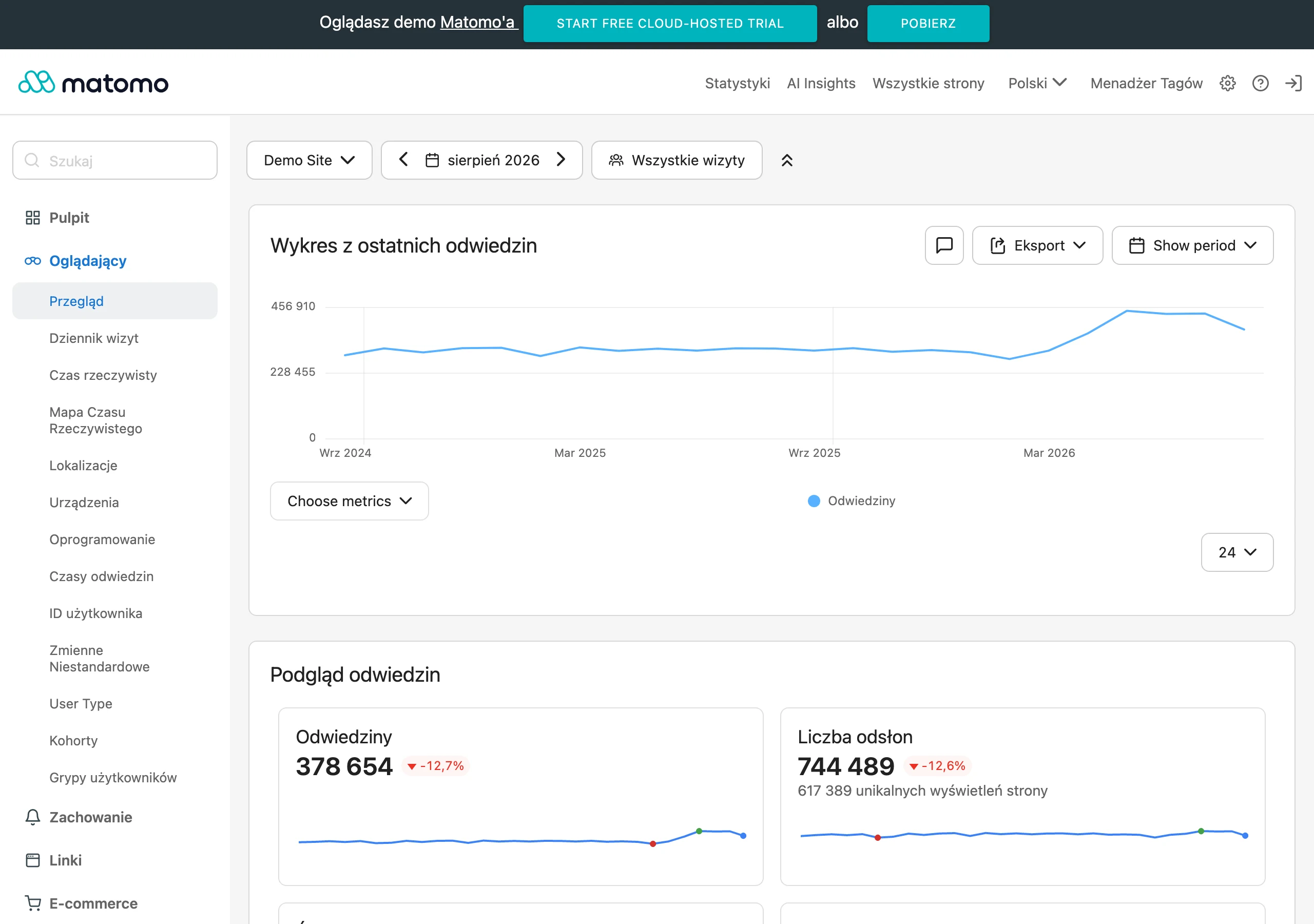
First measure what really matters. If the goal is leads, simply counting forms does not solve anything, because lead quality, acquisition cost and progression to the next stages in the CRM are equally important. If the goal is sales, look not only at traffic and clicks, but also at conversion rate, revenue, margin or the channel’s share in closed deals. Without consistent KPI definitions, the team usually optimises different things at the same time and loses the ability to make clear decisions.
Priorities are updated based on deviations from the plan, not on one-off fireworks from a single channel. If a campaign has a good cost per click but poor lead quality, its place in the queue may drop despite nice numbers from the advertising platform. And rightly so. Similarly, SEO or content should not be measured against weekly fluctuations, but against the trend in visibility, traffic quality and impact on conversions over a longer period. That is why it is crucial to monitor fast-moving metrics and lagging metrics separately.
In practice, priorities are changed when at least one of three things no longer adds up. These are impact potential, feasibility or urgency. Potential rises or falls when a new offer appears, demand in a given category grows, or it becomes clear that a given channel is delivering better revenue than expected. Feasibility drops when development blockers, resource shortages or data issues come up, and urgency rises with measurement errors, site outages, significant drops in conversion or sales pressure tied to a specific period. If the operating conditions have changed and the task queue has stayed the same, then the priorities are already out of date.
Good practice starts with a simple filter. You review each active task through four questions: does it still support the main goal, do we have data to assess it, is it blocking something more important, and is the cost of continuing justified. The question is: why are we still doing this. It works like a proper clear-out — it lets you remove initiatives that are “running on momentum”. Some actions do not need improvement, only stopping or reducing in scope. The most order comes not from adding new tasks, but from consciously removing from the plan those that do not stand up on results.
Without an owner, a priority becomes ownerless. For the process to work, each priority should have an owner, a review date and a condition for staying on the roadmap. Without that, tasks can sit “in progress” for months even though they are not changing anything in practice. But a note of caution: it is worth separating the review of growth activities from the review of mandatory tasks, such as tracking, site bugs or legal matters, because both areas follow a different decision logic. This split reduces the risk that urgent operational matters will constantly crowd out actions with the biggest impact on results.
The most useful model is a short, regularly refreshed roadmap, not an overblown plan mapped out over six months. The team needs to see in black and white what is currently first in line, what is waiting for the green light, and what has been consciously put on the shelf or simply crossed out. That makes a difference. It is then easier to defend decisions to stakeholders and to react faster when results start moving in another direction. Monitoring priorities is not about adding more tasks, but about keeping the right order of actions in conditions that change from week to week.
FAQ
Frequently asked questions
How do you set marketing priorities when everything feels important?
First, you need to identify one overarching business goal, and then assess actions by impact, feasibility and urgency. This way you know not only what to do now, but also what not to do at all.
Why isn’t a to-do list enough in marketing?
Because prioritisation is meant to filter out chaos, not just organise it on paper. Without hard decisions, the team still spreads the budget and jumps between channels.
What most often makes it difficult to set priorities in marketing?
Most often it is the excess of channels, tools and expectations combined with too little time, budget and resources. A major problem is also poor measurement quality and inconsistent data between platforms and the CRM.
Should SEO and content have the same priority as performance campaigns?
No, because these activities have a different timeframe for results and a different role in the funnel. Performance campaigns usually deliver results faster, while SEO and content build a more durable foundation for growth.
What does the marketing prioritisation process look like step by step?
First you define the goal, budget and resources, then you gather all activities into one backlog and verify measurement. Next, each initiative is assessed in terms of impact, cost, implementation time, risk and dependencies.
What mistakes most often occur when setting priorities?
Most often, decisions are made based on opinions rather than criteria, and multiple goals are mixed together at once. Another mistake is ignoring operational constraints and lumping obligatory and growth tasks into one bucket.