

In regulated industries content marketing works well when it combines visibility with risk control. The text should attract the right queries, but it cannot promise more than the regulations and available evidence allow. Not only the main copy matters, but also the headings, the snippet and the way the answer is presented. The safest organic traffic is the kind you do not have to extinguish with corrections after publication. That is why it is worth starting content planning with a risk map, not just a list of keywords.
The importance of visibility without breaches in content marketing for regulated industries
Visibility without breaches means gaining organic traffic without messages that may trigger claims, penalties or costly corrections. In such a strategy, the goal is not the boldest copywriting, but a stable presence in search results. This approach reduces the risk that an effective heading or CTA will have to be withdrawn after publication. In practice, it saves the team time, budget and the brand’s reputation.
This goal changes the way topics and formats are selected. At higher risk, educational content, definitions, comparisons and procedure descriptions work better. Such materials answer real user questions, but they do not make promises of a guaranteed result. By contrast, aggressive CTAs, advice that looks like individual guidance and shortcuts suggesting a guaranteed outcome are less defensible.
Visibility without breaches also organises SEO priorities. It is better to publish a slightly narrower text that is compliant and defensible than a broad piece based on risky claims. If a message requires frequent corrections, the entire publishing and updating process suffers. Good results are usually delivered by content that is from the outset within the boundaries of language permitted for a given industry.
How to assess content risk depending on the industry and jurisdiction
Content risk is assessed by combining six elements: the industry, the product type, the jurisdiction, the audience, the funnel stage and the sensitivity of the claims. Such a risk map shows how cautiously you need to write and what level of approval the material requires. Thanks to this, even at the brief stage you know whether standard editing is enough, or whether expert or legal review is needed. Without this assessment, it is easy to treat every topic the same, even though the level of risk can vary dramatically.
The easiest way is to assess each topic using standard questions:
- Industry — defines the overall level of restrictions and tolerance for simplifications.
- Product type — affects whether you may use language about effectiveness, safety or cost.
- Jurisdiction — determines which requirements apply in a given market and in a given language.
- Audience — communication to a broad audience usually requires greater caution.
- Funnel stage — informational content is usually safer than materials aimed at quickly closing the decision.
- Sensitivity of claims — the stronger the claim, the greater the need for precision, conditions and sources.
Jurisdiction matters in practice because the same topic may require different local versions. Not only disclaimers change, but also the acceptable tone, the scope of promises and the CTA copy. That is why it is safer to create separate materials for countries and languages rather than copy one version across all markets. This division also makes it easier to maintain correct local markings and carry out future updates.
Risk assessment should end with a concrete editorial decision. If the topic is high risk, choose an educational format and conditional language with a clearly described scope of use. If the claim concerns effectiveness, safety, cost or law, prepare a source, a date and a person responsible for the substance. When the risk is lower, it is still not worth resorting to superlatives and mental shortcuts, because these are what most often spoil a safe message.
Choosing the right formats and content intent to minimise risk
The least risky are educational formats that respond to an informational, not a sales, intent. In practice, definitions, comparisons, procedure descriptions and structured explanations of concepts work best. This format helps attract traffic from user questions without making promises of an individual result. It is also easier to defend in approval, because it says how something works, not what it will definitely deliver.
The higher the topic’s risk, the less room there is for content that reads like advice for a specific person. Particularly problematic are materials suggesting a guaranteed effect, a quick fix or a simple purchase decision. That is why a top-of-funnel article should answer the questions “what is it”, “how does it work” and “how is it different”. A safer intent does not weaken SEO if it answers a real query and leads the user to the next compliant step.
The format also needs to be matched to how the content may be read in summary. In regulated industries, short answers are useful only when conditions, exceptions and the source sit alongside the answer. This matters because a search engine or AI system may extract only the answer fragment. If the summary sounds too categorical, risk arises even when the full article is cautious.
Precise phrasing of claims and the importance of evidence
Claims need to be phrased precisely, conditionally and with evidence attached to a specific statement. The greatest risk comes from guarantees of effect, superlatives without confirmation and language suggesting a certain outcome. Instead of broad promises, it is better to describe the scope of use, conditions and limitations. This gives the reader useful information and prevents the brand from stating more than it can substantiate.
Every claim about effectiveness, safety, cost or law should have a source, a date and a subject-matter owner. This structures not only the text itself, but also later audits and updates. When a regulation or interpretation changes, it is immediately clear what needs to be corrected and who confirms it. A stronger claim requires stronger evidence, and the absence of evidence should mean weaker language.
The evidence should sit close to the claim it supports. The reader should not have to guess whether a given sentence comes from a regulation, an internal document or the author’s opinion. In practice, update dates, a clear source indication and separating fact from interpretation work well. This is especially important where even a small shortcut can change the meaning of the message.
The role of the author, reviewer and publishing workflow in the content marketing process
The role of the author, reviewer and workflow is that every piece of content has an owner, an approval path and the ability to be corrected quickly. In regulated industries, a good text alone is not enough if it is not clear who is responsible for its accuracy. A visible author, update date and review note strengthen credibility and make later auditing easier. The reader then sees that the content is not an anonymous opinion without oversight.
The workflow should start with a brief containing a list of prohibited phrases and a risk level for the topic. Next, a compliance checklist, pre-publication approval and versioning of changes are needed. This matters in practice because most problems arise not during writing, but when shortening, adding CTAs and publishing quickly. If a piece of content does not have an assigned subject-matter owner, the risk of error rises already at the first update stage.
The reviewer does not need to check everything with the same level of detail in every text. A definitional piece at the top of the funnel usually requires a lighter process than content touching on costs, performance or law. A simple division of roles works well: the author prepares the content, the expert assesses the substance, and the person responsible for compliance approves publication. When regulations or interpretations change, the same process should trigger a quick correction of already published pages.
Optimisation of on-page elements and snippets for regulatory compliance
On-page and snippet optimisation for regulatory compliance means that the title, meta description, H1, FAQ, anchors and CTA must not promise more than the content itself. In practice, these short elements are the ones most likely to oversimplify the message. The user sees them before the paragraph with terms and limitations. That is why compliance control must cover the entire layer visible in search results, not just the article.
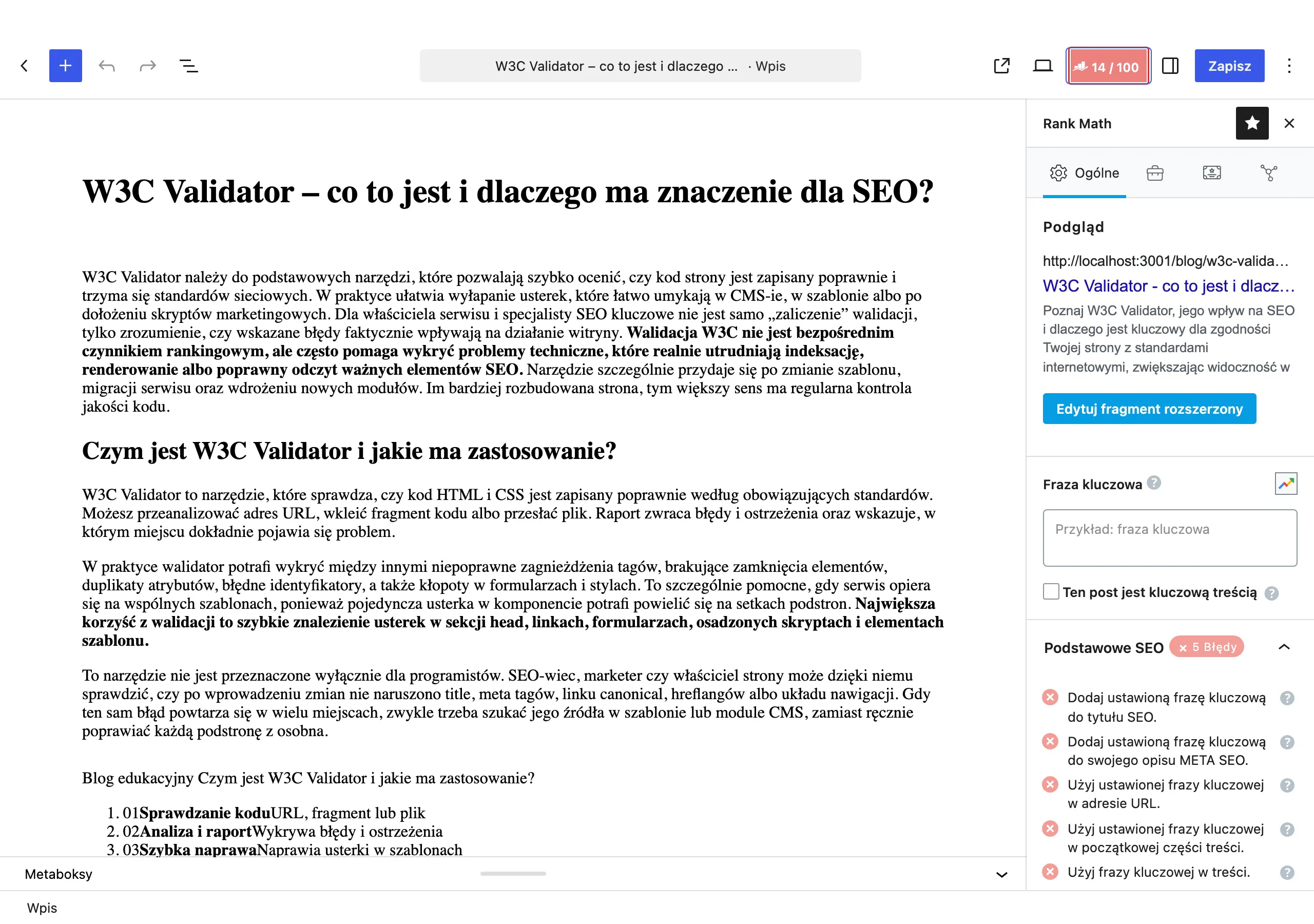
The title and meta description should answer the query, but without language of guarantees, certainty or superiority without proof. The H1 also cannot be bolder than the expanded content lower down the page. FAQ and CTA are particularly risky, because they easily turn a cautious explanation into an overly definite promise. A disclaimer does not fix a snippet that in itself already misleads the audience.
A good practice is a separate review of all elements visible in the SERP before publication and after the text is updated. You need to check whether the heading, description and FAQ answers still fit within permissible language. It is also worth checking internal anchors, as they too can sneak in overly bold shortcuts. If a snippet shortcut sounds more categorical than the page content, it is better to simplify it than to rely on the explanation below.
On high-risk pages, informational messages that clearly indicate the scope of the answer work best. Instead of reinforcing the message with a promise, it is better to name the topic, procedure or assessment criteria. Such wording usually also withstands automatic summaries better, because it does not lose conditions and exceptions. This is important when the search engine shows only a fragment of the answer without full context.
The most common mistakes in content marketing and how to avoid them
The most common mistakes are prohibited claims covered by a disclaimer, copying competitors’ messages, out-of-date content and publishing without review. Each of these problems increases the risk that the material will look marketing-correct, but will not stand up on substance. Particularly dangerous are shortcuts suggesting a certain result, safety or a simple decision. A disclaimer does not fix content that in itself communicates something too categorical.
To limit these mistakes, you need to control not only the text itself, but also the way it is created and updated. In practice, a simple set of operating rules works best:
- do not publish a claim without a source, date and subject-matter owner,
- do not rewrite FAQ, CTAs and headings from competitors’ materials,
- mark the date of the next content review after publication,
- block prohibited phrases already at the brief stage,
- check the snippet against the current version of the page.
Such a process matters in practice because most breaches arise after small changes, not at the first draft stage. The text may be correct, but it becomes risky after adding a stronger title or FAQ answer. That is why the review should cover the whole page, not just the editorial section. If the material concerns law, costs or effectiveness, the control must be particularly strict.
A separate source of risk is AI-generated content and uncontrolled UGC. The model can write with too much certainty, even when the topic requires conditions, exceptions and limitations. User comments, Q&A sections and automatically expanded FAQ can also introduce content that nobody has approved. In regulated industries, every piece of content visible publicly should have an owner and a path for quick correction.
FAQ
Frequently asked questions
How can you assess content risk in a regulated industry before publishing?
You need to combine an assessment of the industry, product type, jurisdiction, audience, funnel stage and the sensitivity of the claims. This risk map shows whether editing is enough, or whether expert or legal review is also needed.
Which content marketing formats are safest in regulated industries?
Educational formats carry the least risk: definitions, comparisons, process descriptions and structured explanations of concepts. They answer users’ questions better, without drifting into promises of an individual result.
Can headings and the snippet increase legal risk even if the article itself is correct?
Yes, because the title, meta description, H1, FAQ and CTA are often read before the full content. If they sound too categorical, they can mislead the audience even when the article is cautious.
Why should claims in regulated industries be phrased conditionally?
Because guarantees of results, unverified superlatives and language implying certainty create the biggest risk. It is safer to describe the scope of use, conditions and limitations, and to link evidence to a specific claim.
When is expert or legal review needed before publication?
When the topic carries a higher level of risk or concerns effectiveness, safety, cost or law. In that case, a redaction brief is not enough and the material should go through additional approval.
What are the most common mistakes in content marketing for regulated industries?
The most common issues are prohibited claims covered by a disclaimer, copying competitors’ messaging, outdated content and publishing without review. Risk is also increased by AI content and uncontrolled UGC if they do not have an owner and a correction path.