

The marketing brief works when, after reading it, the agency understands not only the task, but above all the business problem. That makes it easier to choose the right scope of work, set priorities and avoid discussions about secondary issues. A good brief separates what the company wants to achieve from how the agency is meant to get there. In practice, most misunderstandings come from a lack of a goal, baseline data, a project owner and clear exclusions.
Key elements of an effective marketing brief
An effective marketing brief includes a business goal, the problem to solve, scope, KPI, baseline data and working principles. It is a set of information that allows the agency to propose sensible actions instead of guessing priorities. If even one of these elements is missing, the risk of a poor plan, inaccurate pricing or a dispute over responsibility increases. Most often, the problem is not a lack of detail, but a lack of specificity in the matters that determine the outcome.
The minimum that should be included in the brief is:
- project business goal,
- problem to solve,
- target audience and its intent,
- scope of work and conscious exclusions,
- baseline and current data,
- KPI and deadline for reviewing results,
- budget, resources and constraints,
- project owner, decision-making process and key competitors.
A good brief is short, but based on facts. Instead of long descriptions, it is better to provide example URLs, the results of previous audits, the main competitors and any known technical or legal constraints. You also need to indicate the project owner, the approval process and the resources available, because without this even a good strategy will get stuck. The format can be a document or a presentation, as long as the most important decisions can be read quickly.
How to define a business goal and its measurable KPI
The business goal should be written as a change in the business, and the KPI as the measures confirming that this change is actually happening. The mistake starts when a task is called a goal, for example an SEO audit or preparing content. These are not goals, only means to an end. A correct statement says what is meant to change, for example the number of leads from organic, revenue, non-brand visibility or the level of indexing.
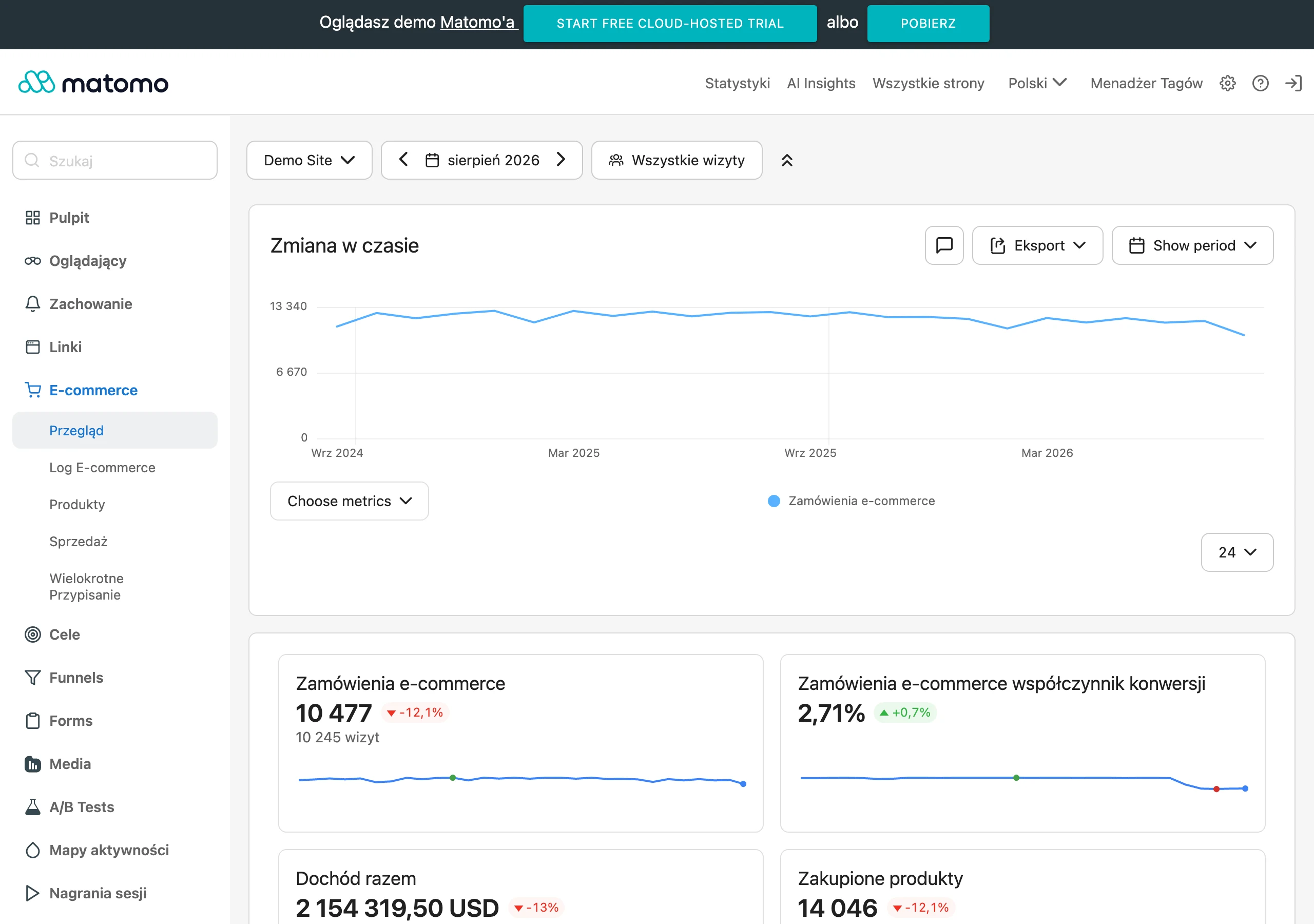
KPI should be derived directly from the goal and anchored in the starting point. Without a baseline, a KPI is only a wish, because there is no way of knowing what level the project starts from. A practical statement combines the metric, target value and review date, for example growth in leads from the organic channel within six months. In digital projects, KPI may also relate to organic non-brand sessions, CTR, indexing, Core Web Vitals or the quality of analytics data.
It is best to choose one main KPI and a few supporting ones that show whether the project is heading in the right direction. If the budget, resources or time are limited, this has to be written down, because it affects how realistic the goal and scope of work are. A common mistake is to leave KPI until later or set them without knowledge of seasonality, domain history and previous activity. A well-written brief allows the agency to restate the goal, metrics and first steps of analysis in its own words.
Defining the problems to solve in the brief
Defining the problems to solve involves describing the symptom, its scale and the most likely source. This tells the agency whether it should look for the cause in indexing, content, CTR, links, analytics or technical changes. The same drop in leads may have different causes, so without a diagnosis it is easy to order the wrong actions.
The problem needs to be backed up with data and context, because a description of a feeling alone is not enough for a sensible plan. In the brief, it is worth indicating the affected segments, important URLs, when the issue appeared, previous implementations and seasonality. This shortens the analysis and reduces the risk that the agency will start by verifying the basics instead of the priorities.
A common mistake is to write a task instead of a problem, for example “do an SEO audit” or “write more content”. A better statement says what is not actually working, for example category visibility dropped after a template change or important pages are not being indexed. The more precisely you name the source of the issue, the more accurately the agency will select the scope, order of work and initial hypotheses.
Defining the target audience and user intent
Defining the target audience and user intent means specifying who is searching, what they expect and what stage of the decision-making process they are at. This directly affects keyword selection, the type of content, page structure and the way results are measured. The agency should not have to guess whether the message should speak to beginners, comparison shoppers or people ready to get in touch.
In the brief, a practical description of the segment is enough, rather than an elaborate persona with irrelevant details. It is necessary to specify what questions the user asks, what they compare and whether they are looking for information, a solution or a specific offer. This matters because a guide will not replace a service page, and the offer page alone will not answer early doubts.
It is a good idea to add sample phrases, key URLs, content gaps and brand constraints if they affect communication. In AIO projects, it is also worth indicating which products, services or people are to be the source of answers to specific queries. If the brief throws all audiences into one basket, the agency usually prepares broad but not very effective communication.
Project scope and key exclusions
The project scope should make it clear what the agency does and what it does not do in this assignment. Without this, both sides often understand the collaboration differently, even though they use the same service names. As a result, disputes arise over whether the price includes implementation, content preparation, publication, reporting or consultations for IT. A well-written scope turns general headings into specific tasks and responsibilities.
In digital projects, it is worth breaking the scope down into working elements. For SEO, this may be a technical audit, indexation analysis, content strategy and link building recommendations. For content, it will be a topic plan, intent map, E-E-A-T guidelines and editing of materials. For analytics, the scope may include a conversion audit, event verification, reporting needs and integrations with CRM or Ads.
Exclusions need to be written with the same precision as the scope, because they are what most often save time and stress. If the agency does not implement changes in the CMS, does not publish content, does not manage social media or is not responsible for the development backlog, the brief should say so explicitly. The best wording separates analysis and recommendations from execution, because these are two different stages, with different time and cost. Such precision also helps to assess realistically whether the goal is achievable with the resources available on the client side.
Priorities and compromises in digital project delivery
Priorities and compromises determine what should win when it is not possible to do everything at once. In practice, the agency needs to know whether quick results, a solid foundation, more traffic, better conversion or sorting out technical debt matter most. These decisions cannot be made sensibly without a brief, because each one changes the order of work. The same budget can be spent effectively or dispersed if the priority is not named.
The most common choice concerns the relationship between fixing technical issues and expanding new content. If indexation, JavaScript rendering, Core Web Vitals or analytics errors are serious, adding more work may achieve very little. Conversely, with a stable foundation, developing category pages, guides or content for specific intents often produces a better result. The brief should indicate which decisions are acceptable and which are not a priority at this stage.
Compromises also need to be recorded where expectation gaps are easy to create. This applies, for example, to the choice between non-brand visibility and maximising conversions from existing traffic, between a small number of strong links and volume-based activity, or between optimisation for AI Overviews and traditional organic traffic. If the company has limited developer time, the priority should take this constraint into account, because it affects the real timeline. A well-prepared brief does not pretend that everything can be done in parallel.
The agency understands the brief best when, after reading it, it can identify the first three delivery decisions. It should be able to say what we do first, what we temporarily give up and how we will know that the chosen direction is working. If this cannot be read from the document, the priorities are written too vaguely. In that case, a plan is usually created that looks right on paper but is difficult to implement and defend in practice.
Common mistakes in a marketing brief and how to avoid them
Typical mistakes in a brief include the lack of a business goal, confusing the goal with the task, lack of baseline data, an unclear scope, no owner and a budget left unspoken. Each of them leads to a different problem: a bad diagnosis, a poor estimate or delays after the project starts. In practice, a brief does not fail because it has too few slides, but because it lacks information that structures decisions. The most expensive mistake is describing what the agency is to do without indicating what is supposed to improve in the business.
The most common slip-ups recur regardless of whether the project concerns SEO, content, analytics or AIO. Before sending the brief, it is worth checking these points in particular:
- the goal has been written as a task, not as a business outcome,
- KPI do not have a starting point or an evaluation date,
- the scope of work does not include exclusions,
- data, access or important URLs are missing,
- the owner and approval process have not been specified,
- budget, resources and constraints have been omitted,
- a single generic brief has been used for different project types.
The second common problem is leaving KPI, access to data or constraints until later. Then the agency starts by guessing whether the source of the problem is content, indexation, event errors or a lack of technical implementations. If the company operates on a rigid CMS, has a long IT backlog or strong brand constraints, this needs to be written down straight away. These are not organisational details, but conditions that affect the scope and timeline.
Avoiding these mistakes requires a simple brief comprehension test. After reading it, the agency should be able to state in its own words the objective, problem, KPI, constraints and first steps of the analysis. If it answers in generalities or asks basic questions, the document is still too weak. In that situation, it is better to clarify one page of the brief than to add general background with no impact on the outcome.
FAQ
Frequently asked questions
What elements should an effective marketing brief include?
It should include the business goal, the problem to solve, scope of work, KPI, starting data and working rules. Budget, project owner, decision-making process, constraints and key competitors are also important.
How do you define the business goal in a marketing brief?
The goal should be written as a change in the business, not as a task to complete. Instead of “SEO audit”, it is better to state what should improve, for example non-brand visibility, the number of leads or revenue.
Can KPI be set in a brief without starting data?
No, because without a baseline KPI is only a wish. You need to provide the starting point, target value and the deadline for assessing results.
How do you describe the problem to solve so the agency understands it properly?
It is worth identifying the symptom, its scale and the most likely source. Data, context, affected segments, important URL and the moment the problem occurs also help.
How precisely should the target audience and user intent be defined in a brief?
You need to describe who is searching, what they expect and what stage of the decision they are at. It is also a good idea to add whether the user is looking for information, a solution or a specific offer.
Why should exclusions and priorities be written into a brief?
Because they clearly show what the agency is not doing and what should win when everything cannot be done at once. This makes it easier to avoid disputes about scope, responsibility and the order of work.