

SEO report only makes sense when it genuinely supports decision-making, rather than merely describing what can be seen in the tools. In practice, whether stakeholders understand the essence of the problem, accept the priorities and release budget for implementation depends on its quality. A good report organises information, identifies the sources of the phenomena and translates them into concrete actions for specific teams. The most important thing is that an SEO report should lead from observation to a business decision, rather than ending with tables and charts. That is why the same set of data can either build trust or undermine it. The difference is determined by the way it is interpreted, the strength of the arguments and the clarity of the recommendations.
What an SEO report is and what it means in practice
An SEO report is a decision-making tool that should explain what is happening with visibility and organic traffic, why, and what next steps should be taken. It should not be a collection of raw exports from a crawler, Search Console and analytics. Its value only appears when it connects business goals with diagnosis and a concrete implementation plan.
In practice, the core of a good report is clear: the company’s goals, the current state, the causes of problems and opportunities, priorities and how to measure results. This structure makes it possible to quickly assess whether the source of the difficulties is indexing, content, information architecture, internal linking or technical limitations of the site. If a report does not answer the question “what are we doing now and who is implementing it”, then it usually does not lead to action.
A report that builds trust clearly separates facts from interpretation. A fact might be a drop in clicks in a specific directory, a high number of pages excluded from the index, or a rise in the number of URLs with an incorrect canonical. The interpretation only comes with the conclusion that such a state limits the site visibility of a category or disrupts the coverage of intent in an important segment.
The significance of the report also depends on the audience. The board needs to understand the impact on revenue, the cost of inaction and the resources required. Marketing expects priorities, KPIs and the right sequence of actions, while the implementation team needs a task list, technical requirements and URL examples. The same report may have one diagnosis, but it must speak different languages to different audiences.
- 01Goals and diagnosisBusiness goals + current state.
- 02Causes and analysisSources of problems and opportunities.
- 03Priorities and planWhat we do now and who.
- 04Action and resultsImplementation and how to measure.
The value of a report is the answer to the question "what are we doing now", not a set of raw data.
The current context of SEO reporting and its impact on business decisions
Modern SEO reporting supports business decisions when it shows not only rankings, but also traffic quality, intent coverage and impact on conversions. Keyword rankings alone are too narrow today, because they do not explain which areas of the site are actually working towards the company’s goals. It is much more important to understand which types of pages attract valuable traffic and where potential is being lost.
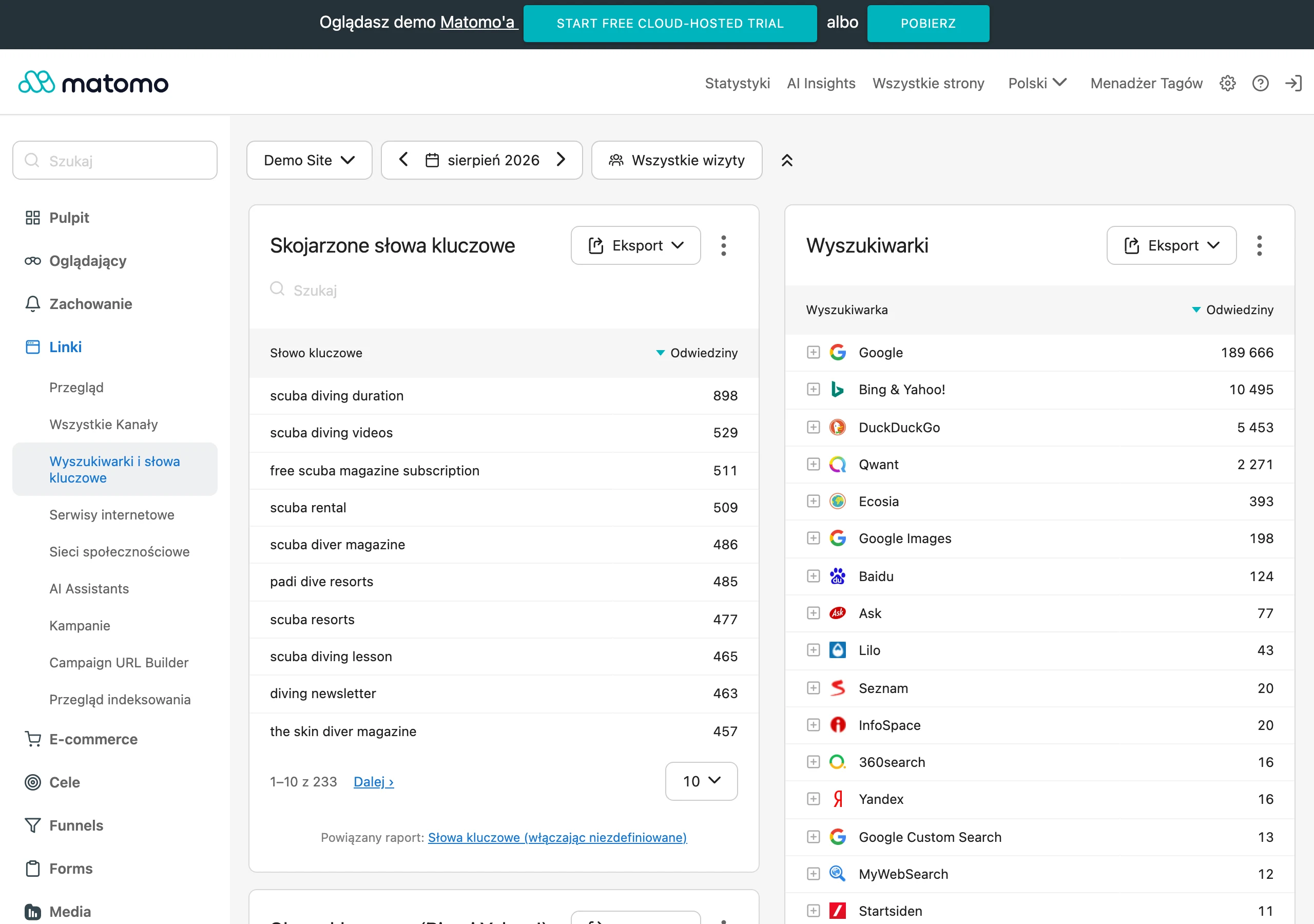
SEO results today are made up of several parallel layers: indexing, crawlability, consistency of technical signals, site usability, content quality and alignment with search intent. In practice, this means that a report should not focus solely on content or solely on technical issues. If a report ignores the relationships between SEO, UX, content, development and analytics, it leads to the wrong priorities.
The quality of source data is crucial, because inaccurate data translates into poor decisions and unnecessary costs. Discrepancies between tools, missing analytics consent, migrations, CMS changes, seasonality or delays in implementation can completely change the reading of a trend. For this reason, a reliable report first verifies the completeness and consistency of the data, and only then moves on to conclusions.
In practice, stakeholders increasingly expect not only a diagnosis, but also an estimate of the implementation effort. From a business perspective, what matters is whether the change requires a development sprint, a series of content publications, navigation adjustments, or merely a technical configuration fix. This is exactly the element that determines whether the report genuinely helps defend the budget and set the order of work.
Automation shortens the analysis time, but it does not replace expert judgement. Automated audits accurately spot recurring error patterns, but they do not determine which issues are business-critical and which merely look worrying in the tool. A report that is meant to build trust must be based on data, but end with a manually verified assessment of priorities.
How to create an SEO report step by step in practice
In practice, an SEO report is built from the business objective, through data verification, all the way to a list of actions with an assigned owner and a way to measure the result. At the outset, it is worth establishing why the report is being created: whether it is meant to justify the budget, support the growth plan, explain declines, or prepare the site for migration. This determines the scope of the analysis, the level of detail, and who the report is meant to help make a decision. A report prepared without a decision question usually ends up as a set of observations rather than an action plan.
The second step is to gather context and access, because without them even good tools will show only part of the picture. Priority page types, markets, seasonality, CMS limitations, implementation history and changes that may have affected the data need to be taken into account. Only then does it make sense to combine Search Console, analytics, crawling, sitemaps, conversion data and, if available, server logs. It is also important to check whether the data can be compared across periods and whether migrations, missing analytics consent or changes in how measurement is set up are not distorting it.
The next stage is to diagnose the site’s health by segment, rather than only through the lens of total traffic. The analysis should show which directories, categories, guides or product pages are losing visibility, which are misaligned with user intent, and which are being blocked by technical constraints. At this stage, you look for causes such as poor indexation, keyword cannibalisation, content gaps, internal linking errors or a low share of landing pages in business-critical areas. The most useful insights appear when the data can be assigned to specific page types and example URLs can be identified.
At the same time, it is worth assessing the technical and content layers, because organic results are rarely caused by a single factor. On the technical side, response statuses, redirects, canonicals, meta robots, duplication, rendering, performance, pagination, hreflang and click depth matter. In the content analysis, you should check whether the page answers the real search intent, whether the topic is covered in sufficient breadth, and whether elements such as the title, headings and information structure support visibility and clicks. A comparison with competitors makes sense when it relates to patterns visible in the SERP, rather than only to the ranking position itself.
At the end, the report should move from diagnosis to priorities and an implementation plan. Each finding is worth describing using a simple framework: symptom, cause, scale, impact, recommendation, required team and a way to verify the effect after implementation. This makes it easier to distinguish quick wins from systemic changes that require the involvement of development, content, UX or analytics. If a recommendation does not have an owner, an implementation condition and a verification criterion, in practice it rarely gets delivered.
The final document should have two layers: a short summary for decision-makers and a working section for the implementation teams. Management wants to see the impact on objectives, the cost of inaction and the resources needed. Marketing needs priorities and KPIs, and the technical team needs specific tasks, example URLs and information on how to check whether the implementation is correct.
- 01Business objectiveDefine why the report is being created
- 02Context and accessGather information and constraints
- 03Data verificationCheck tool data and history
- 04List of actionsAssign an owner and a way to measure
A report without a goal is a set of observations, not an action plan.
Key elements of an SEO report that builds trust
An SEO report that builds trust should include reliable data, a clear diagnosis, business priorities and an implementation plan with impact measurement. It is not enough to show that traffic has fallen or positions have changed. You need to specify exactly what happened, where the problem occurs, why it matters and what actions should be taken in practice. Trust grows when every claim has a data source, an example and a coherent rationale.
The first key element is a clear separation of facts from interpretation. A fact can be a drop in clicks in a specific directory, a low level of indexation for a selected group of URLs, or a loss of visibility for transactional queries. Interpretation is only the claim that the cause was a rendering issue, poor intent match or an architecture change. This structure protects the report from overreaching conclusions and makes it easier to discuss it with stakeholders who want to understand what the recommendation is based on.
The second element is segmenting results by business value. It is worth presenting categories, products, guides, local pages or landing pages separately, because each of these groups serves a different role in the funnel and carries different SEO risks. This prevents the report from losing priorities and from lumping all page types together. From a business perspective, it is usually more important which segments translate into sales or leads than what the averaged trend for the whole site looks like.
The third element is operational evidence, that is, material that makes it possible to move efficiently from conclusion to action. The best approach is example URLs, error samples, period comparisons, query clusters and showing the relationship between indexation, visibility and traffic. This level of specificity shortens the discussion, because instead of an abstract problem the team gets a tangible case to improve. The fewer generalities and the more verifiable examples, the easier it is to justify the budget needed.
The fourth element is prioritisation linked to implementation effort. The report should clearly indicate which changes can be implemented quickly and which require modifications to templates, navigation, content or analytics configuration. SEO impact on its own is often insufficient if the recommendation is costly, depends on multiple departments or is blocked by the CMS. That is why sensible prioritisation combines impact, scale of the problem, risk and real feasibility.
The fifth element is a realistic way of talking about results. It is better to indicate the direction of impact, the conditions for success and the limitations than to make precise promises without solid grounds. The outcome depends on implementation quality, competition, seasonality, the state of indexation and whether the improvement concerns an area with real demand. A report that honestly shows the relationships and risks usually builds more trust than one promising rapid growth without conditions.
The final essential element is post-implementation monitoring. The report should specify precisely what to measure, in which segments to observe the change and after what time to reassess priorities. In practice, this means monitoring indexation, changes in landing pages, the quality of organic traffic, intent coverage and the impact on conversion, rather than only tracking rankings. Without this, even a good implementation is hard to defend or develop into the next stage of work.
The most common mistakes and limitations in SEO reports
The most common mistake in an SEO report is that it contains a lot of data but does not translate into any decision. At first glance it looks professional, but in practice it does not answer the basic questions: what to improve, why, in what order and who is meant to implement it. If the report does not end with an action plan, it can easily lose credibility after the first meeting with stakeholders.
The second common pitfall is mixing facts with interpretation. A rise or fall in clicks alone does not explain anything until you show the source of the data, the scale of the phenomenon and example URLs. A report builds trust when every significant claim is backed by data, not just the author’s comment.
Many reports are also too vague. They put categories, products, guides and local pages into one basket, even though each of these areas has different potential, a different search intent and different implementation constraints. Without segmentation by page type and business value, priorities are usually wrong.
A common problem is also drawing conclusions on the basis of incomplete or distorted data. Discrepancies between tools, a lack of analytics consent, seasonality, migrations, CMS changes or earlier implementations can mean that the report describes the effect but does not show the real cause. That is why, before drawing conclusions, you need to check whether data from Search Console, analytics and the crawler can be sensibly compared.
Reports also lose value when they ignore implementation realities. A recommendation may be technically correct and yet useless if it requires a rebuild of templates, changes to navigation, work from the content team and additional analytics validation, and the report says none of this. A good recommendation describes not only what to do, but also which team is needed, what the implementation depends on and how to verify the effect.
Another limitation of many reports is an excessive attachment to rankings. Rankings are volatile and often do not show whether the site better covers intent, attracts valuable traffic and improves the pages that actually convert. Much more important are changes in clicks, impressions, indexation coverage, landing page quality and visibility for the right topics or categories.
A separate mistake is promising numerical results without solid grounds. SEO depends on competition, crawl frequency, implementation quality, domain history and changes within the site itself. It is safer to show the direction of impact, the conditions for success and the risks than to declare an outcome that cannot be honestly justified.
- 01Too much data, no decisionThe report does not answer the questions: what, why, who.
- 02Mixing facts with interpretationA claim without evidence loses credibility.
- 03Too vague an approachLack of precision for categories, products, guides.
An effective SEO report must end with an action plan, be evidence-based and be precise.
How to measure the effectiveness of implementations based on an SEO report
The effectiveness of implementations is assessed by changes in the parts of the site covered by the recommendation, not by the overall rise in visibility of the whole domain. If you are improving category indexation, analyse that category and its URL class rather than lumping the whole site together, including the blog and brand traffic. Only then can you reliably link the effect to a specific intervention.
The first step is to establish a baseline before implementation. It is worth recording the baseline for the indicated URLs, directories or templates: indexation, clicks, impressions, average position, number of pages with traffic, share of pages with no entrances and, where feasible, also conversions or session quality. Without a “before” state, even a well-executed implementation is hard to justify to the team or management.
The second step is to separate implementation validation from measuring the business impact. First, you verify whether the change has actually been implemented correctly: whether the canonical works, whether internal linking is visible, whether meta robots is not blocking indexing, whether the new content renders and crawlers can see it as they should. Only then do you check whether there has been an improvement in data from Search Console, analytics and landing page monitoring.
In practice, different types of changes are worth measuring with different metrics. For technical issues, the key factors are index coverage, crawl errors, response statuses, the number of excluded pages and the speed at which URLs appear in results. For content changes, clicks and impressions for specific topic clusters matter more, as does the increase in the number of ranking URLs and better alignment with intent. In turn, for internal linking it makes sense to observe click depth, the number of links leading to key pages and changes in traffic on pages that were previously orphaned.
The third step is to choose the right time horizon. Some technical changes are visible after a few days, but their impact on traffic is often felt only after the next crawl and index update. Content changes usually need more time, especially on large sites, seasonal sites or those updated irregularly. Assessing too quickly is one of the most common reasons for the mistaken conclusion that the implementation “did not work”.
It helps a lot to compare against a control group or a similar segment that has not been touched. If you update descriptions in one group of categories, compare their performance with similar categories that have not changed. Such a simple setup does not give complete certainty, but it shows much better whether the improvement is the result of the implementation or rather seasonality or parallel marketing activities.
Finally, it is worth returning to the decision-making questions from the report. Has the implementation solved the problem, does the scale of improvement justify the next stage of work, and are there data that allow you to increase the budget for similar actions in other parts of the site. The most convincing post-implementation report shows a simple chain: what was changed, where, what sign of improvement appeared and what is worth doing next.
FAQ
Frequently asked questions
What should a good SEO report look like so that it supports business decisions?
It should combine the company’s goals, the current situation, the causes of problems and opportunities, priorities and how to measure the results. The most important thing is that it leads to decisions, rather than ending with tables and charts.
Can an SEO report be based only on keyword positions?
No, because rankings alone are too narrow and do not show which areas of the site are really contributing to the company’s goals. What matters more is traffic quality, intent coverage and impact on conversions.
Why do you need to separate facts from interpretation in an SEO report?
Because a drop in clicks or the number of pages excluded from the index are facts, while conclusions about the causes and impact on visibility are already interpretation. This division increases the report’s credibility and makes it easier to talk to stakeholders.
When is it worth segmenting data in an SEO report instead of looking only at the whole site?
Whenever you want to see which directories, categories, guides or product pages are losing visibility or have different business potential. An averaged trend for the whole site often hides the most important problems and opportunities.
What should an SEO report include so that the team can implement it?
Each finding is worth describing through the symptom, cause, scale, impact, recommendation, required team and how the effect will be verified. Without an owner for the task and a criterion for checking it, a recommendation usually does not make it into delivery.
What mistakes most often ruin SEO reports?
Most often, the report contains lots of data but leads to no decision, or it mixes facts with interpretation. Another issue is a lack of segmentation, incomplete data, ignoring implementation realities and too much focus on rankings.