
Google Ads and Meta Ads are not substitutes, but channels for different tasks in e-commerce. One is better at capturing ready demand, while the other is more effective at creating and warming it up. The best choice comes down to user intent, the stage of the funnel and how your product is sold. If these three elements are assessed poorly, even a good budget and correct setup will not deliver a stable result. In practice, most mistakes come from choosing a channel based on fashion, not on the buying process.
The role of user intent in choosing Google Ads and Meta Ads
User intent decides whether Google Ads or Meta Ads will work better. In Google, the user signals a need themselves through a query. In Meta, the starting point is different: the audience, the creative and behavioural signals. This changes not only targeting, but also the speed of moving towards a purchase.
Google Ads usually wins when the customer already knows what they are looking for, is comparing options, or wants to buy in the short term. This applies particularly to products that are known, named and have active demand. If someone enters a specific model, category or problem, buying intent is often clear. In that situation, the ad responds to an existing need rather than building it from scratch.
Meta Ads usually works better when the need has not yet been named or the customer first needs to see the offer. This is a common scenario for visual, new, impulse-led products or those sold through story and aesthetics. Here the product alone is not enough, because the result depends heavily on the creative, the communication angle and showing the benefits. If the ad does not stop attention, the user will not move further, even with good targeting.
In practice, the mistake is to assess both channels using the same logic. Google does not need such a strong narrative at the start when intent already exists. Meta more often has to spark interest first and only then lead to a purchase. That is why the same product can sell well in both systems, but for different reasons.
The sales funnel stage and ad effectiveness
The stage of the sales funnel indicates which channel has a greater chance of delivering results for a given goal. Google Ads more often works in the middle and at the bottom of the funnel. Meta Ads more often supports the top and middle of the funnel, as well as remarketing. This distinction is practical because it organises expectations around campaigns.
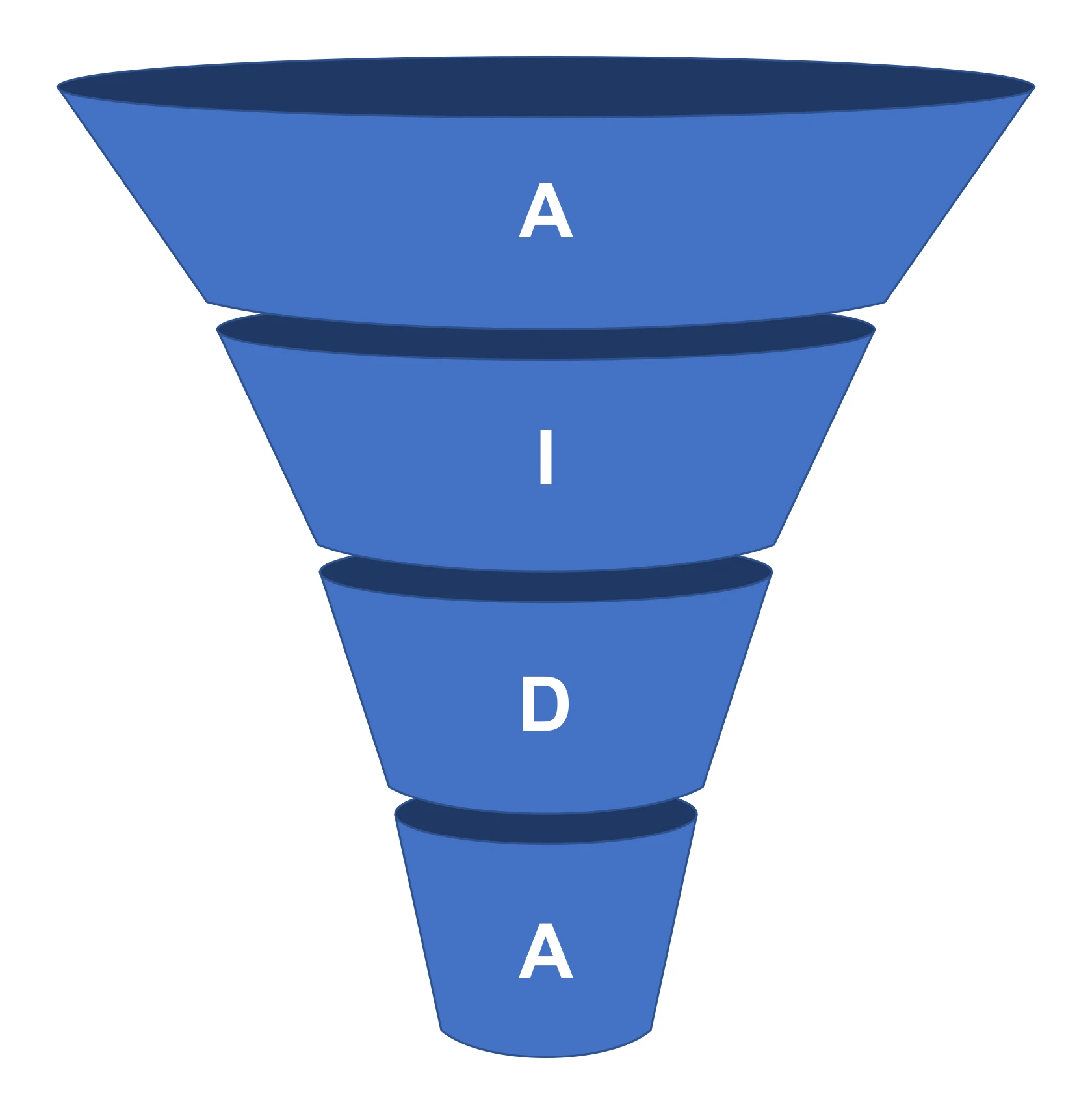
If the goal is to close sales quickly, Google usually has the edge. The user arrives there with a specific need, so the path from click to purchase is often shorter. This is especially clear in product campaigns and high-intent queries. The stronger the readiness to buy, the more important offer fit, price and product data become.
If the goal is to reach new audiences, launch something new or stimulate interest in a category, Meta usually gives more room to work. The ad can build context there, show the product in use and trigger demand that did not exist before. This is especially important when the customer is not yet actively looking for a solution. Meta is also strong in remarketing, because it allows you to remind people of an offer they have already had contact with in the store.
The most sensible setup in many stores is to treat the channels as complementary rather than competing. Meta can feed the middle of the funnel and recover attention, while Google captures traffic ready to buy. If you judge performance only by the last click, it is easy to underestimate Meta’s role in bringing the customer to a decision. That is why, already at the campaign planning stage, you need to decide whether the priority is capturing demand or creating it.
Product type as a key factor in choosing an ad channel
Product type often decides whether Google Ads or Meta Ads will be the better first choice. Google usually works better for products that are known, compared and already actively searched for. Meta more often wins where the product needs to be shown, placed in context and only then does the desire to buy need to be sparked.
If you sell things that the customer can name and compare, Google has a natural advantage. This applies to models, brands, parts, electronics, equipment and categories with clear parameters. The user enters a query, so the ad responds to a specific need. In practice, this means a shorter path to purchase and a greater importance of price, availability and product data quality.
Meta is a better fit for visual, impulse-led, new products or those sold through aesthetics and a usage story. The customer does not have to search for them beforehand to find them attractive. The ad can show the result, the lifestyle or the problem the product solves. This is especially important where the decision is shaped by image, emotion or inspiration.
The most common mistake is choosing a channel based on the store category rather than on the way the customer discovers and evaluates a specific product. Within one assortment, you can have items that are typically Google-led and others that are typically Meta-led. For example, a bestseller with active demand may sell through search, while a new product may move better thanks to creative in social media. That is why the decision should be made at the level of product groups, not the entire store.
It also matters whether the product requires education before purchase. If the customer first needs to understand the difference, the use case or the benefit, Meta gives more space to build context. If, however, the user is already looking for a specific solution, Google will make better use of that readiness to act. This split affects budget, testing pace and the expected time to first sales.
The importance of creative and offer in Meta Ads campaigns
In Meta Ads, creative and offer are one of the main factors behind performance. This channel does not start with a query, so the ad first has to stop attention and quickly explain why the product matters. If the image, video or message are not relevant, even good targeting will not deliver sales.
In practice, what matters is not only aesthetics, but above all the communication angle. The same offer may perform poorly as a general message, and much better after showing a specific benefit, problem or usage outcome. Meta strongly rewards messaging that is clear within a few seconds. That is why you need to test different product angles, formats and promise variants.
The offer must be simple and easy to understand without extra effort. A user in the feed does not analyse the details for long, so the message should quickly answer what it is, who it is for and why it is worth clicking. Elements that reduce friction before visiting the site also work well. These can be clear purchase terms, a specific benefit or social proof.
Meta is particularly sensitive to creative fatigue. Even an effective ad loses freshness over time, and frequency starts working against performance. That means the need for regular tests, refreshing assets and comparing new variants with the current winner. Without this, acquisition cost can rise despite an unchanged budget.
In Meta, it is not enough to “have a nice ad” — the creative has to sell the first step, and the offer has to justify the click. If one of these links is weak, the campaign loses effectiveness even before the user reaches the landing page. So when assessing performance, do not just look at cost per click. Also check which messages attract the right traffic and which ones really lead to purchases.
Optimising the feed and product data for Google Ads
Optimising the feed and product data increases in Google Ads the match between the ad and the query, as well as traffic quality. In product campaigns, the system relies on titles, attributes, price, availability and product identifiers. If this data is poor or inconsistent, the ad is more likely to appear for the wrong searches. Then the cost per click rises, and the conversion rate usually falls.
In practice, the product title and a complete set of attributes make the biggest difference. The title should clearly describe the product in the way users compare and search for it. Missing important features makes it harder for the system to match the right intent. This is especially damaging for ranges where the decision depends on parameters, variants or compatibility.
Equally important is consistency between the feed and the product page. Price, availability and GTIN must match the information visible to the user and the structured data. Inconsistency lowers credibility and makes stable delivery harder. In Google, a poor feed can limit performance even when the budget and demand are sufficient.
The impact of the landing page on ad campaign performance
The landing page directly affects the effectiveness of Google Ads and Meta Ads, because it determines whether a click turns into a purchase. Even a relevant ad will not save a page that is slow, unclear or mismatched with the ad promise. The user must immediately understand where they have landed and what they should do next. The less friction on mobile, the greater the chance of conversion.
In Google, the key factor is how well the page matches the specific query or product. In Meta, it is equally important to quickly close the interest that the ad has just built. That is why the landing page should clearly show the product, price, availability and main benefit. If the user has to look for basic information, they will abandon the session before adding to basket.
The site structure and checkout also have a major impact on performance. The category should make comparison easier, and the product page should remove doubts before purchase. Forms, basket and payment must work smoothly on mobile. When this stage is weak, it is easy to mistakenly conclude that the problem lies with the channel, not the site.
The most common mistakes and myths in choosing an advertising channel
The most common mistakes are comparing Google Ads and Meta Ads only in a last-click model and expecting both channels to play the same role. This distorts the assessment, because Google more often captures existing intent, while Meta more often builds interest or supports return to purchase. If you look only at the last click, you will underestimate the impact of campaigns that work earlier in the user journey. In practice, you need to compare results broken down by new and returning customers and check the share of remarketing.
The second myth is the belief that Google always sells better and that Meta is only suitable for reach or brand awareness. That may be true for products with active demand, but not for new launches, impulse purchases and offers that require context to be shown. Equally misleading is the assumption that poor channel performance is solely down to the platform, when the problem lies in the feed, creative or landing page. Without controlling these elements, it is easy to turn off a channel that could be good, but simply received the wrong configuration.
The third mistake is scaling budget based on ROAS alone without checking margin, returns, average basket value and time to purchase. A channel may look good in the dashboard, while at the same time worsening the store’s results once costs and customer quality are taken into account. When assessing profitability, it is worth combining campaign KPIs with the store’s economics: margin, LTV, share of new customers and exposure frequency. Only then does the choice between Google Ads and Meta Ads rest on real profit, not on apparently attractive numbers.
FAQ
Frequently asked questions
How do you choose between Google Ads and Meta Ads for e-commerce?
The choice depends on user intent, the stage of the funnel and how the product sells. If the customer is already looking for something specific, Google usually works better; if you need to spark interest first, Meta can be better.
Does Google Ads sell products with active demand better?
Yes, especially when the user searches for a specific model, brand, category or problem. Then the ad responds to an existing need and shortens the path to purchase.
When does Meta Ads work better than Google Ads?
Meta usually works better for visual, new, impulse-buy or products that need to be shown first. This channel also helps build interest and supports remarketing.
Why does creative matter so much in Meta Ads?
Because in Meta the ad does not start from a search query; it has to stop attention and quickly explain why the offer matters. If the image, video or message does not work within a few seconds, the user will move on.
Which product data matters most in Google Ads?
The most important elements are the product title, attributes, price, availability and identifiers. When the feed is sparse or inconsistent with the site, the ad is more likely to match the wrong searches and performance drops.
Can the landing page ruin campaign performance in both channels?
Yes, because even a relevant ad will not sell if the page is slow, unclear or mismatched with the promise. The landing page should immediately show the product, price, availability and main benefit.