
A personal brand and a company brand can strengthen each other if they are given different roles, intentions and business goals from the outset. The most important rule is simple: the expert should build trust and attention, while the company should turn them into a clearly described offer. When this division is missing, both brands start talking about the same thing to the same people. That is when communication chaos appears, weaker signals for the search engine and a more difficult path to conversion.
Strategic brand model: How to define the relationship between a personal brand and a company brand?
The relationship between a personal brand and a company brand is defined by choosing a collaboration model, not by the logo alone, communication style or social media activity. In practice, you have three sensible setups. In a founder-led model, the founder is the main face and attracts customers to the company. In an expert-endorsed model, the expert strengthens the company’s credibility, but does not become its full synonym.
The third option is the symbiotic model, in which both brands operate in different areas and support each other strategically. This is usually the safest setup when the person wants to educate the market and the company wants to sell specific services. Such a division limits message mixing and makes it easier to direct the user to the right place. As a result, the personal brand does not have to pretend to be an offer, and the company brand does not have to pretend to be an expert diary.
A key decision is also whether the personal and company brands should operate on one website or on two separate domains. One website can be convenient when the founder and the company are almost inseparable. Two separate websites give better control when the expert has their own topics, their own audience and separate communication goals. If you cannot clearly indicate which brand is responsible for a specific user intent, splitting the assets is usually safer.
A good strategic model should immediately answer three questions. Who attracts attention, who closes the sale, and where the user should go after the first contact with the content. If these answers are vague, the risk later grows that both entities will compete for the same queries, clicks and authority. This is not only a communication problem, but also an SEO and business problem.
Division of roles and territories: Who is responsible for which topic areas?
The personal brand should be responsible for education, opinions and methodology, while the company brand should be responsible for the offer, processes and sales. This is the simplest division that works for both the user and the search engine. The personal brand explains why the topic matters and how to approach it. The company brand shows what exactly it delivers, in what process and on what terms.
In practice, the expert should take on areas that build trust in competence. This includes education, commentary, their own perspective, working methodology and industry relationships. These are the types of content that help the audience understand the problem and assess the quality of the expert’s thinking. They do not have to lead straight to a purchase, but they should build credibility.
The company should take over everything that requires commercial and operational specifics. This includes service pages, service descriptions, the cooperation process, social proof and customer support. Here the user should get an answer to the question of what they are buying and what they are paying for. This makes company content more useful at the decision stage, and expert content does not turn into a hidden sales page.
The best approach is the one in which the expert builds awareness of the problem and the company delivers the solution. Such a setup organises the topic area and makes further decisions about content, internal linking and CTA easier. If both brands start publishing the same topic with the same intent, the boundaries quickly blur. Then the user does not know whether they are reading an independent expert voice or another variant of the same offer.
It is worth writing down the division of territories in a simple way before any more content is created. The person is responsible for communication about “why” and “how”, and the company for “what” and “how much”. This scheme sounds simple, but it removes most future conflicts between the brands. When the team knows these boundaries, it is easier to plan publications without duplicating topics and without weakening the signals of either brand.
Mapping intent and keywords: How do you assign user intent to the right brands?
Intents are assigned so that each query group has one main owner: either the expert or the company. In practice, informational content should go to the personal brand, while commercial and transactional queries should go to the company brand. This gives the user a consistent message, and the search engine does not have to guess which URL is the right one. This limits situations in which two assets compete for the same traffic.
The simplest division looks like this: queries such as “how it works”, “what it involves”, “trends”, “mistakes” belong to the expert. Phrases such as “service”, “pricing”, “offer”, “reviews”, “agency” should lead to the company. Navigational intents are also worth separating without exception: the surname leads to the expert, and the company name to the company website. If one query can reasonably be served by only one brand, do not publish the other version just in case.
For this division to work, you need to look at the real search results, not just the list of keywords from a tool. A SERP audit shows whether Google expects a guide, an expert opinion, a service page or a comparison. Then it is worth creating a simple “topic – intent – owner” matrix and assigning one target URL to each cluster. Such a matrix organises the publication plan and quickly catches topic duplication.
The lack of mapping is usually visible in URL rotation in the results, unstable rankings and weaker CTR. A user lands on an expert post one time and on the company page another, even though they are looking for the same answer. This scatters link authority and makes it harder to build strong topical signals. In AI-driven search, this kind of chaos is even more costly, because the system may merge both entities into an unreadable answer or ignore one of them.
Information architecture and distribution: How do you design the flow of users and authority?
The flow of users and authority is designed through a single source of truth for each piece of content, plus deliberate bridges between the expert and the company. Every unique asset should have one canonical URL, regardless of how many times you promote it. This protects against internal competition and gives a clear signal about where the main version lives. In practice, this means publishing the original only in one place.
It is worth separating distribution according to the role of both brands. The expert works best where they build a relationship and their own voice, for example on a personal blog or in personal profiles. The company should focus on offers, case studies and supporting content that drives the buying decision on its corporate channels. When you want to use the same material elsewhere, publish a summary, teaser or excerpt with a link to the original.
A well-designed architecture usually rests on a few simple principles:
- the expert publishes education, opinions and methodology in their own assets,
- the company publishes the offer, the collaboration process and social proof on its own channels,
- repetitions are replaced with a teaser linking to the main version,
- links between brands lead to the user’s specific next action.
Linking between the personal brand and the company brand should not be random. From expert content, it is worth linking to company pages when the reader is ready to move from understanding the problem to choosing a solution. In turn, the company page can point to the expert’s materials when the audience needs more context or wants to check credentials. This setup does not blur roles; it turns attention into higher-quality traffic.
The most common mistake is publishing full versions of similar texts on both the personal blog and the company blog, and then promoting both in parallel. That is when authority and topical signals split across two URLs instead of strengthening one. It is better to have less content, but with a clear owner and a well-designed next step. This gives you better control over the user journey and makes it easier to measure results later.
Entity and authorship management: How do you strengthen signals for Google?
Signals for Google are strengthened by clearly separating the person entity and the organisation entity, and consistently showing their relationship. In practice, the search engine should recognise who the expert is, who the company is and how these entities are connected. If that information is inconsistent, the algorithm gets weaker topical context and may attribute content incorrectly. That harms visibility, authorship and user trust.
The foundation is complete consistency of data everywhere the expert and the company appear. The first name, surname, job title, bio and organisation name should look the same on the website, in social profiles and in author bios. It is not about identical sentences, but about a consistent information core. When the same person has three different descriptions, Google sees three weaker signals instead of one strong expert profile.
The second pillar is technical marking of authorship and the relationship between pages. At the structured data level, it is worth consistently using the Person, Organization and Article types, plus the author, publisher, worksFor and sameAs properties. Just as important is a visible author byline, a link to the expert profile and a clear connection on the “About us” page. This way, expert content strengthens the person’s experience and expertise, while the company brand takes over the signals of authority and trust.
This also matters beyond classic SEO. In AI-based answer systems, unclear authorship encourages role mixing or the omission of one brand. If the expert publishes an opinion and the company sells the service, both signals need to be readable separately. Then one brand does not overshadow the other, but complements its credibility.
Link building strategy per entity: How do you acquire links appropriate to the role of the brands?
Links should be acquired in line with the role of each brand, rather than according to one shared promotional plan. The expert should collect mentions that confirm expertise and recognisability, while the company should earn links that support the offer and purchasing trust. This division limits the scattering of authority and better strengthens the right landing pages. As a result, the surname builds expertise and the company domain builds sales potential.
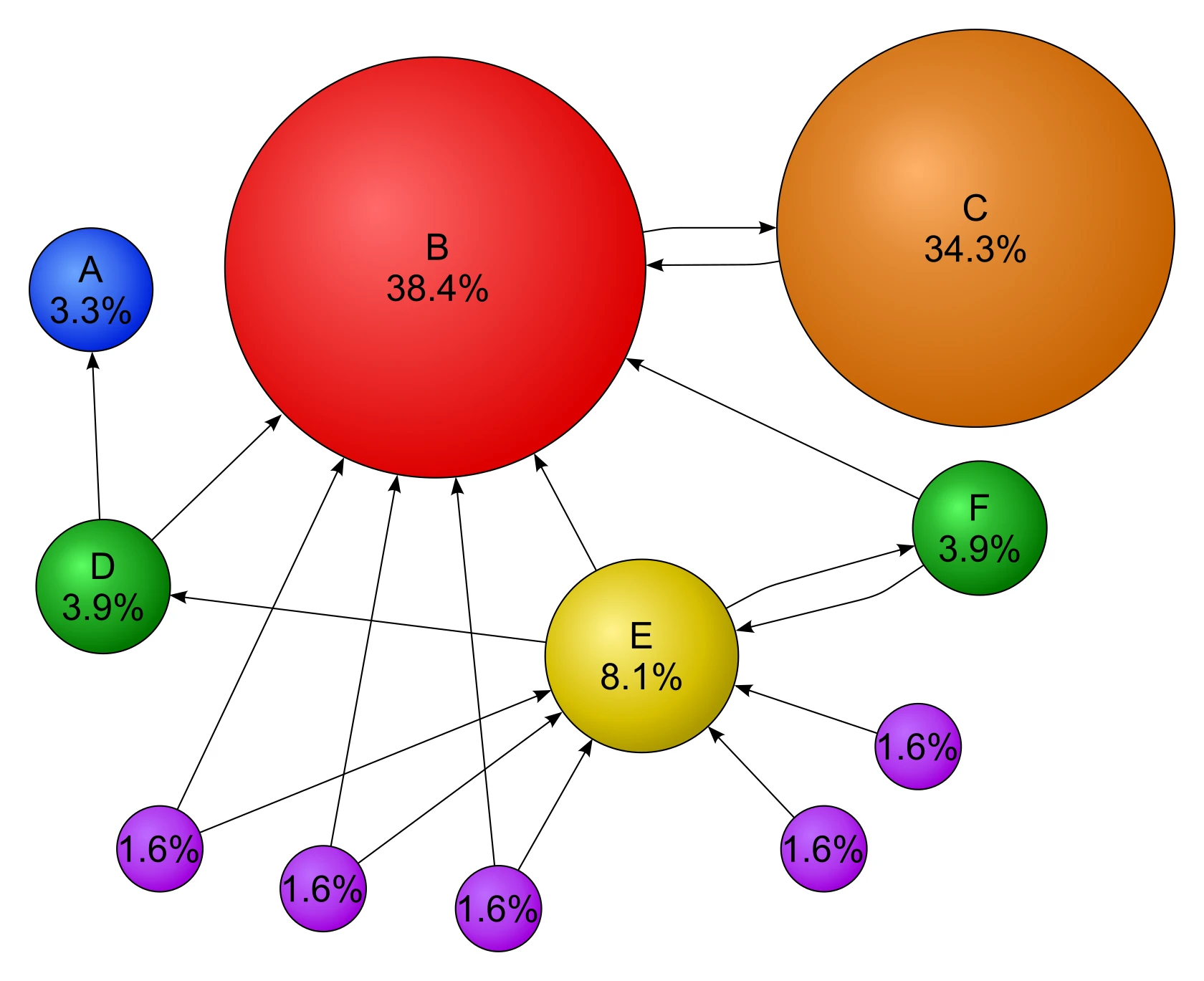
The simplest way is to separate activities by the type of asset that naturally deserves a link:
- for the expert: interviews, podcasts, citations, speaking engagements, guest articles, speaker profiles,
- for the company: reports, research, free tools, case studies, industry directories, sponsorship,
- for both brands: the link should lead to the page that best matches the topic and intent of the material,
- for anchors: the surname supports the expert, while the service or company name supports the commercial asset.
This split has a practical advantage. A link from a podcast about methodology is better directed to an expert’s profile or article, rather than the company homepage. By contrast, publishing an industry report should usually strengthen the company domain, because it supports its organisational authority. The most common mistake is directing almost all links to the homepage, even though the subject of the referring page matches a specific subpage.
The context of the link is important too, not just its source. If an article talks about experience, opinion or trend analysis, the expert is the natural focus. If the material concerns implementation process, client results or a specific service, the company is the better recipient of the link. This selection helps Google understand more clearly what each brand is responsible for.
Link building should be tied to a previously defined split of topics and intent. When the expert and the company try to acquire links to content with the same function, the problem of internal competition returns. It is better to strengthen fewer URLs, but with a clear role and the right anchor text. Then both link profiles work towards the same business goal instead of competing for the same signal.
Typical mistakes and strategic risks: What should you avoid to stop weakening the brands?
The main thing to avoid is duplicating topics for the same intent, because that is exactly how both brands start to weaken. If the expert and the company publish two pieces that answer the same question, the search engine receives a conflicting signal. In practice, in the SERP one URL starts to rotate with another, and the user does not see a clear difference between education and the offer. One intent should have one owner and one main URL.
The second common mistake is taking the “founder-first” model too far, that is, a situation in which all attention, trust and communication pass solely through one person. This setup can work at the start, but it makes scaling the company harder and complicates its sale or a change of roles in the team. When the founder disappears from communication, the company suddenly loses its face, even though the offer formally still exists. That is why the company brand must have its own trust assets: processes, case studies, the offer and a visible organisational structure.
The opposite model can be just as harmful, namely “brand-first”, in which experts are hidden behind impersonal company communication. Then the brand loses its human dimension, and expert content does not build the full signal of experience and expertise. The user sees the company, but does not know who is actually responsible for the knowledge, opinion or methodology. This reduces credibility especially where the purchase decision requires trust in specific competencies.
Strategic risk also appears when the company becomes dependent on one person and has no plan for their departure or a reduction in visibility. This problem does not concern marketing only, but also sales continuity and reputation. If all recognisability is built on a surname, the company brand becomes weaker than it should be. It is wiser to build a setup in which the expert strengthens the company, but does not replace it.
A separate threat is transferring an expert’s reputational crisis onto the company. When the boundaries between the brands are unclear, every controversy, inconsistent statement or change of position can hit the offer and trust in the organisation. That is why personal and company communication should be linked, but not merged into one whole. The safest model is one in which the person builds authority, while the company remains an independent and clear provider of the solution.
FAQ
Frequently asked questions
How do you separate the roles of a personal brand and a company brand so they do not cannibalise each other?
Simply put: the personal brand is responsible for education, opinions and methodology, while the company brand is responsible for the offer, processes and sales. This means each one serves a different user intent.
Should a personal brand and a company brand be on one website or on two domains?
One website makes sense when the founder and the company are almost inseparable. Two separate domains are safer when the expert has their own topics, audience and communication goals.
How do you assign keywords to a personal brand and a company brand?
Informational queries such as “how it works”, “what it is” or “mistakes” should go to the personal brand. Commercial and transactional phrases, for example “price list”, “offer” or “service”, should lead to the company.
What should a personal brand publish, and what should a company brand publish?
The expert should create trust-building content: education, commentary, their own perspective and industry relationships. The company should show the offer, the collaboration process, social proof and customer service.
How should you link between a personal brand and a company brand so it works for SEO?
Links should lead to the place best matched to the user’s intent. From expert content, it is worth pointing readers to the company when they are ready to choose a solution, and from the company site to the expert’s materials when they need more context.
Why is duplicating topics on the expert and company blog a problem?
Because one intent should have one owner and one main URL. When both entities publish the same thing, the search engine receives conflicting signals, and the user does not see a clear difference between education and the offer.