
Affiliate marketing is a way of earning money by recommending other companies’ products or services using special tracking links. In practice, it is not just about inserting a link, but about matching the offer to the audience’s intent and guiding them through the decision-making process. You can operate through a blog, website, newsletter, social media, a video channel or paid campaigns, as long as the given programme allows it. The biggest impact on results comes not from the number of clicks, but from traffic quality, compliance with the programme rules and correct conversion tracking. Getting started is relatively straightforward, but it quickly turns out that those who actually earn are the ones who read the data, draw conclusions and consistently refine their content. In this article we will go through the basics that make the biggest difference at the start.
What is affiliate marketing and how does it work in practice?
Affiliate marketing is a model in which you promote a partner’s offer and receive a commission once the user completes a specified action. Most often this means a sale, but it can also be a lead, registration, app installation or form completion. Everything is based on an affiliate link, which makes it possible to attribute the result to your traffic source.
In practice, it looks fairly straightforward: you join a partner programme, get your tracking link and place it in the content. That content can take the form of a review, comparison, ranking, guide, email campaign or video material. The user clicks the link, lands on the partner’s website, and the system records the click and later credits the commission if the programme’s condition is met.
The best results come from materials that answer a specific user need, rather than simply dropping in a link without any context or justification. Someone looking for a comparison of two tools or checking which product to choose for a specific problem usually has a higher buying intent than someone who has stumbled across a recommendation by chance. That is why affiliate marketing works best where the content helps to make a decision, rather than just driving traffic.
It is also worth remembering that partner programmes have their own rules and limitations. Not every partner allows paid ads, email marketing, brand bidding or publishing links on social media. In addition, some conversions may be rejected if the traffic is low quality, the data is incorrect, or the way the promotion is carried out breaches the terms and conditions.
The technical side matters too. The link has to work flawlessly, clicks must be tracked correctly, and the partner’s landing page cannot put users off with slow loading or an offer that does not match the promise made in the content. If you do not control tracking and do not check the reports, you do not know whether the problem lies with the content, the offer, the traffic source or the conversion attribution itself.
- 01Join and get the linkBecome a partner
- 02Place it in the contentReviews, guides
- 03The user clicks and actsPurchase, registration
- 04Collect the commissionFor the result achieved
A results-based model: you promote, the user takes action, you earn.
What are the steps to get started with partner programmes?
Getting started with partner programmes usually comes down to a few steps: you choose a niche, select an offer, prepare a publishing channel, set up tracking and systematically improve results. It is not particularly difficult, but the order matters. If you start with random offers without verifying the audience’s intent, you will quickly generate clicks that do not lead to commissions.
- Choose a niche and check what the audience is actually searching for, and whether the traffic is driven by buying intent or comparison intent.
- Find a partner programme and assess the payment model, traffic acceptance rules, conversion attribution window and payout conditions.
- Prepare your own publishing channel, for example a website, blog, newsletter or social media profile, in line with the programme’s terms and conditions.
- Implement affiliate links and verify whether clicks are recorded correctly in the programme dashboard and in your analytics.
- Publish content aimed at specific user decisions, such as reviews, comparisons, rankings, objection handling and practical use cases.
- Acquire traffic from allowed sources and analyse results separately for content, devices, channels and offers.
- Optimise the content layout, link placement, calls to action and offer fit, and only then scale your activities.
At the start, it is better to focus on one niche rather than promoting everything at once. This way you will see more quickly which topics deliver valuable traffic and which offers genuinely convert. A narrow start usually gives better data and fewer costly mistakes than broad, chaotic publishing.
When choosing a programme, do not focus solely on the commission rate. Often more important are the approval rules for conversions, restrictions on traffic sources, the clarity of reporting and the stability of the relationship. In practice, a lower rate in a well-run programme can be more profitable than a high rate with a large number of rejections.
You should design the publishing channel around the user, not around the affiliate link itself. Good materials show the differences between variants, costs, limitations, usage conditions and situations in which a given offer will not be the best choice. This builds trust and increases the quality of clicks, which later translates into approved commissions.
From the very beginning, make sure you comply with the terms and legal basics. In many cases, you need to clearly label affiliate collaborations, have a privacy policy and follow cookie rules if they are required in your business model. The most common mistake beginners make is focusing on acquiring traffic before checking whether the promotion method is allowed at all.
What factors affect success in affiliate marketing?
Success in affiliate marketing is usually determined by: choosing the right niche, traffic quality, the offer matching user intent, properly set up tracking and systematic optimisation. Simply adding an affiliate link does not solve the problem. The audience needs to land on content that genuinely helps them make a specific decision. The best-converting content answers a buying, comparison or problem-solving question, rather than making general mention of a product.
Much depends on the niche and on the moment when the user comes across the publication. A guide for someone just getting into the topic will work differently from a ranking for someone who is already ready to buy. When the offer does not match the stage of the decision, clicks may appear, but the commission often will not.
The result also depends on the quality of the content itself. Well-prepared content shows use cases, differences between variants, costs, limitations and situations in which a given option will not be the best choice. Trust is built by specifics, not by pushy encouragement to click.
The technical layer is often more important than many beginners assume. Links must work, redirects should be set up correctly, and clicks and conversions must reach the reports. If you do not measure which piece of content and traffic source generated the sale, you do not know what to develop and what to cut.
Revenue is also affected by what the journey looks like after the click. The location of the link in the content matters, as does the call to action, the speed of the landing page and ease of use on mobile. Often, better matching the content to user needs makes a bigger difference than simply pumping up traffic.
More stable results are usually achieved by people who do not rely entirely on one partner or one channel. A change in commission rate, terms or reach can quickly reduce revenue. Diversifying programmes and traffic sources reduces risk and makes scaling easier.
- 01Choosing the right nicheFocusing on a specific topic.
- 02Traffic qualityEngaging the right audience.
- 03The offer matching intentMatching the stage of the decision.
- 04Proper trackingPrecise measurement of results.
- 05Systematic optimisationContinuous improvement of activities.
Success comes from combining the right content with the user’s decision stage, not just from adding a link.
What are the current challenges and requirements in affiliate programmes?
The biggest challenges today are more restrictive programme terms, more difficult conversion tracking, tighter control over traffic quality, and privacy and disclosure requirements. Many programmes specify exactly where traffic may come from and how the offer may be promoted. Breaking the rules can lead to commission rejection or account closure, even if clicks and sales appear fine at first glance.
Increasingly, the problem is not the lack of traffic, but its compliance with the terms. Some programmes restrict paid ads, forbid bidding on selected brand keywords or do not accept certain sources from social media. Before starting, you need to check not only the commission rate, but also the rules for traffic acceptance, rejections and how conversions are attributed.
The second major challenge remains tracking. Cookies limitations, privacy settings, ad blockers and users switching between devices mean that reports do not always show the full picture. That is why it is worth comparing data from the programme dashboard with your own analytics and regularly checking whether clicks and transitions are being recorded correctly.
In practice, lead quality and sales are playing an ever greater role too. A programme may count clicks, but it will not approve the commission if the lead turns out to be poor quality, incomplete or not aligned with the partner’s requirements. Lots of visits but few approvals usually signals a problem with the offer fit, the message in the content or the traffic source itself.
Added to this is the issue of legal and communication compliance. In many cases you need to make it clear that the link is affiliate in nature, and also take care of a privacy policy and cookie rules where required. It is also not worth making your content look like the partner’s official website or promising results that you do not control.
Finally, there is operational risk. When the whole model is based on one programme, one platform or one type of content, even a small change can noticeably affect results. The safest approach is to treat affiliate marketing as a process: control the data, ensure compliance and continuously update materials to reflect real user behaviour.
How do you optimise content and conversion tracking in affiliate activities?
Content and conversion tracking are improved through better alignment of the material with user intent and through precise measurement of what happens from the click to the approved commission. The biggest difference is not the number of links, but whether the user gets a specific answer before moving on to the offer. In practice, comparisons, reviews, rankings and guides that solve one purchasing problem work best. If the content does not make decision-making easier, clicks may grow, but commissions often do not.
Content optimisation starts with determining which stage of the decision the audience is at. Someone looking for “the best invoicing software for a small business” needs a comparison and a breakdown of the differences between options, not a general article about accounting. For this reason, it is worth building materials around use cases, costs, limitations, variants and situations in which a given offer will not be a good choice.
The layout of the page itself is also very important. The affiliate link should appear where the user naturally expects the next step: after the comparison, after an objection has been answered, in the summary or alongside a clear call to action. Often a better result comes from refining the link placement and CTA message than from adding more traffic to the same content.
Tracking is worth setting up so that the traffic source, the specific content and the affiliate programme can be compared with one another. The simplest approach is separate links or labels for individual channels, for example separately for SEO, email marketing and social media. This quickly shows which piece of content really earns money and which merely generates clicks without approved conversions.
- monitor page views of content, clicks on affiliate links and the click-through rate to the offer,
- verify the number of approved and rejected conversions, not just all submissions,
- compare results by traffic source, device and specific page,
- test headings, section order, comparison format and CTA type,
- regularly make test clicks on your own links and make sure redirects and event tracking are working properly.
In affiliate marketing, you cannot rely uncritically on a single report. Some conversions can be wrongly attributed because of cookie limitations, privacy settings, a change of device or implementation mistakes. That is why it is a good idea to compare data from the programme dashboard with your own click analytics and track discrepancies, instead of looking only at the final commission.
It is best to carry out optimisation step by step. To start with, choose one piece of content that has traffic and determine whether the bottleneck is a low CTR on the link, poor quality of the transition to the offer or a low approval rate. Only then change individual elements, because with too many modifications at once it is difficult to determine what actually improved the result.
- 01Alignment with intentUser decision stage
- 02Specific contentComparisons, reviews, rankings
- 03Precise measurementPath to commission
The key is to match the material to the user’s problem and track the entire journey from the click to the approved commission.
What are the most common mistakes and risks in affiliate marketing?
The most common mistakes and risks in affiliate marketing include choosing an offer that does not match user intent, lack of control over traffic quality, unfamiliarity with the programme’s terms and dependence on a single source of income. In practice, a lot of the problems do not stem from affiliate marketing itself, but from poor operational decisions. Clicks can look promising, yet commissions are low or unstable.
A frequently encountered mistake is promoting too many topics at once. When content is broad and random, it is difficult to identify which queries, formats and offers actually convert. At the beginning, it is more sensible to narrow the niche and verify a few high-intent pieces of content than to publish lots of material without a clear direction.
Another risk is choosing a programme solely on the basis of the rate. Even a high commission will not do much if the programme rejects a large share of leads, has restrictive terms or does not accept your traffic source. Before starting, it is worth checking the advertising rules, approval conditions, attribution model and payment frequency.
Significant losses are also caused by non-compliance with the terms and platform rules. Some programmes do not allow certain paid campaigns, using the brand name in ads, email marketing without consent or publication in selected channels. Breaking the rules may mean not only no commission, but also account suspension and the loss of historical data.
A separate issue arises when performance is assessed solely through the prism of click numbers. If the traffic carries no purchasing intent or promises the user something different from what awaits them on the partner’s site, there will be plenty of visits and very few approved actions. More often than not, this means you need better alignment between the content, the message and the offer, rather than automatically increasing the budget or adding more publications.
In the longer term, the risk increases when everything rests on one partner, one platform or one traffic acquisition channel. A change in rates, terms and conditions or the algorithm, or even the programme being shut down, can cut revenue in a short time. A safer model is gradual diversification: several pieces of content, several complementary offers and your own contact channel, for example a newsletter.
It is also worth avoiding communication that looks like an official statement from the partner. Affiliate material should make comparison and choice easier, not impersonate the brand’s website or disguise the commercial nature of the link. Clear disclosure of the collaboration and a reliable description of the offer’s limitations usually build greater trust than aggressive selling.
How to measure and analyse results in affiliate marketing?
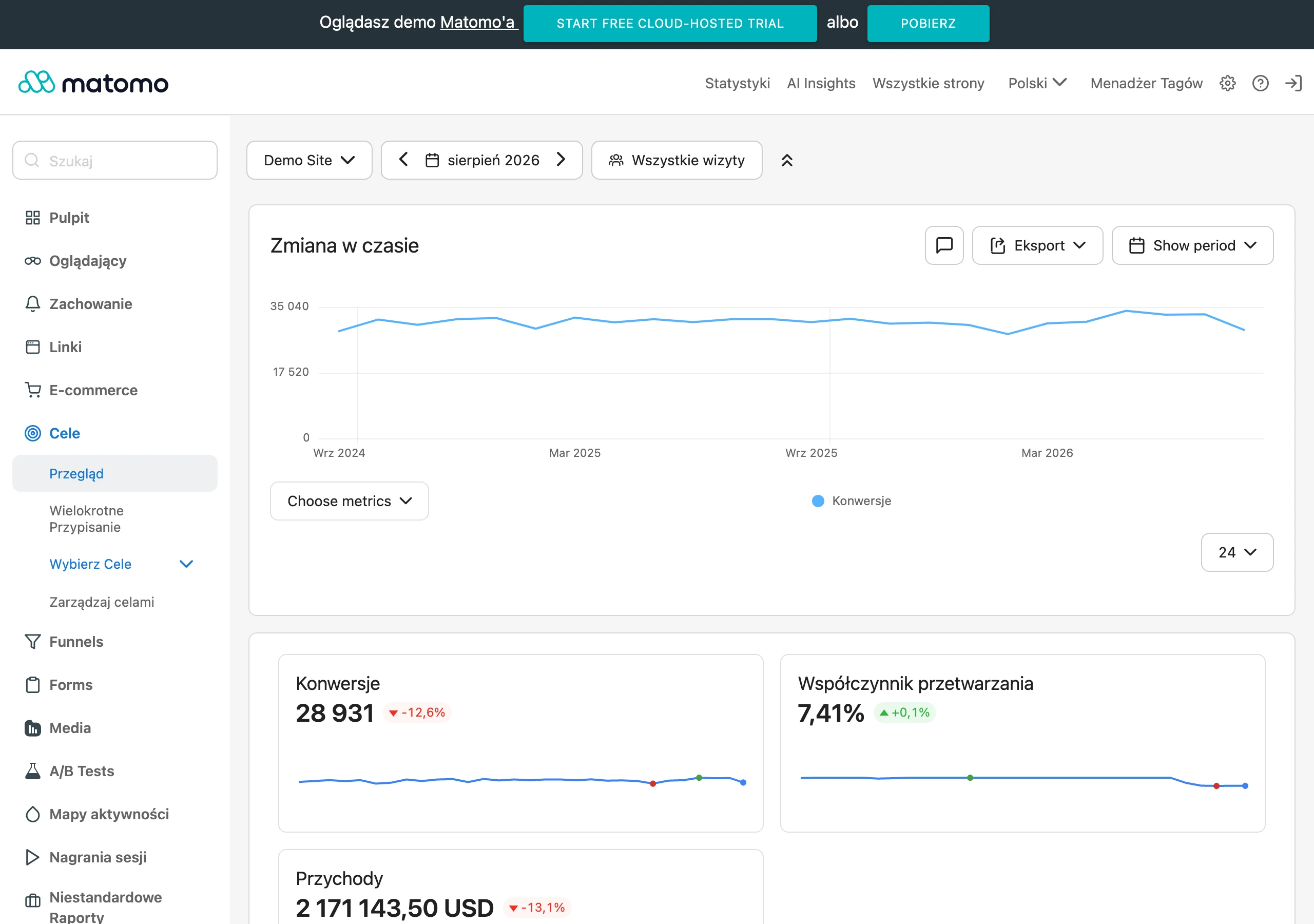
Results in affiliate marketing are best measured by tracking the whole funnel: from entering the content, through clicking the link, to the approved commission. The key thing is not traffic itself or the number of clicks, but the number and value of conversions that the partner has actually approved. For this reason, the affiliate programme dashboard alone is usually not enough. You need to combine data from your own analytics, tracking links and the partner’s reports.
In practice, it is worth regularly monitoring several metrics at the same time: content views, clicks on the affiliate link, click-through rate to the offer, the number of conversions reported, the number of rejected conversions and final revenue. This set quickly shows where the bottleneck appears. If users read the material but do not click, the cause usually lies in the content or the call to action. If they click but there is no commission, you need to check the offer, traffic quality or the programme’s rules.
Useful working metrics also include revenue per piece of content, revenue per traffic source and average commission per click. This approach is often simpler and more reliable than looking only at total sales revenue. A large number of clicks with a small number of approved conversions usually indicates poor alignment with user intent, the wrong offer choice or traffic that the programme does not accept. If you use paid advertising, you also need to add cost per click, cost per conversion and the real return on spend to this set.
It is also worth breaking the analysis down by segment, because the same link can behave completely differently depending on the channel and device. Compare SEO, social media, email and paid campaigns separately, as well as mobile and desktop and individual subpages. The most useful reports are “revenue per page” and “revenue per traffic source”, because they clearly show what is actually earning money and what is merely delivering views. This makes it easier to decide what to strengthen and what to cut back.
It is most sensible to break down performance drops into their component parts, working from the end of the funnel back to the beginning. First, check whether the partner is still approving conversions at a similar rate, then whether the offer and landing page are working without disruption, and only then whether traffic, visibility in Google or the effectiveness of publications has changed. When clicks remain at a similar level but commissions are falling, the cause often does not lie in the content itself. A change in the terms and conditions, lower lead quality, weaker attribution or a deterioration in the partner’s landing page performance may be involved.
It is also worth taking tracking limitations into account. Some conversions may not be correctly attributed because of cookie blocking, device switching or delays in sales approval. That is why it is better not to base decisions on a single day’s data, but on comparable periods, with reporting delays taken into account. In practice, a simple rhythm works well: weekly monitoring of metrics, a monthly review of content and programmes, and quick tests wherever the gap between the click and the approved commission is greatest.
FAQ
Frequently asked questions
How does affiliate marketing work in practice?
It involves promoting a partner’s offer using an affiliate link and receiving a commission when the user completes a specified action, e.g. a purchase, registration or lead. The result is attributed to the traffic source thanks to link tracking.
How do you start earning from affiliate programmes step by step?
First choose a niche and an offer matched to the audience’s intent, then prepare your publishing channel and set up tracking. Finally, publish content aimed at specific user decisions and regularly analyse the results.
Is it enough in affiliate marketing to simply add an affiliate link?
No, the link alone is usually not enough. The best results come from content that helps the user make a decision, such as reviews, comparisons, rankings and guides.
Why is traffic quality more important than the number of clicks?
Because clicks do not guarantee a commission if the traffic is poorly matched to the offer or violates the programme’s terms. What matters is whether the user has a real intent to buy, compare or take action.
When is it worth promoting one niche instead of many topics at once?
At the beginning, this is usually the better option because you can see faster which content and offers convert. A narrow start also reduces the risk of accidental mistakes and makes optimisation easier.
What are the most common mistakes in affiliate marketing?
The most common include promoting too many topics at once, choosing a programme solely because of the commission rate, and failing to control tracking and the terms. Another issue is depending on one partner or one traffic source.