
Dropshipping is a sales model in which you do not need your own warehouse, yet you are still responsible for customer service and ensuring the product matches the description. For many people, it is a convenient way to start in e-commerce with a lower entry barrier, because you do not tie up capital in stock. At the same time, this model means concrete operational work: answering questions, handling complaints, managing returns, and keeping an eye on stock levels and dispatch times. In this section, I will show when dropshipping makes sense and when it can quickly become unprofitable. Then we will go through order fulfilment step by step, so you know where the risks most often appear. If you want to approach the topic practically and without myths about “passive income”, keep reading.
What is dropshipping and when is it worth considering?
Dropshipping is a sales model in which the shop takes the order and payment, and outsources delivery to the supplier (wholesaler or manufacturer). In practice, this means you do not hold the goods yourself, but your role does not end with simply “listing the product” — you are responsible for contact with the customer, complaints, and whether the product actually matches the description. This option is most often chosen in order to get started faster and test the range without investing in stock. Dropshipping is not a “passive business”, because on a day-to-day basis you deal with ads, customer enquiries, complaints and stock updates.
Dropshipping makes sense especially when you want to check demand and turnover quickly, for example by testing 20–50 SKUs and then keeping only those that achieve a sensible ROAS and have a low return rate. You usually need less money to start than with your own warehouse, because you do not tie up capital in stock. On the other hand, you have to accept limited control over packing, quality and dispatch times — and this directly affects reviews and service costs. In many sectors, margins can be lower (e.g. 10–25%), so supplier slip-ups can “eat” your profit through complaints and re-deliveries.
It is also worth considering a domestic or cross-border variant, because the differences are noticeable for the customer and for your service costs. A domestic model (suppliers in PL/EU) usually means delivery within 24–72 h and fewer customs/tax issues, but often a higher purchase price. Cross-border (e.g. AliExpress) can be cheaper to buy from, but typical delivery times of 7–21 days increase the risk of disputes, returns and negative reviews. Dropshipping usually does not work well for products with a high damage rate (e.g. glass, ceramics) or those requiring fitting/installation, because service and return costs can exceed the profit.
- 01Sales modelThe shop orders, the supplier ships.
- 02Your roleCustomer service and complaints.
- 03Quick startTesting without stock.
- 04Active managementAds, stock updates.
Key takeaway: ideal for quickly testing product ranges and demand, but demanding in terms of service.
What does the order fulfilment process look like in dropshipping?
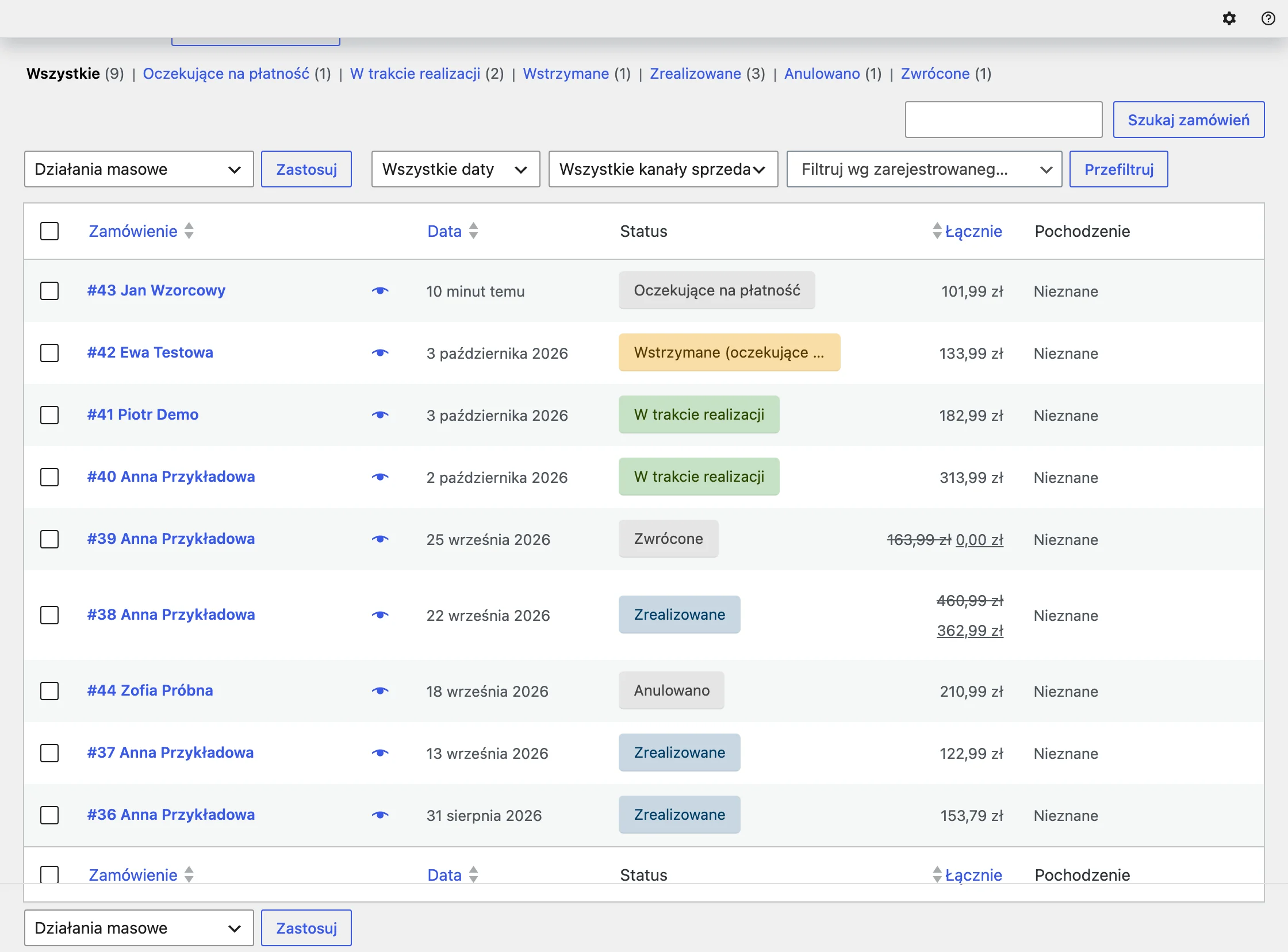
Order fulfilment in dropshipping works like this: the customer places an order and pays in your shop, and you pass the details to the supplier. The supplier picks the goods, packs them and sends the parcel directly to the customer. Payment can go through gateways such as Przelewy24, PayU or Stripe, and order data can be passed on manually or via an integrator (e.g. BaseLinker, Apilo). Once the parcel has been dispatched, the tracking number goes back to your shop, so the customer can see the delivery status in real time. The biggest operational risk arises when there is no efficient synchronisation and clear exchange of statuses, because delays and mistakes quickly end in complaints.
- The customer places an order in the shop and pays for it (e.g. Przelewy24, PayU, Stripe).
- The shop passes the order data to the supplier manually or via an integrator (BaseLinker, Apilo).
- The supplier picks the order, packs it and sends the parcel directly to the customer.
- The tracking number for the parcel comes back to your shop.
- The customer receives information about the status and can track the delivery.
In practice, the more orders you get each day, the greater the need for automating order retrieval, status updates and synchronisation, because manual handling starts to backfire with mistakes and delays. It is also important that the customer receives consistent information about fulfilment, because this reduces the number of parcel-related questions and limits the risk of disputes. If you sell a product that is out of stock, you lose trust and expose yourself to negative reviews, which is why stock synchronisation is critical for the stability of the whole process. Ultimately, although the parcel is physically sent by the supplier, you as the seller close the customer experience, especially in communication and post-purchase support.
Advantages and disadvantages of the dropshipping model
The advantages of dropshipping stem mainly from the low barrier to entry and the ability to quickly test product ranges without tying up capital in stock. This means you can verify demand for specific products and make decisions based on sales results, not “gut feelings”. This approach also makes it easier to build an offer based on data, for example by analysing gross margin per order, CAC (customer acquisition cost) and AOV (average order value). The model works best when you measure key metrics from the outset and have clarity on whether customer acquisition cost is not growing faster than your margin.
The disadvantages of dropshipping mainly come from the fact that you hand over a large part of control to the supplier, which immediately affects the customer experience and service costs. The most common issues are packaging quality, product accuracy versus the description, and dispatch and delivery times, all of which directly translate into returns, complaints and reviews. In many sectors margins are limited (often in the 10–25% range), so even single picking mistakes or the need to resend an order can quickly “eat into” profit. If you see returns rising above typical ranges (e.g. 8–12%, depending on the sector), that is a clear signal to refine the offer or change supplier.
- 01Low barrier to entryAdvantages (Low Entry & Data-Driven) – Quick testing of product ranges without tying up capital in stock.
- 02Data-driven decisionsAdvantages (Low Entry & Data-Driven) – Verifying demand, margin analysis, CAC and AOV.
- 03Measuring key metricsAdvantages (Low Entry & Data-Driven) – Clear profitability, monitoring acquisition costs.
- 04Limited controlDisadvantages (Supplier Control & CX Risks) – Handing control to the supplier, dependence on a partner.
- 05Customer experience riskDisadvantages (Supplier Control & CX Risks) – Service issues, higher support costs, errors.
In summary: Dropshipping offers a quick start and learning from data, but it involves losing control over the process and risks to reputation.
Supplier selection and integration with the store system
Supplier selection and integration with the store are the foundation of dropshipping, because stock levels, shipping times and the scale of fulfilment errors depend on them. Suppliers are worth looking for among wholesalers offering integrations for stores and marketplaces, as well as in wholesaler databases on platforms such as Sky-Shop or in dedicated B2B catalogues. It is equally important to establish how often stock levels are refreshed (API or CSV file every 15 minutes or once a day) and what the fulfilment terms are (e.g. D+0/D+1 and a cut-off, e.g. 12:00). Without automatic stock synchronisation, you risk overselling, which undermines trust and increases the number of cancellations and negative reviews.
- Fulfilment SLA: when the parcel is handed over to the courier (e.g. D+0/D+1) and what the cut-off is (e.g. 12:00).
- Stock and price synchronisation: whether it works via API/CSV and how often it is refreshed.
- Packing and shortages: what the packing looks like and what the shortage/cancellation rate is.
- Documents in the parcel and “white label”: whether the parcel is neutral and whether the supplier does not include their own documents.
- Returns and complaints: where returns go and how quickly the supplier confirms receipt (e.g. 48 h).
It is a good idea to base process integration on tools that reduce manual work and the risk of mistakes, e.g. BaseLinker or Apilo for downloading orders, sending statuses and synchronising. Also establish which couriers the supplier supports (e.g. InPost, DPD, DHL) and whether you will receive tracking numbers, because this affects conversion and the number of “where is my parcel?” enquiries. In the document area, make sure the supplier does not add their own paperwork to the shipment, and send the sales document electronically from your own system (e.g. Fakturownia, iFirma, wFirma). In addition, prepare procedures for shortages, delays and supplier price changes so that you do not sell below cost and can quickly offer a replacement or a refund.
Key performance indicators in dropshipping
The key performance indicators in dropshipping are gross margin per order, CAC (customer acquisition cost), AOV (average order value) and the return rate. These are the metrics that most quickly show whether the model is actually profitable or merely “turning over” revenue. When CAC grows faster than margin, even increasing sales can end up reducing profit. If returns exceed typical ranges (e.g. 8–12%, depending on the sector), that is a signal to change the offer or supplier, not a “normal cost of running a store”.
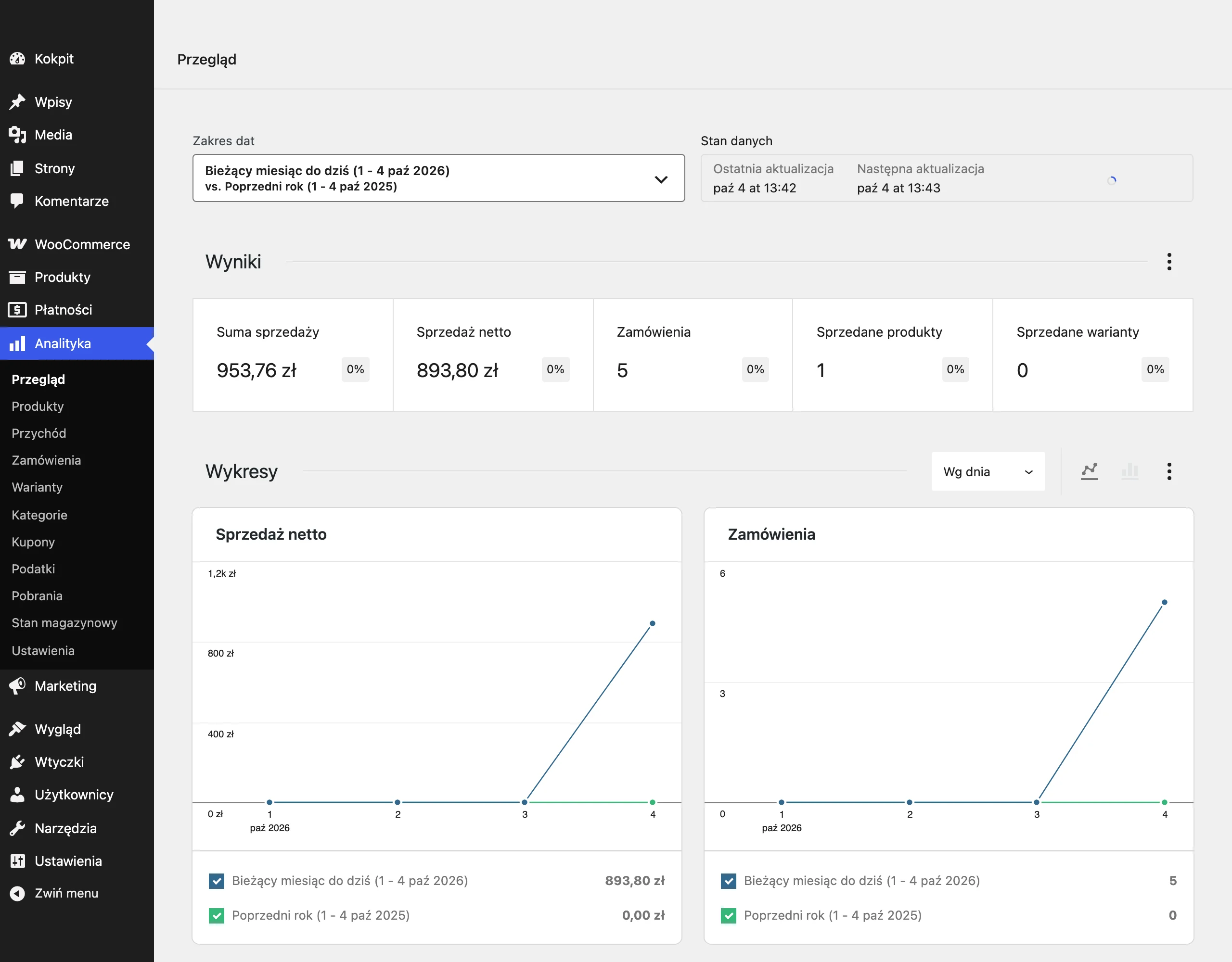
In practice, it is also worth keeping an eye on delivery time and the number of cancellations due to stock shortages, because these two areas directly translate into reviews, disputes and support costs. Analyse return data qualitatively, i.e. check the reasons rather than just the percentage, because some issues can be reduced with a better description and more precise specifications. A simple KPI dashboard (e.g. in Looker Studio), refreshed weekly, works well and quickly shows whether the problem lies in the advertising, the supplier or the offer itself. This means you are not optimising “by instinct”, but responding to concrete indicators.
When assessing marketing, look at ROAS, but always compare it with the actual profit per order, because a high ROAS does not necessarily mean profitability once return and support costs are factored in. If you can see cancellations rising or delivery time lengthening, it is usually not an advertising problem, but fulfilment and post-purchase communication. Keeping your finger on the pulse is particularly important with lower margins, where individual mistakes can “eat up” the profit. Regular reporting also makes decision-making easier when deciding which products to keep in the offer and which to remove.
- 01Gross marginProfit per order
- 02CAC & AOVCost and order value
- 03Returns %Quality and delivery time
Metrics show fastest whether the model is actually making money, or just generating revenue.
How to promote a dropshipping store effectively?
Effective promotion of a dropshipping store comes down to focusing on 1–2 channels at the start and testing the offer under controlled budget conditions. Spreading activity too widely makes it harder to draw conclusions, because you do not know whether the result is being driven by the product, the creative or the channel. A sensible test is usually 50–150 zł per day for 7–14 days on one product hypothesis, provided the margin can support it. It is best to start with one flagship product and only expand the communication and range once it has been validated.
Google Ads works particularly well when a product already has existing demand, because you can capture purchase intent through Google Shopping and Search campaigns for transactional keywords (e.g. “buy”, “price”, “shop”). The condition is a correct feed in Merchant Center, including GTIN, attributes and delivery and returns information, because errors reduce visibility and increase CPC. In Meta Ads (Facebook/Instagram), creatives based on product demonstration and concrete benefits work better than promises of “miracle results”, which increase the risk of the ad being rejected. UGC and a “problem–solution” format often win, tested in several variants (e.g. 3–5 creatives per ad set).
TikTok in dropshipping works mainly for visual products that can be shown clearly in 5–10 seconds, but it requires regular publishing and constantly new angles. You do not need to appear on camera, because hand-held shots, unboxing and short trust-building captions are often enough. At the same time, it is worth developing SEO and content by selecting 20–50 long-tail keywords and preparing category descriptions and guides that deliver traffic without paying per click. SEO makes the most sense when the offer is relatively stable and you can maintain unique content despite changes in the range.
E-mail/SMS marketing helps recover sales when the user does not complete the purchase, which is why it is worth implementing abandoned basket automations (after 1 h and 24 h) and a post-purchase follow-up with instructions and FAQ. After delivery, a request for a review usually works, because reviews and social proof answer the customer’s key question: “why should I buy from you specifically?”. In retargeting, split campaigns into prospecting and actions aimed at people who viewed the product or added it to the basket, setting 7/14/30-day windows depending on the decision cycle. Instead of permanent discounts, it is often more profitable to use bundling and free delivery thresholds, because they increase AOV and stabilise margin without constantly lowering the price.
Law and taxes in dropshipping sales
Law and taxes in dropshipping sales come down to the fact that you are the contractual party for the consumer, so you must fulfil your information obligations and handle returns and complaints. In B2C sales in Poland, the customer has, among other things, the right to withdraw from the contract within 14 days, and you are obliged to clearly describe the procedure and deadlines. You cannot “send the customer back to the wholesaler”, because formally you are responsible for the entire process and its outcome. That is why, already at the store setup stage, it is worth refining a clear terms and conditions document and clearly showing the full price, delivery costs, payment methods and company details before purchase.
GDPR matters from the very first order, because in dropshipping you pass the customer’s data to the supplier (e.g. address and phone number) for the purpose of fulfilment. This is legal if the data is used solely for delivery, and you have the appropriate legal basis as well as provisions in the privacy policy and agreements with processors (e.g. data processing agreement). In practice, this means the order fulfilment process must be consistent not only operationally, but also formally. A lack of order in the documents and information provided to the customer usually quickly comes back in the form of disputes and support problems.
From a tax perspective, VAT and the rules for sales to the EU are key, because they directly affect profitability and invoicing. Sales to consumers in the EU may require accounting for VAT in the customer’s country after crossing the thresholds, or under the VAT OSS procedure, so when planning expansion it is worth preparing the invoicing system and VAT rates for individual countries in advance. If you import goods from outside the EU, customs and tax charges may arise and lead times may be longer, and the lack of clear information about costs and delivery time increases the risk of disputes and lowers conversion. For regulated products (e.g. toys, electronics, PPE), make sure you have genuine documents and conformity markings (e.g. CE), because non-compliance may mean liability and the need to withdraw the product from sale.
If you sell on a marketplace (e.g. Allegro), you must additionally comply with the platform’s rules on dispatch time, returns and service quality. Failure to meet the requirements may reduce offer visibility or even result in the account being blocked, so availability and delivery time declarations must reflect the reality on the supplier’s side. Dropshipping may be permitted, but it must not mislead about availability or fulfilment time. This is particularly important in the cross-border model, where lead times are longer and more prone to delays.
Strategies for scaling a dropshipping business
Scaling a dropshipping business usually means moving from “manual” actions to processes, automations and a hybrid model for bestsellers. When you have products that sell consistently, it often pays to keep top sellers in stock and leave the rest in dropshipping to improve delivery speed and quality control. A hybrid model usually makes sense when the increase in conversion and fewer fulfilment issues offset warehousing costs and the capital tied up in stock. As a result, you reduce the risk of bottlenecks on the supplier side for key SKUs.
From an operational point of view, what scales fastest is what can be standardised: procedures (SOPs), division of roles and systems that take repetitive tasks off your hands. As the business grows, it is worth delegating customer service and tightening up the rules of cooperation with suppliers, because time becomes the bottleneck, not the number of products. At the same time, processes should cover crisis scenarios: delays, stock shortages and supplier price changes, as well as what you communicate to the customer and when. This approach organises service, which translates into reviews and more repeatable sales.
From a finance and marketing perspective, scaling is safest when growth is based on profit data, not revenue alone. In terms of actions that increase margin fastest, negotiating supplier rates, lowering ad costs through better creatives and reducing returns through more accurate descriptions and higher delivery quality come first. In practice, the store that wins is the one that can grow without “error costs” (returns, complaints and cancellations) increasing in proportion to scale. That is why decisions to expand the range, enter new markets or sales channels are best made only once the fulfilment and service process is working predictably.
FAQ
Frequently asked questions
how does order fulfilment in dropshipping work step by step?
The customer buys and pays in your store, and you pass the order details to the supplier manually or via an integrator. The supplier packs and ships the parcel directly to the customer, and the tracking number returns to the store.
is dropshipping good for starting in e-commerce?
Yes, because it does not require your own warehouse and lets you get started without tying up capital in stock. However, you have to be prepared for ongoing customer service, complaints and keeping an eye on inventory levels.
why is dropshipping not a passive business?
Because on a day-to-day basis you need to handle ads, customer enquiries, complaints, returns and stock updates. The model also requires control over shipping times and product accuracy.
which products do not work well in dropshipping?
Products with a high damage rate perform poorly, for example glass and ceramics. Goods that require fitting or installation are also a problem, because fulfilment and returns costs rise.
which metrics are worth measuring in a dropshipping store?
The most important ones are gross margin per order, CAC, AOV and the return rate. It is also worth monitoring delivery time and the number of cancellations, because they affect reviews and support costs.
do you need to know regulations and taxes for dropshipping?
Yes, because you are the contractual party with the customer and are responsible for returns, complaints and information obligations. In sales to the EU and when sharing data with the supplier, VAT and GDPR are also important.