
value proposition and brand positioning
The value proposition (UVP) and brand positioning start with a simple question: why should the customer choose you rather than the competition. Describe the UVP in one sentence, and then consistently develop it in the messages on your website and in your ads. If the UVP is unclear, ads will be expensive because the user will not understand the benefit in 3–5 seconds. In practice, this means that before launching campaigns, you need to be able to summarise the promise in a way that is specific, measurable and easy to repeat.
You refine positioning when the UVP is consistent with what you actually show in your materials: on landing pages, in content and in offers. If the competition communicates, for example, “24h”, and you say “high quality”, you need hard proof of quality (results, certificates, numbers) for the message to sound credible. The most important thing is that in the first contact (ad or website) the user immediately sees a specific benefit, not a generic statement. This consistency also makes it easier later to compare channels and assess whether the barrier lies in the message or in the distribution.
- 01Why you?A unique customer benefit.
- 02Clear UVP (Promise)One sentence, specific, measurable.
- 03Consistent positioningConfirmation at every touchpoint.
Effective positioning requires a clear UVP promise, consistently proven at every customer touchpoint
personas and customer segmentation
Personas and customer segmentation involve consciously defining 2–4 audience segments and tailoring channels and messages to them. Describe the segments using real characteristics: industry, decision-making role, budget, problem, objections and selection criteria. For example, in B2B it is worth separating the “business owner” (who looks at ROI and implementation speed) and the “specialist” (who looks for features and integrations). With this kind of segmentation, it is easier to choose where to advertise (e.g. LinkedIn vs Instagram) and which arguments to use (case study vs promotion).
Segmentation makes sense when it genuinely influences decisions in campaigns and on the website, rather than being only a description of the “ideal customer”. Different objections and selection criteria translate into different content and a different way of closing: some expect proof in the form of a case study, others need a clear description of features and integrations. With segments in place, you will also spot more quickly which activities deliver valuable enquiries and which only generate “nice reach”, because the audience is not a fit. This approach helps maintain consistency between the offer, content and ads, because each segment receives a message based on its own problem and expectations.
SMART goals and success metrics
You set SMART goals and success metrics so that from the outset you know whether advertising a company online is actually generating sales, and not just “reach”. Instead of a general goal like “more customers”, plan a specific outcome, e.g. “50 leads/month at CPL ≤ 60 zł in 90 days”. For each goal, add the KPI you will monitor on a steady basis. Without KPI, it is difficult to tell “nice reach” apart from actions that genuinely sell.
Choose metrics so that they cover both the number of enquiries and the quality and cost-effectiveness of acquisition. In practice, this means you look not only at lead volume, but also at their cost and how they convert into customers. Below are example KPI that let you assess campaigns and SEO from a business perspective:
- number of leads
- conversion rate
- CAC
- ROAS
- share of brand enquiries
- SEO positions
- 01Specific resultA clear, measurable goal, e.g. 50 leads/month.
- 02Choose KPIPerformance indicators for ongoing monitoring.
- 03Business assessmentAnalysis of costs (CAC), quality and return (ROAS).
The key is for advertising to generate real sales, not just "nice reach", which requires precise KPI and constant optimisation.
sales funnel optimisation
Sales funnel optimisation involves mapping out and improving the entire journey: from traffic acquisition to sales and retention. The standard sequence looks like this: ads/SEO → landing page → form/phone call → qualification → offer → sale → retention. In each phase, plan content matched to the stage of decision-making: education (blog/YouTube), proof (case study) and closing (calculator, demo, consultation). If you have a long sales cycle (e.g. 30–90 days), be sure to add remarketing and e-mail nurturing.
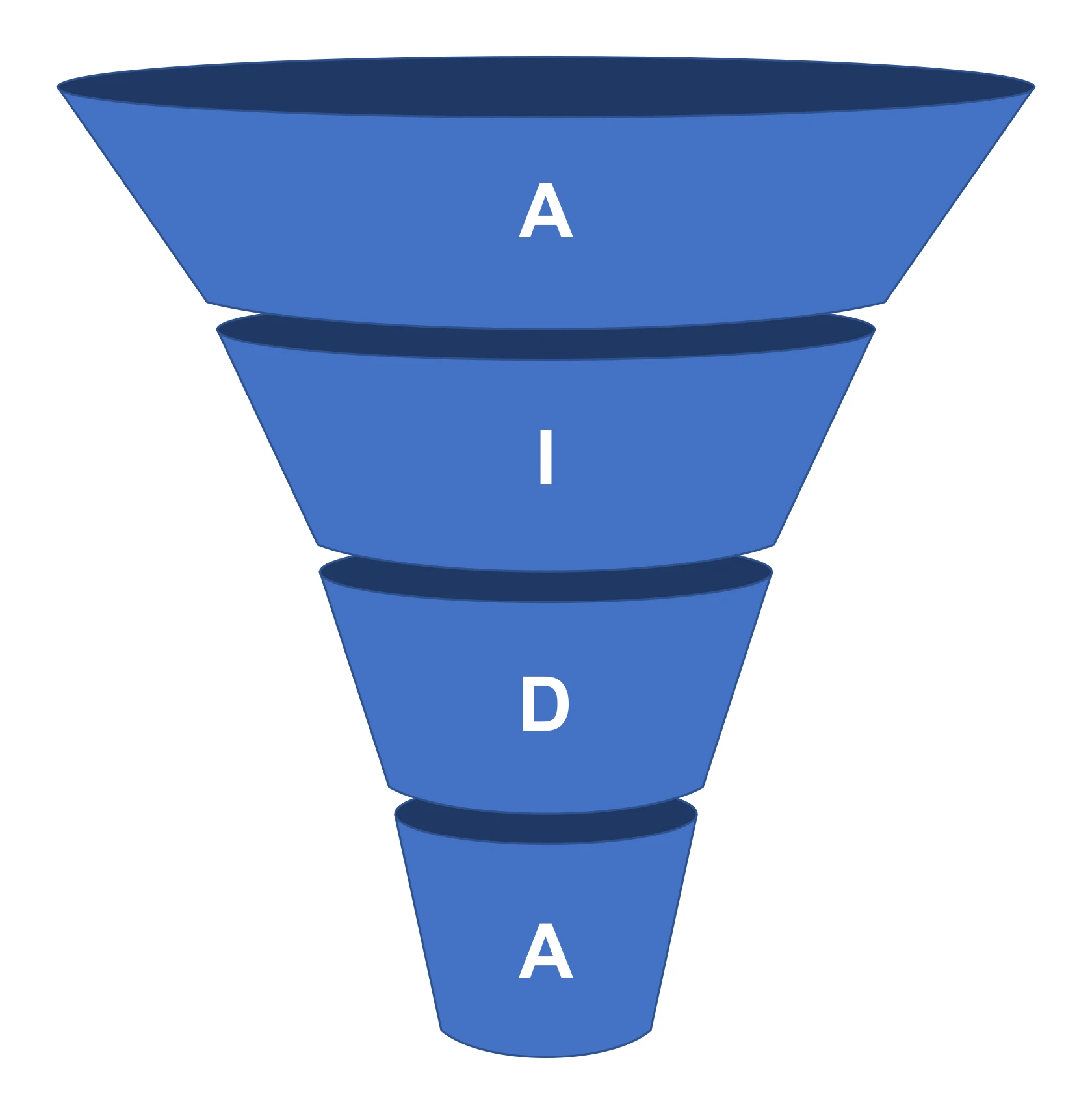
You will optimise the funnel most effectively when, for each step, you have a clearly defined user “next move” and regularly check where the most people drop off. This lets you improve not only campaigns, but also the fit of content, arguments and closing tools. In practice, it comes down to iteration: you strengthen educational elements when understanding is lacking, and when trust is lacking, you add proof in the form of case studies. This approach also makes it easier to prioritise work, because you can quickly see whether the problem concerns entering the site, contact, qualification or the offer stage.
budgeting and choosing marketing channels
Budgeting and choosing channels for marketing is best started with a test split of funds, so that you can quickly gather data and avoid wasting budget. To begin with, divide the budget in a 60% share for the main channel (e.g. Google Ads), 20% for remarketing and 20% for experiments (e.g. Meta or LinkedIn), because this gives you both stability and room to draw conclusions. In small businesses, a sensible test budget is often 1500–5000 zł per month, because below that it is difficult to obtain enough material for optimisation. After 2–4 weeks, cut channels without leads and add spend to those with the lowest CPL or highest ROAS.
The choice of channel should follow the priority: quick leads are easiest to acquire where the user already has purchase intent, while “demand” channels should be treated as a supplement and a testing ground. Plan remarketing as a permanent element, because it lets you return to undecided people and close decisions, especially with a longer sales cycle. Run experiments in a controlled way: change a limited number of elements and assess the effect through the lens of KPI, not just clicks. This way, the “keep it/turn it off” decision is based on hard results, not impressions.
- 01Startowy Budżet TestowySmall businesses: PLN 1500–5000/month.
- 0260/20/20 ratio60% Main, 20% Remarketing, 20% Experiments.
- 03Cut after 2–4 weeksRemove no leads, add to the lowest CPL.
- 04Purchase intent priorityQuick leads: intent; Demand channels: supplement.
Key takeaway: Start with a test budget, quickly gather data and optimise based on results, guided by purchase intent priority.
competitor analysis and benchmarking
Competitor analysis and benchmarking come down to checking which keywords competitors are visible for, and how they communicate the offer in ads and on the site. To verify visibility, use tools such as Senuto or Semrush, and to review ad creatives, use Meta Ads Library and Google ad previews. Then compare their propositions: prices, guarantees, lead time, free consultations, reviews and case studies. If the competition says “24h” and you say “high quality”, you need hard proof of quality (results, certificates, numbers) for your positioning to be credible.
Benchmarking only makes sense when you turn observations into concrete decisions in the offer and messaging, instead of copying the competition’s slogans. Pay attention to what works for them as the “first-contact argument” (e.g. time, price, consultation) and whether you have an equally clear, measurable point of entry. Also check which trust elements they highlight (reviews, case studies) and where they send traffic from ads, because this often shows what really works in a given industry. This helps you identify more quickly what needs to be clarified in the messaging so that the user understands the offer as soon as they land on the ad or landing page.
sales messages and objection handling
Sales messages and objection handling are about anticipating the client’s questions and resolving them before they write or call. Gather the 10 most common questions that come up in sales (e.g. “why is it so expensive?”, “how long will it take?”, “will there be a contract?”, “will you show results?”) and move ready-made answers to the site and into ads. The most useful formats are an FAQ on the landing page, a package comparison and a “for whom / not for whom” section. This reduces the number of unqualified enquiries and shortens sales conversations.
Objections are best handled with specifics, not generalities, so base each answer on a clear scope of service, working conditions and the “next step” in the process. When the user does not know what to do next, add a simple action: a 15-minute consultation, an audit or a demo instead of a general “contact us”. In ads and on the site, make sure the same answers and arguments appear consistently at every stage of contact. The faster a client finds an answer to an objection in 3–5 seconds, the lower the risk that they will drop off and move to a competitor.
90-day action plan
A 90-day action plan is a breakdown of work into short sprints that first let you launch the fundamentals, and then improve and scale what works. In practice, this means mapping activities out by week, with a clearly defined objective for each stage and a consistent review rhythm. This way you do not implement too many changes at once and you can see faster what affects leads and acquisition cost. If you do not have the resources to run many activities in parallel, limit the number of channels to 1–2 at the start.
- weeks 1–2: tracking, landing page, basic campaigns
- weeks 3–6: optimisation, new creatives, first SEO content
- weeks 7–12: scaling, automations, testing new channels
This plan works best when you maintain a steady working rhythm: campaign review twice a week, report and decisions once a week. Consistency of decisions is more important than a one-off “burst”, because optimisation is based on data collected over time. On the operational side, the key thing is that after each week you know clearly what you will improve in the next sprint: creatives, landing page, SEO content or channel testing. If you are not able to maintain the rhythm, it is better to simplify the plan and deliver results in 1–2 channels than to “spread” the effort.
FAQ
Frequently asked questions
How do you start advertising a business online without burning through budget?
First, you need to build the foundations: a clear message, defined audiences and a way to measure success. Only then do you choose the channels and content to match customer intent.
Is a UVP needed before launching a campaign?
Yes, because without it ads can be expensive and unclear. A UVP should be summarised in one sentence and immediately show a specific benefit.
How does customer segmentation help with online business advertising?
It lets you choose the right channels and arguments for different audience groups. The article stresses that segments are worth describing by industry, decision-making role, budget, problem and objections.
What goals and KPIs should you set in online advertising?
Goals are best written in SMART form rather than using vague phrases like “more customers”. Useful metrics include the number of leads, conversion rate, CAC, ROAS, share of brand enquiries and SEO rankings.
When is it worth using remarketing and e-mail nurturing?
For a longer sales cycle, for example 30–90 days, they are especially important. They help you return to undecided people and close the decision.
What questions and objections are worth showing on the website or in ads?
It is best to gather the most common sales questions, such as price, turnaround time, contract or showing results. The article recommends putting the answers in an FAQ, package comparison and a “for whom / not for whom” section.