
Strategy and planning on a small budget
Advertising strategy on a small budget comes down to narrowing decisions to one goal and one success metric, because limited budgets do not forgive “optimisation for everything”. First, determine whether the priority is sales, leads, website traffic or in-store visits, and then choose one main measure, e.g. CPL, CPA or ROAS. This way, every adjustment in the campaign has a clear rationale and priorities do not get mixed up. Set one main metric and optimise solely for it, instead of trying to improve everything at once.
The safest way to start on a budget of around 300–1500 zł/month is to focus on one channel rather than splitting funds across many platforms. You can start, for example, with Google Ads Search or Meta Ads, and only after you have established a predictable cost per acquisition add another traffic source. Also, plan the test within a short window (7–14 days) and decide in advance when you will cut or scale. In practice, the first cost trends in Search are often visible at 20–50 zł/day, and in Meta at 15–40 zł/day.
The message should clearly say “what, for whom and why now”, because that is the fastest way to increase effectiveness without increasing the budget. The customer wants to know straight away what they are getting, how much it costs and what result they can see in 7–30 days, so it is better to stick to specifics rather than generalities. For example, instead of “Comprehensive accounting services”, “Accounting for sole traders: set-up in 24h, from 199 zł/month, contact on WhatsApp” sounds better. An offer prepared this way also makes it easier to match ads and on-site content.
A minimal sales funnel is essential, because even the cheapest ad will not fulfil its role if the user has nowhere to leave their contact details quickly. Instead of a complex website, choose a simple landing page (e.g. Carrd, Webflow, WordPress) with one clear CTA: a form, phone number, Messenger/WhatsApp or a calendar (e.g. Calendly). Segment audiences instead of targeting “everyone”: choose 1–2 personas and their key problem, and in e-commerce separate at least new vs returning customers as well as product categories. First invest in places where the user is already looking for a solution (Google, marketplace, comparison sites), and treat organic social media at the beginning as support for reach and trust-building.
- Set a goal (sales/leads/traffic/visits) and choose one metric: CPL, CPA or ROAS.
- Choose one channel to start with (e.g. Google Ads Search or Meta Ads) and plan a 7–14 day test.
- Prepare a simple offer: what the customer gets, how much they pay and what they gain in 7–30 days.
- Build a minimal funnel: landing page + one CTA (form/phone/Messenger/WhatsApp/calendar).
- Define the group more precisely: 1–2 personas (and in e-commerce also new vs returning customers and categories).
- 01Narrowing the goalOne priority, one metric.
- 02Choosing one measureE.g. CPL, CPA, ROAS.
- 03Focusing on one channelStart with one channel (Google/Meta).
The key to success on a small budget: precision and consistency in optimising for one metric.
SEO and visibility in Google without big spend
SEO on a low budget is mainly based on using free Google tools and intent-driven keywords that lead to contact more quickly. Instead of competing for broad terms (e.g. “dentysta”), target longer long-tail queries, e.g. “dentysta implanty Warszawa Wola cena”, because they usually involve less competition. Use the data you already have to choose topics and set priorities: Google Search Console shows which queries your site appears for, and Keyword Planner helps estimate the volume and competitiveness of keywords (without having to launch a campaign). This approach makes it easier to optimise what has a real chance of “delivering” enquiries.
For local services, the quickest route to visibility is often to complete your Google Business Profile in full, because it’s a practical answer to the question “how do you show up on Google Maps?”. Fill in categories, services, opening hours, photos, description and the link to your website, then make sure you stay consistent: publish posts and respond to reviews. These actions can increase the number of phone calls without paying for clicks. At the same time, ensure NAP data consistency (name–address–phone) across directories and maps, starting with places such as Panorama Firm, pkt.pl and, where relevant, Oferteo and local city portals.
Service-page optimisation usually delivers the best results when your website already answers questions about cost and the process. Add a pricing section or price ranges, as well as an FAQ, plus clear CTAs and trust elements. For local pages, it is worth making sure the H1 heading includes the service and the city, which makes it easier to match intent. If your website loads slowly on mobile, you lose SEO traffic and overpay for advertising, which is why improving speed is one of the cheapest levers.
Visibility can also be improved “without budget” by refining the title and description in search results, because users decide within 1–2 seconds whether they will click. The title should match intent (e.g. “Men’s haircut Kraków – from PLN 60, appointments today”), while the meta description works like a concise promise combined with a differentiator and a CTA, which lifts CTR without paying more. If you run an e-commerce store, the biggest difference comes from well-crafted categories (e.g. “running shoes for asphalt”) and descriptions that genuinely help with selection. With filters, make sure indexing is under control (e.g. noindex for combinations), so Google does not waste crawl budget.
Content marketing and materials that sell without paid reach
Content marketing on a low budget works best when you create materials that answer real customer questions and guide them directly to the offer. Start by building a “question library” from phone calls, emails and private messages, because that gives you a ready-made content plan for many weeks. If you keep hearing “how long does it take?”, “how should I prepare?” or “does it hurt?”, turn those doubts into short formats and link them to the specific service. That way you are not firing off random topics, but removing what most often blocks a purchasing decision.
Short-form video is one of the cheapest ways to win attention without paying for reach, because all you need is a simple structure and a phone. Stick to the 15–45 second format: problem → 1 tip → CTA such as “Write ‘PRICE LIST’ and I’ll send the details”, to close the intent in messages. For editing, you can use CapCut, and for auto captions Captions or the feature in CapCut, which usually boosts viewership without extra costs. Keep a fixed script (problem → tip → CTA), because consistency in format makes it easier to collect enquiries regularly.
Materials sell faster when you add social proof and concrete stories in the “problem–action–effect” structure. Show screenshots of reviews (with permission), a short customer video or before/after photos, because users naturally ask “has anyone already used this?”. In practice, even a few Google reviews and a few mini case studies can lift conversion without increasing traffic. If you want to build a contact base without constantly “chasing reach”, offer a lead magnet (a checklist, template or calculator) in exchange for an email address.
High-intent content, such as “X vs Y” comparisons, helps answer the question “what should I choose?” and often brings the audience close to a decision. Add distribution to that, because publishing is only the beginning, so share excerpts to Facebook groups (in line with the rules), LinkedIn (if it is B2B), industry forums and Q&A sections. Additionally, show “content from the process” (behind the scenes, standards, tools), because that builds trust without costly production. The easiest way to maintain consistency is to squeeze multiple formats out of one topic: reels, carousels, stories and posts, instead of starting from scratch every time.
- 01Collect customer questionsBuild a library from phone calls and emails.
- 02Disarm doubtsTurn concerns into short formats.
- 03Link directly to servicesLead audiences to the specific offer.
- 04Use short-form videoSimple structure: problem → tip → CTA.
Key to sales: Answer real questions and lead directly to the offer, building trust without unnecessary costs.
Social media organically: reach and sales without a budget
Social media can organically generate enquiries without a budget, provided the profile and posts are structured for quick understanding of the offer and easy contact. In practice, within a few seconds the user should know what you offer, who it is for and how to contact you, which is why it is worth adding a clear description, a link (e.g. Linktree/Beacons) and featured highlights: price list, projects, reviews, FAQ. This layout shortens the path from “I’ve watched it” to “I’m sending a message”. At the same time, the profile acts as a mini landing page, so the consistency of the message and CTA is crucial.
The best results without ads come from a realistic posting routine, because algorithms and audiences “reward” consistency. Instead of a strong push for one week, set a minimum rhythm: 2 reels + 1 carousel + 3–5 stories per week and keep it going for a few months. Among the formats that most often deliver enquiries are educational carousels and “tip in 20 seconds” reels, provided you close them with a concrete CTA. Instead of a general “get in touch”, use a short direct prompt, e.g. “Write ‘QUOTE’ and I’ll send the packages and dates”, because this increases the number of DMs.
Free reach often hides in communities, because people go there looking for answers “here and now”. In topical and local groups, answering questions and giving concrete tips works better than posting ads, and after a series of valuable comments users start asking about the service themselves. You can also test barter collaborations with micro-influencers (approx. 2–20 thousand followers), agreeing in advance on deliverables such as 1 reel + 3 stories + link with UTM. If you want more “like from an influencer” content, collect UGC from customers by giving them a simple “before/after” filming brief and one sentence of feedback, and make sure you secure permission to publish it.
Sales on social media can be run without being pushy if you treat DMs as a process, not improvisation. In the conversation, stick to 3 steps: need → recommendation → link to payment or booking, and you can support automated replies to a keyword with tools like ManyChat (Instagram/Facebook). In B2B, LinkedIn is often an effective “no-budget” channel: sensible commenting under posts by people in the niche and publishing twice a week (a case with numbers and a post with a checklist or mistake). Additionally, plan your communication around seasonality and occasions, preparing content 2–3 weeks in advance and refreshing it every year.
Low-budget paid campaigns (Google/Meta) without burning money
Paid campaigns with a small budget can be run without “burning through” money if you focus on high-intent traffic and keep control over which queries and events you are actually paying for. In Google Ads Search, you most often “deliver” leads most cheaply when the user is actively looking for a solution, so even 20–40 zł/day can bring the first contacts. Instead of hundreds of broad keywords, it is better to focus on 5–15 phrases with intent such as “service + city + price”. Test Performance Max cautiously, because with a small budget it is easy to attract some lower-quality traffic if you do not properly manage the goal and signals.
With a low budget, use exact and phrase match and regularly add negative keywords (e.g. “work”, “free”, “course”), so you do not pay for random clicks. This is the simplest response to a situation where “the wrong people are clicking” — without exclusions, the system can choose queries that are too broad. In practice, working on match types and exclusions is often a faster lever than adding budget. If you decide to use Performance Max, set strong audience signals, add a feed in e-commerce, and evaluate the campaign through the lens of valuable conversions, not clicks alone.
In Meta Ads, the safest place to start is with a simple setup: 1 campaign, 1 ad set and 3–5 creatives, using UGC-style assets as the base format (phone, natural shots, a specific benefit). A starting budget of 15–30 zł/day lets you gather data without “spreading” the funds across too many variables. Additionally, remarketing (Meta or Google Display/YouTube) often closes the deal at a lower cost, because it reaches people who have already been on the site or interacted with it — even 5–10 zł/day can make sense if the offer and trust signals are clearly presented. If you have a customer base (at least several hundred records), you can upload it as a Custom Audience and create a 1% Lookalike to reach similar people without spraying broad interests everywhere.
- In Search, choose 5–15 intent-based phrases and control match types (exact/phrase).
- Add query exclusions that generate junk traffic (e.g. “work”, “free”, “course”).
- In Meta, start with 1 campaign, 1 ad set and 3–5 UGC creatives and a budget of 15–30 zł/day.
- Launch remarketing with a small budget (around 5–10 zł/day) to close decisions after the first visit.
- Test one variable at a time in A/B testing (e.g. the headline or creative) and after 3–7 days switch off the losers based on CPL/CPA.
Optimisation only makes sense if you measure the right conversions and teach the algorithms what you actually expect. Set the “lead” or “purchase” event in the Meta pixel and Google tag, instead of optimising solely for traffic. With small amounts, a poorly chosen event can clearly push up the acquisition cost, because the system learns undesirable behaviour. Use promotions carefully: instead of big discounts, offers such as “free 15-minute quote”, “starter package” or “bonus for orders placed by Sunday” often work better, because they lower the barrier to risk and speed up the decision.
- 01High purchase intentFocus on active traffic
- 02Exact and phrase match keywordsChoose 5–15 precise phrases
- 03Regular exclusionsBlock irrelevant queries
- 04Be cautious with PMaxControl goals and signals
- 05Control spendPay for real results
Focusing on traffic quality and tight control of keywords allows you to use a small budget effectively without wasting it.
Marketplaces, classifieds and platforms where customers already buy
Marketplaces and classifieds sites are the fastest route to sales on a low budget, because there you are operating where users are already entering with a “here and now” purchase intent. For physical products, Allegro/Allegro Lokalnie provides immediate traffic, but before scaling you need to factor in commission and delivery costs. The safest approach is to start with 10–30 best-selling products and refine the titles (phrases), images and parameters, because this directly affects visibility. For second-hand items, handmade products and simple services, Facebook Marketplace can be a practical channel, where it is worth showing authentic photos, price ranges and a clear collection or delivery method right away.
OLX can be a low-cost channel for testing, especially locally, when the customer is looking for a solution “right now”. On OLX, response time often gives you the edge (e.g. replying within 5–15 minutes), rather than the budget for promoting the listing. It’s a small operational change that often increases the number of closed conversations without increasing spend. In practice, most questions are about price and logistics, so the faster and more clearly you answer, the fewer enquiries are “lost” along the way.
Lead platforms for services (e.g. Fixly/Oferteo) can work, but profitability is best calculated directly as cost per lead multiplied by close rate. If you pay 20 zł for a contact and close 1/10, your actual customer acquisition cost is 200 zł — then you compare that with margin instead of guessing. In online stores, price comparison sites (Ceneo, Skąpiec) usually deliver high-intent traffic, but before increasing budget it’s worth taking into account cost per click, fees and returns. For beauty and local service businesses, booking tools (Booksy, Fresha) answer the key question “are there available slots?” and can be treated both as an acquisition channel and as a way to drive repeat business.
Trust on platforms grows when you collect reviews where the user can see independent confirmation. In external review systems (e.g. Zaufane.pl), it’s a good idea to consistently ask for a review after every job, sending an SMS or e-mail with a link, so that within 30 days you gain the first 20–50 reviews. In B2B, industry directories and chambers of commerce can deliver leads at a low cost, provided the offer description is written around the customer’s problem and the contact options do not create barriers (phone, e-mail, form). Regardless of the platform, “breaking through” without extra spend is supported by a steady level of service: fast responses, complete specifications, good photos and a high rating, because these indicators affect the position of the listing.
E-mail, SMS and retention: the cheapest sale is the customer’s return
The cheapest sale on a low budget most often happens when the customer comes back, rather than when you keep paying for new traffic. Start by building your list in line with GDPR: a form on the site, a consent checkbox, a clearly defined communication purpose and a privacy policy. Technically, tools such as MailerLite, Brevo (Sendinblue) or GetResponse make this easier, because they help organise consents and automations. If you have consent and a clearly defined purpose, e-mail becomes a channel that does not require paying extra for every click.
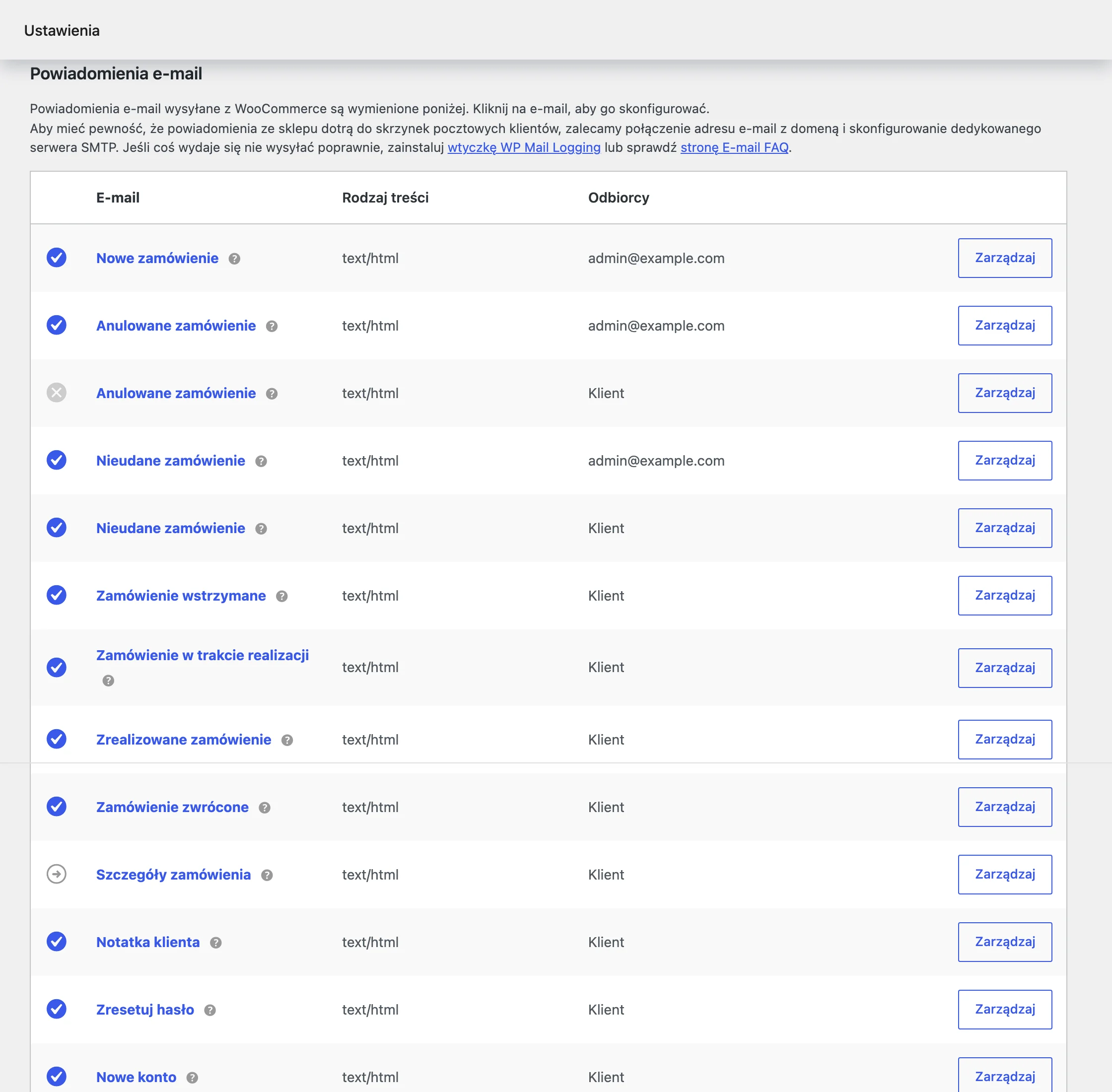
Usually more effective than a “single newsletter” is a 3–5 e-mail welcome sequence, because it works in the background and saves time. In practice, you can structure it as: 1) promise and resources, 2) most common mistakes, 3) case, 4) offer, 5) reminder, so every new contact receives the same key content. At the same time, segment your communication instead of sending the same message to everyone, e.g. to people who downloaded a checklist, added a product to basket or are customers after 30 days. This kind of tailoring shortens the path to a decision and reduces “wasted” sends.
In e-commerce, one of the most cost-effective automations is the abandoned basket, because it recovers sales without increasing the advertising budget. Set up a sequence: 1st e-mail after 1 hour, 2nd e-mail after 24 hours, 3rd e-mail after 72 hours, and instead of a big discount it is better to address objections (delivery time, 30-day returns, reviews, availability). Use SMS sparingly, only for urgent messages such as an appointment reminder, the last day of a promotion or shipping confirmation. SMS sells when it is short, includes a link and relates to a real “right now” benefit.
Retention and upselling are also strengthened by touchpoints after purchase, because the customer naturally asks “what next?”. It’s worth sending instructions, accessory recommendations and a suggestion for the next step (upsell/cross-sell), instead of leaving the user without a follow-up scenario. Keep your database hygiene in check. If the open rate drops, once every 60–90 days run a reactivation campaign and remove or mute inactive people, asking them to confirm with a single click. To avoid doing everything manually, integrate the store or landing page with an e-mail tool (e.g. Shopify/WooCommerce + MailerLite/Brevo) and tag behaviours, which makes it easier to direct the right offer to the right group.
Partnerships, affiliate marketing and referrals: advertising you pay for after the result
Partnerships, affiliate marketing and referrals are an advertising model in which you shift part of the risk onto the result, instead of funding reach “blindly”. The easiest way to start is with a referral programme for existing customers, because a satisfied person can generate a lead more cheaply than any campaign. The mechanism should be easy to understand, e.g. a discount for the referrer and the referred customer, or a reward after a certain number of referrals, along with clear terms and conditions. A referral programme only works when the customer has a simple reason and a simple way to recommend you.
Partnerships are built fastest with complementary businesses, because you have similar audiences but different services. For example, a wedding photographer can exchange leads with a florist, a trainer with a dietitian, and an IT service with an accounting firm, without buying additional traffic. Instead of paying for reach, agree a lead exchange or a joint package offer that solves one customer problem “from A to Z”. A useful add-on can be joint webinars, where you share promotion and trust, provided that the sign-up leads to concrete services from both sides.
In e-commerce, affiliate marketing lets you pay commission only after a sale, which reduces the risk of burning through budget. To measure a partner’s contribution, use tools such as Post Affiliate Pro or Impact (larger businesses) or a simple system of discount codes and UTM links. If you have a base of 500–5000 subscribers, newsletter cross-promotions are also possible: one e-mail, one link, a specific benefit for the recipient and measurement via UTM, so you can assess the real effect. Without partner-specific discount codes and UTM in links, you do not know which channel or partner is really delivering results.
If you want “ads like an influencer” without paying extra just for the reach, it is worth considering working with UGC creators who will prepare assets for your campaigns. In practice, you can buy a package of 5–10 assets and pay for production (often PLN 300–1500), and then use that content in ads and creative tests. In micro-communities, brand ambassadors also work well, that is, people who are active locally or within a niche, whom you provide with ongoing benefits in exchange for regular posts and links with a code. In addition, local offline→online partnerships can drive traffic to the internet through a QR code leading to an offer, a form or Google Maps, however assess the effectiveness of these activities through the prism of KPIs: number of leads, sales, average basket value and returns.
FAQ
Frequently asked questions
How to plan online advertising on a low budget?
First choose one goal, one success metric and one channel, instead of spreading the budget across many platforms. It is also worth setting up a short 7–14 day test and deciding in advance when to cut or scale the campaign.
With a small budget, is it better to invest in Google Ads or Meta Ads?
At the start, it is worth choosing one channel, e.g. Google Ads Search or Meta Ads, and only after achieving a predictable cost per acquisition adding another source of traffic. The article emphasises that with a low budget, it does not pay to split the budget across many platforms at once.
What SEO activities can increase visibility without high costs?
The best results come from keywords with clear intent, longer long-tail queries and optimising service pages for specific customer questions. Free data from Google Search Console and Keyword Planner, as well as a well-optimised Google Business Profile, also help.
Why is a minimal landing page important for cheap advertising?
Because even the cheapest ad will not work if the user has nowhere to quickly leave their contact details. A simple landing page with one CTA is enough, such as a form, phone number, Messenger, WhatsApp or a calendar.
How can you create content that sells without paid reach?
The best approach is to answer the real questions customers ask in phone calls, emails and direct messages. Short materials, 15–45 second videos and a problem–tip–CTA format help close intent and drive people to the offer.
Can social media advertising without a budget generate enquiries?
Yes, if the profile clearly shows the offer, target audience and contact method, and publications are regular. Educational carousels, reels with a clear CTA, comments in groups and barter collaborations with micro-influencers also work well.