
Foundations of online marketing strategy: how to define the offer and value proposition
Defining the offer and value proposition starts with a short, unambiguous answer to the question: “why should someone buy from me?”. Frame the UVP in 1–2 sentences (e.g. “24h printing + design included”) and add 3 concrete benefits and 3 customer objections you remove from their mind (e.g. deadlines, quality, returns). This set becomes the core of your communication on the website, in ads and on social media, ensuring the message remains consistent. If you cannot summarise the UVP in 1–2 sentences, ads and landing pages usually become “blurred”, and the cost of acquiring a lead most often goes up.
A good start also requires one main goal for 90 days and 3–5 KPIs, because without them it is hard to assess whether the marketing is delivering. As KPIs, you can include the number of leads, cost per lead (CPL), conversion rate (CR), revenue and ROAS, and set thresholds (e.g. CPL ≤ PLN 25, landing page CR ≥ 2%). To begin with, assume a minimum test budget of PLN 500–2000 per month for ads and 10–20 hours a week working on content and the website, and treat results as a process: the first 2–4 weeks are usually about collecting data, while more stable effects often appear after 6–12 weeks of optimisation. Also match the sales model to customer behaviour: for services, a form/phone + automated follow-up often works better, while for e-commerce the product, basket, payment and abandoned cart remarketing are key.
To avoid getting stuck in “we do everything” mode, build the simplest funnel in 3 steps: traffic → offer → contact/purchase. In practice, this means one consistent direction of action (e.g. an ad for a purchase keyword → a landing page with pricing and availability → a form), instead of launching a blog, TikTok, a podcast and several campaigns at the same time. At the same time, clarify the brand positioning: whether you win on price, speed, specialisation, quality or service, because a message “for everyone” does not scale ads. The easiest way to start is with an “entry product” (e.g. an audit, consultation, trial package or free quote within 24h), because this simplified decision speeds up the first sales and provides data for optimisation.
- 01Define the Unique Value Proposition (UVP)A clear 1–2 sentence answer to why it is worth buying from you.
- 02Define the benefits and objectionsList 3 key benefits and 3 objections you remove from the customer’s mind.
- 03Set the communication coreUse the UVP as the central, consistent message across all advertising channels.
- 04Set a 90-day goal and KPIsFocus on one main goal and 3–5 key indicators for measuring effectiveness.
A clearly defined offer and measurable goals are the foundation of a coherent and effective marketing strategy, preventing the message from becoming "blurred".
Market and persona analysis: how to understand customers before spending budget
Understanding customers before spending budget means gathering their authentic words, problems and purchase intents, rather than guessing. Start with 20–50 customer statements from Google reviews, Allegro, forums, Facebook groups and comments on TikTok/YouTube, because these are ready-made ideas for ad headlines and landing page sections. Look out for phrases such as “problem”, “I’m worried”, “looking for”, “how much does it cost”, because they answer the questions that genuinely lift conversion. Then develop 2–3 personas based on behaviour (e.g. “looking quickly and cheaply”, “comparing for a long time and reading reviews”, “buying premium because they do not have time”), rather than on demographics alone.
- Collect 20–50 customer quotes and list the recurring objections and selection criteria (this will be fuel for ads and FAQ).
- Create 2–3 behaviour personas and for each note: the main problem, selection criterion, typical objections and the channel where they search (e.g. Google, Instagram, OLX, LinkedIn).
- Split keywords into informational (“how to choose…”) and transactional (“price”, “offer”, “near me”, “24h”, “installation”) and, to start with, prioritise transactional ones.
- Validate demand within 48 hours with a small campaign of PLN 100–300 with one offer and lead measurement, instead of polishing the website for weeks.
Check the market and competition to copy the mechanics, not to duplicate messages 1:1. To review where the competition gets its traffic and leads from, you can use Similarweb (trend), Ahrefs/Semrush (SEO), Meta Ads Library (ads) and Google “site:konkurent.pl” (content structure). If you see that the competition has, for example, very strong reviews and a long SEO history, choose a narrower segment or channel to start with (e.g. Google Maps + local keywords), instead of immediately going after broad terms. When CTR and cost per click look good but there are no leads, the problem is usually the landing page/offer. When CTR is low, the problem is often the message or targeting.
Creating an effective website and landing page: the technical minimum for success
The simplest way to start is with one well-crafted landing page with an offer and a form, instead of building a large website straight away. You can build such a landing page in WordPress + Elementor, Webflow, Framer or Tilda, but more important than the technology itself is one clear CTA (e.g. “Book a quote”) and a clear content structure. This way you gather information about what actually works faster, and only then develop the site based on the results. If a landing page has one CTA and a consistent promise, it is easier to optimise and genuinely increase conversions.
A landing page that sells should include specific elements that make it easier for the user to decide. Add a headline with the UVP, 3–6 benefits, pricing or a price range, social proof (e.g. reviews), FAQ and clear information on “what you get after contacting us” (e.g. a phone call within 15 minutes). In services, a “what cooperation looks like in 3 steps” section also works well, because it reduces uncertainty and shortens the time needed to decide. These components help improve lead quality and maintain consistency in communication from ads.
It is worth keeping the form as short as possible, because fewer fields usually translate into more leads. Start with 3–5 fields (name, phone/e-mail, topic, city, optionally timeframe), and collect the details only at the next stage. If you need additional information, after submitting the form you can redirect the user to a short survey (e.g. Typeform or Tally). This approach reduces friction at the top of the funnel and makes it easier to start the conversation quickly.
- Set a speed goal: LCP < 2.5 s, limit heavy graphics (WebP/AVIF) and unnecessary plugins. Test in PageSpeed Insights and Lighthouse, and base cache/CDN on e.g. Cloudflare, WP Rocket (WordPress) or the built-in Webflow/Shopify optimisations.
- Implement tracking from day 1: Google Analytics 4 and Google Tag Manager. In e-commerce, add events (view_item, add_to_cart, purchase) and Enhanced Conversions (if you can), and for social ads Meta Pixel and optionally Conversions API.
- Define a UTM standard (source/medium/campaign/content/term) and apply it consistently, so you can compare campaigns in GA4 without naming chaos.
- Install behavioural analysis tools (Microsoft Clarity or Hotjar) and improve lead handling in a CRM (HubSpot CRM free, Pipedrive or Livespace), because response time and a structured callback process have a real impact on sales.
- Add trust and compliance elements: Google reviews, case studies, team photos, certificates, a real address and tax identification number, and a privacy policy with consent checkboxes if you collect data.
Without properly implemented measurement (GA4/GTM/pixels), UTM and a lead handling process, you may be paying for traffic while having no certainty where the results come from and what is leaking conversion. In practice, tracking and data hygiene let you quickly distinguish an ad problem from a landing page problem. If heatmaps additionally show that users are not reaching the form, shorten the page, move the CTA higher up and consider a “sticky button” on mobile. This technical minimum gives you a solid starting point for later optimisation and scaling.
- 01Start with a simple landing pageOne page, one clear CTA
- 02Clear structure with key elementsUVP, benefits, social proof, FAQ
- 03Test, optimise and developAnalyse data, increase conversions
First an effective landing page with one goal, then analysis and development based on hard data.
SEO and content: building lasting organic traffic
Stable organic traffic starts with SEO basics and content that matches user intent, rather than relying on random visits. In the first 30 days, start with Google Search Console, the sitemap (sitemap.xml), robots.txt and polished titles and descriptions. Then prepare 10–20 subpages targeting purchase intent, because this translates into valuable enquiries the fastest. In local services, the priority is “service + city/district” pages and a well-optimised Google Business Profile.
Good content on a service page should immediately take the user from the problem to the decision. Include the description of the difficulty, the solution, the process, pricing, FAQ, projects and reviews, because this closes both SEO and conversion at the same time. This layout reduces the number of doubts and shortens the path to contact. If you can show a price range and the factors influencing the price, you save time on leads that are “not within my budget” and usually improve the quality of enquiries.
A content plan that genuinely sells is based on two types of material: BOFU (close to purchase) and MOFU (educational). BOFU includes comparisons, “how much does it cost” and “best for…”, while MOFU covers guides and checklists that can collect e-mails. This approach lets you combine traffic acquisition with building a contact database, instead of creating content “for the sake of the blog”. Additionally, you can prepare 10 short videos (20–60 s) with answers to the most common questions and use them on TikTok, Reels and YouTube Shorts, then repurpose them into other formats (e.g. a transcript as a post).
SEO scales faster when you map keywords to specific URLs and organise internal linking. Instead of publishing 100 random articles, build 5–10 topic clusters and assign keywords to pages, using tools such as Senuto, Ahrefs/Semrush or SurferSEO (for content optimisation). Next, add links between articles and service pages, using sensible anchors (e.g. “air conditioning installation” instead of “click here”), because this is one of the cheapest SEO levers. Consistent internal linking can improve rankings without buying external links, provided it guides the user to the right offer.
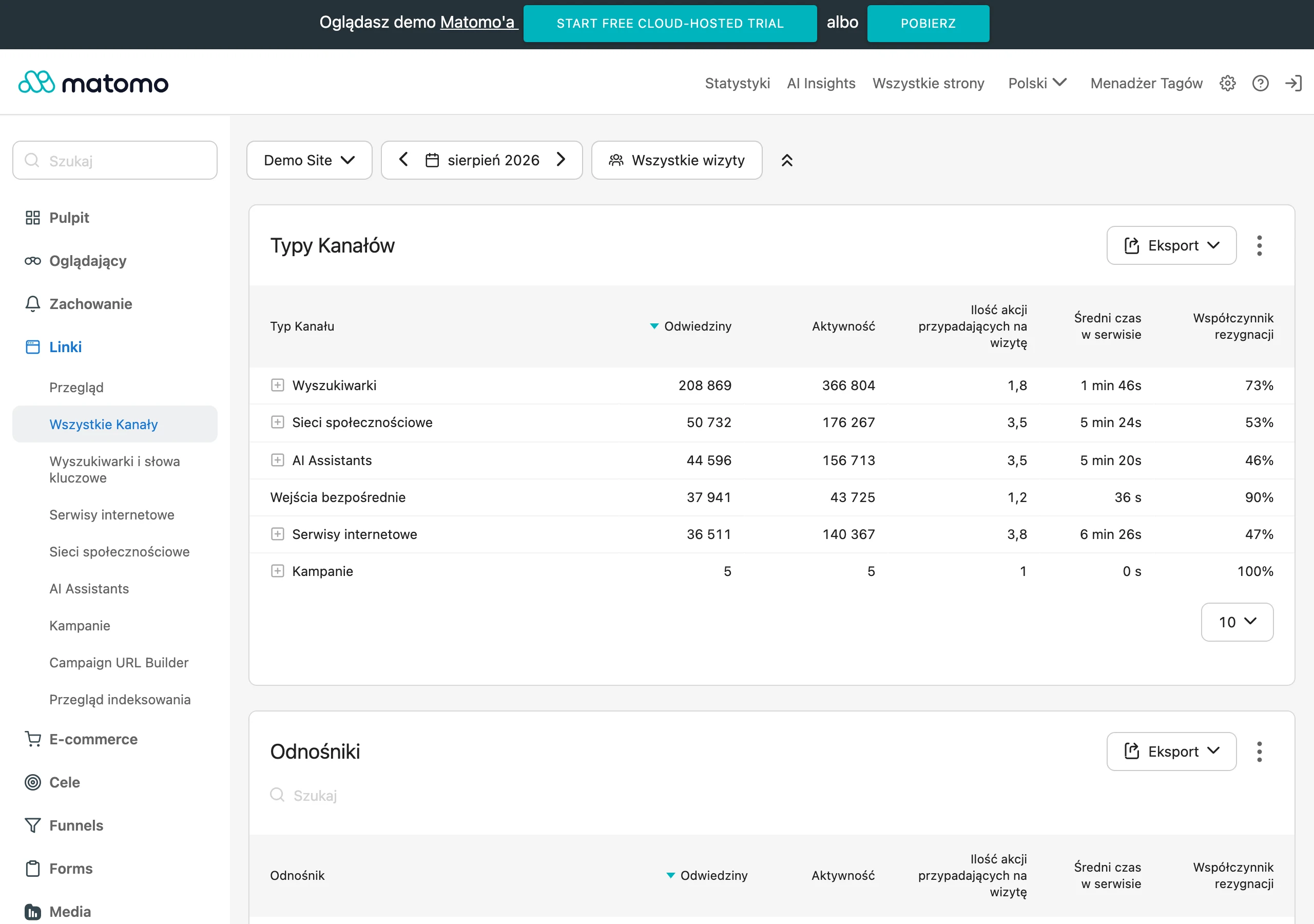
Progress in SEO is best measured with concrete metrics, so you do not base decisions on feelings alone. Track the number of pages in the index, clicks and impressions in Search Console, positions for 20 key keywords, and leads and sales from the organic channel. If after 8–12 weeks impressions are rising but clicks are not moving, refine titles, descriptions and content alignment with intent, because often the problem is a headline promise that does not match the need. In trust-sensitive topics, also make sure you build credibility: add the author, a description of expertise, sources and update dates, so the user, and also the algorithm, can see who is behind the content.
Choice of marketing channels: how to start with the most effective platforms
The wisest approach is to start with the channel that matches customer intent, rather than launching everything at once. When people are actively looking for a solution, Google Ads or SEO are usually the better starting point, whereas when you first need to create demand, Meta Ads or TikTok matter more. At the beginning, limit yourself to 1 paid channel and 1 organic channel so you can clearly see what actually works. If you spread budget and attention across 5–6 platforms, it will be harder to assess what brings leads or sales.
In services, Google Ads campaigns most often deliver leads when you start with Search on purchase-intent keywords with location targeting set up. It is worth adding simple extensions (call, location, descriptions) and tracking calls and forms, because without that it is easy to lose control of performance. At the start, avoid overly broad match types and Performance Max campaigns without solid conversion data and without a proper feed, because it is easy to “burn through” the budget. In practice, the point is to first collect high-quality data and only then increase reach.
In Meta Ads (Facebook/Instagram) you will get up and running fastest when you opt for a simple test structure instead of multiplying campaigns. Build 1 campaign with a Lead or Sales objective, add 2–3 ad sets (e.g. broad, interests, remarketing) and prepare 3–5 creatives per set so the algorithm has something to choose from. If you do not have data yet, test broad targeting and clear messaging, and add remarketing only once you have at least several hundred website visits per week. This order helps avoid conclusions based on too small a sample.
The best ad creatives immediately filter out random clicks because they clearly communicate the offer terms. Show the problem and the specifics, such as price “from”, delivery time, warranty and limitations (e.g. “Warsaw only”), so the right people enquire. Treat remarketing as a source of relatively cheaper conversions, but only when the user had a real chance to familiarise themselves with the offer (e.g. a website visit, watching 50%+ of a video or adding to basket). In addition, set a frequency cap (e.g. 2–4 impressions a day), because overly aggressive exposure can increase costs and damage brand perception.
Organic social media makes sense when you choose one platform where your target audience is actually active and consistently publish repeatable formats. As a sensible minimum, FAQ content (answers to questions), proof (deliveries/case studies) and “behind the scenes” content usually work well, because they reduce distance and build trust. At the same time, it is worth starting email collection through a specific lead magnet (e.g. a PDF checklist, a cost calculator, a “5 mistakes” guide or a 10-minute consultation) and simple message automation. To begin with, you can use MailerLite, Brevo or GetResponse, setting up a welcome email with a link and a second one after 24 hours with a short question about needs.
- 01Match customer intentActive search vs. Creating demand
- 02Limit to 1 paid channel and 1 organic oneFocus budget and attention
- 03Google Ads for services (Search)Purchase-intent keywords + performance tracking
Key: Instead of everything at once, choose efficiently and measure results.
Measurement and campaign optimisation: key metrics and testing strategies
Effective measurement and campaign optimisation rely on tracking metrics that directly describe the business outcome, not just traffic volume. For leads, measure CPL, the website conversion rate (CR), cost per call, cost per sale and response time, and for e-commerce, among others, CAC, AOV, margin, ROAS and LTV. Such metrics help distinguish “lots of clicks” from a real impact on sales. If you do not know your margin, ROAS can be misleading, because a campaign may look good while in practice it is costing you money.
At the start, A/B tests are worth focusing on the elements with the greatest leverage, because that is where changes in CR show up fastest. First test the headline (UVP), the offer (packages/bonus), the CTA and the form (number of fields), because these usually have the strongest impact on conversion. Make one change at a time and collect at least several hundred visits per variant, otherwise the results may turn out to be random. This way, optimisation decisions will be based on data rather than intuition.
Paid campaign optimisation is best carried out on an ongoing basis, checking which keywords or creatives are actually delivering conversions. Every week check where CPC is increasing, which queries appear in Search Terms and whether there are any irrelevant visits, then exclude weak keywords and shift budget to the best-performing sets. Also make sure the ad is consistent with the landing page, because a mismatch in the promise most often lowers CR and worsens lead quality. This working rhythm allows you to improve results without having to increase budget.
Attribution can be misleading, so assess channels not only through the lens of “last click”. In GA4, some conversions will be assigned to Direct or Organic, even though the user’s first contact was with an ad, so it is worth analysing Paths and model comparison reports. In practice, it is also helpful to look at “assists” and at the growth in branded queries, visible, for example, in Search Console and Google Trends. This makes it easier to assess more fairly whether ads are building demand, even if they do not always close the sale as the last touchpoint.
When lead volume is growing and sales are not keeping up, it is worth improving quality rather than just pumping up the number of enquiries. This is helped by qualification through questions in the form, price ranges, limiting the service area and a clear “who this is not for”. In the CRM it is a good idea to tag statuses (new, contact, offer, won/lost) and consistently record the reason for loss. Increase the budget only when KPI are stable for 2–3 weeks and you have the operational capacity to handle a larger number of enquiries. A safe approach is to increase spend by +10–20% every few days, because a 2x jump often resets algorithm learning and can worsen results.
Scaling and retention: how to increase budget and keep customers
Scaling the budget makes sense when you are able to maintain service quality and close sales, rather than simply deliver more clicks or leads. In practice, this means that before adding more funds, you need to see a stable result in the key KPI and have sufficient operational throughput for a larger number of enquiries. If that is missing, a higher budget usually just exposes problems in the offer, the landing page or the sales process. Increase spend only after a period of stable KPI and do it gradually, because sudden budget jumps can worsen results by resetting algorithm learning.
Retention and upselling are often a cheaper growth path than constantly chasing new customers. Plan add-ons, accessories, subscriptions, service packages or seasonal reminders, because this increases revenue without proportionally increasing the ad budget. For example, a bike service can send an email after 90 days saying “time for a check-up” with a -10% coupon to bring the customer back into the process. It is worth linking such actions with automations so that they run regularly and do not get “lost” in the flood of day-to-day tasks.
Keeping customers and scaling results also requires a well-organised sales process, because marketing will not cover weak conversations or a lack of specifics. Prepare a short call script: 5 diagnostic questions, a summary of the problem, a proposed solution and the next step (e.g. a date, payment, documents). Record 10 calls (with consent) and check where customers drop off, because most often there is a lack of clarity about the process and the price. If you record statuses and lost reasons in the CRM, you will more quickly see whether the barrier is the offer, communication or post-lead handling.
Planning marketing activities for 30/60/90 days: step by step to success
The most practical start from zero is a 30/60/90-day plan that takes you from first data to scaling without chaos. In the first 30 days, you focus on launching the landing page and measurement (GA4/GTM/pixels), testing one paid channel and preparing 5–10 pieces of content plus collecting reviews or CASE. The goal of this phase is the first sale and a baseline for CPL and CR, so that decisions are not made “by feel”. If you do not have a CPL/CR baseline and first conversions, you also do not have a basis for sensible optimisation.
In days 31–60, the priorities are UX improvements, launching remarketing and email sequences, and another 10 SEO pieces of content, so as to increase the share of traffic that does not disappear when ads are paused. This is the stage where results are most often improved by refining the message and aligning ad and landing page, rather than by a “bigger budget”. At the same time, it is worth developing automations that ensure the lead gets a quick response and the next step without manual work. This way, not only the number of contacts grows, but also their real sales value.
In days 61–90, you focus on scaling the best channel, test a second channel and close the process in the CRM and automations, so that growth does not come at the expense of service quality. This is the moment when consistency gives you an advantage: regular analysis of results, clean data and clear conclusions about what works for your personas and intent. If enquiries are growing but sales are not keeping up, you go back to conversations and qualification, and only then increase reach. Such a 30/60/90 rhythm allows you to grow in stages, instead of jumping between channels and tasks without closing the loop on results.
FAQ
Frequently asked questions
How do you start online marketing from scratch without burning through your budget?
First, clarify your offer, value proposition and one main goal for the next 90 days. Then build a simple funnel, carry out market and persona analysis, and launch a small test budget instead of acting blindly.
How do you define a value proposition when you are just starting with online marketing?
Answer briefly why someone should buy from you specifically, and put it into 1–2 sentences. Add 3 concrete benefits to the UVP and 3 customer objections that you remove from their head.
Before spending money on ads, do you need to analyse customers?
Yes, because the article emphasises that you should not spend budget based on guesswork. Gather authentic customer statements, identify recurring problems and use them to create messaging and FAQ.
Which landing page works best at the start of online marketing?
At the start, it is best to create one well-crafted page with an offer and a form rather than a large website. The landing page should have one CTA, UVP, benefits, pricing or price ranges, reviews and clear information about what happens after contact.
Which marketing channels should you choose at the beginning if you have limited resources?
It is best to start with one paid channel and one organic channel that match customer intent. When people are actively looking for a solution, the article points to Google Ads or SEO, and when you need to create demand, Meta Ads or TikTok.
When can you expect the first results from online marketing?
The first 2–4 weeks are usually spent gathering data, and more stable results often appear after 6–12 weeks of optimisation. It is worth treating this as a process and assessing results after tests, not after a few days.