
Defining the ideal customer profile and buying personas
You define the ideal customer profile (ICP) and buying personas so that from the outset you can direct lead generation activities towards companies that are a genuine fit and have a reason to buy now. In practice, you answer two questions: “who am I selling to?” and “why now?”, rather than collecting random leads. Take into account both firmographic criteria and intent signals (the so-called “trigger events”), because they often determine the timing of the conversation. A well-defined ICP reduces wasted budget on leads that will never become customers.
The easiest way to start is to gather the key ICP parameters in one place and only then build personas on that basis (e.g. the roles that initiate or block the purchase). The ICP may include, among other things, industry, company size (e.g. 20–200 employees), budget, technology in use and length of the buying cycle. Add “trigger events” such as hiring a Head of Sales, opening a new branch or organisational changes, because they increase the urgency of the decision. This makes the next steps (content, ads, prospecting) more precise and easier to evaluate.
- Industry and the company’s operating context
- Organisation size (e.g. 20–200 employees)
- Budget and purchasing constraints
- Technology and tool environment
- Buying cycle and “trigger events” (e.g. hiring a Head of Sales)
- 01Ideal customer profile (ICP)Companies that fit the firmographic criteria
- 02Intent signals and timingWhy are they buying right now?
- 03Buying personasKey roles initiating the purchase
- 04Efficient growthWithout wasting media budget
Understand who you are selling to and why now, so you do not waste budget.
Creating the offer and value proposition for customers
You create an effective offer and value proposition when you clearly communicate what the customer gets and in what time frame. The user is directly asking themselves “why should I leave contact details?”, so the promise should be concrete and measurable, not vague. For example, you can specify the outcome and deadline: “we’ll implement the CRM in 21 days and cut reporting time by 50%”. The value proposition should be tailored to the segment (e.g. SMB vs enterprise), because different companies expect different outcomes and have different buying conditions.
For the offer to genuinely support lead generation, describe it in a way that immediately structures the decision about the next step (e.g. demo, quote, audit) and reduces uncertainty. Measurable elements (time, process impact, workload savings) allow the recipient to assess whether it makes sense to get in touch even before the conversation. When specifics are missing, leads more often fall into comparing “everything with everything” and put the topic off until later. That is why the more precisely you name the outcome and the conditions, the easier it is later to qualify enquiries and run sales conversations.
Choosing lead generation channels and their mix
The best mix of lead generation channels is created when you initially narrow your efforts to 3–5 sources instead of trying everything at once. This makes it quicker to see what actually delivers MQLs and SQLs, rather than just “traffic” or random contacts. In practice, the question often comes up: “what works the fastest?”. Usually outbound and ads deliver fastest, while SEO and referrals are the most cost-effective in the long term. The mix should be driven by margin and the time in which you need the first results, because those two factors determine the profitability of the channels.
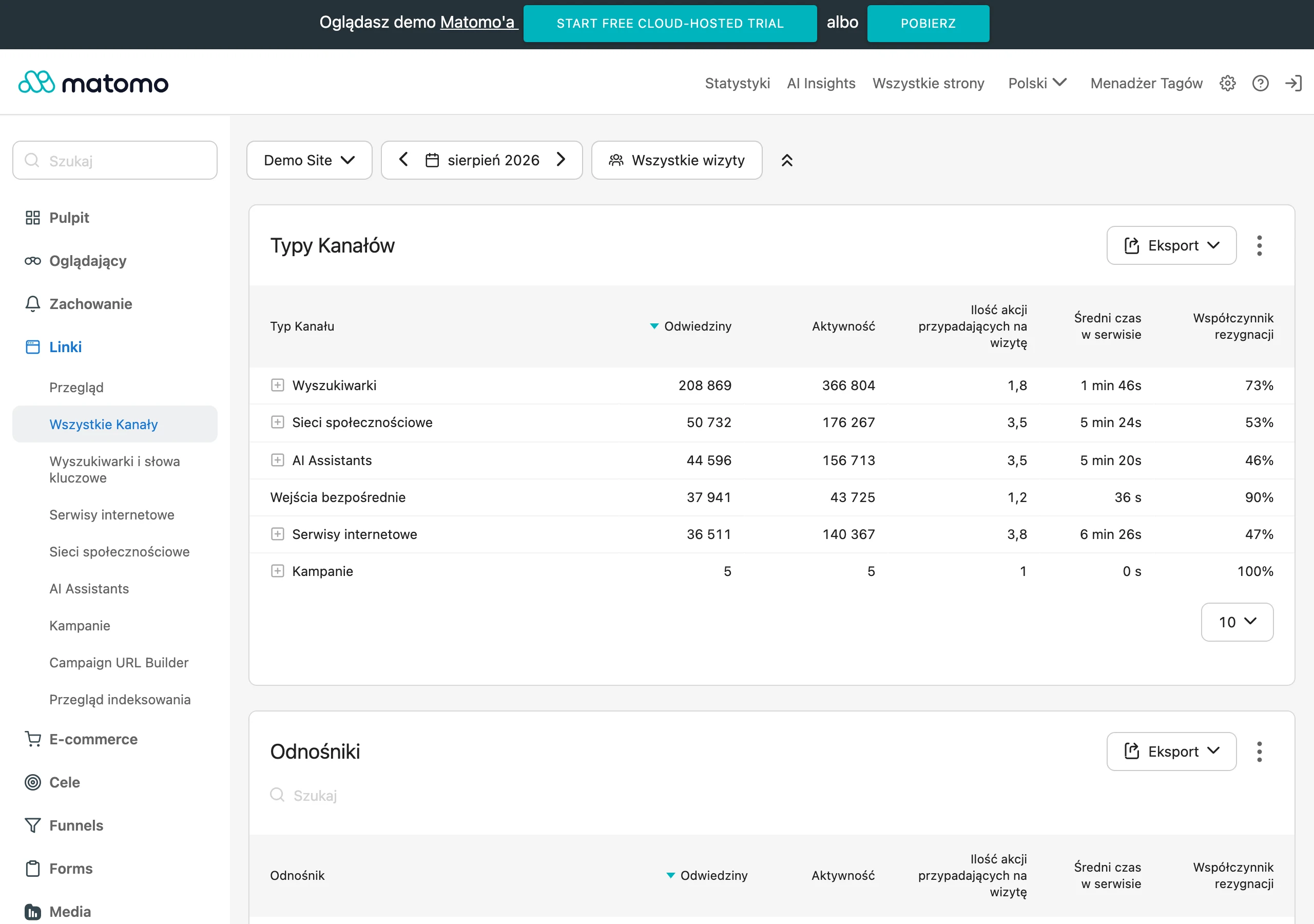
When choosing channels, map them straight away to a specific funnel stage and intent type so that you do not mix “demand” activities with “education” activities. For example, Google Search campaigns capture existing queries, while LinkedIn outbound or cold email can generate conversations even when demand is not yet visible in search. Partnerships, in turn, can be a stable source of referrals if you have clear rules of cooperation and a lead handoff path. The key is to measure results at the stage level (lead → MQL → SQL), not just by the number of forms.
- SEO (long-term, lower marginal cost as visibility grows)
- LinkedIn outbound (faster reach to decision-makers in selected segments)
- Google Search campaigns (capturing high-intent queries)
- Partnerships (a flow of leads from relationships and recommendations)
- 01Narrow it down at the startFocus on 3–5 sources
- 02Verify the resultsMeasure MQL and SQL
- 03Balance time and costFast (Ads) or cheap (SEO)
- 04Match it to the funnelThe channel depends on the stage
An effective channel mix requires early selection, tracking quality leads, and adapting the strategy to time goals and the stage of the sales funnel.
budget optimisation and calculating CAC
You calculate CAC (Customer Acquisition Cost) at the start as (marketing + sales costs) / number of new customers in the period, to determine how much you can realistically allocate to acquiring a customer. This benchmark helps you judge activities not only by the cost per lead, but by the cost of winning the sale. If the margin on a customer is 12,000 zł a year and retention is 2 years, that gives 24,000 zł of gross margin to “allocate” in the model. On this basis, you can decide what share of the margin funds acquisition and sales, depending on cash flow.
Budget optimisation is about converting every investment in a channel into customer acquisition cost straight away, rather than looking only at the cost per contact. Even if a lead is “cheap”, if conversion to calls and quotes is weak, it can ultimately push up CAC and slow scaling. By contrast, a higher lead cost can be acceptable if it results in more SQL and customers, which makes the return on activity clearer. In practice, part of the margin (e.g. 20–40%) can fund acquisition and sales, but the decision must be matched to cash flow capacity and payback time.
SEO strategy for purchase intent
SEO strategy for purchase intent is built through content and pages that respond to queries such as “I want to buy” or “I want to choose”, leading by the shortest possible path to contact. Instead of focusing solely on broad educational phrases, it is better to target terms with a clear decision-making context, e.g. “CRM for construction companies”, “best invoicing system for SaaS” or “HubSpot implementation price”. This approach closes the topic of “how to get leads without ads?”, because well-ranked offer and comparison pages can deliver a steady stream of enquiries. The key is to match content to the stage of “I’m choosing a supplier”, not just “I’m learning what it is”.
If SEO is to generate sales leads in a real way, it is worth directing traffic to pages that clearly lead the user to the next step (e.g. an enquiry form or a request for a demo) and reduce uncertainty. In practice, offer and comparison pages usually perform best, because they answer questions about how well a solution fits a specific industry or use case. It is also worth planning content so that the user can qualify themselves through context and specifics before leaving their details. The closer the phrase is to purchase intent, the greater the chance that traffic will turn into an enquiry rather than just a “site visit”.
- 01Decision-making contentQueries such as “I want to buy”.
- 02Business contextPhrases with a clear goal.
- 03Match to the stageThe “I’m choosing a supplier” stage.
The key is to direct traffic to offer pages that lead to contact by the shortest route and generate leads.
using lead magnets and gated content
Leads from lead magnets and gated content are acquired most effectively when, in exchange for an e-mail, the user gets a tool that solves a specific problem “here and now”. Materials such as implementation checklists, contract templates, ROI spreadsheets, salary benchmarks or a “savings calculator” work best. This directly answers the question “what should you offer for an e-mail?”, because people are more willing to leave their details when the benefit is immediate and saves time. A lead magnet should be matched to the topic and the user’s intent, rather than being a generic file “for everyone”.
Gated content works best when, after downloading the material, you lead the user to the next step instead of leaving them without a clear path. It is worth making sure the lead magnet is specific enough for the recipient to apply the advice straight away or calculate the impact (e.g. in an ROI spreadsheet), and then move smoothly into a conversation about implementation. This way, the contact does not remain a “dead lead”, but becomes a person with a named problem and initial context. The greatest value comes from gated content that both educates and makes qualification easier, because it filters out people without a real need.
building a prospect list and segmentation
You build a prospect list most effectively when you collect contacts from tools and sources that let you assess companies for fit right away. In practice, you can rely on databases such as Apollo.io, LinkedIn Sales Navigator or ZoomInfo (where available), or on local sources such as Panorama Firm/CEIDG with manual domain verification. The key is not to go for mass collection of random e-mail addresses, but to narrow the list based on fit signals, such as technologies used, recruitment or opening new branches. Filtering by “trigger events” and genuine fit reduces outreach to companies that would not buy anyway.
You segment in order to carry out “one-to-many” personalisation at group level, rather than for an individual person. Split your database into segments (e.g. by industry and company size) and tailor to them: the problem, the expected outcome and an example from the industry that will be understandable without additional explanation. This approach answers the question “how do you write so they reply?”, because a message grounded in the realities of the segment usually cuts through better than a generic message about a “great offer”. As a result, it is easier to keep prospecting consistent and to assess more quickly which segments are actually delivering conversations.
retargeting and campaign optimisation
Retargeting is set up so that you can return to people who have already visited key areas of the website and are closer to making a decision. It most often includes users who have visited offer pages or the pricing page, or abandoned a form, and then see a tailored message within a specific time window (e.g. 7/14/30 days). A good solution is to separate the messaging into distinct groups, because someone who has visited the pricing page has different objections from someone who has read the service description. Retargeting with social proof (reviews, case studies) and a clear CTA such as “book 15 min” helps close the traffic you have already paid for in the first click.
Campaign optimisation is only rigorous when changes are tested methodically and quality is assessed more broadly than just through the lens of a click or a form submission. It is worth testing one variable at a time (e.g. headline, offer, form length, graphic vs video) and preparing at least 2–4 variants for each ad set so that the conclusions are not down to chance. At the same time, tracking needs to be properly set up: Google Tag Manager + GA4 + events (e.g. submit, booked_call) as well as sending offline conversions from the CRM to Google/Meta; for Meta, the best option is to use Conversions API (CAPI). As a result, the algorithms can optimise for leads that actually become SQLs or customers, rather than relying on the weakest signal.
FAQ
Frequently asked questions
How do you define an ICP to generate better sales leads?
First answer who you sell to and why that company would buy now. In your ICP, include factors such as industry, company size, budget, technology, buying cycle and intent signals.
Why is it worth considering trigger events when generating leads?
Because such events often increase the urgency of the buying decision. Examples include hiring a Head of Sales, opening a new branch or organisational changes.
What should a good value proposition look like so that someone leaves their details?
It must clearly say what the client gets and in what time frame. It works best when it includes something concrete and a measurable outcome, for example shortening the process or saving time.
Which lead generation channels are worth choosing at the start?
It is best to start with 3–5 sources rather than trying everything at once. The article points out that outbound and ads work quickly, while SEO and referrals are cheaper in the long term.
How do you calculate CAC in sales lead generation?
At the start, calculate it as marketing and sales costs divided by the number of new customers in a given period. This lets you assess not the cost of a lead, but the real cost of acquiring a customer.
How do you create SEO for purchase intent to generate leads?
It is worth targeting content and pages that answer queries such as “I want to buy” or “I want to choose”. Offer and comparison pages work best, taking the user straight to contact or a demo.