
AI in marketing: how to define goals and KPI for sales growth?
First define your business goals and KPI, because without them AI will “do activity” but will not translate into sales. Start by asking: “What needs to improve: revenue, margin, CAC, retention or lead handling speed?”. Only then match actions (e.g. personalisation, automation, A/B tests) to one clearly defined outcome. If the KPI are not unambiguous, you will not be able to assess whether the implementation of AI is worthwhile.
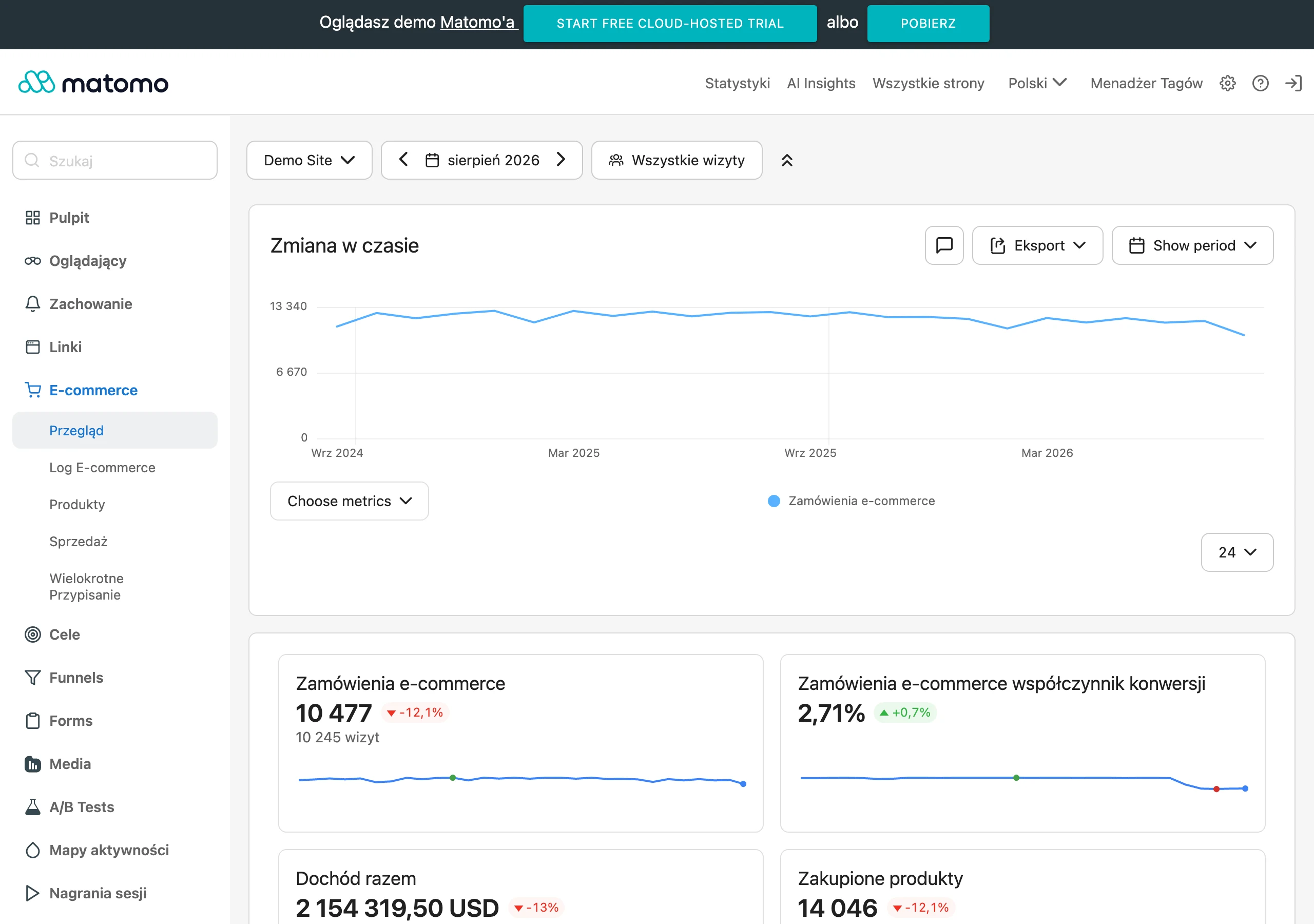
Good KPI come from the business model, so it is worth matching them to e-commerce or B2B. In e-commerce the typical metrics are ROAS, customer acquisition cost (CAC), LTV and conversion rate, while in B2B: MQL→SQL, pipeline velocity and win rate. Once you have chosen the KPI, set up measurement and a baseline so you can compare results “before” and “after” implementation. This shortens the path to answering the question that usually comes first: “when will I see results?”.
- E-commerce: ROAS, CAC, LTV, conversion rate.
- B2B: MQL→SQL, pipeline velocity, win rate.
- Primary goals: revenue, margin, retention, lead handling speed.
- 01Define business goalsDecide what to improve: revenue, margin, CAC
- 02Choose key KPIMatch to the model: E-commerce (ROAS, LTV) or B2B (MQL→SQL)
- 03Match actions to the outcomeSeparate implementations: personalisation, automation, A/B tests
- 04Set measurement and baselineCompare results “before” and “after” implementation
Summary: Only linking clear goals and KPI with specific AI actions will make it possible to assess the value of implementation and sales growth.
Sales funnel map: where does AI deliver the greatest return?
AI delivers the greatest return where you currently have bottlenecks in the funnel that directly block conversion or closing sales. Establish whether the problem is poor traffic quality, weak creatives, abandoned baskets, a long response time from the salesperson or a lack of upsell. Then choose 1–2 use cases with a fast return and build measurement around them so you can see the impact on KPI. Most often, segmentation and personalisation (email/SMS), product recommendations and performance campaign automation improve results the fastest.
Funnel priorities are best set based on user behaviour data and the stages where people most often drop out. If, for example, 60% of traffic is mobile and abandonment is high, intent prediction and basket recovery scenarios come to the fore. This approach brings order to decision-making: instead of “implementing AI everywhere”, you strengthen precisely the part of the customer journey that generates the greatest revenue loss. Thanks to this, AI becomes a growth tool rather than yet another purely technological project.
Choosing the right type of AI: generative, predictive or rule-based?
The choice of AI type depends on whether you primarily want to produce content faster, predict customer behaviour more accurately, or automate simple processes in a stable way. If you are asking “How can I create creatives and descriptions faster?”, use generative AI (e.g. ChatGPT, Jasper, Midjourney). When the key question is “Who and when should I target so they buy?”, you need predictive models (e.g. propensity-to-buy or churn). Rule-based automations (e.g. in Klaviyo or HubSpot) are usually cheaper and more predictable when data is limited or the process remains simple.
Generative AI works best where speed matters most in producing many variants, and a human is responsible for quality control and compliance with communication guidelines. Predictive models require consistent data on behaviour and purchases, because only then can they identify segments with the highest intent or an increased churn risk. Rule-based approaches, in turn, are often the most practical when you want to launch automations “off the shelf” and keep full transparency of how they work. In practice, many companies start with rules and variant generation, and only add prediction once they have measurement in place and organised data.
The safest approach is to match the tool to the specific decision you genuinely want to improve in marketing and sales, rather than choosing the “most advanced” AI. When the priority is a repeatable process (e.g. CRM sequences, basic segmentation), rules often deliver results faster than a model project. When the goal is to optimise who sees the offer and when, prediction gives you an advantage because it is based on probabilities rather than rigid conditions. The key is consistency: one business question → one type of AI → one way of measuring the result.
- 01Generative AIFaster content creation, many variants.
- 02Predictive AIMore accurate forecasting, behaviour targeting.
- 03Rule-based automationStable automation, simple processes.
Choosing AI depends on the goal: speed of creation, predictive accuracy or simple automation.
AI implementation plan: key steps for 30/60/90 days
An AI implementation plan for 30/60/90 days is best built on the principle of starting with 1–2 use cases with a quick return, and only then adding personalisation, tests and predictive models. In the first 30 days, choose use cases with an immediate impact (e.g. abandoned cart and creative variant generation) and prepare measurement together with a baseline. Over the next 60 days, add personalisation and A/B tests (e.g. in VWO or Optimizely) so you can consistently select better variants. In 90 days, launch predictive models and automated budgeting once you already have the foundations of measurement and an organised process.
This rhythm answers the question “when will I see results?”, because the first effects are usually visible after 2–6 weeks, and the fuller ones after 3–6 months. The key is to have a clear scope at every stage: what you are implementing, how you measure it and which decisions you make based on the data. That way you avoid a situation where AI is working “a bit everywhere”, and later it is difficult to identify what actually translated into sales. A 30/60/90 rollout works best when each stage ends with a decision: scale, improve or switch off.
In practice, the 30/60/90 plan also brings order to team work, because it separates quick implementations from projects that require greater data maturity. After 30 days you have a benchmark for comparisons, after 60 days you know which variants are winning in tests, and after 90 days you can move on to prediction and budget automation without guesswork. This approach also improves discussions about priorities, because each next step follows from earlier observations. If at any stage data is missing or the results are inconsistent, it is safer to go back to simpler automations and refine the measurement rather than adding more layers of AI.
How to calculate the profitability of AI in marketing? Business case and ROI
You can calculate the profitability of AI in marketing once you assign its impact on sales and costs in one simple business case. The starting point is to estimate: (conversion uplift × margin) + time savings for the team – the cost of tools and implementation. This approach structures the “is it worth it?” discussion and immediately links AI to KPI, rather than reducing the topic to the number of automations deployed. The most important thing is to calculate the effect on margin and time, not just revenue.
ROI is easiest to build where you have quick measurement and a repeatable impact on revenue, such as email/SMS in lifecycle. In such channels, a real revenue uplift of 5–15% over 8–12 weeks is often achievable if the list and data are well connected. In B2B, a big effect comes from shortening response time: reducing the delay by 1 hour can increase the chances of contact by even several dozen percent, which translates into pipeline. That is why, in a business case, it is worth separating “growth” (conversion, pipeline velocity) from “savings” (team time, service automation).
A business case will only be credible if you include data and maintenance costs, rather than only tool subscriptions. On top of tools (e.g. Klaviyo, HubSpot, Semrush), add integrations (e.g. Fivetran), a data warehouse (BigQuery/Snowflake) and the maintenance of tags and events. A common blocker is “data debt”, meaning the lack of consistent customer identifiers and events, which means personalisation does not work across channels. Before buying tools, check whether they support your channels and attribution model, otherwise the ROI will “drift” at the measurement stage.
- 01Estimate the business caseConversion growth × margin + time savings.
- 02Measure the impact on margin and timeMargin and time are key, not just revenue.
- 03Find quick ROI (lifecycle)5–15% growth in 8–12 weeks (Email/SMS).
- 04Shorten response time (B2B)Faster response = higher chance of contact.
Structuring the discussion: link AI to KPIs, not the number of automations.
Effective segmentation and personalisation with AI: how to increase conversions?
You can increase conversions with AI when you move away from communicating “one offer for everyone” and start tailoring content, contact timing and recommendations to customer behaviour and value. Segmentation and personalisation usually deliver a quick return because they improve message relevance without adding to media spend. In practice, this means different messages should go to new customers, different ones to high value customers, and yet others to people at risk of churning. The simplest way to grow is to implement segments and automations that respond to intent and funnel stage.
RFM segments: who should get a promotion and who should get new arrivals?
RFM segments quickly help you decide who should get a promotion and who should get new arrivals, because they organise the database by Recency, Frequency and Monetary. “High value” customers can receive early access and bundles, “At risk” customers — a reactivation sequence, and “New” customers — product onboarding. You can implement this segmentation in Klaviyo or HubSpot without data science, which makes it easier to get started and speeds up testing. Results often appear within 2–4 weeks, provided the communication is consistently matched to the segments.
Propensity modelling: how can you reduce discounts?
A propensity model helps reduce discounts because it identifies people with the highest likelihood of buying in the next 7–30 days. This allows you to split your actions into “high intent but no purchase yet” (for example, a subtle nudge such as free delivery) and everyone else, who only needs a reminder about the product’s value. This approach tackles the problem of burning margin on discounts for people who would have bought anyway without a reduction. The key is for the segments to be based on behaviour and purchases, not randomly set rules.
On-site personalisation and recommendations: what should you show to close the basket?
On-site personalisation increases the chance of purchase because it changes banners, category order and recommendations depending on user behaviour. Tools such as Dynamic Yield, Bloomreach or VWO let you start with the listing and basket, for example through cross-sell of complementary products without rebuilding the whole website. Product recommendations (Algolia Recommend, AWS Personalize, Rebuy) help you match “frequently bought together” and “similar products”, which supports AOV especially in categories with accessories. From an operational perspective, it is important to filter out products with low margins or a high number of returns, so that revenue growth does not reduce profitability.
Email/SMS in lifecycle: how can you increase revenue from CRM?
Revenue from CRM usually grows thanks to lifecycle automations, because they are based on intent and context rather than mass newsletters. AI makes it easier to choose the subject line, send time and content for a specific segment, instead of sending the same message to the whole database. In Klaviyo/Mailchimp you can use the “expected next order date” prediction and send a reminder 3–5 days before the expected purchase, which naturally increases repeat purchase rates. A good practice is also to add content that reduces returns (for example usage tips), because it translates into real sales value.
Lookalike based on LTV and personalisation in B2B: how can you improve acquisition quality?
Acquisition quality improves when you feed platforms (Meta, Google) with a list of customers with the highest LTV, instead of putting all buyers into one basket. Such an LTV-based seed more often lowers CAC and increases the share of returning customers, provided the data is fresh and correctly hashed. In B2B content personalisation works best in an ABM approach, where you tailor messages to the industry and stage of the buying process (for example, different ones for CFOs, different ones for IT). Demandbase and 6sense tools combine intent signals with account lists, helping direct budget to companies with growing buying readiness.
Frequency capping: how do you avoid “burning” the database with communication?
You can limit the risk of communication fatigue with frequency capping, i.e. controlling how often you contact customers depending on their value and activity. Drops in open rate and increases in unsubscribes often stem from the most active people receiving too many messages in a short time. Set limits (for example, max 3 emails/7 days per person) and communication priorities so that key information takes precedence over less important campaigns. The better the segmentation, the more worthwhile it is to limit send volume and increase the relevance of each message.
Campaign automation and media buying: how can you lower CPA and increase ROAS?
You will lower CPA and increase ROAS when you combine platform automation (Google/Meta) with attention to data quality, the feed and clear optimisation rules. In Google, the key is a Performance Max approach, where performance depends on feed quality, signals (audience signals) and organising campaigns by margin or category. In Meta Advantage+, the algorithm identifies effective audience and creative combinations faster, but it needs a constant stream of variants so that the ads do not “burn out”. The biggest difference is made not by automation itself, but by feeding it the right signals (conversion value, feed, creatives) and consistently controlling what actually works.
Stable results are delivered by automated rules and scripts that react faster than manual optimisation, e.g. pausing an ad set when CPA exceeds the threshold for a given number of days, or increasing the budget by 10–20% when ROAS is above the threshold. In practice, you can set up such automations directly in Google Ads and Meta, and tools such as Optmyzr help with account audits and organising activities. At the same time, it is worth moving to value-based bidding so you optimise not only for “purchase”, but for “purchase value” and split conversions (e.g. new vs returning). If sales are growing but profitability is falling, it helps to pass net values to Ads (after discounts) and include adjustments for returns.
For automation to genuinely deliver results, you need consistent measurement, testing and disciplined campaign naming. It is worth supporting attribution with incremental experiments (e.g. geo/holdout), because they let you determine whether growth is a real lift or just sales attribution by the platform. No less important is creative analytics, i.e. collecting data on creative elements (hook, offer, format, video length, captions) so you can scale winning patterns rather than individual ads. If reports are chaotic, standardising UTM and campaign naming is a prerequisite for calculating ROAS and CPA at channel and creative level.
Resources and roles in the team: who is needed to implement AI?
To implement AI in marketing, you need at minimum four roles: someone from performance marketing, CRM/lifecycle, data analytics and content. This setup makes it possible to launch automations across channels in parallel, build communications (creatives, sequences) and measure the impact on KPI without “guessing” in reports. When these competencies are missing, AI projects usually end up as content production or one-off experiments without further scaling. The most common reason AI does not increase sales is not the technology, but the lack of linkage: data → implementation in channels → decisions based on results.
A data scientist is often not needed at the start if you choose no-code/low-code tools and build capabilities step by step. In practice, you can rely on solutions such as Segment + Hightouch, BigQuery ML or HubSpot AI modules to launch segments, data synchronisation and simple models faster without building the whole infrastructure from scratch. This approach works especially well when there is still little data or the process is simple and repetitive. If you do not have a data science team, the priority should be choosing tools that deliver business value at a lower implementation and maintenance cost.
FAQ
Frequently asked questions
How do you define goals and KPIs for AI in marketing to increase sales?
First you need to determine what should improve: revenue, margin, CAC, retention or lead handling speed. Only then do you choose AI actions and indicators that will show whether the implementation is truly delivering results.
Which KPIs should you choose for AI in e-commerce, and which for B2B?
In e-commerce, the author points to ROAS, CAC, LTV and conversion rate. In B2B, these are MQL→SQL, pipeline velocity and win rate.
When does AI in marketing deliver the fastest return?
It pays back fastest where there are funnel bottlenecks blocking conversion or deal closure. This often involves segmentation, personalisation, product recommendations or automation of performance campaigns.
Is it better to start with generative, predictive or rule-based AI?
It depends on the goal: generative AI helps create content faster, predictive AI forecasts customer behaviour, and rule-based AI automates simple processes. The safest approach is to match the type of AI to one specific business decision.
What does a 30/60/90-day AI implementation plan in marketing look like?
In the first 30 days, you choose 1–2 use cases with a quick return and set up measurement with a baseline. After 60 days, personalisation and A/B tests are added, and after 90 days, predictive models and automated budgeting.
How do you calculate the profitability of AI in marketing?
The author proposes a simple business case: uplift in conversion multiplied by margin plus time saved by the team minus the cost of tools and implementation. It is also worth taking into account integration costs, the data warehouse, and the maintenance of tags and events.