
AI in strategy and planning marketing campaigns
AI can act like an “analyst and planner” that organises information and efficiently translates it into campaign decisions. From raw insights, such as search terms, chat questions or top categories, it can build personas with motivations, objections and purchase triggers, which you then map to channels and creative assets. For example, the persona “I’m buying a gift” will receive messaging about delivery times and wrapping, while “comparing specifications” will get educational content and a landing page with a comparison table. This means planning starts not with “ideas”, but with the data you already have to hand.
The greatest value of AI in strategy is shortening the path from data to a coherent plan: personas → funnel (TOFU/MOFU/BOFU) → content → channels → KPI. AI can analyse your URLs and topics in the CMS, then suggest a matrix: intent → format (e.g. guide, case study, calculator) → CTA → distribution channel. In practice, it often turns out that you have an excess of TOFU content (blog) and a shortage of BOFU (comparisons, FAQ, pricing), which drives up CPA in search campaigns. Such a diagnosis makes it easier to shift effort away from mere “production” and towards closing sales.
AI also supports budget planning, because it can simulate KPI scenarios based on historical CR, CPC and seasonality (e.g. models in a spreadsheet + Python/BigQuery). Instead of one figure, you get ranges (e.g. CPL 70–95 zł) and information on where data is missing, which makes the plan easier to defend. In competitor analysis, tools such as Semrush/Ahrefs + AI can summarise which promises dominate and what is missing from the messaging, making it easier to identify market gaps. This allows you to build an advantage not through “louder slogans”, but through a clearer communication direction and a better selection of goals in campaigns.
- Start with a brief and data-based personas (GA4 + customer phrases/questions), then map them to channels and creative assets.
- Fill out the content funnel (TOFU/MOFU/BOFU) so you do not burn budget on cold traffic without BOFU elements.
- Treat tests as hypotheses and prioritise them using the ICE or RICE method, so a “we’ll do everything” approach does not eat up resources.
- Build value messages in a claim + proof format, using figures, review quotes and recurring questions from support.
- Prepare a “single source of truth” (SSOT): metric definitions, missing events and consistent reporting in Looker Studio/Power BI.
AI also helps segment audiences without third-party cookies, grouping customers by RFM, margin, return frequency or interest categories, and suggesting separate communication journeys. In addition, anomaly models can detect that a drop in results concerns, for example, only mobile Safari or one region, which more often indicates a technical or logistical issue than “poor creatives”. When selecting channels, AI can be helpful in suggesting the mix based on the goal (sales vs leads vs retention) and in showing risks, such as iOS targeting limitations. The result is a plan that remains both practical (what we do) and measurable (how we will know it works).
- 01Data analyst and plannerOrganises raw insights into decisions.
- 02Persona and motivation buildingBuilds a profile with motivations, objections, triggers.
- 03Mapping channels and creative assetsMatches dedicated messages and content.
- 04A coherent plan from data to KPIShortens the path to a ready, coherent action plan.
Main benefit: Rapid transformation of data into a working, coherent campaign plan from personas to results, instead of guessing.
Generating effective content and optimising SEO using AI
AI speeds up content marketing and SEO because it combines intent research, structuring and content quality audits into one repeatable process. It can pull data from GSC and tools such as Semrush/Ahrefs and build topic clusters by intent (informational, comparative, transactional). This makes it easier to separate MOFU and BOFU content and align CTAs so that they support conversion, rather than just “readership”. This approach works particularly well when you want to grow on keywords with purchase intent.
AI is safest in the role of editor and auditor: it suggests an outline and improvements, but factual verification and control of “hallucinations” must remain on your side. Based on top results, PAA and related questions, it can suggest a logical H1–H3 structure, and tools such as SurferSEO, Clearscope or Frase help align the topic scope without “keyword stuffing”. In practice, you get a coherent outline and a list of gaps faster, instead of writing “from scratch” without a plan. Material prepared this way is also easier to keep to one standard in a larger team.
In content refresh, AI compares your content with competitors and spots gaps such as the absence of an FAQ section, a description of the steps that is too short, or outdated data, and then generates update suggestions. In e-commerce, it can create variants of category and product descriptions based on attributes (e.g. material, dimensions, use case) and add benefits and answers to common objections, which helps avoid duplication. For “expert” content (E-E-A-T), AI can serve as a draft, while the expert should add experience: procedures, test results, photos, quotes, sources and the author signature, and go through a fact-checking and style verification checklist. This makes the content useful and more credible, instead of sounding “AI-like”.
AI also supports SEO work beyond the text itself: link building and digital PR, technical SEO, local SEO and video content creation. In outreach, it can analyse a competitor’s backlink profile in Ahrefs, filter domains by traffic and topic, and prepare personalised messages with a clearly defined value proposition. In technical SEO, when Screaming Frog throws out hundreds of errors, AI can sensibly cluster them (e.g. canonicals, pagination, thin content, 404) and prioritise them according to impact on traffic and the ease of implementing fixes. For multimodal content, tools such as Whisper/Descript handle transcriptions, AI produces concise summaries and cuts highlights, and from a long webinar it helps generate shorts with captions and titles.
Consistency and publication quality improve when you implement content governance: tone rules, banned phrases, CTA patterns, industry glossary and source-citation rules, and AI checks content against that standard. In local SEO, AI can prepare variants of responses to reviews and posts for Google Business Profile with context taken into account, while you add specific details such as the order number or deadline. This workflow makes it possible to maintain regular communication without a drop in quality and without sounding unnatural. Ultimately, AI shortens the working time, but it is your standards and verification that decide whether the content will genuinely support visibility and conversion.
Use of AI in paid advertising and campaign optimisation
AI in paid advertising helps above all to finalise campaign optimisation faster and reduce budget “burn” in automation. In Google Ads Performance Max, it makes sense when you have correctly configured conversions (with values), a solid feed and a sensible volume, because otherwise the algorithm learns from “noise”. In practice, it pays to separate goals (sales vs leads), add audience signals and monitor queries in “search terms insights” reports. This keeps automation steerable, rather than making it act like a black box.
The effectiveness of Smart Bidding depends on the quality of conversion data, so an audit of events in GTM/GA4 and tests in debug mode should come before switching to tROAS/tCPA. Jumps in ROAS/CPA after implementing AI bidding usually come from duplicates, a lack of conversion values, a poorly set attribution window or micro-conversions pretending to be sales. Only when definitions and measurement are organised does the algorithm have a solid basis for learning. This approach reduces the risk that the campaign will be optimised for “easy” events rather than real results.
AI also speeds up the preparation and testing of creatives, especially in Meta and short video formats. Graphic tools (e.g. Midjourney/Adobe Firefly/Canva) can generate backgrounds, packshots and layouts, while copy can build different levels of promise (feature/benefit/proof), which you then check using the formula: 5–10 hooks × 3 formats (1:1, 4:5, 9:16). In TikTok/Shorts, AI is often helpful for writing UGC scripts (problem in 2 seconds, demonstration, proof, CTA), and you adapt the wording to the persona and real customer comments. The result is 20–30 second versions with a few cuts and an overlay with specifics plus variants for different objections (e.g. price, delivery, quality).
AI also supports campaign results “along the way” by automating elements that often become the bottleneck in scaling. In Merchant Center, it can create titles based on attributes, spot missing GTINs, suggest Google category corrections and improve policy compliance, which with thousands of SKUs usually translates into better CTR and a larger share of impressions in Shopping without increasing CPC. When matching the landing page to intent, AI helps maintain message match by pointing out missing elements (e.g. FAQ, reviews, guarantee, comparison) when CTR is good but conversions are lacking. This shortens the path from click to decision, because the user gets exactly what was promised in the ad.
AI can also protect budget and result quality when the problem is not bid optimisation, but lead quality and attribution. Rules or models in CRM can detect junk leads (e.g. repeated numbers, suspicious domains, unusual geo, very fast submissions) and mark them for review, and in B2B it is worth linking scoring in HubSpot/Salesforce to MQL/SQL rather than to the bare “submit”. In attribution modelling, AI supports data-driven attribution, holdout tests and simpler MMM (e.g. in Python) with seasonality and promotions, which makes real budget shifts (e.g. 10–15%) between channels easier. Additionally, in brand safety (DV360/YouTube/Meta), it analyses placement reports and helps spot spam patterns so that automated campaigns do not flood forms with low-quality traffic.
- 01Data foundation (PMax)Conversion quality, feed and volume are key to the algorithm’s learning.
- 02Goal controlSeparate goals, use signals and monitor queries to avoid a “black box”.
- 03Smart bidding auditVerify GTM/GA4 data, test in debug mode and eliminate duplicates.
Automation works effectively only on solid, verified data and under constant control.
AI in social media: moderation, creatives and trend analysis
AI in social media works best when it links publications with business goals, rather than supporting “posting because we should”. It can map topics to goals (reach, education, sales, retention) and suggest a cadence, e.g. 4 posts + 3 shorts per week. That way you know in advance which formats are meant to deliver clicks and conversions, and which build trust and context for sales. Such a plan also helps maintain consistency without chaos in production.
AI helps uncover customers’ real needs from conversations and mentions, because it can organise comments, DMs, reviews and mentions into recurring themes, problems and expectations. In practice, social listening tools (e.g. Brand24, SentiOne, Talkwalker) enhanced with an AI layer will show what comes up most often in discussions and what is worth clarifying publicly. For example, if a large share of mentions concerns “size guide”, a sensible response is often a pinned post and a highlight, which reduces the number of questions reaching support. This tightens collaboration between community and content and sales activities.
In moderation, AI speeds up responses, but the safe standard is drafts + escalation of risky topics and human approval in sensitive matters. AI can prepare responses consistent with the tone of voice, while also flagging issues that require caution (e.g. complaints, legal matters, hate). A written “allowed/forbidden” policy and a clear escalation path are a good solution so you can respond quickly without risking brand missteps. This shortens response time without sacrificing communication quality.
AI also streamlines the production of creative assets and the adaptation of copy for specific platforms, which matters when there are many formats and limited time. With fixed brand guidelines (palette, fonts, grids), tools such as Canva with a brand kit or Adobe Firefly help prepare graphics, carousels and thumbnails faster, and one article can be turned into a carousel with key points and a CTA. In copywriting, AI rewrites content for IG, LinkedIn and X, provided it gets context (post goal, segment, prohibited promises and examples of posts that worked). For trend assessment, AI can compare a trend with your industry and performance history and estimate risk, while it links content performance with UTM data, GA4 and social platforms, showing the difference between “engagement” and sales.
AI in personalisation of the customer experience in e-commerce
AI in e-commerce personalisation makes it easier to tailor products, content and display order so that users are guided more efficiently towards purchase. In practice, this includes recommendations (cross-sell and up-sell) based on click history and basket contents, as well as simple segments such as “new vs returning” or “abandoned basket”. Tools such as Dynamic Yield, Bloomreach, Nosto or Shopify Search & Discovery can increase average order value (AOV), provided the recommendations are aligned with customer behaviour. The effect grows when personalisation is tested for its impact on CR, rather than implemented “on faith”.
The safest approach is to start with a few simple segments and rules, and only then add more advanced personalisation scenarios. Segments such as new vs returning, VIP customers, abandoned basket or people interested in a specific category allow you to quickly verify whether banners, product order and messages genuinely increase conversions. AI can also adapt the message to context, e.g. “delivery tomorrow” for users in a given region, provided this is part of your offer and the configuration works correctly. This kind of start limits the risk of overcomplication and makes further iterations easier.
- Product recommendations for cross-sell and up-sell (based on clicks, basket contents and product similarity).
- Personalisation of the site using simple segments (e.g. new vs returning, VIP, abandoned basket).
- Store search with NLP that recognises synonyms and typos (e.g. “bluza z kapturem” vs “hoodie”).
- Automation of merchandising on category pages (sorting by likelihood of purchase, margin, availability and review quality).
- Checkout optimisation based on GA4 data, as well as recordings/heatmaps (Hotjar, Microsoft Clarity) and A/B tests (Optimizely/VWO).
AI also improves the shopping experience in the store search, because NLP handles inflections, synonyms and typos better than simple keyword matching. Tools such as Algolia, Elasticsearch with vectors or Doofinder also make it possible to prioritise products by margin or availability, while the measure of success remains growth in conversion in sessions using search. In checkout, AI helps identify friction points based on GA4 events and behavioural analysis (e.g. problematic fields), which shortens the path to meaningful A/B tests. At the same time, it can support merchandising by arranging category pages according to availability and likelihood of purchase rather than the default order.
If your problem is returns and poor purchase choices, AI can detect products with a higher return risk and suggest “pre-purchase” actions. In practice, this comes down to recommendations such as better photos, video, a size chart or a fit quiz, rather than mechanically cutting ad spend. In addition, shopping quizzes and configurators (e.g. Typeform with logic and recommendations) guide the user through 5–7 questions to 2–3 suggestions, shortening the decision-making time. In marketplaces, AI can also fill in missing attributes by extracting parameters from product cards, manuals or PDFs and formatting them to the platform’s requirements, which usually improves filterability and relevance.
- 01Precise matchingProducts, content, display
- 02Product recommendationsBased on history and basket
- 03Simple segmentationNew vs returning
- 04Measurable resultsTest the impact on CR
Key to success: Start with simple rules, test the results and gradually introduce advanced scenarios.
Automation of e-mail marketing and CRM using AI
AI in e-mail marketing and CRM automates retention and lead qualification, because it can segment audiences, personalise content and tailor sequences based on user behaviour. In CRM (e.g. HubSpot or Salesforce Einstein) it can build scoring based on activity (pages, forms, e-mail), firmographic data and the history of won deals, so that salespeople focus on the top 20–30% of leads. The remaining contacts can be routed into nurturing automation, which keeps the pipeline organised and reduces the time spent on leads with low potential. This approach is particularly important where a form “submit” alone does not yet translate into sales.
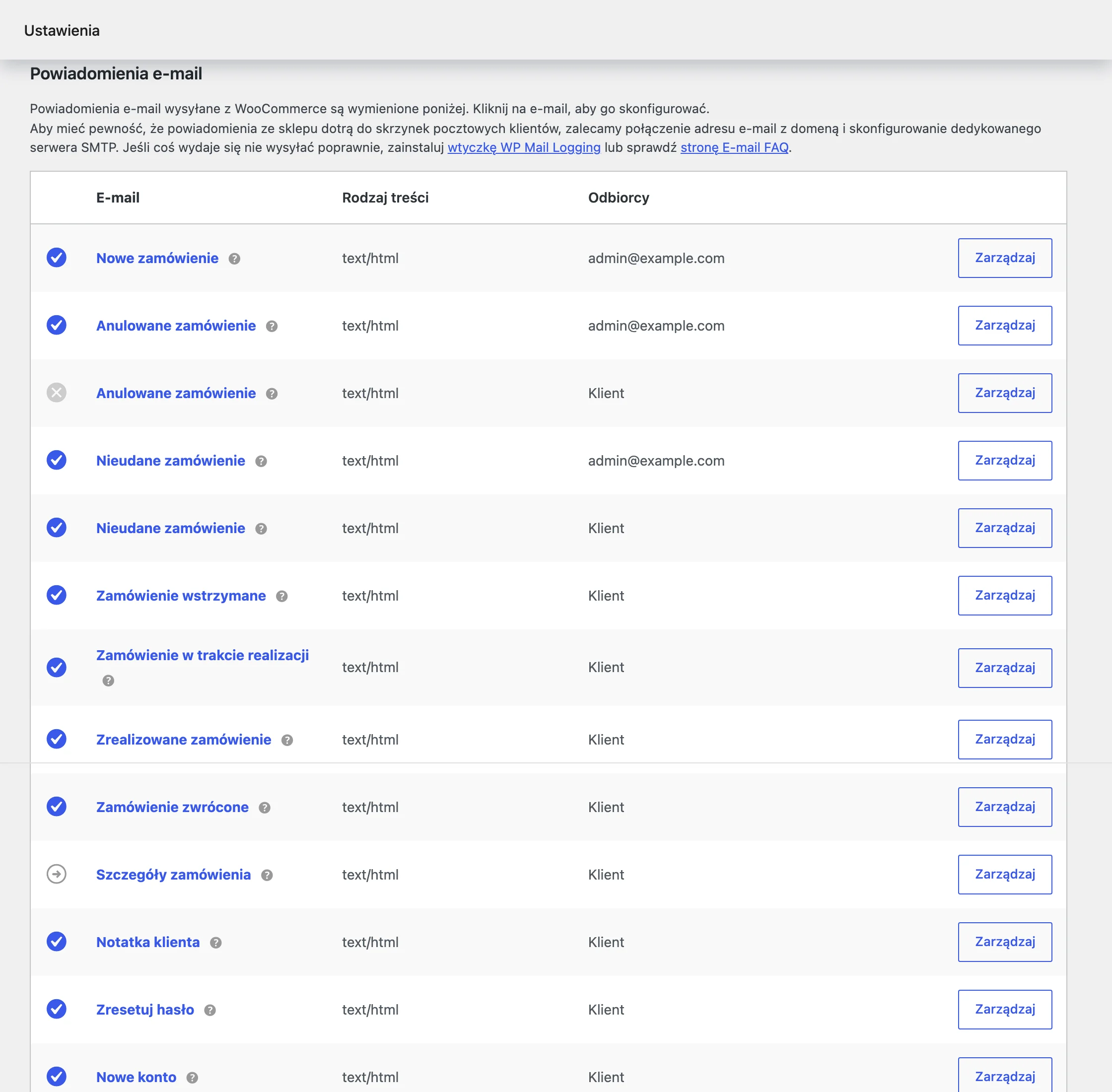
The quickest return usually comes from automations: welcome (1–3 e-mails), abandoned cart (2–4 e-mails), browse abandonment and winback after 30–90 days without a purchase. Tools such as Klaviyo, Mailchimp or HubSpot let you launch them efficiently, and AI helps choose the timing and subject line, provided you test changes in a controlled way. In personalisation, AI does not stop at using the name in the heading, because it can select offer blocks, recommendations and arguments for the segment (e.g. industry, purchase history, preferred budget). As a result, the content gets closer to the recipient’s real intent instead of working on a “one for all” basis.
AI also improves send performance by optimising the subject line and preheaders without resorting to clickbait. It can create subject variants with different emphases (benefit, urgency, social proof) and keep an eye on length, where 35–55 characters on mobile often performs consistently well. Sending is also supported by send-time optimisation (STO), which selects the hour per user based on open and click history and reduces frequency for more sensitive users. This translates into fewer unsubscribes and better deliverability, especially with larger lists.
In retention, AI can predict churn by analysing drops in activity, longer gaps between purchases and quality signals such as returns and complaints. This triggers campaigns that do not have to rely solely on coupons, because often a reminder to replenish the product or a practical usage guide works better. In B2B, AI also supports follow-ups by preparing sequences of 4–6 messages with concrete value (case study, ROI calculation, objection handling, short CTA), and tools such as Apollo, Lemlist or Salesloft allow you to combine e-mail with LinkedIn. The key remains tailoring the content to the recipient’s role and the company context.
Automation performance drops when the database becomes “dead”, which is why AI and rules should support data hygiene and integrations with other systems. In practice, this comes down to identifying inactive contacts (e.g. 180 days without open/click), running re-engagement and removing addresses, which leads to better domain reputation. E-mail ↔ store ↔ CRM ↔ support integrations (e.g. Zapier/Make and native Klaviyo/Shopify/Zendesk connectors) make it possible to pause promotional campaigns when a customer has an open complaint and, at the same time, trigger service communication. AI can additionally tag tickets (e.g. “delay”, “damage”) and launch the right apology or compensation scenarios.
Analytics and marketing experiments supported by AI
AI supports analytics and marketing experiments because it automatically spots anomalies in data and helps plan tests that show the real impact of actions on results. In monitoring, it can detect deviations in metrics (e.g. CPC, CR, revenue, number of transactions) and send alerts before the budget starts to drift. A good example is a drop in transactions on iOS only, which may suggest a payment bug rather than a campaign issue. This helps you separate a “problem in the advert” from a “problem in the product or technical setup” more quickly.
If data is missing because of consent and privacy restrictions, AI only makes sense once you base measurement on consent mode v2, modelling in Google Ads/GA4 and more precise first-party events. In this approach, AI helps assess where modelling distorts results the most, but decisions are better based on trends and incrementality tests rather than last-click alone. In A/B and incrementality experiments, AI supports the planning stage: control vs test group (e.g. geo-split, holdout, brand lift) and calculating the duration and significance threshold. This makes it easier to show whether a social campaign really “adds” sales or merely attributes them.
In reporting, AI can generate SQL queries for BigQuery, explain metrics and build the narrative of “what happened and why”, especially when you report in Looker Studio or Power BI. In cohort and LTV analysis, it can show customer value after 30/90/180 days, which explains situations where 7-day ROAS looks poor but the business is still growing. In attribution blending, AI helps map identifiers (gclid, fbclid, user_id) and build a “from click to revenue” view with margin, which in B2B makes it easier to close the lead → SQL → deal path. A complement is traffic quality analysis: detecting bots and junk traffic based on behavioural patterns and suspicious sources.
In performance forecasting, AI supports diminishing returns modelling, which allows you to scale budgets gradually (e.g. +10% every 3–5 days) and keep algorithm stability under control. To ensure reports can be reliably compared across teams, AI can also design and enforce taxonomies (UTM, events, campaign names) and catch labelling errors. At the same time, it is worth taking care of data compliance and security: anonymising or hashing identifiers, limiting PII fields and using enterprise solutions (e.g. Azure OpenAI with policies, Google Vertex AI) instead of random tools. This approach reduces the risk of customer data leaks and genuinely strengthens GDPR compliance in analytical work.
AI in customer service: chatbots, ticket classification and sentiment analysis
AI in customer service works best when it automates routine tasks and streamlines the flow of information between channels, rather than “pretending to be human”. A chatbot on the website genuinely relieves the team if it resolves the 3–5 most common topics: order status, delivery cost and time, returns, and basic product selection. In practice, tools such as Intercom, Zendesk AI, Tidio or Drift are used for this, with a clear rule to hand over to an agent after 1–2 unsuccessful replies. As a result, the customer gets a solution faster, and the team has fewer queries that can be handled through self-service.
AI-based ticket classification shortens first response time (FRT) because it automatically tags tickets (e.g. “return”, “missing item in parcel”, “invoice”) and routes them to the right queue. At the same time, AI can maintain the knowledge base: creating and refreshing FAQs based on documents (terms and conditions, instructions) and suggesting new articles when the number of questions on a specific topic grows. In conversation analysis (QA), AI performs transcriptions (e.g. Whisper) and assesses quality against a checklist: greeting, verification, resolution, upsell, compliance with procedure. This makes it possible to train the team using real conversation snippets without having to listen to hundreds of contacts every week.
Sentiment analysis and escalation risk analysis work when AI recognises sentiment and risk words (e.g. “fraud”, “UOKiK”, “chargeback”) and increases the priority of the ticket. In practice, this reduces the number of situations in which the problem “goes public”, because the response in private channels comes faster. AI can also generate automatic conversation summaries and save them in the CRM/ticketing system as: problem, steps, promises and deadline, which reduces repetition on the customer’s side and shortens AHT. Additionally, the consultant’s assistant can suggest responses in real time, provided it is based on your knowledge base and policies, and the consultant approves the content before sending.
To ensure AI in customer service does not “optimise for closing tickets”, KPIs should balance FRT, AHT, CSAT/NPS, the escalation rate to a human and the first-contact resolution rate. Sales support in customer service makes sense when AI suggests one concise recommendation at the right moment (e.g. camera → memory card), and you also assess its effectiveness through the lens of satisfaction. A natural way to close the loop is Voice of Customer (VoC): AI aggregates themes from tickets, conversations and reviews, and then matches them against metrics (returns, conversions, complaints), so that marketing and product can react quickly. This makes customer service a source of data for improving the offer and communication, rather than just an operating cost.
FAQ
Frequently asked questions
How does AI help with planning marketing campaigns based on data from GA4 and GSC?
AI can turn raw signals from GA4, GSC, CMS and customer conversations into personas, messaging, tests and a channel plan. This means strategy starts with data, not random ideas.
Can AI help create personas and a sales funnel?
Yes, AI can build personas with motivations, objections and buying triggers, and translate them into a TOFU/MOFU/BOFU funnel. It then becomes easier to match content, channels and KPIs to the real needs of the audience.
Why should AI in content marketing and SEO not work without human oversight?
Because AI can prepare an outline, an audit and suggested improvements, but factual verification and hallucination checks must remain on the human side. This is especially important for expert content and fact-based materials.
When does AI help most with optimising Google Ads campaigns?
Most when conversions are configured correctly, the feed is solid and the data has a meaningful volume. Otherwise the algorithm learns from noise and may optimise the campaign towards the wrong signals.
How does AI support social media in moderation and trend analysis?
AI organises comments, messages and mentions into recurring themes and helps identify customer needs. It can also speed up replies and prepare drafts aligned with the tone of voice, but risky issues should be passed to a human.
Can AI improve personalisation in e-commerce and increase basket value?
Yes, AI helps match products, content and the order of exposure to user behaviour, for example through cross-sell and up-sell recommendations. However, the effectiveness of such personalisation must be tested for its impact on CR, rather than rolled out blindly.