
The average order value is increased most effectively when the customer sees a reason to pay extra or add another item to the basket. In practice, this means better recommendations, a clearer presentation of the offer and smarter guidance through the purchase path. Such growth is especially valuable with steady traffic, because it lets you raise revenue and margin without adding budget for acquiring visits. The best results come from increasing basket value without undermining customer trust and without harming the conversion rate. That is why you need to look not only at a bigger bill, but also at the relevance of the offer and the ease of making a decision.
How to increase the average order value (AOV) in e-commerce
The average order value in e-commerce is increased by raising the value of a single transaction, not by simply increasing the number of customers. This matters because the same traffic can then generate higher revenue. In practice, AOV grows when the customer chooses a better variant, adds a complementary product or buys a ready-made bundle. Each of these decisions should result from genuine usefulness, not pressure.
Four mechanisms work most often: upselling, cross-selling, product bundles and benefit thresholds. Upselling raises the value of one item, cross-selling increases the number of items, and bundling simplifies choice and reduces hesitation. Benefit thresholds, such as free delivery or extra points, motivate a small increase in the basket. The key is to set up these solutions so the customer immediately understands what they gain.
A higher basket value alone is not enough if conversion or margin falls. That is why you need to measure not only AOV, but also the number of products in the order, attach rate, conversion rate and revenue per visitor. It is worth carrying out the analysis in segments, for example for new and returning customers, as well as by device and category. Overly aggressive basket boosting can lower the overall performance of the store if the customer abandons the purchase because of too many options or an unclear message.
Effective upselling strategies without lowering prices
Effective upselling without lowering prices is about showing why the more expensive variant is the wiser choice. The customer must see additional value, such as greater durability, better performance or more features. The mere information that the product is “premium” is usually not enough. What works is a concrete benefit that links the higher price to a practical result of use.
Upsell is best presented where it supports the decision, that is, on the product page or close to the basket. The comparison of variants should be simple and focused on the differences, not on a full list of specifications. Price anchoring also works well, when the customer first sees the higher variant and then evaluates the middle option more favourably. In some offers, the decoy effect also helps, if a third variant organises the choice and directs attention to the most cost-effective version.
Effectiveness increases when the recommendation is tailored to the customer, not identical for everyone. If the store has good product data and a history of behaviour, it can suggest a better variant only where it makes sense. This limits random suggestions and reduces the risk of irritation. Upselling works best when it looks like help with choosing, rather than an attempt to squeeze out a larger amount.
It is also worth supporting upselling with content that justifies choosing the more expensive version before the customer reaches the product page. Guides, comparisons and SEO content can build a need for a better solution instead of leaving the decision to the last minute. This matters especially with organic traffic, where the user is often still comparing options. If the content clearly shows the differences between variants, the store can more easily raise AOV without discounts.
Cross-selling: how to increase the sale of complementary products
Cross-selling increases the sale of complementary products when it suggests exactly what the customer needs for the main purchase. It works best with products that complement use, set-up or ease of use. If someone buys a camera, a sensible suggestion will be accessories, and batteries with a toy. Such a suggestion raises the basket value because it shortens the path to a complete solution.
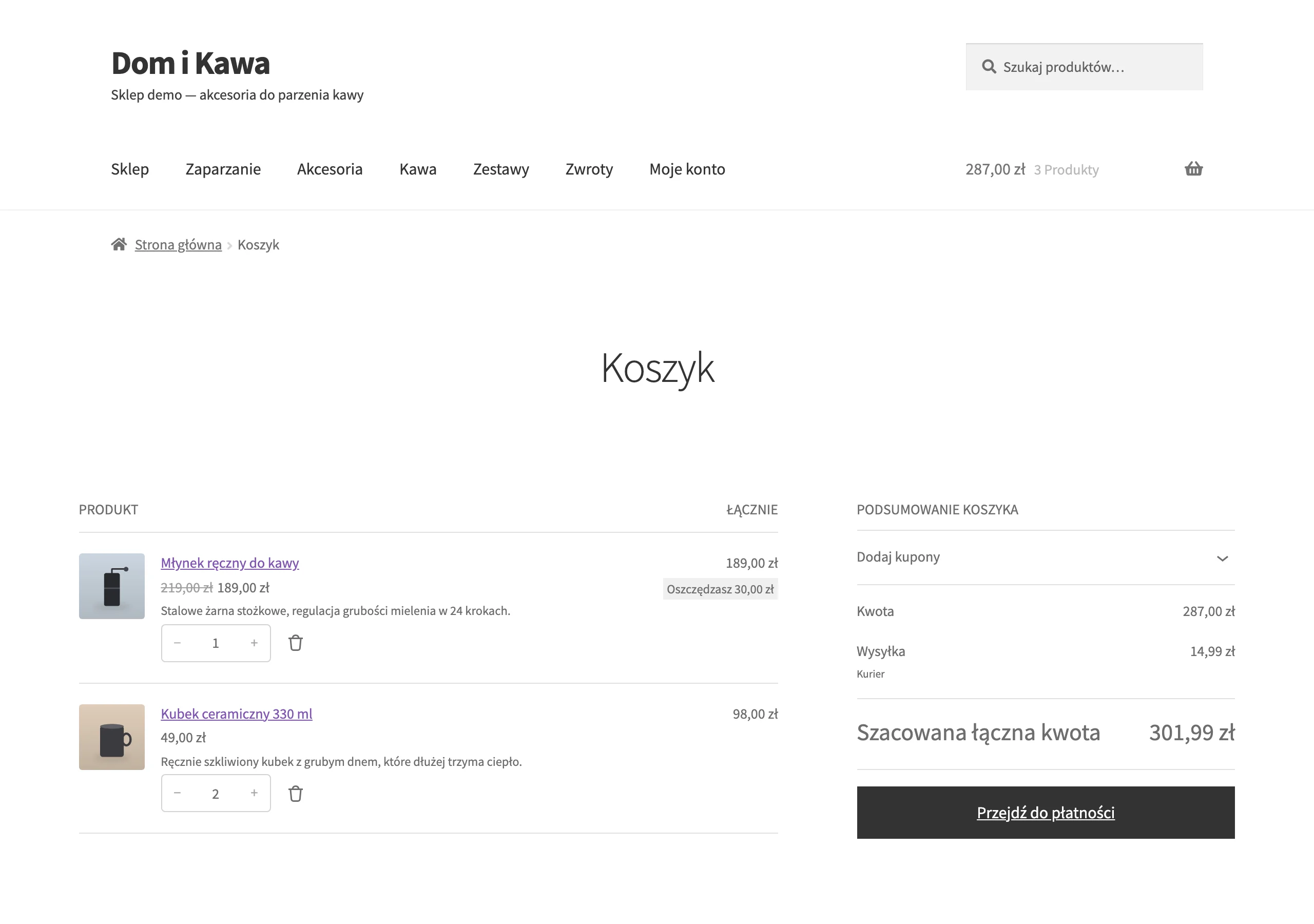
The effectiveness of cross-selling depends mainly on relevance and context, not on the number of recommendations. On the product page, it is worth showing only a few items that have a clear connection to the purchase. In the basket, last-minute add-ons work better than a full wall of suggestions. Too many options distract and can lower conversion instead of increasing AOV.
For recommendations to be relevant, the store needs good product data and clearly described relationships between products. Information such as “is compatible with” or “fits” makes it possible to automate sensible suggestions. Even better results come from combining this data with basket analysis and customer segmentation. This allows the store to see what is actually bought together by new customers, and what by returning users.
Personalisation further increases effectiveness, because not every customer needs the same suggestion. A person returning for another purchase may react differently from someone who is just getting to know the category. In practice, it is worth varying recommendations according to purchase history, behaviour and product type. Cross-selling should look like help in completing the purchase, not like an attempt to push the basket at all costs.
Creating product bundles as a way to increase AOV
Creating product bundles increases AOV by selling several related products as part of one simple choice. The customer does not have to put together all the elements themselves and is less likely to postpone the decision. A well-built bundle increases the number of items in the basket while also simplifying the purchase. This is especially important where a single product rarely works well on its own.
A bundle works best when it responds to a specific usage scenario. It can take the form of a ready-made package or a “buy together” module, if both variants make sense for a given category. The customer should immediately see what is included in the bundle and what each item is useful for. Without that clarity, the package looks like an artificial product combination rather than genuine convenience.
The basis of good bundles is product data and basket analysis. The data shows which products are compatible or form a natural complement, while basket analysis confirms what users really buy together. As a result, the packages are not guesswork, but stem from observing customer behaviour. It also makes it easier to scale bundles across a larger catalogue.
In practice, you need to ensure that bundles do not complicate the purchase journey. It is best to present them where they support the decision, i.e. on the product page or close to the basket. If the store shows several packages at once, the customer is more likely to fall into decision paralysis. A bundle is meant to simplify choice, not create a new problem to solve.
It is worth evaluating the effectiveness of bundles not only by revenue growth. You also need to check AOV, the number of products in the order, attach rate and the impact on conversion. If a package increases basket value but more often ends in abandonment, its composition or presentation needs improving. That is why bundles are best developed iteratively and tested on specific user segments.
The role of recommendation personalisation in increasing basket value
Recommendation personalisation increases basket value because it shows the customer offers matched to their real purchase need. This makes it easier to sell a better variant or a sensible add-on without resorting to a price cut. In practice, the user can more quickly see what else may be useful to them. That lifts AOV because the decision to spend more stems from usefulness, not pressure.
Personalisation based on behavioural data, purchase history and customer segment works best. A returning customer may need a refill or a complement, while a new user is more likely to respond to a complete solution. The difference is practical, because the same recommendation module will not be effective for every group. Personalisation organises the offer and shortens the route to the right decision.
The condition for effectiveness is good product data and correctly described relationships between products. The system needs to know what is compatible, what is a higher-tier variant and what naturally complements the purchase. Without well-structured attributes and product relationships, personalisation quickly turns into random suggestions. That usually lowers trust in recommendations instead of strengthening sales.
The place where recommendations are shown on the purchase journey also matters. On the product page, it is worth personalising a better variant or the key accessories, and in the basket, add-ons that complete the purchase. There should not be too many of these suggestions. An excess of modules and options increases the risk of distraction and basket abandonment.
The importance of basket analysis in optimising sales strategies
Basket analysis matters because it shows which products customers really buy together. That provides a basis for building cross-selling and bundles on facts, not assumptions. In practice, the store discovers natural product combinations more quickly. As a result, recommendations are more logical and more often hit the moment of purchase.
The biggest benefit is that basket analysis reveals relationships that are not visible at first glance. Sometimes the best-selling add-on is not the most obvious one, but the most convenient in a specific usage scenario. This kind of insight helps build “buy together” modules and ready-made packages based on real customer behaviour. It usually improves effectiveness without adding more sales messages.
The results of the analysis need to be read in segments, because different groups buy differently. Different product combinations appear among new customers and among returning ones, or in different categories. The device and entry channel may also matter. Only then is it possible to implement recommendations that match a specific purchasing context.
The analysis itself is not enough if it does not lead to testing and measuring outcomes. After implementing changes, you need to check AOV, the number of products in the order, attach rate, conversion and the impact on margin. If a given combination increases basket value but more often ends in abandonment, the strategy needs to be adjusted. Most often this means improving the product mix, the way it is presented, or the number of visible recommendations.
How to avoid the risk of conversion cannibalisation when increasing AOV
You avoid the risk of conversion cannibalisation by limiting the number of decisions, showing only relevant recommendations and assessing the impact of changes on the whole purchase process. The problem appears when the store tries too aggressively to increase basket value. The customer sees more offers, but finds it harder to complete the purchase. As a result, AOV may rise only superficially, while total sales fall because conversion is worse.
The most common cause is poorly designed merchandising on the purchase journey. Too many modules, pop-ups and additional offers distract, especially in the basket and just before payment. On the product page, it is better to show one sensible higher-tier variant and a few usage-related add-ons. The closer you are to order completion, the more important it is to close the transaction than to add further sales stimuli.
In practice, this means that every recommendation should have a clear purpose. An upsell should justify the extra spend with concrete value, while a cross-sell should complement the main purchase without creating chaos. If a proposal is not obvious in a given context, it is better not to show it. Fewer accurate suggestions usually work better than a wide choice of random products.
Safely increasing AOV requires A/B testing and looking at several metrics at once. You need to measure not only AOV, but also the conversion rate, the number of products in the order, attach rate, revenue per visitor and the impact on margin. If after a change the average basket value rises but the number of orders falls, the implementation is not meeting its goal. Such a result usually means that the message, the module placement or the number of recommendations needs adjusting.
It is worth analysing the results in segments, because the same solution will not work identically for every user. New customers more often need a simpler journey and more obvious prompts. Returning users may respond better to add-ons, bundles or benefits linked to loyalty. Segmentation makes it possible to raise basket value where it genuinely helps, instead of reducing the effectiveness of the whole store.
FAQ
Frequently asked questions
How can you increase average order value in a store without lowering prices?
The best way to raise basket value is through upselling, cross-selling, product bundles and benefit thresholds. The customer needs to see immediately what they gain, not feel pressured into buying.
Can upselling without price promotions work effectively?
Yes, if the more expensive variant has clearly shown benefits, such as greater durability, better performance or more features. The “premium” label alone is usually not enough.
How do you do cross-selling so that it increases the basket rather than annoys the customer?
Recommend only genuinely complementary products that support the main purchase. Too many suggestions distract and can reduce conversion.
When is it worth showing product bundles in an online store?
Bundles work well when they match a specific usage scenario and simplify the choice. It is best to present them on the product page or close to the basket.
Why is basket analysis important when increasing AOV?
Because it shows which products customers really buy together, so recommendations can be built on facts. That makes it easier to create relevant cross-sells and bundles.
How can you avoid a drop in conversion when increasing basket value?
You need to limit the number of decisions, show only relevant recommendations and test the impact of changes on the whole purchase process. It is worth measuring not only AOV, but also conversion, attach rate and margin.