
Black Friday can increase sales, but if it is poorly prepared it can easily damage margins even after the campaign ends. The biggest mistake is treating it purely as a competition to offer the lowest price. The store should plan the season so that it captures promotional demand, while at the same time not teaching customers that full price makes no sense. In practice, this means a selective offer, controlled communication and decisions based not only on revenue, but also on margin and availability.
What challenges does Black Friday bring for online stores?
Black Friday brings a short spike in demand, but at the same time it significantly increases pressure on price, availability and the store’s response speed. Users then enter promotional queries with a clear purchase intent. It is a good moment to acquire traffic and orders, but only if the offer meets customer expectations. If the store shows only a general message about discounts, rather than specific products and terms, some of the traffic will drift to competitors.
The biggest business risk is that a broad discount across the whole range lowers margin and changes customer behaviour after the season. When shoppers see reductions on everything, they start postponing purchases until the next campaign. This weakens sales in ordinary weeks and makes it harder to maintain standard prices. As a result, a one-off increase in revenue may cost the store more than the discount level itself suggests.
The second practical challenge is high sensitivity to product availability. During the Black Friday period, customers compare offers more quickly and more often abandon their basket when a product goes out of stock or delivery terms are unclear. Another problem is sales cannibalisation after the season, especially when the promotion covers bestsellers that are normally bought without any extra incentive. That is why from the outset it is necessary to determine whether the goal is revenue maximisation or protecting margin with controlled sales growth.
What offer strategies should you use to increase sales without cutting margins?
Selective, conditional and time-limited promotions work best, because they make it possible to increase sales without discounting the whole store. Instead of lowering the prices of all products, it is better to choose specific SKUs and categories. This model gives greater control over margin and does not damage the pricing value of the entire offer. The customer still sees a real opportunity, but the store does not give away profit where it does not have to.
The choice of products for the campaign should be based on margin, stock levels and cross-sell potential. The safest approach is to promote excess stock, higher-margin variants and complementary products. In this way, the promotion clears inventory, increases basket value and does not hit the most valuable items. By contrast, bestsellers and low-margin SKUs are often better excluded, because they sell anyway without an aggressive discount.
In practice, it is worth basing the promotion on mechanisms that increase order value rather than just lowering the unit price. The solutions that customers understand easily and compare quickly usually work best:
- discount only on selected products or categories,
- bundle with complementary products,
- free gift with the order,
- basket threshold unlocking a benefit,
- second item cheaper,
- time limit, stock limit or limit on the number of codes.
Such mechanisms matter because they shift the customer’s decision from price alone to the value of the whole purchase. A basket threshold raises the average order value, a bundle improves sales of additional products, and a stock limit strengthens urgency without permanently cutting the price. The most profitable promotion does not have to offer the highest discount, only the best-designed structure. This is especially important when the store wants to take advantage of seasonal traffic, but does not want to damage margin for the rest of the year.
How should you choose your assortment for Black Friday to maximise profits?
The assortment for Black Friday should be selected according to margin, stock levels and the potential to sell additional products. This choice protects profit better than promoting what simply sells fastest. In practice, what matters is not only the number of orders, but also how much is left after discounts. That is why SKU selection should be based on commercial data, not on product popularity alone.
The safest options to include in the campaign are excess stock, higher-margin variants and complementary products. Excess stock helps free up capital tied up in inventory. A variant with better margin gives greater promotional flexibility without dropping to an unprofitable level. Complementary products increase the chance of cross-sell and bundle purchases, so they raise basket value.
It is not worth discounting what would sell anyway without a strong price incentive. This applies especially to bestsellers and low-margin SKUs. In the first case, the store gives away part of the profit without any real need. In the second, the risk increases because even a small additional cost can wipe out the profitability of the order.
Brands and products with pricing restrictions require separate protection. If a manufacturer imposes rules on price communication, Black Friday should not bypass them. A better solution in that case is often a free gift, a bundle or a benefit after crossing a basket threshold. This way the offer remains attractive, but does not breach restrictions and does not damage the relationship with the supplier.
When choosing products, a short list of operational questions works well:
- does the product retain a safe margin after the discount is taken into account,
- will stock levels withstand the increase in demand,
- can an additional product be logically matched to it,
- will discounting it not take away full-price sales after the season.
Why is a permanent Black Friday landing page key to an SEO strategy?
A permanent landing page for Black Friday is key because one seasonal URL builds visibility more easily than a new page created from scratch every year. When the store multiplies addresses, it disperses internal linking, indexing history and signals related to promotional intent. That weakens rankings precisely when the competition is fighting for the same traffic. One permanent address organises the architecture and makes it easier to plan actions before the season.
The best model is to keep the same URL all year round and update it before the next edition of the campaign. Such a landing page can be published and indexed in advance, before the main promotional communication starts. This gives the search engine time to recrawl the page and associate it with seasonal queries. The store also does not have to build visibility from scratch each time.
After the campaign ends, the page should not disappear or return 404. A better solution is an off-season version that informs users the promotion has finished and still leads on to the category or current offers. This is important because removing the page wastes the traffic and links already earned. A permanent landing page should work as a seasonal hub, not a one-off leaflet.
For such a hub to work for SEO, it has to lead to the right places in the store. On the landing page, it is worth linking to categories, selected promotions and supporting subpages that match a specific buying intent. A user looking for deals wants to get to products quickly, not read a generic slogan about discounts. The simpler the path from the landing page to the offer, the better for visibility and sales.
The mistake is creating a separate address for every year and abandoning the previous ones after the season. Such a setup complicates internal linking and makes it harder to keep indexing tidy. In practice, the store then starts from scratch every November. A permanent URL helps avoid this and provides a solid base for future Black Friday editions.
What technical SEO elements are essential during periods of high traffic?
During periods of high traffic, correct indexing of promotional URLs, control of filters, fast mobile performance and up-to-date offer data are essential. If any of these elements fails, the store loses both visibility and sales. The problem usually does not stem from one mistake, but from overload across the whole setup. That is why technical SEO here needs to be treated as operational protection, not a cosmetic touch-up.
First, you need to ensure that promotional URLs are crawlable and indexable, but without opening indexing to everything. Filters, sorting and parameter combinations can generate a huge number of low-value addresses in season. This wastes the crawl budget and dilutes ranking signals. Pages that are meant to earn traffic should be accessible to robots, while technical filtering variants should not compete with the main landings and categories.
Canonical tags and HTTP status codes are just as important. If a promotional landing page points to the wrong canonical or returns 404 after the campaign ends, the search engine receives conflicting signals. This weakens rankings and makes it harder to regain visibility in subsequent seasons. You also need to check that redirects do not create unnecessary chains and that internal links lead to the correct page versions.
For Black Friday, mobile performance and site stability under load matter especially. A user who waits several seconds for a filter, basket or product page will often simply return to the search results. Speed therefore affects not only user experience, but also conversion and the use of traffic. In practice, it is worth checking cache, server resources and elements that worsen Core Web Vitals in advance.
Finally, you need to take care of offer data visible to the search engine and the user. Schema Product, Offer or ItemList makes sense where it genuinely describes a specific offer, price and availability. Data on price, availability and delivery costs or times must be current, because inconsistencies reduce trust and can lead to incorrect messages. During seasonal traffic, this kind of detail quickly turns into a real loss of sales.
What mistakes do stores most often make during Black Friday?
Stores most often make mistakes that simultaneously reduce margin, complicate SEO and send traffic to poorly prepared pages. Many of these problems can be predicted because they recur every year. The most dangerous are the decisions that seem like a quick way to increase sales. In practice, they then affect results even after the campaign has ended.
The first common mistake is discounting the entire range instead of building a selective offer. This boosts the appeal of the message, but it also gives away margin where there was no need for extra incentive. The store then teaches customers to wait for the next price cuts and weakens sales in regular weeks itself. It is a business problem, not just a promotional one.
The second mistake is creating new URLs for every edition and abandoning the old ones after the season. Then the indexing history, links and signals tied to promotional intent do not build up in one place. The result is simple: every year the store starts the fight for visibility from zero. The same mechanism also hurts when SEO activities start at the last minute.
Purely technical mistakes are also very common. Stores allow promotional filters and sorting to be indexed, while at the same time they fail to support the main pages that should really rank. It also happens that traffic is sent to unavailable products or to pages with an out-of-date price and stock level. In season, it is better to show a smaller but real offer than a broad display of products that cannot be sold.
The last recurring mistake concerns measuring results. If the store looks only at revenue, it may consider the campaign a success despite a drop in order margin. It is also worth assessing basket value, the share of cross-sell, stock sell-through speed and the impact of discounts on profitability. Only such a picture allows you to distinguish traffic that earns money from traffic that only looks good in the report.
What metrics are key for analysing the effectiveness of a Black Friday campaign?
The key metrics are those that combine visibility, conversion, margin and availability, not revenue alone. Black Friday can generate a large turnover even when the profit per order is weak. That is why analysis needs to be carried out in parallel for traffic and profitability. If the report ends with revenue, the store does not know whether the campaign actually made money.
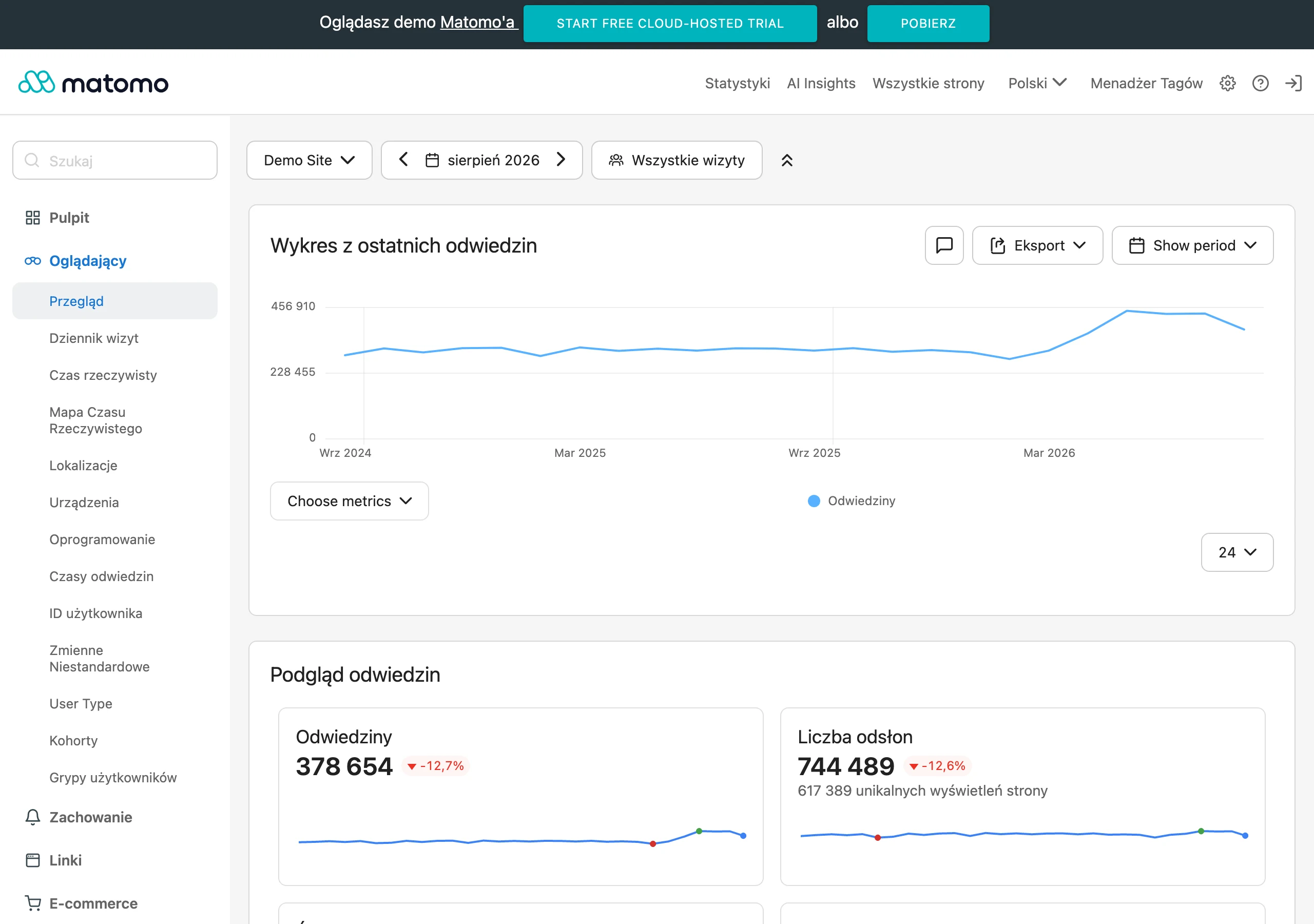
On the SEO and traffic acquisition side, you need to monitor organic sessions on the Black Friday landing page and key categories. You also need rankings and CTR for seasonal keywords, because they show whether the store is capturing promotional demand in search. A drop in CTR despite a good ranking usually points to a problem with the offer messaging or a mismatch with intent. A rise in traffic without a rise in clicks through to categories and products may, in turn, suggest that the hub is not directing users to real offers.
On the sales side, the most important metrics are CR, AOV and revenue per session, but only when combined with margin after discounts. Conversion may rise thanks to deep discounts, while the profitability of the whole campaign may fall at the same time. That is why it is worth separating orders from the main promotion, bundle and cross-sell. If the share of additional products is low, the store may generate turnover without using the basket’s full potential.
You also need to measure the stockout rate, because running out of stock quickly damages the effectiveness of traffic and campaigns. A user landing on unavailable products rarely waits; they simply look for alternatives from a competitor. At the same time, you should monitor page speed, crawl errors and stability under load. These metrics do not look sales-related, but in practice they decide how much traffic can be turned into orders.
The best set of KPIs therefore answers three questions: did the store acquire the right traffic, did it convert it well, and did it do so with an acceptable margin. This structure also makes decision-making easier for the next season. Then you know whether to improve the discount range, product selection, offer structure or the visibility of the page for the season. Without this, it is easy to repeat a campaign that only looks good in one chart.
FAQ
Frequently asked questions
how to prepare a store for Black Friday without lowering margins all year round?
The best approach is to base the campaign on selective, conditional and time-limited promotions rather than discounting the entire range. It is also important to make decisions based on margin, availability and cross-sell potential, not just revenue.
is it worth discounting the whole range during Black Friday?
No, because a broad discount reduces margin and teaches customers to wait for the next sale. As a result, sales in normal weeks fall and it becomes harder to maintain standard prices.
which products are best to choose for Black Friday promotions?
The safest options are overstock, higher-margin variants and complementary products. It is usually better to exclude bestsellers and low-margin SKUs.
why is a permanent Black Friday landing page important for SEO?
A single permanent URL builds visibility better than a new page created from scratch every year. It preserves indexation history, links and signals related to seasonal intent in one place.
which technical SEO issues most often hurt Black Friday results?
Problems can include incorrect indexation, filters and sorting options open to indexing, incorrect canonicals and pages returning 404 after the campaign. Mobile speed and up-to-date data on price, availability and delivery also matter greatly.
which metrics are worth measuring after a Black Friday campaign?
You should look not only at revenue, but also at CR, AOV, revenue per session and margin after discounts. On the SEO and technical side, organic sessions, CTR, rankings, stockout rate and site stability under load are important.