

Seasonality in e-commerce does not forgive late decisions, because the biggest demand appears briefly and quickly increases competition in the search results. An effective plan starts with identifying the peak moment, the pages with the greatest potential, and the actions that will have time to work before the season. The safest approach is to treat 90 days before the season as the minimum window for analysis, implementation, indexing and the first signs of effectiveness. In practice, this means working in parallel on technical SEO, content, internal linking, analytics and visibility in classic Google and AI Search.
How to understand the peak of seasonal demand in e-commerce?
The peak of seasonal demand is the moment when both the number of searches and the user’s readiness to buy increase at the same time. So it is not just about more traffic, but about the period when the same keyword starts to generate more clicks and transactions. This distinction matters, because different pages should be strengthened for inspiration, and different ones for transactional intent.
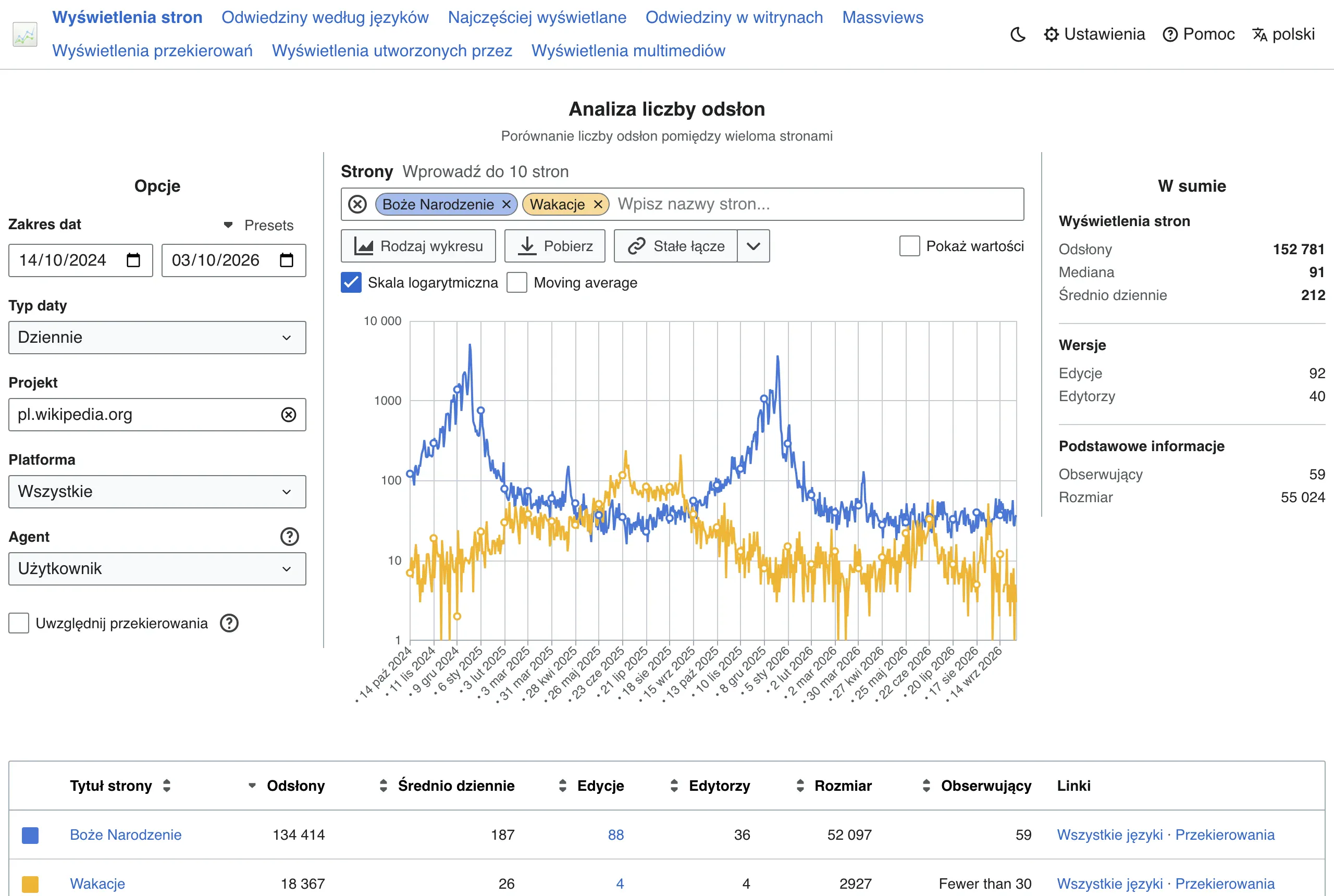
You will most reliably identify such a peak in historical data from Google Analytics, Search Console, sales and Google Trends. Check when organic visits, revenue, number of transactions and queries with time modifiers, for example related to a given year or occasion, increased. If search growth starts earlier than the sales increase, you have a signal that part of the demand is research- or inspiration-driven.
The season term itself is not enough, because demand is distributed across intent clusters. At the beginning, the user looks for ideas and comparisons, then for categories, and closer to the peak for specific products and promotions. In practice, this means the need for a separate plan for inspirational content, category pages and dedicated seasonal landing page‘s. Such mapping makes it easier later to prioritise the URLs that can actually capture traffic and sales.
Why is planning 90 days before the peak crucial?
Planning 90 days before the peak is crucial, because that is usually how long it takes for analysis, technical implementations, content and links to start working in practice. Google has to discover, process and assess the changes, and some effects only appear over time. If you start too late, even good decisions will not have time to translate into visibility before the seasonal climax.
The most practical approach is to divide those 90 days into four stages of work:
- 12 weeks before: analysis of data, trends, seasonal keywords and intent clusters.
- 8 weeks before: content production or content updates and starting link building.
- 4 weeks before: completing the technical audit, indexing, structured data and performance.
- 2 weeks before: intensive rank tracking, CTR, indexing and quick adjustments.
Such a buffer also gives you time to read leading KPIs before you start assessing the business result. Before the season, you can check indexing speed, cluster visibility, average position, CTR, the state of Core Web Vitals and the number of links acquired. This matters because these signals show earlier whether the plan is working than revenue, transactions or SEO’s share of seasonal sales.
The most to lose is the store that creates new URLs every year, removes old pages after the season, or does not synchronise its actions with logistics and stock levels. Then rising demand does not build on earlier page authority, and the user more often ends up with a poor shopping experience. Planning ahead reduces these risks, because it allows you to prepare the site and offer before traffic rises sharply.
How to carry out data and trend analysis for seasonality?
Seasonality analysis is carried out by combining data on historical traffic, sales and visibility with an observation of market trends and competitors. First, identify which categories, products and landing page’s grew before the previous peak. Then check when the increase in clicks, positions and transactions began. This shows how much time your pages need to enter the season with the right visibility.
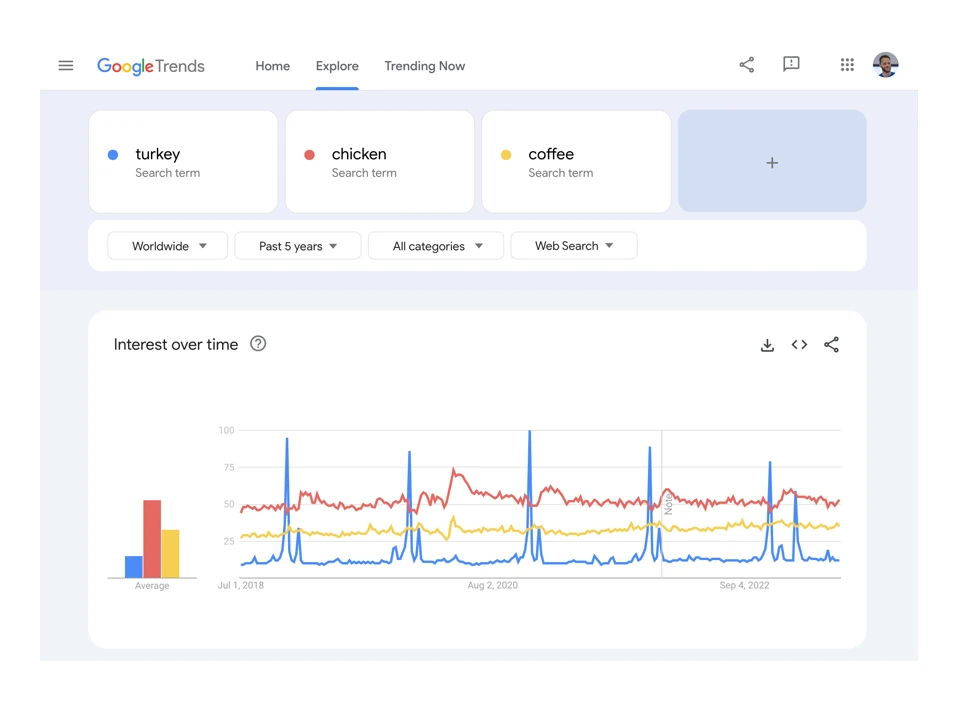
The most valuable data comes from Google Analytics, Search Console, the sales system and Google Trends. In practice, compare the same periods year on year rather than looking only at the last few weeks. Look for the point at which specific URLs start to accelerate, not just the whole store. This makes it easier to distinguish pages that generate revenue from those that only attract informational traffic.
Competitor analysis is needed when you want to assess whether a drop or rise is due to the market or to your own actions. If competitors publish seasonal content earlier or strengthen categories faster, they can capture demand before the peak. It is worth checking which types of pages are gaining visibility and which topic clusters they are on. Such analysis becomes the basis for prioritising pages and further researching seasonal keywords.
How to research seasonal keywords effectively?
You research seasonal keywords effectively when you combine time-based phrases, questions and long tails with real user intent. It is not enough to collect generic high-volume queries. You need to check what the user is looking for at the inspiration, comparison, category-entry and purchase stages. Only this division allows you to choose the right landing page.
In practice, start with core categories and products, then expand them with seasonal modifiers. Look for phrases related to the occasion, the year, promotions, availability and product features. Also include questions, because they often appear earlier than transactional traffic. This is especially important when you want to capture demand before the user types in the name of a specific product.
The easiest way is to group phrases into intent clusters, because this structure immediately suggests the content structure and internal linking. A division into the following usually helps:
- inspiration phrases, which suit guides and idea lists,
- research phrases, which support comparisons and decision-making content,
- navigational phrases, which lead to categories or seasonal landing pages,
- transactional phrases, which should lead to offers, products and promotions.
The research process is effective when every important phrase group has a specific URL assigned to it, or a plan to create one. If several phrases lead to one intent, do not create multiple competing pages. It is better to strengthen one category or a permanent seasonal landing page and update it regularly. This makes it easier to build URL authority and later optimise for AI Search.
How to optimise landing pages for user intent?
Landing pages are optimised for intent by matching the URL type, messaging and on-page elements to the stage of the purchase decision. Inspiration phrases are usually better served by guides and idea lists, while navigational and transactional phrases are better served by categories and seasonal landing pages. First choose the URLs with the highest revenue potential, because they should get priority in content, internal linking and implementation.
The page must make it immediately clear that it answers the user’s query precisely. The SEO title, H1 heading, opening paragraphs, FAQ and CTA should speak the same language of intent. For comparisons, what matters is helping with the choice; for categories, clear navigation; and for seasonal offers, availability, promotion terms and a fast purchase path. Overly generic content reduces the page’s relevance, even if the phrase itself has high demand.
Effectiveness is also strengthened by internal linking to priority pages from the menu, homepage, parent categories and related articles. If a given occasion returns every year, it is better to keep a permanent URL and only update the content, rather than building a new address from scratch. It is also worth adding structured answers, FAQ and the right structured data, because they make it easier for the search engine and AI Search to understand the page.
How to avoid typical mistakes and risks in seasonal planning?
Typical mistakes are avoided by starting early, keeping URLs permanent, maintaining pages after the season and working closely with logistics. Most problems come not from one bad decision, but from delays and inconsistencies between SEO, the offer and the operations team. Before the season, it is worth checking five areas in particular.
- A too-late start, which leaves no time for indexing, links and initial adjustments.
- Creating new seasonal URLs every year instead of strengthening existing pages.
- Removing pages after the season or redirecting them to the homepage.
- Failing to synchronise promotional content with stock levels and logistics.
- Ignoring page performance and stability under heavier load.
Each of these mistakes affects a different stage of the result. New URLs do not have accumulated authority, removed pages lose their history, and unavailable products damage the experience and conversion. Performance problems reduce usability at the most valuable moment, so both SEO KPIs and sales results suffer. After the season, do not close the topic; instead, tidy up the page, remove out-of-date messages and leave it ready for the next cycle.
How to measure the success of SEO activities in the context of seasonality?
Success of SEO activities in season is measured through a combination of leading and business metrics. Transactions alone show the final effect, but do not give you time to make adjustments before the peak. That is why you should monitor organic visibility for seasonal clusters, average position, CTR, indexing pace, Core Web Vitals status and the number of links acquired in advance. If these signals are not growing before the season, it is usually already too late to catch up calmly in the peak week.
In practice, measure these data for specific priority pages, not just for the entire store. A gift category page may be growing while the rest of the site stands still, and it is this page that will determine the seasonal result. It is worth comparing week on week as well as year on year for a comparable period. This setup shows whether real readiness to enter the peak is improving.
You will assess business success by organic revenue, number of transactions, conversion rate, average order value and the share of SEO in seasonal sales. These metrics verify whether the pages, intents and priorities of activities were chosen well. When visibility grows but sales do not, the problem usually lies in offer fit, product availability, promotional communication or the user experience. That is why result analysis should combine SEO, sales and operational data.
For informational content, it is also worth additionally monitoring the impact of AI Search on CTR and the share of zero-click queries. A drop in clicks does not always mean weaker visibility, because some of the answer is delivered to the user without entering the site. In such a case, check whether the brand and pages still appear for important seasonal topics. This is particularly important where guides and FAQs are meant to support later transactional traffic.
FAQ
Frequently asked questions
How do you identify the peak of seasonal demand in e-commerce?
The best approach is to check historical data from Google Analytics, Search Console, sales and Google Trends. It is important not only when traffic grows, but also when clicks, transactions and revenue start to increase.
Why is it worth starting SEO activities 90 days before the season?
Because that is usually how long it takes for analysis, technical implementations, content, links and the first effects in Google. If you start later, the changes may not have time to work before the peak demand.
What data should you check when analysing the seasonality of an online store?
The most important data comes from Google Analytics, Search Console, the sales system and Google Trends. It is worth comparing the same periods year on year and looking at specific URL addresses, not just the whole store.
How do you research seasonal keywords to choose the right pages?
Keywords should be grouped by intent: inspirational, research, navigational and transactional. Each group should have a specific URL assigned to it, or a plan to create one.
How do you optimise seasonal pages for user intent?
The content, SEO title, H1, first paragraphs, FAQ and CTA must match the stage of the buying decision. Inspirational guides work differently, while categories and transactional landing pages work differently.
What mistakes most often ruin seasonal planning in e-commerce?
The most common problems are starting too late, creating new URLs every year, removing pages after the season and failing to synchronise with stock and logistics. Poor page performance and not maintaining pages after the season also cause damage.