

Seasonal marketing without chaos in Q4 requires work spread across the whole year, not just a stronger campaign at the end of the year. The best results usually come from a data-driven approach, because seasonality rarely matches a simple quarter-by-quarter split. For some companies, the greatest potential lies in one peak; for others, in several smaller waves of demand. If you only start planning for a season when everyone else is already communicating it, you are usually simply too late. That is why you first need to identify the real seasons, and only then decide where to invest time, budget and content.
Data analysis and identifying seasons as the foundation of seasonal marketing strategy
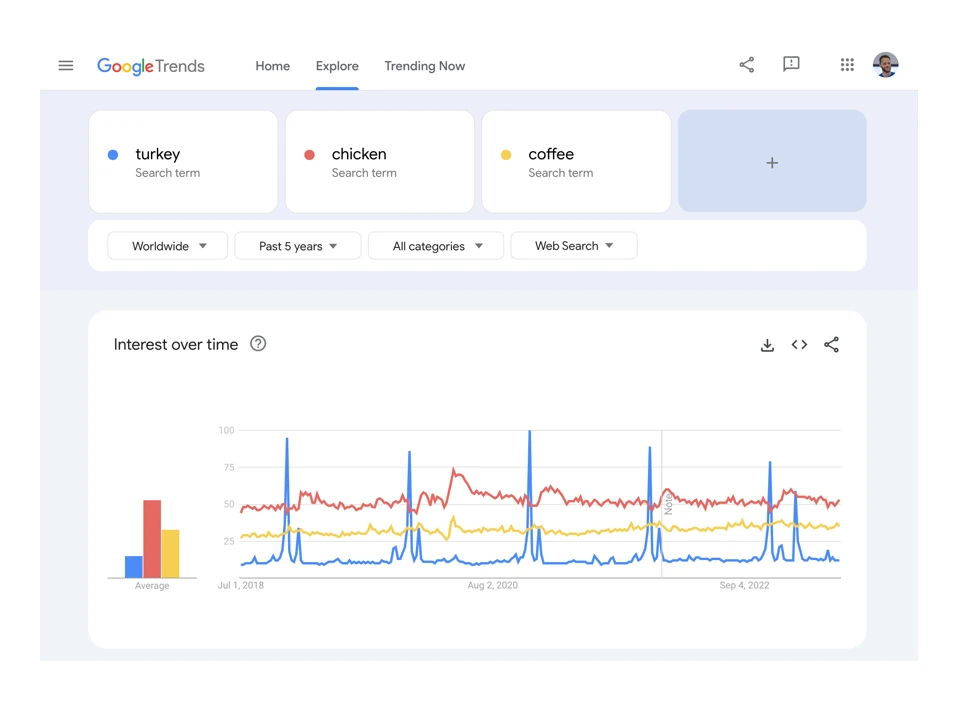
Data analysis and identifying seasons are the foundation of the strategy, because they show when demand really grows, not when it seems it should grow. In practice, you need to combine several sources: Google Trends, search volume data, history from Google Analytics and Search Console, as well as sales from CRM or ERP. Only this combination allows you to distinguish a short-lived trend from a repeatable pattern. This matters because a misread of the season leads to the wrong publication schedule, promotions and rollouts.
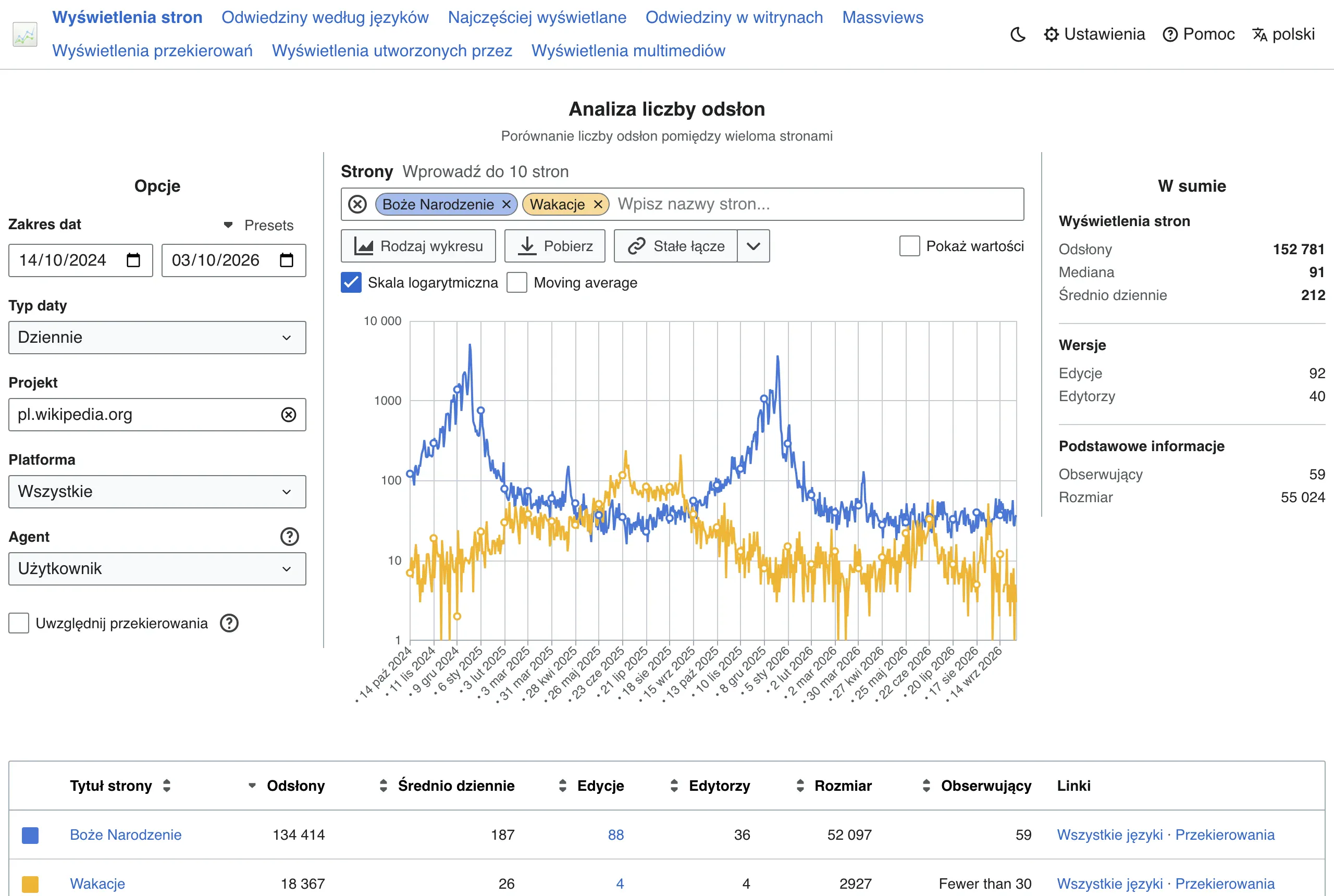
The biggest mistake is looking only at one peak, usually the most obvious one. Data often shows micro-seasons alongside the main season, that is, smaller opportunities with real traffic and sales potential. In many industries, these are what make it possible to spread results across the whole year and reduce dependence on Q4. In addition, you need to check geolocation, because the same product may have a different moment of interest in different markets.
A good analysis ends with a seasonality map, not just a chart. Such a map should show the main seasons, micro-seasons, queries growing earlier than sales, and differences between markets and categories. This makes it easier to decide which topics deserve dedicated resources and which only need support within the content. This is the stage that provides the data for later prioritisation of activities and budget.
Understanding the nature of demand seasonality and its impact on planning activities
Demand seasonality means that interest does not rise suddenly on the purchase day, but develops in waves. The user first looks for inspiration, then compares options, and only later chooses an offer and buys. For planning activities, this means one thing: the moment of highest sales is not the best moment to start communication. If the brand appears only at the final decision stage, it often loses to competitors that were present earlier.
In practice, you need to distinguish between main seasons and micro-seasons, and assess their timing separately. Holidays, summer or the gifting period have a broad reach, but smaller occasions also generate specific waves of searches. These waves differ in length and dynamics depending on the category and market. That is why an action plan should not be based on one calendar for the whole business if the offer has several product lines or operates internationally.
Understanding this mechanism changes the way you plan content, campaigns and team resources. Inspirational content needs to be prepared earlier, because it works at the stage of discovering needs, not at the final click. By contrast, comparison and sales materials must be ready when demand begins to accelerate. This split helps build visibility and sales also outside Q4, instead of concentrating all the effort in one overloaded period.
The importance of lead time in SEO for effective use of seasonality
Lead time in SEO means that visibility for seasonal keywords needs to be built months before the demand peak. Publishing content alone is not enough, because the search engine needs time for crawling, indexing and re-evaluating the page. On top of that comes building topical authority and links, which strengthen trust in the asset. If activities start only in Q4, SEO usually will not have time to support the season in a meaningful way.
In practice, you need to plan content and implementations in advance, from 3 to 9 months, depending on the competitiveness of the topic and the state of the site. A site with history, strong internal linking and a recognisable hub will move faster than a new landing page without support. The more competitive the season, the earlier inspirational content, category pages and supporting materials should appear. This changes the work schedule, because content, technical SEO and outreach must start before the period of greatest sales pressure.
Lead time also affects the order of tasks. First, it is worth preparing durable seasonal pages and their structure, then expanding them with content that matches the next stages of the buying decision. At the same time, you need to plan internal linking and acquiring external links, because authority is not built in a few weeks. This makes Q4 a moment for using work done earlier, rather than a nervous start to the project.
How to prioritise seasons and resources to optimise ROI
Seasons and resources should be prioritised according to return potential, not according to how loud the opportunity sounds in the calendar. Not every season justifies a separate content, technical and link building project. If demand is low, margins are weak, or the offer is not ready, a full campaign usually makes no sense. In that case, it is better to use existing assets and focus greater effort where traffic and conversions can realistically be generated.
The most practical approach is to assess each season against a few consistent criteria:
- organic traffic potential and search volume,
- conversion potential and margin level,
- readiness of the product or service offer,
- availability of the team, budget and technical support,
- strength of competition in that period.
Such an assessment makes it possible to distinguish strategic seasons from supporting ones. A strategic season gets a full plan: dedicated content, implementation, link building and time buffer. A micro-season with lower potential can be handled with an update to an existing hub, internal linking and simpler promotion. The aim is not to be everywhere, but to be strongly present where the offer and resources can translate into results.
Prioritisation also protects the team from overload at the end of the year. When several seasons compete for the same resources, you need to choose which one gets priority in the roadmap. This is especially important when technology, copywriting and SEO share the same bottlenecks. Well-set priorities mean the budget works throughout the year, rather than disappearing in a rush under Q4 pressure.
Creating an annual action plan for a strategic distribution of marketing effort
An annual action plan strategically distributes effort when it turns seasonality into a schedule of work by quarters and micro-seasons. In practice, Q4 should be a moment for using resources prepared earlier, not the start of content production and implementation. Such a plan combines demand data, business priorities and team constraints. This makes it easier to avoid a pile-up of tasks in one period.
The best roadmap starts with a calendar of topics and implementations, rather than the campaign date itself. Inspirational content needs to be planned earliest, then comparison materials, and purchase-focused pages closest to the peak. At the same time, it is worth mapping out technical implementations and the outreach plan, because links and authority also take time. If content, technology and link building do not share a common schedule, the season usually falls apart into disconnected actions.
In practice, an annual plan should include a few fixed elements:
- an editorial calendar for the main seasons and micro-seasons,
- a schedule of technical implementations before traffic increases,
- a plan for acquiring links to the most important assets,
- time buffer for publication delays and offer changes.
A buffer is not an add-on, but a safeguard for the plan. In seasonality, a delay of a few weeks can push publication beyond the moment when interest rises. That is why it is worth agreeing in advance which actions are critical and which can be simplified. This is especially important when several seasons are handled by the same team.
Building a durable evergreen content architecture for long-term success
A durable evergreen content architecture delivers long-term success when, instead of creating new assets every year, you develop one consistent structure. The most practical model is hub-and-spoke, that is, a main topic hub connected to seasonal subpages and supporting content. Such a structure organises the topic for the user and strengthens topical signals for the search engine. As a result, you build subsequent seasons on an existing foundation, rather than from scratch.
The hub should focus on the broad topic, while its branches should handle specific intents and occasions. For example, a permanent hub such as /prezenty can lead to seasonal landing pages as well as guides, inspiration pieces and comparisons. This way, the user reaches the right content format depending on the stage of the decision. Such an architecture also makes it easier to build logical internal linking between pages with a shared context.
The most important rule is: update, do not duplicate. If you publish new URLs every year for the same topic, you break the page history, links and built-up visibility. It is much better to refresh existing landing pages, expand the offer and develop supporting content. Evergreen does not mean unchanging content, only an asset that keeps its URL and grows with each season.
A well-designed architecture also helps outside the season peak. Permanent pages can still capture long-tail traffic, collect links and build topical authority between waves of demand. That is precisely why seasonality does not have to mean short-lived bursts of visibility. With a durable structure, each season strengthens the next instead of starting everything all over again.
Common mistakes in seasonal marketing and how to avoid them
The most common mistakes in seasonal marketing are a late start, ad hoc actions, multiplying new URLs and abandoning pages after the peak. In practice, each of these mistakes lowers visibility precisely when the competition is strongest. If planning begins only in Q4, SEO usually will not have time for indexing, quality assessment and authority building. That is why a season should be treated as a process spread over months, not as a short campaign.
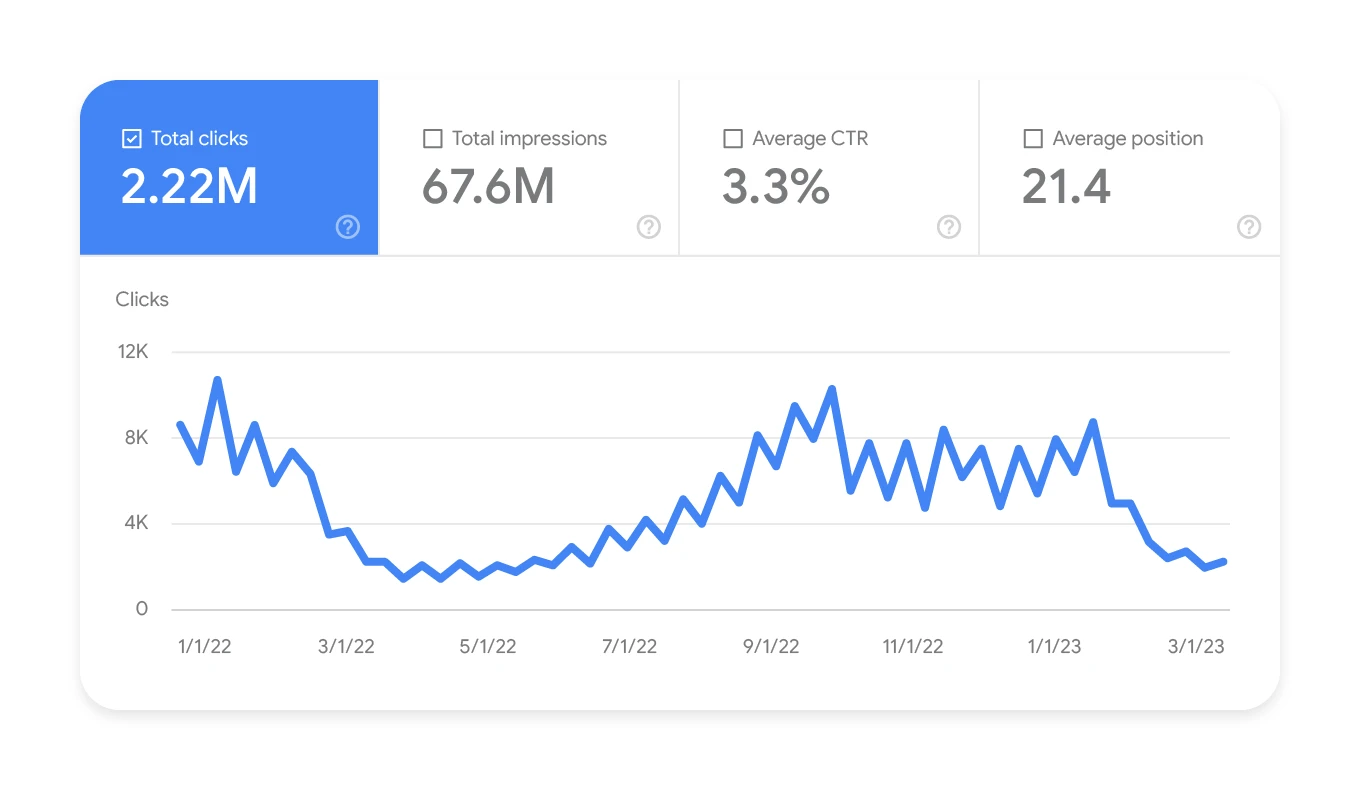
The second costly mistake is destroying the site’s history by creating new landing pages every year, for example with the year in the URL. This approach disperses links, topical signals and performance data, so the next season starts from a lower base again. Hiding pages after the season with noindex, removing them or leaving 404 errors is similarly harmful. It is much safer to keep permanent URLs, update the content and, after the season, direct users’ attention to next season’s offer or evergreen content.
Micro-seasons and long-tail queries are often overlooked too, because the entire budget goes to one biggest peak. That is a mistake, because smaller waves of demand are often less competitive and it is easier to build visibility and sales outside Q4 on them. In practice, it is worth mapping out the main seasons, smaller opportunities and supporting keywords separately, and then assigning realistic resources to them. That way, the team does not burn through the budget on one moment of the year.
The last common problem is a lack of off-season strategy and judging results solely in a last-click model. This kind of measurement understates the value of inspirational, comparison-led content and SEO activities that work earlier than the final conversion. After the season, you need to analyse visibility, indexing of key pages, organic traffic, assisted conversions and the share of revenue from individual periods. If those data lead to specific changes in the roadmap, every subsequent season becomes easier to manage.
FAQ
Frequently asked questions
How do you identify the real demand seasons in seasonal marketing?
You need to combine several data sources: Google Trends, search volumes, Google Analytics, Search Console, and sales from your CRM or ERP. Only that set-up shows when demand really rises and helps you separate a fad from a repeatable pattern.
Is it enough to plan seasonal marketing only around Q4?
No, because seasonality rarely lines up with a simple quarterly split. In many businesses, better results come from spreading activity across the whole year and making use of micro-seasons too.
Why do seasonal content pieces need to be prepared in advance?
SEO needs time for crawling, indexing, page assessment and building topical authority. If you only start in Q4, the content usually will not have time to support the season in a meaningful way.
When is the best time to start SEO work for seasonal keywords?
Usually 3 to 9 months before the demand peak, depending on how competitive the topic is and the state of the site. The harder the season, the earlier content, implementation and link-building should appear.
How do you prioritise seasons if there is no budget for everything?
You should assess each season by traffic potential, conversion opportunity, margin, offer readiness, available resources and competitor strength. Only strategic seasons get a full plan, while smaller ones can be handled with a simpler update and support for existing content.
What is the best content architecture for seasonal marketing?
The hub-and-spoke model works best: a permanent thematic hub linked to seasonal landing pages and supporting content. This structure lets you develop each new season on an existing foundation instead of creating everything from scratch.