
Key differences in the buying cycle between B2B and B2C
In B2C, the buying journey can be short (minutes or days), while in B2B it usually stretches over time (weeks–months), because the cost and risk on the client’s side are incomparable. In B2C, the decision may concern a simple purchase in e-commerce (e.g. shoes), where the risk is relatively low. In B2B, a purchase is often tied to implementation and integrations (e.g. choosing an ERP system), which lengthens the process and increases the number of steps along the way. In practice, this means that a B2B strategy must allow for a longer client “maturation” period and more touchpoints than in B2C.
The B2B process is also complicated by the fact that the decision is made by a buying committee (user, manager, IT, finance, procurement), and each role needs different arguments. In B2C, the decision is usually made by one person (sometimes a couple/family), so the path is simpler and more often closed without delay in the basket. In the area of trust, B2C focuses on the question “will I like it and will it arrive on time?”, which is why reviews, returns and fast service matter more. In B2B, the key question is “will the supplier deliver the project and remain stable for 2–3 years?”, so references, case studies, SLAs and security carry more weight.
- 01Cycle durationB2C: Minutes or days; B2B: Weeks–months
- 02Decision-making processB2C: One person (individually); B2B: Buying committee (multiple roles)
- 03Purchase complexityB2C: Simple purchases (low risk); B2B: Implementation and integrations (high risk)
A B2B strategy requires longer customer “maturation” and more touchpoints because of the higher risk and complexity.
How emotions and rationality influence buying decisions in B2B and B2C
Emotions drive decisions more strongly in B2C, whereas in B2B the message must rely more heavily on “justification” through hard arguments. In B2C, lifestyle and aspiration-related triggers mean that short video formats and UGC content can clearly increase CTR. In B2B, emotions also matter (e.g. fear of failure and reputational risk), but the audience expects evidence and coherent business logic. That is why in B2B it is worth building the message around figures such as ROI, TCO, reduced working time or compliance with standards, rather than relying solely on an appealing creative.
The differences on the “emotion vs rationality” axis also affect which proof elements genuinely build credibility in internet marketing. In B2C, the user looks for social proof (“are other people happy?”), which is why reviews and customer photos are worth their weight in gold, as are clear returns policies and efficient service. In B2B, trust is more often triggered by elements the organisation can easily verify: client logos, video references, G2 ratings and security certificates (e.g. ISO 27001). At the same time, B2B needs storytelling grounded in facts, i.e. a customer implementation story tied to metrics and technical requirements. This approach shortens the distance between “interest” and a real conversation with IT and procurement.
Strategies for segmentation and persona building in B2B and B2C marketing
Strategies for segmentation and persona building in B2B and B2C differ above all in the data and audience questions on which you base communication alignment. In B2C, it is worth building personas on purchasing behaviour, product categories and sensitivity to promotions, because the user is looking for fit with their lifestyle and a specific “occasion”. For example, the “bargain hunters” segment will respond to discount codes, while the “premium” segment will respond to limited collections and fast delivery. In B2B, the starting point is roles within the company (e.g. champion/user, budget decision-maker, IT/security, procurement), because each asks different questions and expects different arguments.
In B2B, segmentation is best started from the ICP (Ideal Customer Profile), i.e. the profile of companies with the highest likelihood of purchase and retention, determined by factors such as industry, size, tools used and “triggers” (e.g. expansion or recruitment). Intent in B2C is often visible directly in on-site behaviour (product views, add to basket, abandoned basket), whereas in B2B it shows in the “depth” of research (whitepaper download, webinar attendance, visits to pricing and integration pages). The most practical approach in B2B is to combine fit (ICP fit) with intent, so that content and campaigns work towards leads with real potential. In both models, the importance of 1st-party data is growing: in B2C this will be the customer account and purchase history, while in B2B it will be primarily the CRM and account activity in an ABM approach.
- Start with data: in B2C, analyse on-site behaviour and search queries from the store search, while in B2B, rely on CRM and activity around content such as pricing, integrations and downloadable resources.
- Define profitability segments: in B2C, take differences in margin and returns into account, while in B2B, segment accounts by LTV potential (e.g. number of seats/licences) and implementation costs.
- Collect qualitative insights: in B2C, pop-up surveys (e.g. Hotjar) will help, while in B2B, 30–45 minute interviews with customers, analysis of sales calls (e.g. Gong) and reasons for “lost” in CRM.
- Map the decision journey and match content: B2C is touchpoints from the ad to checkout, while B2B is stages from the problem to demo, security review and negotiations.
- 01Differences in B2B segmentationBased on roles, ICP and company data
- 02Differences in B2C segmentationBased on behaviour and buying occasions
- 03B2C example (occasions)Promotions for “deal hunters”, premium for “premium segment”
- 04B2B example (roles)Different arguments for decision-makers, IT and users
Summary: The key difference is the data source and the type of audience questions – behaviours and occasions in B2C vs. roles and company profiles in B2B.
Choosing channels and media in B2B and B2C campaigns
Channel selection and media in B2B and B2C are worth basing on the type of search intent, the way targeting works and whether the goal is a quick transaction or rather guiding the customer through a longer research process. In B2C, search is often heavily product-led, so Google Shopping and Performance Max often become the main sales engine. In B2B, problem-based and comparison keywords dominate (e.g. “CRM for service companies”, “alternative to HubSpot”), so SEO and campaigns on “solution/competitor” terms work better. The differences are also visible in social ads. B2C often scales demand through Meta Ads and TikTok Ads (lookalike, purchase signals), whereas B2B is more likely to use LinkedIn Ads, targeting by job title, industry and company size.
In e-mail marketing, B2C is dominated by purchase automations (abandoned cart, recommendations, birthdays, replenishment), while B2B relies on educational sequences (usually 5–7 emails) and role-based personalisation, which are meant to lead to a call or demo. Content distribution in the “earned media” model also follows different rules. In B2C, influencers, reviews and price comparison sites matter, while in B2B, partner webinars, citations in reports, conferences and reviews on G2. If you use LinkedIn Ads in B2B, it makes more sense to optimise for MQL/SQL rather than CTR alone, because clicks without quality do not translate into sales conversations. In addition, in both models the website matters a great deal. In B2C it should shorten checkout as much as possible (e.g. BLIK, fast payments, clear delivery and return costs), while in B2B it should build trust and collect leads (a “Security” section, integration documentation, a calendar for demos and qualification forms).
Remarketing is worth matching to the pace of decision-making. In B2C, product remarketing (dynamic ads) can work well for abandoned carts, whereas in B2B it is better to suggest further materials (case, ROI calculator, webinar), because a repeat click rarely ends in an immediate purchase. In B2C marketplaces (e.g. Amazon, Allegro), customers expect a fast and secure purchase, but margins and brand control remain a limitation, while in B2B the importance of ecosystems is growing (e.g. Salesforce AppExchange, HubSpot Marketplace) as a place to look for integrations. PR in B2C more often supports launches and seasonal campaigns, while in B2B it is meant to confirm expertise through industry reports, expert commentary and publications in industry media. Offline can also genuinely strengthen online. In B2C, a pop-up store or event provides content for social and builds a list of subscribers, while in B2B trade shows and conferences need to be linked with CRM (badge scanning, source tagging and follow-up within 24–48 hours), so that leads do not “go cold”.
Effective content formats for B2C and B2B
In B2C, the formats that work best are those that quickly show the product in use, namely short video, buying guides and UGC content, because the audience wants to see the product “in real life” and make a decision without delay. In practice, Reels/TikTok and simple materials answering questions about fit with lifestyle are effective. For example, a cosmetics brand can publish “before/after” tests and skincare checklists, driving traffic to specific product sets. Such content supports both the inspiration stage and a smooth transition to the product page.
In B2B, greater weight is placed on evidence- and process-based content, such as whitepapers, case studies, webinars, demos, competitor comparisons and integration documentation. A good case study should include the client’s industry, the problem, the implementation description, metrics (e.g. reduced working time) and a quote from the decision-maker, because that makes it easier to assess the risk and credibility of the supplier. In B2B, content is not only meant to spark interest, but also to guide the company through the evaluation process: from educating the market about the problem, through ROI and comparisons, all the way to “purchase” materials such as SLA and security. As a result, content that simultaneously addresses the needs of the user, IT/security and finance becomes more important.
The most practical approach is to design content around funnel stages, and then recycle materials to reduce production costs and speed up distribution. In B2C, the top of the funnel is inspiration (lookbook, trends), and the bottom of the funnel is reinforced by the product page, reviews and FAQ on delivery and returns. In B2B, a webinar can be repurposed into an SEO article, a series of LinkedIn posts, an email nurturing sequence and a PDF for sales reps, which lets you squeeze more value out of a single topic. At the same time, it is worth maintaining a content ops process: in B2C this is about fast, high-volume production with an asset library and hook testing, while in B2B it is about marketing–product–sales collaboration with editorial review and updates after changes to features or legal terms.
- 01Short video and UGCQuick inspiration, product in use
- 02Guides and checklistsQuick purchase decision
- 03Case study and whitepaperEvidence and processes-based
- 04Webinars and demoDocumentation, integrations, comparisons
The key is to match the format to the decision stage and the customer’s needs in B2C (quick result) or B2B (knowledge and evidence).
Automation and management of sales funnels in B2B and B2C
In B2C, funnel automation should primarily increase transaction conversion and basket value, because success is measured by purchase completion in e-commerce. In practice, abandoned basket automations, upsell in the basket and solutions that shorten payment (e.g. one-click payments) are implemented, because even a small increase in CR has a major impact at high traffic volumes. Behaviour-based automations (browsed categories, last purchase) also help increase AOV and repeat visits. Standard flows include welcome, post-purchase, winback after 30–60 days and cross-sell of complementary products.
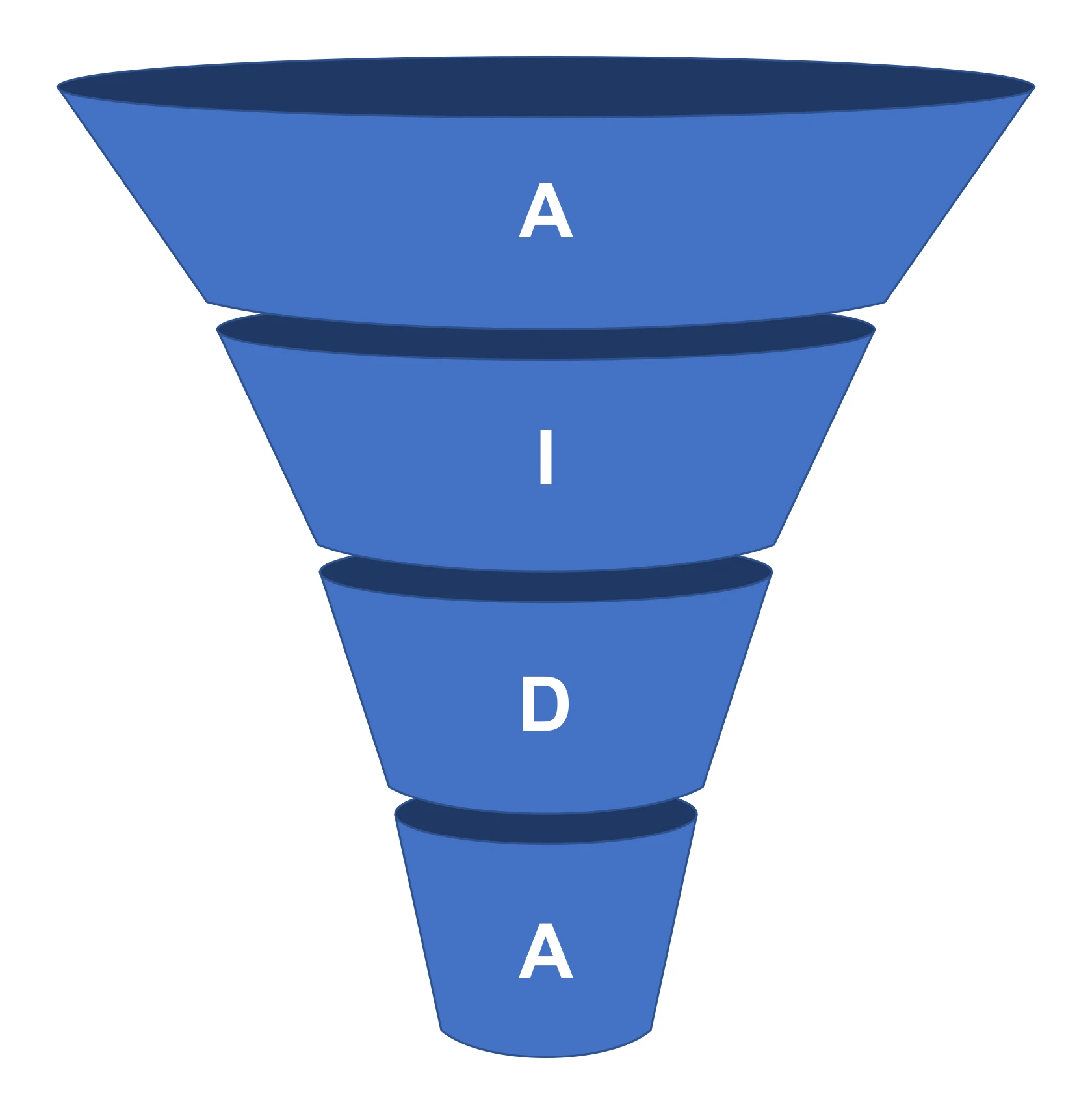
Automation of the funnel in B2B should deliver leads that the sales team can actually close, which is why the foundation is clear MQL/SQL definitions and quality control right at the top of the funnel. It is worth basing lead scoring both on fit to the ICP (e.g. industry, headcount) and on intent (e.g. visits to pricing and integrations pages, downloads), and tools such as HubSpot, Marketo or Salesforce Pardot make it possible to set thresholds and automatically route leads to SDRs. In B2B, nurturing must sustain attention during longer research cycles, guiding the audience from the problem to a specific use case, and only then to a demo with a consultant. After downloading an e-book, a sensible sequence might be sending a calculator, then a case study from the same industry, and finally an invitation to a call.
- Set the required fields in the form and the qualification criteria (e.g. industry, size, budget), so that marketing does not report only volume and sales does not reject leads as “not a fit”.
- Integrate analytics with the CRM (GA4 and Google Ads/LinkedIn Ads with HubSpot/Salesforce) via native integrations or Zapier/Make, so you can assess pipeline and revenue per source, not just the number of enquiries.
- Implement routing and a marketing–sales SLA: a lead after a demo request should receive contact within 5–15 minutes, and an example SLA is 1 hour for the first contact, with automatic assignment and alerts in the CRM.
- Plan post-sale activities: in B2B, the hand-off to Customer Success should include the client’s goal, implementation scope and risks, and onboarding based on a checklist (e.g. over 30 days) supports feature adoption, reduces churn and increases upsell.
Managing the funnel in B2B is increasingly expanding to include an ABM approach, i.e. campaigns targeted at a list of specific accounts instead of “random leads”. In practice, this combines an account list with LinkedIn campaigns targeted at companies, personalised landing pages and outbound SDR activity, measuring the impact on meetings and pipeline. At the same time, once the sale is closed, marketing should not “disappear”: lifecycle campaigns (feature adoption, QBR, industry case studies) support account growth and can generate referrals. This allows you to close the loop between acquisition, retention and further revenue growth in the B2B model.
Key success metrics and attribution in B2B and B2C marketing
Key indicators of success in B2C focus on sales profitability, whereas in B2B they focus on how marketing affects the pipeline and revenue. In e-commerce you most often answer the questions “how much does a sale cost?” and “is the campaign profitable?”, so you measure ROAS, CAC, AOV, conversion rate, the share of new vs returning customers, and returns (return rate). In B2B the key question is “how much pipeline and revenue does marketing generate?”, so MQL→SQL, cost per SQL, cost per meeting, pipeline velocity, win rate and CAC payback matter more. In practice, this means that in B2B it only makes sense to look at CPL at the very end, because a cheap lead may have no sales value at all.
Attribution in B2C is usually easier, because purchase journeys are shorter and it is more often possible to rely on last-click with adjustments (e.g. data-driven in GA4). At the same time, iOS/consent limitations can undercount measurement, so it is sensible to back this up with modelling (GA4), incrementality tests and cohort analysis (e.g. comparing regions with and without a campaign). In B2B, last-click most often distorts the picture, because before a demo there may be 8–15 touchpoints. That is why in B2B it is better to implement multi-touch in CRM (e.g. HubSpot Attribution, Dreamdata) and check channel impact across stages: first visit, MQL, SQL, pipeline and closed-won.
Reporting and data quality determine whether KPIs genuinely support budget decisions in both models. Dashboards in Looker Studio or Power BI with daily updates let you quickly answer the question “what is working this week?”, and in B2B it is worth adding views per ICP segment and per account (ABM), while in B2C per category and margin. In e-commerce, proper e-commerce tracking (GA4, Enhanced Ecommerce) and alignment of data with ad platforms are crucial. In B2B, UTMs, lead deduplication in CRM and tracking the source at contact and company level are equally important, because otherwise attribution will “drift apart” after 2–3 months.
Benchmarks help set realistic expectations, but they need to be interpreted in the context of the buying model. In B2C, e-commerce conversion often ranges around 1–3% (depending on category and device), and e-mail flows can deliver a large share of revenue at a relatively low sending cost. In B2B, form conversion on cold traffic is often below 1%, so more useful targets are “cost per meeting” and “pipeline per 1000 sessions” rather than simply comparing yourself with e-commerce. If you additionally run incrementality experiments, in B2B a sensible approach is a holdout on ABM lists (some accounts without ads) and measuring the difference in the number of meetings and pipeline value. This approach better answers the question of whether ads actually accelerate sales.
Budgeting and customer retention in B2B and B2C strategies
Budgeting in B2C is usually seasonal and geared towards rapid scaling, whereas in B2B it is planned around return on account acquisition over time and pipeline coverage. In B2C the budget works hardest during promotional and holiday periods, so the ability to quickly adjust spend to demand and control margin after discounts and delivery costs matters. A practical standard in B2C is to leave room for creative and offer testing (e.g. 10–20% of the budget), so optimisation does not get frozen during the season. In B2B, the starting points are CAC payback and pipeline coverage, and when the cycle lasts 3–6 months, you need stable demand investments (content/SEO) and precise high-intent campaigns rather than short bursts.
The offer and pricing policy in B2C is more often based on promotions, whereas in B2B it is based on conditions resulting from volume and contract length, as well as sales support with financial arguments. In B2C discount codes, 2+1 type offers or free delivery above a certain threshold are a fixed part of the game and translate directly into conversion. In B2B discounts usually result from volume or contract duration (e.g. a discount for annual payment), and it is worth backing the offer with an ROI calculator and a clear implementation scope. The choice between free trial and demo in B2B comes down to whether the product can be launched independently without major obstacles: self-serve SaaS more often wins with a trial, while solutions with integrations usually require a demo and consultation. This makes it possible to align the media and sales budget with the real implementation “friction”.
Retention in B2C grows through loyalty, personalisation and service quality, while in B2B it grows through onboarding, feature adoption and account development after implementation. In e-commerce, loyalty programmes (points, tiers), personalisation and efficient returns handling directly translate into repeat purchases and reviews, which affects conversion. For example, a supplement shop can set replenishment reminders every 25–30 days and subscription bundles with a 5–10% discount to increase purchase regularity. In B2B, a client stays when the solution “takes hold” in the organisation, which is why investments in onboarding, training and communicating value over time are part of the marketing strategy, not just an area of customer service. Lifecycle campaigns (feature adoption, QBR, industry case studies) support upsell, and Customer Marketing can deliver references and referrals.
Alignment between marketing, sales and customer service in B2B and B2C strengthens retention and budget efficiency, although it works in different ways. In B2B, the biggest difference is the need to close processes: shared MQL/SQL definitions, a weekly feedback loop and shared goals such as “pipeline”, rather than a tug of war over lead volume alone. In B2C, service quality (response time, complaints) affects reviews and returns, and therefore campaign performance and conversion. In B2B, support and customer success build references that become fuel for marketing (case studies, video testimonials, joint webinars). As a result, it is worth planning budgets and retention activities in both models as part of one system, rather than separate “departments” without shared metrics.
FAQ
Frequently asked questions
How does the buying cycle differ in B2B and B2C?
In B2C, the buying journey usually takes from minutes to days, while in B2B it most often stretches over weeks or months. This is due to the higher cost, greater risk and more steps on the client side.
Does brand trust work differently in B2B and B2C?
Yes, in B2C trust is built mainly by reviews, easy returns and efficient service. In B2B, references, case studies, security certifications and supplier stability play a bigger role.
Why do you need to create content for different roles in a company in B2B?
Because the purchasing decision is usually made by several people, and each of them looks for different arguments. The user, IT, finance and procurement assess the offer from a different perspective.
Which marketing channels work best for B2B and which for B2C?
In B2C, Google Shopping, Performance Max, Meta Ads and TikTok Ads work strongly. In B2B, SEO, LinkedIn Ads and content and campaigns based on problem-based and comparison keywords are more effective.
Which content formats are effective in B2B and which in B2C?
In B2C, short videos, buying guides and UGC content work well because they quickly show the product in use. In B2B, whitepapers, case studies, webinars, demos and integration documentation are better.
How is marketing effectiveness measured in B2B and B2C?
In B2C, the most important metrics are sales profitability indicators such as ROAS, CAC, AOV and conversion. In B2B, marketing is assessed primarily by its impact on the pipeline and revenue, not just the number of leads.