
Foundations of mathematics in AI: key concepts and their application
Mathematical foundations in AI are needed so that you can understand data representation, the mechanics of learning and the meaning of metrics, rather than just “run training”. In practice, AI data (images, text, signals) is stored as tensors, and learning boils down mainly to matrix operations, which is why linear algebra comes back at almost every step. Differential calculus explains where the “learning” in neural networks comes from: the gradient of the loss function and backpropagation lead to weight updates in SGD/Adam. Statistics and probability, in turn, help measure uncertainty, interpret classifier results and distinguish real improvement from pure chance.
To quickly build an intuition for “what is happening under the hood”, it is worth focusing on linear algebra (vectors, L1/L2 norms, eigenvalues, SVD) and on the gradient and the chain rule. These elements explain, among other things, PCA, training stability and embeddings in NLP, as well as why too high a learning rate (e.g. 1e-1) can cause loss oscillations, while a lower one (e.g. 1e-3) stabilises training. In practical tasks, you may encounter, for example, reducing 768-dimensional BERT embeddings to 50 dimensions using PCA to speed up clustering. These are “hard” skills that translate into model decisions and experiment duration.
It is also crucial to understand quality and validation, because without that it is easy to draw false conclusions in ML. The question “is 95% accuracy a lot” makes no sense without the context of imbalanced classes and the cost of errors, which is why it is worth mastering precision/recall, F1, ROC-AUC, PR-AUC, as well as MSE/MAE and selecting the decision threshold to meet business requirements. Additionally, if the goal is to check whether a difference in a metric is “real”, confidence intervals and bootstrap help (e.g. 10,000 samples), because an improvement in AUC of 0.842 vs 0.848 may turn out to be insignificant. The most common trap in learning and work is incorrect validation and data leakage, so it is worth sticking to a hard rule: fit preprocessing only on train.
At the start, you do not need to know everything perfectly, but it is good to have a plan for filling gaps in parallel with coding. You can build the minimum mathematical threshold in 4–6 weeks, spending 30–45 minutes a day on the basics: vectors, derivatives, probability and metrics. A sample rhythm is 2 weeks of linear algebra (Khan Academy/3Blue1Brown), 2 weeks of calculus (Paul’s Notes) and 2 weeks of statistics (StatQuest). Such a study structure supports practice: you spot overfitting faster (bias–variance and L1/L2 regularisation, early stopping, dropout) and better understand why cross-entropy is the standard in classification (entropy, cross-entropy, log-loss).
- 01Linear algebraData representation and operations
- 02Differential calculusLearning, optimisation and gradient
- 03Statistics and probabilityUncertainty, interpretation and metrics
Understanding data, the mechanics of learning and the meaning of results
Python and tools for working with data: how to start a career in AI
The easiest way to start a career in AI is by mastering Python and tools for working with data, because most ML pipelines begin with cleaning, aggregation and validation of data. You do not need to know Python “perfectly”, but you do need solid practice with data structures, functions, classes and typing. In day-to-day work, list/dict, list comprehensions, generators and error handling are useful, and types (mypy, pydantic) support production projects. For example, validating a model input schema with pydantic can significantly reduce API integration errors.
In practical AI work, speed and repeatability matter: NumPy/Pandas for processing, SQL for building training datasets and Git for collaboration and reproducible experiments. In NumPy, vectorisation and avoiding loops are key, while in Pandas it is groupby, merge and datetime operations that drive data preparation for training. SQL is often just as important as ML libraries, because data rarely sits in a perfect CSV waiting for you. Master JOIN, windows (window functions), CTE and aggregations so you can build features independently. Version control in Git (branches, pull requests, rebase/merge) ties everything together: models without a history of changes and configuration are harder to keep under control.
- Python (“production” basics): data structures, functions, classes, error handling and typing supported by mypy/pydantic.
- Working with data: NumPy (broadcasting, indexing) and Pandas (groupby, merge, datetime) with an emphasis on vectorisation.
- SQL: JOIN, window functions, CTE, aggregations and the basics of performance (e.g. indexes) for creating training datasets.
- Git and collaboration: pull requests, sensible commits and versioning of training configuration (e.g. in YAML), so that the result can be reproduced later.
- Work environment: isolated environments (conda/poetry), prototypes in Jupyter and moving code into modules run from the CLI.
To avoid wasting time on dependency issues, use isolated environments (conda or poetry) and pin library versions, and treat notebooks mainly as an exploratory stage. Keep production code in Python modules run from the CLI, which makes testing and keeping the repository tidy easier; a typical step is moving a prototype into a package with an entry point python -m train and adding tests in pytest. It is also worth building in software engineering basics from the start: tests (pytest), logging (structlog/loguru), configuration (hydra) and simple patterns (pipeline, adapter). A practical example of a test that “saves training” is checking for the absence of NaN after preprocessing.
Choose hardware and compute to match the task, because not every ML project requires a GPU. Classic scikit‑learn models usually run fast enough on CPU, while deep learning more often needs a GPU — for learning you can use Google Colab (T4/A100 depending on the plan) or a local RTX 3060/4060 (12–16 GB VRAM) for smaller projects. For example, fine-tuning a small text model (e.g. DistilBERT) is realistic on 12 GB VRAM if you choose the batch size sensibly and use gradient accumulation. If you are thinking about deployment, remember that models often end up as an API (REST/gRPC) or batch scoring in the cloud, where storage (S3/GCS), containers (Docker) and running services (Cloud Run, ECS, Kubernetes) come into play.
Machine learning models: from classic algorithms to deep learning
The most sensible path from classic algorithms to deep learning usually means starting with simple models and only adding complexity when the data and the baseline truly justify it. In practice, an ML project is worth opening with a baseline: a simple rule, logistic regression or RandomForest, because it quickly shows whether the problem lies in the data or in the choice of architecture. For example, in churn, the baseline “if there has been no activity for 30 days, then churn” can deliver a surprisingly high recall. Such a reference point then makes it easier to judge whether a more advanced model genuinely adds value.
If your goal is predictions on tabular data, classic supervised learning with boosting (XGBoost, LightGBM, CatBoost) and solid validation usually comes out on top. Regression is used to predict numerical values (e.g. price, demand), while classification is used for labels (e.g. spam/not spam), so right from the start you need to match the type of task to the problem. In practice, LightGBM is often very strong on tabular data, and SHAP helps explain why the model made a given decision (e.g. rejected a loan application). This approach also provides a good foundation for later deployment and quality monitoring.
Unsupervised learning is useful when you do not have labels, yet still want to extract hidden structure from a dataset, such as customer segments. In such a situation, clustering (k-means, DBSCAN) and dimensionality reduction (PCA, UMAP) are usually used, keeping in mind the choice of the number of clusters (e.g. silhouette score) and the methods’ sensitivity to feature scaling. A sample workflow is UMAP + HDBSCAN on customer review embeddings to surface topics without manual tagging. Projects like this are a good demonstration of the ability to work “from data to conclusions” even when full labels are missing.
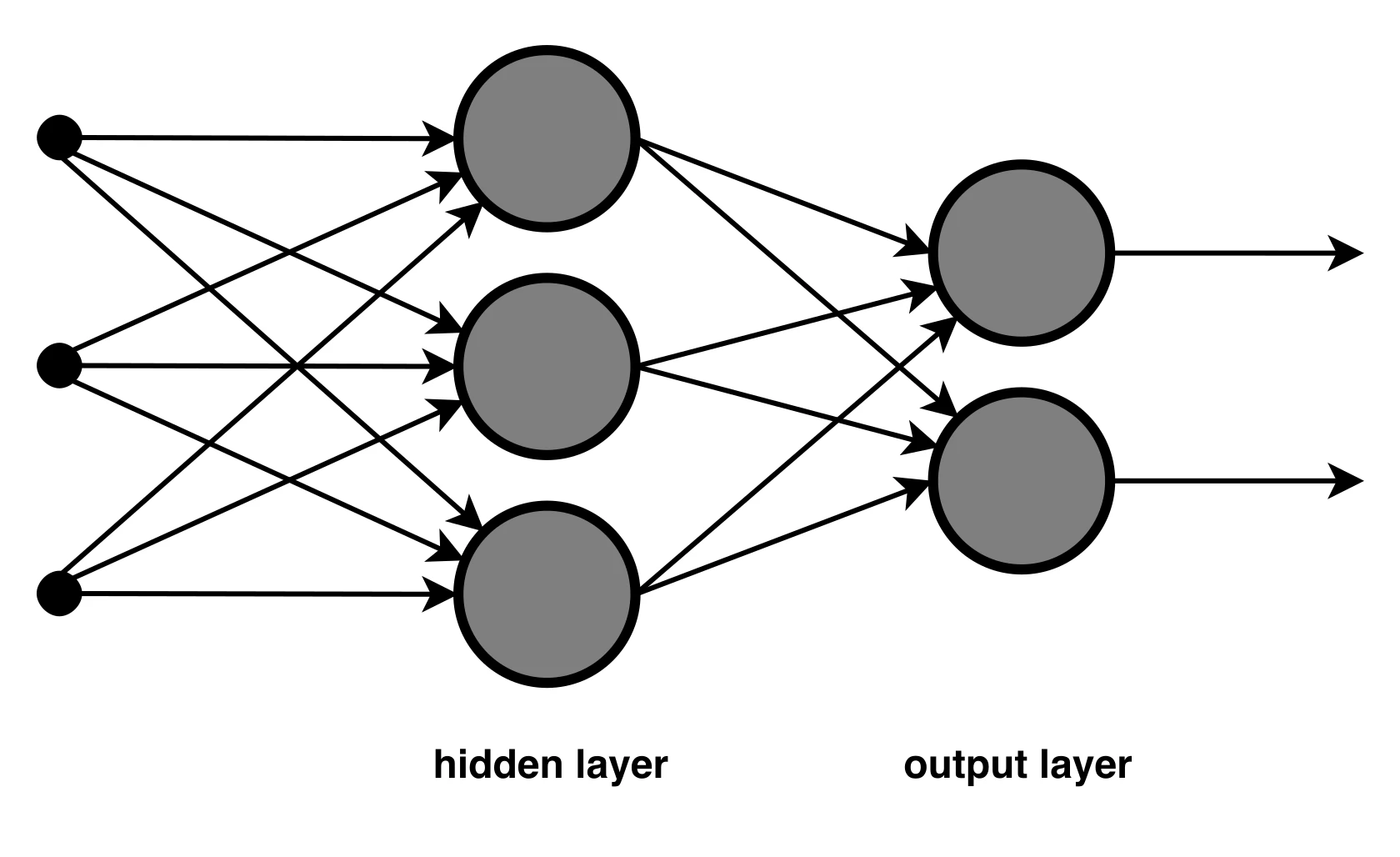
Deep learning makes the most sense for images, audio and text, where representations are complex and transfer learning often brings a clear gain. However, it is worth remembering that on tabular data and small datasets neural networks do not have to perform better, so the decision is best based on experiments and cost calculations. In NLP, transformers are the standard (BERT, RoBERTa, GPT-style): you learn tokenisation (BPE/WordPiece), attention, fine-tuning and evaluation (e.g. F1, exact match), and in practice you use Hugging Face Transformers. In computer vision you will often encounter YOLOv8 (detection) and U-Net/Mask R-CNN (segmentation), where augmentations (Albumentations), metrics (mAP) and annotation quality (Label Studio, CVAT) are key.
The fastest way to make real progress in modelling is systematic debugging: error analysis, learning curves and sanity checks, including trying to overfit a small dataset. If the model performs poorly, the practical question is: does the problem lie in the data, the labels or the pipeline, rather than “what architecture should I add”. For example, when a model cannot overfit 200 examples, this often points to a bug in preprocessing, labels or the way the data is mixed. This approach saves time and reduces the risk of chasing a “better model” when the foundations of the experiment are shaky.
- 01Start simple (Baseline)Simple rules or regression
- 02Add complexityBoosting (XGBoost, LightGBM)
- 03Assess valueCompare with the baseline
Key development path: Build from simple foundations, increase complexity only when justified.
Deployment and model management: MLOps and best practices
MLOps is a set of practices that make it possible to deliver models to production in a repeatable, monitorable and resilient way despite changes in data. The most common reason models “break” after deployment is data drift and a lack of quality control, so the pipeline should verify the schema and distributions before scoring. In practice, schema validation (Great Expectations, pandera) is used, as well as monitoring of missing values, distributions and outliers. A sample warning sign is a jump in the share of missing values in the “country” field from 1% to 15%, which can explain a drop in accuracy within a week.
If you want to be able to reproduce the result months later, version the code, data and models in parallel, and keep artefacts in registries. For dataset snapshots, DVC or lakeFS are most often used, and models are stored in a registry (e.g. MLflow Model Registry, SageMaker Model Registry) to preserve the full experiment history. Feature Store (Feast, Tecton) ensures consistency of features between training and production by exposing the same definitions offline and online. A classic trap is a mismatch in how the feature “number of logins in 24h” is calculated between batch and API, which can throw the results off despite excellent offline metrics.
- Choose the inference mode: batch scoring is usually simpler and cheaper, while real-time requires low latency, caching and scaling (e.g. recommendations <100 ms).
- Containerise the deployment: Docker and the runtime environment (Kubernetes, ECS, Cloud Run) make predictable execution and local testing easier.
- Monitor drift and metrics: tools such as Evidently AI, Arize, WhyLabs help track distribution shifts and quality once labels appear (e.g. PSI > 0.2 as a warning signal).
- Automate the pipelines: Airflow/Prefect for orchestration, GitHub Actions/GitLab CI for tests and builds, and model “promotion” once thresholds are met (e.g. F1 > 0.72).
You need to tailor model deployment to business needs, because different products have different costs and latency tolerances. Batch scoring (e.g. overnight) is often easier to maintain, while real-time requires low latency, caching and scaling, so the architecture should be selected for the specific scenario. Containerisation in Docker and running on Kubernetes/ECS/Cloud Run improve repeatability, but it is worth measuring startup time and RAM usage. For example, an NLP model may use 1–2 GB of RAM, so a 512 MB limit in a serverless environment may end up killing the instance.
You will most often reduce model operating costs by optimising inference: latency, batching, compression and result caching. In practice, quantization (INT8), distillation, ONNX Runtime, TensorRT and caching are used depending on the environment and quality requirements. For example, switching from full BERT to DistilBERT can reduce latency by 2–3× with only a slight drop in classification quality. At the same time, do not ignore security and privacy: when dealing with customer data, the legal basis (RODO/GDPR), data minimisation, anonymisation/pseudonymisation, access control and encryption matter, and in sensitive domains so do approaches such as differential privacy and federated learning.
Career paths in AI: how to choose the right role
You are most likely to find the right role in AI fastest if you match it to whether you are more drawn to data and insights, systems and deployment, language and products, or strictly research work. In practice, the choice most often revolves around paths such as Data Scientist (modelling and experiments), Machine Learning Engineer (production and scaling), AI/LLM Engineer (applications with generative models) or Research Scientist/Engineer (research work). It is also worth thinking in terms of time: a sensible plan is 3–6 months to your first projects and 9–18 months to a junior role, assuming 8–12 hours of study per week. This breakdown lets you quickly feel whether you are closer to iterating on metrics and validation, or to building reliable services and pipelines.
Base your choice of path on the type of work you want to do every day: interpreting results and experiments (DS), shipping to production (MLE), building applications with LLMs (LLM Engineer) or replicating and developing methods (Research). If you are starting from scratch, data analysis can be a good entry point: SQL, dashboards and simple models, with ML added gradually, step by step. The Data Scientist role combines statistics, modelling, A/B experiments and translating results into business language, often with tools such as scikit-learn, boosting and SHAP. In turn, a Machine Learning Engineer places more emphasis on backend and MLOps: Docker, CI/CD, monitoring, inference optimisation and working with the cloud (SageMaker/Vertex AI/Azure ML).
Narrower specialisations make sense when you know that you are interested in a specific type of risk or product. Research Scientist/Engineer requires a solid grounding in deep learning (e.g. PyTorch), the ability to implement methods from the literature and critically assess results, and a typical task is to reproduce the results from a paper and verify whether they hold on your data. AI/LLM Engineer focuses on applications: RAG, tool use, evaluation and guardrails, often with LangChain/LlamaIndex and vector databases (FAISS, Pinecone, Weaviate). If you prefer to combine technology with the market, the AI Product Manager role is based on defining the problem, success metrics, costs and risk constraints, while the AI Safety/Compliance/Governance and AI Security areas focus, among other things, on auditing, bias, red-teaming and resilience against attacks such as prompt injection or data poisoning.
- 01Data ScientistModelling and insights
- 02ML EngineerSystems and scaling
- 03AI/LLM EngineerApplications and generative models
- 04Research Scientist/EngineerResearch work and innovation
Base your choice of path on the type of work you want to do: from data analysis to building systems.
AI learning plan: effective strategies and educational resources
An effective AI learning plan is one that is split into thematic blocks and ends with regular mini-projects instead of passively working through materials. A practical “0→1” framework covers 12 weeks: weeks 1–3 for Python/SQL, 4–6 for classical ML, 7–9 for deep learning, and 10–12 for MLOps and deployment. It is a good idea to finish each week with a mini-project and a short metrics report, because that forces you to understand the decisions you made and their limitations. This structure brings order to the work, reduces chaos and makes it easier to compare progress between weeks.
You will choose the best educational resources when you reach for materials proven in the industry and complement them with practical implementation of the insights. In ML, “Machine Learning” by Andrew Ng (Coursera), fast.ai, “Hands-On Machine Learning” by Aurélien Géron and “An Introduction to Statistical Learning” are often recommended, and when working with NLP, the Hugging Face course as well. For maths, StatQuest and 3Blue1Brown are well suited because they combine intuition with formalism. When you work through a book or a course, consolidate the knowledge by reproducing the solutions in scikit-learn instead of limiting yourself to simply “completing the chapters”.
The fastest progress comes from learning through end-to-end projects and the 30% theory, 70% code rule with results analysis, so you do not get stuck in “tutorial hell”. After each module, build a flow of data → baseline → validation → conclusions → README, and only then expand it with additional elements. Kaggle is especially helpful when you are learning the process: you start with a stable CV score, review notebooks for validation and feature engineering, and only then check stacking and ensembling. To maintain momentum, stick to one path for a minimum of 4 weeks, and note new topics in a backlog instead of interrupting the project you have already started.
You will build lasting skills when you combine practice with revision, reading sources and measurable criteria for progress. In notes and revision, the following structure works well: short definitions + flashcards (e.g. in Anki) and “spaced repetition” of projects, meaning recreating the pipeline every 2–3 weeks. At mid/senior level, analytical reading of scikit-learn/PyTorch documentation and papers becomes increasingly important (problem, method, experiment setup, limitations). Progress is easiest to measure with goals such as: time from data to baseline, ability to explain the metric, and reproducing a model from the README without errors, as well as defending decisions (choice of metrics, validation, threshold) in a short presentation.
Portfolio and recruitment: how to show your AI skills
You will show your AI skills most clearly through 2–3 fully completed end-to-end projects that can be understood and reproduced quickly. In the first few minutes, a recruiter looks for a clearly described problem, data, metrics, conclusions and instructions for running the project, which is why a repository with a clear README is crucial. The README should include installation commands, a validation description, results and solution limitations, rather than just a link to a notebook. A practical example of a strong section is “Reproduction” with commands such as make train and make evaluate, because it clearly shortens the project verification time.
A portfolio gains in quality when you show the full workflow: data → baseline → validation → conclusions → (optionally) deployment and monitoring. A set of projects works well: a tabular project (e.g. churn), an NLP project (e.g. ticket classification) and a deploy project (API + Docker), because together they close the topic of modelling and production realities. If you present only the model, you miss the elements that determine credibility: data preparation, validation and maintenance. The best “proof of skill” is a project with an ETL pipeline → training → model registry → FastAPI endpoint with tests and logging.
Choose data for projects so that you can describe it legally and defend it in an interview. Sources can include Kaggle, UCI, data.gov, Google Dataset Search or company data after anonymisation, and what matters most is not size but the description: column meaning, missing values, bias and label limitations. In recruitment practice, the ability to justify decisions also matters, so it is worth writing short case studies: alternatives, trade-offs, metric selection and a plan for further iterations. For example, you can explain why you chose CatBoost (categories) instead of a neural network and how you verified the impact of leakage.
In interviews and take-home tasks, a repeatable way of working often wins: implemented validation, error analysis and the ability to explain decisions clearly. It is worth practising ML system design thinking, meaning describing the end-to-end architecture: data, training, inference, monitoring, costs and risks, together with SLA requirements (e.g. p95 latency). If you build projects with LLMs, show not only the prompt, but also RAG, sources, tests and limitations — for example, using LlamaIndex/LangChain, a vector DB (Chroma/FAISS) and evaluation on a question set for hallucination. Contributions to open-source also build credibility (bugfix, usage example, regression test), because they show collaboration in a repository.
Your CV and LinkedIn in AI should describe outcomes with numbers, because metrics and costs are clearer than general statements. In project descriptions, include the metric, data scale, inference time and technologies (e.g. PyTorch, MLflow, Docker), and in bullet points emphasise the impact (e.g. “F1 +0.08” or “latency -40%”). This format makes it easier to assess whether you understand both modelling and deployment. An example format is: “Ticket classification API (FastAPI + Docker), F1=0.91 on 50k records, p95 latency 120 ms on CPU”.
Future-facing skills in AI: ethics, law and adapting to change
Future-facing skills in AI are above all the ability to use models safely and responsibly. This includes detecting bias, legal compliance, product thinking and readiness to change tools when necessary. Models can discriminate even without explicit sensitive features, so it is worth knowing how to measure fairness (e.g. demographic parity, equal opportunity) and apply mitigations such as reweighting or post-processing thresholds. In practice, this comes down to a data audit, a disparity report and a decision on how to reduce risk in the product. This is a set of skills that is increasingly appearing in roles related to governance and risk assessment.
From the perspective of law and organisation, the GDPR principles remain key: purpose limitation, data minimisation, transparency and the rights of the data subject. In practice, this means controlling data retention, having a proper legal basis for processing and consistently documenting the decision-making process, especially when automating decisions. If you work with customer data, data minimisation and proper documentation are just as important as model metrics. An example action is preparing a description of features, decision logic and an appeals procedure for a risk assessment model.
Adapting to working “with the business” comes down to being able to explain clearly what the model does, what it does not do and in what situations it makes mistakes. For tabular data, SHAP/LIME are useful, and in RAG applications, rather than “magic”, it is better to show concrete examples of errors and cited sources. At the same time, the importance of product thinking is growing: operational metrics, costs and SLAs (e.g. p95 latency, availability), as well as a retraining plan and fallback. A prototype only becomes a product once you have defined SLAs, a cost budget and a contingency plan for when the model does not respond in time.
To keep up with changes, it is worth sticking to the fundamentals of the process (data → validation → deployment → monitoring), because frameworks and models will change. A critical approach to benchmarks helps separate real value from hype. Ask about test data, leakage, costs and whether the result makes sense for your problem. In a company, the safe use of LLMs is also important: rules on not entering sensitive data, anonymisation, and access and logging control, depending on the policy and privacy configuration. In day-to-day work, soft skills (collaboration, experiment reviews, short decision notes) and domain specialisation also increase the pace of development, because in finance risk and regulation matter, and in medicine the validation process.
FAQ
Frequently asked questions
What maths foundations are most important when learning AI?
The most important are linear algebra, differential calculus, and statistics and probability. They help you understand how models work, how they are trained and how to assess their results.
Do you need to know Python very well to start a career in AI?
You do not need to know it perfectly, but you do need to work confidently with data structures, functions, classes and error handling. In practice, it also matters to be able to use type hints and tools such as mypy or pydantic.
Which data tools are worth mastering at the start?
The key ones are NumPy, Pandas, SQL and Git. NumPy and Pandas help with data preparation, SQL with building training datasets, and Git with version control and collaboration.
Why is it worth starting with simple models when learning AI?
Because a simple baseline quickly shows whether the problem lies in the data or in an overly complex model. Only once the reference point is sensible is it worth moving on to more advanced algorithms.
When does deep learning make the most sense?
It works best with images, audio and text, where the representations are complex. On tabular data and small datasets, classical models and boosting often perform better.
Which MLOps practices are most important when deploying models?
The most important are monitoring data, versioning code, data and models, and validating the input schema. It is also worth tracking drift, automating pipelines and choosing the inference mode to suit business needs.