
Foundations of lead nurturing and the goal of the process
The basis of lead nurturing is systematically moving a lead from first interest to a purchase decision with content matched to the stage and context. This process makes the most sense when the client does not buy “straight away”, but needs time for comparisons, proof and internal approval. Lead generation is completed at the point of leaving details (e.g. a form, webinar sign-up), whereas nurturing starts when you need to build a reason for a conversation and a purchase. If you limit yourself to a single “thank you” email, most leads will go cold, because they will not receive answers to the key questions about solution fit and cost.
The aim of the nurturing process is to bring the lead to the next measurable step that moves them closer to a sales conversation or a purchase. In many cases, a better KPI than “purchase straight away” will be booking a demo, consultation or quote. Micro-goals can include, among others, watching 70% of a webinar, downloading a checklist, visiting the pricing page or replying to an email. The most effective nurturing works when every interaction leads to one specific next step and translates into clearly measurable progress through the funnel.
The process should stem from a map of the customer’s decision path, i.e. a set of questions appearing at the stages: problem → criteria → shortlist → decision. Gather them in one place (e.g. integrations, implementation speed, “hidden” costs), and then assign specific resources to them: an article, a comparison, a case study or an ROI calculator. This means the lead gets an answer before they start looking for it outside your brand. Such mapping also makes it easier to design communication that is not random, but consistently reduces decision risk.
Trigger nurturing and stop it based on clear triggers and a pre-set contact frequency. The start can result from genuine intent (e.g. downloading an e-book “How to choose a CRM”, registering for a webinar, or 2 visits to the pricing page in 7 days), and the stop from a purchase, opting out, inactivity for 60–90 days or passing to an SDR/sales rep after reaching the scoring threshold. In the first 7 days after conversion, 3–5 contacts usually work well, and later a rhythm of 1–2 times a week. When the lead does not respond, a “cool-down” and a return via a reactivation campaign after 30 days can be better. In B2B, the “problem → proof → conversation” model often wins (education, case studies, comparisons, CTA to demo), and an important safeguard for the whole process is the SLA, which defines when a lead becomes MQL/SQL and how quickly sales must handle it (e.g. SQL → contact within 15 minutes during working hours, maximum 2 hours).
- 01Lead generationCollecting contact details
- 02Need for timeBuilding trust, education
- 03Matched contentAnswers to questions
- 04Next stepMoving closer to a conversation/purchase
The aim of the process is to systematically lead the lead to a measurable step that moves them closer to a sales conversation or a purchase.
Persona segmentation and behavioural context
Effective lead nurturing requires persona segmentation and taking behavioural context into account, so that every message addresses a real need rather than being “for everyone”. Build personas using data from the CRM (e.g. Salesforce, Pipedrive), NPS surveys, sales conversations and session recordings (Hotjar), rather than relying on intuition about “who buys”. In practice, a minimum set of information is enough: role, industry, main problem, risk factors, most common objections and selection criteria. The better you describe the persona’s objections and risks, the easier it is to design content that unblocks the decision without sales pressure.
Segment leads by intent, because on-site behaviour more often reveals the stage of the decision than the mere fact of sign-up. Someone who reads three educational articles is in a different place from someone who visits the “Pricing” page twice within 7 days and checks integrations. In GA4 and automation tools (HubSpot, ActiveCampaign) you can build segments based on events such as visits to key subpages, CTA clicks, time on page > 90 s or a return within 48 h. This means communication follows the context rather than a random sequence.
Also segment by need (use case), customer size and LTV potential, because different companies go through different buying processes and have different requirements. Instead of one “about the product” nurture stream, prepare journeys for specific uses, e.g. in CRM: “for field sales”, “for e-commerce”, “for call centres”, and in B2B take into account the buying committee (often 2–6 people: user, manager, IT, finance, procurement). Base personalisation on the lead source as well (UTM and the source/medium field in the CRM), because a lead from a comparison campaign expects a different starting point than a webinar attendee. If you have data on industry, job title or area of interest, use dynamic content blocks (HubSpot Smart Content, ActiveCampaign Conditional Content) so that one email has different paragraphs and CTAs depending on the segment.
- Minimum data set to start: email + one qualifying field (e.g. industry or role) plus consent.
- Gather the remaining information gradually (progressive profiling) during subsequent interactions, e.g. when the next piece of content is downloaded.
- In your segments, include a simple purchase readiness scale: Cold (education), Warm (consideration), Hot (decision), to match content and CTAs to the stage.
Content and offers at funnel stages
Content and offers in lead nurturing should answer the lead’s questions at the subsequent funnel stages: problem awareness, consideration and decision. At the start, content that works well includes articles about the “symptoms and costs of the problem”, checklists and short 2–5 minute videos, as well as a diagnostic quiz (Typeform, Outgrow) that indicates the next step without sales pressure. At the consideration stage, the lead needs “how to choose” guides, feature comparisons and decision-making frameworks, e.g. a PDF “10 questions to ask a CRM provider”, and a webinar with Q&A. In the decision phase, evidence and risk reduction come to the fore: case studies with numbers, testimonials, reviews (G2, Capterra), implementation description and SLA.
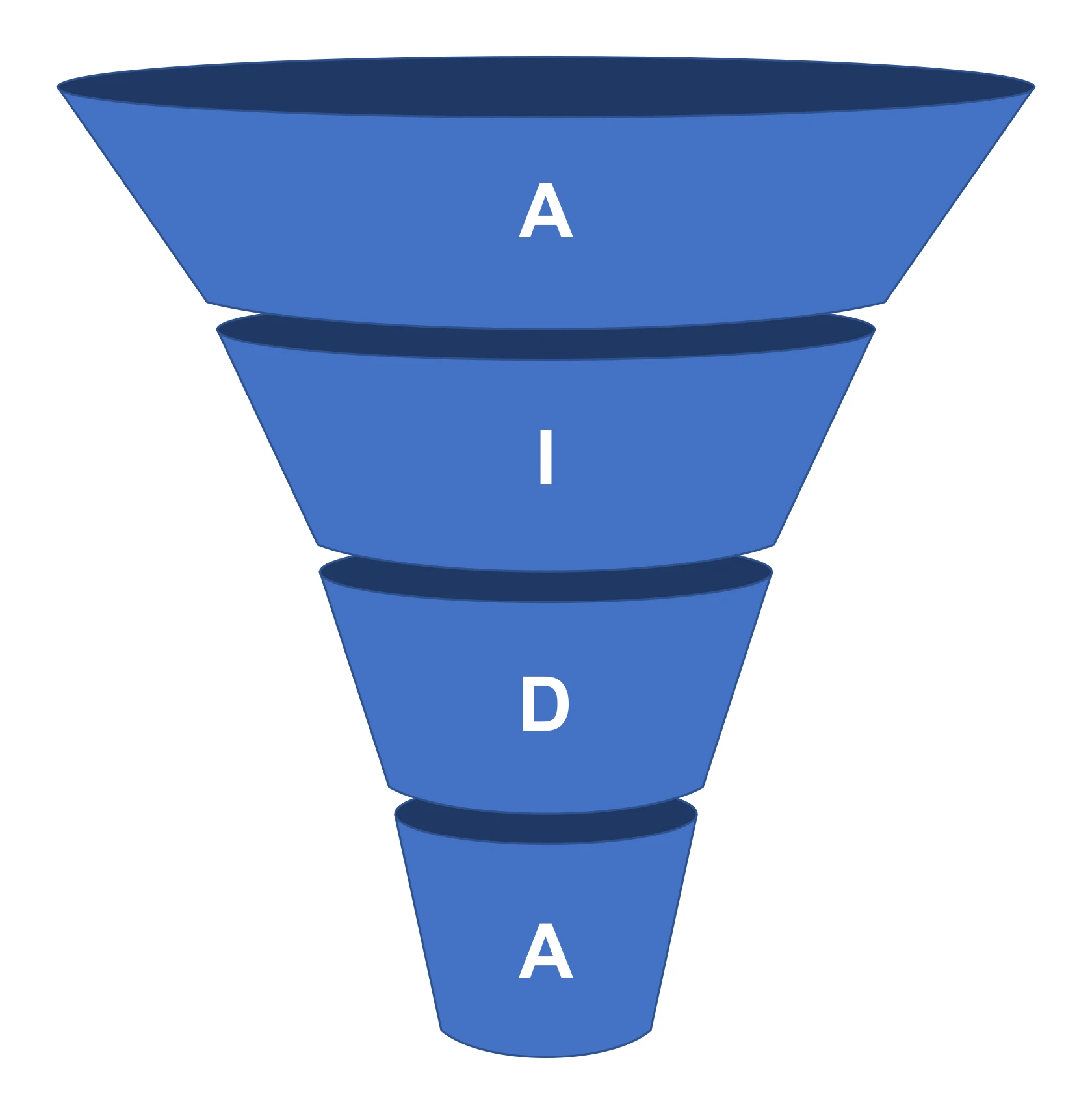
A case study drives sales when it shows the context, the actions implemented and the hard result, rather than a generic promise. The material should take into account the industry and scale, the starting point, the steps taken and the result in numbers (e.g. “handling time fell by 23%, and the number of MQL leads increased by 31% in 60 days”). If you cannot disclose full data, provide ranges and the measurement method (e.g. GA4 + CRM) to maintain credibility. This format reduces distance, because it answers the question “does it work in conditions similar to mine?”.
A ROI and TCO calculator shortens the negotiation stage, because it directly answers the question “is it worth it?”. You can prepare it in a spreadsheet, on a page or in a tool such as Outgrow and present the result as time savings, lower acquisition cost or revenue growth, while also offering to send the results by email. Between the e-book and the purchase, use intermediate offers such as a 15-minute consultation, an audit, a demo, a sample, an implementation plan or a “pricing call”, because not everyone is immediately ready for “buy now”. For example, after a webinar, the CTA “book a data analysis in 20 minutes” often works better than “book a demo”, because it is seen as real help.
If you offer a trial or demo, nurturing should lead the user to the first value (aha moment) within 24–72 h through clear steps, e.g. importing contacts or launching the first automation. In-app sequences (Intercom, Pendo) and email onboarding are worth building around events (event-based), because users start at different speeds. Webinars and live Q&A build trust when they end with a clearly indicated next step, and after the event it is worth sending three messages: a link to the recording (in 1 h), a summary with timestamps (the next day) and answers to questions + CTA (after 3 days). In email sequences, keep to the rule: one email = one user question and one click goal, and as a benchmark treat an open rate of 25–35% and a CTR of 2–5% in B2B.
- 01Problem awarenessDiagnose symptoms, calculate costs
- 02Consideration of solutionsCompare features, create decision frameworks
- 03Decision makingReduce risk, present hard evidence
The key is to match content to the lead’s specific questions and needs at each stage, building trust without sales pressure.
Channels and communication automation
Channels and communication automation in lead nurturing should work like one coherent mechanism, in which every touchpoint reinforces the previous one and naturally leads to the next step. The core of the process is usually email, because it is easiest to automate and measure, while other channels are meant to broaden reach and close the “gaps” in the audience’s attention. Tools such as HubSpot, ActiveCampaign, Klaviyo or Mailchimp make it possible to build paths based on behaviour (clicks, visits, lack of activity), rather than relying on a rigid autoresponder. If you have to choose one channel to start scaling nurturing from, start with email and only then add further layers.
Remarketing serves this purpose, to sustain nurturing when a lead does not open emails but is still consuming content online. In practice, it is worth setting up 2–3 ad sets: education (video/article), proof (case) and decision (demo/trial) in Google Ads and Meta/LinkedIn, with 7/14/30-day windows. An important element is excluding people who have already become SQLs, so as not to mix marketing communication with the sales process. This setup helps maintain context and remind people about the solution, without adding pressure to the inbox.
LinkedIn in B2B builds trust faster when the sequence is based on “micro-value” rather than spam. The following order works well: a comment, a short message with a resource, and only later a suggestion to talk, which fits longer decision-making processes better. To scale it, you can use Sales Navigator and tools such as Waalaxy or Expandi, while keeping an eye on limits and the level of personalisation, because accounts can easily run into restrictions. This channel is particularly effective at closing the stage where the lead is comparing options and needs “proof” and wider context.
SMS and push notifications deliver results mainly in short, time-limited windows, when a fast response from the recipient matters. SMS works well for webinar starts, demo reminders or a trial coming to an end, because it has a very high open rate in a short time. Web push (e.g. OneSignal) can work well in e-commerce, whereas in B2B it is sometimes perceived as intrusive, so it is worth using it only for clearly opted-in subscribers and with a specific benefit. In practice, these are “point” channels that best support key moments in the journey.
Chat on the website is most effective when the lead is “hot” and has a question blocking the decision, e.g. about price or integrations. Tools such as Intercom, Drift or Crisp let you set up playbooks: on the pricing page you show the option “talk to an advisor” with routing to SDR, and on the blog you limit yourself to a bot with materials. At the same time, design automations in two logics: time-based (“day 1/3/7”) and event-based, reacting to behaviours such as a click on pricing or inactivity. Event-based is usually more effective because it responds to the user’s real context, not the marketing calendar.
Automation without CRM and marketing automation integration quickly loses its point, because the system does not recognise whether the lead has already spoken to a salesperson and what their current status is. Connect the tools via native integrations or Zapier/Make, mapping fields (status, source, segment, scoring) and at the same time taking care of contact deduplication. Design landing pages and forms so that they collect only the information needed to trigger the right journey, and fill in the remaining data later. After downloading a resource, do not stop at sending a PDF: use the thank-you page with the next CTA, and treat email as a safeguard, because some messages may arrive with a delay or end up in spam.
Lead scoring, qualification and handoff to sales
Lead scoring should answer the question of which leads are ready for a sales contact right now and which need further nurturing. A good practice is to score fit and intent separately, because these are two different signals: fit comes, for example, from role or company size, while intent comes from activity on the website and in campaigns. For example, you can award points for job title, company size, a visit to the pricing page or completing a demo form, to organise priorities. Separating fit and intent reduces situations in which an “active but unsuitable” lead pushes an ideal contact down the queue.
It is worth defining MQL and SQL thresholds together as a team so that marketing and sales work to the same criteria. An MQL is a lead that meets the minimum conditions and shows activity, but is not necessarily ready for a conversation, while an SQL is a contact that should be passed to sales immediately. Set point thresholds and additional conditions, e.g. SQL = a specific number of points + a visit to the pricing page within 7 days or a direct request for an offer. Such rules reduce discretion and speed up handling of “hot” contacts.
Qualification can be carried out in nurturing without asking BANT directly, by collecting information indirectly through content and micro-forms. For example, in an email about ROI you can ask about the number of users as an approximation of budget, and in implementation checklists about the deadline as a clue about the timeline. This way the SDR starts the conversation with the right context, and the lead does not feel interrogated at an early stage. This approach raises the quality of the handoff to sales, because some key data is already “built into” the journey.
Speed of contact is crucial for “high intent” leads, because the customer is simultaneously comparing several vendors. In many industries, a response within 5–15 minutes remains the standard, and if you cannot provide that, set up an automatic “instant follow-up”: an email with a Calendly link and 2 qualifying questions before a human calls back. Once the lead reaches SQL status, they should have an owner in the CRM so they do not get lost in the queue, and routing can be based on region, industry or company size. In addition, automatic assignment rules and alerts (e.g. in Slack/Teams) help maintain pace with “hot” signals.
- Signals for scoring: separate fit (industry/size/role) from intent (e.g. pricing, demo, integrations).
- What to pass to sales in the handoff: lead source, the last 5 interactions, downloaded materials, visited subpages and the scoring result.
- After SQL: a sequence of 5–8 contact attempts over 10–14 days (email, phone, LinkedIn, voicemail, then email again) with content matched to the lead’s behaviour.
Handling mismatched leads should be based on recycling rather than “throwing” the contact out of the process. Leads that are too small or lack budget should be moved to a “recycle” segment, where education continues more slowly, with clear return rules, e.g. when they come back to the pricing page or sign up for a demo after 60 days. At the same time, make sure cannibalisation and duplicates do not occur, because overlapping campaigns damage the experience and create conflicting messages. In practice, this means deduplication by email/phone, blocks on re-enrolling in the same sequence, and audience exclusions for people in active contact with sales.
- 01Fit & Intent scoring (fit and behaviour)Separate scoring of profile and activity.
- 02Intelligent prioritisation (avoiding pushiness)Ready to contact vs. requiring nurturing.
- 03Shared criteria (MQL and SQL definitions)Team alignment and clear thresholds.
Effective scoring combines fit assessment with intent, enabling a smooth handover of the best leads to sales according to agreed criteria.
Designing nurturing scenarios and playbooks
Designing nurturing scenarios comes down to building repeatable sequences that guide a lead through the next steps, depending on context and behaviour. Start with a “welcome series” after the first conversion. The first three messages should quickly set out what the lead will receive, how often, and what the best next step is. A sample logic is: (1) deliver the resource + ask about the goal, (2) the best article or case study for the segment, (3) an invitation to a call or a tool such as an ROI calculator. Well-designed scenarios reduce uncertainty from the outset because they tell the user clearly: “what next” and “why it’s worth it”.
Post-webinar scenarios are worth splitting between live attendees and no-shows, because their readiness for the next step usually differs. For “attended”, set a faster CTA (e.g. a consultation) within 24–48 hours, because these people saw the Q&A and often already have clearer requirements. For “no-show”, start with a recap, highlights and timestamps to make it easier to watch the recording, and only then move on to the call CTA. This split limits sending the same communication to two different decision-making situations.
A trial scenario should directly answer the question “what do I need to do to make this work for me?” and deliver first value as quickly as possible through user actions. Design sequences around events: if someone has not logged in within 24 hours, send a short video (e.g. 2 min), and when they complete a key action, follow up with a “what next” prompt and a case study from a similar company. In e-commerce and lead gen, it is also worth planning recovery of abandoned journeys: follow up an abandoned basket with 2–4 messages over 24–72 hours, and recover a broken form (e.g. demo) with an email asking “what stopped you?” and a link to a shorter form or calendar. The biggest difference comes from event-based automation, because it responds to real blockers, not to “day 3” in the campaign.
Playbooks are there to quickly and consistently neutralise the most common objections that genuinely block the decision. Gather the top 10 objections from sales and prepare a mini set for each: a short email, article, video and a case study excerpt (e.g. “too expensive” → TCO and alternative costs; “integrations” → list of integrations, instructions and a sample architecture). At the same time, test CTA personalisation and micro-conversions, because not every contact should end with an invitation to a call (sometimes “see a 5 min demo” or “download a comparison” works better). Finally, introduce suppression rules and frequency caps (e.g. max 3 emails per week and max 1 SMS per week) plus automatic marketing pause when the lead is in an active sales conversation.
Measurement, optimisation and GDPR compliance
Lead nurturing measurement should show whether the process is really moving leads through the funnel, not just generating opens and clicks. Beyond open rate, monitor funnel KPIs: MQL→SQL growth, time to first contact, meeting booking rate and revenue influenced, and in B2B also pipeline generated and pipeline influenced in the CRM. To answer the question “what works”, connect GA4, UTM and the CRM and establish a single source of truth (usually the CRM). Without consistent UTMs and conversion mapping to funnel stages, it is impossible to fairly assess which content and channels are truly supporting sales.
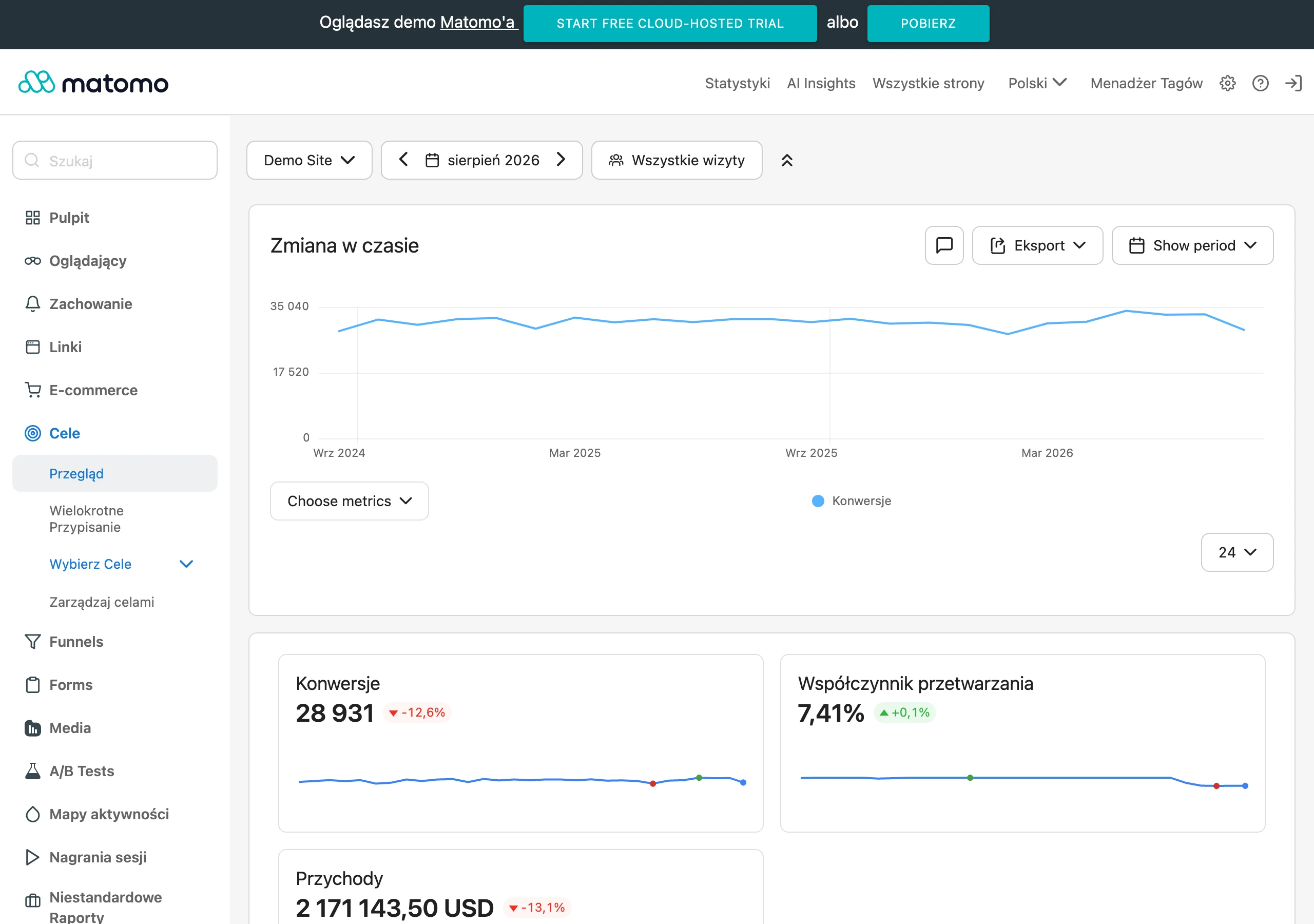
Start optimising nurturing by testing the elements with the biggest impact: the offer (CTA), segmentation, the first email and contact timing, and only then introduce minor copy tweaks. Use A/B testing tools (e.g. HubSpot A/B, Optimizely, VWO or experiments in Mailchimp/ActiveCampaign) and keep an eye on the minimum sample, e.g. 500–1000 sends per variant (depending on CTR). When you see drops, diagnose them along the journey: if leads click but do not book meetings, the problem often lies in the landing page or in an offer that comes too early; if meetings happen but do not progress to SQL/opportunity, check the scoring and whether sales responses align with the SLA. This analysis of “where leads are leaking” usually delivers faster results than increasing acquisition budget.
Legal compliance and data hygiene are the foundation of stable nurturing, because without them the risk of spam, unsubscribes and formal issues increases. Look after deliverability: clean your database regularly, run re-engagement before removal, configure SPF/DKIM/DMARC, monitor bounce rate (target <2%) and, at larger scale, consider a separate subdomain for marketing sends. GDPR requires a clear legal basis for processing and informing users about the purposes, so forms should include clear consent checkboxes and a link to the privacy policy, and in B2B it is worth separating “legitimate interest” from marketing consent (if in doubt, the basis is best discussed with a specialist). A preference centre (topic and frequency) reduces the number of unsubscribes, because the user can lower the intensity of communication instead of opting out entirely.
It is worth treating data security in the team as a permanent part of the process, because nurturing relies on company and behavioural data. Apply the principle of least privilege, log activity, organise roles in the CRM, enable 2FA and carry out periodic permission reviews, and make sure you have data processing agreements in place with tool providers. In optimisation, also take systematic sales feedback into account: in the CRM, collect loss reasons (“loss reason”) and notes, and then turn them into concrete content (e.g. if leads do not understand the differences between packages, add an email and a page explaining the contents of the plans). This way, improvements come from real conversations and objections, not assumptions.
FAQ
Frequently asked questions
how does lead nurturing help guide a customer to purchase?
It takes a lead step by step from interest to decision thanks to content tailored to the stage and context. Each interaction should push them towards the next measurable step in the funnel.
does lead nurturing make sense with a short sales cycle?
It works best when the sales cycle lasts longer than 7–14 days and the customer needs time for comparisons and proof. For fast decisions, its importance is lower.
why is lead generation alone not enough?
Because the moment they leave their details is only the beginning, not the purchase decision. Without further communication, the lead often cools off and does not get answers to key questions about fit and cost.
what content should be used at the start of lead nurturing?
At the awareness stage, articles about the symptoms and cost of the problem, checklists, short videos and a diagnostic quiz work well. Their goal is to point to the next step without purchase pressure.
what should be included in lead nurturing at the decision stage?
At the bottom of the funnel, case studies with numbers, testimonials, reviews, implementation descriptions and SLAs work best. These are materials that reduce risk and show whether the solution works in similar conditions.
when should an automated nurturing sequence be stopped?
The sequence should be stopped after purchase, opting out, no activity for 60–90 days, or after passing the lead to an SDR or salesperson. Start and stop should result from clear triggers and agreed scoring thresholds.