
The client does not buy an SEO service because they received a free sample of the work, but because they understand what that service will realistically change. Before making a decision, they want to see whether the provider has correctly identified the problem, can set priorities and can foresee a sensible way of working. In practice, it is not the person who gives away the most for free who wins, but the one who best organises the risk and shows the logic of the collaboration. The strongest proof of value before signing is an accurate diagnosis combined with a clear plan for evaluating results, not a free implementation. This is particularly important in SEO, where results depend not only on the idea, but also on implementation, data, resources and time.
What does the client want to assess before buying an SEO service?
Before buying an SEO service, the client assesses four things: competence, fit for their problem, cost-effectiveness and predictability of the collaboration. They are not interested in a list of actions alone, but in whether the provider understands their situation. If the diagnosis is generic, the concern grows that later there will be random work with no impact on the business. That is why, already at the sales conversation stage, the accuracy of the questions and the ability to separate the main problems from the secondary ones matter.
The client recognises competence by the way of thinking, not by the number of promises. A good specialist can point out what is probably blocking growth, what can be checked quickly and what cannot honestly be assessed without data. This builds trust because it shows the limits of certainty instead of artificial certainty. In SEO, the lack of such limits usually means the risk of poor decisions, poor priorities or unrealistic expectations.
Fit for the problem means that the client sees a link between their situation and the proposed scope of work. A business with an indexing problem needs a different kind of proof than a store with a content gap or weak conversion measurement. The client assesses cost-effectiveness through the impact on the business, not through the monthly cost alone. Predictability, meanwhile, comes from whether it is clear what will be assessed, over what time horizon and on what the success of the collaboration depends.
What does the value of an SEO service consist of in practice?
The value of an SEO service in practice lies in an accurate diagnosis, good priorities, an action plan, measuring the result and reducing the risk of wrong moves. These are the elements that prevent a business from spending months on low-impact activity. Simply completing tasks is not yet value if it does not stem from a proper understanding of the situation. The client therefore pays not for activity itself, but for sensibly organised change.
The most practical value appears when the provider can connect the problem with its business consequence. If the site has problems with rendering or indexing, the consequence may be the invisibility of key pages, not just a “technical error”. If the content does not cover users’ intent, the result will be a low share of traffic for important queries, even with regular publishing. This logic helps the client understand why certain tasks have priority and others should wait.
The value of the service also does not lie in promising a simple result, but in showing how the result will be evaluated. The client should know the starting point, how early progress will be recognised and when it makes sense to assess the final outcome. This is particularly important because SEO depends on implementation, data quality, available resources and seasonality. When these dependencies are named from the outset, the collaboration becomes more predictable and less prone to disappointment.
Practically, this also means reducing the risk of poor decisions before major work begins. A good service can indicate what not to do, what not to implement immediately and where data verification is needed. That often has more value than a long document full of ideas with no order and no assessment criteria. That is precisely why the client does not need to receive a free implementation in order to see the sense of the investment.
Which formats for presenting the value of a service do not require free work?
The best-performing formats are those that show the way of thinking and priorities without handing over the finished result. The client then sees whether you understand the problem, how you assess business impact and according to what you set the order of actions. That is enough to assess competence if the material is based on data rather than general declarations. Pre-sales should show the method and the logic of decisions, not perform part of the service for free.
In practice, the best formats are those with a limited scope and a clear objective. Each of them answers a different client question: is the diagnosis accurate, does the plan make sense and is the way of working predictable? This means the conversation is not about promises, but about proof. That reduces pressure for a free sample.
- paid discovery, when a deeper diagnosis is needed before defining the scope of collaboration
- a mini-audit with a limited scope, when one area of the problem needs to be checked
- a diagnostic workshop, when priorities and the division of responsibility matter
- a teardown on public data or a sample, when you want to show the analytical process
- a sample report, brief or roadmap, when the client wants to see the standard deliverables
The choice of format depends on the complexity of the problem, the team’s time and the risk of the material being used without purchase. The more concrete you provide before the contract, the higher the sales cost and the lower the protection of know-how. That is why for a simple problem a short diagnosis with priorities will be enough, and when there is uncertainty, paid discovery will be better. This arrangement is fair to both sides because it increases predictability without giving away the implementation.
What are the boundaries of pre-sales in the context of SEO?
The boundaries of pre-sales in SEO are simple: you show the method, but you do not carry out the implementation. The client should receive a diagnosis, the logic of priorities, the measurement approach and the conditions for success. They should not, however, receive a full audit, a complete operational strategy or ready-made changes to implement. Only then does the sales stage remain proof of value rather than free delivery.
The most important boundaries are worth stating directly during the conversation itself. This organises expectations and protects both sides from an unclear scope. The client knows what they can expect before signing the contract, and the provider does not fall into a spiral of successive free analyses. Such clarity usually builds more trust than an excess of materials.
- do not give away a full audit for free
- do not implement changes before the contract
- do not write out a complete operational strategy
- reveal priorities and logic, not all the know-how
These boundaries matter in practice, because SEO is easy to confuse with consulting handed out endlessly for free. When you give away too much in pre-sales, the client mainly judges the amount of material, not the quality of the decision. This weakens your position as an expert and makes it harder to price the actual work fairly. If more certainty is needed before a decision, it is wiser to sell a limited discovery stage than to extend the free scope.
What are the key KPIs and methods for measuring the value of an SEO service?
The key KPIs for the value of an SEO service are the baseline, leading indicators, lagging indicators and the time horizon for assessing impact. Without these four elements, the client does not know whether the service is truly improving the situation or merely generating activity. A growth in visibility or in the number of tasks is not enough if it is not clear where we are starting from and what is meant to change commercially. That is why a good proof of value always starts with the starting point.
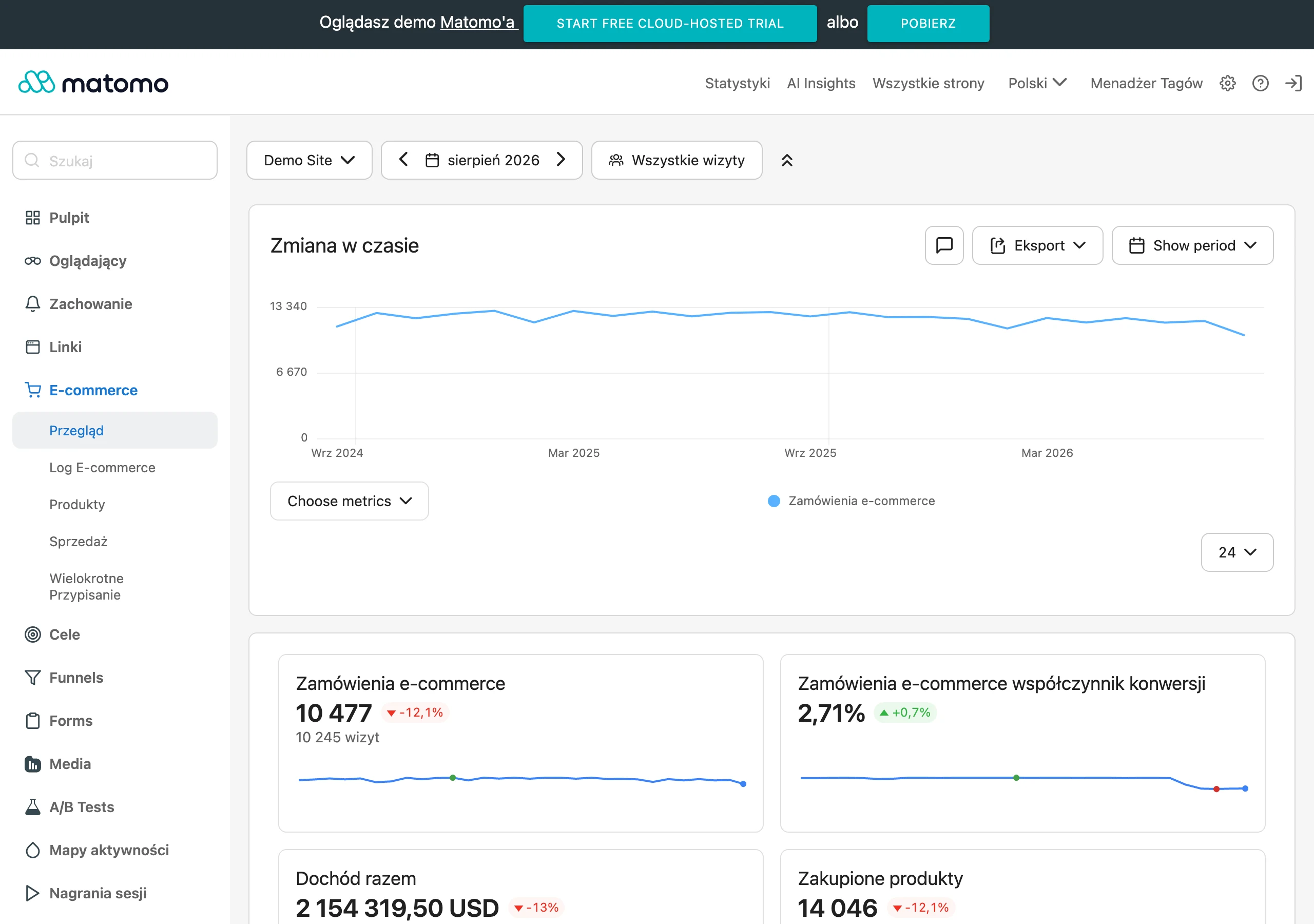
The baseline should cover what genuinely limits the assessment of progress: the site’s technical condition, visibility, organic traffic, leads or sales, and the quality of measurement data. If conversion tracking is wrong, even good SEO work can look ineffective. In contrast, where there are technical problems, traffic itself can be a delayed signal, so indexing, crawl and rendering need to be monitored earlier. In practice, this means choosing metrics according to the type of problem, not according to a single report template.
The clearest way to structure measurement is in three layers:
- baseline: technical condition, visibility, traffic, leads, data accuracy,
- leading indicators: indexing, crawl errors, CTR, intent coverage, publishing pace, link quality,
- lagging indicators: organic traffic, number of leads, sales, share of visibility.
This structure organises the conversation with the client, because it shows what can change quickly and what will take more time. If, after improvements, the number of indexed pages rises and crawl errors fall, that is an important signal of technical progress. If there is still no increase in leads at the same time, it does not have to mean failure, only the natural delay of the effect. The biggest mistake in SEO assessment is to mix leading signals with the final result without taking time into account.
Measurement methods should be based on data, not declarations. In pre-sales, a sample crawl and rendering, indexing analysis, export of queries and landing pages, a SERP snapshot with intent assessment, a sample link profile or a review of conversion tracking work well. Such material does not replace the full service, but it shows that recommendations are grounded in facts. The client then sees not only the conclusion, but also the source of the conclusion.
Every measurement plan needs to be closed with conditions for success. The result depends on implementation of changes, available resources, seasonality and the quality of the input data. If the client cannot implement fixes quickly, the assessment horizon should be longer. This matters, because honest measurement does not sell certainty, only a predictable way of checking progress.
What mistakes and myths weaken the perceived value of an SEO service?
The perceived value of an SEO service is weakened most by promises without conditions, giving away a large part of the work for free, and the lack of a clear link between diagnosis and the business outcome. The client quickly senses when sales material looks impressive but does not help with decision-making. That is when uncertainty grows, even if the presentation is extensive. Trust is built by precision, not by an excess of slides.
The most common mistakes are worth spotting early, because they are often mistaken for “good sales”. In practice, they work the other way round: they reduce credibility and shift the conversation from the quality of the decision to the amount of free work.
- promises of rankings or deadlines without clear caveats,
- a full free audit as the sales standard,
- slides without priorities and without business impact,
- no baseline and no definition of success,
- confusing diagnosis with implementation,
- forecasts without input data and without a margin of uncertainty.
Promises of rankings and fixed deadlines sound attractive, but they usually ignore dependencies on implementation, competition and the site’s condition. They do not give the client predictability, only a false sense of control. When delays or limitations appear later, trust falls more sharply than with cautious but honest communication. The same applies to a forecast without input data, because it looks like a sales assertion rather than an analysis.
A full free audit weakens the value of the service, because it shifts the emphasis from the quality of thinking to the volume of material delivered. The client starts comparing the number of pages in the document, rather than the relevance of the priorities. It also blurs the boundary between the sales stage and delivery. If deeper certainty is needed, a limited and clearly priced discovery stage remains the better solution.
Materials without priorities and without business impact are just as harmful. A list of technical, content or link issues means little if it is not clear what is blocking results most strongly and what should be done first. The client is not buying a catalogue of problems, but a way of making good decisions. That is why the diagnosis must lead to a concrete order of actions.
A lack of baseline and a definition of success destroys value even after the contract is signed. When it has not been agreed how progress will be evaluated, each side interprets the results differently. This leads to disputes about effectiveness instead of a joint assessment of facts. Well-prepared pre-sales should prevent that, not carry the chaos into the next stage.
How do you verify progress and success after the collaboration has started?
Progress and success after work has started are verified through agreed milestones, acceptance criteria and regular data reviews. This way, the client knows what should be ready after 30, 60 and 90 days, and how to assess the value of the work done. It is not just about a report on activities, but about comparing results against the previously agreed plan and conditions for success. This brings expectations into order before delayed business results appear.
In practice, the post-launch review plan should cover four elements:
- 30/60/90-day milestones with the scope of work and the expected state of the metrics,
- acceptance criteria for the audit, roadmap, implementations, publications or reports,
- a clear division of responsibility between the client and the contractor for data, decisions and implementations,
- a steady rhythm for reviewing hypotheses, priorities and deviations from the plan.
Acceptance criteria are particularly important because they separate “done” from “sent”. If a deliverable is meant to indicate repair priorities, the client should know according to what logic they were set. The same applies on the client side: it must be agreed who approves changes, who implements fixes and within what timeframe. Without this, it is difficult to assess fairly whether the problem was the quality of the recommendations or a lack of execution.
A regular review of hypotheses allows the plan to be adjusted without chaos. If indexation is growing, CTR is improving or a measurement error disappears, these are important signs of progress, even without an immediate increase in sales. If, however, the early indicators are standing still, you need to check the quality of implementation, resources or a flawed assumption. The easiest time to buy a service is when the client can see from the start not only the action plan, but also the rules for measuring it.
FAQ
Frequently asked questions
How do you prove the value of SEO services without free trial work?
The best way is through an accurate diagnosis, priority logic and a clear plan for measuring results. The client should see the way of thinking, not a finished implementation for free.
Does a client want to see a free audit before buying SEO services?
Not necessarily, because they are more likely to assess the accuracy of the problem identification, the fit for their situation and the predictability of the collaboration. Too much free scope can weaken the perceived value of the service.
Why is showing the diagnosis more important than a list of actions in SEO?
Because a list of tasks alone does not yet show what is actually blocking results and what needs to be done first. A good diagnosis links the problem to its business impact.
Which pre-sales formats best show the value of SEO services?
Paid discovery, a mini-audit with a limited scope, a diagnostic workshop or a teardown based on public data work well. Each of these formats shows the method without giving away the full delivery.
Which KPIs are worth setting to assess SEO effectiveness?
You need a baseline, leading indicators, outcome indicators and a results assessment horizon. That way you know where the project starts and when it makes sense to assess progress.
When, after starting cooperation in SEO, can progress be assessed?
It is best to use 30, 60 and 90 day milestones and regular data reviews. Before that, it is worth looking at leading signals such as indexing, crawl or CTR, rather than only sales.