
Repeatable client acquisition does not start with more enquiries, but with designing a process that works even when the owner does not reply personally. If every quote, every conversation and every decision lands with the owner, the company does not have a sales system, only a bottleneck. In practice, this means a clear offer, the right channels, lead filtering and data that show what works. The starting point is not a tool, but a decision about who the company wants to be the obvious choice for and what it will not sell.
Client acquisition system: how it works and why is it key?
A client acquisition system is a structured process that turns traffic from selected channels into qualified leads and the next sales steps. It is key because it makes the flow of opportunities independent of the owner’s memory, energy and availability. When the process is documented and embedded in the CRM, the team can operate according to the same rules, and the company can see where losses occur.
In practice, such a system consists of several connected elements. First, the company defines its ICP, then builds a packaged service and directs traffic to dedicated sales pages. Next, it launches pre-qualification, automated replies, meeting scheduling and saves the entire history in the CRM.
This approach changes the way enquiries are handled. Instead of treating each one individually, the company assesses fit with the offer and takes standard actions. The fewer exceptions lead handling requires, the easier it is to delegate sales without a drop in quality.
Ideal customer profile (ICP): how to define it precisely?
The Ideal Customer Profile defines the segment for which the company solves a specific problem in a predictable way and with profitable sales. A precise ICP must include three elements: the problem, the budget and the readiness to buy. Without this, communication becomes generic, and the team starts responding to enquiries that should not enter the funnel.
In practice, an ICP description should answer three questions:
- What problem does the client want to solve now?
- Do they accept the price level or the offer range?
- Are they ready to go through the standard buying process?
Such an ICP structures further decisions. It determines which topics to cover in content marketing, which channels make sense and how to describe the service on the sales page. If two segments have different problems or expectations, they usually need separate messages, and sometimes also separate offers.
The most common mistake is defining the ICP too broadly. A description such as “companies that want more clients” does not say what the client is looking for, how much they can pay or whether they fit the process. A good ICP makes it easier to reject mismatched enquiries, not just attract the right ones.
Packaged service: how to standardise an offer for efficient scaling?
A service is standardised by closing it within a clear scope, process, price or price range, and expected outcome. This way, the lead understands more quickly what they are buying, and the company does not start every conversation from scratch. Such an offer makes it easier to quote, compare enquiries and hand conversations over to someone other than the owner.
In practice, a packaged service should answer four questions: who it is for, what exactly it includes, how the collaboration works and what result can realistically be delivered. The fewer ambiguities at the start, the fewer explanatory emails and the fewer exceptions in the process. If the offer requires rewriting the scope from scratch every time, it is difficult to scale and difficult to sell as a team.
Standardisation does not mean rigidity in every situation. It means defining a base version that can be communicated, priced and implemented quickly. Only after building it is it worth deciding which elements can be optional and which must remain unchanged so as not to blow up the margin and the process.
The most common problem arises when a company tries to handle too many different cases with one offer. Sales then returns to manual mode, because every enquiry requires separate interpretation. The same happens when there is no public scope or at least a price range, because it attracts many conversations without budget fit.
Distribution channels: which ones to choose to effectively generate leads?
Channels are chosen according to the ICP and buying intent, not according to what is fashionable at the moment. A well-chosen channel attracts people with the problem the offer solves and leads them to the next step. A poor channel may generate traffic, but it does not deliver conversations that can be sensibly closed.
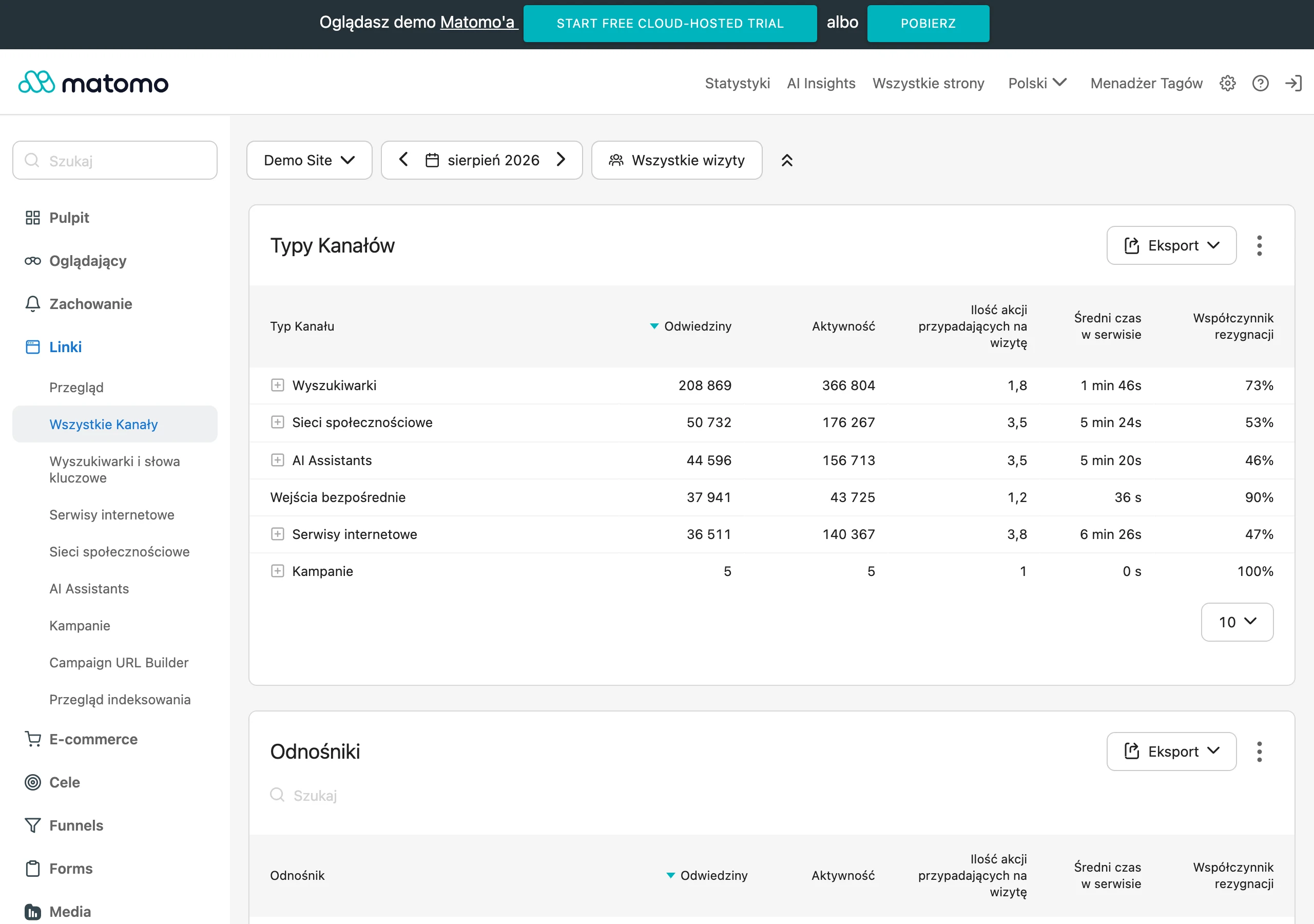
If the client is actively looking for a solution, channels with clear intent usually work well, such as SEO or Google Ads. If the decision is maturing earlier, content marketing, social media or networking play a bigger role, because they build awareness and trust before contact. Referrals are valuable, but rarely sufficient as the only predictable growth channel.
In practice, it is better to launch a small number of channels, but consistently, than to publish everywhere without a process. Each chosen channel should lead to a specific offer and a specific CTA, rather than to a generic homepage. A channel only makes sense once you know what leads it is meant to bring and how they will be qualified further.
The most common mistakes are repetitive: choosing a channel based on the owner’s preferences, mixing messages for different segments and making the company dependent on one source of enquiries. In such a situation, results are unstable, and the team cannot see which actions really deliver. That is why channels need to be assessed not by reach, but by the quality of leads and how they move through the funnel.
Marketing automation: how to automate the client acquisition process?
The client acquisition process is automated by organising the repeatable steps from the first contact to booking a call and saving the data in the CRM. The biggest gains come from automatic replies, lead segmentation, sending materials and self-booking time slots. This means the owner does not have to react to every enquiry for the process to keep moving. Automation only makes sense when it is based on a clear ICP and a standardised offer.
In practice, automation starts with pre-qualification. A form, survey or chatbot should collect the data needed to assess fit with the offer. If the questions concern the problem, budget and readiness to buy, the team immediately knows whether it is worth moving forward. A well-designed form does not make contact harder; it saves time for both sides.
Once the answers have been collected, the system should trigger different paths. A well-matched lead receives materials and a link to the calendar, an unready lead is moved into education, and a poor fit receives clear feedback. This organises the funnel and reduces the number of conversations with no real chance of a sale. Manually arranging times by email usually only slows the process down.
Automation also includes synchronising data with the CRM. Every enquiry should have its status, source, contact history and next step recorded. Without this, the company will not be able to distinguish temporary activity from a working system. The CRM is needed not only to handle leads, but also to assess the quality of channels later on.
AI can support this stage if the company has structured data about the offer and qualification criteria. Then the chatbot can ask sensible questions, and educational content can be better matched to the specific enquiry. However, this does not change the basic principle: only automate what already works manually in a predictable way. When the process is unclear, automation only multiplies the chaos faster.
Typical mistakes in the client acquisition process and how to avoid them
The most common mistakes are treating every enquiry individually, lacking a public scope or price range, unclear CTA, no lead filtering and manual meeting scheduling. Each of them increases the number of exceptions that come back to the owner’s desk. As a result, the company has traffic but no predictable process. That is when sales becomes a series of ad hoc reactions.
Treating every lead as a separate project usually means the offer is too vague. When the client cannot see the scope, process and approximate price level, they send a general enquiry and wait for clarification. The team wastes time on conversations that should have ended earlier. The same happens when traffic is sent to a general page without a single, clear CTA.
These mistakes are avoided through a few simple operational decisions:
- describe the service within a fixed scope and show the price or price range,
- direct each channel to a dedicated sales page,
- implement a qualification form instead of just the “send a message” field,
- set up automatic responses and self-scheduling of meetings,
- manage all leads and next steps in one CRM.
The second group of problems is scale-related mistakes. A system that is too rigid can put off valuable leads that do not fit the framework perfectly. On the other hand, a process that is too loose lowers qualification quality and again requires constant decisions from the owner. A sensible approach is to make the service standard strict, but with a clearly defined place for exceptions.
It is also risky to rely on one channel for incoming enquiries. When that channel weakens, the company is left without a flow of new opportunities and starts operating reactively. That is why mistakes should be assessed not only by the number of leads, but by whether the system maintains quality and predictability. If the process cannot be delegated without the owner, the mistake usually lies in the system design, not in a lack of greater effort.
Risks and scaling pitfalls: what to watch out for when developing the system?
When developing the system, the main things to watch out for are dehumanising contact, overly rigid rules, a drop in lead quality and dependence on one channel. Each of these risks reduces effectiveness or drags the owner back into manually saving the process. Scaling is successful only when the company handles a larger volume without losing fit and without adding exceptions.
The most common pitfall appears when the company tries to standardise sales as much as possible, even though some valuable enquiries require limited flexibility. That is why exceptions should have clear criteria: who can approve them, at what budget level and at which point in the funnel. If every salesperson interprets exceptions in their own way, the offer stops being delegable and the chaos known from the beginning returns.
The second pitfall is confusing more leads with a healthier system. When a new channel delivers cheaper but poorly matched enquiries, the team does more work while conversion and close speed fall. That is why you need to regularly check the lead source, qualification quality and stage transitions in the CRM, and then adjust the channels, content or forms. Becoming dependent on one traffic source usually ends in a sharp drop in opportunities when that channel stops delivering.
FAQ
Frequently asked questions
How do you build a client acquisition system so the owner does not have to answer every enquiry?
You need to combine the ICP, a packaged service, the right channels, prequalification, automated responses and a CRM. This means the team works to the same rules, rather than the owner making decisions on the fly.
How do you define the ideal customer profile (ICP) precisely?
The ICP should take into account the problem, budget and readiness to buy. If one of these elements is missing, communication becomes too general and attracts poorly matched enquiries.
What should a packaged service include so that it can be scaled?
It should have a clear scope, process, price or price range, and an expected outcome. Such an offer is easier for the team to quote, communicate and sell.
When is it worth choosing SEO, Google Ads, content marketing or networking as a lead generation channel?
The channel is chosen according to the ICP and buying intent. SEO and Google Ads suit people actively looking for a solution, while content marketing, social media and networking are for building awareness earlier on.
How do you automate the client acquisition process without losing lead quality?
First you need to streamline the repeatable steps: the form, qualification, sending materials, booking times and logging everything in the CRM. Automation only makes sense when it is based on a clear ICP and a standardised offer.
What mistakes most often damage the client acquisition process?
The most common problem is treating every enquiry separately, a lack of scope or pricing ranges, unclear CTA, no lead filtering and manual scheduling of meetings. This increases the number of exceptions and comes back as extra work for the owner.