
In practice, this does not always mean lying, however most often the promise is greater than what the material actually delivers, which in turn breeds disappointment and undermines trust. This applies to both text and video, where the “thumbnail + title” duo is particularly powerful. In this material I show where the line runs between natural curiosity and manipulation, and which formats most often boost CTR at the expense of quality. You will also get simple criteria that let you recognise clickbait before clicking. That way, it becomes easier to assess whether the headline really signals value, or is merely playing on emotions.
Definition and scope of clickbait: how to recognise manipulative titles?
You can spot clickbait by the fact that the headline or thumbnail is prepared primarily to trigger a click, rather than to honestly summarise the content. This form often “inflates” the promise, so after entering, the user gets less than the title suggested, which lowers trust in the author or brand. The line between curiosity and manipulation appears when the title deliberately misleads about the scale, outcome or meaning of the material. It is worth remembering that clickbait likes to use sensational language, but not every sensational headline is automatically clickbait.
A sensational headline can simply be urgent information if it remains consistent with the content and does not hide key facts. For example, the message “Earthquake of 6.2 in Turkey – there are casualties” is not clickbait if the article actually describes this. Clickbait begins only when the headline manipulates and conceals the essence, e.g. “This happened in Turkey… you won’t guess what happened next”. Similarly in marketing: a headline can encourage action while remaining precise and verifiable, for example by stating the scope of the comparison and the assessment criteria.
- Lack of specifics in the title (who. what. when.) and relying on generalities instead of measurable data.
- Overusing emotion (“shock”, “slaughter”) and promises of immediate change (“do this today and…”), without criteria or sources.
- In video: the thumbnail and title suggest an event that is not in the material (e.g. a dramatic face and “The end.” for a routine update).
Clickbait does not have to be fake news, but it easily becomes a vehicle for disinformation, because it rewards emotion and haste. It often does not rely on complete lies, only on manipulating the framing: a true fact is presented in a way that leads to false conclusions (e.g. “Scientists proved…” without indicating the quality of the study). It is also worth distinguishing it from tabloidisation: tabloidisation is a long-term style focused on emotion, while clickbait is a specific “entry point” technique into the content. As a result, even a serious outlet may occasionally use a clickbait title to boost traffic.
- 01The aim is a clicknot an honest summary
- 02“Inflating” the promisethe content delivers less
- 03Deliberate misleadingfalse scale or meaning
- 04Sensational languageoften, but not always
The key thing is the mismatch between the promise and the actual content, which lowers trust.
Mechanisms of clickbait: omissions and emotional headlines
Clickbait most often relies on omission and playing on emotions, that is, on a headline structure that heightens curiosity or arousal instead of clearly saying what the reader will actually get. The key mechanism is the “information gap”: the title deliberately omits the most important element to encourage a click (e.g. “This one mistake in your CV is costing you the job”). This technique can only be used fairly when, after clicking, the audience quickly gets the answer and concrete examples, rather than pages of filler. When the answer is artificially delayed and the content fails to meet the promise, the sense of wasted time grows and satisfaction falls.
The second pillar is superlatives and “strong” words (“SHOCKING”, “UNBELIEVABLE”, “WORST”, “HIT”), which can boost CTR but undermine credibility if the material turns out to be average. Another common variant is rhetorical questions (“Is this product poisoning you?”), which suggest an answer without evidence and can be a convenient shield against responsibility for the claim. There are also promises of “hidden secrets” (“they won’t tell you this”, “the industry secret”), which become clickbait if the author does not have unique data or sources. The simplest test is to check whether, after clicking, documents, numbers, methodology or credible sources appear, rather than only opinions.
Lists and apparent rankings are also a popular format: on their own they can be useful, but clickbait begins when the number of points is artificially inflated or the list ends with obvious points without context. In social media and video, the mechanism is further reinforced by thumbnails: dramatic faces, red arrows or “before/after” comparisons without conditions for comparison. In texts, hiding the key information works in a similar way, e.g. “This ingredient destroys your health – doctors warn”, when the article gives neither a source nor the scale of the risk. If “scrollbait” is added to this (a long introduction, ads between paragraphs or artificial pagination), the intention often shifts from informational value to simply racking up views.
The role of clickbait in monetisation and SEO strategies
Clickbait in monetisation and SEO is used primarily to increase the number of visits from search and social media, which directly translates into ad impressions. This mechanism particularly drives an impressions- and ads-based revenue model (CPM) and rapid audience growth, because it rewards a high CTR even when the content does not deliver on the promise. When revenue depends on the number of visits, creators may polish titles for clicks at the expense of quality, assuming that some users will see the ads anyway before leaving. In practice, clickbait is therefore often a shortcut to short-term “traffic”, rather than to real value for the audience.
In SEO, clickbait works primarily through the page title (title tag) and meta description, which can lift CTR in Google results, but at the same time blur the match with user intent. There is no simple single “penalty for clickbait”, but the gap between promise and content often ends with a quick return to the results and weaker visibility in the long term. As an alert signal, you usually see the pattern: high CTR in Google Search Console alongside short sessions and no conversions in GA4. In publishing sites, metrics such as “dwell time” and scroll depth are read in a similar way when a strong start does not translate into real engagement.
On video platforms, clickbait can temporarily increase thumbnail CTR, but when viewers drop off quickly, Average View Duration falls and the content is recommended less often. In short-form content, this shifts into the first few seconds (“I’ll show you in a moment…”) and on-screen captions, and delaying the punchline increases scrolling past, which limits further views. Testing headlines purely “for CTR” (e.g. in A/B tests) without monitoring satisfaction can easily lead to clickbait escalation. In addition, with paywalls this tactic can increase frustration when users do not get the promised specific value after clicking.
- 01Growth in visitsfrom search engines and social media
- 02Driving adsCPM revenue model
- 03CTR bonuseven without quality
- 04Shortcut to trafficshort-term reach
- 05Boost in SEOhigher CTR in results
Clickbait is often used as a short-term way to maximise traffic and ad impressions, rewarding clicks at the expense of long-term value and user trust.
The impact of clickbait on audience trust and traffic quality
Clickbait most often lowers audience trust, because it reinforces the belief that the source “promises too much” and delivers less than the title suggests. Disappointment acts as a strong trigger to avoid the brand in the future, even if a single piece generated high traffic. This is also visible in loyalty: users return less often and approach the next headline promises with greater caution. In the long run, the reputational cost can outweigh the short-term gain from clicks.
Clickbait lowers traffic quality, because it often attracts people driven by emotion rather than a real need, so conversions (purchase, sign-up, lead) tend to be weaker than with precise titles. The typical scenario is “lots of visits, little sales”, when the headline does not filter intent and brings in random visitors. In analytics, this mismatch is usually seen as a set of: high visits/CTR with short engagement time, a high exit rate and no further page views or conversions. As a result, the cost of acquiring a valuable user rises, even though the “traffic” looks good at first glance.
Clickbait also lowers the quality of debate, because it often provokes reactions to the headline itself rather than to the content and fuels emotional comments. In the long run, this can strengthen a sense of information chaos and “feed fatigue”, when stimuli designed for an immediate reaction dominate instead of understanding. Areas that are especially sensitive, such as health and finance, are particularly risky, because clickbait promises without evidence can lead to poor decisions. In branding terms, it becomes harder for creators and publishers to build an expert position and sell premium products based on trust.
The psychology of clickbait: why do users click?
Users click clickbait because it taps into the natural mechanism of curiosity and the need to “close” an unfinished story. When a headline promises a quick informational reward and the cost of clicking is low, it is easy to make an impulsive decision even when you suspect the material is poor quality. The mechanics of reward prediction also play a role: every so often you land on valuable content, so the brain learns to try again. As a result, a click can be like a small lottery, reinforcing the habit even though many visits end in disappointment.
Clickbait is especially effectively driven by negative emotions such as fear, anger and outrage, because they usually trigger a stronger response than a calm informational message. Such headlines increase the tendency to share, especially when they strike at group identity and suggest conflict. In addition, the availability heuristic comes into play: when you often see a message about rare events, you may overestimate how common they are if there are no data or scale. In practice, the question “is this really common?” is settled by numbers and sources, which clickbait usually does not provide, or provides in an imprecise way.
On social media, clicks amplify FOMO and the pressure of immediacy, because the feed is fast and platforms reward content that triggers a reaction there and then. Clickbait also uses social proof (“everyone is talking about it”), which sounds convincing until you check whether there are concrete data and sources behind it. This creates tension between time and value: the audience spends attention but does not get useful knowledge, so the sense of wasted time grows. Over the longer term, such micro-losses accumulate and reduce satisfaction with using media.
- 01Knowledge gapThe need to close the story.
- 02Quick rewardA promise of information at low cost.
- 03Lottery mechanismLearning through random hits.
- 04Negative emotionsA stronger reaction to fear and anger.
Natural mechanisms of curiosity and reward prediction reinforce the habit of clicking. As a result, clicking becomes a habit-reinforcing impulse driven by curiosity and strong emotions, despite frequent disappointment.
Alternatives to clickbait: how to create honest and effective headlines
Honest and effective headlines are created when you combine a promise with a measurable scope and clearly communicate what the reader will get after clicking. The most useful rule is “promise + proof”, meaning signalling criteria, data or method instead of relying solely on emotions (e.g. specific numbers, comparison range, source). Such a headline may be less focused on CTR alone, but it usually improves traffic quality because it filters intent and reduces the gap between the promise and the content. If you want to build suspense, you can use a teaser that states the conclusion straight away, while leaving the details (method, data, limitations) in the article.
- Use the “Problem + specifics + for whom” format so the audience can immediately see whether the content is for them, instead of generic scaremongering or multiplying prohibitions.
- Make sure the strongest claim has a source indicated in the text, and that the promise from the headline is fulfilled directly in a specific paragraph.
- If you use tools (Ahrefs, Semrush, Google Search Console), use them to match intent and topics, not to “amplify” emotions.
A good solution is also to test headlines in a way that does not reward manipulation. Instead of assessing only clickability, it is worth comparing CTR with engagement metrics, returning users and subscription conversion. In practice, this reduces the risk that the “clickable” variant wins, but disappoints after the visit. Editorial procedures also help: the author of the title should indicate the paragraph that directly fulfils the headline’s promise and add a source for the strongest claim. This way, the headline remains attractive, but does not build reach at the expense of trust.
Platform policies against clickbait: limitations and regulations
Platforms limit clickbait primarily through rules against “misleading” titles and thumbnails, as well as mechanisms that reduce the distribution of content that misleads. Increasingly, particular attention is paid to health, finance and safety topics, where misleading promises can cause real harm. In practice, this means that content may lose reach when viewers quickly stop watching or reading after clicking on an exaggerated promise. The effect is often gradual: visibility drops first, and only later may additional restrictions appear.
The consequences for the creator depend on the platform’s terms and the scale of the problem, but most often it starts with reduced recommendations. With persistent deception, monetisation or reach restrictions may be added, because systems detect the gap between the promise and the real user experience. It is also worth remembering that clickbait may border on misleading practices, especially when it suggests false product features or false effects, which in extreme cases can be a burden for both the advertiser and the publisher. For brands, this means not only a reputational risk, but also an operational one, if the distribution channel starts to “trim” reach.
How to measure the impact of clickbait in digital analytics?
You can assess the impact of clickbait by looking for a gap between high interest on entry and low value after the click, visible only when several metrics are analysed together. In Google Search Console, a warning sign may be a high CTR that does not translate into real results in GA4, such as conversions or longer sessions. In publishing sites, “dwell time” and scroll depth are also helpful, because clickbait often gives a good start but ends with low scroll depth. This picture suggests that the headline “sold” a promise that the content ultimately did not fulfil.
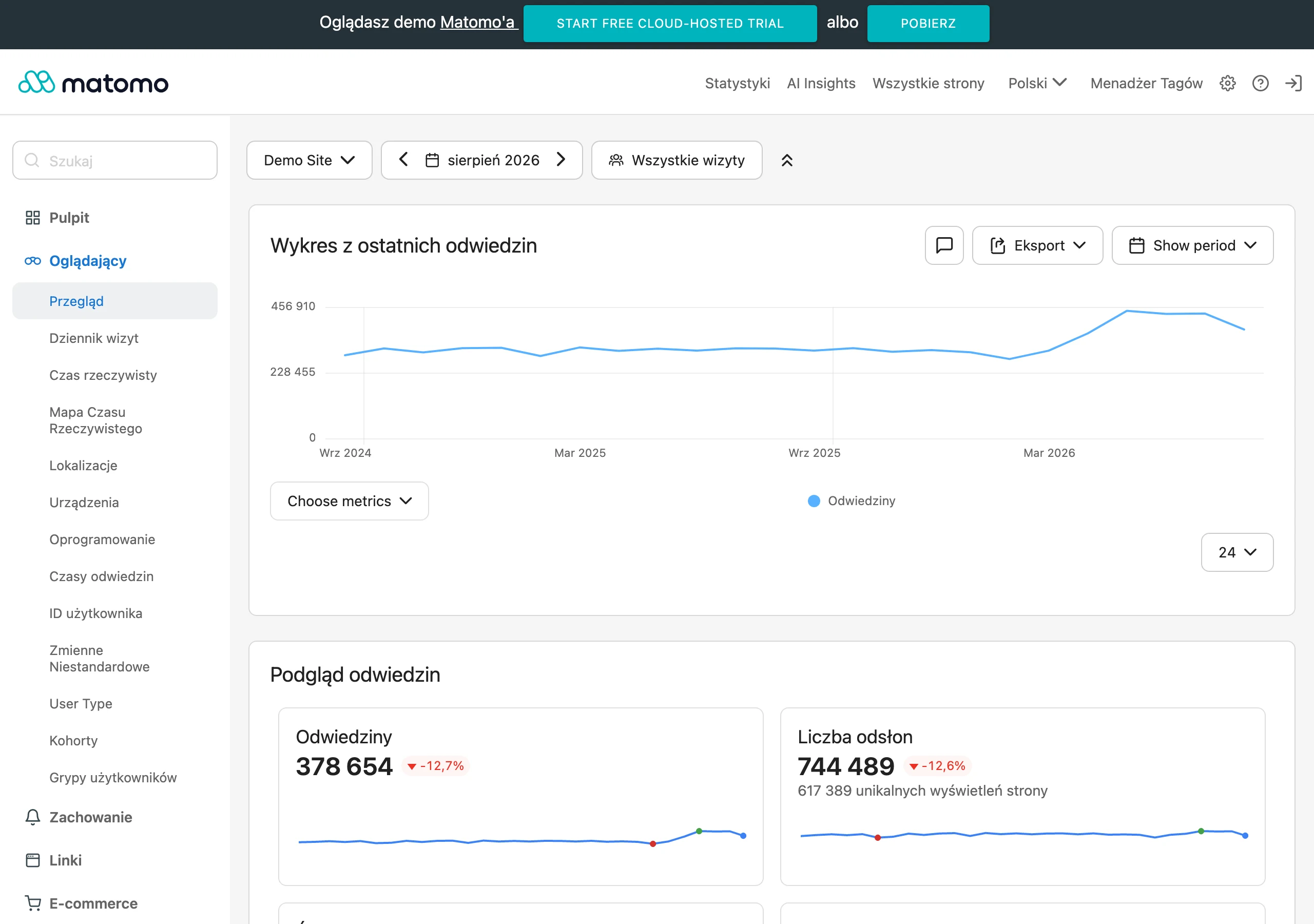
In user behaviour analytics, a typical clickbait signature is: lots of visits or a high CTR, followed by a short engagement time and a high exit rate with no further pageviews or conversions. On YouTube, by analogy, thumbnail CTR is compared with audience retention, because a high CTR with low watch time in the first 30–60 seconds often indicates that the thumbnail or title promised something different from the video content. In short-form content (e.g. Reels/TikTok), a rising swipe-away rate can be an additional clue when the payoff is dragged out or unconvincing despite a “strong” opening. This way, instead of judging headlines solely by clicks, you can check whether the promise actually delivers satisfaction and value.
FAQ
Frequently asked questions
How do you spot clickbait in a title or thumbnail?
You can recognise it because the headline or graphic is meant primarily to get a click, rather than to summarise the content accurately. Warning signs include vagueness, a lack of specifics, emotional language and a promise that is bigger than what the material actually delivers.
Is every sensational headline clickbait?
No, because a sensational headline may simply be announcing urgent or important information. Clickbait begins when the title manipulates, hides the main point or misleads you about the scale, outcome or meaning of the material.
Why does clickbait work on users?
It works because it exploits curiosity, the need to close an unresolved story and the expectation of a quick information reward. It is also strengthened by emotions, especially fear, anger and outrage, which easily push people to click.
When does a title become manipulation rather than a normal hook?
It does so when it deliberately omits the most important element and, after the click, the user gets less than the headline promised. The line is also crossed when the title suggests something that the material does not show at all.
How does clickbait affect SEO and monetisation?
It can boost CTR in Google and on video platforms, which increases traffic and ad impressions. However, if the content does not live up to the promise, the risk of short sessions, weaker engagement and poorer visibility over time increases.
How do you create headlines without clickbait, but still make them effective?
The best approach is to combine the promise with a concrete detail, for example by giving the scope, data, source or method. The “promise + proof” principle also works well, because it makes the title attention-grabbing without disappointing people after the click.