
implementation models for an online store and their impact on costs
The chosen implementation model for an online store directly affects the launch cost, monthly commitments and freedom for further development. SaaS (e.g. Shoper, Shopify, IdoSell) lets you get started quickly, but comes with a subscription and additional fees for payments and applications. Open-source (e.g. WooCommerce on WordPress) may mean “zero” platform licence cost, but the real budget is built by implementation, hosting and extensions. Enterprise-class solutions (e.g. Magento/Adobe Commerce) and custom stores raise the budgetary bar, because they require an experienced team, more robust infrastructure and usually a broader scope of integrations.
- SaaS: approx. 100–400 PLN/month in Polish systems (e.g. Shoper) or 39–399 USD/month in Shopify + commissions/fees for payments and applications
- WooCommerce (open-source): initial implementation often 8,000–30,000 PLN; with further development (B2B, integrations, custom) 30,000–100,000+ PLN
- Magento/Adobe Commerce, PrestaShop (enterprise/open-source): implementations often 80,000–200,000 PLN; with integrations and performance optimisation they can exceed 300,000–500,000 PLN
- Dedicated store (custom): budgets usually from 150,000 PLN; with extensive integrations and high availability 500,000–1,000,000+ PLN
The valuation rises fastest when the scale of the catalogue and traffic grows, as well as the number of “exceptions” in the processes. A store with 50 products and simple shipping will be incomparably cheaper than a store with 50,000 SKUs, variants, advanced filters and stock synchronisation across multiple warehouses. Large traffic spikes (e.g. after campaigns) can force load testing, a CDN and an architecture resistant to spikes, which drives up implementation and maintenance costs. If you are planning rapid growth, compare not only the launch cost, but also how a given model handles expansion and increasing traffic.
Features typical of international and B2B sales can clearly shift the budget, regardless of the chosen platform. Every additional language means not only translations, but also handling separate currencies, VAT rates, delivery rules and local payment methods (e.g. Klarna, iDEAL), which in practice often adds 15–40% to the implementation budget. In B2B, individual price lists and discounts, credit limits or order approval usually also come into play, which can increase the cost by 20–80% compared with simple B2C, especially when integrating with ERP and automating invoicing. The final amount is also affected by time: delivery in 2–4 weeks (SaaS + a ready-made template) can be cheaper, whereas pressure from a very short deadline raises rates and increases the risk of fixes after launch.
- 01SaaS (Software as a Service)Fast start, subscription
- 02Open-SourceNo licence, implementation cost
- 03Enterprise / DedicatedLarge project, high cost
The chosen model affects launch costs, monthly commitments and the store’s further development possibilities.
one-off costs: needs analysis, graphic design and implementation
The one-off costs of an online store include the budget for preparing, designing and building a working system together with key integrations. Needs analysis and specification (Discovery) organise processes such as returns, discounts, stock levels or user roles and usually cost 3,000–20,000 PLN. Graphic design and UX depend on the chosen route: adapting a ready-made theme is usually 2,000–8,000 PLN, while individual UX/UI is 10,000–50,000 PLN (more for extensive listings, configurators and checkouts). The largest item is front-end and back-end implementation (template, basket, checkout, customer account, admin panel, promotion logic), which for WooCommerce/PrestaShop typically falls within 8,000–60,000 PLN, and for Magento 80,000–250,000+ PLN.
Integrations and data migration often determine whether a “cheap store” still remains cheap when confronted with real processes. Migrating products, customers and orders requires field mapping, data cleansing and testing: a simple CSV migration is often 1,000–5,000 PLN, while an automated one preserving order history is 10,000–50,000+ PLN. Initial integrations (ERP, courier, payments, invoices) vary in scope — one well-developed ERP integration (e.g. Subiekt GT/NEO, enova365, Comarch ERP) can cost 10,000–80,000 PLN depending on the API and processes. In practice, integrations and migrations are the most common source of divergence between the “range” and the final quote.
Pre-launch elements are start-up costs that affect sales and the level of risk from day one. Payment setup (e.g. Przelewy24, PayU, Tpay, Stripe) can be quick, but refining the checkout for conversion and scenarios such as PayPo or split payment for B2B increases the number of tests and the scope of work. Basic technical SEO at launch (including friendly URLs, 301 redirects, sitemap, canonicals and Schema structured data.org) is often 2 000–15 000 zł, depending on the platform and scale. Testing and stabilisation (including payments, delivery, taxes and transactional emails) usually take 10–25% of development time, and training the team plus operational procedures most often cost 1 000–6 000 zł, because someone has to handle products, promotions and returns efficiently.
fixed monthly and annual costs associated with running the store
Fixed monthly and annual costs in an online store are expenses that arise regardless of whether you are actively growing e-commerce in a given month or simply maintaining its operation. In a SaaS model, you pay a subscription, and as sales and requirements grow, the package costs often rise too (e.g. product limits, staff accounts, reports, additional stores). With open-source solutions, hosting/VPS/cloud fees and recurring technical maintenance are added. The best approach is to plan the budget not “for launch”, but as a fixed monthly cost of running the store + scale-dependent fees (traffic, number of orders, integrations).
The monthly cost of infrastructure and tools depends mainly on the platform, the level of traffic and how many functions you deliver through add-ons or external services. For a small store on WooCommerce, in practice hosting at 50–200 zł/month may be enough, whereas under heavier load a VPS at 200–800 zł/month becomes the standard. Magento and stores requiring high availability more often need infrastructure in the region of 1 000–10 000+ zł/month (servers, cache, databases, backups). Costs also rise when apps, extension licences and marketing tools (newsletter, automations, SMS) are added, as these usually scale with the contact base and number of sends.
- Infrastructure: hosting 50–200 zł/month (small WooCommerce), VPS 200–800 zł/month, and for Magento/high availability 1 000–10 000+ zł/month.
- Domain and SSL: a .pl domain usually 50–150 zł/year; SSL can be free (Let’s Encrypt) or 200–1 000 zł/year
- Transactional email: from several dozen zł a month to hundreds at high notification volumes (e.g. Mailgun, SendGrid)
- Online payments: commissions usually around 1.2–2.5% + a fixed fee (depending on method and negotiation)
- Technical support and SLA: small store 300–1 500 zł/month, medium 2 000–6 000 zł/month; with 24/7 SLA and high traffic the costs are higher
Operating costs in e-commerce also increase through payments, shipping and accounting, because these are “per order” areas that grow with turnover. Payment operators charge commissions usually in the region of 1.2–2.5% + a fixed fee, and the real cost depends heavily on the share of BLIK/cards/transfers. In logistics, even when delivery is paid by the customer, handling returns and complaints adds costs, and courier rates can vary with volume (e.g. 12–18 zł net for a domestic parcel vs 20–30 zł at low quantities). If invoices are to be generated automatically, costs for a module, integration or system subscription often appear (e.g. Fakturownia), and in B2B additional documents and corrections are required. In practice, the biggest fluctuations in fixed costs come from an expanding set of tools (plugins/apps) and a higher level of support when the store starts earning “for real”.
- 01Platform modelSaaS or Open-Source
- 02SaaS subscriptionGrows with scale and needs
- 03Open-source infrastructureHosting, VPS, technical maintenance
- 04Budget planningFixed monthly cost
Key maintenance costs independent of current growth. "The key is to plan the budget as a fixed operating cost, taking into account growth dependent on scale."
functionalities and integrations affecting the e-commerce budget
The e-commerce budget rises fastest when the store has to operate across the entire system ecosystem (ERP, marketplace, analytics tools) and handle unusual sales processes. ERP and warehouse integration (e.g. Subiekt, enova365, Comarch ERP, SAP) is often “partly ready”, but tuning it to real procedures (stock reservations, picking, dropshipping) is custom work. The cost depends on the quality of the API and the scope: a simple synchronisation usually costs 5 000–20 000 zł, whereas a full two-way integration costs 20 000–150 000 zł. The key cost decision is: is the integration meant only to “read” data, or also to control the order process, stock levels, tracking and documents.
Multichannel sales and organising product data are other areas that can quickly expand the scope of work and maintenance costs. Marketplace integrations (Allegro, Empik, Amazon) require synchronising prices, stock levels, listings and order handling, because otherwise overselling and complaints start to appear; tools such as BaseLinker operate on a subscription model and have commissions/limits, while setting up the process (templates, statuses, automations) often costs 3 000–30 000 zł. With thousands of SKUs and multiple channels, a PIM (e.g. Akeneo, Pimcore) starts to make sense; in that case the budget covers not only the tool itself, but also the data model and integrations, and implementations often start at 30 000–200 000 zł depending on scale. In practice, these are investments that reduce the number of errors in descriptions and attributes and shorten the time spent on the catalogue, but without properly aligning processes on the company side, it is hard to achieve the full effect.
“Pro-sales” features are often among the more expensive ones, because they combine UX, backend logic and many test scenarios. Advanced filtering and search (ElasticSearch, Algolia) usually mean additional infrastructure and an implementation in the region of 10 000–80 000 zł plus service costs depending on the number of queries and index size. Product configurators and personalisation (option validation, pricing, sometimes real-time preview) are often 30 000–200 000+ zł, because the complexity of the whole purchase process increases. Subscription models and recurring payments require support for renewals, payment retries and plan changes (e.g. Stripe Billing), and the implementation cost usually falls within 5 000–40 000 zł depending on the scenarios.
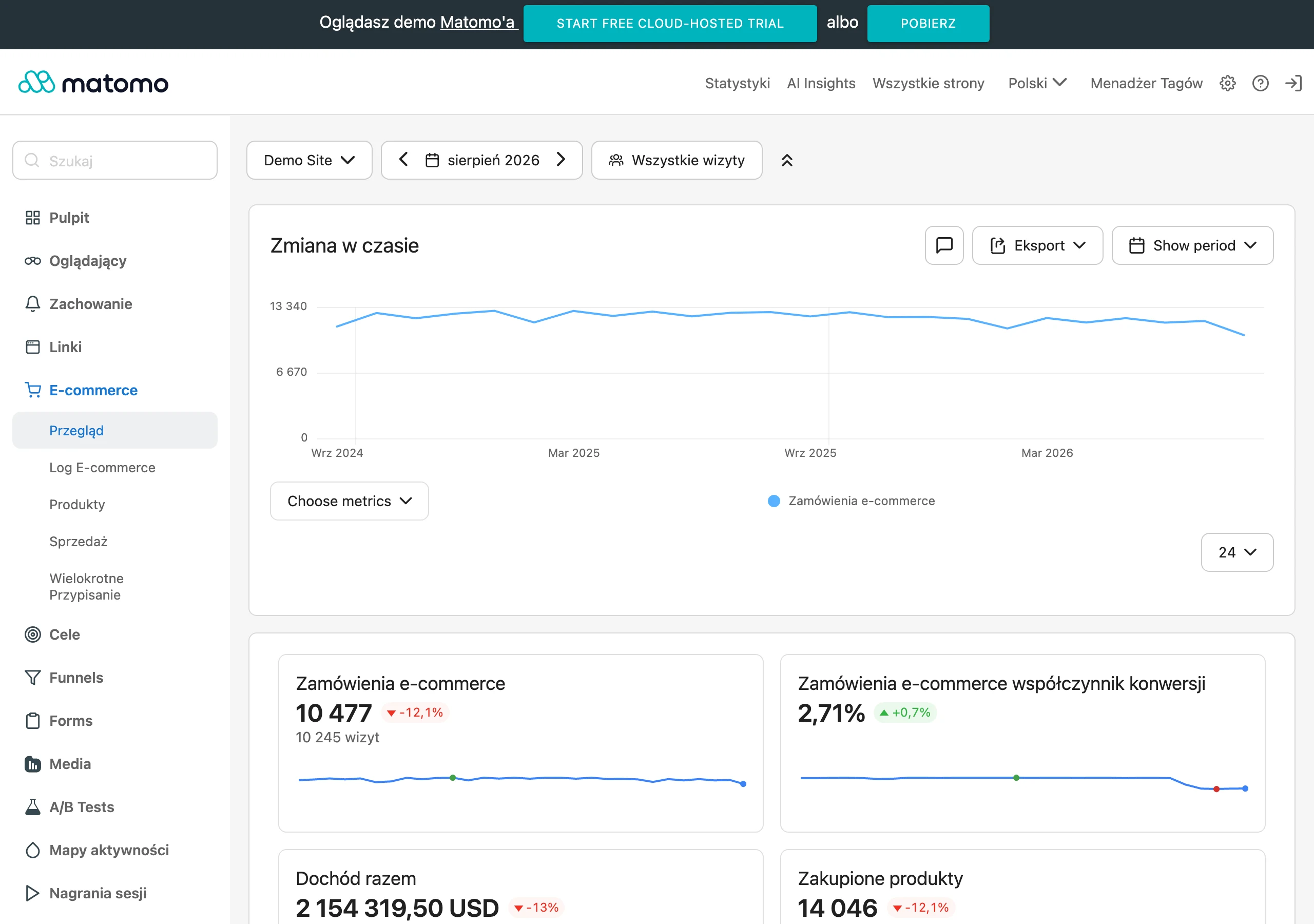
The most “hidden” costs usually appear in the B2B area, returns handling and proper e-commerce tracking in analytics. B2B price lists and discounts (discounts per group, per product, quantity thresholds, minimum order, offers), together with testing, can add 10 000–80 000 zł, especially when prices are pulled from the ERP. Returns and RMA (returns panel, return labels, statuses and e-mail/SMS communication) usually cost 5 000–50 000 zł, depending on exceptions such as partial returns or exchanges. In analytics, simply connecting GA4 is not enough — the result is determined by e-commerce events and their accuracy in checkout, and the setup of GA4/GTM/consents (sometimes server-side tracking) usually costs 2 000–30 000 zł plus infrastructure costs. If you care about controlling profitability and optimising campaigns, treat analytics and integrations as part of the implementation budget, not as “extras for later”.
UX/UI design: how it affects conversion and costs
UX/UI design affects conversion directly, because it determines whether the user quickly finds the product, understands the purchase terms and moves through the basket without unnecessary obstacles. When information architecture (category structure and navigation) is out of step with customer intent, traffic “escapes” despite the right prices and marketing activity. Redesigning the menu, categories and listings usually costs in the region of 3 000–20 000 zł, and it is often an expense that solves the problem of “lots of visits, few orders”. If you want to increase sales without increasing your ad budget, start with navigation and listings, because these guide the user along the path to purchase.
The product page (PDP) raises implementation costs when it is meant to answer questions about delivery, returns, availability and variants on its own, without involving customer service. The scope of work on the PDP often grows because of trust elements such as reviews (e.g. Opineo, Trusted Shops), an FAQ section or variant comparison, as that means additional components and integrations. Checkout is often a separate project, because this is where cart abandonment most often happens due to overly long forms, a lack of BLIK or problems with NIP/address validation. Checkout optimisation (e.g. one-page, auto-fill, clear delivery costs) usually costs 5 000–50 000 zł, depending on the platform and its limitations.
Responsiveness and speed on mobile increase the budget when Core Web Vitals (LCP, INP, CLS) need improving through template rebuilding, image compression (WebP/AVIF) and cache. Such optimisation often costs 3 000–40 000 zł, and it is most sensible to plan it especially when most of the traffic comes from a phone. Content costs can also be calculated: copywriting for descriptions and categories supports SEO and answers customer questions, and, for example, 200 descriptions at 25–60 zł each comes to 5 000–12 000 zł. On top of that there are transactional materials (e-mails, SMS, PDF), usually 1 000–10 000 zł, and usability tests (e.g. 5–8 users) for 2 000–8 000 zł, which make it possible to stop guessing what works.
- 01Direct impact on conversionQuick finding, easy purchase
- 02Information architectureStructure aligned with intent
- 03Navigation redesignSolves the “lots of visits, few orders” problem
- 04Product page (PDP)Answers questions, increases cost
If you want to improve sales without increasing the advertising budget, start with navigation and listings that guide the user along the purchase journey.
legal aspects and security: compliance-related costs
Compliance costs in e-commerce include spending on documentation, consents and safeguards that reduce the risk of disputes, penalties and losses after outages or incidents. GDPR and privacy policies are often prepared at the start with the help of generators, but with profiling, newsletters and advertising integrations, complexity quickly increases, along with the need to adapt documents to actual processes. Legal consultation and preparing or adapting documents (GDPR, cookie policy, data processing agreements) usually cost 1 500–10 000 zł. The terms and conditions, returns and complaints policy should reflect real sales scenarios, because inconsistencies in the documents increase the risk of disputes and costly corrections.
Analytics and marketing implementations push up costs when proper cookie consent and script blocking until acceptance are required. CMP tools (e.g. Cookiebot, OneTrust) work on a subscription model, and implementation compliant with requirements usually costs 1 000–8 000 zł. In payments, the scope of PCI obligations depends on whether card data is processed on your side — using gateways such as Przelewy24/PayU/Stripe usually limits this scope, whereas custom solutions or card storage increase audit costs and security requirements. If the store is to remain stable during peak season and campaigns, compliance also includes operational processes (e.g. incident response), not just “checkboxes” on the site.
Security and business continuity generate recurring costs, because open-source stores require regular updates of the core, theme and plugins, as well as a structured patching process. The budget for hardening and WAF (e.g. Cloudflare WAF) and updates is often 200–2 000 zł/month plus ad-hoc work. Backups and the recovery plan (backup/DR) include automated backups (database + files), restore tests and off-site storage, usually 100–1 000 zł/month depending on data and infrastructure. Additional costs may arise from accessibility requirements (WCAG) — the audit and fixes (contrast, keyboard navigation, aria-labels) cost 5 000–50 000 zł — as well as the need for monitoring and alerts (e.g. UptimeRobot, Grafana/Prometheus, Sentry, New Relic) from several dozen to several thousand zł per month, depending on scale and data retention.
maintaining and developing the store: optimising the total cost of ownership
Optimising the total cost of ownership (TCO) means planning not only the implementation price, but also maintenance and development costs over a 12–36 month horizon. In practice, TCO includes, among other things, subscriptions and licences, plugins/apps, technical support, fixes, as well as budgets for marketing activities and changes to the store. The most common mistake is to compare only the launch cost, without calculating how much it will cost after one or two years of operation. If you want to compare offers fairly, compare cost scenarios over time (e.g. 2 years), not just the launch price.
Maintenance after launch requires a financial buffer, because in the first few months needs usually emerge that could not realistically be predicted at the development stage. In practice, it is worth allocating 10–30% of the implementation budget for the first 3–6 months to post-launch fixes, including new delivery methods, integration changes, UX adjustments or preparing seasonal campaigns. Instead of trying to implement “everything at once”, companies often opt for an MVP and develop the store in sprints every 2–4 weeks. Such a model helps keep cash flow under control, but it assumes a fixed budget, e.g. 1–3 days of the team’s work per month or a retainer of 2 000–15 000 zł/month.
Controlling maintenance costs also means sensible management of add-ons and preparing the store for seasonal traffic spikes. As the store grows, it is easy to add more plugins, which increases the risk of conflicts after updates and raises fixed costs, so regular review of extensions, combining functions and dropping unused licences can reduce spending by 10–30%. Additional costs also appear when scaling for the season (e.g. Black Friday), when CDN (e.g. Cloudflare), cache, database optimisation and load testing are needed, which usually costs 3 000–80 000 zł, depending on the scale and type of issues. It is also worth taking into account cyclical adjustments to regulatory changes, payment provider requirements and advertising platform policies, because they often mean updating the terms and conditions, rebuilding cookie consents or modifying the checkout.
example budgets for implementing and maintaining an online store
Example budgets show that the cost of an online store depends on the technology, scope and whether the costs are concentrated at launch or spread across fixed charges. A simple SaaS store with a ready-made template usually costs 1 000–5 000 zł to launch and 150–600 zł/month to maintain. WooCommerce with a custom adaptation most often costs 12 000–50 000 zł to launch and 200–1 500 zł/month plus the cost of plugins. Magento/enterprise usually costs 120 000–500 000 zł to launch and 2 000–15 000 zł/month to maintain (depending on traffic, SLA and integrations).
The highest entry barrier is a custom store, although the justification for it comes from the need for full control and process fit. In a custom build, start-up costs are the highest, and profitability only appears once sales reach the right scale and requirements arise that cannot be sensibly delivered on a platform without compromises. The right benchmark is not “the cheapest start”, but matching the budget to the scale, integrations, expected SLA and the store’s growth plan.
The precision of the quote depends directly on the quality of the brief and the specifics provided at the start of the project. An honest cost calculation requires data such as: number of SKUs and variants, delivery methods, countries of sale, integrations, returns handling, B2B requirements and the expected SLA. The more detail you provide, for example a full list of integrations: BaseLinker + Subiekt + InPost + Przelewy24, the lower the risk of “top-ups” during delivery. This approach also makes it possible to assess in advance whether a better direction would be an MVP and development in sprints, or investing in the full scope from the outset.
FAQ
Frequently asked questions
What most affects the cost of an online store?
The biggest impact comes from the implementation model, catalogue size, number of integrations and the expected features. International selling, B2B and delivery speed also have a strong effect on the price.
How much does a SaaS online store cost?
In Polish systems, the cost is usually around 100–400 PLN per month, and in Shopify 39–399 USD per month. You also need to add commissions and fees for payments and apps.
How much does an online store on WooCommerce or PrestaShop cost?
A basic implementation often falls within 8,000–30,000 PLN. With B2B, integrations and custom features, the budget can rise to 30,000–100,000+ PLN.
How much do ERP and marketplace integrations affect the price?
Integrations can be one of the main budget items, because they require adaptation to real processes. Simple ERP synchronisation usually costs 5,000–20,000 PLN, while full two-way integration can cost 20,000–150,000 PLN.
Is a B2B store more expensive than a simple B2C store?
Yes, because you need individual price lists, discounts, credit limits, order approval and often ERP integration. The article indicates that such solutions can increase the cost by 20–80% compared with a simple B2C store.
When do online store costs rise the most?
They rise most sharply with a large catalogue, many variants, traffic spikes and complex sales processes. The budget is also pushed up by extras such as advanced filtering, product configurators, analytics and automation.