

Visibility online does not come from advertising or from publishing random content. It starts with organising where and how a client can find your company. In practice, this means having the brand present in the right place, with a relevant offer and at the moment when the user is ready to compare options or get in touch. For some, that will be the search engine and map; for others, also social media, an industry directory or advisory content. The most important thing is not simply “being online”, but building consistent touchpoints that lead the user to contact or purchase. This requires a few simple decisions: what the goal is, who you want to acquire and which channels you can realistically manage. Only on such a foundation does it become clear what should be implemented first and what can wait.
What visibility online means
Visibility online is a company’s ability to appear where the client is actually looking for a service, product or answer. It is not limited to the website itself, but includes a presence in search results, maps, social profiles, industry directories and in content that answers specific user questions. The better these places are connected, the easier it is to move from interest to contact.
In practice, visibility consists of several basic elements. You need a website or landing page with a clearly presented offer, a complete local listing, consistent contact details and a simple way to act, for example a phone number, form or booking. If a user finds your company but cannot quickly understand what you offer and how to get in touch, visibility does not translate into results.
A lot depends on the language you use to describe your services. A client usually does not type in an internal service name or a marketing slogan, but rather their problem, location or specific need. That is why the service description should reflect how people actually phrase their queries and what they expect when they land on the site.
Visibility rarely works as a single touchpoint. A user often starts in the search engine, then checks the map, reads reviews, visits the website and only then makes a decision. The company that wins is not always the one that is “the loudest”, but the one that provides complete, credible and easy-to-check information.
For this reason, it is worth thinking about visibility as a system rather than as one action. Publishing content on its own, advertising on its own or a listing on its own usually will not be enough if everything else is lagging behind. The key operational questions are: are there separate service pages, is the data up to date, is the offer clear on mobile, and can you measure where the enquiries come from?
The current context and challenges in building visibility
The current context and challenges of building visibility stem from the fact that user attention is fragmented, and a website’s mere presence rarely determines the choice. A client may find a company through classic search results, maps, video, social media or an industry portal. This means it is worth taking care not only of your own website, but also of how the brand presents itself in other places that genuinely influence the decision.
Today, it is not only about whether you are visible, but also how you perform at first contact. The page title, service description, photos, reviews, opening hours, service area and method of contact decide whether the user will click on you specifically. Poor presentation can weaken the effect even when the company is already present in the search results.
The second significant challenge is matching content to user intent. Search engines are increasingly accurate at assessing whether a given subpage genuinely answers a specific query or merely contains general phrases. For this reason, texts written “for everyone”, without indicating the service, location, scope of offer and stage of the customer’s decision, are performing worse and worse.
In practice, this means the need for a more precise information architecture. Instead of one general company page, separate subpages for services, locations, pricing, FAQ or case studies are often needed. These are the pages that answer users’ real questions and increase the chance that they will land straight on the information they need.
Another issue is measuring results. Without analytics, it is hard to distinguish traffic that merely looks good from traffic that translates into phone calls, forms and sales. If you do not measure clicks on the phone number, submitted forms, visits from the map or the source of enquiries, you do not know which actions are actually building visibility.
A problem can also be launching too many channels at once. A company sets up a website, several social profiles, a listing, directories and starts publishing without a plan, and after a few weeks some of the places are abandoned or out of date. From the user’s perspective, this reduces credibility, and from the owner’s perspective, it makes it harder to assess what is actually delivering results.
The most sensible approach today is to choose the core of visibility and consistently refine the basics. For many local businesses, this will be a well-prepared website, a complete listing and one or two supporting channels that can be managed regularly. Only when these elements are working and being measured does it make sense to expand further.
How the visibility-building process works in practice
Building visibility in practice means organising the company’s presence where the client is actually looking for the service, and then removing the obstacles that make contact or purchase harder. It is not about a one-off “marketing launch”, but about creating several consistent touchpoints: the website, the local profile, offer content and a simple contact path. First you need to clearly define which conversion you want to acquire, because without that it is difficult to assess whether visibility is actually delivering results.
You usually start by checking the baseline. It is worth verifying whether the site has separate service pages, whether the contact details are consistent, whether the business profile is complete, and whether the brand appears at all for queries related to the offer. Only this audit shows what is really missing: content, structure, locations, reviews, performance speed or analytics.
The next stage is matching content to user intent. Someone searching for “dentysta Kraków cennik” needs a different page than someone entering the more general “jak wybrać dentystę”. Visibility grows when every important customer need has its own clear answer on the site or in the business profile.
Next, you choose the channels that the business is able to manage consistently. For a local business, the core will usually be the site and the map listing, while for more complex services also expert content, industry directories or selected social media. It is better to manage two channels properly than to launch five and leave them with out-of-date information.
This process does not end with publication alone, but moves into cyclical improvements. You analyse where users come from, which pages most often lead to contact, and where people drop off. Without measuring phone calls, forms, clicks on the number and visits from maps, it is easy to mistake traffic for a real business outcome.
Stages of building an online presence
The stages of building an online presence begin with defining the goal and audience, and end with ongoing data-driven optimisation. This is important because simply publishing a site or profile does not yet guarantee visibility if it does not answer specific queries and does not lead the user to take action.
- Stage 1 — define the goal. You need to identify the main conversion, for example a phone call, form submission, booking or sale. In the same step, it is worth clarifying the priority service, location and customer group.
- Stage 2 — audit the presence. Check the site, local profile, contact details, indexing, reviews, directories, social accounts and access to tools. Often even at this stage basic problems emerge, such as no owner access to accounts, inconsistent data or an offer that is too general.
- Stage 3 — analyse demand and intent. It is worth checking which phrases and questions customers use at different stages of decision-making. This quickly shows whether separate pages are needed for services, locations, pricing, case studies or FAQ.
- Stage 4 — choose the channels. This is where you decide what is to be the pillar of visibility and what is only a supporting element. This is influenced by, among other things, whether the business operates locally or more broadly, what the length of the buying process looks like, and what resources the team has available.
- Stage 5 — implement technical and content basics. You organise the site structure, headings, meta data, service descriptions, forms, mobile version, performance speed and trust-building elements. At the same time, analytics should be connected so that data can be collected from the very beginning.
- Stage 6 — local and semantic optimisation. You complete the business profile with categories, opening hours, photos, service area and a description of the business. On the site, you align the service, location and the language used by the customer.
- Stage 7 — publication and distribution. You prepare offer pages, answers to common questions, advisory content and materials supporting the decision. Then these contents need to be circulated by embedding them in business profiles and local or industry posts, rather than leaving them unsupported.
- Stage 8 — measurement and adjustments. You check traffic from channels, query visibility, user behaviour, calls and forms. On this basis, you refine the content, page layout, profiles and priorities of actions.
If resources are limited, the most sensible approach is to first organise stages 1 to 5. Only then do additional content and new channels make sense, because they lead the user to an efficient, trustworthy and measurable contact path. In practice, most problems do not stem from a lack of activity, but from doing things in the wrong order.
Where to start building visibility online
It is a good idea to start building visibility online with one business goal and one priority customer segment. At the outset, it is easiest to focus on a specific service and a specific location or audience type. This makes it easier to prepare the right content, select channels and assess whether the actions are really generating contact. The biggest mistake at the start is trying to promote the entire offer to everyone at once.
The next step is to prepare the operational minimum, namely the places and elements that the user should find without searching blindly. You need your own domain, a site with a clear description of services, correct contact details, a simple form or phone number, and a local profile if the business operates within a specific area. All information must be consistent everywhere it is published. If a customer lands on the business but does not clearly see what you offer, where you operate and how to get in touch, visibility does not turn into results.
Next, it is a good idea to prepare the basic pages that answer real customer queries. In practice, this means separate pages for services, locations and contact, and often also pricing and FAQ if that information genuinely affects the decision. This structure usually works better than one general page with an extensive description of the whole business. The user finds the right content faster, and the search engine more accurately recognises which need that page addresses.
At the end, choose only those channels that can be run consistently. In most cases, a good foundation is a website, a local profile and one supporting channel, for example an industry profile or social media. If you want contacts straight away, you can run paid campaigns in parallel, but this will not replace organised basics. It is better to run two channels properly than to have five dead profiles with outdated information.
What to watch out for when optimising visibility
When optimising visibility, it is worth paying attention above all to actions that, on paper, look technically correct but do not make it easier for the user to make a decision. This applies especially to vague messages, copied content and pages written for keywords rather than for real customer questions. The presence of keywords alone is not enough if the page lacks the scope of the service, location, terms of cooperation and a simple call to action. It is not only the ranking position that is optimised, but also what the user notices in the first few seconds after landing on the page.
You also need to watch out for inconsistent company details. Different names, phone numbers, addresses, opening hours or links to an old website weaken trust and make local visibility harder. This is a common problem when a company has been added to directories and profiles at different times by different people. It is worth checking periodically that the same details appear everywhere and that they point to up-to-date contact points.
It can also be risky to launch too many channels without the resources to manage them. Outdated profiles, abandoned content, no responses to reviews and no up-to-date photos reduce credibility more than the mere presence helps. Another problem is not having owner access to accounts, business listings and analytics tools. If a company does not control its own accounts and data, every later optimisation becomes slower and more expensive.
Finally, you need to watch out for actions carried out without measurement. Without tracking forms, clicks on the phone number, map visits and traffic quality, it is impossible to assess which elements actually increase the number of enquiries. Ranking position alone does not yet determine whether the user found what they were looking for. Visibility only makes sense when it can be linked to a visit, a contact and a specific user decision.
Measuring results and adjusting strategy
Measuring results and adjusting strategy comes down to verifying which channels, subpages and activities actually end in a contact or sale, and then improving what weakens the outcome. What matters is not how many users visited the site, but whether they carried out the expected action. High traffic without phone calls, forms or orders does not mean good visibility. That is why the starting point should always be one main conversion and one unambiguous way of measuring it.
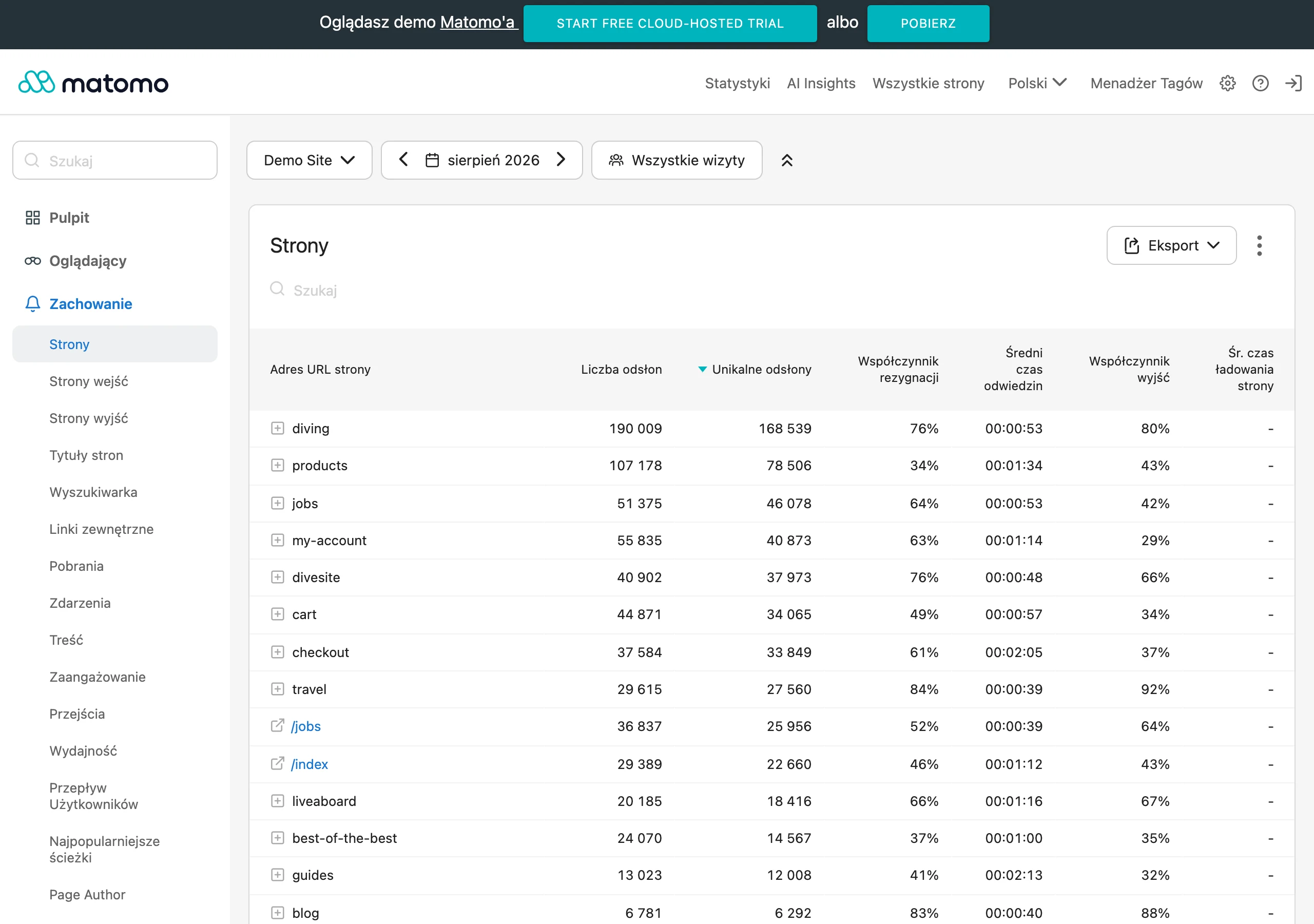
In practice, it is worth measuring not only visits themselves, but also specific user behaviours. Most often this means submitting a form, clicking the phone number, going to a map, making a booking, making a purchase or carrying out another business-valued action. If analytics does not record such events, you cannot tell the difference between a channel that merely rakes in pageviews and one that actually brings in customers.
The basic data set should include the source of the visit, the landing page and the final outcome. In practice, this means integrating analytics tools with the website and monitoring visibility in search and maps. It is useful to know which queries users arrive from, which subpages attract traffic and at which stages the user drops off.
Analysing the quality of visits is particularly important. One subpage may have fewer visits than another, but if it more often leads to contact, then it has greater value. Content and channels are assessed by user intent, not by the number of sessions alone. This is often the moment when companies stop chasing vanity metrics and start developing what actually delivers results.
Strategy adjustments should result from data, not intuition. If users visit but do not contact the company, the cause is most often a mismatched offer, a message that is too general, a weak above-the-fold section, a lack of responses to objections or a contact path that is too demanding. If a subpage has impressions but few clicks from search results, it is worth improving the title, description and match to the query.
In local visibility, it is worth analysing the company profile and the website separately. The user often sees the business listing, reviews, opening hours and photos first, and only later moves on. When the local profile is active but the website does not close the decision, you lose some contacts between the map and the form or phone. That is why you need to look at the whole chain: search, click, visit, decision.
A good working rhythm is a regular review of data and small improvements rather than rare, big revolutions. In practice, it is worth comparing month on month: which channels are growing, which content is gaining visibility, which subpages are losing out and where the click-through rate to contact is dropping. The best results come from consistently refining a few key elements, not from constantly adding new channels without controlling the outcome.
If, after several measurement cycles, the results are still not visible, it is worth returning to the foundations of the strategy. It may be that the company is targeting too broad an audience, promoting the wrong service, publishing content that answers low-intent queries, or operating in a channel that does not align with the way the customer makes decisions. That is why measurement does not complete the process, but acts as a compass that allows you to narrow the direction and use budget, time and content more sensibly.
FAQ
Frequently asked questions
How do you start building online visibility from scratch?
First, you need to define one business goal, the priority service and the customer group. Only then is it worth preparing the website, consistent contact details and choosing channels that can be managed consistently.
Is a website alone enough to be visible online?
No, because visibility also includes maps, social media profiles, industry directories and content that answers users’ questions. A website on its own, without coherent touchpoints, usually does not translate into results.
Why are consistent company details important for local visibility?
Different names, phone numbers, addresses or opening hours weaken trust and make local visibility harder. It is worth checking that the same information appears everywhere and leads to up-to-date contact points.
When is it worth creating separate service, location and FAQ pages?
When customers are looking for specific information or asking different questions at different stages of the decision-making process. This structure helps the user find an answer faster, and helps search engines better understand the page topic.
Which channels are best to choose at the start of building an online presence?
It is usually best to start with a website, a local profile and one supporting channel. It is better to manage two channels properly than to launch several and leave them with out-of-date information.
What should you measure to know whether visibility is really working?
You need to track calls, forms, clicks on the phone number, visits from maps and query sources. Without this, it is easy to confuse traffic itself with a real business result.