
Building brand visibility online does not come down to a single campaign, but to the continuous organisation of communication, content and presence in key channels. The aim is for the right audience to be able to find the brand effortlessly, recognise it and quickly understand what it does. In practice, it is not only about whether the brand appears on Google, but also whether it is present where the user is genuinely comparing options: on social media, maps, business profiles and expert materials. The biggest mistake is reducing visibility to simply “creating content”, without a plan, a consistent message and a link to the offer. Well-built visibility increases traffic, trust and sales effectiveness, but this happens only when it stems from the real needs of the audience. In this article, we will go through this process step by step, from the foundations to actions that are worth measuring and regularly optimising.
What is building brand visibility online?
Building brand visibility online is an organised set of activities that increases the number of places where a brand becomes noticeable, searched for and remembered by the right audience. It is not about being present in one channel, but about creating multiple touchpoints with the user. The brand should be easy to find when someone is looking for a solution, comparing offers or checking the company’s credibility.
In practice, the process includes the website, offer and advisory content, SEO, social profiles, business listings, external publications, email and visual materials. Each of these elements has a different role. The website organises the offer, SEO increases the chance of the brand being found, and social media and business profiles help maintain the relationship and build recognition.
The key point is that visibility rarely delivers results as a single, one-off action. More often, it works like an ecosystem of content and trust signals that grows over time. The more consistent and high-quality touchpoints with the brand there are, the greater the chance that the user will come back to it rather than to a competitor.
This has a direct business impact because visibility influences traffic, the number of enquiries, brand recall and the perceived credibility of the offer at the same time. When a brand is present but communicates inconsistently, the user is more likely to hesitate or move on. Visibility works best when the user quickly understands who you are, what you offer and why it is worth trusting you.
Current trends in building brand visibility
Current trends in building brand visibility show that it is no longer enough to mark your presence in one channel. Users simultaneously look for information in search engines, social media, maps, review sites and video materials. This means that the brand should be consistent and easy to recognise regardless of the point of contact.
Expert content and practical content are playing an increasingly important role, because users usually compare sources before getting in touch or making a purchase. Weak, generic and duplicated publications lose reach and do not provide a real advantage. Today it is better to publish fewer pieces, but ones that are well matched to the audience’s intent, than to create a lot of content without a clear purpose.
An important direction is also the growing importance of owned channels, such as a website, a newsletter or a library of materials on the company blog. They provide control over communication, a proper archive of content and access to analytical data. This is especially important when reach on external platforms can be unstable or dependent on algorithms.
The quality of the on-site experience is also becoming increasingly important. The user evaluates not only the content itself, but also whether the site works smoothly on mobile, whether the offer is clear and whether the contact details can be found quickly. Even good content will not help if, after arriving on the site, the brand gives the impression of being outdated, inconsistent or makes it difficult to take the next step.
The scope of activities is also influenced by organisational factors: the level of brand recognition, the condition of the website, the budget, access to experts and readiness for regular publishing. That is why there is no one-size-fits-all framework. An effective plan is built around where the brand is today, who it should be visible to and which channels can realistically be developed in a systematic way.
How does the process of increasing brand visibility work?
The process of increasing brand visibility involves gradually building a presence where the audience is actually looking for information, comparing options and making decisions. At the outset, it is worth checking the starting point: whether the brand is visible for brand and topic-related keywords, what content it already has, what the site looks like and whether the communication is consistent across different channels. Without such a diagnosis, it is easy to get caught in a flurry of activity that translates neither into recognition nor into the number of enquiries. Visibility grows fastest when the brand appears in the right context, rather than simply in a large number of places.
The second stage is to build the foundations, that is, to define more precisely who the brand is speaking to, what problems it solves and what it should be associated with. This affects the choice of topics, language and channels. Visibility for a local brand is planned differently, for a B2B company differently, and for an online store differently again. When this step is skipped, the content can be technically correct but still miss the audience’s intent.
The next step is to prepare the infrastructure, primarily the website and business profiles. The website should clearly present the offer, guide the user to the relevant subpages and include basic trust-building elements: contact details, service descriptions, FAQs, reviews, case studies or other proof of competence. Good visibility will not work if the user lands on the site and does not understand what the brand does or what they should do next.
Then content appears, but not as a collection of random publications. A topic map is created based on the audience’s questions, comparisons, problems and purchase intent. Some materials are meant to build reach and educate, others to clear up specific doubts, and still others to support sales. In practice, this means connecting articles, service subpages, brand content, profile updates and social media materials into one consistent system.
Next, the content is refined and directed at the audience. You need to look after titles, headings, internal linking, meta descriptions, local data, images, company profiles and the quality of the publications themselves. Simply putting content out there is rarely enough, which is why it is worth reinforcing content with email marketing, social media, sales materials and external publications. Owned channels are key here, because they give you control over the message, the content archive and the analytics data.
At the end, measurement and plan adjustments are needed. It is not only traffic that matters, but also whether brand searches are growing, whether users land on the right subpages, how they behave on the site and whether they move on to contact or purchase. Only at this stage can you see which topics and channels build real visibility, and which merely generate empty page views.
Key steps in building brand visibility online
The key steps in building brand visibility online include an audit, choosing audiences and topics, tidying up the website, regular publishing, distribution and ongoing measurement of results. To start, it is worth checking whether the brand is consistent across all touchpoints: on the website, in the Google Business Profile, on social media, in directories and in company materials. If the name, business description, contact details or visual identity differ between channels, the brand loses credibility and recognisability.
The second step is to establish who the brand should be visible to and why the user should find it. It is not about a broad group such as “everyone interested”, but about specific situations: someone is looking for a solution to a problem, comparing services, wants to check reviews, or needs local contact. If the brand does not know the questions under which it should appear, it will produce content that increases reach but does not support sales.
The third step is to build the core of the presence, meaning the places to which all traffic will lead. In practice, these are most often the homepage, service or category subpages, the knowledge section, FAQ, reviews, case studies and company profiles. These elements should complement one another rather than operate separately. A user arriving from Google, maps or social media should quickly land on content matched to their stage in the decision-making process.
The fourth step is a publication plan based on audience intent. It is worth preparing how-to, comparison, offer and brand content, but each one should fulfil a clearly defined goal. Some materials are meant to attract attention, others to show the advantages of the offer, and still others to make the next action easier, for example contact. Content that does not connect with the offer or the user’s next step rarely translates into business value.
The fifth step is to strengthen the brand’s search visibility. This requires developing brand content, updating profiles, maintaining a presence in maps and quality websites, and making it easier to reach official sources. This is particularly important when the user already knows the brand name and wants to verify it before getting in touch. At that point, it is not just the position in the results that matters, but also the consistency of information and the quality of the first impression.
The sixth step is the regular optimisation of what is already working. In practice, it often makes more sense to refine existing subpages and articles than to keep adding new materials without a plan. Updating headings, expanding answers, improving linking and refreshing data can increase visibility faster than publishing more weak content. The quality and freshness of existing materials very often deliver a better result than the number of publications alone.
The final step is analysing the quality of visibility. It is worth checking whether traffic lands on the right pages, whether the user understands the offer, whether they return to the brand and whether they carry out the expected actions. The number of visits alone is not enough to assess effectiveness, because visibility only matters when it increases recognisability, trust and the chance of contact.
The most important actions in practice
The most important actions in practice include organising your own channels, publishing content that responds to the specific needs of the audience, strengthening the brand’s presence in the search engine and regularly measuring traffic quality. First, you need to reach a point where the user, after landing on the site, immediately understands what the brand does, who it helps and how to get in touch. If this foundation does not work, even good reach will be wasted. Visibility only starts to work when the user lands in the right place and is given a clear next step.
In practice, the core of the activity is the website and everything that the brand controls independently. Service, category or solution subpages should respond to specific intents rather than being merely a short business card. FAQ sections, reviews, case studies, information about the cooperation process and up-to-date contact details also help, because they shorten the path from interest to decision.
The second pillar is content, but not content created solely to maintain regularity. Topics are worth choosing based on customer questions, decision-making stages and objections that arise before contact. It is better to publish fewer pieces, but ones linked to the offer and searched for by the right audience, than to generate traffic that adds nothing.
- Organise the homepage, offer, navigation and trust elements so that the sense of the brand can be grasped in a few seconds.
- Prepare a topic map that covers offer-related, guide-style, comparison and brand content.
- Strengthen brand searchability in Google, maps, business listings and social profiles so that official sources are easy to find.
- After publication, push every piece of content further through circulation: to social media, the newsletter, sales materials and communication with customers.
- Refresh materials that already have visits or positions instead of endlessly adding new ones without a plan.
The consistency of brand information outside the website is also very important. The company name, business description, graphics, links, contact hours and tone of communication should look similar in every important place. When a brand is described differently across channels, the user loses confidence that they have landed on the right source.
In the end, it is worth measuring not just the number of visits, but the quality of visibility. Check which pieces of content drive traffic to offer pages, which channels bring back returning users and which topics trigger enquiries. The most valuable visibility is the kind that increases brand recognition and leads to real actions, not just page views.
Typical mistakes in building brand visibility
Typical mistakes in building brand visibility include a lack of consistent communication, publishing content without a purpose, neglecting the website as the main touchpoint, and evaluating results solely by reach. Many companies run a lot of activities in parallel, but do not combine them into one logical system. As a result, the brand appears in different places, yet it does not create a recognisable image or strengthen the offer.
A common problem is preparing generic, repetitive content that does not move the user further on. An article, post or video should answer a specific question and serve a clear function: educate, compare, build trust or lead to the offer. If the content is not connected to what the brand actually sells, it usually ends with traffic that does not translate into anything.
The second mistake is neglecting the mobile site, information structure and the technical foundations of SEO. A user may find the brand, but if the site loads slowly, the offer is unclear or it is hard to find contact details, visibility will not translate into results. The problem is rarely a lack of traffic itself; more often, the traffic lands on a poorly prepared destination.
- Inconsistent naming, descriptions and graphics across different channels.
- Publishing topics without a plan and without linking the content to the offer.
- Ignoring brand keywords, business listings and official brand profiles.
- No content distribution after publication, as if the post alone had to stand on its own.
- Irregularity of activity: a strong start, followed by long breaks.
- Focusing solely on page views instead of the quality of visits, enquiries and returning users.
In practice, it also does damage to mindlessly copying competitors’ actions without understanding what makes them effective. The fact that another brand publishes a lot of video, runs a newsletter or invests in specific channels does not automatically mean the same set-up will work for every company. Visibility grows fastest when the channel, format and topic are matched to the audience, available resources and the business objective.
The simplest way to reduce mistakes is a cyclical review of the entire ecosystem: the website, content, profiles, search results and analytical data. Such an audit quickly shows whether the brand is easy to find, whether communication stays on one course and which activities genuinely drive interest. This allows you to improve the system step by step instead of starting from scratch over and over again.
How to measure the effectiveness of brand visibility activities?
It is worth evaluating the effectiveness of brand visibility activities by combining data on reach, traffic quality, brand recognition and impact on enquiries or sales. An increase in page views alone is not enough, because it can be the result of topics that do not attract the right audience. The most important question is not “how many people visited”, but “did the right people land on the right content and take the next step”.
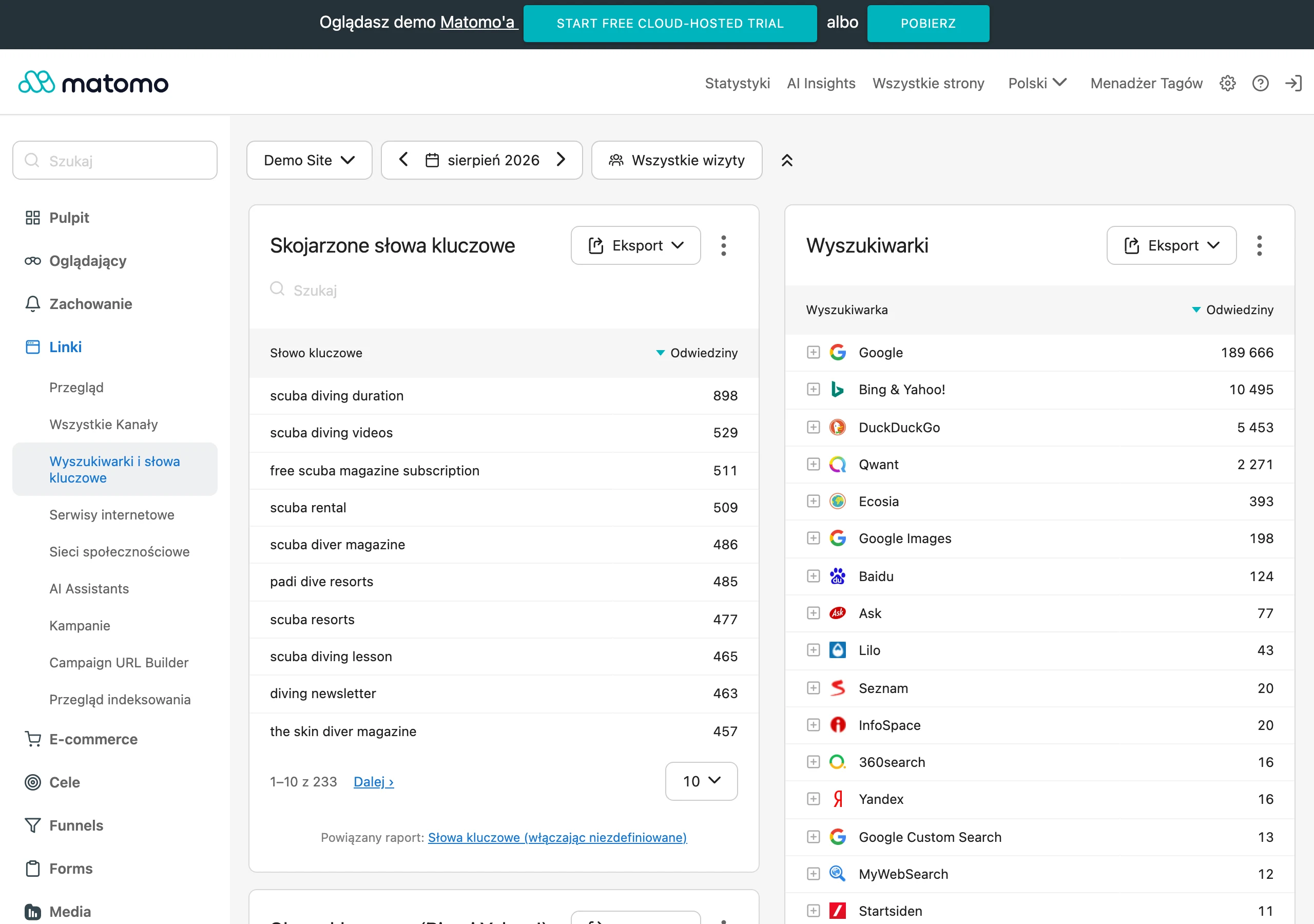
It is a good idea to start measurement with a baseline. In practice, it is worth recording the current state: visibility in Google, the number of brand and non-brand keywords, traffic to key subpages, the number of enquiries, visits from social profiles and data from the company profile. This way, you later compare the result with a real baseline rather than with a single better or worse week.
In search, three areas are key: the number of brand impressions, the number of visits from offer-related keywords and the quality of the pages the user lands on. When brand keyword visibility grows, it usually means the brand appears more often in people’s minds and is searched for directly. When non-brand keyword visibility grows, it is a sign that the brand is also being found by people who do not know it yet. Well-developed visibility combines both types of queries rather than relying on just one of them.
On the website, it is worth measuring not only the number of sessions, but also what the user does after arriving. What matters is whether they visit offer pages, move from an article to a service, or click on contact, the form, the phone number, pricing or newsletter sign-up. These are signals that visibility does not end with attracting attention, but genuinely supports the decision.
On social media and other channels that support reach, it is not worth judging performance solely by likes. Far more important are website visits, profile visits, saved posts, direct messages, growth in brand-related searches and users returning in the following days. Content that has less reach, but brings the right people to the site, is usually more valuable than material with a large number of reactions and no further effect.
Good measurement should clearly separate early-stage metrics from strictly business metrics. The first group includes impressions, reach, clicks, number of keywords and profile visits. The second includes enquiries, phone calls, forms, bookings, sales, share of brand traffic, returning users and visits to the most important subpages. This division makes it easier to determine whether the problem stems from insufficient brand exposure, or rather from a weak offer, website or message.
In practice, the best approach is to review results by channel and topic. The mere information that traffic has grown adds little if you do not know which content generated it and whether it led to contact. The most insight comes from analysing which topic attracts valuable visits, which subpage closes interest and which channel genuinely strengthens the brand.
The best working rhythm is a regular, simple monthly report and a more in-depth review every few months. The monthly report checks changes in visibility, traffic, visit quality and the number of contacts. The broader review assesses which content to update, which channels to strengthen and which activities to drop because they mainly generate apparent activity.
If a brand operates locally, the effects of being present in maps and business listings should be measured separately. In that case, what matters are profile impressions, route clicks, calls, website visits and consistent contact details everywhere. For a local brand, even a well-run website will not use its full potential if the user cannot quickly find the official company details in local results.
FAQ
Frequently asked questions
How do you build brand visibility online step by step?
First, you need to audit the brand’s presence, organise the website and company profiles, and then plan content around the specific needs of your audience. In the end, what matters is regular measurement of results and improving what already works.
Is publishing content enough to make a brand more visible?
No, because content without a plan and a link to the offer usually does not translate into a real effect. Visibility grows when publications are consistent, match user intent and lead to the next step.
Why does communication consistency matter for brand visibility?
Because the user understands more quickly who the brand is, what it offers and why it is worth trusting. When communication is inconsistent, the audience hesitates more often or moves to a competitor.
When is it worth refreshing existing content instead of creating new content?
When older subpages or articles already have visits or rankings, but can be improved. Updating headings, internal linking or answers often gives a better result than adding more weak materials.
What should be on a website to support brand visibility?
The website should clearly present the offer, contact details, FAQ, reviews, case studies and other trust-building elements. It is also important that the user immediately understands what the brand does and what to do next.
How can you check whether brand visibility is actually working?
It is not enough to look only at the number of visits, because traffic quality also matters. You need to check whether users land on the right subpages, return to the brand and move on to contact or purchase.