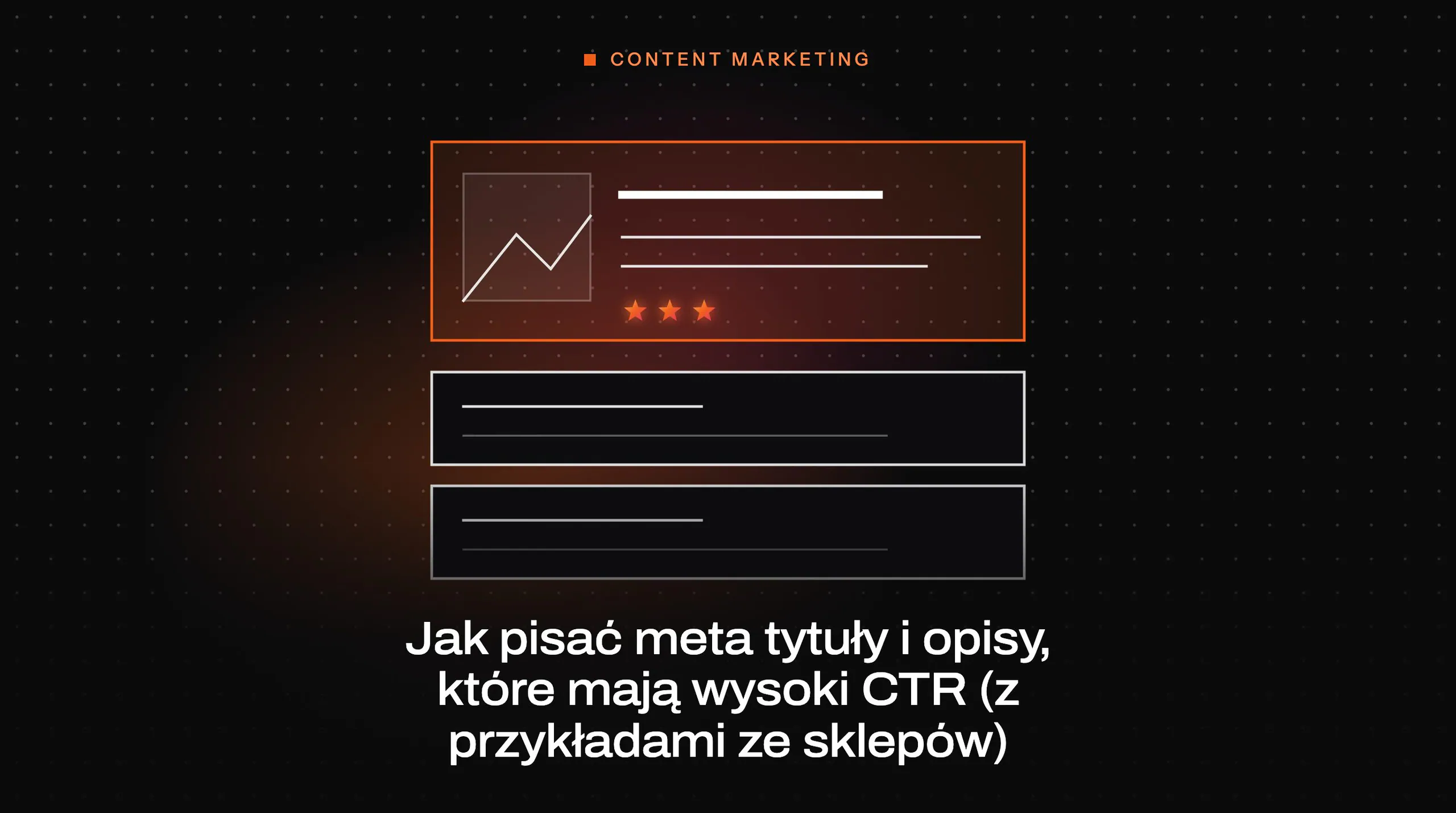

The meta title and meta description influence whether a user clicks your result before assessing the page itself. A well-written snippet will not improve rankings, but it can make much better use of the impressions you have already earned. In an online store, this effect is especially visible on category pages, product pages and buying guides. That is why meta tags need to be written not for bots, but for a specific intent, offer and promise of the landing page.
The role of meta tags in CTR optimisation
Meta tags optimise CTR because they build the snippet that the user sees in search results. The title attracts attention and sets the topic, while the description adds the benefit, details and a prompt to click. They do not replace rankings, page quality or query relevance. But at the same ranking, they can shift traffic towards the result that looks more specific and more trustworthy.
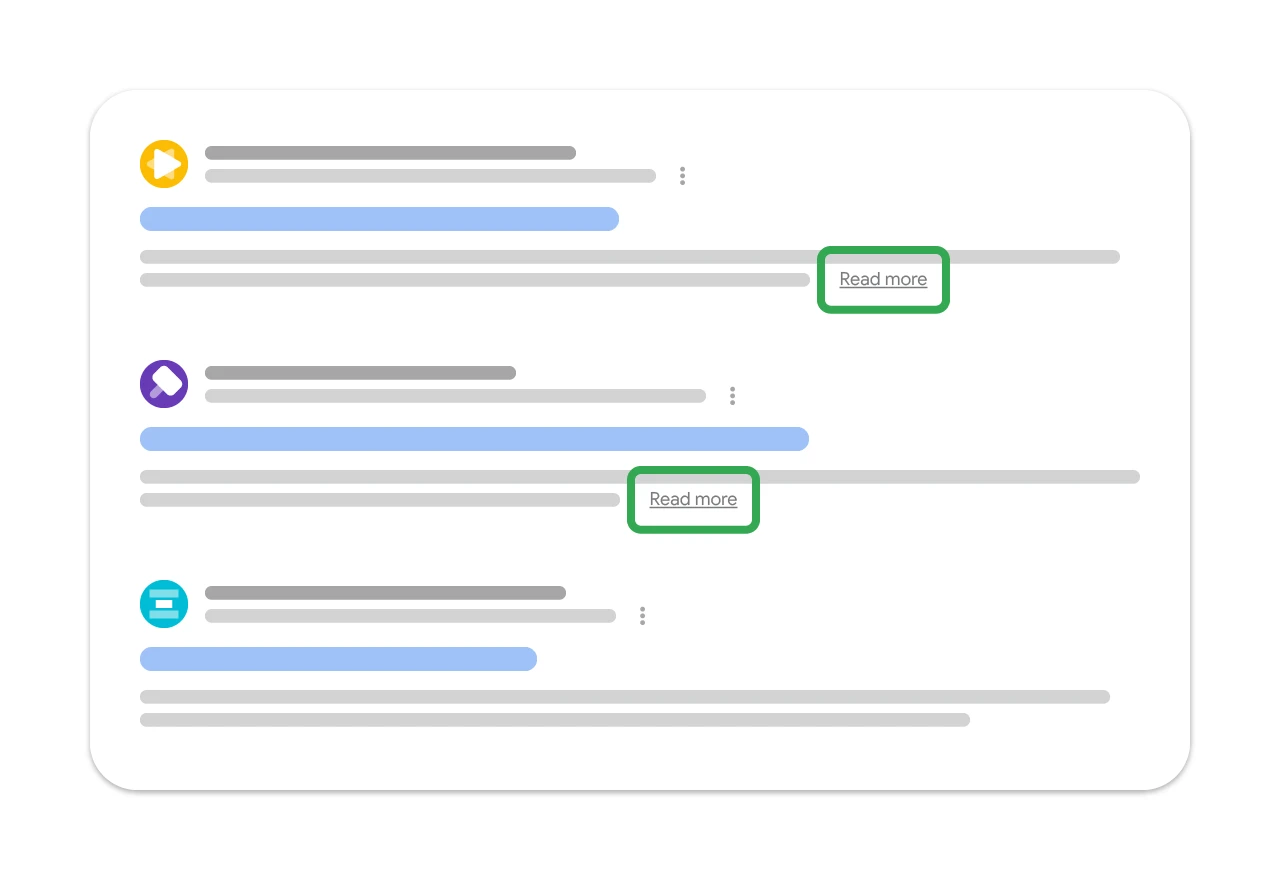
In practice, it is not only a matter of writing meta tags, but also of keeping control over the snippet. The search engine may rewrite the title or description if it decides that it can answer a given query better. The risk decreases when meta tags are unique and aligned with the H1 and the page content. If a category promises “New summer collection”, but old products are visible on the page, the message loses credibility.
CTR should be improved only on technically tidy URLs. Every page should have its own title, a correct canonical and sensibly controlled indexing of filters and pagination. In international stores, correct hreflangs also matter. Schema can enrich the result, but it does not replace a good title and description.
How to match meta titles and descriptions to user intent
Meta titles and descriptions are matched to intent by changing the promise, the language and the specifics to suit the user’s goal. A user with an informational query wants an answer, with a commercial query comparisons, and with a transactional query a quick purchasing decision. The same product should not be described in the same way on a guide, a category page and a product page.
For a product page, the model, availability and unique selling point of the offer are the most important. Example from an electronics store: “De’Longhi Magnifica S espresso machine – 24h delivery | SklepAGD” immediately shows what you will buy and what you gain. The description “Buy the De’Longhi Magnifica S espresso machine with grinder. 2-year warranty, free delivery. Check reviews and order online!” supports the decision with specifics. This works because a user searching for an exact model wants confirmation of purchase parameters, not general slogans.
For a category and a guide, the emphasis needs to change because the intent is broader. The category “Women’s linen dresses – New summer collection | ModaSklep” responds better to browsing the offer than aggressive “Buy now”. A description with sizes, colours and free returns helps assess the choice before clicking through. Meanwhile, a guide such as “Which mattress for allergy sufferers? Foam or latex [Guide]” should promise a comparison and a practical answer.
Effective title and description structure for higher click-through rates
An effective title structure puts the main keyword at the beginning, then shows a specific differentiator, and ends with the brand. This layout helps the user quickly recognise the topic and assess whether the offer is better than other results. In an online store, this works particularly well on product pages and category pages, where the decision is made in a few seconds. The most important information must fit at the beginning of the title, because that is the part that most often determines the click.
In practice, a good template looks like this: product or category name, dash, benefit or USP, vertical bar, brand. For a product, this will be the model and the buying benefit, for example fast delivery. For a category, offer features work better, such as a new collection, size range or type of assortment. The brand at the end organises the message, but it should not push out the more important content.
The description should develop the promise from the title through one main benefit, two or three specifics and a clear CTA. Instead of writing “high quality”, it is better to state “2-year warranty”, “free delivery” or “30-day returns”. Such a description gives the user a real reason to visit the page and reduces uncertainty. A good CTA closes the message, but it cannot sound detached from the page intent.
When creating length, it is not worth sticking to a rigid character limit; instead, make sure the first roughly 600 pixels remain readable. This matters because a cut-off title often loses its meaning or chops off the most important differentiator. If the title only fits the category name and the brand, the user will not see the benefit. That is why it is better to shorten embellishments than to remove specifics.
On a product page, “De’Longhi Magnifica S espresso machine – 24h delivery | SklepAGD” works better than just the model and the store name. The user immediately sees that it is about a specific product and fast order fulfilment. A description with the grinder, warranty and free delivery completes the purchase decision. On a category or a guide, the same structure remains, but the emphasis changes because the entry point has a different purpose.
How to use differentiators and click psychology in meta tags
Differentiators and click psychology increase CTR when they show a real reason to choose exactly this result. The keyword alone is not enough if the competition next to it communicates more specifically and more convincingly. The user compares snippet with snippet, not the entire page. That is why you need to choose the elements of the offer that truly set the store apart in the SERP.
The best USPs are those that are quick to understand and commercially important. In e-commerce, the following usually work: price, free delivery, 24-hour shipping, warranty, promotion or a unique product feature. For a clothing category, a seasonal collection, wide size range or free returns also make sense. Don’t try to cram all the advantages in at once, because an overly dense message loses readability.
Click psychology strengthens meta tags when it matches the page type and stage of decision-making. For sales offers, urgency may work, for example “offer until tomorrow”, if it really applies. For guides, curiosity and the promise of explaining a difference, comparison or mistake to avoid work better. In shopping results, social proof can also be useful, if it can be communicated credibly.
For a store, this means a simple rule: a product should reduce purchase risk, a category should make choice easier, and a guide should promise an answer. A product description can highlight warranty and fast delivery. A category can emphasise the collection, sizes and returns. A guide can lead with a sentence that announces a comparison of drawbacks, benefits and recommendations.
Every psychological trigger must be consistent with the content of the page, otherwise the snippet becomes clickbait. If the title promises a promotion or delivery date, the user should see the same thing after clicking through. An unfulfilled promise not only reduces trust, but also weakens the effectiveness of future tests. A high CTR is only valuable when it results from an accurate and credible promise.
The importance of on-page consistency for snippet stability
On-page consistency stabilises the snippet because it confirms on the page what the title and description promise. When the H1, first paragraphs, price, availability and structured data say the same thing, the search engine has fewer reasons to rewrite the meta tags. This is especially important in a store, where the decision to click is based on a short promise. If the snippet promises something the user does not immediately see after clicking through, CTR may rise at the expense of trust.
In practice, inconsistency most often appears on product pages and category pages. The title may promise “24h delivery”, while the page shows a longer lead time or no shipping information at all. A category may suggest “New summer collection”, but the H1 and assortment show a broader, mixed selection. In such a situation, the message loses credibility for both the user and the search engine.
Before making changes to meta tags, it is worth checking a few elements on the page:
- whether the H1 expands on the same topic as the title, without changing the meaning,
- whether the category or product description confirms the promised benefits,
- whether the price and availability match the sales message,
- whether the Schema data does not show information different from the page content.
Consistency does not mean copying the same sentence everywhere. It is about aligning the meaning and priorities of the message. A meta tag should encourage a click, and the page should immediately confirm that the user has landed in the right place. This makes it easier to keep control over the snippet and assess the effectiveness of subsequent changes.
Testing and prioritising changes to meta tags
It is worth testing meta tag changes first on URLs with a large number of impressions, low CTR and a stable position. Only then can you see whether the improvement comes from the new message rather than a change in visibility. Positions from 4 to 15 usually offer the best scope for work. There, the snippet genuinely influences the choice between several similar results.
Priorities are set according to traffic potential, not intuition. A product page with a small number of impressions may have a poor CTR, but it will not provide a meaningful signal after the change. A better candidate will be a popular category or a group of products with stable data. Only compare similar page types and the same position range, otherwise the test result will be misleading.
In practice, it is worth starting with templates rather than individual manual tweaks. For products, you can test changing the USP in the title, for example delivery or warranty. For categories, it is often more worthwhile to check other specifics in the description, such as sizes, returns or the collection. In store guides, test above all the promise of an answer, a comparison or an explanation of the choice.
Results are assessed in Google Search Console, but always in the right context. You need to look at CTR together with average position, number of impressions, device, country and the split into brand and non-brand queries. If, after a title change, CTR rises and the position remains similar, the signal is useful. If the position changes at the same time or Google rewrites the snippet, the result requires a more cautious interpretation.
Common mistakes when creating meta titles and descriptions
Common mistakes when creating meta titles and descriptions are above all keyword stuffing, duplicates, empty promises and messages that do not match the page. Such a snippet is less likely to win the click because it looks artificial or untrustworthy. In an online store, the damage is greater when the same mistake is repeated across hundreds of URLs. Then it is not one product card that weakens, but the whole visibility segment.
The biggest problems are caused by mistakes that are meant to improve CTR quickly, but in practice reduce trust. Clickbait only attracts attention until the user lands on the page and is quickly disappointed. Overusing CAPS LOCK and decorative symbols also works poorly, because instead of substance it gives the impression of shouting. Phrases such as “highest quality” work in a similar way, because they confirm nothing and do not distinguish the offer from the competition.
It is usually worth spotting such patterns:
- a title with the same keyword repeated several times, without new information,
- identical meta tags on many products or categories,
- promises such as “cheapest” or “delivery tomorrow” without confirmation on the page,
- empty slogans instead of specifics, for example a warranty, returns or shipping date,
- overly long titles where the differentiator or brand is cut off.
Another common mistake is ignoring readability in the first part of the title. If the opening is taken up by a generic phrase, the user does not quickly see the model, benefit or difference compared with other results. For example, a product title with three variants of the words “coffee machine” usually loses to a simple message with the model name and 24h delivery. In the description, a similar effect is caused by overloading the text with features without one clear benefit and a sensible CTA.
A good error audit starts with groups of URLs, not individual exceptions. Check which templates generate duplicates, which titles are being cut off and where the snippet promises more than the page shows. Then prioritise the addresses with a high number of impressions and a stable ranking. That is where you can see fastest whether a simpler, more credible message actually improves click-through rate.
FAQ
Frequently asked questions
How do you write a meta title to increase CTR in an online store?
First place the main keyword, then a specific differentiator, and finally the brand. The most important information should be at the beginning, because this is the part that most often decides on the click.
Does the meta description affect a page’s ranking in Google?
No, a well-written meta description does not improve rankings. However, it can make better use of already earned impressions and encourage the user to click.
Why do meta tags need to be consistent with the page content?
Because consistency reduces the risk that the search engine will rewrite the title or description and strengthens the credibility of the snippet. If the promise in the meta tag does not match what is visible on the page, trust and CTR performance suffer.
How do you tailor the meta title and description to user intent?
You need to adjust the promise, language and specifics to the search goal. A product page is described differently, a category differently, and a buying guide differently.
When is it worth testing new meta titles and descriptions?
Best on URLs with a large number of impressions, low CTR and a stable position. The most sense usually comes from results in positions 4 to 15, where the snippet genuinely influences the user’s choice.
Which mistakes in meta titles and descriptions most often reduce click-through rates?
The most common problems are duplicates, keyword stuffing, empty promises and messages that do not match the page. Overly long titles, vague claims such as “highest quality”, and too much CAPS LOCK and decorative flourishes also hurt.