
The choice between a landing page and a blog article starts with the keyword, not with the content template. The wrong format usually ends up with traffic that does not convert, or a page that does not match the search results. First establish what the user is really looking for and what type of answer Google promotes for that keyword. Only then plan the page structure, call to action and place of publication within the site.
Query analysis as the starting point for the decision
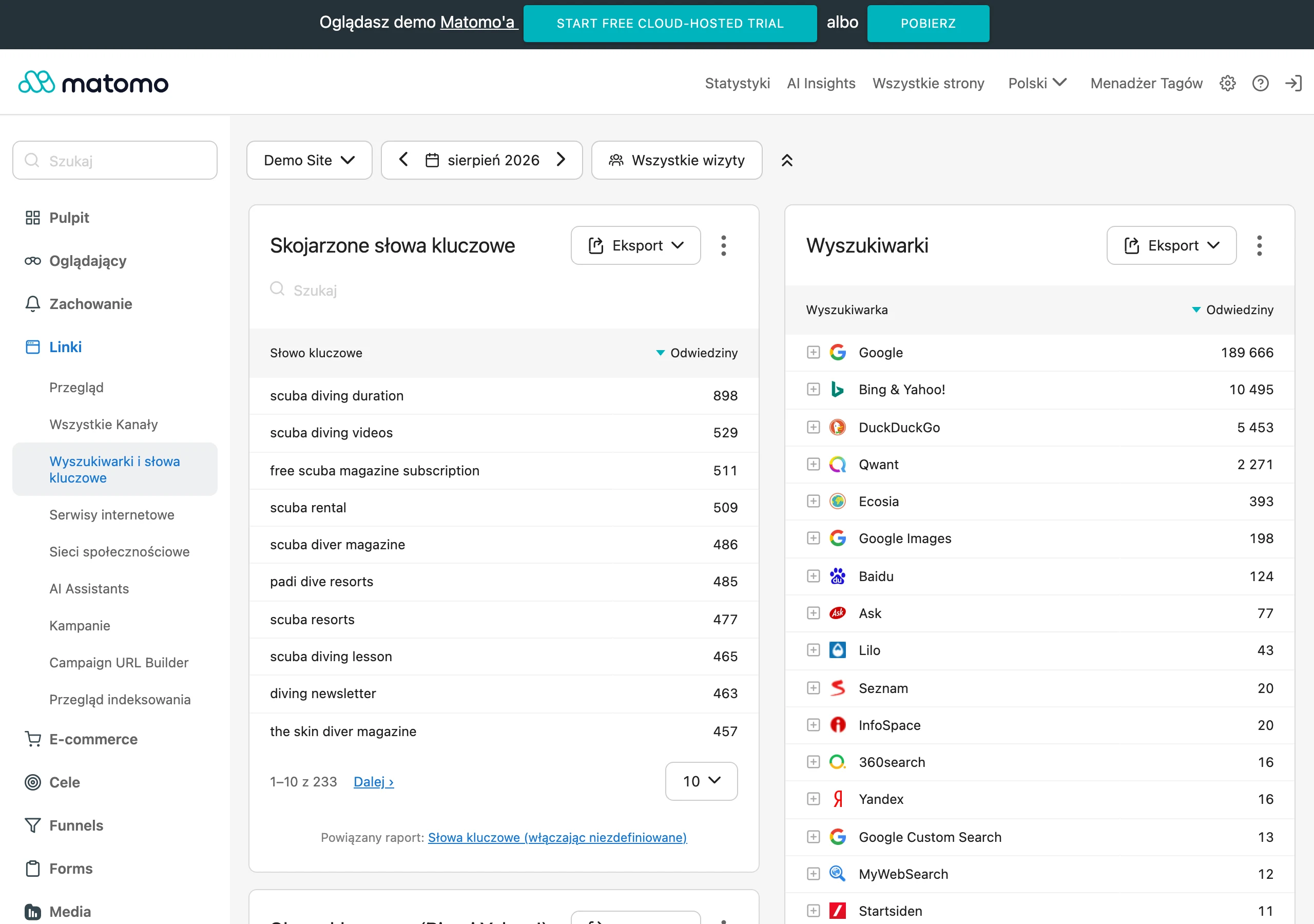
Query analysis lets you assess whether a given keyword requires educational content or a page focused on conversion. The structure of the keywords itself tells you the most. Questions, “how” keywords and definitions usually signal a need for explanation. By contrast, “price”, the name of a service or product, and a more specific offer more often suggest purchase readiness.
Keywords such as “best” or comparisons indicate that the user is at the stage of researching options. This is not yet a pure transaction, but it is not just casual curiosity either. In practice, such a keyword often needs content that helps the user make a decision. If you show only the offer straight away, you may fail to answer the right question.
Also look at the scope and freshness of the topic. Broad or frequently changing queries are easier to handle with an article that can be regularly expanded and updated. A narrow keyword with a clear business objective works better as one strong source of truth. This initial assessment always needs to be checked later in the search results.
User intent and its impact on the choice of content format
User intent determines whether a landing page, blog article or another content layout will be better. With informational intent, the audience wants to understand the topic, solve a problem or learn a definition. Here, a guide usually wins, because it gives room for context, examples and structured answers. In such a case, a landing page usually feels too short and too salesy.
With commercial or transactional intent, the user expects an offer, specifics and a quick way to move on. That is why a service page, product page or category page with a clear scope, benefits and action is often better. This format shortens the path to contact or purchase. If instead you publish a long guide, you may spark interest, but you will not make the decision easier.
Navigational keywords should lead to a specific subpage, not to an article created for the sake of it. Intent also shows the stage on the customer journey: at the top of the funnel, education is needed; in the middle, comparison; at the bottom, a clear offer. This matters because the content format should support the site’s business goal, not just traffic. When one keyword combines different needs, it is better to split them into separate URLs than to mix everything on one page.
The role of SERP analysis in the decision-making process
SERP analysis determines whether Google expects a landing page, a guide or another format for a given keyword. It is a practical verification of your earlier assumptions about intent. If the top 10 are dominated by service pages, product pages or categories, you usually need to prepare a landing page. If guides, definitions and articles dominate, blog content will be the better choice.
It is not enough to check the result titles alone. You need to see what function the competitors’ pages serve: whether they educate, compare, capture leads, or lead straight to purchase. SERP shows not what you want to publish, but what the search engine considers the right answer for that keyword. Ignoring this signal usually ends with publishing content that does not fit the expected format.
In practice, analyse not only the type of results, but also their structure. Check whether the competition builds short offers, in-depth guides, comparisons, tools or video materials. This helps you assess how broadly the topic needs to be covered and whether the user expects a quick decision or first needs the problem explained. Both a manual results analysis and a comparison of content formats in the top 10 are useful.
If the results are mixed, do not guess. Such a SERP often means that the keyword combines several needs or is broad in theme. In that case, you need to plan the content architecture carefully so that you do not mix the offer with education on one URL without a clear purpose. This is also the first moment when it is worth checking the risk of future keyword cannibalisation.
The role of the business goal in content creation
The business goal determines whether the content should primarily convert, educate, build awareness or support sales. That choice should align with intent and the stage of the customer journey. If the page is meant to generate leads or sales for a high-potential keyword, a landing page is usually better. If the goal is market education, growing visibility or attracting long-tail topics, an article more often wins.
This distinction matters operationally. A landing page should shorten the route to action, so it needs a clear offer and a simple path to contact or purchase. A blog article works differently: it answers questions, develops the topic and builds topical authority, which later strengthens important sales pages. Thanks to this, the blog does not have to close the sale in the last click to genuinely support the business.
The mistake appears when every piece of content is supposed to serve all goals at once. A guide that is too salesy loses educational value, and a landing page that is too extensive makes the decision harder and blurs the call to action. First define one main goal for the page, and only then choose the format, content scope and place of publication. This also makes later performance measurement easier.
For a landing page, sensible metrics are conversions, conversion rate, revenue or cost per lead. For a blog, traffic, engagement, new long-tail enquiries and assisted conversions matter more. If you assess an article solely on direct sales, you may mistakenly judge valuable content as ineffective. Conversely, a landing page assessed on traffic alone may look good, even if it is not achieving the business goal.
Applying a hybrid model for broad topics
The hybrid model is best used when the topic is broad, competitive and covers many related queries. In such a situation, a single landing page can be too thin, and one article too generic. A pillar page organises the main topic, while supporting content expands its specific angles. This solution works particularly well when one keyword covers both education and the consideration stage.
In practice, a pillar page should answer the main question and guide the user further to more detailed materials. It does not have to cover every subtopic at the level of an expert guide. Its role is to gather the topic in one place, show the structure of the issue and direct users to the right subpages. As a result, the user does not get lost in the site, and the search engine better understands the relationships between the content.
The most common mistake is putting all the knowledge and all the offer on one URL without a clear hierarchy. Such a page tends to be too long, inconsistent and difficult to rank for one dominant intent. It is better to split the topic into a pillar and supporting articles, and then connect them with logical internal linking. This reduces chaos and makes it easier to build visibility for a set of related keywords, rather than just one main one.
Building topical authority through blogs
A blog builds topical authority when it systematically covers questions, problems and comparisons related to one area of the offer. It is not about the sheer number of posts, but about their semantic consistency. If you publish guides around a specific service or category, you show the search engine that the site understands the topic more broadly than just sales. This usually also strengthens important landing pages.
The practical value of a blog grows when articles answer top- and middle-of-funnel intents and then lead to the right landing pages. This structure serves the user at different stages of the decision-making process. First they get an explanation or comparison, and then they can move to the offer without having to search for it again. The blog then becomes a source of context that supports pages focused on conversion.
For this mechanism to work, blog content cannot be random. A good set of topics usually includes:
- questions such as “how”, “what is” and “why”
- comparisons and consideration-stage keywords
- user problems related to the service or product
- supporting content for the main sales pages
A poor result comes from publishing posts only because they have traffic, but do not connect with the business area of the site. Such a blog may generate views, but it does not build real expertise around the offer. The second common mistake is creating several texts that answer the same intent. Then, instead of strengthening the topic, you start spreading potential across competing URLs.
Keyword cannibalisation and its impact on SEO
Keyword cannibalisation means that several URL addresses from one domain compete for the same keyword and the same intent. As a result, the search engine receives conflicting signals about which URL should be shown. This weakens ranking stability and makes it harder to match the right page to the query. The problem affects blog articles as well as service landing pages or categories.
In practice, keyword cannibalisation usually appears when you publish similar content without a clear mapping of keywords to specific URLs. A typical example is a guide and a service page that answer the same need in almost exactly the same way. The second scenario is several blog posts developing the same topic under different titles, but with the same intent. One main intent should have one strongest URL.
First, check in Google Search Console whether several subpages appear for the same group of queries. Then assess which one best fulfils the user goal and the business goal. If two addresses answer the same main intent, the most sensible approach is to consolidate the content on one URL. The weaker address is then worth redirecting with 301, rather than leaving it to continue competing.
Not every keyword overlap is a problem, because different intents can justify different formats. An “how to choose” article and a sales landing page can coexist if one educates and the other finalises the decision. The condition is simple: the content must have a distinct role, structure and internal linking. When both URLs are trying to do the same thing, it is usually better to combine their potential than split it between two pages.
FAQ
Frequently asked questions
How do you tell whether a blog post or a landing page is better for a given keyword?
First assess the intent behind the query: keywords with “how”, definitions and questions usually call for educational content, while “price”, a service name or a product name more often point to an offer. Then check which format dominates the search results.
Does analysing Google results really help you choose the right content format?
Yes, because the SERP shows what kind of answer Google considers best for a given keyword. If service or product pages dominate the top 10, a landing page is usually better, and if guides and definitions dominate, a blog post is better.
Why should keywords with comparisons and the word “best” not always lead to a sales page?
Such queries often indicate the consideration stage rather than readiness to buy. In that case, the content should help the user make a decision instead of showing only the offer straight away.
When is it better to publish a pillar page instead of a single detailed landing page or article?
When the topic is broad, competitive and covers many related queries. A pillar page organises the main topic, while supporting content expands on its subtopics.
How can a blog support sales pages without direct selling?
A blog builds topical authority when it consistently answers questions, problems and comparisons related to the offer. As a result, it supports important landing pages and guides the user from education to decision.
Can several pages on the same domain answer a similar keyword?
They can, but only if they have different roles and different intent. If several URLs compete for the same keyword and the same task, keyword cannibalisation appears and it is worth consolidating them.