


In a company that is growing at sprint speed, marketing rarely loses because it lacks ideas. It loses because it lacks a structured way of working. Week by week, campaigns, content, requests from sales, website changes, reports and “urgent” tasks keep coming in, while the team remains the same size. And then the problem is not the number of tasks itself, but that every one of them seems equally urgent. If marketing does not operate according to clear priorities, processes and data, company growth starts to overload it faster than the team can cope with. This article shows how to organise marketing operationally so it delivers results despite limited resources. The point is not theory, but decisions that genuinely cut through the chaos and increase predictability.
What marketing looks like in a company growing faster than the team
This is the marketing operating model for a company where the number of tasks, channels and expectations is growing faster than the number of hands available to do the work. Sounds familiar. In practice, it means marketing can no longer operate “from campaign to campaign” or try to respond to everything in sequence. It needs rules that help decide what to do now, what to simplify, what to automate, and what not to touch at all.
In this marketing model, you are not measured by the number of completed tasks. What matters is the impact on business goals, and that is a completely different level: pipeline, revenue, activation, retention, entry into new segments and real sales support. This is an important shift: the team is not meant to be busy, but useful to the business.
The whole thing usually starts with a workload audit, a simple check of where the work comes from and where time is being lost. Then the activities are organised: which are repetitive and which are bespoke. The next step is choosing the channels with the highest impact and implementing working standards and automation. Only at the end does reporting come in, supporting decisions rather than merely showing activity.
This way of working usually covers several areas at once: inbound, performance, CRM, content, SEO, lifecycle, landing pages, analytics and campaign operations. The result is not one “marketing plan”, but a set of operational tools for day-to-day use: a process map, a prioritisation matrix, an activity backlog, a channel plan, a KPI dashboard, a campaign playbook, an approval workflow and rules for working with sales. Without this kind of order, the company slips into ad hoc mode, fragments the budget and finds it increasingly difficult to predict marketing performance.
The current operational context in marketing
The current operational context in marketing looks like this: the number of initiatives is growing faster than the skills, processes and tools needed to handle them. The data makes it very clear where this leads. In practice, marketing starts to become a bottleneck for sales, product and the board, because everyone wants it “yesterday” and there is no spare capacity to add. The team takes on more and more responsibility, but it does not always have the time, data and structure to operate efficiently.
Today, website traffic alone or the number of leads is not enough. To assess effectiveness, you increasingly need harder criteria: lead quality, impact on the pipeline, acquisition cost, time between stages and conversion by segment. If marketing reports mainly vanity metrics, the company makes budget decisions on far too weak a basis. And that is not a cliché.
The second brake is data. More precisely: its quality and the consistency of the systems. When the CRM, analytics, ad platforms and automations show different numbers, it is impossible to fairly assess channels, plan hiring or defend priorities. What does the team do then. Instead of working on results, it spends hours manually checking, correcting and explaining discrepancies in reports.
Marketing is increasingly operating in a multi-channel mode. Paid media, SEO, email, social media, webinars, partnerships and sales support activities are all running at the same time. Without process owners and clear prioritisation rules, the channels start competing for the same resources: the time of designers, copywriters, campaign specialists and approvers. That is precisely when a small team appears to be underperforming, even though the real problem is often a lack of working rules rather than a lack of commitment. The question is who is keeping track of the queue of tasks.
That is why operational automation is becoming more important. It is not just about sending emails, but also about lead routing, lead scoring, nurturing sequences, data synchronisation, report templates, publication planning and standardising asset production. The key is where automation makes sense. It delivers the greatest value where tasks are frequent, predictable and repetitive, and therefore should not, by definition, be eating up people’s time.
The scope of the problem always depends on the specific company. Relevant factors include the stage of growth, length of the sales cycle, number of segments and personas, revenue model, CRM maturity, number of active channels and how closely marketing works with sales and product. Look at it another way. Two teams with the same number of people can have completely different operational capacity because they work within a totally different pattern of workload and dependencies.
How the marketing operating model works
The marketing operating model brings order to chaos. It does this by turning an excess of tasks into a few structured processes aligned with business goals. First, you check where the team’s workload is really coming from: campaigns, ad hoc requests, reporting, website changes, lead handling or manual work in tools. This makes it clear not only what the team is doing, but also what is holding it back and why. In practice, the biggest problem is rarely the lack of people itself, but the lack of rules about what should be done first.
The next step is to align the company’s goals with specific workflows. If the goal is pipeline growth, then demand generation is planned separately, lead handling separately, and sales support separately. Each stream should have an owner, KPI, inputs and outputs, otherwise tasks drift between people and accountability for the result becomes blurred. The problem is that without this structure, even sensible initiatives can get stuck at the “who is going to deliver this?” stage.
Then comes the time to evaluate channels and segments. Not by how many of them you have, but by their impact and servicing cost, because what matters is the impact on pipeline, time to launch, dependencies on other departments, data quality, and whether it can be scaled without adding more people. This is the moment when the company stops asking “are we active in this channel” and starts asking “does this channel justify its operating cost”.
After such an analysis, the team decides what to do with each type of work. Most often, tasks fall into four groups:
- keep in-house, if they require business context and quick decisions,
- automate, if they are frequent, predictable and based on simple rules,
- simplify or remove, if they generate a lot of work for little impact,
- delegate, if they require specialist production or do not need to be done within the team.
Then standardisation comes in. And it is what genuinely relieves the team, because campaign briefs, landing page templates, campaign naming conventions, UTM schemes, QA checklists and approval rules are created to keep projects under control. The effect is simple: fewer revisions, shorter rollouts and fewer situations in which every project has to be invented from scratch.
The next step is to bring order to tools and automations. CRM, marketing automation, analytics, dashboards and the task management system must exchange data without manual retyping, because otherwise “automation” is just a nice label for chaos. Automation makes sense when it organises repetitive work, not when it masks a poor process.
In this model, the flow of leads between marketing and sales is critical. You need to define lead sources, required fields, scoring rules, routing to sales reps, CRM statuses and response times, because without this marketing may deliver volume, but the company will still lose opportunities because of confusion at the handling stage.
Finally, there is a constant data-driven optimisation loop. You report not only campaign results, but also implementation time, the share of ad hoc tasks, backlog, data quality and the effectiveness of automation, in other words what usually slips into the background. Mature marketing measures not only the final outcome, but also how efficiently the team is able to deliver that outcome.
What to do to manage marketing effectively
To manage marketing effectively, you first need to reduce the number of parallel activities and introduce one shared way of setting priorities. Every project should receive a clear assessment: impact on the business goal, servicing cost, deadline, dependencies and available resources. Without this, the team chases the loudest requests instead of doing what actually moves the numbers.
First, calculate the operating cost of growth. Check how long it takes to launch a campaign, how many tasks come back for revisions, how many reports are created manually, how many leads do not have an owner and where the team is stuck in a queue, waiting for decisions from other departments. Such a quick audit usually reveals without mercy whether the problem is lack of capacity, lack of process, or simply too broad a scope of work.
Then it is time to simplify. It is better to run fewer channels, but with good measurement, clear accountability and a repeatable process, than to multiply activities that nobody can honestly evaluate. In a fast-growing company, giving up some activities is often more valuable than adding new ones. The question is: what really delivers results, and what just fills the calendar.
You also need to standardise work inputs. The campaign brief, content brief, landing page requirements, segment definitions, campaign tagging rules and the rules for handing a lead over to sales should be documented, not agreed every time in messages and meetings. This is especially important where marketing works with sales, product and the board at the same time, because then a small inconsistency can grow into a blocking issue.
Implement automation where the work is frequent and predictable. The biggest gains usually come from: lead assignment, nurturing sequences, recurring reports, publication scheduling, data error alerts and status updates. If a process is manual but comes back every week, it is almost always a good candidate not for “another spreadsheet”, but for simplification or automation.
It is also crucial to separate strategic work from production work. The person responsible for direction should not at the same time constantly put out fires, write all the content, launch campaigns and build reports, because in practice that ends up being a life from sprint to sprint. When these roles are too tightly mixed, the company operates reactively and loses the ability to plan ahead.
To manage performance well, build a dashboard in three layers.
- business: pipeline, revenue, SQL, retention,
- channel: cost, conversion, volume, share of results,
- operational: delivery time, backlog, SLA, data quality.
Such a setup makes decision-making easier. You can see not only which channel delivers results, but also whether the team is able to handle it without overload, or whether it is running on fumes. This is especially important before entering a new segment, market or channel, because then the costs of chaos grow faster than the budget.
Finally, define the conditions for expanding the scope of marketing. A new initiative should only start when it has an owner, measurement, budget, a lead handling process and the resources to produce materials; otherwise it will become yet another “urgent issue” that never ends. The most common mistakes are repetitive: adding campaigns without order in the CRM, reporting empty metrics, too many tools without integration and no rules for ad hoc requests from sales or the board.
The importance of automation and standardisation in marketing
Automation and standardisation are needed so that marketing delivers a predictable result despite a lean team. And that’s not a cliché. In practice, it’s not about “more tools”, but about less manual work, fewer mistakes and a faster route from idea to campaign launch. When the number of channels and requests grows, without fixed rules every action starts to look slightly different. And then the team loses time not on marketing, but on recreating the process from scratch.
Standardisation brings order at the front end. The campaign brief, naming conventions, UTM tags, a landing page template, a QA checklist, segment definitions and the rules for handing a lead over to sales all make the work move faster and come back for amendments less often. The key is that everything becomes comparable, so diagnosis stops being guesswork. It then becomes easier to point out where the problem really lies: in the creative, the offer, the channel or lead handling.
Automation is implemented where work is repetitive. Where tasks are frequent, predictable and based on simple rules, a tool can make a difference without the risk that “something will go off track”. Most often, this involves lead routing, email sequences, recurring reports, publication scheduling, status updates and data error alerts. You do not automate chaos — first you need to simplify the process, and only then move it into a tool.
The biggest benefit does not end with time savings. The problem is that without standards, data quickly becomes skewed, and poor decisions are made on skewed data. Well-set rules improve the quality of information, and that translates into decisions on budget, channels and hiring. If the CRM, analytics and advertising platforms use the same definitions and fields, it is easier to calculate acquisition cost, pipeline impact and lead quality by segment. The data clearly shows what works and what only generates traffic.
Standardisation and automation separate strategy from production. Instead of manually compiling a report, copying over leads and correcting poorly described tasks, the marketer gets time back for analysing performance and making priority decisions. And that changes the dynamic of the work, because the team stops “putting out fires” and starts managing performance. In a small or overstretched team, that is often more important than launching another channel.
Most common mistakes and how to avoid them
The most common mistake is scaling the number of actions without setting priorities, data and accountability. The company adds campaigns, formats and channels, but does not change the way it works, so the number of tasks grows, not effectiveness. The question is, why increase the pace if the direction remains unsettled. The effect is predictable: delays, weaker execution quality and increasingly unreliable reporting.
The first classic mistake is doing too many things at once. Marketing handles SEO, paid media, webinars, email, social, outbound and sales support, but no area has a closed process or a clear owner. Over time, every channel works “sort of”, which in practice depends on who happens to have a moment, rather than on rules. It is better to narrow the scope to channels that can realistically be measured and handled operationally than to maintain a broad set of activities without control.
The second mistake is mundane, but costly. It is poor data quality and the lack of shared definitions, because when marketing counts MQL differently from how sales counts SQL, and some leads have no source or owner, the report turns into a table with no decision-making power. What is the point if the numbers add up, when nothing follows from them. To prevent this, define stage definitions, mandatory fields in the CRM, attribution rules and lead response SLA.
The third mistake is reporting activity instead of impact. Traffic alone, the number of publications or cost per click may sound concrete, but they do not answer whether marketing is actually building pipeline and revenue. A good dashboard should combine three levels: business outcome, channel effectiveness and the team’s operational efficiency. Otherwise you are looking at metrics, not at the business.
The fourth mistake takes the form of an “urgent request”. Too many ad hoc requests from sales, the board and other departments, without intake rules, mean that every new task displaces planned work, and the team stops controlling its own backlog. And then you are no longer managing priorities, you are putting out fires. In practice, one ticketing system, clear priority criteria, a minimum brief standard and a hard rule work: a new task must have an owner and a clearly described impact on the business goal.
The fifth mistake is introducing tools without order in the process. A new CRM, automation platform or dashboard will not fix the situation if the team is still working from incomplete briefs, inconsistent campaign names and manual workarounds. The problem is that technology then becomes an alibi, not support. A tool is meant to strengthen a good process, not replace the decision about how marketing should work.
The last common problem is uncomfortable, because it requires cuts. It is the lack of a decision to drop low-impact activities, because in a fast-growing company it is easy to add new initiatives, and rarely remove old ones that have stopped working or are too expensive to run. How many things are you doing “out of momentum”, simply because they have always been on the list. A regular review of the backlog, channels and work formats helps recover resources without increasing headcount.
How to measure and optimise marketing activities
Marketing activities are measured on three levels: business, channel and operational. At the business level, what matters above all is the impact on pipeline, revenue, the number of SQLs, activation or retention, depending on the company model. At the channel level, you look at cost, volume, conversion and the share of a given source in the result, that is, what delivers and what only “looks good”. At the operational level, you assess whether the team is able to deliver activities on time and without chaos. Without this three-layer perspective, it is easy to confuse traffic with impact.
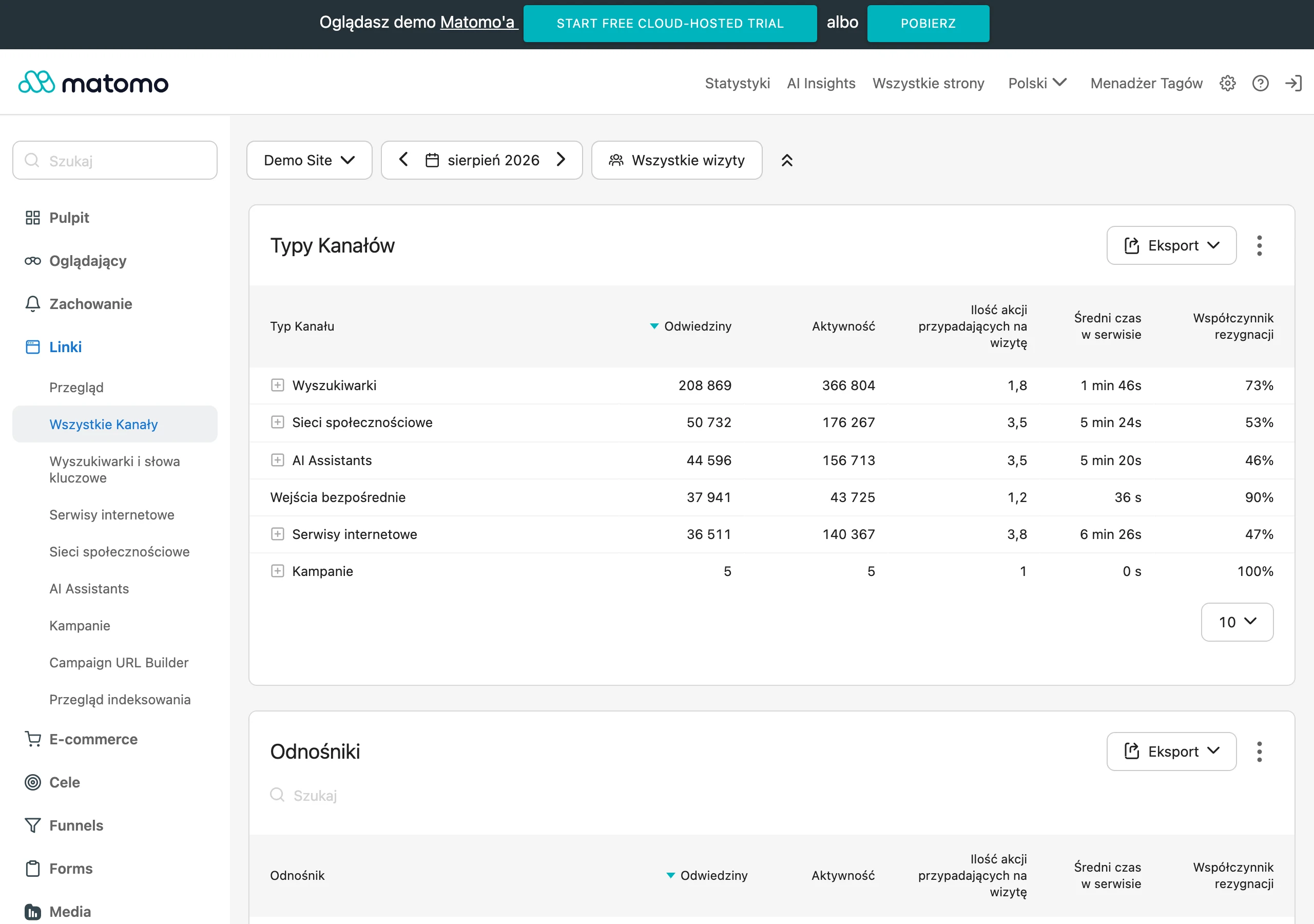
If a report shows only traffic, reach or the number of leads, it usually is not enough to make a good budget decision. A lead only matters once you know which segment it came from, what quality it is and whether it moves further through the sales process. The key is therefore to connect data from CRM, analytics, advertising platforms and marketing automation, instead of living in separate dashboards. The data makes it clear: without that connection, it is easy to scale a channel that looks good in the ad dashboard but performs badly in the pipeline.
Optimisation starts with finding the bottleneck. Not by changing everything at once, because then it is easy to “fix” what was not broken in the first place. If campaigns are delayed, production and approval are often to blame, not media. If there are lots of leads but sales do not pick them up, rather than increasing budget it is better to improve routing, scoring or the SLA rules between marketing and sales. First determine whether the problem concerns demand, lead quality, the handling process or data flow.
In practice, operational metrics also matter. They show whether marketing can scale without adding people, or whether you are only adding stress. Measure campaign launch time, the number of revisions, the share of ad hoc tasks, backlog delays, the quality of UTM tagging, field completeness in CRM and the number of manual reports. These data are not a technical curiosity. They decide whether the team works predictably, or whether it spends day after day putting out fires it started itself earlier.
Good optimisation is just as often about switching something off as it is about improving a channel that is already working. That may be unpopular, but it is sometimes the only sensible decision. If a channel has little impact on results and a high management cost, there is no point keeping it just because “it works, doesn’t it”. The same applies to content, webinars, campaigns and segments that generate work but do not support business priorities. In a company growing faster than the team, failing to decide to give something up hurts a bit at first, then hurts everyone, and eventually turns into an overload of the entire marketing function.
The best working rhythm is simple. A regular data review should lead to decisions about what to simplify, automate, move or stop, rather than ending with yet another “charts meeting”. Such a review should close with a change to the backlog, ownership or scope, not just with discussion. A report should be a decision-making tool, not a chronicle of the team’s activity. And that is not a cliché, because only then does marketing stay under control even when the number of tasks grows faster than the team itself.
FAQ
Frequently asked questions
How do you organise marketing in a company that is growing faster than the team?
First, you need to check where the team’s workload is coming from and which activities really affect the outcome. Then it is worth setting priorities, simplifying processes and automating repetitive tasks.
Should marketing in a fast-growing company be measured by the number of tasks?
No, more important is the impact on business goals such as pipeline, revenue, activation or retention. The team should be useful to the business, not just busy.
Why do CRM, analytics and ads need to show the same data?
Because without consistent data it is impossible to assess channels fairly, plan hiring or defend priorities. Gaps in reporting force the team to check things manually and take time away from work on results.
Which marketing tasks are worth automating first?
The most sensible tasks are frequent, predictable and based on simple rules, for example lead routing, nurturing, recurring reports or publishing schedules. Automation should organise repetitive work, not mask a poor process.
When should marketing cut the number of channels and activities?
When parallel activities start competing for the same resources and the team has neither time nor working rules. It is better to run fewer channels with good measurement than to multiply activities that nobody evaluates properly.
What should be included in a marketing dashboard in a growing company?
The dashboard should have three layers: business, channel and operational. This makes it possible to see not only the result, but also cost, conversion, lead time, backlog and data quality.