

Quora can support SEO, but usually not in the way many people assume at the outset. It is not primarily a tool for acquiring “strong links”, but a source of genuine questions, intent and user problems. This makes it easier to plan content that answers specific needs, rather than relying solely on broad keywords from SEO tools. Quora is also often visible in Google for informational and problem-solving queries, so it can attract audience attention earlier in the decision-making process. Quora’s biggest value in SEO is usually indirect: better research, more relevant content and a stronger brand presence at the moment when the user is looking for an answer. That is why it is better to treat it as part of content strategy, rather than a shortcut to rankings.
Why is Quora a valuable tool in SEO?
Quora is a valuable tool in SEO because it shows real audience questions, makes content planning easier and can deliver extra traffic both from search and from the platform itself. In practice, you get raw material on how people describe their problems, what they do not understand and what objections they have before buying. This makes it easier to create content creation that is closer to intent than texts based solely on keyword volumes. If you want to write for the user’s real needs, Quora gives you better context than a simple keyword list.
The second benefit is visibility for long-tail keywords. Quora answers can appear in search results, especially for educational, comparison and problem-solving queries. This does not give you the same level of control as your own website, but it does allow you to be present where the user is still organising their knowledge and getting to grips with the topic. For a brand or expert, this is often the first touchpoint with the audience.
Quora also matters as a channel that builds expertise. A well-written answer strengthens trust if it solves the problem first and only then points to a more comprehensive piece of content. The user needs to get value on the platform itself, because answers written purely “for the link” usually do not work either for image or for traffic. This also matters because execution quality affects how the community and moderation respond to it.
It is also worth making it clear what Quora does not provide. Being present on the platform alone will not replace your own website, well-planned content or a solid SEO structure. Links from Quora should not be treated as the main mechanism for improving rankings. Their practical value more often comes from referral traffic, signals of interest and support for the content strategy.
- 01Real audience questionsRaw, authentic problems
- 02Better content contextIntent over volumes
- 03Long-tail visibilityEducational, problem-solving keywords
- 04Additional trafficFrom search and the platform
Key takeaway: Quora provides a deeper understanding of user needs and increases reach for specific queries.
How does Quora support topic and user-intent research?
Quora supports topic and user-intent research because it reveals the language of the audience, their doubts, comparisons and questions asked before making a decision. This is especially valuable where classic tools show a keyword, but do not explain why someone is searching for it. On Quora, you can see whether the user wants to understand a concept, compare options, solve a problem or choose a provider. It is intent, not the keyword itself, that determines which type of content is most likely to work.

In practice, it is worth collecting questions and organising them by user goal. Four types work best most often:
- informational — when someone wants to understand a concept, process or relationship,
- problem-solving — when they are looking for a solution to a specific error, barrier or symptom,
- comparative — when they are comparing tools, methods, services or options,
- purchase-related — when they ask about value for money, choosing a provider, cost or the risk of a decision.
This division makes it easier to map topics to page types. An informational question can become an article or FAQ section, a problem-solving question can become a step-by-step guide, and a comparative one can become a strong landing page or service page with objections and differences. As a result, you do not end up with content “about everything”, but with materials tailored to a specific stage of the user journey.
Another major advantage of Quora is the repeatability of questions. If the same problem keeps coming back in many variations, it usually means the topic has real weight and is worth giving a higher priority. It is not just the number of occurrences that matters, but also the quality of the discussion: whether the question is precise, whether side threads appear and whether users clarify the conditions of the problem. This often suggests which H2s, which comparison sections and which responses to objections are worth adding on the page.
Quora also helps you check whether a given topic can be explained clearly and usefully. If it is obvious that chaos is building around one question, contradictory answers appear or there is no complete explanation, that can be a good opportunity to build a better resource on your own site. It could be a guide, checklist, documentation, calculator or a specific service page. The best questions from Quora do not end with the answer on the platform itself, but become a draft for content that later works on your own website.
Best practices for using Quora for content optimisation
Best practices for using Quora for content optimisation involve turning users’ questions into specific elements of your own website. It is not only about choosing an article topic, but also about how to name the problem, which objections to include and in what order to present the information. Quora is most useful when it shows the audience’s language, not when it is used solely to insert a link.
To start with, pick out questions that recur in several versions, because there is usually a real information need behind them. When users keep asking about differences, costs, common mistakes or choosing between two options, you have a ready-made set of highly relevant topics. In practice, repeatability of questions can be more valuable than a single striking formulation.
Next, map the questions to the right format. One will work best as an FAQ, another as a standalone guide, and another as a comparison section on a service or product page. In this approach, Quora not only suggests topics, but also helps structure the information architecture.
- use problem-based questions in guides and in “how to fix it” sections
- turn comparison questions into “A vs B” pages or comparison blocks
- turn buying doubts into FAQs, objection sections and process descriptions
- develop recurring user mistakes as checklists, instructions and warning lists
It is also worth looking at how users add detail to the question. This clarification often reveals intent: someone is not looking for a definition, but wants to know what to choose, how long it takes or whether the solution fits their situation. Such nuances should later be reflected in H2 headings, intros, FAQ sections and comparison content.
Do not transfer questions from Quora to your blog verbatim. It is better to treat them as raw material that needs grouping, simplification and contextualising within the offer and the user’s decision stage. In practice, content that answers more broadly and more precisely than the discussion on the platform wins.
- 01Turn questions into contentAnalysing audience language
- 02Detect recurring patternsIdentify real needs
- 03Map common objectionsDifferences, costs, mistakes
- 04Create relevant, well-structured contentRespond in order
Quora is used to learn the language of audiences, not just for linking – that is the basis for creating valuable materials.
How to publish answers on Quora effectively?
Publishing answers on Quora effectively means first solving the user’s problem in the answer itself, and only then, optionally, directing them to broader material. The answer should remain useful even without clicking the link. This matters both for the audience and for the author’s credibility.
A good answer starts with a clear thesis or a short answer to the question. Then it is worth adding 2-4 concrete steps, limitations or conditions on which the outcome depends. The best structure is: short answer, explanation, practical example, and only at the end a link to further detail.
Add a link only when it leads to a precisely matched subpage. If you are writing about choosing a tool, do not send users to the company homepage, but to a comparison, guide, documentation or a case study showing the process. An overly generic or aggressively sales-focused link reduces usefulness and looks like promotion.
- write one answer around one problem and one intent
- avoid pasting blog excerpts without adapting them to the question
- do not overdo self-promotion and do not force in a link
- complete your profile so that your experience in the given topic is clearly evident
The choice of questions you answer is also very important. There is no point publishing in bulk under random topics just to boost the number of answers. It is better to get involved where the question fits the offer, has business justification and leaves room for real help.
After publishing, monitor which answers attract views, reactions and clicks. This will show you which problems really “carry” and which topics are worth developing further on your own site. Quora works best as a test of a topic’s practical value before you invest more time in expanded content.
The importance of optimising the author profile on Quora
Refining the author profile on Quora increases the credibility of answers and makes it easier for the user to assess whether it is worth trusting you. On this platform, content matters, but the profile often decides whether someone clicks, reads the answer to the end, or moves on to the page. When a profile looks random, even a solid answer can be received less favourably. The profile itself does not do SEO, but it does have a real impact on how expertise is perceived and on the effectiveness of the whole channel.
The key elements of a profile are a clear indication of specialisation, a short description of experience, and consistency in the topics you answer on. This is not about an elaborate CV, but about a quick message: what you do, who you help, and in what area you have practice. If you are answering about SEO and the profile gives no point of reference, you lose part of the trust right from the start. Specifics work best, for example the area of specialisation, the type of clients, or the kind of problems you solve.
In practice, it is worth tailoring the bio to the topics you actually plan to develop. A profile focused on one area performs better than an account commenting on everything at once: marketing, finance, health and technology. That consistency also helps with research, because you can more quickly spot questions that genuinely fit your offer and expertise.
If you add a link in your profile or in your answers, direct it to a place that confirms competence or develops the topic. The best options are author pages, guides, documentation, a case study describing the process, or a specific service related to the question. The link should support the answer, not replace it. This matters both for the user and for the platform moderation.
- 01Builds credibilityIncreases user trust
- 02Influences engagementEncourages reading and clicks.
- 03Confirms expertiseStrengthens the perception of your knowledge.
- 04Communicates specialisationA clear message about your area
The author profile is a key element in building trust and communication effectiveness on Quora
The most common mistakes and limitations of using Quora
The most common mistake is treating Quora as a simple source of SEO links, rather than as a place to solve specific user problems. That tactic usually ends with weaker answers, low engagement and low-quality traffic. Quora works best when you first provide value on the platform, and only then point users to a broader piece of content.
Another common mistake is mass-answering random questions solely to “be active”. As a result, the topical profile becomes blurred, and it becomes harder for you to judge which questions really matter for your business. It is better to publish fewer answers, but ones that are precisely matched to the offer, intent and on-site content. On Quora, question relevance matters more than the number of posts.
Equally ineffective is pasting blog excerpts without taking the question context into account. A Quora user expects a short, factual answer, not a copied article or a sales-focused service description. When an answer does not address the core of the problem, the link becomes an add-on with no real value and is less likely to translate into meaningful clicks.
It is also worth being aware of the limitations of this channel. You do not control the platform, the way answers are displayed, or how long they will remain visible. Visibility depends on answer quality, question context, competition from other authors and user reactions. That is why Quora should support your own website and content strategy, not replace them.
In practice, the biggest benefit of Quora is indirect. The platform makes it easier to name problems precisely, plan FAQs, expand comparison sections, and create content that responds to real customer objections. If you are counting on an immediate rise in rankings solely because of your presence on Quora, you are most likely overestimating this channel. When you use it for research, topic validation and sensible distribution of expert answers, it can be much more useful.
Analysing results and measuring the effectiveness of activity on Quora
Measuring the effectiveness of activity on Quora comes down to checking whether answers deliver visibility, traffic and better content decisions, not just the presence of links. In practice, it is worth looking at this channel in three layers: answer reach on the platform, visits to the website, and impact on content planning and optimisation. The most common mistake is evaluating Quora solely by SEO positions, even though its real value is often mainly indirect. If a question generates views and the answer attracts clicks and suggests ideas for effective content on the site, it means the channel is working properly.
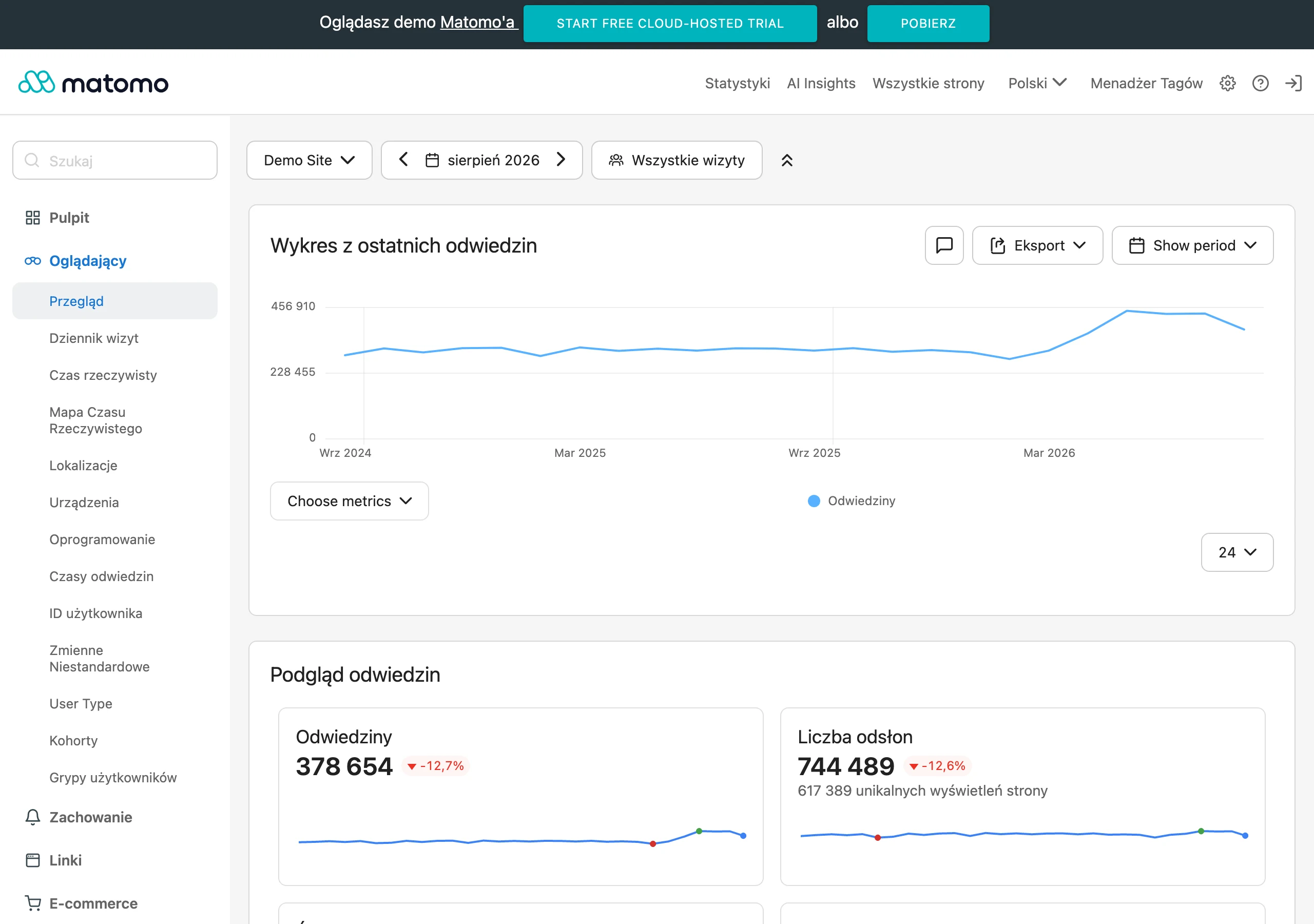
At the level of the platform itself, analyse above all answer impressions, user reactions, comments, and the pace at which interest builds over time. These signals show whether the topic is resonating, whether the answer is understandable, and whether you are matching real intent. A high number of impressions with no clicks usually means that the topic is good, but the answer or the linking is poorly matched. By contrast, low reach may indicate a weak question, an answer that is too general, or a mismatch with what the user is actually looking for.
Measure Quora traffic on the site just like traffic from any other referral channel. The easiest way is to use well-tagged UTM links and analysis in GA4: sessions, engagement, scrolls, CTA clicks, form submissions, newsletter sign-ups, or visits to the contact page. Do not focus solely on the number of visits, because a small amount of traffic from a well-chosen question can be more valuable than a large amount of traffic from a random discussion. If users leave the site quickly, it is usually not the fault of Quora itself, but of a poorly matched landing page.
From an SEO perspective, it is also worth tracking the indirect impact. If you use questions from Quora to create new articles, FAQ sections, or expand service pages, later check in Google Search Console whether those pieces of content start to collect impressions and clicks for problem, comparison, and long tail keywords. This is often the most important effect of working with Quora: a better choice of topics and language, not the referral traffic itself. A simple spreadsheet works well, where you pair the Quora question, the published answer, the linked page, and the later performance of that content on your own site.
Assess the quality of your efforts by topic, not by individual answers. One answer may not deliver results, but several comments around the same problem can show that the area has potential and is worth developing in the blog, in the offer, or in educational materials. That is why you should compare question categories: educational, problem-based, comparative, and purchase-oriented. Over time, it will become clear which types build reach best, which generate clicks, and which genuinely support sales or leads.
In practice, it is a good idea to summarise Quora’s effectiveness once a month or quarterly. See which answers deliver consistent impressions, which links have the best engagement, and which questions led to new content or changes on the site. If Quora is not driving traffic, but it regularly suggests relevant content ideas, it can still be worthwhile as a research tool. Looking at it this way makes it easier to assess it without illusions and use it where it delivers the most value.
FAQ
Frequently asked questions
How can Quora support SEO if it is not mainly about links?
Quora’s biggest value lies in showing real questions, intents and user problems. This makes it easier to create content that better meets audience needs than text based only on keywords from SEO tools.
Does Quora help with researching topics and user intent?
Yes, because it reveals the audience’s language, doubts, comparisons and pre-decision questions. It also lets you distinguish whether a user wants to understand a topic, compare options, solve a problem or buy something.
How can you use questions from Quora to plan content on your site?
It is worth mapping questions to the right formats, such as FAQ, a step-by-step guide, a comparison section or a service page. This ensures the content matches the user’s decision stage and avoids creating materials “about everything”.
How do you publish answers on Quora effectively so they make sense?
The answer should first solve the user’s problem, and only then, if appropriate, point to a broader piece of content. The best structure is: a short answer, an explanation, a practical example and a link at the end, if it is genuinely relevant.
Why does optimising the author profile on Quora matter?
Because the profile affects the credibility of your answers and helps the user decide whether to trust you. The most important things are a clear specialism, a short description of experience and consistency in the topics you answer on.
What are the most common mistakes when using Quora for SEO?
The most common mistake is treating Quora as a source of links instead of a place to solve users’ problems. Mass answering random questions and pasting blog excerpts without adapting them to the question’s context also performs poorly.