

A niche store wins when the customer finds the right product faster and gets answers to questions before buying. A small store does not need the largest catalogue if it responds better to a specific customer problem. This requires narrowing the offer, organising categories and working on the pages that genuinely sell. Low cost does not mean cutting everywhere, only choosing the actions with the highest impact on traffic, CTR and revenue.
How narrow specialisation can help you win in a niche
Narrow specialisation helps you win because it increases the relevance of the offer for a specific problem and reduces wasted budget. A large store has the advantage of scale, but a small one can respond better to the needs of one customer group. If you sell for a clearly defined use case, it is easier to build categories, descriptions and content around long-tail keywords. This kind of traffic usually has clearer intent and more often leads to a purchase.
In practice, specialisation means narrowing the offer by intent and margin, not by the number of products. Products that do not fit the customer’s main problem distract budget, crawl and user attention. It is often better to remove or limit peripheral stock than to try to look like a marketplace. This way, important URLs get better internal linking and a clearer message.
The most common mistake is copying the broad offer of bigger players and competing mainly on price. In that case, the store loses its relevance advantage, and SEO gets spread across hundreds of weak pages. Check whether the share of non-brand long-tail traffic is growing, as well as the organic conversion rate and margin on top categories. If these metrics are not improving together, the niche has been chosen too broadly or described poorly.
Cost-effectiveness priorities for small stores
Cost-effectiveness priorities for small stores mean working in an order that improves visibility and sales fastest. First, fix the important URLs that should be indexed and rendered properly. Then refine the categories and top products, because that is where CTR and conversion change fastest. Only later expand guides and links that strengthen what is already working.
The right order of work usually looks like this:
- indexing and correctness of important URLs
- categories that respond to problems and use cases
- top products with full purchase information
- content and links supporting priority clusters
The cheapest growth comes from working on top URLs and top clusters, not from tweaking everything a little bit. You save the most when you implement one change in a category or product template instead of editing pages manually. A typical mistake is an audit without implementation order or measuring only rankings. It is better to look at how clicks, CTR and revenue from priority URLs change.
Structure and filters as the key to effective indexing
Structure and filters determine effective indexing when they lead crawlers and users to pages with real demand. In a niche store, categories should answer the problem, feature or use case of the product. This structure makes it easier to match intent and limits the creation of empty URLs. As a result, important URLs are closer to the homepage and collect signals faster.

The best structure does not start with the menu, but with the customer’s pre-purchase questions. If the customer is looking for a product for a specific use, the category should communicate that clearly in its name and content. A filter is worth indexing only when it matches a standalone search pattern and adds unique value. Otherwise it creates duplication, wastes crawl and weakens pages that are more important for the business.
In practice, the decision to index filters is worth basing on simple criteria:
- whether the filter has visible long-tail demand,
- whether the filtered page has a unique set of products and a sensible title,
- whether it can be supported with internal linking,
- whether it does not duplicate an existing category or another filter.
If the answer to any question is no, it is better to use a canonical, noindex or limit linking to such a URL. Indexing all filter combinations almost always ends up with junk in the index. This is especially harmful for small stores because the crawl budget is smaller and the number of strong pages is limited. It is better to have fewer URLs, but ones that genuinely match searches.
Also monitor click depth, breadcrumbs and orphaned pages. When an important category requires many steps to reach, it is harder to strengthen for both the user and the crawler. A chaotic menu often hides important clusters under random labels. A good signal is a growing number of valuable URLs in the index and a better crawled to indexed ratio.
Optimisation of category and product pages for better conversion
Optimisation of pages categories and products improves conversion when it removes doubts before purchase. Price and image alone are not enough, especially in a niche where the customer often compares fit and way of use. A sales page should answer who the product is for, what it is used for and how to choose the right variant. This increases the chance of a click from the results and a purchase after landing on the page.
On category pages, the most important thing is help with choosing, not a long block of generic text. A short description of the range, differentiating features and selection tips works well. If the user does not know how the options differ, they quickly return to the search results. The category is meant to lead to a decision, not just to a list of products.
On product pages, the key information is what the customer is looking for just before adding to basket. This includes compatibility, dimensions, usage limitations, availability, delivery and returns. Important data should be visible in HTML, not hidden only in graphics or scripts. This helps both the user and the search engine understand the page.
Unique descriptions still matter, but only when they answer specific purchase questions. Copying manufacturer content usually does not explain the differences between variants or build a niche advantage. A better result comes from describing selection criteria, real-world use and typical mistakes when matching the product. This kind of content improves intent relevance and often increases snippet CTR.
A clear site structure makes conversion easier because it shortens the path to an answer. Use simple headings, short sections, feature lists and FAQ where they genuinely help sell. Implement structured data only when it reflects the content visible on the page. It will not replace missing information, but it can improve the way the result is presented.
In a niche, every click is more expensive, so trust has to be visible before the basket, not only in the terms and conditions. Clearly show contact, warranty terms, delivery times and real availability. Add your own photos, reviews and fit information if the product requires it. This usually reduces abandonment and lowers the risk of returns after a wrong choice.
Assess the effectiveness of such changes at category and product level, not by individual phrases. Look at whether CTR from the results, add-to-cart and conversion rate are growing for priority URLs. If traffic is growing but sales are not, the problem is often a lack of trust or incomplete purchase information. If conversion is growing without traffic growth, it is worth further strengthening those pages internally and with content.
The importance of purchase-related content in driving traffic
Purchase-related content generates traffic when it answers the customer’s questions just before they choose a product and right after they do. In a niche, the best-performing materials are those closest to the decision: variant comparisons, use cases, typical problems and maintenance. Such traffic usually has more value than generic advisory content. It is also easier to direct it to categories and products without artificial link-building.
A good content cluster starts with the questions that block the purchase. If the customer does not know which variant to choose, prepare a comparison of features, limitations and use cases. If the issue is compatibility, describe compatibility and the most common selection mistakes. After purchase, usage, maintenance and troubleshooting guides work well because they capture additional long-tail queries.
An advisory piece should lead to a purchase decision, not end with general knowledge. From each text, link to the right category, filter or product, ideally where the user naturally looks for the next step. Measure non-brand clicks to advisory content and assisted conversions separately, because some visits will only buy later. Also be careful with several texts about almost the same question, because it is easy then to spread traffic and signals too thinly.
How contextual niche links affect visibility
Contextual niche links improve visibility when they strengthen pages that are thematically aligned with the offer and search intent. For a small store, a few relevant industry publications deliver a better return than many mass posts unrelated to the product. Such links more often support categories, guides and other deep URLs. This increases visibility where the store really has a chance to win.
These kinds of links are easiest to earn through materials that have value beyond the sale itself. Specialist guides, tests, comparisons, data from your own observations, setups and industry partnerships all work well. If the store shows its own photos, usage limitations or practical compatibility tables, the chance of natural citation increases. This usually works better than buying cheap link packages.
Do not link only to the homepage, because then the authority bypasses the URLs that answer specific queries. In practice, it is worth strengthening priority categories, the best guides and selected products with high potential. Anchors should be varied and natural, otherwise it is easy to weaken the effect through over-optimised linking. Just as important is later internal linking, which passes value further to sales pages.
The cheapest link is one that supports SEO, brings referral traffic and strengthens an important URL at the same time. So assess not only the number of referring domains, but also the increase in visibility of the supported pages and visits from places close to the niche. If only the homepage grows after publication, the strategy is often too broad. If categories and guides tied to the offer grow, the links are working where they should.
The role of analytics in making SEO decisions
Analytics helps make SEO decisions when it shows results separately for categories, products, filters and guides, rather than as one average for the whole store. In a small store, every change should have a clear goal and be assessed at template or cluster level. This makes it clear which URLs are really growing and which are only taking time. That is more important than watching individual positions for a few phrases.
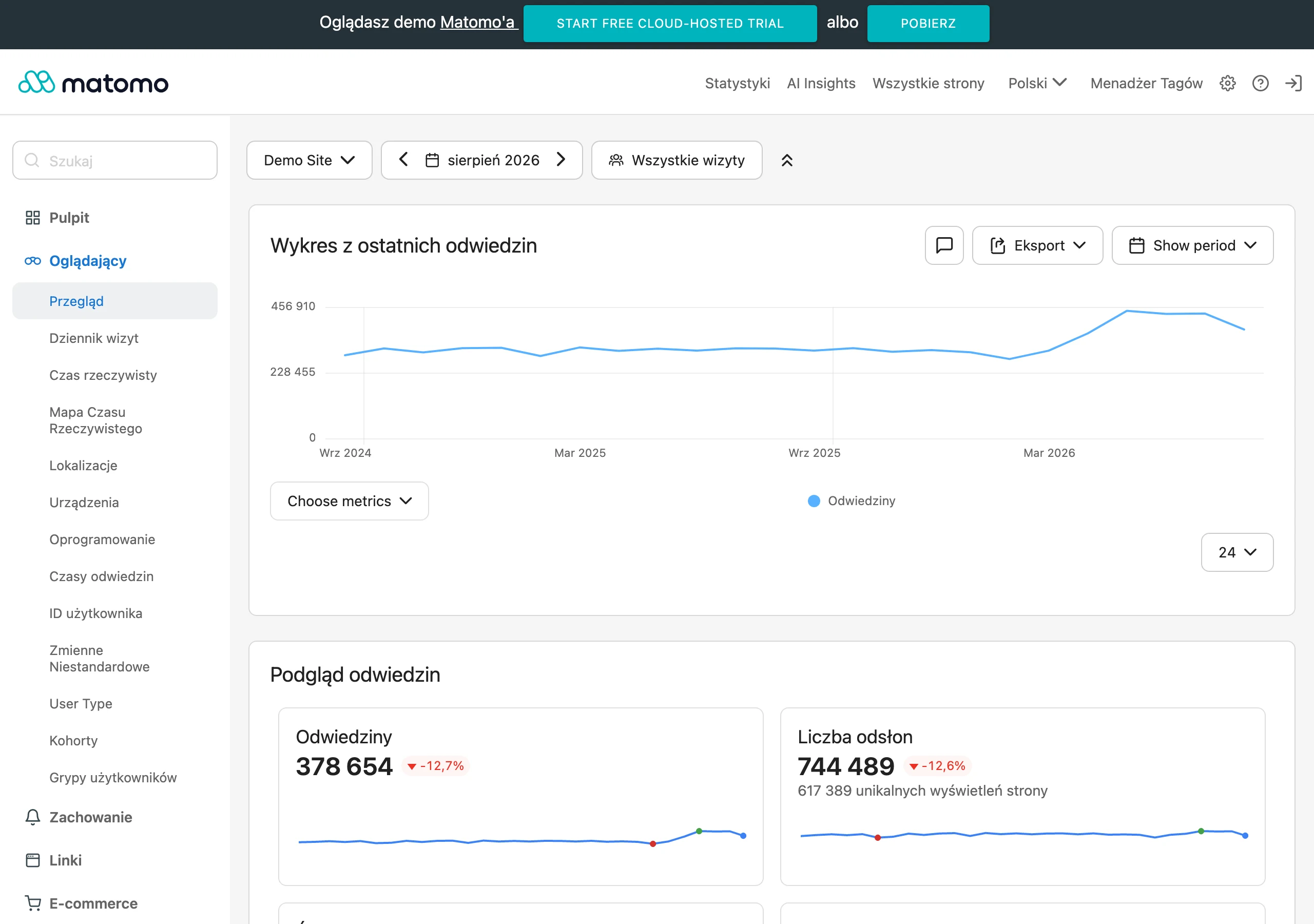
In practice, segment the data at least into brand and non-brand traffic, because both query types tell you different things. Brand more often shows store recognition, while non-brand reveals whether SEO is capturing new demand in the niche. Also report results separately for categories, products, filters and guides. This breakdown will quickly show whether the problem lies in indexation, content relevance, CTR or the template itself.
The most useful reports combine clicks, CTR, indexation status and organic revenue. If a category has impressions but a low CTR, you usually need to improve the title, description and alignment with intent. If a product has traffic but does not sell, the issue is more often incomplete information, compatibility or trust on the site. When a filter is crawled but brings no visits or sales, it probably should not be surfaced or indexed.
The best SEO decision in a niche store is one whose impact can be attributed to a specific change and a specific URL group. That is why you should record deployment dates and compare results after changes at the level of entire templates, not individual addresses. If you improve category descriptions and layout, assess a group of similar categories. If clicks grow but revenue does not, the problem usually no longer concerns visibility, but traffic quality or conversion.
FAQ
Frequently asked questions
How can a niche store beat big players at low cost?
By better matching the offer to one specific customer problem and answering their pre-purchase questions more quickly. You do not need the biggest catalogue, only better work on the pages that actually sell.
Why is it worth narrowing the offer in a niche store instead of copying a competitor’s broad assortment?
Because narrowing reduces wasted budget, crawl and user attention on products that do not fit the customer’s main problem. This means important URLs get better internal linking and a clearer message.
Which pages in a niche store are worth improving first?
First, important URLs that need to be indexed and rendered correctly, then categories and top products. Only later is it worth developing guides and supporting links for priority clusters.
When is it worth indexing filters in an online store?
Only when a filter matches an independent search pattern and adds unique value. If it duplicates a category or another filter, it is better to limit its visibility with canonical, noindex or weaker linking.
What should be on a category and product page to increase conversion?
A category page needs help with choosing, a short description of the range, differentiating features and guidance. On a product page, the key elements are compatibility, dimensions, usage limitations, availability, delivery and returns visible in HTML.
What content around the purchase works best for generating traffic in a niche?
Materials close to the decision work best, such as comparisons of variants, use cases, typical problems and maintenance. Such content more easily leads the user to a category or product and usually has more value than general guides.