
Link popularity affects site authority through which external domains link to it, which subpages they point to and the editorial context in which they are placed. In practice, it is not the raw number of links that matters, but whether they increase the site’s credibility and support key URLs. A well-assessed link profile helps important subpages appear higher in search results more often, but only when the links are thematically consistent and technically point to valuable content. The biggest impact comes from links from credible, indexed and thematically relevant sources, not from a mass volume of random links. It also matters whether authority goes only to the homepage or is passed further to categories, services and expert content. In this article, the key thing is understanding what really strengthens a domain and what merely inflates the profile artificially and increases risk.
How link popularity affects site authority in practice
Link popularity affects site authority through an assessment of the quality, topical relevance and naturalness of links pointing to the domain and its key subpages. In algorithmic terms, the search engine does not analyse only the number of links, but checks whether they come from places that themselves inspire trust and are related to the site’s topic. A link from a strong industry source usually brings more value than many links from random directories or private blog networks. One relevant link to an important subpage can be more valuable than dozens of weak links to the homepage.
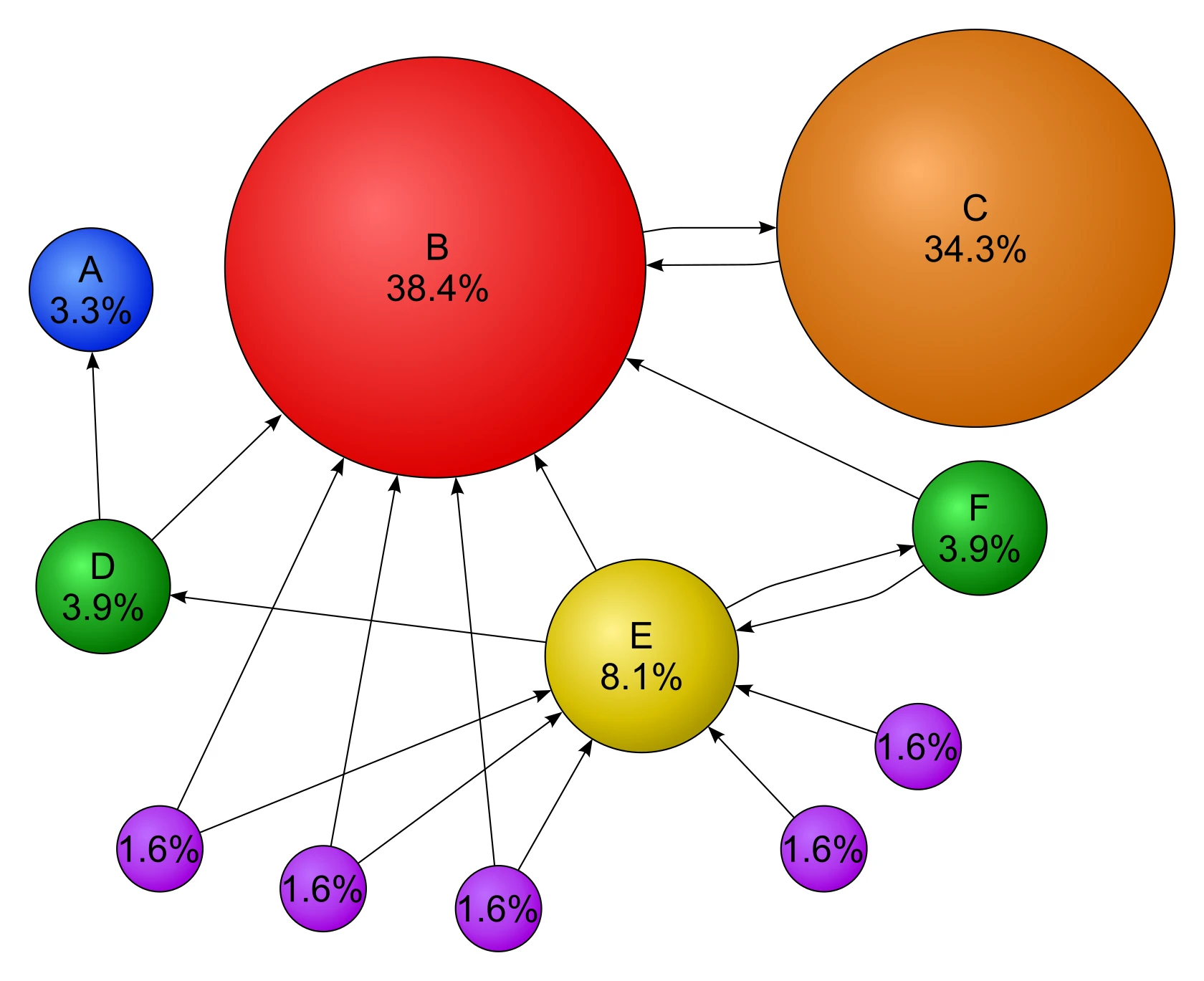
Authority is built in parallel at the level of the whole domain and individual URLs. When links lead mainly to the homepage, support for categories, services or articles may prove insufficient. That is why a solid link profile distributes signals across different sections of the site, in line with their business role and SEO potential. This kind of distribution looks more natural and better supports visibility where traffic acquisition really matters.
The publication context is also important, that is whether the link has been woven into content that is thematically coherent and editorially justified. A link placed in an article aligned with the target site’s topic usually builds trust more strongly than a link added in the footer, sidebar or on a page overloaded with random outbound links. The link context often determines whether a link looks like a recommendation or like part of a scheme.
Link popularity works most effectively when it goes hand in hand with the quality of the landing page. If a link leads to weak, thin content or to a subpage that does not answer the user’s intent, its potential remains limited. Internal linking is also highly important, because it allows some authority to be passed further within the site. The mere presence of external links will not solve information architecture problems or poor content quality.
In practice, overall credibility and profile naturalness also affect the assessment. If the majority of anchors are commercial, links arrive in waves from similar places, and the whole thing gives the impression of a staged manipulation, the risk grows that such actions will lose value. A profile based on a mix of branded anchors, bare URLs, neutral phrasing and links leading to different types of subpages performs more safely. Authority is built more steadily when the link profile resembles genuine citations and recommendations, rather than a campaign based on one repetitive scheme.
Key elements of assessing an external link profile
The assessment of an external link profile includes, among other things, the quality of linking domains, topical relevance, the distribution of links across subpages, anchor types and signals indicating naturalness or an attempt at manipulation. This analysis answers not only the question of how many links you have, but above all whether they genuinely support site authority. In practice, it is the starting point for decisions on which links are worth strengthening, which sources to look for and where the risks lie.
- Source quality – it is checked whether the linking domain is indexed, has its own visibility, publishes sensible content and does not resemble a link farm.
- Topical relevance – a link from a site related to the industry or the user’s problem usually carries more weight than a link from a random place.
- Editorial context – it matters whether the link is embedded in the content, whether it is accompanied by a coherent topic and whether the article adds any substantive value.
- Landing page – it is assessed whether the link leads to a URL that is genuinely worth strengthening and that can further pass strength through internal linking.
- Anchor profile – the proportions of branded, URL, generic and commercial anchors are checked to detect over-optimisation.
- Link type – nofollow links, sponsored links and UGC are not the main carrier of authority, but they help build a more varied profile.
Assessing the quality of sources is crucial, because weak domains can reduce the value of the entire profile. It is worth looking not only at the site itself, but also at recurring patterns: the number of outgoing links, the publishing rhythm, the standard of the content and whether the site appears to have been created solely for SEO. When many backlinks come from similar, low-quality places, the profile starts to look unnatural even with correct anchors.
The distribution of links across subpages translates into real results. When all backlinks point to the homepage or to a few commercial URLs, the site loses naturalness and does not build broad support for the structure. A better profile strengthens different levels of the website: the category, service, guide, comparison or contact page, provided there is a sensible context for this. Well-distributed links help build the authority of the whole site, not just one URL.
Anchors are worth assessing with great care, because this is one of the most common areas of over-optimisation. A natural profile usually contains plenty of brand mentions, clean URLs and neutral phrasing, and fewer repeatedly duplicated sales phrases. When exact match anchors dominate, the whole thing can feel artificially managed. This does not mean that a commercial anchor is inherently bad, but it should result from the content of the publication, not from a mechanically executed plan.
Finally, it is worth checking risk signals over time, not just as a one-off. What matters is the pace of link growth, loss of backlinks, the appearance of series of publications from one type of source and changes in anchor proportions. It is worth monitoring the link profile regularly, because a site’s authority depends not only on acquired links, but also on their longevity, indexing and quality after a few months.
Current trends and challenges in building link popularity
Nowadays, link popularity is built above all on the quality and relevance of links, rather than on the sheer number of backlinks. Profiles based on random directories, mass publications and repetitive schemes usually add little or increase risk. The key issue is whether the source is credible, indexed and topically relevant to your site. Today, one well-placed link from a sensible source often has greater value than many weak backlinks without context.
The editorial context of a link is playing an increasingly important role. In practice, a backlink placed in content that genuinely develops a given topic tends to work better than a link in the footer, sidebar box or on a page with dozens of outbound links. It is worth looking not only at the domain, but also at the quality of the specific subpage the link comes from.
One of the main challenges remains the naturalness of the anchor profile. If too large a share of links uses the same sales anchors or exact match, the profile starts to look artificial. A safer and more credible profile is usually based on brand anchors, URLs and natural phrasing, rather than constantly repeating keywords.
It is also important to consider the distribution of links between different URLs. A profile focused almost entirely on the homepage provides weaker support for the visibility of categories, services and content that are actually meant to gain traffic from search. Nofollow links, sponsored and UGC are not the main source of authority, but they can complement the profile, diversify signals and bring referral traffic.
In practice, the hardest thing is often combining link building with site quality. A link will not work as strongly if it leads to weak, thin content, a page with technical problems or a subpage cut off from the rest of the structure. External links work best when they reinforce valuable target pages that are well supported by internal linking.
Practical steps for auditing and optimising the link profile
Auditing and optimising the link profile comes down to checking which backlinks actually strengthen important subpages and which merely add noise or increase risk. This process should end with a clear conclusion: what to strengthen, what to diversify and what to dial back. Without that, the analysis remains just a table in a spreadsheet.
Start by identifying subpages with business and ranking potential, because without a list of priority URLs it is easy to link to the wrong places. Most often these will be categories, service pages, key expert articles and sometimes the homepage, although the proportions are not always the same. Only with this map in place can you properly assess whether the current link profile supports the right areas of the site.
- Collect a list of referring domains, linking URLs, target pages, anchors and link types.
- Verify the quality of sources, taking into account the topic, indexation, visibility, editorial nature and number of outgoing links.
- Check which subpages receive links, and whether they are sufficiently strong in content terms and technically accessible.
- Analyse the share of brand, URL, generic and commercial anchors.
- Spot risk patterns such as mass low-quality links, repetitive publications, artificial anchor series or an excessive concentration on the homepage.
- Draw up an action plan, indicating which URLs to keep strengthening, which sources to look for and which weak links to remove or limit.
Once the data has been collected, it is worth assessing not only the sources themselves, but also the target pages. If a link leads to a subpage that does not match the user’s intent, has thin content or does not pass authority onwards through internal linking, its real value will be limited. For this reason, optimising the link profile often goes hand in hand with improving content, structure and the internal connections between subpages.
The next stage is a plan for acquiring new links. In practice, it is better to focus on expert publications, industry citations, partnerships, how-to materials and other places where the link results from context rather than from the transaction itself. Do not direct most new links to the homepage if you want to improve the visibility of categories, services or specific articles.
In parallel, you need to tidy up what is already in the profile. If there are mass low-quality sources, comment spam, private blog network publications or unnaturally repeated anchors, it is worth limiting their impact and not replicating that pattern in future actions. A common mistake is also buying volume without checking whether the linking domain has any credibility at all.
Finally comes monitoring, which in practice determines the stability of the results. You need to keep track of lost links, changes in anchor ratios, publication indexing and the condition of linking domains. Regular monitoring is just as important as acquiring new links itself, because the link profile changes all the time, also without your involvement.
Strategies for acquiring valuable links
Strategies for acquiring valuable links come down to securing links from credible, topically relevant sources, leading to specific subpages that you want to strengthen. First, choose URLs that have real business and ranking potential. In practice, these will most often be service pages, categories, key landing pages and content supporting sales or lead generation. The homepage itself should rarely be the only and permanent target for linking.
The safest links are those embedded in sensible editorial context, rather than those that result solely from being present in a publication database. Good results come from expert articles, citations in industry media, specialist comments, partnerships, guest posts and materials that respond to a specific audience need. One link from a sensible publication is better than a series of links from places with no traffic and no topical relevance.
Before acquiring a link, it is worth analysing not only the domain, but also the specific subpage where the link is to appear. What matters is indexing, topical relevance, content quality, the number of outbound links and whether the site looks like a normal source rather than a private blog network for selling links. On the other side, the quality of the destination page is equally important, because a weak URL will not make use of the potential of even a very good link.
Anchor text should be varied and sound natural in the sentence. Brand and URL anchors usually provide a safer foundation than aggressive exact match. Commercial phrases are worth using sparingly and only when they genuinely fit the publication context.
It is also worth treating links as part of the wider site architecture. If a new link leads to an important subpage, that subpage should be sensibly connected by internal linking to other sections, so that authority can “flow onwards”. If most links lead only to the homepage, the profile often loses its naturalness and SEO usefulness.
Typical mistakes and risks associated with link popularity
Typical mistakes and risks associated with link popularity include buying volume instead of quality, repeating patterns and pointing links to random subpages. Most often, problems begin when the decision to acquire a link is based solely on price, the number of domains or one metric from a tool. Such a profile may look good only at first glance, while in practice it supports visibility poorly and increases risk.
A common mistake is turning to sites that exist mainly in order to publish links. Such sites often have low content quality, a repetitive layout, low trust levels and a very large number of outbound links. The problem is not sponsored publishing itself, but the lack of source selection and the lack of real value for the user.
The second significant risk is anchor over-optimisation. When many links are based on the same sales phrase, lead to the same addresses and appear in a similar structure, the profile starts to look unnatural. The biggest problem arises when the whole link profile can be reduced to one constantly repeated pattern.
Another ineffective action is strengthening subpages that are not ready to receive links. If a given subpage has thin content, does not fully answer user intent, is weak in internal linking or has indexing issues, part of the link potential is simply lost. In practice, it is worth getting the destination page right first and only then promoting it.
Risk is also increased by the lack of ongoing profile monitoring. The loss of important links, a drop in the quality of the linking domain, a mass influx of weak links or a change in link attributes can affect results gradually, without a clear initial signal. That is why regularly checking new and lost links is just as important as acquiring them in the first place.
The importance of monitoring and analysis in maintaining site authority
Monitoring and analysis are essential for maintaining site authority, because the link profile changes constantly, and without control it can quickly lose quality. Links disappear, linking pages drop out of the index, publications are removed, and anchor ratios can shift without your involvement. This shows that even a well-built profile is not set once and for all. Site authority is maintained not by the mere fact of acquiring links, but by regularly assessing their quality and real impact.
In practice, it is worth tracking not only the number of new links, but above all which domains are linking, which URLs the links lead to and whether the destination pages still have business and SEO justification. When most new links go to the homepage and key categories or services are not being strengthened, the profile stops supporting the development of the whole site. It is equally important to make sure that linked subpages are accessible, indexed and sensibly connected with internal linking. Otherwise, some of the value simply dissipates.
A well-run analysis quickly picks up warning signs. Most often this involves a sudden increase in links from similar domains, repeated commercial anchors, publications from low-quality private blog networks or links pointing to weak content. If the profile starts to look formulaic, the problem is not the growth in the number of links itself, but the build-up of a predictable pattern of manipulation. For this reason, analysing anchors, sources and publication context should be a permanent part of the work, not a one-off audit.
- lost links and drops in the number of referring domains,
- indexation of linking pages and landing pages,
- changes in the proportions of branded, URL and commercial anchors,
- the distribution of links between the homepage, categories, services and expert content,
- the impact of changes on the visibility of individual subpages, not just the entire domain.
It is best to carry out monitoring on a regular cycle, for example once a month, and even more often after larger link building campaigns. Such a review should end with a clear decision: which links to keep, which sources to continue developing, which URLs need a boost, and where the risk of over-optimisation starts to appear. The most useful analysis does not end with a report, but translates into a list of concrete corrective and growth actions.
Monitoring also has a strategic dimension, because it allows you to check whether link popularity is really supporting the site’s goals. It happens that a profile looks good in the numbers, yet still does not strengthen sales subpages, does not help supporting content and does not translate into stable visibility. In such a situation, the problem is usually not a shortage of links, but their misplaced distribution or the too weak quality of landing pages. Ongoing analysis helps keep the profile natural, useful and consistent with the site structure, and that is what most strongly builds lasting authority of the page.
FAQ
Frequently asked questions
How does link popularity affect site authority in practice?
The most important links are from trustworthy, topically relevant sources that point to important subpages. The sheer number of links matters less than their quality and naturalness.
Are links leading only to the homepage enough to build authority?
No, because authority should also flow to categories, services and expert content. If everything points to the homepage, the profile looks less natural and supports the visibility of the whole site less effectively.
Why does the editorial context of a link matter so much?
A link embedded in text that is thematically consistent usually builds trust more strongly than a link in the footer or sidebar. Search engines also assess whether the publication makes genuine editorial sense.
Which anchors are safest in a link profile?
Brand anchors, plain URLs and neutral phrases look the most natural. An excessive share of commercial phrases and exact match anchors can look like over-optimisation.
Do nofollow, sponsored and UGC links affect site authority?
They are not the main carriers of authority, but they help diversify the link profile. They can also support signal diversification and bring referral traffic.
What actions matter when auditing a link profile?
You need to check linking domains, target pages, anchors, link types and their naturalness. It is also important to monitor lost links, indexing and changes in anchor ratios.