
Inbound links still remain an important element of SEO, however in 2026 it is no longer so much the number of links that matters, but their relevance, context and quality. A well-acquired link can increase the visibility of a specific subpage, make it easier for search engines to discover content and strengthen the topic in which you want to be seen as a reliable source. A weak link usually brings no measurable benefit, and it can also happen that it merely increases the risk of an inconsistent, chaotic link profile. Today, the greatest value lies in links that genuinely fit the topic, are useful for the reader and lead to a page worth recommending. This means that link building starts not with sending emails, but with choosing the right subpage and preparing content that can be sensibly cited. In practice, companies do better when they treat links as part of quality content marketing and editorial relationships, rather than as a mass purchasing campaign.
What is inbound link building and its importance in 2026
Inbound link building is the process of acquiring editorially justified links from other websites to specific subpages of your site. It is not about random mentions or bulk publications, but about links that have their place in a given article, resource or expert comment. In practice, you always work with a specific set: the target page, content worth linking to, a list of matched sources and a way of contacting the editorial team or site owner.
The importance of this process in 2026 stems from the fact that search engines can distinguish a natural link from a forced or artificially inserted one much better. The mere fact that a link exists is no longer enough. If the source has no topical connection with your site or publishes links at scale without editorial selection, the value of such a link is usually limited. That is why topical relevance, the quality of the publication archive and the real benefit for the reader are becoming increasingly important.
Inbound link building mainly supports three areas: organic visibility, content discoverability and topical authority around selected clusters. This is especially important when you want to strengthen specific groups of subpages, rather than just the homepage. Well-acquired links help send a consistent signal that your site is relevant in a given area, however the effect largely depends on the quality of the target page.
Not every subpage is suitable for link acquisition. The ones that work best are those with search potential, business relevance and content that can be honestly recommended. If the target page is thin, out of date, slow or does not match user intent, even a good link will often not translate into a clear result. That is why before starting work it is worth checking indexability, technical health and the usefulness of the URLs being promoted.
What factors influence the value of inbound links
The value of an inbound link is mainly determined by: the topical relevance of the source, editorial context, publication quality, the way the link is integrated and the usefulness of the page it leads to. This set of criteria is often more important than the domain metric from SEO tools alone. In practice, a link from a precisely matched industry article can carry more weight than a link from a strong but topically unrelated site.
The first factor is the quality and credibility of the source. It is worth checking whether the site is indexed, whether it publishes substantive material, what its archive looks like and whether it does not link in bulk to any sites without clear rules. A good source is not judged solely by the number of SEO metrics, but by whether it looks like a real media outlet, a real expert blog or a real resource for users. In this area, manual assessment usually produces better results than automated filters.
The second factor is the placement and way the link is embedded. The best-performing link is one woven into the content naturally, in a paragraph that develops a specific topic and genuinely makes use of the linked material. A link dropped into a random fragment, into the author’s footer or on a page filled with sponsored inserts usually has less value. The anchor also matters, but it should not resemble a mechanically repeated sales formula.
The third factor is the strength of the target page. If a link leads to a subpage that accurately matches user intent, contains data, expert commentary, a tool, a checklist or a solid guide, it is easier to justify such a link and make fuller use of its potential. The best links lead to pages that really solve a problem or add new information, rather than just trying to capture traffic. For this reason, serial and easy-to-scale content more often struggles to earn good links than materials that bring their own clear value.
The fourth factor is the naturalness of the entire link profile. The risk increases when many links come from unrelated sites, use the same exact match phrase or appear within a publishing network with a similar pattern. In practice, it is better to mix brand anchors, URLs and natural descriptions than to push one commercial phrase on a broad scale. Publication transparency is also important, as is whether the link truly fits the audience of the given site.
How the process of acquiring valuable links works
The process of acquiring valuable links starts with an audit and the selection of target pages, and ends with quality control after publication. At the outset, you analyse the link profile, the technical condition of the site, content quality and the potential of specific subpages. Not every page is suitable for link promotion. First you select the URLs that make business sense or have real search potential.
After selecting the target pages, you prepare a resource that genuinely justifies linking. This may be a report, a data roundup, an expert comment, a checklist, a resource page, a graphic or a simple tool. If the subpage is superficial, outdated or mismatched with user intent, even a strong link usually will not deliver the full effect. For this reason, link building in practice often starts with refining the content itself.
Next comes the time to search for sources and manually verify them. This includes industry media, specialist blogs, resource pages, unlinked mentions, dead links and places where expert input genuinely fits the topic. It is not enough here to glance at a single domain metric. What matters is topical relevance, the quality of the archive, linking practice to other sites, and whether the publication resembles a solid editorial piece.
Contact with the editorial team or the site owner should be based on value, not on a request to “add a link”. What usually works is something concrete: a data quote, an update to existing content, a resource addition, fixing a broken link, or expert commentary on an already covered topic. A mass, identical pitch reduces effectiveness because it does not explain why this particular piece matters to that site’s audience.
After approval, you need to pay attention to publication details. The target URL, natural anchor, link placement within the paragraph, link attribute, and the overall usefulness of the mention for the reader all matter. Brand anchors, URLs and descriptive phrases are the safest options, rather than repeatedly using the same commercial phrase at scale.
The final stage is post-publication monitoring. It is worth checking whether the page with the link is indexed, whether the link is crawlable, whether it does not lead through faulty redirects, and whether it has not been hidden in a low-value spot. A good practice is to keep a publication log and notes on risk. This makes it easier to assess which activities deliver stable results and which only seemingly boost the number of links.
Which strategies are most effective for link acquisition
The most effective link acquisition strategies in 2026 are those that combine real value for the audience with a good fit for the source. The best results come from activities based on data, expert commentary and useful resources that an editorial team or author can naturally cite. Schemes focused on scale, but with no topical connection and no value for the reader, perform worse.
A strong approach is data-driven PR. When a company has its own observations, analysis results, aggregated statistics or practical market insights, it is easier to get citations in industry media and specialist portals. Such material needs to be specific and clear. Publishers are most likely to link to content that explains something, makes comparisons or confirms conclusions, rather than serving solely to promote the brand.
You can also gain a lot by reclaiming existing opportunities. In practice, this means brand mentions without a link, old references to an inactive address, broken link building and refreshing resources that were previously cited. This is usually easier than starting contact from scratch, because the reference point is already there. However, you still need to make sure that the destination page genuinely fits the context and that, after clicking, the user gets exactly what they expect.
Subject-matter partnerships and selective expert publications also work well. This is not about mass guest posts, but about being present where the brand brings knowledge that is hard to find elsewhere: a practitioner’s comment, a problem analysis, an implementation checklist or a tool that makes work easier. Such a publication only makes sense if, even without the link, it remains genuinely useful. It is a simple quality filter.
In many industries, resource pages, guides and tools deliver good results. If you prepare a calculator, an answers database, a comparison of solutions or a clearly structured guide, you have a chance to reach authors who are looking for material to recommend. The condition is clear: the resource should be up to date, practical and written in an easy-to-understand way. A link is easier to earn when the audience can immediately see why they should click and what they will gain from it.
Regardless of the chosen route, it is worth immediately cutting off sources that add nothing for the user. Sites with random topics, poor archives, mass outgoing links and content created mainly to sell placements more often weaken the link profile than improve it. In practice, it is wiser to gain fewer links, but from places sensibly related to the topic.
Effectiveness is best measured in layers. The number of publications alone means little if links disappear, are not indexed or do not support visibility for key topic clusters. That is why you also analyse link durability, referral traffic, behaviour on destination pages and visibility changes around the promoted area. The most common mistake is buying scale instead of relevance and pointing links to subpages that are not ready for promotion.
How to avoid common mistakes and risks in link building
Typical link building mistakes are reduced through source selection, careful anchor choice and quality control of every publication before and after it goes live. Most problems come not from a shortage of links, but from acquiring them from places that make no sense either for the user or for the page topic. If a source only looks good in a tool but performs poorly under manual review, it usually makes no sense to invest in it.
A common mistake is promoting subpages that are not prepared for traffic and quality assessment. When the destination page is thin, outdated, slow or mismatched with search intent, the link alone will not solve the problem. In practice, you first refine the content and usefulness of the URL, and only then build links to it.
A major risk also comes from an unnatural anchor text pattern. Repeatedly using the same commercial phrase across many publications is noticeable and unnecessarily increases exposure to a quality filter. Brand anchors, URLs and neutral descriptive phrases woven into a normal paragraph are safer and more natural.
Weak options are off-topic sites, platforms mass-selling placements and websites whose archive was created solely for links. Such places often have a low editorial standard, lots of outgoing links and little real value for the reader. If a given publication could not be defended as a sensible source recommendation, it is wiser to pass on it.
Problems also begin when the whole process is over-automated. An identical pitch sent to everyone lowers effectiveness and increases the chance of publications in random places. Better results come from personalisation based on a specific gap in the article, a need to update data, a mention without a link, or genuine expert value.
After publication, you should not close the topic. It is worth checking whether the link is indexable, whether it leads to the correct URL, whether it does not redirect, whether the page has an incorrect canonical, and whether the mention has been embedded in a sensible context. Lack of technical checks after publication is a common reason for losing the effect despite seemingly securing the link.
How to measure the effectiveness of inbound link activities
The effectiveness of inbound links is worth measuring in layers, because the number of acquired publications alone tells you little about the actual impact of the activities. Reliable measurement shows not only how many links were obtained, but also where they come from, whether they were retained, and how target pages respond to them. The key thing is to compare publication quality with the business result or the visibility of specific topic clusters.
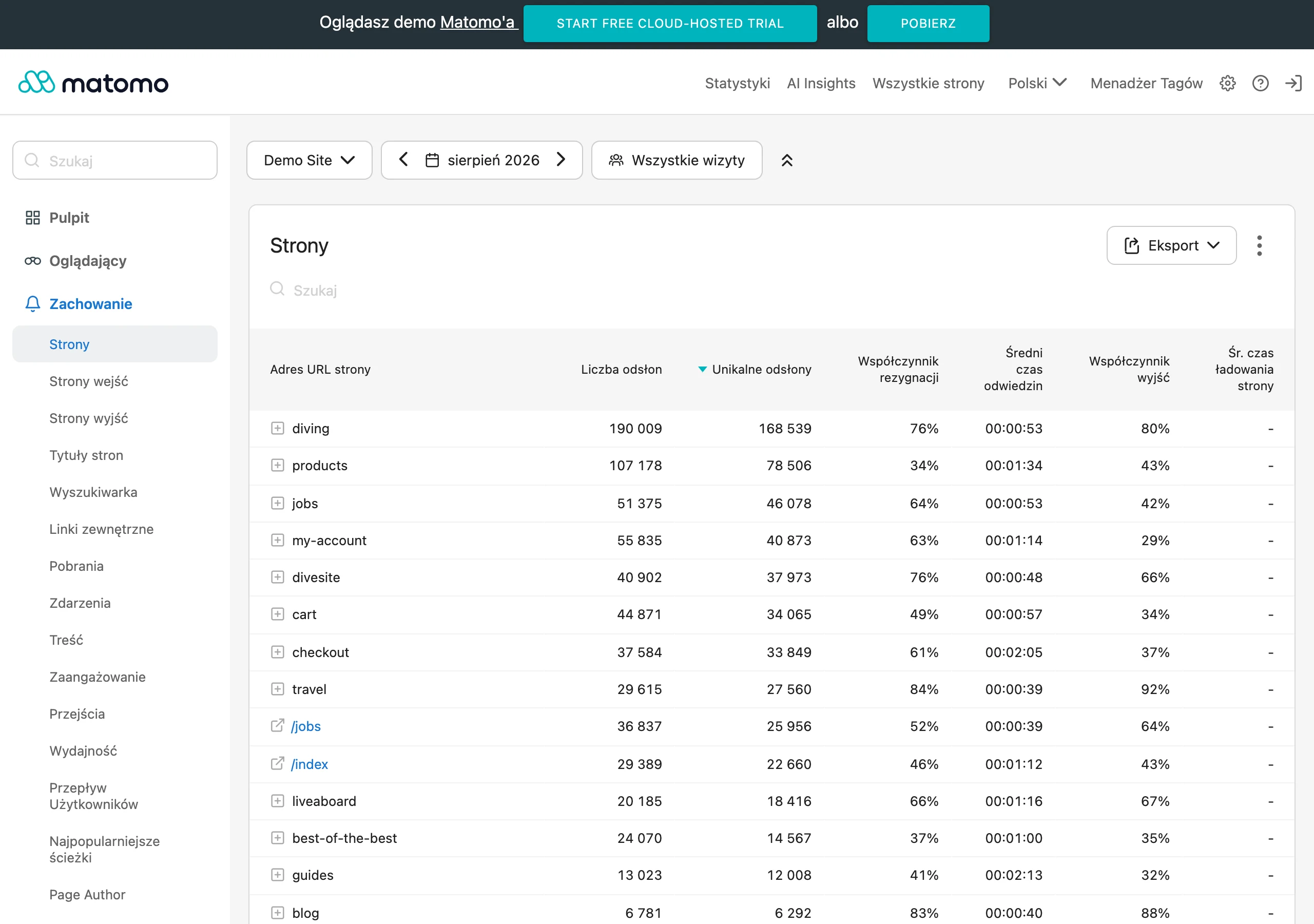
At the first level, it is worth assessing operational quality. The point is whether the publication has been indexed, whether the link remains active, what attribute it has, whether it is embedded naturally, and whether the source actually matches the topic. This is the basic filter without which further analysis can lead to false conclusions.
At the second level, you measure the impact on the target page and the topic area that is being linked to. What matters is the change in visibility in organic results, an increase in the number of queries, improved rankings for related keywords, and referral traffic from the publications themselves. Not every publication will generate clicks, but a valuable link should strengthen discoverability and the page’s credibility in a broader sense.
In practice, the most convenient approach is to track several groups of metrics in parallel:
- the number of quality publications and the pace at which they are acquired,
- link retention over time and changes to their attributes,
- indexation of publications and target pages,
- referral traffic and user behaviour after the visit,
- changes in visibility and clicks in the clusters boosted by the links,
- the response of target pages, for example an increase in queries, leads or other conversions.
It is also worth making sure that the effect is attributed to the right actions. When content has been replaced at the same time, technical issues on the site have been refined and a link campaign has been launched, the result usually comes from several factors overlapping. For this reason, it is a good idea to mark publication dates, keep a register of links and compare changes within specific time windows, rather than drawing conclusions after one week.
The most common mistake in measurement is evaluating a campaign solely through the prism of domain metrics or the number of links alone. In practice, that means buying scale instead of real impact. A better decision is fewer publications, but with clear topical alignment, link durability and a visible response from the promoted subpage.
FAQ
Frequently asked questions
How do you acquire valuable inbound links in 2026?
First, choose a specific subpage and prepare content that can be sensibly recommended. Then look for relevant sources and contact the editorial team on the basis of real value, not just a request for a link.
Why does quality matter more than the number of links in inbound link building?
Because a link without topical fit and sensible context usually delivers very little. One well-placed backlink from the right source can be more valuable than many random publications.
Which links have the greatest SEO value in 2026?
The most valuable are links that match the topic, are useful for the reader and are placed naturally within the content. The credibility of the source also matters greatly, as does whether they lead to a page that is genuinely worth recommending.
Is every subpage suitable for link acquisition?
No, the best-performing URLs are those with search potential, business importance and content that can be honestly recommended. If a page is thin, slow or does not match the user’s intent, the link often will not deliver a clear effect.
Which link building strategies work best in 2026?
The strongest results come from actions based on data, expert commentary, useful resources and selective publications. Reclaiming unlinked mentions, broken link building and content partnerships also work well.
What mistakes should you avoid when acquiring inbound links?
You should avoid sources that are random in topical terms, sites that mass-sell publications and unnatural anchors with a repeated commercial phrase. It is also a mistake to promote a weak landing page and to fail to control quality after publication.