

Keyword selection for a blog article determines whether the publication will answer a real user query and whether it has a genuine chance of appearing high in the search results. In practice, it is not about choosing “nice-sounding phrases”, but about deciding which specific problem one clearly defined article is meant to solve. This affects the topic, the structure of the sections, the language of the content, and whether you will clash with other subpages within the site. It is not about finding the most popular phrase, but about matching the topic to the real search intent and the capabilities of your domain. Accurately chosen keywords organise editorial work, while poor ones lead to texts that are too broad, fragmented or out of step with the audience’s needs.
What keyword selection for a blog article involves
Keyword selection for a blog article involves identifying one main phrase and a set of supporting phrases that stem from the same user intent. The aim is for one text to provide a complete answer to one key question or problem, rather than trying to cover everything at once. This is the difference between an article that ranks for a coherent cluster of queries and material that is a patchwork of several threads.
In practice, you do not gather the maximum number of phrases from the tool, but consistently eliminate those that point to a different intent. If a user enters a how-to question one time and is looking for a comparison or a product another time, this is usually not suitable material for one article. One article should serve one main problem, not several different topics at once.
Good keyword selection ends with a set of specific editorial decisions. You then know which query the text should answer, which sections it should include, which questions are worth adding, and which language variants to use in the copy naturally. It is more of an outline and a content plan than a mere list of phrases.
It is also essential to match the phrase to the role of the article across the whole site. You will choose different words when the text is meant to attract informational traffic, different ones when it is meant to support sales or close a topical gap on the blog. A well-chosen main phrase later simplifies the title, headings, internal linking and on-page optimisation.
What the current challenges are in choosing keywords
The current challenges in choosing keywords stem from the fact that phrase popularity alone does not determine whether a given article has a chance to rank. Today, what matters is not only exact match, but also full coverage of intent, questions and semantic variants. As a result, a phrase with high volume may turn out to be a poor choice if the audience expects a different type of content than you plan to produce.
The biggest problem is that search results often bring together different content formats in one place. For the same query, how-to guides, tool lists, category pages, videos and short answers may all rank at the same time. The SERP is worth reviewing manually before choosing a phrase, because it shows best what kind of answer the user actually expects.
The second challenge is a topic that is too broad for a site that is too weak. When a domain does not yet have solid authority, a developed content cluster or sensibly structured internal linking, it is hard to compete for very general phrases. High volume will not make up for the wrong intent or an overly broad topic.
You also need to take language, location and seasonality into account. The same phrase may require a different text format depending on the country, the time of year or how users normally phrase their questions. In practice, this means that a keyword research tool provides only a starting point, not a final decision.
Another issue is matching the new article to what is already on the site. If there is already material targeting a very similar intent, a new post may weaken both texts instead of improving visibility. An article’s visibility depends not only on the phrase itself, but also on the quality of the existing content and internal linking.
How the keyword selection process works
Keyword selection starts with defining the article’s goal, then involves collecting and grouping queries, and ends with choosing one main phrase and a set of supporting phrases. At the outset, you need to decide whether the text is meant to drive informational traffic, answer a specific question, or support a topic related to sales. If one article is meant to achieve several different goals at the same time, keyword selection quickly stops forming a coherent whole.
The next step is to collect a pool of real user queries. In practice, it is worth combining data from Search Console, Google suggestions, the People Also Ask section, related searches and phrases from keyword research tools. It is also worth reviewing your own site, because a new article should fit the existing content architecture and be able to be linked to logically.
Then comes the key analysis stage, namely grouping queries by intent. The point is not to gather as many phrases as possible, but to determine which of them can be handled by one text without diluting the topic. Phrases that are similar linguistically do not always mean the same user need, which is why you organise intents, not the words themselves.
Next, you need to check the search results for the most important candidates. This is the moment when you assess what types of content are already ranking, how they are structured and what Google expects for a given query. The SERP matters more than the list of phrases from the tool itself, because it shows the real answer format: a guide, a list, a comparison, a category, a review or a service page.
At the end, you choose the main phrase, supporting phrases and verify whether the topic does not conflict with an existing subpage. If the site already has an article targeting the same intent, it is often wiser to expand it, combine it with new material or take a different angle. The result should be a concise editorial brief that organises the further work on the text.
- the main phrase and its primary goal,
- a set of supporting phrases kept within the same intent,
- the proposed section structure and the questions that need to be covered,
- findings from the SERP analysis,
- places for internal linking and language variants.
What decisions are key when choosing the main phrase
The choice of the main phrase is determined by decisions regarding intent, the real chances of ranking, the scope of the topic and the absence of a clash with other content on the site. First, it is worth asking whether the query in question really supports the goal of a specific article. If the user is looking for instructions, and the results show mostly product pages or categories, such a phrase will usually not be suitable for a blog post.
The second decision concerns whether the page has any real chance of competing for the query in question. A high search volume alone is not enough when the SERP is dominated by very strong domains, extensive guides or content that requires expert backing you do not yet have. It is better to choose a narrower phrase with a clear intent than a broad term that cannot be properly covered in a single article.
The third decision relates to the scope of the topic. A good main phrase allows you to provide a full answer in one piece of content, and the supporting phrases naturally deepen the same theme. If the analysis shows that two different content formats or two distinct sets of answers would be needed, that is a sign that the topic should be split.
The fourth decision is matching the phrase to what already exists on the site. You need to check whether a similar article is already ranking or collecting impressions for closely related queries. Lack of control over keyword cannibalisation means several subpages fight for the same intent and none uses its full potential.
In practice, when choosing the main phrase, it is best to go through a short decision filter:
- whether the query matches one specific article goal,
- whether the search results show a format suitable for a blog post,
- whether the topic can be covered exhaustively in one text,
- whether the supporting phrases fit within the same intent,
- whether the site does not already have material targeting the same thing.
If the answer to most of these questions is “yes”, the main phrase is usually chosen well. When the answers are “no”, it is better to return to the analysis and narrow the topic, rather than publishing a text that is too broad, too general or at odds with what the user is actually looking for.
How to avoid common mistakes in keyword selection
Common mistakes can be avoided when the phrase selection follows user intent and what is actually visible in the search results, rather than volume from the tool alone. The most common trap is choosing a very broad term simply because it “brings” huge traffic potential. In practice, such a topic is often reserved for stronger domains, requires more extensive content and broader coverage of the subject than a single article can handle. It is wiser to choose a narrower phrase, but one that can be genuinely covered by a single text.
The second frequent mistake is giving up on SERP analysis. The fact that a phrase sounds logical does not yet mean that a blog guide will be the right format for it. When category pages, product round-ups or reviews dominate the results, a classic informational article may have little chance of visibility.
Just as often, the problem is combining several different intents in one piece of content. A text that tries at once to explain a concept, compare solutions and at the same time drive a purchase usually loses coherence. If two queries require different answers, it is better to split them into separate pieces of content than to cram everything into one post.
Another trap is selecting too many supporting phrases just because they are thematically close. Mere similarity of words is not enough if they hide different user expectations. In practice, supporting phrases should add to the answer to the same question, not open side topics that deserve their own texts.
It is also worth checking whether a given intent is already addressed on the site. When you publish another article targeting the same query, the risk of keyword cannibalisation increases and Google gets several similar signals instead of one clear one. Before choosing a phrase, it is a good idea to assess whether a new publication, an updated old text or merging content will be better.
The last common mistake is using the company’s language instead of the user’s language. Internet users type questions, shorthand expressions, colloquial variants and names of problems, not always official industry terms. That is why the list of phrases should result from real queries from Google and Search Console, and not only from the brand’s internal naming.
How to optimise content for selected keywords
Content optimisation consists of assigning the main phrase to the overarching goal of the article and the supporting phrases to specific sections, questions and examples. The main phrase should appear in the title, H1, the introduction and naturally throughout the text, but without mechanical repetition. The key thing is that from the first sentences it is clear what question the article answers and who it is aimed at.
There is no point forcing in supporting phrases. It is better to introduce them where they genuinely add to and organise the topic: in headings, explanatory parts, short answers to common questions and usage examples. Good optimisation is not about increasing keyword density, but about full topic coverage using language that matches user intent.
The structure of the article is worth setting up around what is already performing well in search results. If the SERP favours step-by-step how-to guides, the text should lead the reader through the next actions in a clear order. When comparison pieces or answers to specific questions dominate, it is wiser to build the sections precisely around those expectations rather than cling rigidly to one fixed editorial template.
The scope of the answer is also important. An article that is too short often leaves the topic unfinished, while one that is too long distracts from the main intent and loses focus. The best results come from content that answers the main query precisely and then expands the topic only with those subtopics that the user genuinely wants to learn about next.
Optimisation does not end with the content itself. It is worth refining a sensible title, clear headings, internal linking from related articles, and anchor texts that strengthen the page’s topic. If the text is part of a larger cluster, it should point to more detailed materials and at the same time receive backlinks from them.
After publication, it is worth checking which queries the article is actually generating impressions and clicks for. It often becomes clear that users are coming from different variants than those assumed in the brief. Using data from Search Console, you can refine the headings, fill in missing sections and better tune the content to the real way people search.
How to monitor an article’s performance after publication
The most convenient way to assess an article’s performance after publication is by checking which queries the text is actually gaining impressions, clicks and positions for. Google Search Console remains the key source of data, because it shows real keywords rather than only the original assumptions from the research. That is where you can see whether the article ranks for the chosen intent, or whether it starts attracting traffic from other related topics as well. After publication, do not judge the text only by one main keyword, but by the whole cluster of queries that were meant to be covered by a single article.
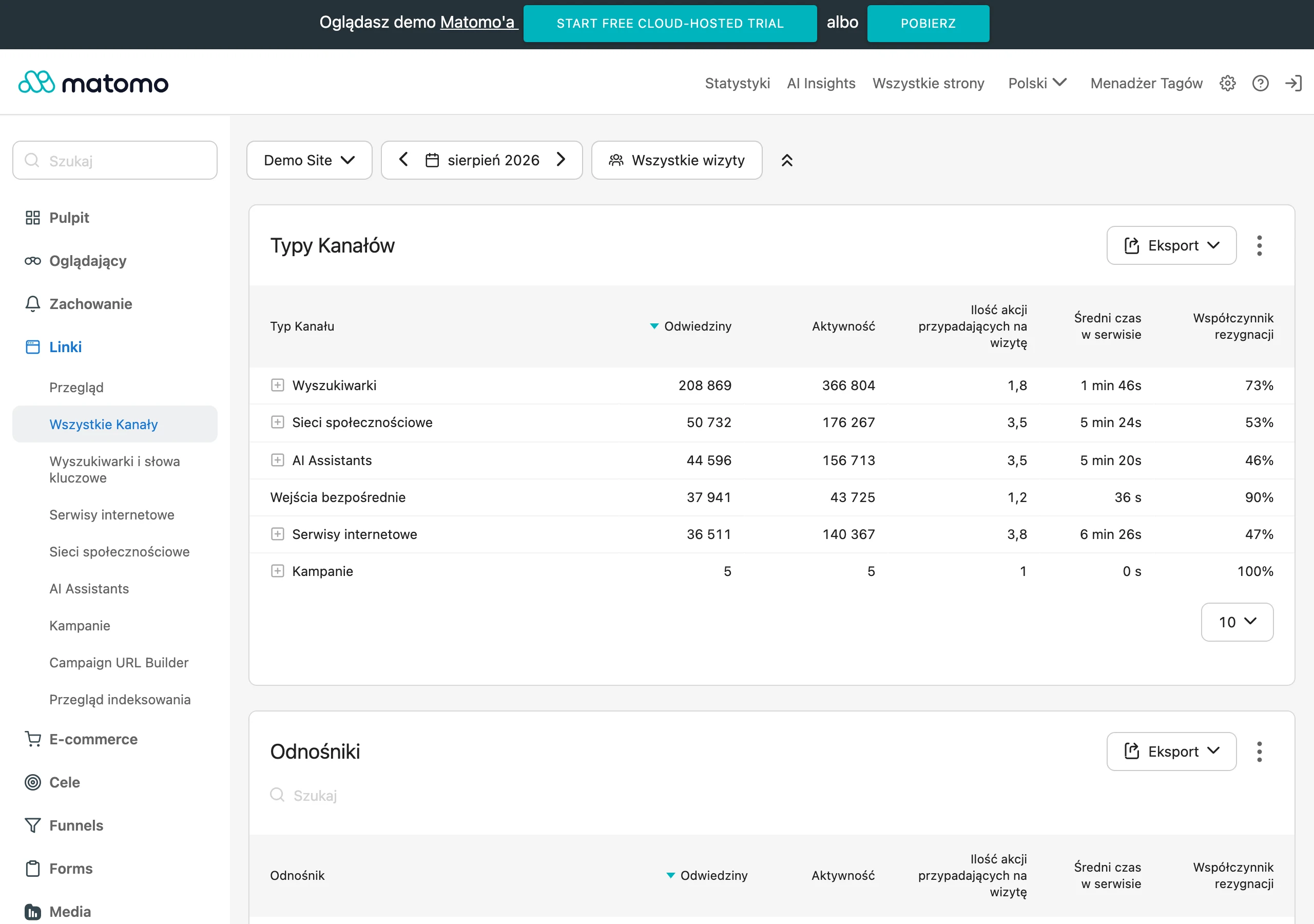
In practice, it is worth keeping a close eye on four areas: impressions, clicks, average position and CTR for a specific URL. If impressions are growing but clicks are standing still, the problem is often not the choice of keywords, but the title, meta description or a format that does not match what the user sees in the SERP. When an article has many queries in positions 8-20, it usually signals that the direction is right, but the content needs refinement or stronger support from internal linking.
It is also worth checking whether the article ranks for the right queries. If Google shows it mainly for secondary keywords rather than the main keyword and its closest variants, this usually signals topic dilution, too weak a message in the headings, or incomplete fulfilment of the intent. The most valuable observation after publication is the gap between the planned keywords and the keywords that actually generate impressions.
There is no point drawing conclusions too quickly. A fresh article often needs time for indexing, the first “test runs” at positions and stabilising its set of queries, especially on a younger or weaker domain. On top of that comes seasonality, location, SERP reshuffles and the strength of competing content, so it is better to base the assessment on a trend rather than on one day.
If the results are below expectations, the adjustments should follow concrete signals. When an article is picking up impressions for questions it does not cover, it is worth adding a section or expanding an existing heading. When positions are average despite a good topical match, clarifying the H1, placing supporting keywords more strongly in subheadings and adding links from related texts often helps. The best post-publication optimisation consists of developing what is already visible in search data, rather than shooting off in new directions.
A good practice is to review the article regularly every few weeks and refresh the keyword map for that URL. This makes it possible to remove fragments that do not support the main intent and expand those that attract valuable traffic. An article that ranks is rarely finished once and for all — most often, it is refined on the basis of real user queries.
FAQ
Frequently asked questions
How do you choose keywords for a blog post so it has a chance to rank?
First define the purpose of the text, then gather real queries and group them by intent. Finally, choose one primary phrase and supporting phrases that can be covered by a single article.
Why is popularity alone not enough when choosing keywords?
Because high search volume does not guarantee alignment with user intent or a chance to rank. What matters more is whether the topic fits the content format and the capabilities of your domain.
Should one blog post answer several different intents?
Usually not, because then the text loses coherence and becomes a patchwork of several threads. One article should solve one main user problem.
How do you check whether a chosen phrase fits a blog post?
You need to manually review the search results and see which content formats are already ranking. If product pages, categories or other types rather than a guide dominate, the phrase may not be a good fit.
When is it better to narrow the topic instead of choosing a broad keyword?
When the topic is too broad and one publication will not cover it thoroughly. This is especially important if the domain does not yet have strong authority or a well-developed content cluster.
How do you avoid keyword cannibalisation on a blog?
Before publishing, check whether the site already has an article targeting the same intent. If such a text exists, it is better to expand it, merge the content or choose a different angle.