
Content distribution is no longer about putting out one piece of text and waiting for it to “stand on its own”. In practice, companies already have a lot of knowledge packed into webinars, expert interviews, reports, presentations or sales materials, but then they fail to spread it across channels in a sensible way. The “one piece of content, many formats” model brings order to this chaos and turns a single asset into a set of content tailored to the publication channel and the business objective. The key point is that this is not about copying the same message everywhere, but about consciously adapting one content core. This makes the material last longer, easier to repurpose later, and more accurate in meeting different audience needs. Next, you will see how such a model works operationally and which stages really make a difference.
What is the “one piece of content, many formats” model in practice?
It is a way of working in which you transform one source piece into several or a dozen versions tailored to different channels, audiences and goals. The base material can be an expert article, webinar, podcast, report, case study, presentation or training recording. From such a source, shorter, more “ready to use” variants are then created: social media posts, carousels, short video, newsletters, FAQ sections or fragments for a product page. One source, many entries. And that is the point.
In practice, repurposing does not mean copying, but adapting. The length, structure of the content, order of arguments, heading, CTA, visual form and often also the way the narrative is led change. The same topic can work differently on LinkedIn, differently in a newsletter, and differently again in an SEO article. Why? Because the user in each of these places has a different intent and a completely different level of attention.
The basic unit of work is not a single post. It is a distribution pack. It includes the base version and a set of “content atoms”, meaning smaller elements that can be used on their own or combined into new formats. In practice, these are quotes, short instructions, examples, answers to objections from customers, checklists, hooks for video or specific educational fragments. The better these atoms are described and the easier they are to find, the less manual fiddling there is in all of this.
For this model to work, you need a simple matrix: topic, audience, channel, format, goal and metric. Without such a map, it is very easy to fall into publishing the same message everywhere, and that usually lowers reach, retention and the usefulness of the content. Channels reward native format, so the material needs to be prepared for how it will be consumed in a given place, not just shortened. The question is: are you creating content “for the channel”, or are you only cramming it into the channel.
In a well-designed process, the final result is not “more content”, but a more predictable distribution system. Such a system has a schedule, templates, versioning rules, order in the files and a clear way of measuring results. This becomes especially important when several roles are involved in the process at once: strategist or content lead, editor, designer, video editor, SEO specialist and the person responsible for publication and tracking. Without agreements, everyone runs in their own direction, and instead of working, the content simply disperses.
The biggest practical value of this model is extending the life of a good piece of material and making faster use of the knowledge the company already has. There is only one condition. The source material must be substantive, up to date and legally safe to reuse. A weak source rarely gives you gold. Usually it simply produces a larger number of weak derivatives.
What are the key stages of the content distribution process?
The content distribution process starts with analysing the base material, then comes breaking it into modules, matching formats to channels, producing versions, publishing with tracking and, at the end, optimisation based on data. It sounds like creative work. In practice, it is more of an operation than an art, because the result is determined not only by ideas, but also by the order of actions and the quality of execution at every step. If even one stage is missing, the content more often misses the audience’s intent or becomes almost impossible to measure.
- Entry into the process: at the beginning, the source material and business context are gathered: the content goal, target audience, funnel stage, freshness of the information, as well as legal and organisational constraints.
- Content audit of the source: the strongest theses, data, quotes, answers to objections, educational fragments and moments that can be sensibly used across different channels are identified.
- Decomposition into modules: the material is broken down into smaller building blocks, such as problem, example, instruction, checklist, FAQ or CTA, so that different formats can be assembled from them easily.
- Channel mapping: for each module, the channel, length, tone, visual form, goal and main promise to the audience are defined.
- Production of variants: ready-to-publish versions are created: texts, slides, descriptions, clips, thumbnails, captions, subtitles, alt texts and metadata.
- Technical optimisation: UTM parameters, proper file names, linking, campaign parameters, correct proportions, subtitles and export settings required by the given channel are added.
- Publishing workflow: materials are added to the calendar, go through brand or compliance approval, and then are published or scheduled in the tools.
- Measurement and iteration: results are analysed and titles, hooks, slide order, format length, CTA and channel selection are improved.
In practice, the most problems arise between the audit and channel mapping. And this is not a detail, but a bottleneck. This is the point at which you need to decide which threads are genuinely strong and which only sound good in the long version. It is also the moment of truth: it shows whether the source material has enough “knowledge density” to feed several formats without diluting the message.
Measurement is planned from the start, not after publication. Without consistent UTMs, analytics events and sensible campaign naming, you are left guessing which format drives reach, which genuinely engages, and which delivers conversions. Depending on the channel, look at retention, CTA clicks, newsletter sign-ups, watch time, scroll depth and assisted entrances.
The time and quality of delivery are also affected by very down-to-earth things. The quality of audio or video in the source material, the expert’s availability to clarify the arguments, the number of language versions, SEO requirements, seasonality of the topic and the number of approval cycles can shift the deadline more than the best plan. And this is where the essence lies. A good distribution process does not end with asset production. It only ends when the content is published, tagged analytically and ready for the next iteration.
What factors affect the effectiveness of content distribution?
Three things determine distribution effectiveness: the quality of the base material, the fit between format and channel, and solid measurement of results. Sounds simple. If the starting point is weak, chaotic or lacking in substance, the subsequent versions will at best be better packaged blandness. A webinar with plenty of examples, a strong expert article or a well-conducted interview with an expert will deliver more than content based on generalities. First, you need to assess whether the base material really contains knowledge that can be broken down into smaller, useful fragments.
The second factor is the alignment between topic, audience, channel and objective. This is not an academic puzzle, but practice. The same thread will perform differently in an SEO article, differently in a newsletter, and yet differently in a short video. The problem is that many companies publish the same thing everywhere, without changing the structure, heading, CTA or the way attention is directed. The format should result from the audience’s intent and the funnel stage, not from the team’s convenience.
Native publishing also matters. Channels reward content made for their own logic: a short opening in a short video, sequencing in a carousel, a clear structure in an article, brevity in the feed and a strong subject line in a newsletter. And note that a large part of consumption happens without a click these days, so not every piece of content has to lead to the website straight away. Sometimes a better goal is holding attention, a sign-up to the database or bringing the audience back to the brand in the next step.
Technical and operational preparation also affects the result. UTMs, linking, file naming, subtitles, transcripts, alt texts and correct metadata are not a “nice-to-have”, but an element of effective distribution. The same applies to accessibility: a clear layout, subtitles and a good transcript increase usability and make the material easier to reuse. Content that is not easy to find, read, measure and repurpose quickly loses operational value.
The last key area is organisational constraints and continuous optimisation. Rights to recordings, image releases, compliance, embargoes, multi-stage approvals and language localisations can genuinely slow down work and narrow the scope of distribution. These are not “details for later”, but hard brakes in the process. It is equally important to regularly review the data: retention, CTA clicks, scroll depth, sign-ups and assisted entrances, ideally on a fixed cadence, not only when “something is not delivering”. Without iteration based on data, it is easy to confuse activity with impact.
What tools and roles are essential in the content distribution process?
The content distribution process requires specific roles and a simple set of tools for production, publication and measurement. That is all. It is not about an elaborate stack, but about making sure each stage has an owner and the material does not get lost between the document, editing, approval and publication. One thing is also key: decisions must have a signature, and versions must be orderly. The most common problem does not result from a lack of tools, but from a lack of accountability and discipline in files.
The most important roles in such a model are:
- strategist or content lead — sets priorities, goals, channels and which threads are worth extracting from the base material,
- editor — simplifies the message, organises the arguments and adapts the language to the audience,
- designer — translates the content into visual formats, ensures readability and template consistency,
- video editor — selects shots, cuts the material into hooks and prepares short versions for the channels,
- SEO specialist — organises structure, intent, FAQ, headings and the logic of the content for search,
- marketing ops or publishing specialist — manages the calendar, UTMs, publication, tagging and basic tracking.
On the tools side, four groups of solutions are usually enough. The first concerns collecting and outlining the material: transcription, a shared document, a research notebook or a knowledge management system. The second is production: a text editor, graphics and video, preferably template-based so you do not reinvent the wheel. The third covers publishing and storage: a CMS, a social media schedule, a file repository or DAM and a content calendar, because without logistics even good content falls apart. The fourth is analytics: a dashboard, web analytics tools, events, goals, UTMs and consistent campaign naming, because data without order is just noise.
In practice, the most underestimated element is often the version repository. It should contain the source material, update date, legal status, related formats, owner, and the CTAs and links used. It sounds technical, but this is exactly the team’s “operational memory”. It means everyone knows which fragments are current, what has already been published and what can be safely reused. Without version control this model quickly turns into chaos, duplication and the publication of out-of-date content.
Increasingly, AI tools are also entering the process, but their role is support, not direction. They are accelerators. They handle transcription well, initially break the material into modules, assemble working summaries and provide first variants. But be careful, that is where their “confidence” ends. You still need editing, fact-checking, standardising the brand tone and ruthlessly removing repetitions. AI speeds up production, but it does not replace editorial decisions or quality control.
What are the most common mistakes in content distribution and how do you avoid them?
The list of sins is repetitive: the same message in every channel, no objective for a specific format, weak source material and mess in approvals and updates. On paper it looks “efficient” only for a moment, and then it lowers performance and creates an avalanche of revisions. Channels reward native content, so an identical text, description and CTA will rarely perform equally well at the same time in an article, newsletter and short video. The question is: why pretend that every channel is the same. Repurposing is not about copying, but about adapting the same meaning to a different way of consumption.
The second common mistake is simple, but costly: starting with a publication list rather than the logic of distribution. Instead of a plan — a calendar. If you do not know who the format is aimed at, which stage of the funnel it works at and what it is meant to trigger, you end up with content that is formally correct but commercially sterile. In practice, it makes sense to assign each version one main goal: explaining a problem, generating interest, signing up to the database, driving a website visit or supporting sales. One format should have one dominant goal, because then it is easier to write, assess and improve.
Very often the problem starts even earlier, namely in the base material. That is the foundation. When the source is generic, inconsistent or poor in examples, then after splitting it you get many weak fragments instead of a few strong ones. That is why it is better to work from a webinar with specific answers, an expert conversation, a report or an extensive FAQ than from a short text without a thesis and without evidence. And that is not a cliché. A weak source material does not become better just because you break it into more formats.
The next mistake is overlooking the technical and editorial layer. This is a detail that kills reach. No transcription, subtitles, alt text, logical headings, FAQ sections or correct metadata limit reach, usability and the ability to reuse the material. The same applies to version control: if it is not clear which version is current, who approved the publication and which CTA has already been used, it is very easy to push out content that is outdated or inconsistent with the offer. Instead of order — noise.
Avoiding these mistakes requires a simple system, not heavy bureaucracy. One matrix works well: topic, audience, channel, format, objective, CTA and metric, plus a repository with the update date and the legal status of the material. Also include real-world constraints straight away: rights to the recording, image releases, embargo, language localisation and the time needed for approval. Most problems in distribution result not from a lack of ideas, but from a lack of operational order.
Why are optimisation and measurement of content distribution results important?
Optimisation and measurement matter because they quickly show which formats really deliver reach, engagement or conversion, and which merely burn time and budget. Without data, it is difficult to distinguish a format that only looks good from one that actually delivers results. And here the key is not just “how much”, but “what next”: did the audience take the next step. If you do not measure the effect at channel and format level, you do not know what to scale and what to stop.
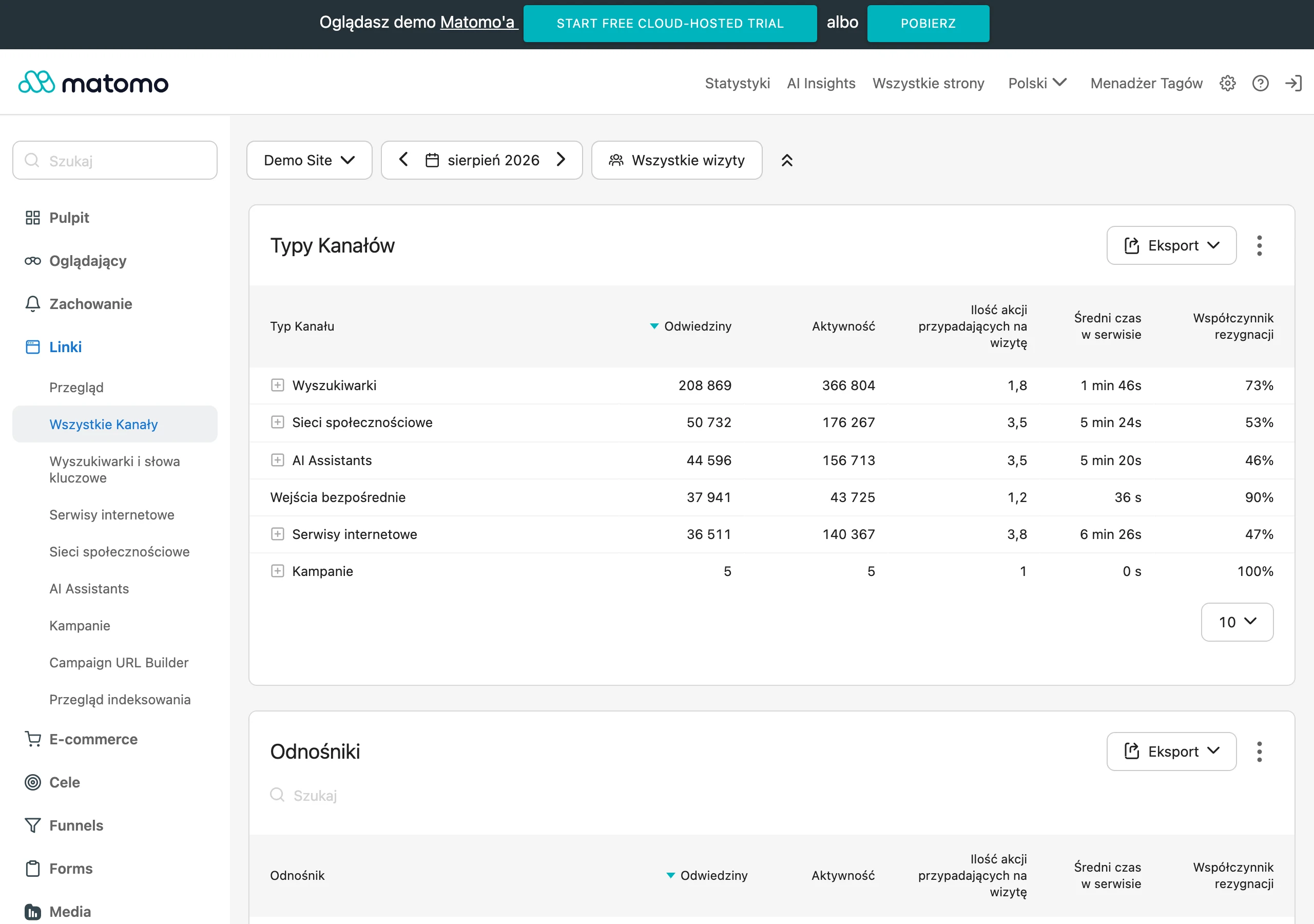
Measurement starts before publication. That is when you assign UTM tags, analytics events, form goals, consistent campaign names and clear definitions of success for each content version. Otherwise, after a few weeks you can see traffic, but you still do not know which clip, which newsletter or which carousel contributed. This is especially important for content that supports sales indirectly, where some visits and decisions only appear with a delay.
Different formats mean different metrics. In short video, the first seconds, retention and completion rate matter; in an article, scroll depth, engagement time and transitions to subsequent sections; and in a newsletter, opens, clicks and sign-ups resulting from a specific sequence. The problem is that vanity metrics can dazzle like a neon sign. High reach does not have to mean that the content explained the topic or supported the purchasing decision.
Optimisation is surgery, not demolition. Rather than recreating everything from scratch, most of the time it is enough to change the hook, slide order, title, thumbnail, intro length, CTA or the way the material closes. In many cases, the same topic only starts to work better after a stronger opening or after shortening the first sentences. The most profitable improvements usually concern the beginning of the content, because that is where the audience decides whether to stay.
Measurement is also needed to steer the entire content system, not just an individual publication. The data clearly show which sources provide the most useful modules, which channels best support the owned database and which formats are worth maintaining as a permanent distribution package. This makes it possible to plan the next source materials more sensibly, cut the production of weak variants and update more quickly the ones that are still working. Good distribution does not end at publication, but at data-driven iteration.
What legal and organisational constraints should be taken into account?
There is no room for improvisation here. Content rights, image releases, licences, data protection, embargoes and the internal approval process are not “extras” at the end, but conditions that determine whether material can be safely cut up, repurposed and rolled out across multiple channels. The most common mistake is assuming that because a company has a webinar or a recording, it automatically also has the right to all of its cut-downs, quotes and ad variants. Then the reality of contracts and regulations kicks in. In practice, this needs to be checked before production of derivative formats starts.
The first area is material ownership and the scope of the licence. The key question is who owns the recording, presentation, photos, music, graphics and expert statements, and whether the agreements cover further use in social media, ads, landing page‘s and sales materials. It sounds formal, but the consequences are very practical: without the right licence, there is no scaling of content, only the risk of a dispute. If the base material includes elements supplied by an external agency, freelancer or partner, you need to confirm whether the licence covers repurposing, modifications and publication in subsequent channels.
The second area is consent from the people appearing in the content. This concerns not only image rights, but also voice, surname, job title, quotes and fragments of statements that later end up in short clips, ads or carousels. Consent to take part in a webinar does not always mean consent to cut out the same fragment for a promotional campaign. The question is where “participation in an event” ends and “use in sales” begins. The broader the distribution and the more sales-driven the context, the more important it is to define the scope of use precisely.
The third area is sensitive data and information subject to business restrictions. In case studies, demos, product webinars and internal recordings it is easy to leave in client data, system screenshots, sales figures, product roadmaps or information that has not yet been approved for publication. And then things get serious. This requires a simple filter before production: what can be shown publicly, what needs to be anonymised, and what should not leave the company at all. In regulated sectors, compliance comes into play too, which may require specific wording, disclaimers or a ban on certain promises.
The fourth area is embargoes and content freshness. Some materials can only be published after a product launch, a price change, approval of a press release or signing agreements with partners. The problem is that when a dozen formats are created from one source, it is easy to lose track of which version is already approved and which is still waiting. That is why every derivative should have an owner, approval status, publication date and a link to the source version. This is not bureaucracy for its own sake, but a safeguard that saves nerves and costly corrections.
From an organisational point of view, the biggest bottleneck is rarely the writing itself. Usually, what kills us is the number of decisions along the way. When a piece of material has to go through marketing, an expert, the legal team, compliance, product and sales, and the sequence is not agreed in advance, the publication calendar clogs up within a week. The question is: who has the final say and when. A simple thing works here, not “a grand strategy”, but a clear workflow: who submits the material, who is responsible for editing, who approves the substance, who checks legal risks and who finally publishes it.
It is also crucial to agree from the outset on the rules for versioning and updates. Because if the offer, procedure, product function or legal message changes, you need to know immediately which posts, clips, FAQs and newsletters require amendments. Without a version repository, the company starts distributing old and new messages in parallel, which damages credibility and makes it harder to analyse results. And this is not about pedantry, but about control over the message. From a practical point of view, operational order is just as important here as the content quality itself.
FAQ
Frequently asked questions
How does the “one piece, many formats” model work in practice?
One source piece is turned into several versions tailored to different channels, audiences and goals. From one webinar, article or report, you can create posts, carousels, short videos, a newsletter or FAQ, among other things.
Does repurposing mean copying the same content to all channels?
No, it means adapting one core piece of content to the logic of a given channel. Length, structure, heading, CTA, visual form and the way the narrative is led all change.
What are the key stages of the content distribution process?
The process starts with analysing the base material and its business context, then comes breaking it into modules and mapping channels. Next are version production, publishing with tracking, and data-driven optimisation.
What has the biggest impact on content distribution effectiveness?
The most important factors are the quality of the base material, matching the format to the channel, and solid measurement of results. The native feel of the publication also matters, as does technical preparation, such as UTM tags, subtitles or metadata.
What roles are needed in the content distribution process?
The model needs, among others, a content lead, editor, designer, video editor, SEO specialist and someone responsible for publishing and tracking. Each of these roles is responsible for a different stage, so the material does not get lost between preparation and publication.
What mistakes most often undermine content distribution?
The most common problem is publishing the same message in every channel, lacking a goal for a specific format, and weak source material. Equally harmful are gaps in versioning, approvals and the technical layer, e.g. without transcripts, subtitles and metadata.