
Repurposing content allows you to get more out of the materials you already have, instead of starting from scratch every time. In practice, it means taking one solid source and turning it into several variants tailored to different publishing locations and different goals. This approach is especially helpful when a company creates content regularly but does not have an established process for reusing it further. The most important thing is that repurposing is not about copying the same message, but about adapting it sensibly. This makes it easier to maintain a consistent brand message while making better use of the team’s time and budget. However, for this to work, you need to choose the source material properly, assess its relevance and adapt the format to the specific channel.
What is content repurposing in practice?
In practice, content repurposing means turning one valuable piece of content into several new publications prepared for different channels. The starting point can be an article, webinar, podcast, report, presentation or video recording. From such a base, you extract the key arguments, instructions, examples, quotes or data, and then translate them into shorter and more functional formats.
This is not about mechanically pasting the same text onto your blog, LinkedIn and newsletter. Each channel has a different way of consuming content, so you usually need to change the structure, length, opening and often also the CTA. The same idea can work well in several places, but it should almost never look identical everywhere.
Most often, you start with materials that have substantive value and can easily be broken down into smaller modules. A good article can turn into a series of posts, an FAQ on the website, a newsletter excerpt and a script for a short video. A webinar can provide quotes for social media, a downloadable checklist, a section for a landing page and material for a salesperson.
This solution works particularly well where there is already a content library, but no process for reusing it. If the source material is weak, messy or outdated, repurposing usually only spreads those problems across more formats. That is why it is worth first assessing the quality of the base content, and only then planning the preparation of further versions.
- 01Substantive baseOne valuable source material.
- 02Turning into new formatsExtracting arguments, data, quotes.
- 03Adapting to channelsEvery format requires personalisation.
The key is changing the form, not the content, to suit the audience.
What importance does the current operational context have?
The current operational context is very important because content is now published simultaneously across many channels, and each one requires different handling. For that reason, repurposing has become a process rather than a one-off action. A brand must think not only about the topic itself, but also about how that topic will perform on the website, in social media, in email marketing and in sales materials.
Platforms favour native formats, so content should be adapted to the rules of the specific publishing location. The message is structured differently in an SEO article, differently in a carousel, and differently again in a short video. The most common mistake is treating repurposing as a simple “copy and paste” between channels.
Refreshing older materials before reusing them is also very important. It is worth checking dates, data, links, alignment with the offer and brand language, because even a text that is solid in terms of substance can already be commercially imprecise. This is particularly important when the content is meant to support SEO, lead generation or sales.
In practice, repurposing is intertwined with performance analysis, distribution and work organisation. The decision about what to repurpose should follow from the topic’s potential, the results of the current materials and the team’s real resources. Success is often determined not only by ideas, but also by practical matters: rights to recordings, access to source files, transcripts and an efficient approval workflow.
How does the repurposing process work step by step?
The repurposing process covers the journey from auditing existing materials to publishing new formats and measuring their results. At the beginning, you need to assess what the company already has, what condition those assets are in and what can be sensibly repurposed without building everything from scratch. Next, you choose the content with the highest business and editorial potential. The best results come from working with material that has clearly stated arguments, examples, questions and concrete takeaways.
Once the source material has been selected, you extract its core, that is, the elements that can work independently in other formats. These can be short instructions, quotes, clips from a recording, answers to FAQ, newsletter sections or carousel threads. Only then are these elements assigned to channels and goals, because the same topic will resonate differently in an article, differently in short video, and differently again in email marketing.
- Content audit: you review the library of materials, their currency, performance, completeness and editability.
- Source selection: priority goes to evergreen, expert, offer-relevant content or content that is already performing well.
- Core extraction: you break the material into smaller modules that can be used independently.
- Channel mapping: you decide what goes to the blog, social media, the newsletter, a landing page or sales activities.
- Adaptation: you tailor the length, structure, language and emphasis to the audience and the funnel stage.
- Optimisation: you refine headings, hooks, CTAs, SEO, metadata and the visual layer.
- Consistency check: you verify alignment with the brand tone, offer, facts and legal constraints.
- Production and publication: you prepare the final files, briefs and schedule, then deploy the materials across channels.
- Measurement and iteration: you check which adaptations bring views, clicks, sign-ups or leads, and further develop what works.
In practice, the biggest mistake appears when a team treats repurposing as a quick copy-and-paste of content. Platforms reward native formats, so you usually need to rebuild the opening, narrative pace, order of arguments and call to action. The same idea can be preserved, but the way it is presented should almost always be different.
Finally, it is worth analysing not only the result of the source content, but also the effectiveness of each adaptation separately. This makes it clear whether the educational, sales, video or text variant performs better. Repurposing is an iterative process: you keep developing the strongest formats, and quickly phase out the weaker ones before they start consuming time and budget.
- 01Asset auditAssessment of materials and potential.
- 02Material selectionSelecting content with high potential.
- 03Core extractionExtracting key elements.
- 04Channel adaptationFormatting and distribution.
The repurposing process is an effective route from auditing existing materials to publishing new formats and measuring results.
What should you pay attention to when choosing source content?
When choosing source content, you need to assess its substantive value, currency, ability to be broken into modules and rights for further use. Not every publication is suitable for repurposing, even if it was once shared. The base material should offer something more than general opinions, ideally containing specific knowledge, a clear structure and several standalone threads. Poor material, once repurposed, usually remains poor, it just ends up in more places.
The best starting points are evergreen, expert or commercially important content. Good candidates are how-to articles, webinars with a specific topic, podcasts with strong theses, reports, process case studies and sales materials that answer real customer questions. If one piece of material can be split into several separate topics without effort, that is a sign it has high potential.
Before starting, you also need to verify whether the content is up to date. Older material may require refreshing the data, links, examples, service names and brand language. This is particularly important for SEO, offers and educational content, because outdated information quickly undermines the credibility of the entire communication.
The operational side is equally important. If there is no consent to use the recording, the source file is missing, there is no transcript, or the material was prepared by an external contractor without clearly defined copyright, the scope of repurposing can be heavily limited. In practice, access to files and permissions is often just as important as the quality of the content.
To make selection easier, it is worth assessing each piece of material against a few questions: is the topic still important, does it support the offer, does it have results or SEO potential, can it be broken into smaller formats, and do you know who it is meant to reach? This quick filtering organises the work and helps you avoid starting with content that will require more patching than real adaptation. If the material passes this test, only then does it make sense to plan formats, channels and production.
What are the key stages of content adaptation and optimisation?
The key stages of content adaptation and optimisation include choosing the right thread from the source material, tailoring it to the channel and objective, and the technical and editorial preparation for publication. In practice, the whole material is rarely repurposed at once; more often, specific elements are extracted that can work independently. One fragment may work as an educational post, another as an FAQ section, and yet another as a short video. Good adaptation is not about copying content, but about changing its form and function.
The first stage is deciding exactly what is to be repurposed and for what purpose. The same content base can serve different tasks, but each format should have one main one: reach, education, sign-ups, leads or sales support. This immediately affects length, style, opening and CTA. When this step is skipped, you end up with materials that are correct but of limited usefulness.
The second stage is proper adaptation, meaning rewriting the content for the way it is consumed on a given platform. An article needs a different structure than a newsletter, and a short video requires a stronger start, simpler language and a faster pace. Often you need to trim the introduction, split arguments into shorter sequences, add examples or rearrange the order of information. Not every good source piece will work after shortening alone.
The third stage is optimisation, that is, fine-tuning the elements that influence perception and results. On a website, these will be headings, keywords, metadata, internal linking and a clear content layout. In social media, the hook, opening lines, caption, visual format and native fit for the platform matter. In video materials, captions, framing, shot length and a clear message delivered from the very beginning come into play.
The final stage is quality control, and only then publication. You need to verify consistency with the current offer, brand tone, data, terminology and legal constraints. It is also worth checking whether the messages do not overlap too much across channels and whether each piece of content really adds something different. Optimisation does not end before publication, because ultimately the results of a specific adaptation are what count.
- 01Choose the topic and goalDecide what and why
- 02Match the format and functionChange the form, not the content
- 03Prepare technicallyReady for publication
Good adaptation is a change of form and function, not copying.
What are the most common limitations and risks in repurposing?
The most common limitations and risks in repurposing are weak source material, outdated information, legal and organisational gaps, and overly mechanical content transfer between channels. If the base is average, after reworking you usually just end up with more average materials rather than better content. Another issue arises when some content exists only in a form that is difficult to edit, with no transcript, source files or permissions for reuse. That limits the scale and speed of work.
The first risk concerns the quality of the source content. The material may be too generic, chaotic or poorly matched to audience needs, making it hard to sensibly break it down into smaller formats. In such a situation, repurposing does not save time, because instead of simple adaptation you need almost a full rewrite from scratch. Poor content after reworking is usually still poor, it just appears in more places.
The second risk is loss of freshness. An older article, webinar or podcast may contain data, links, service names, examples or recommendations that no longer fit the current offer and brand language. If you rework such material without checking it, the same mistake will be copied across several channels at once. Before reusing it, it is worth checking the facts, dates, links and consistency with the current communication.
The third group of problems is legal and technical in nature. Lack of consent to use a recording featuring an expert, unclear rights to graphics, no access to the editing file or no archive of draft versions can block a project despite a good idea. In practice, this is a more common obstacle than the creative work itself, especially in companies with a dispersed material workflow. No right to use a specific asset can invalidate the entire repurposing plan.
The fourth risk is operational and concerns work organisation. When there is no approval owner, no clear production statuses and no clear channel-format-goal matrix, the team can easily create duplicates, miss updates or publish messages that are too similar to one another. This not only lowers quality, but also makes it harder to assess what actually works. That is why repurposing should be based on a simple workflow, and results should be measured at the level of each adaptation, not just the base content. The most common mistake is treating repurposing as a quick copy and paste between platforms.
How do you measure the effectiveness of repurposing in practice?
The effectiveness of repurposing is best assessed by comparing the result of each adaptation with its specific business and communication goal. A post aimed at reach is evaluated differently from a landing page section designed to support sign-ups or leads. The most important rule is simple: do not judge the entire process with a single metric. If you put all formats into one bucket, you quickly lose information about what really delivers results.
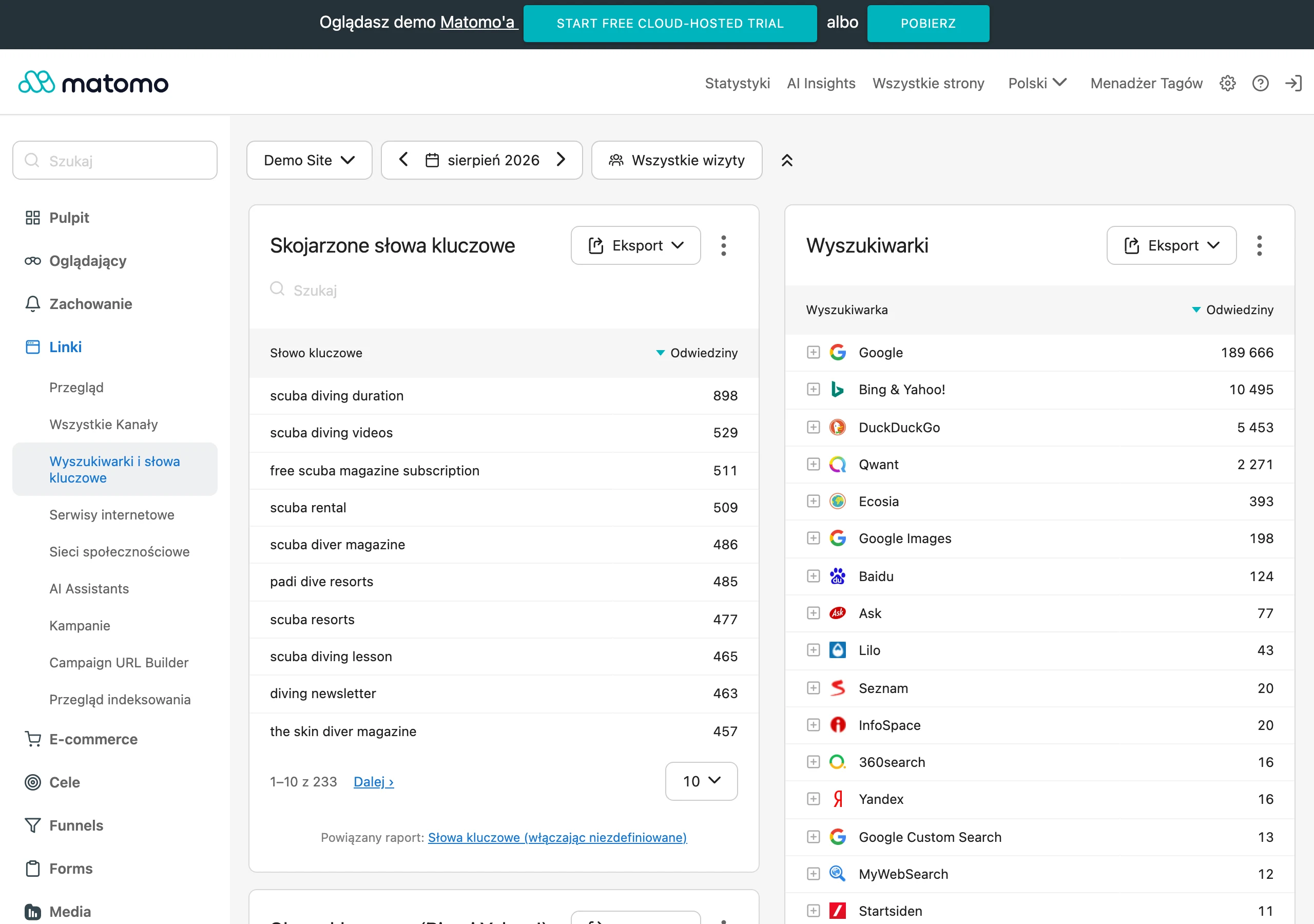
At the start, you need to assign one main task to each format. For reach-focused content, these will usually be impressions, watch time, saves, shares or comments. In SEO content, clicks from search results, visibility for specific keywords, traffic quality and clicks through to other pages matter more. In lead-generation materials, clicks on the CTA, conversion rate, number of sign-ups and the quality of the contacts acquired are key.
Measure the results of each adaptation separately, rather than only the outcome of the base content. Just because a webinar performed well does not automatically mean that its social media summary or rewritten newsletter version will work just as well. In practice, separate link tracking, consistent material naming and a simple system of reporting are useful, as they show where a specific result came from.
It is worth assessing not only the final result, but also the efficiency of the process itself. If several sensible publications are created from one strong piece of content, and production time is clearly shorter than when creating from scratch, repurposing is working well operationally, even if not every format becomes a hit. That is why a good practice is to analyse the cost of preparing the adaptation, the time needed for implementation, and the number of useful assets generated from one source.
Data interpretation should take the publication context into account. Results depend on the channel, distribution quality, promotional budget, seasonality, the audience group and the way the content itself has been adapted. Do not compare directly formats that had a different goal, different media support and a different “life span”. It is better to compare similar adaptations with one another and look for repeatable patterns: which topics, communication angles and formats regularly deliver results.
The most useful measurement ends with a decision on what to do next. If a given theme works well as a post and a newsletter, it is worth expanding it into an FAQ, a sales section or a lead magnet. When an adaptation performs poorly, you need to check whether the problem was the topic, the format, the hook, the CTA, or simply a mismatch with the channel. The aim of analytics in repurposing is not a report for the sake of a report, but the choice of what is actually worth repurposing again.
FAQ
Frequently asked questions
How does content repurposing work in practice?
It involves reworking one piece of content, such as an article, webinar or podcast, into several new publications tailored to different channels. Rather than copying the content, you extract the key points, examples and quotes and give them a different form.
Is content repurposing just copying content between channels?
No, because it is about adaptation, not mechanically pasting the same material everywhere. Each channel is consumed differently, so you usually need to change the length, structure, opening and CTA.
What content is best suited to repurposing?
Evergreen, expert and commercially important materials work best, as they can be easily broken down into smaller modules. Good starting points are how-to articles, webinars, podcasts, reports, case studies and sales materials.
What should you check before reworking old content?
You need to check its freshness, quality, structure and the rights to reuse it further. Dates, links, examples, service names and alignment with the brand’s current messaging are also important.
What are the biggest risks in content repurposing?
The biggest problems are weak source material, outdated information, legal gaps and too mechanical a transfer of content between channels. In that case, instead of saving time you end up with more average material and more editorial work.
How do you measure the effectiveness of content repurposing?
Each format should be assessed against its own business goal, not one shared metric. Reach-focused content is measured differently from material supporting sign-ups, leads or sales.