
Publishing an article is only the start if the content is really meant to deliver traffic, interest and conversions. A distribution plan organises what happens after you click “publish”: where the piece will go, in what format, to whom, how often it will come back on the radar and how it will be measured. This means the article is not just a blog post, but becomes part of SEO activity, social media, e-mail marketing, sales and analytics. A publication alone rarely delivers a stable effect without actively activating several channels and without later optimisation. A well-built plan keeps the usual chaos in check: random posts, no UTM, mismatched CTAs and empty space where data for assessing the result should be. In practice, it is about one thing. How to squeeze more visits, more touchpoints with the audience and better decisions based on numbers, not gut feeling, out of one piece of content.
What is a content distribution plan after publishing an article?
A content distribution plan after publishing an article is an operational action plan that turns a finished text into a set of publications, promotion and performance measurement across different channels. It usually covers owned, earned and paid channels, for example the website, newsletter, social media, partners, industry communities and advertising campaigns. Its aim is not merely to “show the article”, but to deliver a specific business outcome. And that makes a difference.
The starting point should not be the article itself, but the goal it is meant to achieve. Distribution is planned differently for an educational piece under SEO, differently for content supporting lead generation, and differently again for an article meant to help salespeople in conversations with clients. The question is: what should happen after contact with the content. It is this goal that determines the choice of channels, the format of the messages, the CTAs and the way effectiveness is measured.
In practice, such a plan works as a bridge between content and the rest of marketing. It connects editorial work with SEO, e-mailing, social media, CRM, PR and analytics. As a result, the article can live in many places at once: in search, in the newsletter, in on-site recommendations, in the knowledge base, in e-mail footers or in lead sequences. Instead of one shot — a series of controlled touchpoints.
A well-prepared plan makes one article a source of many entry points rather than a single blog publication. The end result is usually a concrete map of channels, a publishing schedule, a set of message variants, UTM tags, a list of operational tasks and a way of reporting results. This is what distinguishes distribution from randomly dropping a link into social media. And that is not a cliché.
What are the key elements of a content distribution plan?
The key elements of a content distribution plan are the publication goal, channel selection, message preparation, proper measurement, an action schedule and later optimisation. It sounds technical, but it works brutally simply: each of these elements affects the outcome, because even a good article can fail to “stick” if it reaches the wrong audience, in the wrong format or without measuring the results. The most common mistake is promoting content without a clear goal and without an agreed way of assessing effectiveness. Then all you are left with is traffic for traffic’s sake, not decisions that can be defended with data.
The readiness of the article itself for promotion is just as important. If the page loads slowly, the CTA is weak, internal linking does not exist, and the share preview looks poor, distribution will suffer regardless of which channel you choose. It sounds technical. But it is precisely this “small detail” that often decides whether someone clicks and stays. The question is whether you are promoting the content or merely pushing it out into the world. That is why the plan should cover not only publishing messages, but also the technical preparation of the material and its entire environment.
- Goal and KPI — first you establish whether the article is meant to generate traffic, leads, sign-ups, sales support, links or market education, and then you choose the metrics that will show it is actually working.
- Channel selection — owned, earned and paid channels are chosen according to the goal, the type of content, the persona and the resources that are actually available, not according to what is currently fashionable.
- Audience segments — new users are different, subscribers are different, as are customers, leads in the CRM or partners, so they should get a different entry point and different CTAs.
- Message variants — different hooks, summaries, teasers, e-mail leads and descriptions tailored to specific channels are prepared instead of one “universal” text.
- Publication assets — you need graphics, carousels, short videos, a newsletter snippet, copy for content recommendations and links with correct UTM, because without that the campaign usually falls apart.
- Measurement and analytics — UTM, events, conversion goals and source differentiation are configured so that channels and formats can be compared without guessing.
- Schedule and sequence of actions — the plan sets out what you launch immediately after publication, what follows in the next days, and what waits until the first data comes in.
- Optimisation and maintenance — after publication you look at the results, improve the messages, expand the article and return with promotion after updates, instead of relying on a one-off hit.
Owned channels are usually the core of the plan, because they give the greatest control over reach and the frequency of actions. This is where you do not fight a fickle algorithm, but arrange distribution like a process. Newsletter, recommendation modules on the website, the knowledge base, e-mail sequences and communication to existing customers often work more effectively than a single post in an algorithmic channel. Social media, outreach and paid media also make sense, but note: they deliver best when they reinforce an already well-prepared foundation, rather than replace it.
One message should not be copied unchanged into every channel. What works in a newsletter will usually not perform in the same way in a LinkedIn post, in an industry group or in an ad, because the context and the audience’s “temperature” are different. The problem is that copy and paste looks like time savings, but ends up reducing effectiveness. A good distribution plan also takes operational constraints into account: graphics availability, legal and analytical compliance, team capacity, sending frequency and the calendar of other campaigns.
Which channels can be used for content distribution?
Owned, earned and paid channels are used to distribute content after an article is published. Simple rule: first activate the places over which you have full control, because they give the fastest start and the clearest measurement. This is usually the newsletter, recommendation modules on the website, internal linking, knowledge base, email sequences, web push and email footers. Owned channels are often the core of the plan, because they do not depend so heavily on algorithms and are easier to tie to a specific CTA.
Earned channels start working when someone “from outside” helps you naturally reach the audience. This includes partners, experts quoted in the article, moderators of industry groups, company publications, thematic communities, or the sales and customer service team, which shares the material in real conversations with clients. The scale may be smaller than in paid. On the other hand, the quality is often higher, because you reach people already warmed up to the topic, rather than ones caught “by accident” through reach.
Paid channels are useful when an article is meant to deliver a specific business goal, not just generate reach. This usually means promoting the post in social ads, content discovery campaigns, remarketing, or driving traffic to the article for a micro-conversion, for example a sign-up, a CTA click or a move to the offer. What is key, however, is something less flashy but more important: the technical readiness of the page. Paid only really makes sense when the article actually leads the user to the next step, instead of ending with “read and that’s it”.
Channel selection depends on the article’s goal, the funnel stage and the audience type. Evergreen content usually works well in SEO, newsletters and internal linking, while time-sensitive content is picked up faster by social media and email marketing. Expert content is better suited to outreach and partnerships than to mass promotion. Not every article should go to every channel, because instead of results it is easy to burn time, budget and the audience’s attention.
What are the best practices in content distribution?
The best practices in content distribution come down to one thing: match the channel, message and measurement to one specific goal of the article. If you cannot say whether the piece is meant to generate traffic, leads, sign-ups or support sales, the plan starts to fall apart from the outset. That is why, before publishing, you set the main goal and separate KPIs for each channel. Do not judge the whole distribution by one metric, because a click from an email, an SEO visit and a social media reaction mean different things.
Before promotion, the article must be technically complete. You check indexability, link correctness, the mobile version, loading speed, the share preview, forms, CTA and event tracking. This is not cosmetic. Promoting an unprepared page can increase traffic, but it will not deliver reliable data or a meaningful result. Before you add budget or reach, make sure the user has somewhere to click and that the click can be measured.
Good distribution is not about copy and pasting one message everywhere. The same article should have different entry points: a summary of the problem for social media, a concrete benefit for email marketing, an expert argument for outreach, and for SEO a precise semantic context. Segmenting the audience is also crucial, because a different message works for new users, and a different one for clients, leads in the CRM or newsletter subscribers. One article can work across many channels, but each channel needs its own format and its own hook.
A layered model works safest. First you launch your owned channels, then you activate the community and partners, and only at the end do you boost the variants that already show potential with paid support. This way you are not shooting blindly, but basing subsequent moves on the first data on CTR, visit quality, scroll depth, CTA clicks and assisted conversions.
The work does not end after publication. The problem is that distribution needs to be refined afterwards, not ticked off a checklist. In practice, you change post headlines, the newsletter snippet, publication times, sending segments, internal linking placements and the CTAs in the article itself. It is also worth returning to the material after updating data, adding an FAQ or adding a new format (for example a carousel, a short video or a checklist). Often it is the re-distribution of improved content that delivers a better result than the first publication.
What mistakes should be avoided in content distribution?
In content distribution, the most damaging actions are those without a goal, without measurement and without adapting the message to the channel. These are three mistakes that can ruin results even before the first publication. If it is not clear whether the article is meant to generate traffic, leads, sign-ups or support sales, the plan quickly turns into random dropping of the link in different places. First set the main goal of the article, and only then choose the channels, formats and CTA.
A common mistake is promoting text that does not technically close the topic. An article may be substantively good, but if it has weak CTA, performs badly on mobile, loads slowly, has indexing issues or looks poor when shared on social media, traffic will not translate into results. In practice, before launch it is better to check not only the content, but also forms, event tracking, internal linking and the link preview after sharing.
The second major mistake is copying one message into all channels. What works in a newsletter usually does not work in a LinkedIn post, and a message that is good for outreach does not have to suit an audience from a paid campaign. Do not distribute an article as one link with one description, but as a set of variants matched to the audience’s intent. In practice, the hook, the promise, the length of the text and the CTA itself are all different.
Many companies burn through potential by firing at the entire database without segmentation. This hurts most in email marketing and CRM: a new lead, an existing customer and someone after a sales call should receive the same material, but in a completely different usage context. Mass sending lowers relevance. And then the guessing starts as to whether the article failed or simply reached the wrong audience. It is better to send less, but more precisely.
A major problem is also the lack of consistent traffic tagging and weak analytics. Without UTM parameters, events and clearly named campaigns, you cannot compare channels or check which visits are really delivering. If you do not separate traffic sources, after publication you only see an overall increase in visits, but you do not know what caused it. The problem is that optimisation then becomes roulette, and it is easy to draw conclusions that sound logical but are simply wrong.
In practice, too-quick assessment of results also often fails. One weaker post, one average send or low reach on the first day does not mean the topic is not working. Sometimes it is enough to refine the headline, swap the graphic, adjust the CTA differently or shift the emphasis to another channel. Distribution is an iterative process, not a one-off shot. The question is: did you give that material a second chance before writing it off.
A separate category of mistakes is abandoning content after publication. The article should keep living: be linked from new materials, expanded with FAQ, used by sales and customer service, and promoted again after an update. Well-performing content rarely ends its life after the first week, because its value grows through recycling and additional entry points. Instead of treating publication like the finish line, it is better to see it as the start. Without such an approach, even strong material quickly loses reach.
How to measure the effectiveness of content distribution?
Content distribution effectiveness is measured by comparing the article’s goal with traffic quality, user behaviour and the business result, separately for each channel. Traffic growth alone is not enough. High traffic can fail to deliver any sign-ups, leads or real sales support. That is why measurement should start with a simple test: what is this article actually meant to do. Different KPIs will be appropriate for an educational piece, different ones for a lead magnet, and yet others for content that closes the sale.
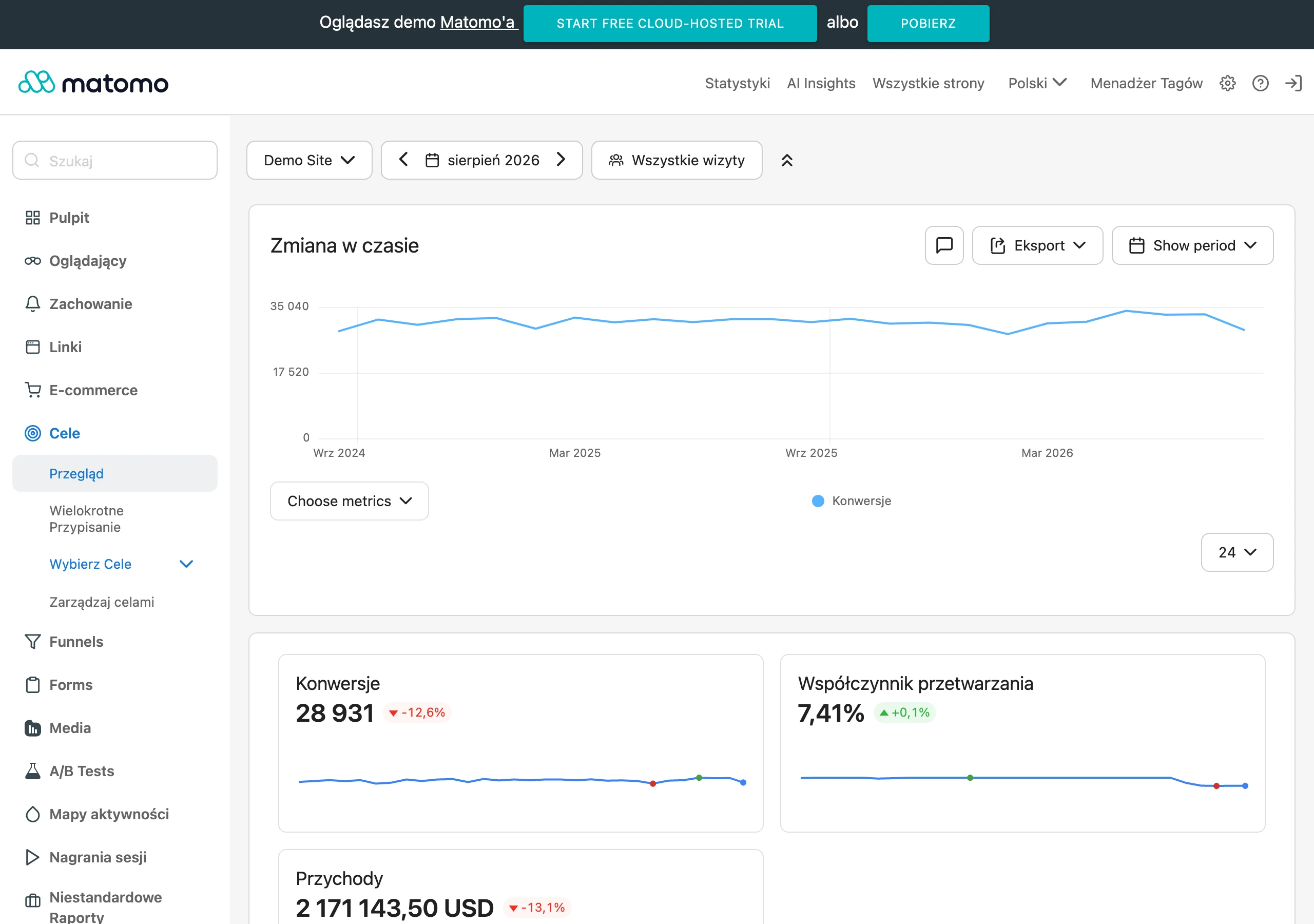
The most practical model is to measure results in layers. First, visibility and delivery of the content, i.e. impressions, reach, indexing, positions, open rate or the number of post views. Then the move to the page: CTR, clicks and sessions. Finally, the quality of the visit and the outcome, i.e. engagement time, scroll depth, CTA clicks, sign-up, lead, sales response or another conversion. The data clearly shows at which stage the bottleneck appears.
The key is to separate the role of the channels. A newsletter can deliver fewer visits than social media, but bring better sessions and more conversions. Social can build the first contact, and SEO can deliver traffic steadily over time. Do not judge all channels by the same measure, because each of them works at a different stage of the user journey. Not X, but Y: not scale alone, but the quality and intent of that visit.
For such measurement to make sense at all, the data has to be set up properly. The basics are UTM parameters, event tracking, conversion goals, audience segments and orderly campaign naming. The simplest approach works best: each channel, format and creative variant has its own tag, and the dashboard shows not only visits but also further user actions. Without this hygiene, it is hard to distinguish an effective message from random traffic that only looks good in the report.
When assessing distribution quality, several signals matter at once. If a channel has a high CTR but very low scroll depth and no CTA clicks, the problem usually lies in the promise of the message or in a mismatch between the content and the intent. And when users read for a long time but do not take any action, you need to scrutinise the CTA, the order of arguments or the offer itself after clicking through from the article (sometimes that is what ruins the result). Good data does not end the analysis; it shows what exactly to improve next.
It is also important to measure the article’s share in assisted conversions. Not every piece of content sells on the last click, but it can genuinely work earlier, at the stage of education and comparing options. The key is therefore to check whether users return later from other sources, whether the number of returning sessions is growing and whether the material appears on pre-conversion paths. This is not a detail, but the essence of expert content and the top of the funnel.
Measurement should also have a time rhythm. Some channels deliver results within hours, like email or social, while others need more time, like SEO, internal linking or content recommendations on the website. It makes sense to split the analysis into the first week, the first month and the later retention period. This shows whether the article only had a short spike or is building value long term.
In the end, what matters is turning data into decisions. If the newsletter works best, you can add the article to an automated sequence. If traffic from LinkedIn has a high CTR but low engagement, rather than pumping up the budget it is better to improve the promise in the post or the landing experience. Measuring effectiveness only makes sense when it leads to a specific change in the message, channel, CTA or the content itself.
How to optimise your content distribution strategy?
The content distribution strategy is optimised by regularly comparing the performance of channels, messages and segments, and then making small, measurable changes. The problem is that without diagnosis it is easy to turn the knobs blindly, so first you need to establish exactly where the journey is breaking down: in reach, click-through, the quality of the visit or conversion. You optimise an article with a low CTR on social media differently from one that attracts traffic but does not lead to any action. First find the weakest stage of the journey, then change the messaging or budget.
In practice, you need to read the data in layers, not through one metric for everything. If a newsletter drives few visits, but that traffic signs up for a demo or downloads a resource, it can be more valuable than a channel with broad reach and poor visit quality. Do not optimise distribution for superficial reactions if the goal is leads, sign-ups or sales support.
A good working model is simple. You test one element at a time, because only then do you know what really worked. Most often the hook, graphic format, first sentence of the post, CTA, audience segment, publishing time or the location of the link on the page go under the microscope. If you move everything at once, the result will change, but the cause will disappear in the noise.
If an article gets lots of visits but users leave quickly, the problem is usually no longer in the distribution itself. The question is: does the promise in the post or mailing match what the reader gets after clicking. Then you check the match between the message and the page content, loading speed, the clarity of the introduction, the mobile layout, internal linking and the visibility of the CTA. Distribution works well only when the entry point and the article content promise the same thing.
Optimisation is also about the order of channels and the sequence of actions. Usually the best effect comes from starting with owned channels, then activating partners and communities, and only at the end using paid support to amplify what is already showing a good quality signal. But beware: if you immediately direct budget to a weak messaging variant, you are not improving the result, only scaling ineffective traffic faster.
Audience segmentation matters a lot. The same article needs a different opening for new users, another for subscribers and yet another for customers already in the CRM. Most often, three tailored messaging variants work better than one universal post pushed everywhere. This is not cosmetic; it is the difference between traffic and intent.
It pays to optimise the entire content lifecycle, not just the first week after publication. An article can be expanded with an FAQ, new examples added, the title improved, linked from further materials, used in an email sequence or turned into a carousel, short video or checklist. The fact is that it is often the redistribution after an update that delivers a better result than the first publication. Instead of chasing novelty — squeeze more out of what is already working.
In the end, you still need a decision: develop the material further or close the topic. If the content has good engagement, supports conversions or is frequently used by sales and customer support, it makes sense to strengthen it with additional formats and internal linking. If, despite several iterations, it still does not match audience intent, it is better to change the communication angle, the CTA or the article itself, rather than promoting the same version endlessly.
FAQ
Frequently asked questions
What are the key elements of a content distribution plan after publishing an article?
These are primarily the publication goal, channel selection, message preparation, measurement, the action schedule and later optimisation. Without these elements, even a good text may not deliver a measurable result.
Which channels can be used for content distribution after publishing an article?
The article points to owned, earned and paid channels. These include, among others, newsletters, on-site recommendations, internal linking, industry communities, partners and advertising campaigns.
Why isn’t it enough to simply post a link to the article on social media?
Because distribution is not a one-off share, but a planned process with channels, message variants and measurement. A link on its own, without adapting it to the audience and without analytics, usually does not deliver a stable result.
How should you prepare an article for distribution so the campaign doesn’t fall flat?
You need to check, among other things, page load speed, mobile version, CTA, internal linking, forms, share preview and event tracking. If these elements do not work, promotion may increase traffic, but not results.
Why shouldn’t one message be copied across all channels?
Because a newsletter, LinkedIn, an industry group or an advert all have different contexts and different audience receptiveness. The article should have different hooks, summaries and CTA tailored to a specific channel.
How do you measure the effectiveness of content distribution after publication?
Effectiveness is measured by comparing the article’s goal with the quality of traffic, user behaviour and the business outcome for each channel separately. A mere increase in visits is not enough if it does not translate into sign-ups, leads or sales support.