


In SEO, there is no single, universal answer to the question of whether dynamic or static content performs better. The results depend on the type of site, the data source, the user intent and how the website has been built from a technical perspective. Service pages, pillar pages and sales pages usually require a different strategy than extensive listings, location pages or subpages based on filters. The best results are usually delivered not by sticking to one model across the whole site, but by a deliberate split: what should remain fixed and what can be generated from data. This is a decision of significant weight because it affects indexing, the pace and scale of publishing, the quality of materials and maintenance costs at the same time. In practice, then, it is not about the content format itself, but about matching the model to the role of a specific section of the site.
Significance of dynamic and static content in SEO practice
The role of dynamic and static content in SEO comes down to the fact that each of these models is better suited to a different type of site and a different business goal. Static content is planned and maintained manually, which gives full control over the messaging, heading structure, CTA and internal linking. It works best where precision and predictability matter, for example on service pages, main categories, landing page pages and in evergreen content.
Dynamic content is created on the basis of templates and variable data such as products, locations, prices, availability, reviews or parameters. This makes it possible to quickly launch a large number of subpages that respond to more specific queries. This approach makes sense when each page provides genuinely distinct value and matches a specific search intent, rather than repeating the same layout with one variable swapped out.
In practice, the choice between these models translates into several key areas. Static content is usually easier to keep under quality control and simpler to refine for specific keywords. Dynamic content scales visibility more effectively with large data sets, but at the same time increases the risk of duplication, thin content and indexing issues. The more automation there is, the greater the need for clear, hard rules for quality and indexing.
That is why a hybrid model works best on many sites. The core of the site remains static, while selected modules update automatically, for example the offer, FAQ, reviews, stock levels or local content. This setup allows you to maintain control over the most important part of the page while also benefiting from the scale and freshness of data. It is usually safer and more effective than trying to base the entire website on one model alone.
- 01Matching the goalDifferent models for different goals
- 02Static content – controlManual planning, full precision
- 03Dynamic content – scaleQuick creation based on templates
- 04Value and relevanceEach page brings unique value
The key is to choose the right content model for the type of page and the user intent in order to achieve the best results.
Current challenges and opportunities related to dynamic content
Today’s challenges related to dynamic content stem above all from the fact that it is easy to scale, but just as easy to reduce SEO quality if implementation takes place without oversight. The biggest advantage is rapid coverage of a broad range of queries, especially in e-commerce, local services, listing portals and extensive databases. The problems start when the system generates subpages without sufficiently unique content, without a sensibly defined search intent or without real value for the user.
One of the key technical issues remains rendering. Search engines can process JavaScript, but SEO-critical elements are safest to deliver directly in server-side HTML or by using prerendering. This applies in particular to the title, meta data, H1, main content, internal links, the canonical and structured data. If these elements only appear after delayed JS execution, the risk of indexing issues and a drop in visibility increases.
Another major challenge is the overproduction of automatically generated pages. Filters, tags, parameters and location combinations can create thousands of URL addresses, a significant proportion of which should not be indexed. Without clear rules it is easy to end up with empty subpages, duplicates, near-identical variants and crawl budget traps. For this reason, dynamic sections must operate according to precise rules: what to index, what to canonicalise and what to leave for navigation only.
It is also worth bearing in mind that freshness of content alone does not automatically provide an advantage. A page updated every day will not win just because it changes more often if it still responds poorly to user intent or adds nothing beyond what is already visible in the results. The effect is determined primarily by site usability, the quality of the input data, content uniqueness and internal linking, which makes it easier for both crawlers and users to discover these subpages.
The greatest potential of dynamic content appears when it is based on solid data and has editorial exceptions built in. A template should not be merely a mechanical frame, but a system with required fields, data validation, an option for manual overrides and post-publication monitoring of results. Only the combination of automation and quality control makes dynamic content genuinely support SEO instead of introducing technical and indexing chaos.
Decision process: when to choose static, dynamic or hybrid content
Choose static content when a given page has significant business importance, should communicate the offer precisely and requires full control over the content and internal linking. This most often applies to service pages, main categories, landing pages and cornerstone content. In such areas, consistency of messaging, convenient editing and a predictable outcome after changes are what matter.
Use dynamic content when a page’s value is driven primarily by data rather than a manually refined description. This is the right approach for offers, locations, listings, product pages, dates, parameters and other sections where the number of variants is large or changes over time. If each generated page does not add its own value, it is better not to publish or index it.
Choose a hybrid model when the page foundation is to remain unchanged, but some information should refresh automatically. In practice, this means a fixed heading, lead, expert section and controlled linking, alongside modules with prices, availability, reviews, FAQ and local data. This is usually the safest setup for SEO, because it combines editorial control with scale.
The best choice comes from assessing three elements: search intent, data variability and technical risk. When the user expects an expert explanation or comparison, the page should remain mostly static. If, however, they are looking for a specific offer, location or a data-dependent variant, the dynamic model will be more justified.
- Choose a static model when the priority is message quality, conversion and manual control over every element.
- Choose a dynamic model when you have a large set of structured data and there is real demand for many page variants.
- Choose a hybrid model when you want to scale a section and retain control over the key message at the same time.
Before making a decision, it is also worth checking whether the system can correctly generate HTML, handle canonicals, filtering, noindex, sitemaps and internal linking. The mere fact that thousands of URLs can technically be produced does not mean they should all end up in the index. In SEO, what wins is not the number of pages, but the quality of the pages that the crawler and user really have a reason to visit.
- 01Static contentImportant business pages, full control over content
- 02Dynamic contentValue is driven by data, large number of variants
- 03Hybrid modelCombining both approaches for optimisation
Key takeaway: Match the content creation method to the business goal and the nature of the data.
How to implement dynamic content without harming SEO
Implement dynamic content so that the key SEO elements are available straight away in HTML and do not depend on delayed JavaScript execution. This applies above all to the page title, H1, main content, internal links, canonical and structured data. If these elements only appear after client-side rendering, the risk of indexing issues and incomplete page parsing increases.
The dynamic template should be based on clear quality rules, not solely on fields for automatic filling. You need to define which data is mandatory, under what conditions a page may be published, and which sections can be overridden manually. Good implementation is not about generating everything, but about blocking the publication of weak variants.
Particular attention should be paid to indexation. Not every combination of filters, parameters, cities or tags should end up in Google. To start with, it is worth setting a minimum page “value”: does it answer a separate intent, does it provide unique data and does it make business sense.
Safe implementation also requires thoughtful internal linking. Dynamic pages often exist from a technical point of view, but they do not receive enough meaningful links from other sections of the site. If an important dynamic page is not linked logically, the crawler may reach it late or consider it unimportant.
- Make sure you have SSR, prerendering or another solution that serves the full content in the HTML code.
- Set publication rules: minimum amount of data, unique fields, no empty blocks, correct meta and H1.
- Define indexation rules for filters, parameters, pagination and local variants.
- Add the option for manual overrides in key sections of the template.
- After implementation, monitor rendering, indexation coverage, duplication, logs and changes in Search Console.
The most common mistakes usually repeat themselves: empty pages where data is missing, near-identical content for many cities, missing canonicals, noindex set too broadly or not at all, and publishing without rendering tests. Relying solely on data freshness can be equally risky. An updated price or number of offers will not improve visibility if the page remains weak, repetitive or difficult for the crawler to access.
In practice, the best approach is a process in which SEO, development and content work together. First comes a map of page types and template rules, then a test on a small sample, and only after that broader publication. With dynamic content, the quality of control after implementation is just as important as the scaling idea itself.
The most common mistakes when creating dynamic pages
The most common mistakes when creating dynamic pages are indexing subpages without real value, duplicating content and making key SEO elements dependent on poorly handled JavaScript. In practice, the problem does not come from the “dynamic” model itself, but from the fact that the template publishes too much, too similarly and without consistent quality control. If a page has no own intent, no own data and no own business purpose, it should not end up in the index.
A very common mistake is generating pages for every combination of filters, parameters, locations or tags. Such a section quickly produces thin content, empty pages once the offer has been exhausted, or variants differing only by a single word in the title. As a result, rankings drop, crawl budget is wasted and the indexing reports become messier.
The second common problem is too thin a layer of uniqueness. A template with only the city, category or product feature name swapped out is usually not enough if the rest of the content remains the same. A dynamic page should be based on unique data fields, not just on the automatic replacement of a few words.
Another mistake stems from the implementation method. If the title, H1, main content, internal links or canonical appear only on the client side and with a delay, the crawler may see an incomplete version or index the page in a poorer variant. For this reason, the key SEO elements are safer to output in server-side HTML or deliver via properly prepared prerendering.
- lack of canonical and noindex rules for filters, pagination and technical variants,
- publishing empty pages when there is no data or offer,
- content duplication between cities, categories or tags,
- lack of internal linking to dynamic pages, so they are formally published but effectively cut off,
- lack of manual overrides for the most important template pages,
- implementation without render testing, indexing checks and input data quality control.
A separate mistake is confusing scale with quality. Generating thousands of URLs does not yet mean that the site better matches demand if most of those pages add nothing new. It is better to have fewer pages, but with clearly distinct value and sensible linking, than to bloat the index with weak variants.
How to measure and monitor the effectiveness of dynamic content
The effectiveness of content dynamic content is assessed through indexing quality, organic visibility, traffic to template groups and real contribution to business goals. The most sense comes from comparing entire page types rather than assessing individual URLs in isolation from the template. In practice, you check not only whether the pages display, but also whether the right versions make it into the index and whether they answer the right queries.
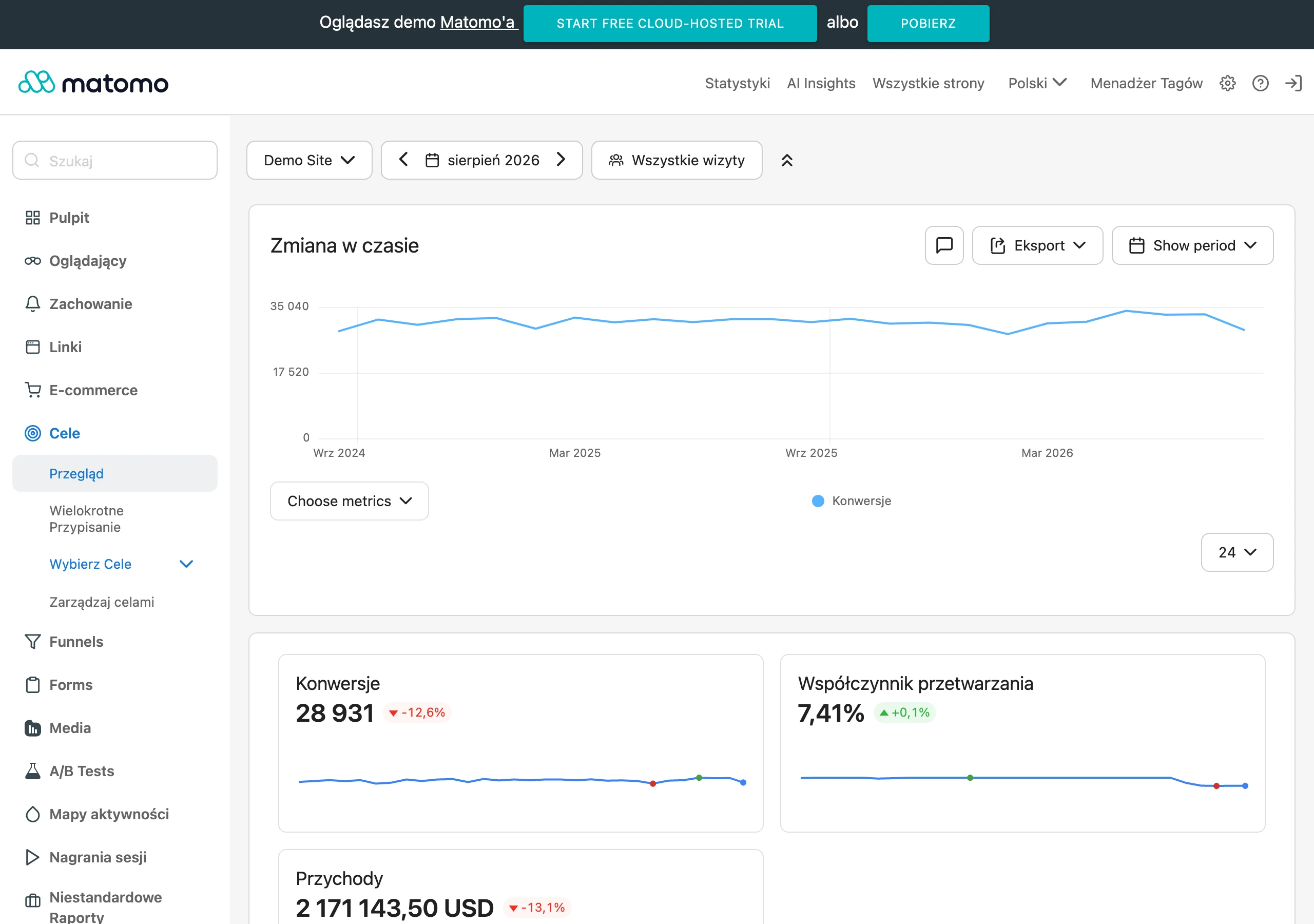
The first level is indexing. You verify how many pages have been published, how many are accessible to crawlers, how many have entered the index and which groups are being rejected or starting to cannibalise each other. A large number of generated pages means nothing if the index mostly contains weak variants and valuable URLs are being skipped.
The second level is visibility and intent matching. In Search Console, it is worth monitoring clicks, impressions, average position and queries for specific directories, templates or page classes, for example /miasto/, /oferta/, /filtr/. If a dynamic section collects impressions for queries that do not match the page’s purpose, it usually points to a problem with the content, headings, titles or generation logic.
The third level is technical quality control after rendering. It is worth periodically checking whether the HTML actually contains the title, H1, main content, internal links, structured data, canonical and whether empty blocks are left behind after data errors. This is particularly important after changes to the template, product feed, filter logic or frontend framework.
- indexing coverage: the number of URLs published, indexed and excluded,
- visibility per page type: clicks, impressions, CTR and positions for directories or templates,
- input quality: whether landing pages match the right queries and intents,
- technical signals: rendering errors, HTTP statuses, duplicate titles, canonicals,
- log data or crawl stats: whether the crawler is not wasting resources on junk pages,
- business result: leads, sales, transitions to key actions from organic traffic.
A lot can be gained by comparing page groups before and after implementation or by running an A/B test at template level, provided the site architecture makes this possible. This makes it possible to assess whether the new generation logic improved indexing, snippets and visits, or merely increased the number of URLs. Effectiveness assessment should concern the entire dynamic page system, not individual “successes” that may be accidental.
Finally, connect SEO with business goals. If dynamic pages attract traffic but do not support sales, leads or progression to the next step, it usually means they cover the wrong type of queries or the page does not deliver value after the visit. A good dynamic section does not just rank, but also guides the user to a specific action thanks to better matched content and structure.
Hybrid content optimisation strategies for better SEO results
The strategy of optimising hybrid content is based on combining a fixed, manually controlled core of the page with data-driven dynamic modules. This model works well when one page needs to respond to a lasting search intent, while at the same time presenting variable elements such as locations, offers, availability, reviews or FAQ. In practice, this gives greater quality control than full automation and better scalability than creating every subpage entirely manually. The most important thing is that the user and the crawler see both the stable meaning of the page and genuinely up-to-date data at the same time.
First, you need to separate the elements that should remain fixed from those that can update automatically. The static layer usually includes the main topic of the page, H1, lead, key paragraphs, heading structure, basic CTA and the main internal linking. The dynamic layer most often includes offer modules, local sections, prices, dates, stock levels, reviews, FAQ answers and “related” blocks.
This division has a direct impact on SEO, because the search engine can interpret the page more easily when its main message does not “float” after every data update. When the core relies too heavily on automation, a mismatch quickly appears between the title, the heading and the content. In a hybrid model, the layer responsible for search intent should be predictable and consistently present in the HTML.
The key SEO elements are best delivered server-side or through safe prerendering. This applies in particular to the title, meta description, H1, main content, canonical, structured data and important internal links. Dynamic modules can be refreshed later based on data, but they should not remain the sole carrier of the page’s meaning.
A good hybrid template needs quality rules, not just a “slot” for data. It is worth defining mandatory fields, a minimum threshold of unique information, the logic of conditional blocks and the situations in which a page should not be published or indexed. If a dynamic module is reduced to replacing only the city, price or one parameter, such a subpage usually brings no real SEO value.
- a fixed introduction explaining the page topic and scope,
- a manually prepared expert or sales block,
- a dynamic section with data current for the user,
- a conditional FAQ or an answer module based on real differences,
- links to parent pages and related variants.
In hybrid content, it is important to manually override selected elements. Not every page has to be written from scratch, but key subpages should allow individual editing of the lead, contextual paragraphs, FAQ or local section. It is precisely the option to override automation on pages with the greatest potential that most often distinguishes a good hybrid model from an average one.
Internal linking should connect the static and dynamic parts in both directions. Pillar pages and main categories should pass context and authority to data-generated pages, and dynamic pages should lead to overarching thematic hubs. This makes it easier for the crawler to read the relationships between subpages, and the user does not end up at a dead end.
Indexation requires separate control. Not every combination of filter, location and variant should be available to Google, even if it can technically be generated. Only those hybrid pages that have their own intent, their own set of data and enough content to stand on their own as results are worth allowing into the index.
In practice, this means the need for clear rules: which URLs get a self-canonical, which are canonicalised to a parent version, and which are kept only for navigation purposes. Without such control, the hybrid model quickly starts producing duplicates and pages that are too similar to one another. The mere fact that content is partly dynamic is not yet an argument for indexation.
At the end, there is the monitoring of results after implementation. It is worth checking whether dynamic modules are actually included in the rendered HTML, whether the snippet is consistent with the page topic, whether coverage of sensible queries is increasing and whether keyword cannibalisation does not occur between variants. The best results come from a hybrid model in which automation provides scale, while editorial control consistently takes care of quality and the business sense of every indexed page.
FAQ
Frequently asked questions
Which content works better for SEO: dynamic or static?
It depends on the type of page, the data source and user intent. The article emphasises that the best results come from matching the model to the role of a specific section of the site, rather than using one solution everywhere.
When is it worth choosing static content on a site?
When a page is commercially important and requires full control over the message and linking. This applies especially to service pages, main categories, landing pages and pillar content.
When do dynamic content make the most sense in SEO?
When a page’s value is determined primarily by data, and the number of variants is large or changing. It is a good solution for offers, locations, listings, product pages, dates and parameters.
Why can dynamic content harm SEO?
Because they can easily lead to duplication, thin content and indexing issues if they publish too many similar pages without real value. The risk also increases when key SEO elements depend on delayed JavaScript.
How should dynamic content be implemented so visibility does not suffer?
The safest approach is to serve key SEO elements in server-side HTML or via prerendering. It is also worth setting rules for publishing, indexing, canonicals and manual overrides.
Is a hybrid model the best for SEO?
Often yes, because it combines editorial control with scale and freshness of data. The article points out that the core of a site can remain static, while selected modules update automatically.