

In practice, the question is not whether technical SEO or content SEO is better, but what is currently holding the site back the most. Some sites lose traffic because of issues with indexing, duplication or rendering, while others do so because of too weak content and poor alignment with user intent. For this reason, it is worth assessing both areas together rather than considering them in isolation. The best results are most often delivered not by choosing one approach, but by the right sequence: first removing technical barriers, then developing and optimising content. This order shows more quickly what is actually working and where the bottleneck lies. Without a thorough diagnosis, it is easy to spend time and budget on activities that will not be able to realise their full potential.
What are the key differences between technical SEO and content SEO?
Technical SEO determines whether a site can be properly discovered, rendered, indexed and interpreted by the search engine, whereas content SEO determines whether the content responds to search intent and genuinely covers the topic the user is looking for. These are two separate layers of the same work. The first takes care of the site’s technical accessibility and quality, while the second is responsible for the meaning, scope and usefulness of the information on the pages.
In technical SEO, the main thing checked is crawlability and indexability, that is, whether the robot can move around the site and whether a given URL should end up in the index. In practice, this involves elements such as HTTP statuses, redirects, canonical tags, robots.txt, XML sitemaps, internal linking, the mobile version, performance, JavaScript rendering and structured data. If there are errors at this level, even very good content may not be properly used by Google.
Content SEO focuses on whether the site answers real user questions and whether it does so better than the competition. It includes search intent analysis, identifying topic gaps, assigning keywords to specific URLs, expanding sections, refining headings, updating older content and planning contextual linking. So what matters is not so much the number of texts, but above all their fit with the topic, the stage of the decision process and the structure of the whole site.
The nature of the effects delivered by these areas also differs. Technical SEO most often unlocks potential that already exists, because it improves the use of current assets and removes errors affecting many URLs at once. Content SEO more often expands topical reach, allows you to enter new queries and improves visibility where the technical layer is already stable. Technical work more often operates at the level of templates and the overall architecture, while content works at the level of specific topics, intents and URLs.
The importance of both areas also depends on the type of site. In a large e-commerce site, portal or a site with extensive filters and parameters, technical SEO usually carries more weight, because a single error can affect thousands of URLs. By contrast, on an expert or corporate site that is well organised technically, content SEO more often drives growth, because the content broadens topic coverage and answers a wider set of queries. That is why there is no single answer for every site — you need to assess whether the bottleneck is the site’s accessibility for the search engine, or rather the lack of content matched to intent.
- 01Technical accessibilityCrawlability, Indexability, Structure
- 02Content relevanceIntent, Scope, Usefulness
- 03Layer cooperationTwo layers of one job
- 04Visibility and qualityCorrect interpretation and value
These are two separate but complementary layers ensuring the site’s quality and visibility
Why is the right order of SEO activities crucial?
The right order of activities matters because publishing content on a site with indexing or rendering problems rarely delivers the full effect, and technical fixes alone, without expanding content, quickly exhaust growth potential. SEO works in stages. First, the site must be accessible and readable for the search engine, and only then can content genuinely build visibility.
The most common mistake is that a company immediately invests in new articles or category descriptions, even though Google does not index some URLs, misreads canonicalisation or has trouble discovering subpages because of poor internal linking. As a result, the content is created but does not do its job as it should. Content does not solve technical problems; at most it can temporarily mask them or show that the site cannot make use of the new material.
The second common mistake looks the other way round: the site goes through a technical audit, tidies up statuses, XML sitemaps and performance, and then stops there. The page is technically sound, but still has too little content, does not cover key topics, or does not match user intent. In that case, growth after the fixes usually fades quickly, because the search engine has easier access to the site, but cannot find enough valuable material in it to broaden visibility further.
In practice, the best model starts with diagnosis. It is worth reviewing data from Google Search Console, analytics and a crawl of the site, and in more demanding projects also server logs, to see how the bot actually moves around the page. Only on that basis can you assess whether the problem is a drop in indexation, duplication, rendering errors, cannibalisation, weak information architecture, or simply a lack of the right content. Without such analysis, setting priorities is guesswork.
If the site has blocking barriers, technical issues with the biggest impact should be removed first. Once the technical layer is stable, the priority shifts to content development, refreshing older URLs and better mapping topics to the site structure. This order shortens the path to results, because each subsequent publication already has the conditions to be found, indexed and connected to the right topic cluster.
So the key question is not which SEO is “better”, but what is currently the bottleneck. On one site it will be heavy JavaScript rendering or a mess in URLs, while on another it will be a lack of content for important queries and outdated articles. The right order of actions allows you to unlock the site’s potential first and then scale it consistently through content. That is why two sites with similar budgets can achieve completely different results: not because of the scope of work itself, but because of the order in which it is carried out.
What steps does the technical and content SEO implementation process include?
The process includes diagnosis, prioritisation, technical or content implementation, quality control and further data-driven iteration. It starts with verifying how the site is crawled, rendered and indexed, as well as which types of pages actually build visibility and traffic. At this stage, data from Google Search Console, a site crawl, server logs, page templates and the behaviour of key URLs are usually reviewed. Without such a diagnosis, it is easy to optimise an area that in practice does not hold back growth.
The second step is deciding what the current bottleneck is. If the problem is indexation errors, duplication, incorrect canonicals, poor internal linking, heavy JavaScript rendering or mobile issues, technical SEO comes first. When the technical side is working stably, but the site does not cover important topics, has thin content or old URLs no longer match user intent, the priority shifts to content SEO.
In the technical area, fixes are implemented that increase the site’s accessibility and make it easier for the search engine to interpret. They most often concern HTTP status codes, redirects, robots, XML sitemap, canonicalisation, pagination, URL parameters, internal link structure, performance and JavaScript elements responsible for rendering content. Technical SEO usually does not “generate traffic on its own”, but it removes blockages and unlocks the potential of existing and future pages.
On the content side, topics and intents are organised, and then assigned to specific URLs. In practice, this comes down to clustering keywords, deciding what to create from scratch, what to consolidate and what to refresh, as well as developing editorial briefs and on-page recommendations. What matters is not only the content itself, but also the structure of sections, headings, scope of the answer, entities, FAQ and relationships built through internal linking.
The next stage is implementation by the right people. Technical tasks go to development or the CMS administrator, and content tasks to the editorial team, SEO content specialist or the site owner. This is often where the operational problem comes to light: the recommendations are sound, but they are not implemented in full or they are modified along the way, which is why a precise specification and control of changes in production are needed.
After implementation, it is worth making sure everything works as intended. In practice, this means running another crawl, verifying indexation and rendering, checking structured data, linking and the alignment of the content with the brief. The most common mistake is to consider the project finished after implementation alone, without validation and without checking the effects in the data.
The final stage is iteration, meaning assessing the results and making further adjustments. At this point, changes in the number of indexed pages, query exposure, CTR, visibility of specific URLs, cannibalisation and the behaviour of templates after implementations are analysed. It is precisely at this stage that it becomes clear whether the next round should focus on the technical side, further content expansion, or both areas at the same time.
- 01Diagnosis and verificationCrawling, indexing, GSC data
- 02PrioritisingIdentifying bottlenecks
- 03Technical implementationsFixing errors, mobile optimisation
- 04Content implementationsCreating content, URL structure
- 05Quality control and iterationVerification of results, further optimisation
The key to effective SEO is systematic diagnosis, prioritisation of technical and content actions, and continuous iteration based on data.
When should technical SEO be prioritised over content SEO?
Technical SEO should come first when issues with the site limit discovery, rendering or indexing of pages. Under such conditions, even good content will not show its full potential, because the search engine does not read it properly or does not recognise it as valuable and unique URLs. If Google has a problem accessing the page or interpreting its structure, investment in content usually pays off more slowly.
- the number of indexed pages clearly drops or is much lower than the number of important URLs on the site,
- a large share of pages ends up duplicated or has incorrectly set canonical tags,
- the site relies on JavaScript and the content does not render correctly for bots,
- there are widespread issues with HTTP statuses, redirects or blocks in robots.txt,
- filters, parameters and pagination generate uncontrolled URL variants,
- internal linking is so weak that important pages are buried deep or are hard to discover,
- the mobile version performs worse than desktop and affects content accessibility or the usability of key templates.
This becomes especially important in large sites, e-commerce, portals and pages with extensive filters. In such projects, a single technical error can affect thousands of URLs at once, so its impact is incomparably greater than on a small business website. That is why, at scale, technical work very often delivers the fastest operational effect, because it removes a systemic problem rather than an isolated case.
A technical priority is also justified when the content is already relatively good, but it is not ranking despite indexing, or its visibility remains unstable. It is then worth checking whether the source of the problem lies in the information architecture, internal linking, templates, structured data or incorrect signalling of canonical versions. Simply adding more paragraphs rarely resolves such situations.
That does not mean, however, that technical SEO should always be the main focus. When a site is technically in order and the barrier turns out to be a lack of topic coverage, weak intent matching, outdated articles or a lack of dedicated URLs for important query clusters, content SEO will bring a bigger effect. It is not worth basing the decision on intuition, but on data concerning indexing, URL visibility, content quality and user behaviour.
In practice, a sequential approach works best. First, you remove the most important technical obstacles, and only then develop content in areas where the site already has the conditions to capture demand from search quickly. This sequence reduces wasted budget and makes it easier to assess which actions actually translate into results.
What are the most common mistakes in SEO implementation?
The most common mistakes in SEO implementation are the wrong order of work, a lack of verification after implementation, and optimising elements that are not the real growth bottleneck. Very often, teams start by creating new content, even though the site is struggling with indexing, duplication or internal linking problems. Under such conditions, even valuable materials do not show their full potential. If Google has trouble discovering, rendering or interpreting the page, content alone will not solve the issue.
Another equally common mistake is treating the audit as the end of the process. A list of recommendations on its own will not improve visibility if it has not been implemented, verified and compared with post-change data. This applies especially to canonicals, redirects, robots, XML sitemaps and template changes. In SEO, implementation and effect tracking matter, not the recommendation document itself.
On the content SEO side, the problem is often creating many subpages without mapping intent and without assigning each URL a single overarching role. The result is keyword cannibalisation, topic dilution and several pages competing for almost the same queries. This is especially visible where separate articles or categories are created for keywords that users perceive as one topic. As a rule, one well-developed page gives a better result than several weaker ones that repeat the same meaning.
A large part of the problems also comes down to scale. In e-commerce or large sites, filters, sorting and URL parameters can generate thousands of low-value URLs. When there is no control over indexing, canonicalisation and internal linking, bots spend resources on pages that should not be competing for rankings. As a result, key subpages also suffer, because they receive less attention and a weaker internal signal.
A separate category of mistakes concerns technical implementations carried out without verifying how the site behaves from the perspective of both the browser and the bot. This is especially visible on sites heavily reliant on JavaScript, where content, links or navigation elements appear with a delay or do not load in full. To the team, everything may look visually fine, while at the same time part of the content remains poorly accessible to the search engine. The fact that a page works for the user does not yet mean that it works correctly for the indexing process.
A common operational mistake is also a lack of clear division of responsibilities between development, content and the person carrying out data analysis. As a result, technical recommendations do not make it into the sprints, content briefs are too generic, and after publication no one checks whether new pages have been indexed and for which queries they are actually building visibility. SEO works most efficiently when every task has an owner, a deadline and a way of validating it.
Finally, it is worth pointing out a decision-making mistake: setting priorities without relying on data. Without comparing indexation, traffic by page type, queries, CTR and content quality, it is easy to spend months on an area that is not a bottleneck today. The most expensive mistake in SEO is fixing what is visible at first glance instead of what is really limiting results.
- 01Incorrect order of workContent before technical work.
- 02No post-implementation verificationChanges without checks.
- 03Optimising irrelevant elementsIgnoring bottlenecks.
The key to success is verification and the correct prioritisation of technical foundations before creating content.
Which metrics are worth monitoring to assess the effectiveness of SEO activities?
The effectiveness of SEO activities is best assessed through a set of metrics that simultaneously shows the technical health of the site, content visibility and the impact on traffic and business. Rankings alone or the sheer number of published articles do not give the full picture. You need to check whether key URLs are being discovered, indexed, displayed and clicked for the right queries. Only such a cross-section of data makes it possible to determine whether the problem lies in technical issues, content or intent match.
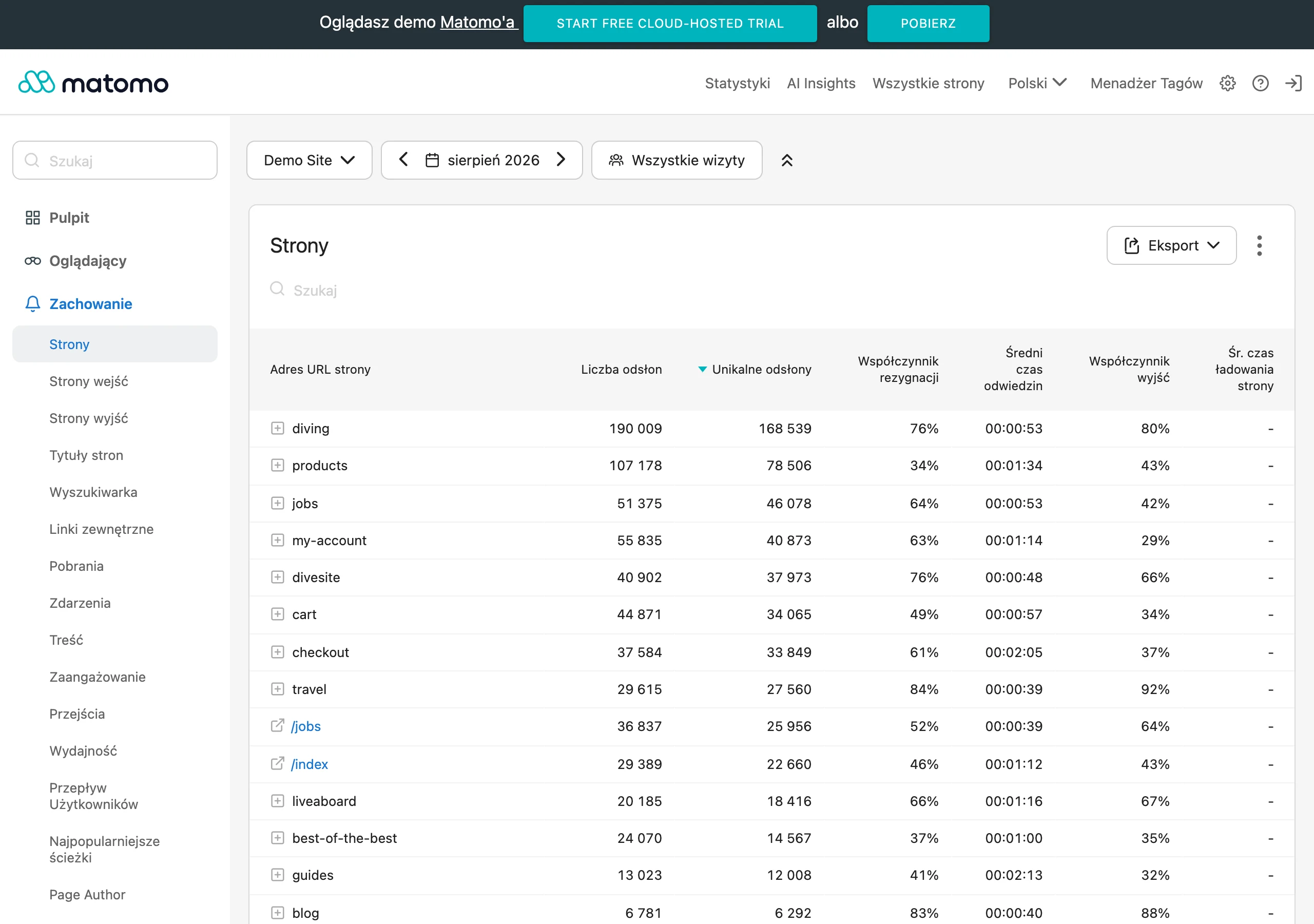
From a technical perspective, data on indexation and URL quality are crucial. In practice, it is worth tracking the number of valuable pages in the index, the difference between the number of existing URLs and the number of indexed pages, as well as HTTP statuses for the most important page types. If, after deployment, the number of properly indexed category, product or article pages grows, it usually means that a specific technical barrier has been removed.
Signals related to discovery and rendering are no less important. On larger sites, server log analysis adds a lot of value, because it shows which sections the crawler visits regularly and which it consistently skips. On top of that comes checking canonicals, robots, XML sitemaps, internal linking and template behaviour after changes. If important pages are poorly crawled or render incompletely, content growth will be limited regardless of the quality of the copy.
In content SEO it is worth tracking clicks, impressions, CTR and the number of queries for which a given page gains exposure. This set quickly shows whether the content matches the intent and whether the title and description really encourage users to click through. If impressions grow while clicks remain flat, the usual culprit is a low CTR or a mismatch between the promise in the results and what the user expects. Conversely, if a page is indexed but does not rank for many queries, it is often necessary to refine the text structure, broaden or narrow the topic scope, or strengthen internal linking.
Much can be gained from analysing at the level of page types and specific URLs, rather than looking only at the entire domain. It is worth measuring categories, products, how-to articles, service pages and updated posts separately. This makes it easier to establish whether growth comes from new content, refreshing older materials or fixing a problematic template. SEO needs to be measured at the level of sections and URLs, because aggregate domain results can mask the real source of improvement or decline.
You should also avoid basing your assessment solely on average position. It is a helpful metric, but it is easy to misread because it mixes queries with different intent, locations and devices. It makes far more sense to observe which topic clusters are attracting new visits, which pages are increasing the number of queries, and where cannibalisation starts. The best signal that content SEO is working is an increase in meaningful queries and visits to the right URLs, not just an improvement in one averaged number.
If SEO is to be assessed from a business perspective, a combination of data from Search Console and analytics is needed. Then you can see not only organic clicks, but also engagement, journeys between pages and conversions assisted by search traffic. This is especially important where some pages serve an informational function and do not close the sale immediately. Good SEO does not end with a visit from Google; what also matters is whether the user lands on the right page and takes the next step.
In practice, the most useful approach is ongoing monitoring of several groups of metrics at the same time: indexing, crawl budget, URL visibility, CTR, the number of queries, organic traffic and conversions. This setup makes it possible to quickly spot whether, after implementation, you still need to improve the technical setup, expand the content, or restructure the information architecture. As a result, decisions are not based on gut feeling, but on where the current growth bottleneck actually lies.
What analyses are essential before deciding on the direction of SEO actions?
You need analyses of indexing, crawlability, server logs, URL visibility, content quality and search intent, because only they allow you to determine whether the source of the problem lies in technical SEO or content SEO. Observing a drop in traffic or weaker rankings alone does not yet determine the cause. In practice, you need to verify whether the key pages are being discovered, rendered and indexed, and then whether their content actually matches users’ queries. Without data on which addresses are visible, which are being ignored and which do not match intent, setting priorities comes down to guesswork.
- Google Search Console analysis: which pages are indexed, which are excluded, which queries the site is getting impressions for, and where impressions appear without clicks.
- Full site crawl: HTTP status codes, redirects, canonicals, robots, XML sitemaps, internal linking, orphan pages, pagination, filters and URL parameters.
- Analysis of server logs or bot behaviour: whether Google visits the key types of pages, whether it spends budget on low-value addresses, and whether it skips important sections.
- Assessment of rendering and templates: whether content is correctly visible after JavaScript, whether SEO elements disappear during rendering, and whether the mobile version does not narrow indexing opportunities.
- Analysis of analytics and business data: which types of pages deliver traffic and conversions, which have recorded declines, and which, despite indexing, do not produce results.
- Content audit and intent: mapping keywords to URLs, detecting thin content, outdated content, topical gaps, keyword cannibalisation and content that does not match the user’s stage in the decision process.
The key is to combine this data at the level of page types, rather than treating the site as a single organism. A blog may need above all a content expansion, while e-commerce categories may at the same time be losing out due to incorrect canonicals and weak internal linking. It is worth making decisions separately for templates and sections, because the bottleneck rarely looks identical across the whole site.
If the analysis reveals a large mismatch between the number of important URLs and the number of pages in the index, widespread duplication, rendering issues, problems with parameters or poor link architecture, technical SEO should be the priority. In such a setup, new content will usually not make full use of its potential, because the search engine has difficulty discovering or properly understanding it. This applies especially to large sites, online stores, portals and sites with filters.
If, on the other hand, the technical setup is stable, the pages are indexed, and yet the site has poor topic coverage, old materials, a lack of dedicated URLs for important clusters and a mismatch with intent, content SEO will deliver the greater effect. In that case, the problem is not the page’s availability to Google, but the lack of an answer to what the user is actually looking for. A good signal to work on content is a situation where the URLs are in the index, but they do not rank broadly or generate impressions without an increase in clicks.
In practice, even the most in-depth analysis usually comes down to one question: what is really limiting growth today. Sometimes it will be indexing and the quality of templates, at other times a shortage of content that answers specific user needs. The best results are most often delivered by a staged approach: first remove the technical blockers with the biggest impact, and only then develop and refresh content where the site is able to use it most effectively.
FAQ
Frequently asked questions
How do you determine whether the problem with a site is technical SEO or content SEO?
You need to check what is blocking growth the most: indexing, rendering, duplication or a lack of content matched to intent. Google Search Console data, analytics, a site crawl and, in more demanding projects, server logs can all help.
Is it worth fixing technical SEO first and only then content SEO?
Yes, if the site has barriers preventing pages from being discovered, rendered or indexed. First you need to remove the technical obstacles, then develop content so it can genuinely build visibility.
Why does publishing new content on its own not always deliver results in SEO?
Because content will not solve problems with indexing, rendering or weak internal linking. If Google cannot read it properly, new content will not use the full potential of the site.
When does content SEO deliver better results than technical SEO?
When the site is technically in good shape but has too little content, does not cover important topics or poorly matches user intent. In that case, content development and updates usually drive growth more strongly.
What signals show that technical SEO should have a higher priority?
For example, a drop in the number of indexed pages, issues with canonical tags, rendering errors after JavaScript, widespread HTTP status problems or weak internal linking. This is especially important on large sites, e-commerce sites and portals.
What mistakes are most often made when implementing SEO?
Most often people start with content, even though the issue is technical, or they stop at the audit stage without implementing the recommendations. Another common mistake is creating many subpages without intent mapping, which leads to keyword cannibalisation.