Facet navigation is a commonly used UX pattern designed to make it easier to search for products in an online store. If implemented poorly, it can be a source of many SEO issues. Introduced in a considered way, it can be a way to increase traffic. Find out exactly what facet navigation is and what its impact on SEO is!
Facet navigation – what is it?
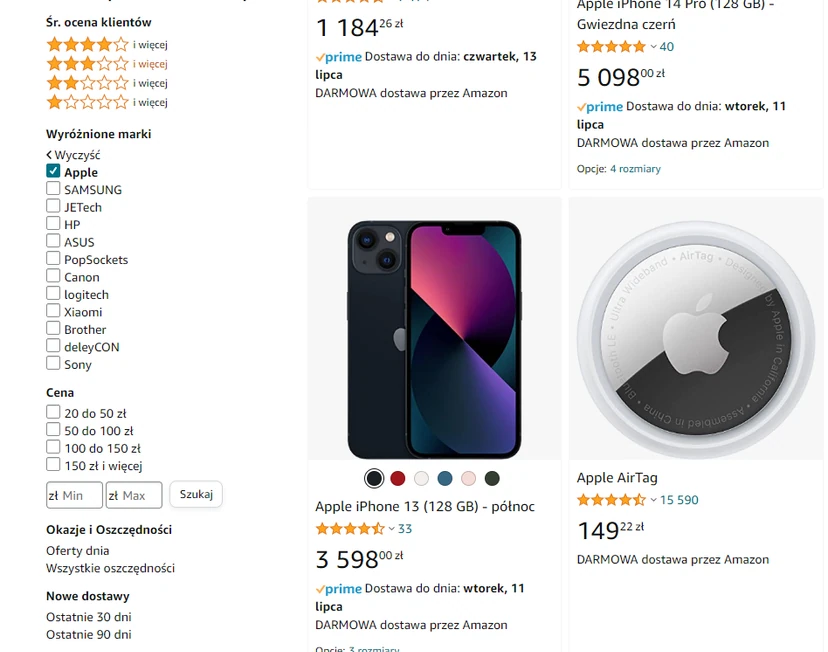
Facet navigation is a solution that allows users to filter and sort the offer by selected product attributes. It most often takes the form of a panel in the website’s sidebar.
DiagramStore menu with categories and subcategories — navigation is a signal to Google which pages are the most important in the site.Source: Google Search Central, CC BY 4.0
Implementation of facet navigation on the example of Amazon
This type of navigation is most often used on category subpages in online stores with a large number of products. Its purpose is to make it easier for users to find the products or services they are interested in.
The product attributes used to create filters are called facets. They differ depending on the nature of the products. Taking a shoe shop as an example, you can identify features such as:
brand,
size,
colour,
material,
type of fastening.
E-commerce UXFacet navigation – what is it?
01Filtering and sortingBy product attributes.
02Sidebar panel in e-commerceOn store category pages.
03Making searches easierFaster product discovery.
04Facets (attributes)Features that create filters.
A key solution for improving user experience in stores with a broad offering.
How does facet navigation work?
Facet navigation works by filtering a product listing by product features. Filters are created based on the analysis of information and metadata specific to the website database.
When a user selects filters, facet navigation can work in one of several ways – depending on the chosen UX direction UX.
After selecting filters, the user often has to click an “apply” button. It updates the listing to reflect the selection (requires JavaScript).
When a filter is selected, the offers are updated immediately (also requires JavaScript).
The page reloads, showing the filtered selection.
When the user clicks the “apply” button, a new page loads.
It is worth paying attention to the page URL, which may update or remain unchanged. There are several possible scenarios here.
The URL remains unchanged after the products are updated.
A new, static URL is created based on the facets used (e.g. koszulki/red).
A parameter identifying the facet is added to the URL (e.g. ?category=koszulki).
Based on the settings, the subpage adds a hash to the URL (#colour=red).
Is it worth indexing facet subpages?
Indexing facet subpages can be a beneficial solution, but only in certain cases. However, it is worth being careful, as this solution can cause issues such as duplicate content and wasted crawl budget for the site.
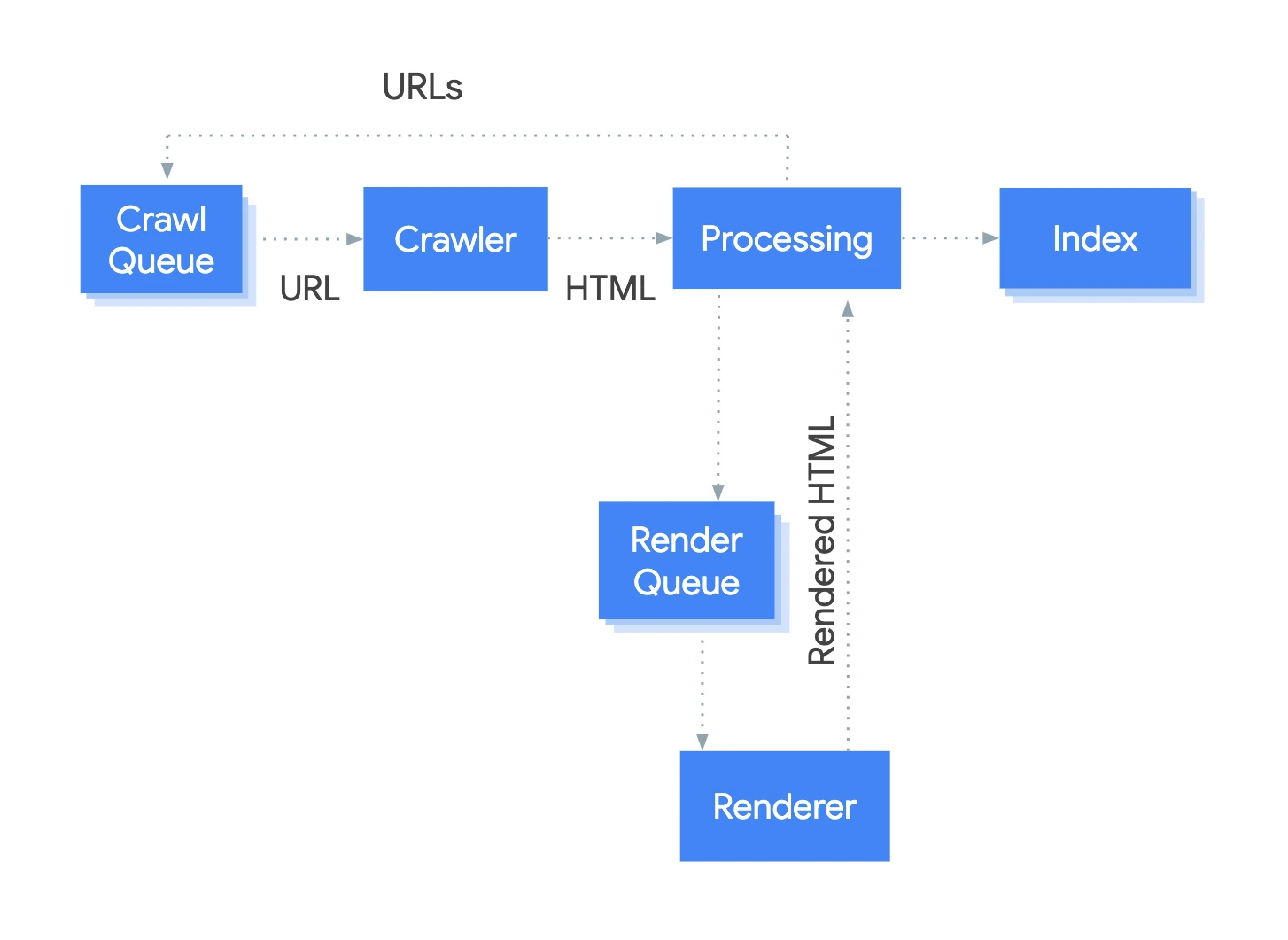
DiagramJavaScript pages also go into the render queue — content visible only after scripts have run may be indexed later than HTML from the server.Source: Google Search Central, CC BY 4.0
Before deciding whether to index them, it is worth answering two questions.
Is the subpage, once filtered, unique and rich enough in content to avoid duplication and thin content?
Is there sufficient search volume for a given query?
Here are two example situations showing whether it is worth indexing faceted subpages.
Is it worth indexing faceted subpages?Indexing faceted subpages: benefits and risks
01Content duplicationMay cause problems
02Answer two questionsBefore making a decision
03High query volumeIncreases the chance of ranking
04Few results and little contentAvoid indexing
Indexing faceted subpages is beneficial only in specific, well thought-out cases.
Worth indexing
We are dealing with the subpage “black running shoes”, existing under the category “running shoes”. The keyword has high search volume, and the shop shows a large number of results. Indexing the subpage can significantly increase the chance of ranking for these queries.
Not worth indexing
The page shows very few results (0-5 products) and little content, and the subcategory has zero search volume. In such a case, Google’s bots will waste time on duplicate subpages, which may cause them to miss the more valuable ones.
Some faceted subpages should therefore not be indexed. To achieve this effect, you can use one of the solutions below.
Canonical link – the “rel=canonical” attribute will point Google to the page with the original content, which usually contains much higher substantive value. This will help minimise the content duplication issue.
robots.txt file– implementing the blocking protocol in the file for bots can prevent the indexing of irrelevant subpages. Even so, it is worth knowing that bots sometimes index the content of these subpages even if they do not crawl them.
noindex tag – this tag will tell search engine bots which subpages to exclude from the index. These pages will still be crawled, which uses up crawl budget. The noindex tag should not be placed alongside canonical.
Faceted navigationHow to increase traffic thanks to faceted navigation?
01Understand long-tail potentialFacets create precise pages for long-tail keywords
02Find topics in AhrefsUse 'Keyword Explorer' and 'Parent topics' for categories
03Choose and indexAnalyse keyword groups and choose pages with potential
The key to long-tail traffic: precise faceted pages and their effective indexing.
Faceted navigation audit
If you want to improve faceted navigation or are just starting to work with it, it is a good idea to carry out an audit. From an SEO perspective, only subpages with valuable content and no duplicates can bring benefit. In the case of faceted navigation, however, we are dealing with hundreds or even thousands of subpages.
A well-conducted faceted navigation audit will provide answers to four key issues.
Wasting crawl budget
Signs of wasted crawl budget due to faceted navigation can be observed, for example, in Google Search Console. If the navigation was implemented recently, and GSC shows a large number of indexed subpages, this may indicate crawl budget being wasted.
This happens because navigation pages (most of which generate negligible organic traffic) attract a significant share of Googlebot visits to the site.
Blocking the wrong subpages
When working with faceted navigation, it may turn out that subpages that could bring a lot of value are being blocked. It is worth checking whether important subpages have a noindex tag or are listed in the robots.txt file.
One example of this kind of approach is the footwear industry, where products are often searched for by colour. By blocking the indexing of subpages with colour filters, you lose the opportunity to gain traffic from long-tail keywords.
Indexing the right subpages
During an audit, it may turn out that Googlebots have indexed a huge number of subpages located deep within the site navigation.
Subpages with faceted navigation filters are a good benchmark here. If many subpages in the index are at a similar level of “depth”, this may indicate wasted crawl budget and the need to exclude these areas from indexing.
Number of pages with duplicate content
When checking content duplication on faceted navigation subpages, it is worth paying particular attention to the hierarchical order of adding filters to the URL. Below is an example from the footwear industry mentioned earlier.
When a user wants to buy, for example, blue sneakers and selects the type and colour filters, they get this URL:
Both addresses have duplicate content. To avoid this problem, one of the subpages should receive a canonical tag.
How to increase traffic thanks to faceted navigation?
Faceted navigation can be an excellent solution for capturing traffic from long-tail keywords. Facets create more detailed versions of pages that respond to a broader range of queries.
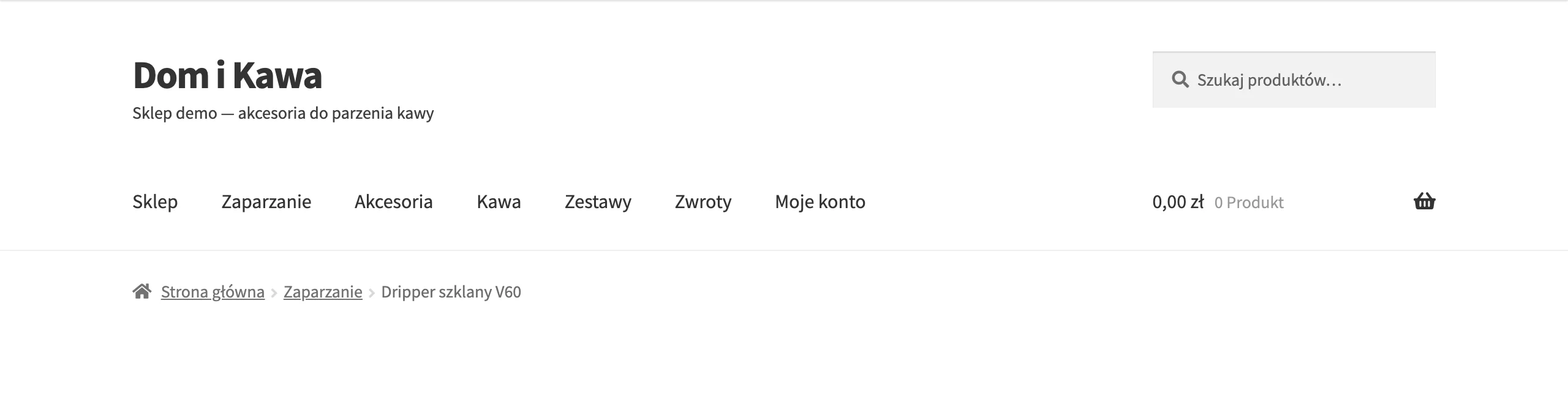
ExampleHeader and breadcrumbs in a WooCommerce demo store: logo, search, category menu, mini basket and product path
Here is a guide on how to use the potential of faceted navigation to acquire traffic in three steps from long-tail keywords!
Step 1. Identifying long-tail keyword variants
Keyword variants can be easily found using Ahrefs. In the “Keyword Explorer” section, enter the name of a category that is already on the site. Then open the “Matching terms” report and choose the “Parent topics” option in the sidebar.
The tool will automatically find and group keywords with a similar search results page. It is worth analysing this list and choosing the faceted subpages whose indexing has potential.
Step 2. Indexing the selected subpages
Now you just need to make the pages indexable and crawlable by Googlebot. Depending on the type of navigation, there are two possible solutions.
Faceted navigation with internal links – make sure that: nofollow attributes in internal links, disallow rules in the robots.txt file and noindex tags have been removed.
Faceted navigation without internal links – create a category subpage for a specific combination in the faceted navigation. The faceted navigation itself cannot be used to create subpages, as it does not generate internal links.
Step 3. Optimising the URL and subpage for search
The URL of the created subpage should be simple and readable. Returning to the previous example:
In addition, it is important to carry out basic SEO optimisations such as:
adding the URL to the sitemap,
including unique and valuable content,
optimising metadata and the title tag and meta description.
FAQ
Frequently asked questions
01How does faceted navigation work in an online store?
It allows products to be filtered and sorted by selected attributes such as brand, size or colour. It most often works on category subpages and updates the listing after filters are selected.
02Is it worth indexing faceted subpages in SEO?
Yes, but only when the filtered page is unique, has valuable content and matches a query with sufficient search volume. Otherwise, it can lead to duplicate content and wasted crawl budget.
03Why can faceted navigation harm SEO?
Because it generates many similar subpages that can duplicate content and consume crawl budget. As a result, Google may spend time on less valuable URLs instead of more important pages.
04When is it worth not indexing filtered subpages?
When the filtered page shows very few products and there are no searches for that combination. In such a case, it is better to exclude it from the index so that you do not create thin, duplicated subpages.
05What can be used to block irrelevant faceted subpages?
You can use a canonical link, the robots.txt file or the noindex tag. Each of these solutions helps limit indexing of unnecessary pages, although noindex still allows them to be crawled.
06How can you increase traffic from long tail queries through faceted navigation?
You first need to identify keyword variants, choose the subpages with potential, and then allow them to be indexed. Next, it is worth optimising the URL, adding unique content, metadata, and the title and meta description.