

In the automotive industry, where competition is exceptionally fierce, SEO becomes an essential tool for increasing visibility and attracting customers. A well-planned strategy that takes into account local SEO, careful keyword selection and valuable content enables businesses to stand out in the market. Find out how effective SEO can influence sales growth and build a long-term advantage in the dynamic automotive sector.
The importance of SEO in the automotive industry
In the automotive industry, SEO plays a key role, enabling businesses to increase visibility in search results. The high level of competition in this market means that effective SEO is essential for attracting potential customers. With proper search engine optimisation, businesses can significantly increase organic traffic, which translates into higher sales and brand recognition.
Customers in the automotive sector often look for specific services or products, such as car repairs, buying new vehicles or car hire. In this context, visibility in Google is hugely important. Research shows that over 70% of users use search engines before making purchasing decisions. That is why a well-thought-out SEO strategy allows businesses to reach their target audience at exactly the moment they are actively looking for solutions.
It is also worth noting that the automotive industry is characterised by high customer acquisition costs. Effective SEO helps reduce these costs by generating organic traffic instead of relying on paid ads. Particular attention should be paid to local SEO, which is extremely important for car workshops or dealerships competing mainly at a regional level.
Investing in SEO is not just a way to increase online visibility – it is also a tool for building a long-term competitive advantage in the dynamic and demanding automotive industry.
- 01High competitionKey to standing out
- 02Increased visibilityAttracts potential customers
- 03Growth in organic trafficSales and brand recognition
- 04Purchasing decisionsOver 70% search before buying
A professional SEO strategy translates into greater reach and conversions in the competitive world of automotive.
How to increase traffic in car workshops and dealerships?
To attract more customers to car workshops and dealerships, it is worth focusing on a comprehensive SEO strategy. The key is to combine technical optimisation with creating engaging content that meets users’ needs. The first step should be effective SEO, which increases the site’s visibility in search results. Local queries are particularly important, because most people search for automotive services in their area. Interestingly, as many as 46% of queries in Google are local.
It is also extremely important to carefully select keywords, such as “car repair Warsaw” or “car dealership Kraków”. They should accurately reflect the intentions of potential customers. It is also worth investing in high-quality content that not only attracts attention but also builds trust in the brand. Examples include guides on vehicle care or detailed model comparisons.
Local SEO is another pillar of an effective strategy. Optimising a Google Business Profile and gathering positive reviews from customers significantly improve a company’s visibility in local results. It is also worth taking care of local citations and backlinks from reputable sources, such as industry directories or partner websites.
For car workshops and dealerships, page load speed and responsiveness are also hugely important. Research shows that over half of users leave a website if it takes longer than 3 seconds to load. That is why technical optimisation for performance is essential to keep visitors engaged.
Increasing traffic requires combining effective local SEO, precise keyword selection and investment in valuable content and technical optimisation of the website.
Effective website SEO
Effective website SEO in the automotive sector requires a holistic approach, combining both technical aspects of optimisation and marketing activities. The first step is to carry out an SEO audit, which helps identify weak points of the site – from code errors to indexing issues or a lack of responsiveness on mobile devices. This makes it possible to implement the necessary changes, which will significantly improve the website’s visibility in search results.
A key role is played by strategic keyword selection. In the automotive sector, it is worth focusing on phrases with high conversion potential, such as “car repair Warsaw” or “car showroom Kraków”. However, you must not forget about long-tail keywords, which are more specific and often deliver better results. An example could be “oil change in a diesel car” – such phrases attract users with specific needs.
Competitor analysis is another important element of an SEO strategy. By examining competitors’ activities, you can uncover their strengths and weaknesses and find new opportunities for growth. It is worth looking at which keywords other players in the market use and which content generates the most organic traffic. This is a valuable source of inspiration and information.
In the automotive industry, local SEO is particularly important. Optimising your Google Business Profile and gaining positive reviews from customers are actions that significantly increase a company’s visibility in local search results. In addition, it is worth taking care of local citations and backlinks from reputable sources, such as industry directories or partner websites.
Creating high-quality content is another pillar of effective SEO. How-to articles, car model comparisons or detailed service descriptions not only attract organic traffic, but also build trust in the brand. It is worth providing users with valuable information that meets their needs.
The final step is regular monitoring of progress. Analysing SEO results using tools such as Google Analytics or Search Console allows you to assess the effectiveness of the actions taken and make the necessary adjustments. This makes it possible to track organic traffic, conversion rate and user behaviour on the site.
- 01Local SEOGoogle Business Profile, reviews, local links
- 02Valuable contentGuides, comparisons, brand trust
- 03Competitor analysisMarket monitoring, learning
A comprehensive approach covering local optimisation, customer education and market analysis builds a lasting online advantage.
The role of valuable content in SEO
Valuable content is extremely important for SEO because it affects both user engagement and a site’s position in search results. In the automotive sector, unique materials such as guides, service descriptions or blog articles attract potential customers and strengthen trust in the brand. This, in turn, translates into longer time spent on the site, which Google’s algorithms consider a positive signal.
Examples of such content may include:
- detailed car model comparisons,
- practical advice on vehicle care,
- tips to help you choose the right service.
This type of material not only meets the needs of the audience, but also attracts organic traffic and increases the site’s visibility in search engines.
Regular content updates are another key element. Fresh and up-to-date information is rated better by algorithms, which can result in higher positions in SERP. It is also worth adapting materials to local customer needs, e.g. by including phrases such as “car repair Warsaw” or “car service Kraków”.
Creating valuable content is not only a way to improve online visibility – it is also a tool for building lasting relationships with customers and increasing their loyalty to the brand. This helps the brand stand out from the competition and gain long-term trust from its audience.
Precise keyword selection
An effective SEO strategy in the automotive industry starts with careful keyword selection. To achieve the best results, you need to understand users’ needs in detail and use analytics tools such as Google Keyword Planner or SEMrush. It is important to choose phrases that are not only popular, but also match the intentions of potential customers – for example “naprawa samochodów Warszawa” or “wymiana oleju w dieslu”.
It is worth paying particular attention to long tail keywords, that is, more specific queries that often generate a higher conversion rate. An example could be “serwis klimatyzacji samochodowej Kraków”. Such phrases, although less popular, attract more targeted traffic.
Regularly updating the keyword list is essential, especially in the dynamic automotive industry. New car models, technologies or services require adapting the strategy to current trends and user behaviour. You also cannot forget about local queries – for workshops or car dealerships operating in a specific area, phrases such as “salon samochodowy Poznań” or “warsztat samochodowy Gdańsk” can significantly increase visibility in local search results.
The key to success is continuous analysis and flexibility in adapting the strategy to changing market conditions. This makes it possible to attract organic traffic effectively and increase conversions in the automotive industry.
- 01Local searchesAs many as 46% of Google queries are local
- 02Profile optimisationAccurate details, opening hours, photos and reviews increase visibility
- 03Visibility in the Map PackEffective reach to customers in a given area
Key to success: tailoring activities to the needs of local customers in the region.
SEO strategy for workshops and car dealerships
SEO strategy for workshops and car dealerships should be based on three key pillars: local SEO, creating valuable content and analysing competitors’ activities. For companies operating regionally, local optimisation is particularly important because it allows them to reach customers in a specific area. It is worth taking care of the Google Business Profile, collecting positive customer reviews and building a network of local links.
Another important element is creating unique and useful content. Guides, car model comparisons or detailed descriptions of the services offered not only attract organic traffic, but also strengthen trust in the brand. For example, articles such as “How do you properly care for your car’s air conditioning?” or “A review of the most popular SUVs on the market” can effectively engage potential customers.
Competitor analysis is the third essential step in building an effective SEO strategy. By studying what other companies in the automotive industry are doing, you can uncover their strengths, weaknesses and find new opportunities for growth. It is worth paying attention to the keywords used by competitors and analysing their content in terms of the traffic it generates.
You should also not forget about technical website optimisation. Website loading speed, its mobile responsiveness and security have a huge impact on both user experience and search rankings. Research shows that more than half of visitors leave a page if it takes longer than 3 seconds to load.
Regular monitoring of SEO results is crucial for assessing their effectiveness. Tools such as Google Analytics or Search Console make it possible to track organic traffic, conversion rate and user behaviour on the website. This allows you to make the necessary adjustments and adapt the strategy to current market trends.
An effective SEO strategy for workshops and car dealerships therefore requires a combination of local SEO, creating valuable content and continuous analysis of competitors and optimisation results.
Local SEO as a key element
Local SEO plays a key role in the automotive industry, especially for car service centres and dealer showrooms operating within a specific area. With proper optimisation for local searches, businesses can significantly increase their visibility in Google, thereby attracting more potential customers. It is worth noting that as many as 46% of Google queries are local in nature, which underlines the importance of this strategy.
One of the most important elements is the optimisation of the Google Business Profile. The profile should include precise contact details, opening hours and attractive photos of the location. All of this increases the chances of appearing in the Google Map Pack, i.e. the top three local results. Positive customer reviews not only affect a higher ranking, but also build trust in the brand.
The importance of local citations, i.e. mentions of a business in industry directories or on partner websites, should also not be overlooked. It is crucial to keep the data consistent: the company name, address and phone number (the so-called NAP). This helps Google’s algorithms identify the business location more accurately.
Another important aspect is the use of local keywords, such as “naprawa samochodów Warszawa” or “salon samochodowy Kraków”. These phrases should be carefully selected and used consistently both on the website and in promotional materials. This is an effective way to reach customers looking for automotive services in their area.
Local SEO is not only a tool for increasing online visibility – it is also a way to build a lasting competitive advantage in the dynamic automotive industry.
Creating unique and topical content
Creating unique and topical content is the foundation of an effective SEO strategy in the automotive industry. Guides, service descriptions or blog articles not only attract potential customers, but also build trust in the brand. For example, texts such as “How to take care of your car’s air conditioning?” or “An overview of the most popular SUVs” address users’ real needs while generating organic traffic to the site.
Regularly updating the blog keeps the site “fresh” in Google’s eyes, which is extremely important for SEO. Search engine algorithms favour up-to-date and valuable content that provides users with specific information. It is also worth adapting content to local customer needs, for example by adding phrases such as “naprawa aut Warszawa” or “serwis samochodowy Kraków”.
Topical content makes it easier to make use of long-tail keywords, which are more specific and often deliver a higher conversion rate. An example might be the phrase “wymiana oleju w dieslu” – such phrases attract users with specific needs.
Diversity of formats is another important element of the strategy. In addition to traditional articles, it is worth creating:
- infographics,
- instructional videos,
- comparisons of car models in table form.
This makes it possible to reach a wider audience and increase engagement on the site.
Unique content is not only a way to improve online visibility – it is also a tool for building lasting relationships with customers and increasing their loyalty to the brand. Investing in high-quality materials makes it possible to stand out from the competition and gain a market advantage.
Competitor analysis and progress monitoring
Competitor analysis and progress monitoring are the foundation of an effective SEO strategy in the automotive sector. By regularly examining rivals’ activities, you can not only identify their strengths and weaknesses, but also discover new avenues for growth. In this process, tools such as Google Analytics and SEMrush prove invaluable, as they make it possible to track organic traffic, conversion rates and visitor behaviour.
A key element is the analysis of keywords used by the competition. This allows you to adapt your own strategy to current trends and user expectations. For example, if a rival achieves high positions thanks to the query “naprawa aut Warszawa”, it is worth considering optimisation for similar phrases.
It is also essential to monitor SEO results systematically. Thanks to analytics tools, you can continuously observe changes in site rankings, organic traffic or conversion rates. This, in turn, makes it possible to respond quickly and adjust the strategy to dynamic market conditions.
It is also worth looking at the technical aspects of competitors’ sites, such as loading speed, responsiveness or security levels. Analysing these elements can provide valuable inspiration for improving your own website.
These actions not only increase the site’s visibility in search results, but also build a lasting competitive advantage in the dynamic automotive industry.
Technical optimisation and UX
In the automotive industry, both technical optimisation and UX (User Experience) play a key role in website SEO. Effective SEO is not just about well-prepared content, but also about looking after the technical aspects of the site and user comfort.
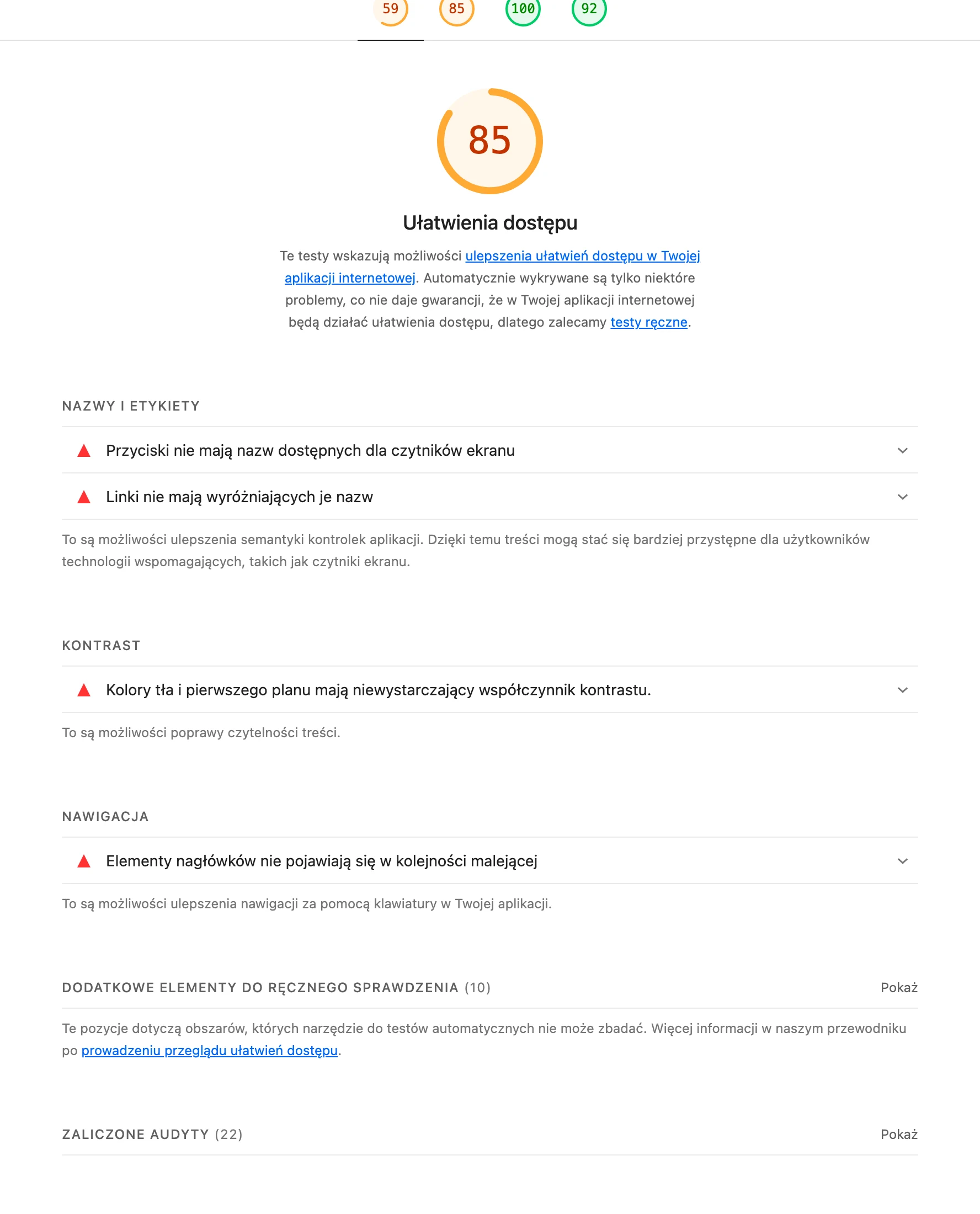
One of the most important factors is page load speed. Research shows that more than half of visitors leave a site if it takes longer than 3 seconds to load. In the case of car service centres or dealership showrooms, where customers often look for quick solutions, optimising this parameter is absolutely crucial. Tools such as Google PageSpeed Insights help identify issues and implement the necessary fixes.
Another important element is responsive design. In the age of mobile devices, more than 60% of internet traffic comes from phones and tablets. That is why the site must be adapted to different screen sizes to ensure convenient browsing of service offers or car models. Lack of responsiveness can result in losing potential customers.
Website security is also extremely important for both SEO and user trust. Implementing the HTTPS protocol and regular updates to the content management system (CMS) minimise the risk of hacking attacks and data leaks. Google’s algorithms prefer secure sites, which translates into higher positions in search results.
You cannot forget about site architecture – a clear site structure, intuitive navigation and proper internal linking make it easier to navigate the site for both users and the crawlers indexing its content. For example, categories such as “car repairs” or “showroom offer” should be easily accessible from the main menu.
UX optimisation also includes tailoring content to visitors’ needs. Clearly worded descriptions of repair services or detailed information about available car models increase user engagement. It is also worth ensuring a user-friendly contact form and visible calls to action (CTA), such as “Book a service” or “Enquire about an offer”.
Implementing these changes not only improves the user experience, but also leads to better SEO results. The site becomes more friendly to crawlers, which translates into higher positions in search results and more organic traffic.
When it comes to page load speed and responsiveness – these are the two pillars affecting user experience and Google rankings. Image optimisation, minification of CSS/JS code and using caching are the basic methods for speeding up a site.
Website security is also key to customer trust and Google’s algorithms. The HTTPS protocol and regular CMS updates minimise the risk of hacking attacks and data leaks.
Page load speed and responsiveness
Page load speed and responsiveness are key elements that affect both user experience and search rankings. Research shows that more than half of visitors stop browsing a site if it takes longer than 3 seconds to load. In the case of car service centres or dealership showrooms, where customers expect immediate solutions, optimising this aspect is absolutely essential.
Responsive design is another important factor. In the age of mobile devices, more than 60% of internet traffic comes from phones and tablets. That is why the site must be adapted to different screen sizes to ensure convenient browsing of service offers or car models. Lack of responsiveness can result in losing potential customers.
To speed up a site, it is worth applying a few basic techniques:
- image optimisation,
- minification of CSS/JS code,
- using caching.
Tools such as Google PageSpeed Insights help identify issues and implement the necessary fixes, making the site more friendly to crawlers.
Implementing these changes brings twofold benefits. First, it improves the user experience. Second, it leads to better SEO results. The site becomes more attractive to crawlers, which translates into higher positions in search results and more organic traffic. These are simple steps that can have a significant impact on your site’s success.
Website security and site architecture
Security and site architecture play a crucial role both in SEO and in user experience. Implementing the HTTPS protocol together with an SSL certificate is essential to secure the data transmitted between the server and the browser. What is more, websites with an SSL certificate are rated better by Google algorithms, which translates into higher positions in search results. In addition, a secure website builds trust among customers, who are more likely to decide to use automotive companies’ services.
Clear and intuitive site architecture is another important element. Thanks to the right division into categories, such as “car repair” or “showroom offer”, users quickly find the information they need. This not only improves their experience (UX), but also makes it easier for indexing robots to analyse the site’s content. It is also worth using structured data, which help search engines interpret the website’s content better.
You cannot forget about internal linking, which significantly makes navigation around the site easier and increases the time spent by visitors. For example, an article about air conditioning repair can include links to other service offerings, encouraging further familiarisation with the offer.
Website security also means regular updates to the content management system (CMS) and protection against hacking attacks. Google algorithms prefer websites that take care of the security of their customers’ data, which directly affects their position in search results.
A well-designed and secure site architecture is the foundation of effective SEO and user satisfaction. Investing in these elements translates into greater visibility in Google and increased customer trust in the brand.
The importance of local searches and linking
Local searches and linking play a crucial role in increasing the visibility of automotive businesses, such as car workshops or dealership showrooms, in Google results. Interestingly, as many as 46% of queries are local, which highlights the importance of tailoring activities to the needs of customers in a given region. With the right strategies, businesses can effectively reach people looking for services in their area.
One of the most important steps is optimising the Google Business Profile. The profile should include accurate contact details, opening hours and attractive photos of the premises. This increases the chances of appearing in Google Map Pack, i.e. the top three local results. Positive customer reviews not only affect a higher ranking position, but also build trust in the brand.
Local citations, meaning mentions of the company in industry directories or on partner websites, are also hugely important. It is crucial to keep the data consistent: the company name, address and phone number (the so-called NAP). This helps Google algorithms identify the business location better and increase its visibility.
It is also worth taking care of local backlinks from reputable sources, such as partner websites or industry directories. These links not only support the site’s SEO, but also build the brand’s authority among the local community. Examples could include collaborations with local automotive blogs or participation in industry events.
Another important element is the use of local keywords, such as “car repair Warsaw” or “car showroom Kraków”. These phrases should be carefully selected and consistently used both on the website and in promotional materials. This is an effective way to reach customers looking for automotive services in their area.
Activities related to local searches and linking are not only a tool for increasing online visibility – they are also a way to build a lasting competitive advantage in the dynamic automotive industry.
Optimising the Google Business Profile account
Optimising the Google Business Profile is a key element of a local SEO strategy for workshops, service centres and dealership showrooms. It allows you to present key information about the business, such as the address, opening hours, services offered or photos of the premises. This gives the business a chance to appear in the Google Map Pack, i.e. among the top three local search results.
The first step is to fully complete the profile. Accurate contact details (NAP – name, address, phone) are key and must be consistent across all platforms. Adding attractive photos and detailed service descriptions attracts the attention of potential customers. Regularly updating information, such as changing opening hours or promotions, is also hugely important.
Another important element is gathering positive customer reviews. Reviews not only improve your position in local rankings, but also build trust in the brand. Encouraging customers to leave a review after the service has been completed can bring measurable benefits to the business.
It is also worth paying attention to local keywords, such as “car repair Warsaw” or “air conditioning service Kraków”. They should be used consistently both in the profile description and on the website. This helps Google algorithms better recognise the business’s location and specialism.
Optimising the Google Business Profile account is not only a way to increase online visibility – it is also a tool for building a lasting competitive advantage in the dynamic automotive industry.
Local citations and backlinks
Local citations and backlinks play a key role in building a website’s authority and increasing its visibility in local search results. Citations, that is mentions of a business in industry directories, local media or partner websites, are an important element of an SEO strategy. Consistency of NAP data (name, address, phone) in these sources helps Google algorithms identify and assess the business more effectively.
Backlinks from reputable platforms, such as local news portals or industry websites, not only increase trust in the brand, but also support its SEO. The quality of these links is crucial – those from authoritative websites have much greater value for SEO. Examples include collaborations with automotive blogs or participation in industry events, which generate valuable links.
Thanks to such actions, the company not only improves its visibility in Google, but also builds a lasting competitive advantage in the automotive market. Investing time and resources in these strategies brings long-term benefits that translate into business success.
SEO for different segments of the automotive industry
SEO in the automotive industry is a process that requires a personalised approach tailored to the specifics of a given segment. Each type of business – from car washes to dealer showrooms – presents marketers with unique challenges that influence the shape of the SEO strategy.
For car washes, it is crucial to focus on local queries such as “myjnia samochodowa Warszawa” or “automyjnia Kraków”. It is worth optimising the Google Business Profile and regularly encouraging customers to leave positive reviews. Creating content related to car care, for example guides on looking after the bodywork or the vehicle interior, can attract people looking for specific services in their area.
For car hire companies, long-tail phrases such as “wynajem aut na weekend Kraków” or “wypożyczalnia samochodów rodzinnych Warszawa” are important. Building links from local travel portals or travel blogs can significantly affect website visibility. In addition, it is worth creating valuable materials, such as guides helping people choose the ideal vehicle for a holiday, which will increase organic traffic and user engagement.
In dealer showrooms, the priority is phrases related to specific brands and models, for example “salon Ford Warszawa” or “nowe modele SUV 2023”. High-quality photos and detailed descriptions of the cars on offer are essential. Regular content updates on the website and mobile optimisation are necessary, especially since many customers browse offers on smartphones.
Although each segment has its own specific SEO needs, the common element is attention to local visibility, content quality and the technical performance of the website. Thanks to these actions, companies can compete effectively in the dynamic automotive world.
SEO for car washes and car hire companies
SEO for car washes and car hire companies requires a personalised approach that takes into account the unique features of these sectors. In the case of car washes, it is crucial to focus on local searches such as “myjnia samochodowa Warszawa” or “automyjnia Kraków”. Optimising the Google Business Profile and encouraging customers to leave positive reviews are fundamental actions. Creating valuable materials, for example guides on car bodywork or interior care, can attract people looking for specific services in their area.
As for car hire companies, it is worth focusing on long-tail phrases such as “wynajem aut na weekend Kraków” or “wypożyczalnia samochodów rodzinnych Warszawa”. Building backlinks from local travel portals or travel blogs can significantly increase website visibility. Creating practical content, such as guides helping people choose the ideal vehicle for a holiday, will not only attract more organic traffic but also engage users.
In both cases, you cannot forget about the technical aspects of the website. Loading speed, responsiveness and website security are crucial for both SEO and user experience. Regular monitoring of results with tools such as Google Analytics or Search Console allows you to adapt the strategy to current market trends.
Investing in local SEO and valuable content is not just a way to increase online visibility – it is also a tool for building a lasting competitive advantage in the dynamic automotive industry.
SEO for a dealer showroom and used car lot
SEO for dealer showrooms and used car lots is a key element of an SEO strategy in the automotive industry. For dealers, the priority is phrases related to specific brands and models, such as “salon Ford Warszawa” or “nowe SUV-y 2023”. To attract potential customers, high-quality photos and detailed descriptions of the vehicles on offer are essential. Regular content updates on the website, such as adding new models or promotions, have a significant impact on visibility in search results.
In the case of used car lots, it is worth focusing on local queries, for example “komis samochodowy Kraków” or “używane auta Warszawa”. Optimising the Google Business Profile and obtaining positive customer reviews are fundamental steps that build trust in the brand and improve ranking in local results. Creating valuable content, such as guides on buying used cars or model comparisons, can attract people looking for specific solutions.
For both segments, technical website optimisation is equally important. The site’s loading speed, its responsiveness on mobile devices and security have a huge impact both on user experience and on rankings in Google. Research shows that more than half of visitors leave a page if it takes longer than 3 seconds to load. That is why it is worth taking care of:
- image optimisation,
- CSS/JS minification,
- use of cache memory.
Local SEO plays a key role for both dealerships and used car dealers. As many as 46% of Google queries are local in nature, which underlines the importance of tailoring activities to the needs of customers in a given region. Using local keywords and building a network of backlinks from reputable sources are effective ways to increase online visibility.
Investing in SEO for a dealership or used car dealer is not only a way to attract more customers – it is also a tool for building a long-term competitive advantage in the dynamic automotive industry.
SEO for a workshop and automotive store
SEO is a key element of the marketing strategy for workshops and automotive stores, and it can significantly increase a company’s visibility in search results. In an industry full of competition, effective SEO of a website becomes essential in order to attract more customers.
The first step is technical optimisation of the site. Loading speed, responsiveness on mobile devices and security are key aspects. Research indicates that more than half of users leave a page if it takes longer than 3 seconds to load. That is why it is worth simplifying CSS/JS code and optimising graphics.
Another important element is local SEO. Most customers look for services in their area, so optimising the Google Business Profile and gaining positive reviews from customers are fundamental. Keywords such as “car repair Warsaw” or “automotive store Kraków” should be carefully selected and used consistently.
Creating valuable content is another pillar of effective SEO. Guides on car repairs, service descriptions or blog articles not only attract potential customers, but also build trust in the brand. For example, texts such as “How do I replace an air filter?” or “The most common brake system faults” can attract people looking for specific solutions.
We cannot forget about internal and external linking. Backlinks from reputable sources, such as industry directories or partner websites, can significantly affect a site’s position in search results. In addition, it is worth using structured data (schema markup), which help Google’s robots better interpret the site’s content.
Regular monitoring of SEO results using tools such as Google Analytics or Search Console makes it possible to assess the effectiveness of the strategy on an ongoing basis and make the necessary adjustments. This allows activities to be adapted to current market trends and customer needs.
Investing in SEO for a workshop and automotive store is not only a way to increase organic traffic – it is also a tool for building a lasting competitive advantage in the dynamic automotive industry.
FAQ
Frequently asked questions
How does SEO help car service centres and showrooms increase website traffic?
It improves visibility in Google and attracts users who are actively looking for automotive services or products. As a result, organic traffic grows, along with the chance of sales and brand recognition.
Is local SEO important for car showrooms and workshops?
Yes, because service centres and showrooms usually compete at a regional level. Optimising for local searches helps reach customers from the immediate area.
Which keywords are worth choosing in the automotive industry?
The best performing are keywords that match customer intent, for example those related to car repairs, oil changes or a car showroom in a specific town. It is also worth including long-tail keywords, as they often deliver better conversion.
Why is valuable content important in SEO for automotive websites?
Because it attracts users and builds trust in the brand. Articles, guides and model comparisons increase time spent on the site, which is a positive signal for Google.
What needs to be done to improve local SEO for a service centre or showroom?
It is worth optimising your Google Business Profile, looking after positive reviews and ensuring consistent business details in directories and on partner websites. Local keywords used on the site and in promotional materials also help.
Which technical website elements affect SEO in the automotive industry?
Loading speed, responsiveness and website security are very important. If a site loads too slowly, some users leave it, which weakens results.