

In the digital era online visibility becomes a key success factor for transport companies. From effective local SEO, through website optimisation, to building valuable content – SEO strategy enables a company to increase its online presence, attract customers and build trust in the brand. Find out how the right SEO activities can help you stand out in the competitive logistics and transport services market.
The importance of SEO in the transport industry
Online visibility is the key to success in the transport industry, where competition is huge and customers increasingly use the internet to find the services they need. Strong positions in search results translate into more quote enquiries and faster business growth. What is more, a well-managed SEO strategy not only increases online presence, but also strengthens trust in the brand.
For transport companies, SEO activities should focus on several key areas:
- website audit allows you to identify weak points and plan both technical and content optimisation,
- local SEO, especially for businesses operating in a specific area,
- using tools such as Google My Business and ensuring consistency of NAP data (name, address, phone number), which significantly increases the chances of appearing in local search results.
The next important step is selecting the right keywords. They should reflect customer needs and include both general transport-related phrases and more specific queries concerning particular services or regions. Regularly publishing valuable content on the website not only improves positions in search results, but also attracts new users.
An effective SEO strategy requires constant monitoring of results and adapting activities to the changing algorithms of search engines. This enables companies to maintain high online visibility and compete effectively in the dynamic logistics and transport services market.
- 01Visibility and successKey to online success, an edge over the competition.
- 02Increase in enquiriesMore quote enquiries, faster business growth.
- 03Trust in the brandStrengthens the company’s credibility and builds authority.
- 04Precise keywordsMatched to needs, general and specific queries.
- 05Valuable contentRegular publications, better positions in search engines.
Effective SEO is an investment in visibility, growth and customer trust in the transport industry.
Why is online visibility crucial for transport companies?
Online visibility is key to success for transport companies. Most customers begin their search for logistics and transport services online. Studies show that more than 80% of users use search engines to find the right provider. The higher the position in search results, the greater the chance of winning new orders and bookings.
For companies operating in the international market, a strong online presence is particularly important. By optimising for phrases related to international transport, you can reach customers from different parts of the world. It is an effective way to increase recognition among people looking for long-distance transport services.
Online presence also affects brand perception. Companies appearing on the first pages of search results are more often chosen by customers, who perceive them as more professional and trustworthy. In addition, a presence in Google My Business and consistent NAP data (name, address, phone number) increase the chances of attracting local audiences.
The transport industry is extremely competitive, which is why an effective SEO strategy is essential. Website optimisation in technical and content terms, as well as regularly publishing valuable content, are key activities that help maintain high online visibility and stand out from the competition.
How does SEO influence the development of a transport business?
SEO plays a key role in the growth of transport companies, helping them increase visibility online and acquire new customers. Long-term optimisation activities not only lower customer acquisition costs, but also attract more traffic to the website. In an industry where competition is huge, a high position in search results translates into a greater number of enquiries and speeds up business growth.
Thanks to proper SEO optimisation of the website, transport companies can reach a wider audience. Key phrases, such as “international transport” or “logistics services”, attract people looking for specific solutions. What is more, studies show that as many as 71% of clicks go to pages found on the first page of search results.
An effective SEO strategy also affects conversions. Companies investing in technical and content optimisation record higher conversion rates. For example, reducing page load time by just one second can increase conversions by 7%. High-quality content is also an important element – publishing industry articles or guides on a regular basis not only attracts users, but also builds trust in the brand.
For companies operating locally, SEO is particularly important. Local SEO, supported by tools such as Google My Business and consistency of NAP data (name, address, phone), allows you to reach customers in a given region. This is especially important for businesses offering transport services over short distances or local deliveries.
SEO is not only a way to increase traffic on the website – it is also a tool for lowering marketing costs and building a lasting competitive advantage in the dynamic transport industry.
- 01Keyword analysisIdentifying user queries
- 02Using SEO toolsUse the keyword planner and analytics
- 03Discovering different phrasesGeneral and specific search terms
- 04Matching the target audienceUnderstanding customer needs
The key to effectively reaching customers actively searching for your services online.
Key elements of an SEO strategy for transport companies
The SEO strategy for companies in the transport sector is based on several key elements that help increase visibility in search results and attract more customers. The first step is an SEO audit, which allows you to identify weak points of the website, such as technical errors or missing metadata. This makes it possible to plan both technical and content optimisation.
Another important element is competitor analysis. It allows you to understand what actions other transport companies are taking and which keywords they are using. This, in turn, makes it possible to adapt the strategy to current trends and market needs.
Technical optimisation of the website is another pillar of effective SEO. It includes improving page loading speed, its responsiveness on mobile devices and removing errors related to indexing by search engine robots. Loading speed has a direct impact on user experience (UX) and search rankings.
Choosing the right keywords is another key aspect of the SEO strategy for companies in the transport sector. These keywords should reflect the needs of potential customers and include both general phrases related to transport and more specific queries concerning particular services or regions. Regular publishing of valuable content saturated with these keywords attracts new users and improves the website’s ranking.
In addition, creating valuable content is essential for building domain authority. Industry articles, guides or case studies not only attract organic traffic, but also increase trust in the brand. It is also worth taking care of internal linking, which improves site navigation and supports indexing of subpages by search engine robots.
The final element is monitoring results. Regular analysis of performance makes it possible to adapt the strategy to changing search engine algorithms and user needs. Tools such as Google Analytics or Search Console provide valuable data on website traffic, conversion rate and the effectiveness of individual SEO activities.
An effective SEO strategy for transport companies requires a comprehensive approach – from audit and technical optimisation to content creation and competitor analysis. Thanks to these activities, businesses can increase their online visibility and compete effectively in the logistics and transport services market.
SEO audit as the starting point of an effective strategy
An SEO audit is a key element in building an effective SEO strategy for transport companies. It is a comprehensive analysis of the website, covering both technical and content-related issues, as well as its visibility in search results. This tool makes it possible to identify errors such as ineffective page titles, missing metadata or loading speed issues.
The first step is a technical analysis, during which the URL structure, responsiveness of the website on mobile devices and any indexing errors by search engine robots are checked. Next comes the content assessment to make sure that the content is valuable to users and contains the appropriate keywords. An important part of the audit is also the link profile – both internal and external – which has a direct impact on domain authority.
Thanks to an SEO audit, transport companies can set priorities for optimisation activities. For example, reducing page load time by just one second can increase conversions by as much as 7%. Identifying weak points makes it possible to better tailor the strategy to market and competitor requirements.
An SEO audit is not only a diagnosis of the current state of the website, but also planning the next steps. Carrying out such analyses regularly makes it possible to track progress and adapt the strategy to changing search engine algorithms and user expectations. It is a tool that helps companies remain competitive in a dynamic online environment.
- 01Increased visibilitySearch results in the region
- 02Competitive advantageCrucial in the transport industry
- 03Precise reachCustomers looking for local services
- 04Google My BusinessRegistration, complete profile, reviews
Local SEO is the foundation of an effective strategy for reaching customers in the logistics industry.
The role of technical optimisation in SEO
Technical optimisation is crucial for effective website SEO, especially in the transport sector. Its main aim is to improve the site structure, speed up loading times and adapt to the requirements of search engine algorithms. As a result, Google robots can index the website more efficiently, which translates into better positions in search results.
One of the most important elements is the URL structure. They should be concise, clear and contain keywords that reflect the content of the page. For example, an address such as “www.firmatransportowa.pl/transport-miedzynarodowy” is far more SEO-friendly than a long and complicated string of characters.
Another important factor is page load speed. Studies indicate that even a one-second delay can reduce conversions by 7%. In the transport industry, where competition is huge, website performance has a direct impact on user experience (UX) and their purchasing decisions.
It is also worth remembering website responsiveness, that is, its adaptation to different devices – computers, tablets and smartphones. Since most users browse the internet using mobile devices, the website must work smoothly on all platforms.
It is also worth paying attention to correct heading tags (H1, H2 etc.) and the use of schema.org markup. These elements help search engine robots better understand the content structure and the context of the services offered.
Technical optimisation is the foundation of effective SEO for transport companies. Improving website performance not only increases its visibility in search results, but also affects customer satisfaction and higher conversions.
The importance of competitor analysis in choosing SEO techniques
Competitor analysis plays a key role in developing effective SEO strategies for transport companies. It not only helps you understand what steps other market players are taking, but also adapt your own activities to current trends and user preferences. It makes it possible to identify keywords generating traffic on competitors’ sites, assess the quality of their content and analyse their backlink profiles.
Tools such as SEMrush or Ahrefs make it much easier to track SEO activities of other businesses in the transport industry. With them, you can check which keywords they are using and how they perform in organic search results. This valuable source of information helps you plan your own strategy better and avoid mistakes made by competing companies.
One of the most important elements of the analysis is identifying gaps in competitors’ strategies. For example, if most companies focus on broad phrases such as “international transport”, it is worth considering optimisation for more precise queries, such as “transport of goods to Germany” or “logistics services for small businesses”. This approach allows you to stand out from the others and attract a more targeted audience.
It is also worth looking at the quality of the content published by competitors. If most of them offer only basic information about their services, a good solution may be to invest in valuable materials such as:
- industry articles,
- guides,
- case studies.
This type of content not only attracts organic traffic, but also builds domain authority and increases trust in the brand.
Equally important is analysing competitors’ backlink profiles. It allows you to discover potential sources of valuable backlinks and build relationships with industry partners. For example, if many transport companies are linked to by local business portals or industry online directories, it is worth considering similar actions for your own website.
Competitor analysis is an essential element of creating an effective SEO strategy for transport companies. It helps you better understand the market, adapt activities to user needs and find ways to stand out among other players in the logistics and transport industry.
Choosing and optimising keywords
Choosing and optimising keywords are a key element of an effective SEO strategy for transport companies. Carefully selected phrases make it possible to reach people actively searching online for logistics or transport services. This process starts with keyword analysis, that is, identifying the queries most often entered by users into search engines. It is worth using tools such as Google Keyword Planner, SEMrush or Ahrefs, which help uncover both broad terms, e.g. “international transport”, and more specific queries, such as “furniture transport to Germany”.
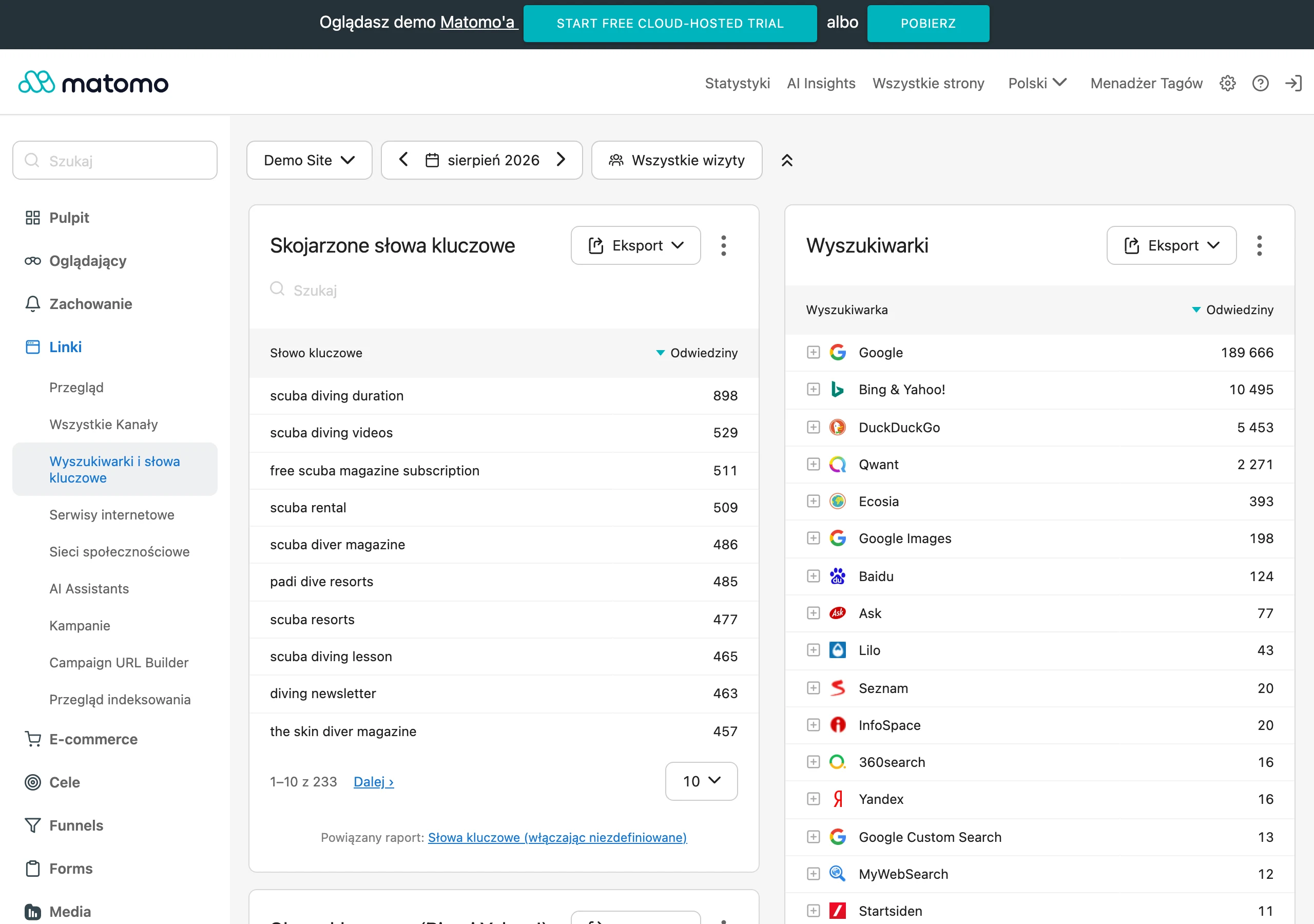
It is extremely important to adapt keywords to the needs of the target audience. For transport businesses, this means taking into account both broad industry phrases and precise queries related to specific services or regions. For example, a company specialising in refrigerated transport should focus on terms such as “food transport” or “frozen goods transport”.
Optimisation also includes the natural integration of keywords into the website content. The key is to place them in titles (H1 tags), headings (H2, H3), meta descriptions and article text. However, you should avoid so-called keyword stuffing, that is, excessive saturation of the text with keywords, as this may result in penalties from Google’s algorithms.
It is worth paying attention to long-tail keywords. Although they are less competitive, they often generate higher conversion rates. Examples of such phrases include “cheap furniture transport Warszawa” or “express parcel transport to England”. Research indicates that as much as 70% of organic traffic comes from long-tail phrases.
Regular analysis of the effectiveness of selected keywords is equally important. Analytics tools allow you to monitor your site’s positions in search results and adapt the strategy to changing trends and user needs. This enables transport companies to maintain high online visibility and compete effectively in the logistics and transport services market.
How does keyword analysis affect SEO effectiveness?
Keyword analysis is the foundation of effective SEO, enabling you to understand which phrases users enter into search engines. This makes it possible to better align the content on the site with their expectations, which translates into higher positions in search results. In the case of transport companies, well-chosen terms such as “international transport” or “logistics services” attract customers looking for specific solutions.
It is also worth paying attention to long tail keywords – more specific queries such as “furniture transport to Germany” or “cheap parcel transport”. Such phrases can significantly increase conversions, especially since as much as 70% of organic traffic comes precisely from long-tail keywords. Keyword analysis also helps avoid common mistakes such as excessive text saturation with phrases (keyword stuffing), which can result in penalties from Google’s algorithms.
Regular keyword analysis and optimisation makes it possible to adapt the SEO strategy to changing trends and user needs. This is particularly important in the dynamic transport industry, where competition is strong and most customers look for services online.
Keyword strategy for transport companies
Creating an effective keyword strategy for transport companies requires, above all, a thorough understanding of customer needs and the specifics of the market. It is worth aiming for variety – using both broad phrases such as “international transport” or “logistics services”, as well as more precise queries, e.g. “furniture transport to Germany” or “cheap parcel transport”. This allows you to reach a wide audience – from people looking for basic information to those who need specific solutions.
A key element is also creating dedicated landing pages tailored to different locations. For example, a company operating in Warsaw can prepare a subpage with phrases such as “transport Warsaw” or “transport services in Warsaw”. This approach not only increases visibility in search results for a given region, but also better meets the needs of local customers.
To identify valuable keywords, it is worth using tools such as Google Keyword Planner, SEMrush or Ahrefs. They make it possible not only to find popular phrases, but also to assess their competitiveness and conversion potential. It is particularly worth paying attention to long-tail keywords, which, although they generate less traffic, often have a higher conversion rate. Examples include “express parcel transport to England” or “transport of chilled food”.
Keyword optimisation involves naturally incorporating them into the content of the website – both in titles (H1), headings (H2, H3), meta descriptions and article copy. However, you should avoid excessive text saturation with phrases (keyword stuffing), as this can result in penalties from Google’s algorithms.
Regular analysis of the performance of selected keywords makes it possible to adjust the strategy to changing trends and user expectations. This allows transport companies to maintain a high position in search results and compete effectively in the market for logistics and transport services.
Website optimisation for transport companies
Website optimisation for transport companies is a key element of an effective SEO strategy, affecting both visibility in search results and the user experience. In an industry where competition is huge, the website must not only look good, but also be technically well prepared.
The first step is responsiveness, meaning adapting the website to different devices – computers, tablets and smartphones. More than 60% of users browse the internet using mobile devices, so smooth performance across all platforms is an absolute necessity. Research shows that sites not optimised for mobile can lose up to half of potential customers.
Another important aspect is loading speed. In the transport industry, time plays a key role – both for customers and Google’s algorithms. If a page takes longer than 3 seconds to load, it can lose up to 40% of visitors. To prevent this, it is worth optimising images, using caching and minifying code.
URL structure also matters in the context of SEO. They should be short, clear and contain keywords that reflect the content of the page. For example, the address “www.firmatransportowa.pl/transport-miedzynarodowy” is much more search-engine-friendly than a long and complicated string of characters.
It is also worth ensuring correct heading tags (H1, H2 etc.) and the use of schema.org markup. These elements help search engine bots better understand the structure of the content and the context of the services offered. For transport companies, markup related to location and the type of services provided is particularly important.
Technical optimisation also includes removing indexing errors, such as incorrect redirects or missing metadata. Regular SEO audits make it possible to detect these problems and improve site performance.
We should not forget about user experience (UX) – intuitive navigation and ease of finding the information needed affect time spent on the site and the conversion rate. Adding features such as a transport cost calculator or an enquiry form can significantly increase visitor engagement.
Website optimisation for transport companies is a process that requires taking into account both technical and content-related aspects. As a result, businesses can increase their online visibility and effectively compete in the logistics and transport services market.
Why are responsiveness and loading speed important?
Responsiveness and page loading speed are key elements that affect both user experience and position in search results. In the transport industry, where competition is huge, these factors have a direct impact on conversions and customer satisfaction.
Responsiveness means that the website works properly on different devices – from computers to tablets and smartphones. More than 60% of users browse the internet using mobile devices, so the site must be adapted to smaller screens. Research shows that sites not optimised for mobile devices lose as many as half of their potential customers. For transport companies, this is particularly important because customers often look for services on the move or in a hurry.
Loading speed is another important aspect. If a page takes longer than 3 seconds to load, it can lose up to 40% of visitors. In the case of transport companies, time matters enormously – both for customers and Google algorithms. Search engine algorithms take loading speed into account when assessing a site’s quality. Interestingly, reducing loading time by just one second can increase conversions by 7%.
Technical optimisation also includes the URL structure. These should be short and contain keywords that reflect the content of the page. For example, the address “www.firmatransportowa.pl/transport-miedzynarodowy” is more SEO-friendly than a long string of characters.
It is also worth ensuring correct heading tags (H1, H2 etc.) and using schema.org tags. These elements help search engine bots better understand the content structure and the context of the services offered. For transport companies, tags related to location and the type of services provided are particularly important.
Responsiveness and loading speed are the foundations of an effective SEO strategy for transport companies. Improving these parameters not only increases site visibility in search results, but also affects customer satisfaction and conversion growth.
How to improve UX and UI on transport websites?
In the transport industry, where competition is huge, improving user experience (UX) and interface (UI) can significantly affect customer satisfaction and increase conversion rates. Intuitive navigation and attractive design often decide whether a user chooses your service.
A key point is understanding customer needs. It is worth analysing what information is searched for most often – in the case of transport companies, this is usually prices, delivery time and the availability of different transport options. Placing this data in easily accessible locations not only shortens the time needed to find it, but also improves the comfort of using the site.
We cannot forget about contact forms, which should be as simple as possible. A few basic fields are enough: first name, last name, email address and a short description of the enquiry. Adding autocomplete or data validation makes forms more user-friendly.
Nowadays, site responsiveness is an absolute necessity. More than half of internet traffic comes from mobile devices, so the website must work flawlessly on smartphones and tablets. Research indicates that sites not optimised for mobile devices can lose as many as 50% of potential customers.
Another important element is loading speed. In the transport industry, every second matters – both for customers and Google search algorithms. If a page takes longer than 3 seconds to load, you risk losing up to 40% of visitors. Image optimisation, use of cache and code minification are effective ways to speed up a website.
Intuitive navigation also plays a huge role in building positive user experiences. The menu should be clear and allow quick movement between sections. Additional features, such as a transport cost calculator or an interactive map showing the company’s location, can significantly increase visitor engagement.
The last important aspect is aesthetic design. The colour scheme should be consistent with the company’s branding, and the page layout should be clear and pleasing to the eye. It is also worth investing in high-quality photos and graphics that will attract users’ attention and strengthen a professional brand image.
Improving UX and UI on transport websites requires combining technical solutions with a content-led approach to customer needs. This allows companies not only to increase their online visibility, but also to compete effectively in the logistics and transport services market.
Optimising URLs and page content
Optimising URLs and page content is the foundation of an effective SEO strategy for transport companies. Addresses should be concise, clear and contain keywords related to the page topic. For example, an address such as “www.firmatransportowa.pl/transport-miedzynarodowy” is much better received by search engines than long, complicated strings of characters. This helps Google bots recognise the website topic more quickly, which can translate into higher positions in search results.
The quality of the content on the site is equally important. Texts must be valuable to users and include relevant keywords, but without going overboard – excessive use of them (so-called keyword stuffing) can result in penalties from Google’s algorithms. Instead, it is worth naturally weaving keywords into headings (H1, H2), meta descriptions and the main body of articles.
Text structure also matters. Breaking content into paragraphs, using bullet lists and highlighting key information improve readability and increase visitor engagement. For transport companies, it is particularly important to publish valuable materials, such as guides on logistics or case studies of completed transport projects. Such content not only attracts organic traffic, but also builds domain authority and trust in the brand.
Optimising URLs and content is a process that requires regular updates and adaptation to changing search engine algorithms. Thanks to these actions, transport companies can increase their online visibility and effectively compete in the logistics and transport services market.
Local SEO for logistics and transport companies
Local SEO plays a key role in the SEO strategy of logistics and transport companies. It enables businesses to increase their visibility in search results for specific regions, which is extremely important in a highly competitive industry. It is precisely local SEO that allows companies to effectively reach customers looking for transport services in specific areas.
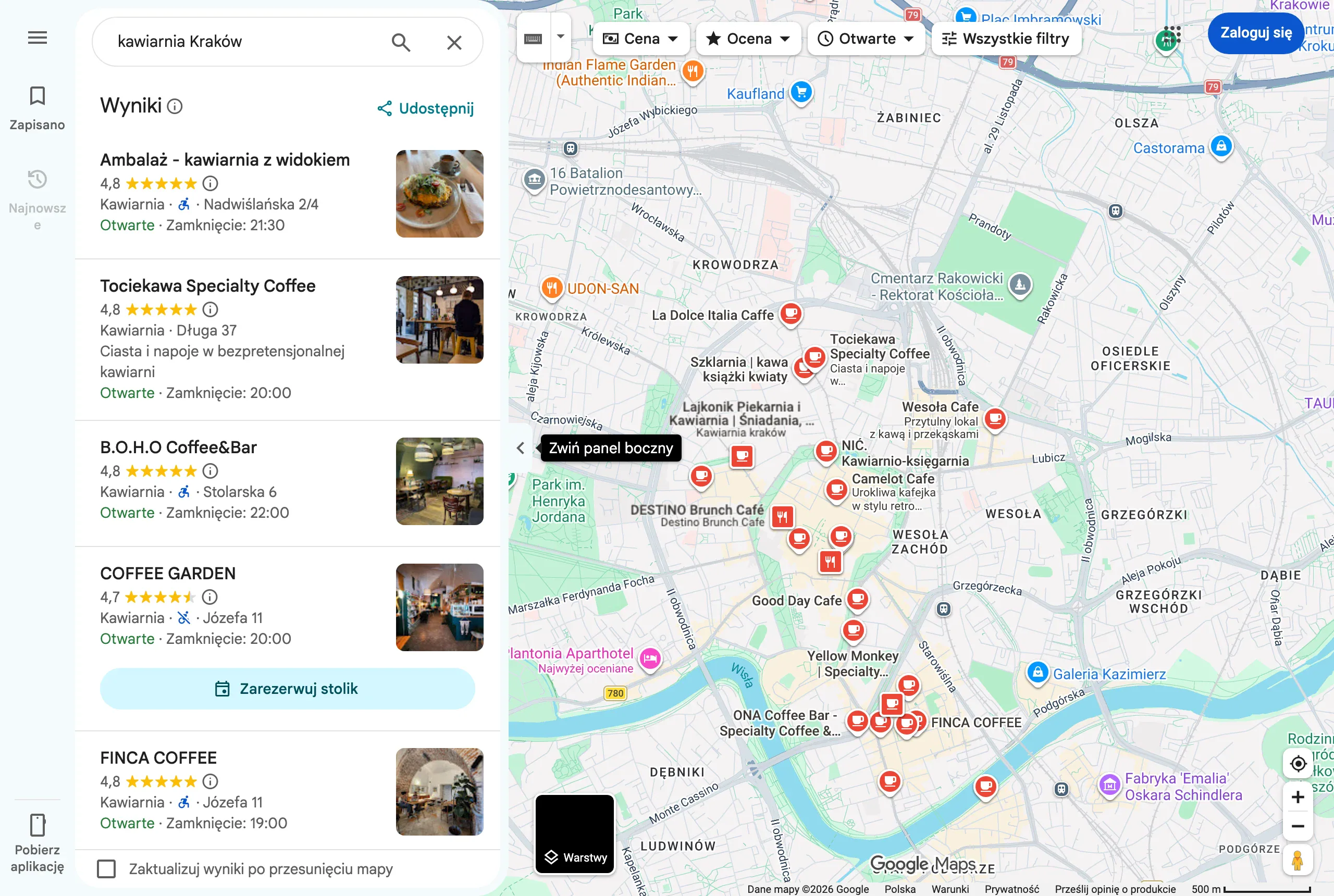
The basis for success is registering in Google My Business. This tool allows companies to appear both on Google Maps and in local search results. It is crucial to ensure the profile is complete – it is worth adding photos, regularly updating information about the offer and ensuring data consistency. Such actions not only build customer trust, but also influence a better position in results.
You cannot forget about NAP data consistency (name, address, phone). This information must be identical on the website, in the Google My Business profile and in other online directories. Inconsistencies can confuse both users and Google algorithms, which can have a negative impact on the company’s position.
For businesses operating across Poland, it is worth considering creating dedicated landing pages optimised for the largest cities. Phrases such as “transport Warszawa” or “usługi logistyczne Kraków” attract customers looking for services in specific locations. This approach not only increases website visibility, but also better matches the needs of potential customers.
Local SEO is also an excellent tool for building brand trust. Companies appearing in local results are more often perceived as professional and trustworthy. In addition, positive customer reviews posted in Google My Business have a real impact on other users’ purchasing decisions.
It is also worth using local keywords both on the website and in blog content or industry articles. Phrases such as “przewóz mebli Poznań” or “transport międzynarodowy Gdańsk” can significantly increase organic traffic and attract a more targeted audience.
Local SEO is not only a way to increase visibility online – it is also a tool for building lasting relationships with customers and competing effectively in the logistics and transport services market.
How does Google My Business increase local visibility?
Google My Business is a powerful tool that can significantly increase the local visibility of transport and logistics companies. It gives businesses the ability to manage their details in Google Search and on maps, which translates into greater exposure among customers from a given region. Registering with this tool makes it possible to appear both in local search results and on Google Maps, which is particularly important for companies operating in a specific area.
The benefits of using Google My Business are truly impressive. You can add detailed company information there, such as the address, opening hours or the range of services offered. The consistency of NAP (name, address, phone) data not only builds customer trust, but also has a positive effect on Google’s algorithms. Regularly updating the profile, adding photos and service descriptions attracts the attention of potential customers and helps the company stand out from the competition.
One of the most important aspects is the ability to collect customer reviews. Positive reviews not only strengthen brand reputation, but also contribute to a higher position in search results. Research shows that users are more likely to choose companies with better ratings, which makes this element extremely important for business success.
For transport companies, it is also crucial to use local keywords appropriately in the profile description. Phrases such as “transport Warszawa” or “usługi logistyczne Kraków” help reach people looking for services in a specific region. This is an effective way to increase competitiveness in the local market and generate more quote enquiries.
It is worth emphasising that Google My Business is not only a tool for managing company information – it is also an effective way to improve local visibility and build lasting brand trust among customers.
The importance of NAP data consistency in Google Business Profiles
NAP data consistency (name, address, phone) in Google Business Profiles is hugely important for the credibility of transport companies. Consistent information across different platforms – whether on the website, in Google My Business, or in industry directories – directly affects rankings in local search results. Google’s algorithms prefer businesses whose details are consistent and easy to verify.
Inconsistent data can lead to misunderstandings for both customers and crawlers. For example, if the phone number listed on the website differs from the one in Google My Business, customers may have difficulty getting in touch. What is more, such errors can result in a drop in the company’s rankings. Research indicates that as many as 80% of users lose trust in companies with outdated or incorrect details.
For transport businesses, it is crucial to update NAP information regularly across all sources. It is also worth systematically checking profiles on industry platforms and online directories to ensure they match. This allows companies to increase their local visibility and attract more customers looking for transport services in a given region.
NAP data consistency also helps build trust in the brand. Companies with complete and consistent information are perceived as more professional and more trustworthy. This is particularly important in the transport industry, where competition is strong and customers often base their decisions on reviews and available online data.
Taking care of NAP data consistency is not just a technical matter – it is also an important element of a strategy for building brand reputation and increasing competitiveness in the logistics and transport services market.
How does local SEO help reach customers in a specific area?
Local SEO is an extremely important tool for transport companies that want to reach audiences in specific regions. By optimising content and marketing strategies for local keywords, businesses can significantly improve their positions in search results. In the transport industry, where customers often look for services near them, this is particularly important.
One of the most effective ways to support local SEO is Google My Business. Registering a company in this service means it appears both on Google Maps and in local search results. To make the most of this potential, it is worth making sure the profile is complete – adding attractive photos, regularly updating offer information and ensuring data consistency. Such actions not only build customer trust, but also improve the company’s position in results.
It is also key for transport companies to use local keywords. Phrases such as “transport Warszawa” or “usługi logistyczne Kraków” attract customers looking for solutions in a specific area. Creating dedicated landing pages optimised for major cities not only increases website visibility, but also better meets the needs of local audiences.
You cannot forget about NAP data consistency (name, address, phone). This information must be identical on the website, the Google My Business profile and other online directories. Inconsistencies can cause confusion for both users and Google’s algorithms, which can negatively affect the company’s position.
Local SEO is also an excellent tool for building brand trust. Companies appearing in local results are more often perceived as professional and trustworthy. In addition, positive customer reviews posted in Google My Business have a real impact on other users’ purchasing decisions.
It is also worth regularly publishing content related to local events or special offers for a given region. This not only attracts the attention of potential customers, but also strengthens the company’s position as an expert in its field.
Thanks to local SEO, transport companies can compete effectively in the logistics and transport services market. They increase their online visibility and build lasting relationships with customers.
Link building and competitor analysis
Link building and competitor analysis are key elements of an effective SEO strategy for transport companies. External links, especially those from reputable sources, have a significant impact on domain authority and the site’s position in search results. However, in order to shape a link profile effectively, it is essential to take a close look at what the competition is doing.
Competitor analysis makes it possible to uncover the backlink sources used by other transport companies. This makes it possible to identify potential industry partnerships, such as:
- logistics portals,
- company directories,
- specialist blogs.
Tools such as Ahrefs or SEMrush make it easier to monitor competitors’ link profiles, which helps in choosing the optimal strategies.
It is also worth paying attention to the types of content that attract natural links. If the competition publishes detailed guides on international transport or case studies of completed projects, it is worth considering creating similar materials. Such content not only attracts the audience’s attention, but also encourages other websites to share it.
Another important aspect is analysing the linking techniques used by market leaders. This may include:
- working with industry influencers,
- taking part in competitions and promotional campaigns.
This makes it possible to adapt your own strategy to best practice and avoid the mistakes made by other players.
Building a link profile also requires attention to the quality of content on the website. Valuable industry articles, guides or infographics are more often shared and linked to by users. That is why it is worth investing in creating unique educational or informational materials related to transport services.
Competitor analysis is therefore an essential element of effective link profile building for transport companies. It not only makes it possible to uncover valuable backlink sources, but also to adapt the strategy to current trends and market needs. This enables businesses to increase their online visibility and compete effectively in the logistics and transport services market.
Techniques for acquiring valuable external links
Building domain authority and improving the visibility of a site in search results require effective strategies for acquiring valuable external links. One of the most effective ways is publishing guest articles on reputable industry portals. Such cooperation not only brings valuable links, but also allows you to reach a new audience, increasing the brand’s reach. Another technique is building relationships with influencers who, by sharing content on their platforms, can provide links from trustworthy sources.
It is also worth focusing on the natural growth of incoming links by creating high-quality materials that others are happy to share. These may be practical guides, inspiring case studies or clear infographics related to the transport industry. Active participation in industry life, for example through attending conferences or publishing expert articles, can also result in links from recognised portals.
Do not forget to analyse competitors’ activities – tools such as Ahrefs or SEMrush help uncover the sources of their backlinks. This is an excellent source of inspiration for building similar collaborations and expanding your network of links. It is also worth considering a presence in industry company directories and regularly informing the media about company news or successes through press releases.
However, remember that link quality is key – a few valuable links matter more than many weak ones, which can harm the site’s position in search results.
How do internal and external linking affect domain authority?
Internal and external linking plays a key role in building domain authority, which directly affects the site’s position in search results. Internal links, which direct users to other subpages of the same website, not only make navigation easier, but also help search engine crawlers better understand the site structure. Thanks to them, Google’s algorithms define the content hierarchy more precisely, which translates into greater visibility for the website.
By contrast, external links – that is, links leading to your site from other sources – are one of the most important factors affecting ranking. Backlinks from reputable sites signal to Google that your website is trustworthy and offers valuable content. In the transport industry, it is particularly worth acquiring such links from industry portals, company directories or expert blogs. According to research, sites with a greater number of high-quality external links achieve, on average, 50% better positions in search results.
It is also extremely important to maintain a natural link profile – both internal and external. An excessive focus on one type may be considered by Google’s algorithms as an attempt at manipulation. That is why it is so important to maintain a balance between both types and to regularly monitor their quality and quantity using tools such as Ahrefs or SEMrush.
Creating valuable content in the transport industry
Creating valuable content in the transport industry is the key to an effective SEO strategy that affects both a site’s visibility in search results and user engagement. This is not only about basic information, such as service descriptions or price lists, but also educational materials, guides and articles that address the needs of potential customers. Thanks to these, companies can build trust in the brand and attract new audiences.
The first step is to publish detailed service descriptions that clearly present the offer. Customers should be able to find information about types of transport (e.g. international, refrigerated), available carriage options and terms of cooperation. Adding a price list or a cost calculator increases the transparency of the offer and makes it easier for customers to make a decision.
Another important element is industry articles and guides that answer users’ questions. For example, content such as “How do you prepare a shipment for international transport?” or “What is the difference between refrigerated transport and standard transport?” not only attracts organic traffic, but also positions the company as an expert in its field. Research shows that sites with regularly updated blogs have as much as 55% more visitors.
It is also worth investing in case studies – descriptions of completed transport projects that show the company’s competence and build trust among potential clients. Such content can be shared by users or linked to by other sites, which further strengthens the domain’s authority.
For companies operating locally, tailored content for specific regions is important. Articles such as “Furniture transport in Warsaw” or “Logistics services for small businesses in Kraków” attract customers looking for solutions in a given area. Local keywords increase a site’s visibility in search results for specific locations.
We must not forget industry news – information about changes in transport regulations or new logistics technologies. This type of content not only attracts users’ attention, but also positions the company as a source of reliable information.
Valuable content should also be optimised for SEO – include relevant keywords (e.g. “international transport”, “logistics services”) and be easy to read thanks to paragraph breaks and the use of headings (H1, H2). Additionally, it is worth taking care of multimedia – photos of the fleet or videos presenting the service delivery process increase the site’s appeal and the time users spend on the site.
Creating valuable content is a process that requires consistency and adaptation to the needs of the audience. Thanks to this, transport companies can not only improve their online visibility, but also compete effectively in the logistics and transport services market.
How does content marketing increase traffic to a website?
Content marketing plays a key role in attracting more visitors to a website, especially in the transport sector. Creating valuable and engaging materials not only attracts new users, but also increases visibility in search results. With well-optimised content, companies can generate organic traffic while building trust in their brand.
One of the most effective ways to increase traffic is to publish industry articles, guides or case studies. For example, materials such as “How do you prepare a shipment for international transport?” or “What is the difference between refrigerated transport and standard transport?” address real customer needs, positioning the company as an expert in the field. Research indicates that sites that regularly update their blog can expect as much as 55% more visitors.
It is also worth focusing on a variety of formats – videos, infographics or webinars can prove just as effective. For transport companies, materials presenting the service delivery process or practical logistics tips are particularly valuable. This type of content not only attracts attention, but also encourages sharing on social media, which further increases reach.
SEO optimisation is another key element of a content marketing strategy. Using the right keywords (e.g. “international transport”, “logistics services”) and paying attention to the structure of the text (H1, H2 headings) help search engine robots better understand the subject matter of the site and improve its position in the results.
For companies operating locally, content tailored to specific regions is important. Articles such as “Furniture transport in Warsaw” or “Logistics services for small businesses in Kraków” attract customers looking for solutions in a given geographical area. Local keywords significantly increase a site’s visibility for specific locations.
Regular interaction with users – by replying to comments or encouraging content sharing – also helps to increase traffic to the site. This kind of activity helps build lasting relationships with customers and increase visitor engagement.
Content marketing is a powerful tool that helps increase traffic by delivering valuable and engaging materials and optimising them for SEO. This enables transport companies to improve their online visibility effectively and compete in the logistics and transport services market.
The importance of high-quality content for search rankings
High-quality content is essential if a website is to compete effectively in search results. Google’s algorithms increasingly reward unique, valuable and properly optimised materials that genuinely meet users’ needs. For transport companies, publishing such articles regularly is not only an opportunity to acquire new customers, but also a way to build trust in the brand and increase domain authority.
The key is creating content that is practical and useful for the audience. In the transport industry, these can include:
- guides on efficient logistics,
- articles comparing different types of transport,
- case studies of completed projects.
Such materials not only attract organic traffic, but also encourage others to share and link to them, which further strengthens the site’s position in search results.
You should not forget about SEO optimisation. Using the right keywords (e.g. “international transport”, “logistics services”) and maintaining a clear text structure (H1, H2 headings) helps search engine robots understand the page’s subject matter better. However, it is important to avoid excessive keyword stuffing, which can lead to penalties from Google’s algorithms.
Particular attention should be paid to local keywords, which are extremely important for companies operating in a specific area. For example, articles such as “Furniture transport in Warsaw” or “Logistics services for small businesses in Kraków” attract customers looking for solutions in a given region.
Regularly updating content is another important element of an SEO strategy. Research shows that sites publishing new materials regularly can see as much as 55% more visitors than those that do not update their resources.
Measuring the effectiveness of SEO activities
Measuring the effectiveness of SEO activities is a key element of a positioning strategy, especially in the dynamic transport industry. Strong competition means that online visibility has a direct impact on the number of customers acquired. Regular data analysis makes it possible to adapt activities to changing search engine algorithms and user expectations. This enables companies to monitor progress and optimise strategies in order to achieve ever better results.
Analytical tools such as Google Analytics and Google Search Console are used to assess SEO effectiveness. They make it possible to track key metrics: organic traffic, conversion rate and the site’s rankings in search results. For example, a 20% increase in organic traffic over a quarter can be a clear sign that the techniques used are effective.
Keyword analysis is a key aspect. Tracking their positions and the traffic they generate helps identify the phrases delivering the best results. For transport companies, long-tail queries such as “international transport to Germany” or “logistics services for small businesses” are particularly valuable. Research indicates that as much as 70% of organic traffic comes from this type of query.
Equally important is assessing the quality of incoming and outgoing links. Tools such as Ahrefs and SEMrush make it possible to analyse the site’s link profile and identify valuable backlink sources. A high domain authority (DA) translates into better positions in search results, which is extremely important in the competitive transport industry.
The role of user experience (UX) cannot be overlooked. Metrics such as time spent on site or bounce rate provide valuable information about how attractive the website is to visitors. For transport companies, page load speed is particularly important – even a one-second delay can reduce conversions by as much as 7%.
Regular reporting of results makes it possible to adjust the SEO strategy on an ongoing basis to current trends and market needs. This helps transport companies maintain high online visibility and compete effectively in the logistics and transport services market.
Why is regular monitoring of results crucial?
Regular tracking of SEO results is essential, especially in such a dynamic field as transport. Data analysis enables companies to assess whether their strategy is delivering the expected results, identify areas that need improvement and adapt activities to changing search engine algorithms and user preferences.
Tools such as Google Analytics or Google Search Console make it possible to monitor key metrics such as organic traffic, conversion rate or the site’s positions in search results. For example, an increase in visits from organic results by 20% over three months can be evidence of the effectiveness of the optimisations implemented.
It is also extremely important to track keywords. Analysing their positions and the traffic they generate helps identify the phrases that deliver the best results. In the transport industry, long-tail queries, such as “przewóz towarów do Holandii” or “logistyka dla startupów”, prove particularly valuable. Interestingly, research shows that as much as 70% of organic traffic comes from this type of query.
Another key aspect is assessing the quality of links leading to the site and those leaving it. With tools such as Ahrefs or SEMrush, you can analyse the website’s link profile and identify valuable backlink sources. A high domain authority (DA) translates into better positions in search results, which is hugely important in such a competitive industry as transport.
User experience (UX) should not be overlooked. Metrics such as time spent on the site or bounce rate provide valuable insights into how appealing the website is to visitors. For transport companies, page speed is particularly important – even a one-second delay can reduce conversions by as much as 7%.
Systematic reporting of results makes it possible to adjust the SEO strategy on an ongoing basis to current trends and market demands. As a result, businesses in the transport industry can maintain high online visibility and compete effectively in the logistics and transport services market.
How to adjust the strategy based on data analysis?
Adjusting the SEO strategy based on data analysis is a necessary element for transport companies that want to remain competitive in the fast-changing online world. Regularly tracking the results of SEO helps determine which actions are delivering results and which require modification. This, in turn, leads to more informed business decisions.
Organic traffic analysis is the key starting point. It is worth using tools such as Google Analytics or Google Search Console for this purpose, as they provide detailed information on the number of visits, conversion rates and the site’s positions in search results. For example, a 20% increase in organic traffic over three months can be a clear sign of the effectiveness of the changes introduced.
Another important aspect is monitoring keyword positions. Analysing the phrases that generate the most traffic makes it possible to better tailor content to users’ expectations. In the transport sector, long-tail queries, such as “transport międzynarodowy do Niemiec” or “usługi logistyczne dla małych firm”, are particularly valuable. Interestingly, research indicates that as much as 70% of organic traffic comes precisely from this type of query.
No less important is the quality of links – both incoming and outgoing. Tools such as Ahrefs or SEMrush make it possible to carry out a detailed analysis of the site’s link profile and identify valuable backlink sources. A high domain authority (DA) translates into better positions in search results, which is hugely important in such a competitive industry as transport.
User experience (UX) also plays a key role. Metrics such as time spent on the site or bounce rate provide valuable information about how appealing the website is. For transport companies, page speed is particularly important – even a one-second delay can reduce conversions by as much as 7%.
Regular reporting of results makes it possible to adjust the SEO strategy on an ongoing basis to current trends and market needs. This allows transport companies to maintain high online visibility and compete effectively in the dynamic logistics and transport industry.
FAQ
Frequently asked questions
How does SEO help transport companies win more customers?
Good positions in search results increase the number of quote enquiries and speed up the company’s growth. SEO also lowers customer acquisition costs over the longer term.
Is local SEO important for logistics and haulage companies?
Yes, especially for companies operating in a specific area or offering local deliveries. Google My Business and consistent NAP data: name, address and phone number help with this.
What elements should an SEO audit in the transport industry include?
The audit should check technical and content-related issues as well as the site’s visibility in search. Important factors include technical errors, missing metadata, page titles, loading speed and the link profile.
Why does page loading speed matter in SEO for transport?
Even a one-second delay can reduce conversions by 7%. A faster site also improves user experience and makes it easier to achieve better search results.
Which keywords are worth choosing for a transport company?
The best ones are those that match customer needs and include both general transport-related keywords and specific services or regions. The article gives “transport międzynarodowy” (international transport) and “usługi logistyczne” (logistics services) as examples.
Is it worth publishing content on a transport company website regularly?
Yes, valuable content improves visibility in search results and attracts new users. Industry articles, guides and case studies also build trust in the brand.