

SEO can be a effective source of sales enquiries, but only on condition that it responds to real user needs rather than being focused solely on pumping traffic. In practice, the site that wins is not the one with the highest number of visits, but the one that accurately reads intent and efficiently leads to contact. It is worth looking at this from a business perspective: which queries attract the right people, which subpages they land on, and what they do next. The most important thing is that a valuable lead from SEO appears only when the keyword, page content, offer and contact method are aligned. Visibility in Google alone does not solve the issue. You still need a well-thought-out site architecture, clear CTAs and measurement of enquiry quality.
What is a sales lead and how do you define it in the context of SEO?
A sales lead in the context of SEO is contact from a user coming from organic search results that has a real chance of turning into a sales conversation or a purchase. So it is not about every visit or every form submission. What matters is a signal that matches the company’s needs and concerns a service, product or problem that you actually handle. A good definition of a lead starts not with SEO tools, but with determining which query has value for the business.
In practice, a lead may be a form submission, a phone call, an e-mail message, a request for a quote, a consultation booking or arranging a demo. Everything depends on the sales model, the length of the decision-making process and the way customers usually initiate contact. For one business, a contact form will be valuable, while for another it will only be an enquiry with a specific budget or a clearly defined scope of work.
In SEO, a lead should be defined together with the intent behind the entered keyword. Someone searching “agencja SEO Warszawa cennik” is usually closer to a decision than someone typing “co to jest SEO”. That does not mean educational content is pointless, only that it serves a different function: it supports the decision, builds trust and directs users to service pages. The most valuable leads usually come from service, local, comparison and problem-based keywords with a clear need to act.
The definition of a lead should also take quality into account, not just the number of contacts. If the site generates plenty of forms from random people, outside the service area or without a fit with the offer, it is hard to regard that as an effective SEO result. That is why it is a good idea to establish at the outset which characteristics distinguish a good lead from a weak one: location, type of service, decision stage, project size or readiness to talk.
From a practical point of view, it is worth separating primary and secondary conversions. Primary ones are those that directly support sales, such as a phone call or a quote request. Secondary ones cover indirect actions, such as clicking an e-mail address, going to the contact tab or downloading an offer. This division later makes it easier to assess whether SEO is delivering real sales opportunities or merely user activity of limited value.
What are the key elements of a strategy for generating valuable leads from SEO?
The basis of this strategy is visibility for the right queries, content aligned with user intent and a page refined for conversion. If even one of these three pillars is missing, the results are usually disappointing. You can achieve high rankings and still have no leads. You can also have a good offer, but without traffic from the right keywords nobody will find it.
The first step is deciding which services and types of queries take priority. In practice, this comes down to mapping keywords to decision stages: problem, solution, comparison, offer, location, price, contact. Such a map quickly shows which subpages you need and which are still missing. The most common mistake is targeting broad informational keywords without preparing pages that capture purchase intent.
The second area is site architecture geared towards lead generation. A user from Google should land on a subpage that precisely answers their question and immediately suggests the next step. Most often these will be service pages, local subpages, problem-solution content, FAQs and decision-supporting materials. A blog alone is not enough if it does not lead sensibly to the offer.
The third element is content. Material written for leads not only explains the topic, but also organises key information: scope of service, who the offer is for, what the cooperation looks like, which area you operate in and how to get in touch. The user should not have to wonder whether the company handles their case. The fewer ambiguities on the page, the greater the chance that SEO traffic will turn into an enquiry.
The fourth element is on-page conversion, namely CTAs, forms and ease of contact. When the form is too long, the contact button is hidden and the phone number only appears at the bottom of the page, some valuable traffic drops off along the way. A short form, a clear message on the button and contact available at moments of high intent work best. This is particularly important on mobile devices, where the user often wants to call straight away.
- choosing keywords with sales intent instead of focusing solely on search volume,
- preparing service and local pages for specific user needs,
- combining educational content with the offer through internal linking and clear CTAs,
- simplifying the contact path and reducing the number of fields in the form,
- implementing analytics for forms, phone calls, e-mails and other conversions,
- regularly assessing which keywords and landing pages generate real sales conversations.
The fifth element includes technical SEO and site accessibility. If key subpages are not properly indexed, the site is slow, or the mobile version makes contact difficult, leads will slip away before the form. Technology on its own does not create demand, but it removes obstacles that can lower the result of the whole process.
The sixth element is measurement and evaluation of enquiry quality. It is worth knowing not only how many conversions came from SEO, but also which pages they came from, which phrases users arrived on and whether those leads had real value for the salesperson. Without linking SEO data with information about lead quality, it is easy to improve traffic that looks great in the report, but does not translate into sales. Only on that basis is it possible to sensibly develop content, strengthen specific landing pages and cut off activities that do not deliver a business result.
What steps should be taken to effectively generate leads from organic results?
To effectively generate leads from organic results, you first need to establish which conversion actually has business value, and then align phrases, content, pages and measurement with that. For one company, a lead will be a quote request form, for another a phone call, a demo booking or a request for contact. Without that precision, it is easy to inflate the figures with traffic that looks good in the report, but does not contribute to sales.
The next stage is search intent analysis and separating sales phrases from purely informational ones. The greatest value is usually delivered by quote enquiries, local, comparative and problem-based terms, especially those appearing close to the decision moment. If a phrase does not suggest a real need to act, it often brings visits but does not translate into sales conversations.
Then it is worth checking whether the current site can even capture that intent. In practice, you analyse which subpages are already drawing traffic from Google, which ones lead to contact, and at what point the user drops out. A common problem is the lack of separate pages for specific services, locations or decision stages.
Next, you build the site’s lead architecture. The aim is to organise service pages, local subpages, FAQ sections and content supporting the decision so that the user has a coherent path from searching for the problem to making contact. A blog or guide should not break that path, but instead direct the user to the offer page or form.
Content should be prepared around the user’s real questions, not solely around keywords. A good lead-generating page clearly shows the scope of the service, who the offer is for, what the cooperation looks like, where the company operates and what needs to be done to start contact. It is also important to match the message to the decision stage, because someone looking for a provider expects specifics, not a general introduction.
At the same time, you need to take care of on-site SEO and technical issues. If key subpages are poorly linked, load too slowly, work unreliably on mobile or have indexing problems, traffic will not reach where it should. In more extensive sites, canonisation, the quality of internal linking and limiting unnecessary pages competing for the same intent are also important.
At the end, it is worth implementing measurement and cyclical assessment of lead quality. Simply counting submitted forms does not give the full picture if you do not know which subpages and queries they came from, and whether they ultimately lead to a conversation with the right customer. The most accurate optimisation decisions are made when analytics data is combined with sales feedback on the quality of enquiries.
What are the most important aspects of optimising pages for conversion?
The key elements of conversion optimisation are matching content to intent, easy contact, clear CTAs and removing obstacles that delay the decision. A person entering from Google should immediately see that they are in the right place. When they have to guess whether the company really offers what they are looking for, the conversion rate usually drops.
Most depends on the quality of the service landing page. Such a page should not be merely a set of generalities, but a concrete response to the query the user came with from the search engine. The best-performing subpages are those that quickly organise: the scope of the service, the terms of cooperation and the next step.
- a clear description of the service and who it is intended for,
- the area of operation or location, if relevant,
- a description of the course of cooperation or implementation,
- answers to the most common concerns before making contact,
- a clearly visible form, phone number or other contact method.
The form should collect only the information necessary for initial contact. Too many fields, required attachments or an unclear message on the button often reduce the number of enquiries. In many industries, a simple form works better, with further details clarified only after the first conversation.
The CTA must match the decision stage. On the offer page, the user is usually looking for a quote, a consultation or a conversation, not encouragement in the style of “find out more”. The closer the search intent is to a purchase, the more specific the next step on the page should be.
Trust-building elements also matter, provided they support the decision rather than obscuring the offer. The user wants to quickly reach information about experience, areas of operation, working method, the person responsible for contact, or the most common questions. In practice, the functionality of these sections matters more than their size.
Conversion optimisation does not end on the landing page itself. It is worth checking whether informational content sensibly directs users to offers, whether contact is convenient on mobile, and whether key elements are visible without unnecessary scrolling. In organic traffic, it is very often not the weak offer that loses, but the path to contact that is too long and not clear enough.
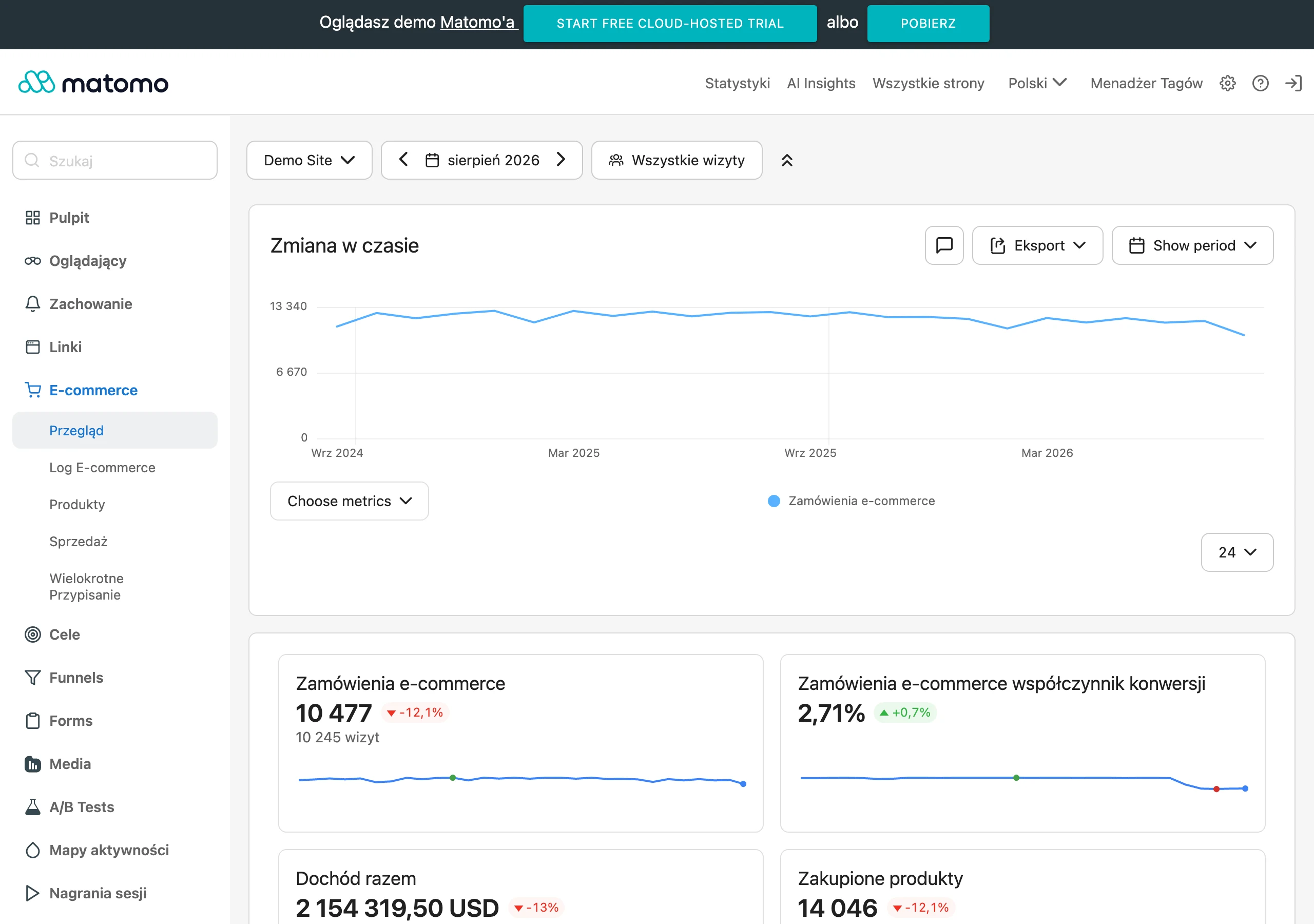
At the final stage, it is worth measuring performance at the level of specific subpages, devices and query types. If a given subpage generates traffic but does not convert it into leads, it is worth taking a close look at four areas: whether it matches the right intent, whether the offer is clear, whether the CTA gets lost on the page, and whether the form requires too much. Only such verification shows what is genuinely worth improving.
What mistakes should be avoided when generating leads from SEO?
The most common mistake is optimising SEO for traffic itself, rather than for leads. A jump in visits brings little value if users land on a page without contact or quote intent. If you do not know which keywords and subpages generate real enquiries, it is easy to grow a channel that looks good only in the report.
Another common problem is mismatching content to search intent. A person looking for a provider, price or consultation does not want to read only a general guide without a concrete offer and easy contact. In practice, this means that a keyword may rank well, but the page does not capture the intent and does not turn the visit into a sales conversation.
It is also a mistake to lack subpages for specific services, locations and buying scenarios. One general subpage rarely answers questions about the service, city, scope of cooperation and contact rules at the same time. The better a page answers a specific query, the greater the chance that the user will take the next step.
Many companies lose leads when contact is too demanding. A lengthy form, no phone number in a visible place, unclear CTA or a hidden email address can significantly reduce conversion even with good traffic. On pages with sales intent, contact should be simple, clearly highlighted and matched to the stage of the decision.
Another issue is cutting the blog and educational content off from the offer. An article may accurately answer the user’s question, but if it does not lead them onwards to a service, consultation or quote, the journey ends too soon. This is particularly important in industries where the buying decision is multi-stage, and the user first compares solutions and only later chooses a provider.
It is also risky to operate without analytics and without feedback from sales. Tracking only the number of forms is not enough if some enquiries are random, incomplete or outside the right customer group. SEO for leads should be assessed not by the number of contacts, but by the quality of enquiries and how well they match the offer.
Typical losses also occur on the technical side. A slow mobile version, indexing issues, incorrect redirects, outdated contact details or weak internal linking reduce both visibility and conversion. The user does not separate these layers — if the site works badly, they simply do not leave their contact details.
How should the quality of leads acquired from SEO be measured and assessed?
Lead quality from SEO is assessed by combining data on the source of the visit with information on whether the contact had real commercial value. It is worth knowing not only that someone submitted a form, but also where they came from, which keyword they may have landed on, and whether the enquiry was ultimately a good fit for the offer. Without this, it is hard to distinguish valuable traffic from random visits.
The starting point is correct tracking of all important conversions. This includes forms, clicks on the phone number, clicks on email, chat, bookings and other actions that genuinely initiate contact. If you measure only forms, and customers often call, the picture of SEO effectiveness will be distorted.
In practice, the best approach is to analyse results at the level of landing page, query type and intent group. A service page for offer-related keywords is assessed differently from problem-focused content that supports the decision and only leads to contact later. This division shows which subpages really drive sales and which merely generate visits.
The number of leads alone is not enough, which is why a business assessment of their quality is needed. A good practice is to label which enquiries were relevant, which led to a sales conversation, and which had no potential. The most valuable insights appear when analytics data is combined with feedback from the CRM or the sales team.
When assessing effectiveness, it is worth looking at several dimensions in parallel: organic conversion rate, enquiry quality, locations, devices and differences between new and returning users. It often turns out that the same service performs differently on mobile than on desktop, or delivers better leads only in selected cities. This makes it easier to decide where to improve the content, UX or the offer itself.
If a given keyword or page generates traffic but does not deliver good leads, it is worth checking four areas: search intent, message alignment, CTA quality and ease of contact. The problem does not always stem from Google rankings. Sometimes the page attracts the wrong type of user, and sometimes it answers a question too broadly when the user is already one step away from deciding.
The assessment of lead quality from SEO should be cyclical, because results change along with content, seasonality, competition and changes on the site. The most sensible approach is to compare not only month on month, but also which subpages have the best ratio of traffic to real sales conversations. It is this indicator that most often shows where SEO is truly supporting the business and where it needs adjustment.
What are the best practices for analysing and optimising content for user intent?
Best practices come down to matching each piece of content to a specific search intent and checking whether it leads the user to the next stage. In SEO for leads, materials are judged not only by rankings, but also by whether, after landing on the site, the user has a real reason to submit a form, call, or request a quote. The key is a consistent match between the keyword, the message on the page and the user action expected.
The first step is to divide queries by decision stage. Problem-solving keywords are optimised differently, comparison keywords differently again, and so are transactional, local and price-related terms. If someone is looking for a provider, the page should quickly show the scope of the service, area of operation, terms of cooperation and contact details, instead of keeping the user at the purely educational opening.
In practice, it is worth checking for each important subpage which intent it actually serves and whether there is any mismatch between the content and the query. Such a mismatch often becomes apparent when the page gets traffic but does not generate valuable contacts. If a keyword attracts people ready to act, the content should not push them to look elsewhere for the offer.
- whether the main heading precisely answers what the user is looking for,
- whether the offer is visible without extensive scrolling,
- whether the content addresses the most common concerns before contact,
- whether the CTA matches the decision stage,
- whether it is easy to move from informational content to the service page.
Good content optimisation often also means restructuring the site, not just adding keywords. A service landing page should clearly show who the service is for, what it includes, what the process looks like, what the limitations are and how to make contact most easily. The less the user has to guess, the greater the chance they will move on to contact.
Educational content can also generate leads, but only when it supports the decision rather than cutting the journey short. A how-to article should naturally direct users to service pages, a consultation, a quote, or a conversation with an adviser. Otherwise, the blog builds traffic but does not translate into sales.
It is also worth looking at intent separately for devices, locations and user types. On a phone, the user is more likely to want to call straight away, while on desktop they are more likely to fill in a form or compare the offer. The content and contact path should be driven not only by the keyword, but also by the user’s real behaviour.
Finally, the best practice is to measure results at landing page level and by query groups, rather than for all organic traffic. You need to know which pieces of content attract commercial enquiries and which end only with a visit and no next step. If a given subpage ranks but does not bring leads, it is worth checking the intent, content layout, internal linking and CTA visibility, instead of assuming the problem lies solely in SEO itself.
FAQ
Frequently asked questions
How does SEO help generate valuable sales leads?
SEO works when it matches the right queries and leads the user to contact. The best results come from alignment between the keyword, page content, offer and contact method.
Can every visit from Google be a sales lead?
No, a lead is only a contact that has a real chance of turning into a sales conversation or a purchase. A visit alone or a random form submission is not enough.
Which SEO keywords most often generate the best leads?
The most valuable leads usually come from offer-based, local, comparison and problem-based keywords with a clear need to act. Educational content also has value, but it more often supports the decision than closes the contact.
Why is visibility in Google not enough to win leads?
Because high rankings do not guarantee that the user will land on a page matching their intent. Without a well-designed site architecture and a clear path to contact, traffic may not turn into enquiries.
Which page elements have the biggest impact on the number of leads from SEO?
The most important are relevant content, a clear CTA, a simple form and easily accessible contact details. It also matters whether the page clearly shows the scope of the service, the service area and the next step.
Which mistakes most often reduce the effectiveness of SEO leads?
The most common issues are optimising for traffic alone rather than contact, and content that does not match search intent. Other problems include overly long forms, hidden contact details and a lack of enquiry-quality analytics.