
SEO for video is the key to increasing the visibility of your content in the digital world. With the right optimisation – from selecting relevant keywords, through engaging titles and descriptions, to designing eye-catching thumbnails – videos not only achieve higher rankings in search engines, but also generate greater user engagement. Discover proven VSEO techniques and find out how to build your online presence effectively.
What is SEO for video?
Content optimisation for video, known as SEO for video, is a key process for increasing the visibility of materials in search results. With the right techniques and strategies, videos can achieve higher rankings, which directly translates into more views and viewer engagement.

To effectively rank video, it is worth focusing on several important elements:
- choosing relevant keywords that will attract the attention of the audience,
- creating attractive titles and descriptions that encourage clicks,
- designing eye-catching thumbnails that reflect the character of the film,
- adding captions and transcripts so that algorithms can better understand the content of the material,
- using tags and categories that affect effective SEO.
Platforms such as YouTube especially value well-optimised content. Algorithms assess videos in terms of watch time, user interactions and the quality of the content itself. With the right optimisation, you can not only improve a video’s visibility in search results, but also increase the time viewers spend on the platform and their activity.
It is worth remembering, however, that effective SEO for video is a process that requires constant attention. Regularly monitoring results and adapting your strategy to changing algorithms and audience preferences are essential for achieving long-term effects. Only with flexibility and consistency can you maintain a high position for your materials online.
- 01Content optimisationIncreases visibility in results
- 02Algorithm analysisWatch time and interactions
- 03Higher rankingsBetter rankings, more views
- 04Greater engagementViewer activity on the platform
Effective SEO for video is a process that improves content visibility and viewer engagement, leading to higher rankings.
Why is video optimisation important?
In today’s digital world, video optimisation is extremely important. Thanks to it, video materials gain better visibility in search results, which makes it possible to reach a wider audience. A higher position in the rankings translates into more views, which is of huge importance both for content creators and for companies promoting their services.
Well-prepared videos attract users’ attention and increase their engagement. Viewers are more likely to engage with content that is easy to find and matches their expectations. This, in turn, affects time spent on the site or platform – a key factor taken into account by search engine algorithms. The longer users stay on the page, the greater the likelihood that the algorithms will consider the material valuable and improve its position.
Video optimisation is also a tool for building relationships with audiences. Eye-catching titles, descriptions and thumbnails encourage clicks, while well-prepared captions or transcripts make content more accessible to different audience groups. This not only increases the visibility of the material, but also its appeal to a broader audience.
It is worth remembering that video optimisation is not just a matter of visibility or engagement. It is also a way to stand out from the competition and build a lasting brand presence online. Thanks to this, you can compete effectively and maintain long-term audience interest.
Improving visibility in search engines
Improving visibility in search engines is a key element of video optimisation. Choosing the right keywords, appealing titles and descriptions, as well as eye-catching thumbnails can have a significant impact on a video’s position in search results. The algorithms of platforms such as YouTube analyse these factors, assessing the value of the content and its relevance to user queries.
Well-optimised content has a better chance of appearing in top positions, which directly translates into an increase in views. Using tags and categories additionally increases the likelihood of reaching the right target audience. Subtitles and transcripts are also important – they help algorithms better understand the video content, which affects its visibility.
A high position in the results not only attracts more viewers, but also builds trust in the brand or creator. Users are more likely to click on content appearing in the top spots, which increases their engagement and the time spent on the platform. As a result, optimisation becomes an indispensable tool for success in the digital world.
- 01KeywordsChoose and incorporate
- 02Appealing title and descriptionCapture attention, encourage
- 03Links and engagementAdd related links
The key to better visibility is relevant keywords, a catchy title and building engagement.
Increasing user engagement
Increasing engagement among audiences is one of the key elements in video content optimisation. Appealing video content attracts viewers’ attention, which translates into more interactions – comments, shares or positive ratings. These actions are extremely important for platform algorithms, which assess the value of content precisely on the basis of user activity.
The more positive reactions, such as comments or shares, the greater the chance of a better position in search results. Algorithms are more likely to promote videos with a high level of engagement, which significantly increases their reach and visibility.
High ratings also matter enormously. Content with good scores is perceived as more valuable by both platforms and users themselves. This encourages viewers to watch longer and return to the material more often.
Time spent watching cannot be forgotten. Longer time spent in front of the screen signals to algorithms that the content is interesting and meets audience expectations. This directly affects the video’s position in search results.
Building engagement through interactions and positive ratings is the foundation of successful video content. It not only increases the visibility of the material, but also guarantees its long-term popularity among audiences.
Impact on time spent on the page
Video content plays a key role in increasing time spent on the page, which is hugely important both for search engine algorithms and for website performance. Longer viewing signals that the content is valuable and meets users’ expectations, which positively affects the bounce rate – the situation where visitors leave the page quickly without taking any action.
Platforms such as YouTube or Google treat watch time as one of the most important ranking factors. The longer viewers stay on the page or platform, the more likely it is that algorithms will consider the material engaging. This in turn translates into better visibility in search results, improving ranking and increasing the video’s reach.
In addition, longer time spent on the page often leads to more interactions. Comments, shares or ratings are further signals to algorithms that the content is valuable and deserves promotion. That is why video optimisation to extend watch time becomes an integral part of an SEO strategy.
It is worth noting that videos engage users far more effectively than text content. They attract attention and encourage further browsing of the page or platform. This not only improves the material’s position in search results, but also increases the chances of conversions and building lasting relationships with audiences.
How to optimise video content for SEO?
To effectively optimise video content for SEO, it is worth paying attention to several key aspects. Choosing the right keywords is absolutely fundamental. They should not only match the subject matter of the video, but also be popular among users. It is worth incorporating them naturally into the title, description and tags so that algorithms can easily identify the topic of the material.
Another important step is preparing an attractive title and description. The title should be concise, yet eye-catching, with the main keyword clearly highlighted. The description must accurately reflect the video content, encourage people to watch and include additional key phrases. It is also worth adding links to related content or channels – this is a simple way to increase viewer engagement.
You cannot forget about the video thumbnail, which plays a crucial role in attracting attention. It should be aesthetically pleasing, clear and reflect the character of the video. A well-designed thumbnail has a significant impact on the click-through rate (CTR), which directly translates into a greater number of views.
It is also worth making sure to add subtitles and transcripts. Subtitles not only improve accessibility for people who are deaf or using devices without sound, but also help algorithms better understand the video content. Transcripts can serve as an additional text description that positively affects SEO.
Tags and categories are other elements that improve the visibility of the material. Tags should be closely related to the topic of the video and include both the main keywords and their synonyms. Categories, meanwhile, help organise content on the platform, making it easier for users to find similar material.
Using internal linking in video descriptions is an effective technique for increasing viewer engagement and improving the SEO of other content on the channel. Adding links to related videos or playlists encourages users to stay on the platform longer.
The last important element is hashtags, particularly important on social media platforms such as Instagram or TikTok. Hashtags help reach a wider group of people interested in a given topic.
Optimising content for videos for SEO therefore requires a comprehensive approach – from carefully selecting keywords to designing attractive thumbnails and adding subtitles. Thanks to these actions, you can significantly improve the visibility of materials in search engine results and increase viewer engagement.
Choosing the right keywords
Choosing the right keywords is the key to effective optimisation of video content for SEO. They should closely relate to the topic of the video and answer the questions users enter into search engines. This helps platform algorithms, such as YouTube’s, recognise the content better and assign it to the right categories.
To find the best phrases, it is worth using analytical tools such as Google Keyword Planner or TubeBuddy. They allow you to assess the popularity and competitiveness of individual keywords. It is important to weave them naturally into the video title, description and tags. However, avoid overusing the same phrases – this may be treated as spam and negatively affect SEO.
For example, if you are creating a video about healthy cooking, you can use phrases such as “zdrowe przepisy”, “dieta fit” or “proste dania”. It is also worth adding synonyms or related expressions, e.g. “posiłki na redukcję” or “fit obiad”. This increases the chances of reaching a wider audience interested in a given topic.
Do not forget about the local context. If your content is aimed at Polish users, include keywords in Polish. For example: “jak schudnąć szybko” or “przepisy na kolację”. This will help the material reach the local audience better.
Well-chosen keywords not only improve the visibility of a video in search results, but also affect the click-through rate (CTR). A title containing relevant phrases attracts users’ attention and encourages them to watch the material. As a result, the number of views and viewer engagement increase.
Optimising the title and video description
To increase a video’s visibility in search results and attract viewers’ attention, the key is to optimise the title and description appropriately. The title should be concise yet intriguing, with clear use of the main keyword. For example, if you are creating content about healthy eating, a title such as “5 simple recipes for a fit breakfast” can effectively attract interest.
The video description plays an equally important role. It should accurately reflect the content of the material, encourage people to watch and include additional keywords. It is worth adding links to related content or playlists – this not only increases viewer engagement, but also extends the time spent on the platform. A well-structured description helps algorithms better understand the topic of the video and provides valuable information to users.
It is worth including in the description:
- a short summary of the content,
- a list of benefits for the viewer,
- a call to action (CTA), e.g. “Click here to see more recipes!”.
Consistency between the title and description is key – platforms such as YouTube analyse these elements for alignment with user queries. The better the keywords and topic match, the greater the chance of a higher position in search results.
The uniqueness of the title and description also matters – avoid repeating the same phrases across different materials. Each video should have individually tailored optimisation elements that match its specific nature and marketing goals. These are simple steps that can significantly impact the success of your content!
The importance of the video thumbnail
The video thumbnail is a key element that attracts viewers’ attention and affects the click-through rate (CTR). As the first element visible to potential viewers, it must be aesthetically pleasing, clear and accurately reflect the content of the video. A well-designed thumbnail can significantly increase the number of views, which in turn improves the material’s visibility in search results.
Platforms such as YouTube treat CTR as one of the key ranking factors. The more people click on the thumbnail, the greater the chance that the algorithm will consider the video valuable and raise its position. That is why it is worth ensuring that thumbnails are attractive and encourage people to watch the material.
Effective thumbnails often stand out for:
- clear visuals,
- contrasting colours,
- short text highlighting the main topic of the video.
However, it is important to avoid overloading it with information – the thumbnail should be simple and easy to understand even on small smartphone screens.
It is also worth experimenting with different versions of thumbnails to check which one generates the most clicks. Tools such as A/B tests allow you to compare the effectiveness of different designs and choose the best solution. Remember: a well-designed thumbnail is not just a matter of aesthetics, but also an important factor influencing the success of video content in an SEO context.
Adding captions and transcripts
Adding captions and transcripts to videos is a key element of optimising video content for SEO. Captions not only increase the accessibility of the material for deaf people or those using devices without sound, but also help search engine algorithms better understand the content of the video, which can translate into a higher position in search results.
Transcripts play a similar role, providing additional text description that is analysed by algorithms. This is especially important on platforms such as YouTube, where text content is used to index and categorise materials. For example, if a video is about healthy recipes, a transcript containing phrases such as “healthy eating” or “simple dishes” can significantly increase the visibility of the material.
Captions and transcripts also affect viewer engagement. People watching videos in public places or without the ability to play sound are more likely to choose materials with captions. This translates into longer time spent on the platform, which is one of the key ranking factors for YouTube and Google algorithms.
It is worth remembering that well-prepared captions can include keywords related to the topic of the video. For example, if you are creating content about fitness, it is worth including phrases such as “home workout” or “fat-loss exercises”. This further strengthens the optimisation of the content.
Adding captions and transcripts is not only a matter of accessibility, but also a effective SEO strategy for video. It affects both the material’s visibility in search results and viewer engagement as well as time spent on the platform.
Using tags and categories
Tags and categories play a key role in optimising video content for SEO. Tags are keywords or phrases that precisely describe the topic of the video, helping platform algorithms, such as YouTube, better understand its content. They should be closely related to the video content and include both main keywords and their synonyms. For example, if you are creating content about healthy eating, it is worth adding tags such as “healthy recipes”, “fit diet” or “simple dishes”.
Meanwhile, categories are used to organise content on the platform, making it easier for users to find similar materials. As a result, videos are better classified, which increases their visibility both in search results and on the platform’s homepage. For example, a fitness video can be assigned to the “Health and lifestyle” or “Sport” category.
Well-chosen tags and categories not only improve a video’s SEO, but also affect viewer engagement. Users are more likely to browse content related to their interests, which translates into longer time spent on the platform and more interactions – comments, shares or ratings.
However, it is worth remembering moderation – too many tags may be treated as spam by the platform’s algorithms. That is why it is best to use them sensibly – usually 5-10 well-chosen tags and the right category are enough. Regularly updating these elements as the channel’s subject matter develops also affects the long-term visibility of the videos.
Using tags and categories is an effective SEO strategy, which helps both the platform’s algorithms with indexing content and users in finding the materials they are interested in.
Internal linking in video descriptions
Internal linking in video descriptions is an effective method that not only increases viewer engagement, but also improves the SEO of content. Adding links to related materials, such as other videos, playlists or resources on the channel, encourages users to stay on the platform longer. This is an important factor for algorithms such as YouTube’s.
It is crucial that links lead to valuable and topically relevant content. For example, if you create a video about healthy eating, it is worth adding links to materials about diets or recipes. This approach not only improves the viewer experience, but also shows algorithms that your content is well organised and comprehensive.
Additionally internal linking can increase the click-through rate (CTR) and extend the time spent on the platform. Viewers are more likely to browse the channel when they have easy access to thematically related materials. For example, in the description of a video about home workouts, it is worth including links to playlists with exercises or tips on a healthy lifestyle.
Don’t forget about the proper formatting of links either – they should be clear and encourage clicking. You can use short descriptions or keywords as anchor text (e.g. “See more fit recipes”). This way, both algorithms and users will understand the context of the redirect more quickly.
Strategic use of internal linking is a simple way to improve content visibility and increase viewer engagement. It is an important element of SEO optimisation for video, which is worth using regularly in your content strategy.
The importance of hashtags and keywords
Hashtags and keywords play a key role in optimising video content for SEO. Hashtags, that is words or phrases preceded by the “#” sign, help organise content on platforms such as Instagram, TikTok or YouTube. Keywords, on the other hand, are queries that users enter into search engines to find content they are interested in. Both of these elements are essential for increasing the visibility of videos and making them easier for audiences to find.
Well-chosen hashtags and keywords should be closely related to the topic of the video. For example, if you are creating content about healthy eating, it is worth using tags such as #zdroweodżywianie, #fitprzepisy or #dietetyczneinspiracje. The same applies to keywords – it is worth including popular queries such as “jak schudnąć szybko” or “proste dania fit”. This way, the platforms’ algorithms better recognise the content of the video and assign it to the appropriate categories.
Using hashtags and keywords also affects user engagement. People interested in a given topic are more likely to come across content marked with the relevant tags. This translates into more views, likes and shares. Platform algorithms interpret this as a signal that the material is valuable and deserves promotion.
However, it is important to be moderate. Too many hashtags or unnatural repetition of keywords may be treated as spam. That is why it is best to use them sensibly, focusing on the most relevant and popular ones. Regular analysis of the effectiveness of the tags used and adapting them to changing trends is the key to long-term success in video content SEO.
How do YouTube algorithms affect video SEO?
YouTube algorithms have a huge influence on how videos are displayed in search results and on the platform’s home page. Their main task is to deliver users personalised content that matches their interests and behaviour. In this process, many factors are taken into account, which determine the position of a given piece of content.
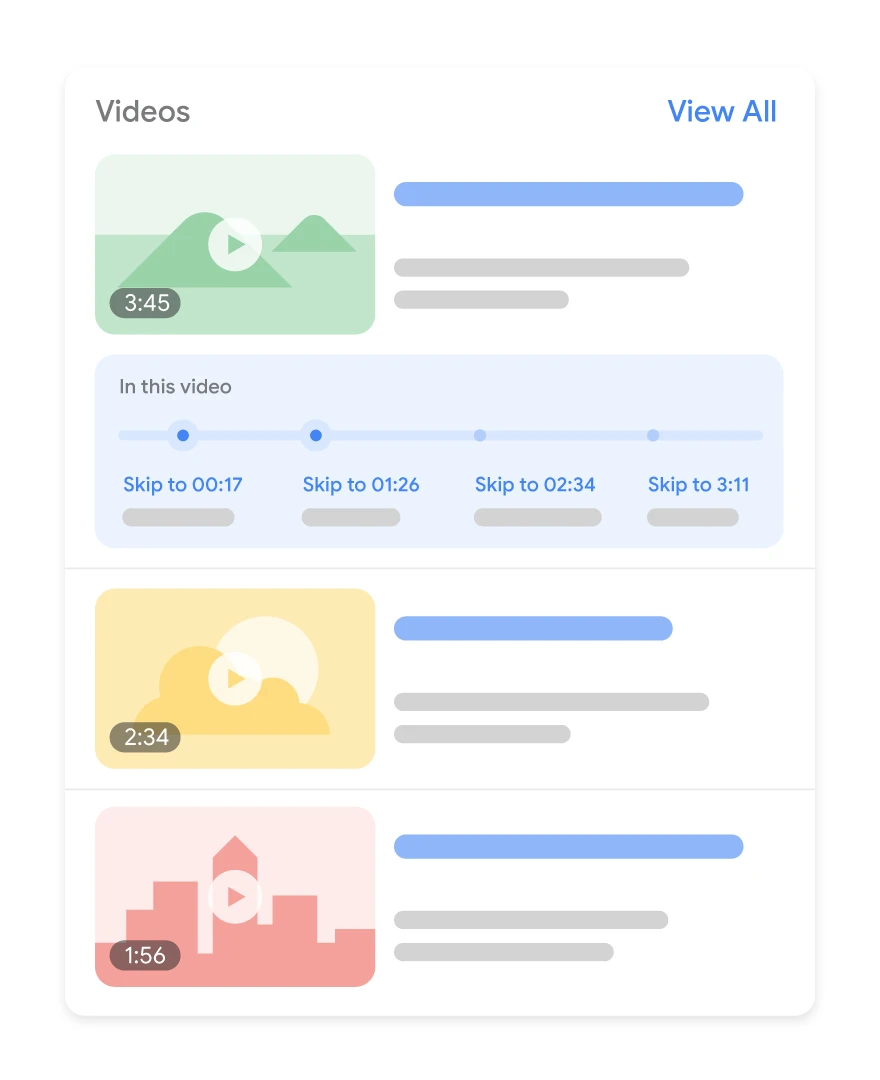
One of the key elements is watch time. Algorithms favour videos that hold viewers’ attention for longer, because this indicates their value and quality. The more time users spend watching, the greater the chance of better visibility in the rankings.
The popularity of a video also matters, but it is not just about the number of views. The platform also analyses the retention rate, that is, how much of the material is actually watched. Videos with a high retention rate are more often promoted by the algorithms.
Audience engagement plays an equally important role. Likes, shares and comments are treated as proof of viewer interest. The algorithms interpret these interactions as a signal of valuable content, which translates into a better position in search results.
You cannot forget about metadata optimisation, such as the title, description or tags. Carefully selected keywords help the algorithms understand the subject matter of the video and match it to users’ queries. Good use of these elements increases the chances of the material appearing in suggestions and search results.
YouTube algorithms are constantly evolving to better meet users’ expectations. That is why creators should regularly analyse the performance of their videos and adjust their strategy to current trends and the platform’s requirements. Effective SEO requires not only creating engaging content, but also a thorough understanding of how YouTube algorithms work.
YouTube ranking factors
Ranking factors on YouTube play a key role in positioning videos on the platform. The algorithms take many elements into account to determine which materials are most valuable for viewers. One of the most important aspects is watch time. The longer viewers stay on the screen, the more likely it is that the algorithm will consider the video attractive and improve its position in search results.
Equally important are user interactions. Likes, shares, comments and ratings are signals to the platform that the content is engaging and worth attention. Videos with a high number of interactions have a greater chance of being promoted by YouTube. It is also worth monitoring the retention rate, that is, how much of the material is actually watched. A high retention rate indicates content quality and translates into better visibility.
CTR (click-through rate) is another important factor. Eye-catching thumbnails and titles increase the likelihood of a video being clicked on, which in turn leads to a higher CTR. The algorithms interpret this as a sign of user interest in the material.
You also cannot forget about the number of subscribers gained after watching the video and shares. Subscriptions show long-term engagement with the channel, while shares extend the reach of the content beyond the platform.
Also crucial are the metadata, such as the title, description and tags. Carefully selected keywords help the algorithms better understand the subject matter of the video and match it to users’ queries.
To achieve a high position in YouTube results, it is worth focusing on creating valuable content that keeps viewers engaged, as well as on optimising metadata and thumbnails.
The impact of watch time on ranking
Watch time plays a key role in positioning videos on platforms such as YouTube. The algorithms assess how long users engage with a given piece of content, treating this as the main indicator of the value and attractiveness of the content. The longer viewers stay in front of the screen, the more likely it is that the algorithm will consider the video worth attention and raise its position in search results.
Long watch time is a signal to the platform that the content meets the audience’s expectations. This in turn translates into better visibility for the material, attracting more views and interactions. YouTube considers this factor one of the most important quality indicators.
To improve this metric, it is worth making sure of:
- an engaging start to the video from the very first seconds,
- an intriguing introduction and the right pace of narration,
- valuable content that encourages viewers to watch longer,
- maintaining thematic consistency,
- avoiding unnecessary digressions that may distract or put off the audience.
Watch time also affects other ranking factors, such as retention rate or the number of interactions. Longer viewer engagement often translates into more likes, comments or shares, which further strengthens the video’s position in search results.
Optimising for watch time is the foundation of an effective video SEO strategy. Focusing on creating engaging content and regularly analysing this metric makes it possible to significantly improve content visibility and achieve better results on platforms such as YouTube.
The role of interactions – comments, shares, ratings
Interactions such as comments, shares and ratings play a key role in positioning videos on platforms such as YouTube. The algorithms treat these actions as signals of viewer engagement, which directly affects the visibility of content in search results. The more interactions a video generates, the greater the chance of it being promoted by the algorithms.
Comments are one of the most important factors affecting ranking. Videos with a large number of comments are seen as more valuable and engaging. The algorithms interpret this as proof of audience interest, which translates into a better position in search results. It is worth encouraging viewers to discuss by asking questions or requesting opinions in the video description.
Shares also matter enormously. Each share increases the video’s reach beyond the platform, which is a signal to the algorithms that the content is valuable and deserves promotion. Videos that are frequently shared have a greater chance of reaching new audiences and achieving a higher position in rankings.
Ratings are another important element affecting SEO. Positive ratings (e.g. likes) are treated as proof of viewer satisfaction. Algorithms favour videos with a high positive rating rate, which translates into better visibility in search results and platform suggestions.
Interactions not only influence rankings, but also build a community around the channel. Regularly engaging viewers through replies to comments or requests to share can increase audience loyalty and encourage them to return to the content more often.
Benefits of VSEO – how does video SEO affect success?
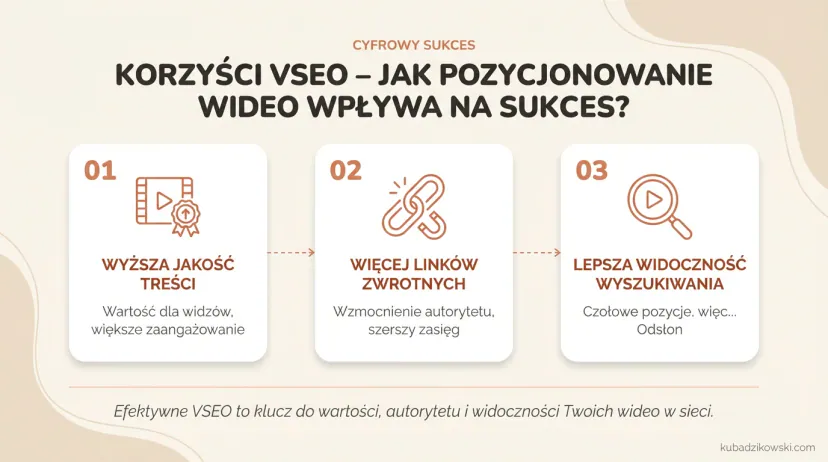
Video SEO, or VSEO (Video Search Engine Optimization), is a powerful tool that can significantly affect the success of video content. One of the most important effects is improving the quality of the materials. With the right optimisation, videos become more valuable to viewers, which translates into greater engagement and positive reactions. High quality also attracts more backlinks, which strengthens the material’s authority in the eyes of search engine algorithms.
Another key advantage is increased visibility in search results. The right keywords, attractive titles and descriptions, and well-designed thumbnails significantly increase the chance of a video appearing in top positions. This, in turn, leads to more views and reaches a wider audience.
VSEO also has a huge impact on user engagement and time spent watching. Watch time is one of the key ranking factors for platforms such as YouTube. The longer viewers stay with a piece of content, the more likely the algorithm is to consider it valuable and raise its ranking. In addition, interactions such as comments, shares or ratings are a signal to algorithms that the content is engaging and deserves promotion.
It is also worth remembering the role of VSEO in building a lasting brand presence. Well-optimised videos not only attract new audiences, but also keep their interest for longer. This translates into viewer loyalty and an increase in the number of channel subscribers.
With VSEO, you can achieve many benefits: from improving content quality to increasing visibility and influencing user engagement. That is why video SEO has become a key element of an effective marketing strategy for both individual creators and businesses.
Improving content quality and increasing the number of links
Video SEO (VSEO) plays a key role in improving content quality and attracting links leading to the site. With the right optimisation, videos gain greater value for audiences, which translates into their engagement and positive reactions. High-quality materials also attract more backlinks, which strengthens the site’s authority in the eyes of search engine algorithms.
Backlinks are one of the most important factors influencing rankings in SEO. The more valuable links point to a site, the higher its position in search results. Well-optimised videos that provide useful information and engage viewers increase the chances of earning natural links from other sites. This, in turn, translates into better visibility for the entire website.
It is worth noting that videos are often shared by users on social media platforms, which generates additional links and increases website traffic. As a result, not only does the quality of the content grow, but also the number of visitors and their engagement.
Optimising video for SEO is not just a way to increase views – it is also an effective method of building a lasting online brand presence. It allows you to achieve long-term benefits:
- improving visibility,
- growth in organic traffic,
- acquiring valuable links leading to the site.
Increasing visibility in search engines
Increasing visibility in search engines is the main goal of video SEO (VSEO). With the right optimisation, videos can achieve better positions in search results, which directly translates into more views and audience engagement. Platforms such as YouTube or Google take many factors into account to assess which content is most valuable to users.
One of the most important elements affecting visibility is watch time. The longer viewers stay engaged with the material, the greater the chance that the algorithm will consider it attractive and raise its ranking. A high retention rate, i.e. the proportion of the video watched, also affects better visibility.
User interactions, such as likes, shares or comments, also play an important role. Videos with a high number of interactions are seen as more engaging and valuable, which encourages algorithms to promote them. Another key factor is the click-through rate (CTR), i.e. the ratio of impressions to clicks on the thumbnail. Attention-grabbing titles and graphics increase CTR, signalling to algorithms user interest in a given piece of content.
Optimising metadata – title, description and tags – is also hugely important. Well-chosen keywords help algorithms better understand the subject matter of the video and match it to users’ queries. In addition, using captions and transcripts not only makes the content more accessible for deaf people, but also supports algorithms in indexing the material.
It is also worth remembering about internal linking and using hashtags. Links to related materials encourage users to stay on the platform longer, while hashtags help reach a wider audience interested in the given topic.
Increasing visibility in search engines requires a comprehensive approach – from creating engaging content to optimising metadata and monitoring user interactions. This allows videos to achieve higher positions in search results, attracting more views and building a lasting online brand presence.
The impact on engagement and watch time
Video SEO plays a key role in attracting viewers’ attention and increasing the time spent watching. These elements are extremely important for the success of video content online. Audience engagement can be assessed on the basis of interactions such as comments, shares or likes, which signal to platform algorithms that the material is valuable. The more such reactions there are, the greater the chance of better visibility in search results.
Watch time is one of the most important factors affecting ranking on platforms such as YouTube. Algorithms analyse how long users remain interested in the material. More time spent in front of the screen indicates engaging content and translates into a higher position in the rankings. Equally important is a high retention rate, meaning the percentage of the video watched, which directly affects visibility.
To improve these metrics, it is worth making sure the content is engaging from the very first seconds of the recording. An intriguing introduction, a coherent narrative and avoiding unnecessary digressions are key elements that attract viewers’ attention. In addition, encouraging interaction by asking questions or requesting opinions can significantly increase the number of comments and shares.
We should also not forget to monitor these parameters using the analytical tools available on the platforms. Regular analysis makes it possible to adapt the strategy to audience preferences and current trends, which translates into better results in video SEO.
FAQ
Frequently asked questions
What are the most important elements in video SEO?
The most important are keywords, an attractive title and description, an eye-catching thumbnail, plus captions and transcripts. Tags and categories are also important, as they help algorithms better understand the material.
Does a video thumbnail affect a video's ranking?
Yes, the thumbnail matters a great deal because, as the first element, it attracts attention and affects the click-through rate. It should be aesthetically pleasing, clear and reflect the character of the video.
Why do captions and transcripts help with video SEO?
Captions and transcripts make it easier for algorithms to understand the content of the video. They also increase the accessibility of the content for different audiences.
How should you choose keywords for a video?
Keywords should match the topic of the video and answer users’ queries. It is worth placing them naturally in the title, description and tags.
Does watch time matter for video SEO?
Yes, time spent watching is one of the important signals for algorithms. The longer viewers stay with the video, the greater the chance of better visibility in the results.
When is it worth monitoring video SEO results?
It is worth doing this regularly, because effective video SEO requires constant attention. You need to adapt your strategy to changing algorithms and audience preferences.