
In the era of digitalisation, when as many as 80% of patients search for healthcare services online, effective SEO becomes a key tool for clinics and healthcare providers that want to increase their online visibility. Technical optimisation, valuable content and local keywords not only help you stand out from the competition, but also build patient trust and strengthen your market position. Discover proven methods for achieving online success!
SEO in the healthcare sector – how clinics and medical facilities can increase their visibility
SEO in the healthcare sector is an essential tool for clinics and medical facilities that want to stand out online. According to data from 2021, as many as 80% of patients searched for information about medical services online, which highlights the importance of effective SEO. With a well-planned SEO strategy, facilities can reach a wider group of people looking for specialists, which directly increases patient numbers.
SEO optimisation in the medical industry requires both technical and content-related actions. It is important to adapt the website to search engine requirements – key factors include page load speed, responsiveness and properly aligning content with keywords related to healthcare services. It is also worth focusing on creating valuable materials, such as expert articles or health guides, which attract the attention of potential patients and build trust.
Another important element is building authority online. Positive patient reviews published on platforms such as Google Business Profile or industry portals shape the clinic’s image. Activity on social media and regularly updating the company profile on Google also contribute to improved visibility in local search results.
An effective way to reach people searching for specific medical services is to use long-tail keywords. Phrases such as “cardiologist Warsaw” or “laboratory tests Kraków” allow you to target your audience precisely. This means that smaller facilities can effectively compete even with larger medical providers.
Investing in SEO for medical facilities is not only a way to increase visibility online, but also a tool for building trust and authority among patients. An effective SEO strategy makes it possible to reach people searching for specialist healthcare services, which translates into a real increase in customer numbers and business growth.
- 0180% of patients search onlineFirst information is found online
- 02Technical optimisationSpeed, responsiveness, mobile
- 03Content for keywordsValuable, substantive information
- 04More patientsA wider audience
Summary: An SEO strategy is an essential tool for making a medical facility stand out and reach people looking for specialists.
Why is it worth investing in SEO for medical facilities?
Investing in SEO for medical facilities is a key element of a modern marketing strategy. A high position in search results allows clinics and surgeries to increase their visibility online, which directly affects the acquisition of new patients. Research from 2021 shows that as many as 80% of people looking for medical services use the internet, which highlights the importance of effective SEO.
Effective SEO not only generates more website traffic, but also builds trust and the facility’s reputation. Valuable content, such as expert articles or health guides, attracts the attention of potential patients and strengthens the clinic’s image as professional and trustworthy. In addition, positive reviews on platforms such as Google Business Profile influence the facility’s authority in users’ eyes.
Investing in SEO is also an effective way to reach people searching for specific medical services. By using long-tail keywords such as “cardiologist Warsaw” or “laboratory tests Kraków”, you can target your audience precisely. This means that smaller facilities can compete with larger medical providers.
Investing in SEO is not just a tool for increasing online visibility – it is also a way to build long-term trust and authority among patients. An effective SEO strategy makes it possible to reach people looking for specialist healthcare services, which translates into a real increase in the number of clients and business growth.
The role of SEO in increasing the visibility of medical practices
SEO plays a key role in increasing the visibility of medical practices online. Thanks to proper search engine optimisation, clinics and surgeries can achieve higher positions in search results, which directly translates into a larger number of potential patients. Research from 2021 shows that as many as 80% of people looking for medical specialists use the internet, which highlights the importance of effective SEO.
Key elements affecting visibility are not only the technical optimisation of the site, but also its loading speed and responsiveness. In addition, publishing valuable content – such as expert articles or health guides – attracts users’ attention and strengthens trust in the practice. Using precise keywords, e.g. “lekarz dermatolog Warszawa”, helps reach a specific target group.
Patient reviews published on platforms such as Google Business Profile are also important. Positive reviews build the practice’s authority and improve its visibility in local search results. An effective SEO strategy is not only a way to increase traffic to the site, but also a tool for building long-term trust and reputation among patients.
- 01Google Business ProfileDetails, opening hours, reviews
- 02Local SEOKeywords with location (e.g. city)
- 03Long tail (Long-Tail)Precise service keywords
The key to greater online visibility and attracting patients.
The importance of an online presence for patients looking for specialists
An online presence is hugely important for patients looking for medical specialists. According to research from 2021, as many as 80% of people use the internet to find information about doctors and healthcare services. This means that medical practices must take care of their online visibility in order to reach potential clients effectively.
Today’s patients are increasingly choosing a specialist based on the information available online. What matters to them are other people’s reviews, location or the range of services offered. That is why being present in Google search results and on platforms such as Google Business Profile has become crucial. Practices that invest in SEO optimisation have a greater chance of standing out in the market and attracting people looking for specific healthcare solutions.
Nor should we forget the role of valuable expert content and health guides. Such materials not only attract patients’ attention, but also build trust in the practice. Positive reviews published by patients additionally strengthen the clinic’s authority and its position in local search results.
An effective online presence translates directly into an increased number of patients. Thanks to a well-planned SEO strategy, medical practices can reach people looking for specialist services, which affects both business growth and building lasting relationships with clients.
Key elements of SEO in the medical industry
In the medical industry, effective SEO is the key to increasing a practice’s visibility in search results and attracting more patients. To achieve this goal, it is worth focusing on several key areas that combine technical and content-related aspects.
The foundation is technical optimisation. The website must work quickly, be secure and adapted to different devices. Loading speed matters enormously – sites that load within 2 seconds can increase the conversion rate by as much as 15%. Responsiveness is equally important, especially since over 60% of users browse the internet using smartphones.
Another important element is creating valuable content. Expert articles, health guides or medical blogs not only attract the attention of potential patients, but also build trust in the practice. It is worth covering topics related to preventive healthcare, disease treatment or the latest trends in medicine. For example, an article “5 sposobów na obniżenie cholesterolu” can attract people looking for practical advice on this subject.
For locally operating practices, local SEO is key. Optimising the Google Business Profile by adding accurate contact details, opening hours and patient reviews can significantly improve visibility in local search results. Keywords such as “dentysta Kraków” or “badania laboratoryjne Warszawa” are often used by patients looking for services in their area.
We should not forget about link building, i.e. acquiring valuable links leading to the facility’s website. Collaboration with industry medical portals or publishing guest expert articles can strengthen the site authority in the eyes of search engines.
It is also worth using long-tail keywords, such as “lekarz kardiolog Warszawa” or “badania krwi Kraków”. Thanks to them, you can precisely reach the target group and increase the chances of conversion. These actions allow smaller facilities to compete effectively with larger medical providers.
An effective SEO strategy in the medical industry is based on combining technical optimisation, creating valuable content, local SEO and link building. This enables facilities to increase their online visibility and attract new patients.
- 01Algorithm updatesConstant changes to the rules
- 02Focus on YMYLHigh-stakes content
- 03E.A.T. criteriaExpertise, Authority, Trust
- 04Expert contentCreated by doctors
- 05Impact on visibilityChanges in rankings
Credible content and expert sources are key to maintaining high rankings and patient trust.
Technical optimisation and its importance
Technical optimisation of a website plays a key role in effective SEO, especially in the medical sector. It has a direct impact on how search engines assess the site, which in turn determines its position in search results. The most important goals are to ensure speed, security and adaptability across different devices, including smartphones and tablets.
Page load speed is one of the most important factors. According to research, websites that load within 2 seconds can increase conversion rate by as much as 15%. In the case of medical facilities, quick access to information about services or specialists is extremely important for patients looking for help. To speed up the site, it is worth focusing on:
- optimising HTML code,
- image compression,
- using cache memory.
Responsiveness is another key element. More than 60% of users access the internet via mobile devices, so the website must be adapted to different screen sizes. A lack of responsiveness can put off potential patients, who will not be able to browse the site comfortably.
We also must not forget about the site structure. Proper use of HTML tags, such as headings (H1, H2), and alt attributes for images helps search engine bots better understand the content. As a result, the medical facility has a greater chance of achieving a higher position in search results for keywords related to the services offered.
Security is another important aspect of technical optimisation. Implementing the HTTPS protocol and regular updates to the content management system (CMS) are essential for protecting patient data and building their trust in the facility.
Technical optimisation is the foundation of effective SEO for the medical sector. Improving page load speed, ensuring responsiveness and taking care of security translate into better online visibility and attracting a greater number of patients.
The importance of page load speed and responsiveness
Page load speed and responsiveness are key factors affecting user experience and search engine rankings. Websites that load too slowly often put visitors off, leading to a high bounce rate. According to research, sites that load within 2 seconds can increase conversions by as much as 15%. In the case of medical facilities, quick access to information about services or specialists is particularly important for patients looking for help.
Website responsiveness is also hugely important. More than 60% of users browse the internet on mobile devices, so the website must be adapted to different screen sizes. A lack of responsiveness can effectively put off potential patients, who will not be able to comfortably read the content.
To improve page load speed, it is worth focusing on a few key steps:
- optimisation of HTML code,
- image compression,
- use of cache memory.
Thanks to them, the website runs more smoothly, which translates into a better user experience and a higher position in search results.
Just as important is the right site structure. Using HTML tags such as headings H1 and H2, as well as alt attributes for images, helps search engine bots better understand the content of the website. This, in turn, increases the visibility of the medical facility in search results.
In summary, both loading speed and responsiveness are essential for effective SEO in the medical sector. Improving these parameters not only affects user satisfaction, but also increases the conversion rate and the online visibility of the facility.
Linkbuilding as a tool for increasing authority
Linkbuilding is an extremely important tool for building the credibility and authority of a medical facility’s website. Its essence is acquiring valuable backlinks from other websites, which translates into a better assessment of the site by search engine algorithms. The more high-quality links point to a given page, the greater the chance of achieving better positions in search results.
In the medical sector, linkbuilding can take various forms:
- cooperation with industry portals that publish expert articles or health guides containing links to the facility’s website,
- writing guest posts on blogs related to health topics,
- placing links in local medical directories and review platforms such as Google Business Profile or ZnanymLekarzem.pl.
Such activities not only increase visibility, but also build trust among potential patients. Additionally, positive patient reviews published on these platforms strengthen the clinic’s reputation and attract new clients.
The key to success is a strategic approach to linkbuilding, with an emphasis on the quality of acquired backlinks. Valuable links from reputable sources have a far greater impact on a site’s position than a large number of low-quality backlinks. That is why it is worth investing time and resources in cooperation with respected medical portals and health institutions.
Effective linkbuilding is not only a way to improve positions in search results, but also a tool for increasing organic traffic and building the long-term reputation of a medical facility online. This makes it possible not only to attract more patients, but also to retain their loyalty by continually strengthening the brand’s online authority.
SEO for medical practices – best practices
To increase the visibility of medical practices in search results and attract more patients, it is worth applying proven SEO practices. One of the key steps is optimising the Google Business Profile. Adding contact details, opening hours and positive patient reviews can significantly influence the practice’s position in local results. Patients often search for medical services using phrases such as “dentysta Kraków” or “badania laboratoryjne Warszawa”, so it is worth making sure they are present in the profile.
Another important element is using long-tail keywords, which make it possible to target the audience more precisely. Examples of such phrases include “lekarz kardiolog Warszawa” or “badania krwi Kraków”. Thanks to them, smaller practices can compete effectively with larger facilities while also increasing the chances of conversion.
Creating valuable content is another important aspect of effective SEO. Expert articles, health guides or medical blogs not only attract the attention of potential patients, but also build trust in the practice. For example, an article titled “5 sposobów na obniżenie cholesterolu” may interest people looking for practical advice on this topic.
It is also worth remembering about technical website optimisation. Website loading speed is of huge importance – pages that load within 2 seconds can increase the conversion rate by as much as 15%. Equally important is site responsiveness, especially since over 60% of users access the internet via mobile devices.
It is also worth paying attention to metadata, such as page titles and meta descriptions. They should contain the right keywords and encourage users to click. For example, the title “Lekarz dermatolog Warszawa – umów się online” can effectively attract the attention of potential patients.
Thanks to these actions – from optimising the Google profile to creating valuable content and paying attention to the technical aspects of the site – medical practices can significantly improve their online visibility and attract new patients.
The importance of the Google Business Profile for local SEO
The Google Business Profile, also known as Google Moja Firma, plays a key role in the local SEO of medical facilities. Thanks to it, practices and clinics can significantly improve their visibility in search results, especially for people looking for medical services nearby. The profile makes it possible to display accurate information such as contact details, opening hours or a location on Google Maps, which makes it easier for patients to quickly find the facility they need.
According to research, as many as 80% of people looking for medical services use the internet, often entering local phrases, e.g. “dentysta Kraków” or “badania laboratoryjne Warszawa”. That is why optimising the Google Moja Firma profile is essential for increasing visibility in local results. In addition, positive patient reviews published on the profile build trust in the facility and strengthen its online authority.
It is worth noting that the profile integrates with Google Maps, which creates an opportunity to appear in the so-called Google Local Pack. This is a set of the three most important local results displayed above the traditional organic results. For medical practices, this is an excellent opportunity to compete with larger organisations and attract patients from the immediate area.
Regularly updating the profile is another important element. Adding new information about the services offered or promotions increases its appeal. Using features such as posts or photos can attract the attention of potential patients and encourage them to use the services of a given facility.
A Google Business Profile is not only a tool that improves online visibility – it is also a way to build trust and authority among the local patient community.
Using long-tail keywords in the SEO strategy
Using long-tail keywords in the SEO strategy is an effective method for improving the visibility of medical facilities in search results. Long-tail keywords are multi-word keywords that are more specific and less competitive than single terms. Examples of such phrases include “lekarz kardiolog Warszawa” or “badania laboratoryjne Kraków”. Thanks to them, you can precisely reach a specific audience, which is particularly important for local medical practices.
One of the main advantages of long-tail keywords is their lower competitiveness, which makes it easier to achieve high rankings in search engines. In addition, they allow you to better match content to users’ real needs. For example, someone searching for “dentysty dziecięcego w Warszawie” is more likely to land on the website of a practice specialising in dentistry for children.
To use this strategy effectively, proper planning and keyword analysis are essential. It is worth using tools such as Google Keyword Planner or SEMrush, which help you find phrases with low competitiveness but high conversion potential. It is also crucial to create valuable content – expert articles, health guides or service descriptions – that naturally include these phrases.
For medical facilities, long-tail keywords are particularly valuable because of their local nature. Phrases such as “fizjoterapeuta Poznań” or “badania krwi Gdańsk” help you reach patients from the nearest area, which directly translates into an increase in the number of clients. Do not forget about optimising meta tags – titles and descriptions – which should include these phrases in order to increase the chances of the page appearing in search results.
In short, long-tail keywords are an effective SEO strategy for medical facilities. They allow you to reach the target audience precisely and increase online visibility with less effort than competing for popular keywords.
How to build the authority and credibility of a medical website?
In the medical sector, where patient trust plays a key role, building the authority and credibility of a website is essential for an effective SEO strategy. Google particularly values three elements: expertise, authority and trust (E.A.T.), which are important both for search engine algorithms and for users.
A key step is creating valuable content based on the knowledge of specialists. Medical articles should be prepared by experts, and their qualifications must be presented clearly. Long, substantive texts such as guides or case studies not only attract readers’ attention, but also strengthen trust in the facility. For example, an article titled “5 ways to prevent heart disease” may interest people looking for practical tips.
Ensuring website security is equally important. Implementing HTTPS and an SSL certificate are basic steps in protecting patient data. Google favours secure websites, which translates into better rankings in search results. In addition, it is worth regularly updating the CMS and monitoring potential threats.
Positive patient reviews are another important factor affecting a facility’s reputation. Reviews published on platforms such as Google Moja Firma or ZnanymLekarzem.pl not only build reputation, but also increase visibility in local search results. Research shows that as many as 93% of consumers check online reviews before choosing a medical service.
Do not forget about link building, i.e. acquiring links from reputable sources. Working with industry portals or publishing guest expert articles can significantly raise the authority of the website in the eyes of search engines. For example, links from recognised health institutions are more valuable than those from less well-known sites.
To increase the authority and credibility of a medical website, you need to combine high-quality expert content with attention to security and the acquisition of positive reviews and valuable links. Thanks to these actions, a facility can not only improve its online visibility, but also gain patients’ trust and become a leader in its field.
Building authority through valuable content
Creating valuable content is the foundation of effective SEO for medical websites. In the health sector, where trust plays a key role, publishing reliable and practical information is hugely important. Research shows that as many as 93% of patients check reviews on the internet before deciding to choose a medical service – a clear signal of how important the credibility of the content presented is.
Expert articles, guides or case studies not only attract the attention of potential patients, but also build trust in the facility. For example, text such as “5 ways to prevent heart disease” may interest people looking for practical tips. It is also crucial to involve specialists in the content creation process – their qualifications should be clearly highlighted to emphasise the facility’s professionalism and expertise.
Google particularly values sites that meet the E.A.T. criteria (Expertise, Authority, Trustworthiness), that is, expertise, authority and trust. That is why it is worth regularly updating the site with new materials based on the latest medical knowledge. Long, substantive articles not only attract organic traffic, but also contribute to a better position in search results.
You cannot forget about internal links, which make it easier to navigate the site and encourage users to discover further valuable content. For example, an article on health prevention may include links to materials on specific conditions or diagnostic tests.
Valuable content is not only a way to increase online visibility – it is also a tool for building long-term patient trust and strengthening a medical facility’s authority online.
The importance of positive patient reviews
Positive patient reviews play a key role in shaping a medical facility’s reputation and its presence online. According to research, as many as 93% of people check online ratings before deciding to use medical services. This shows how important positive reviews are for the choices of potential patients. Good reviews not only build trust in the facility, but also influence its visibility in Google local search results.
Platforms such as Google Business Profile or specialist sites like ZnanymLekarzem.pl are places where patients share their experiences. Reviews published on these portals strengthen a facility’s credibility and attract new clients. Google algorithms favour businesses with high ratings and numerous positive comments, which translates into better positions in local results.
It is worth encouraging patients to share their impressions after a visit. This can be done, for example, by sending emails requesting a review or by placing a link to the Google Business Profile on the facility’s website. Regularly monitoring and responding to reviews – both positive and critical – builds trust and shows commitment to service quality.
Positive reviews are also important for local SEO, especially when they contain keywords related to the services offered. For example, a review containing the phrase “lekarz dermatolog Warszawa” (dermatologist Warsaw) can contribute to better optimisation of the site for that specific query.
Positive patient reviews are not only a marketing tool – they are also an important element affecting a medical facility’s online visibility and its reputation among potential clients.
How do algorithm updates affect SEO in the healthcare industry?
Search engine algorithm updates, especially in the medical sector, have a huge impact on the visibility of healthcare websites. New content evaluation rules can cause some sites to lose their high positions in search results. Google algorithms such as Medic Update or Core Updates place emphasis on quality, credibility and compliance with YMYL (Your Money or Your Life) guidelines.
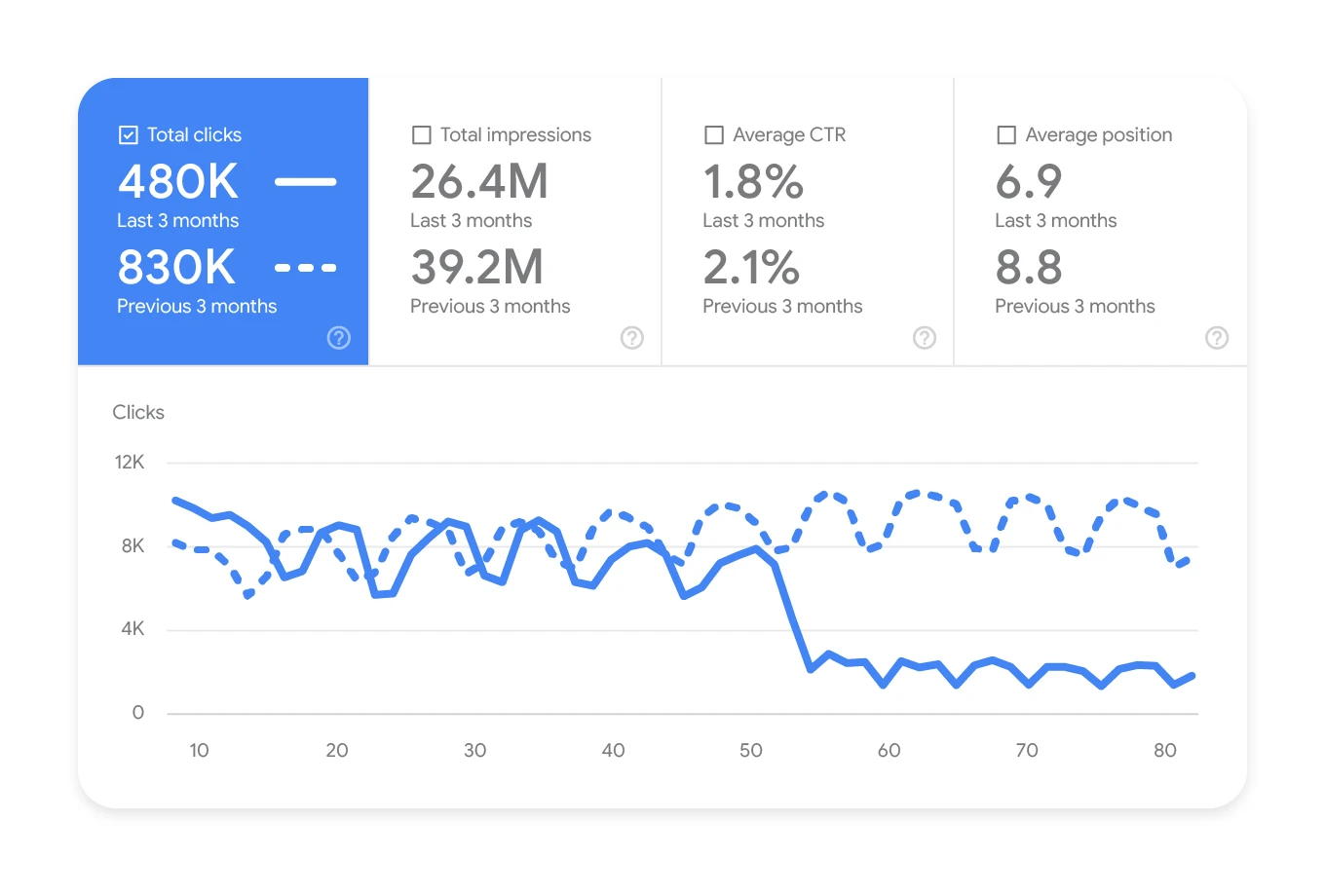
In the medical industry, where patient trust is key, algorithms particularly value sites that meet the E.A.T. criteria (Expertise, Authority, Trustworthiness). This means that content should be created by experts, based on up-to-date medical knowledge and strengthen the facility’s authority. For example, articles prepared by specialist doctors are more valuable than those written by people without the appropriate qualifications.
Updates also affect the technical aspects of the site. Page load speed, responsiveness and security (e.g. SSL certificate) are increasingly analysed by algorithms. Slow sites or those not adapted for mobile devices can quickly lose positions to the competition.
You should also not forget the importance of local SEO. Google algorithms are increasingly promoting sites with well-completed Google Business Profile listings and positive patient reviews. Medical facilities should regularly update their profiles and encourage patients to add reviews.
Changes in algorithms require medical facilities to continuously adapt their SEO strategy to new guidelines. The key is creating valuable expert content, looking after the technical aspects of the site and building local authority through reviews and online activity.
The impact of medical updates on site visibility
Search engine algorithm updates, especially those affecting the medical sector, are hugely important for the visibility of healthcare websites. Google regularly introduces changes such as Medic Update or Core Updates, which focus on content quality, its credibility and compliance with the guidelines of YMYL (Your Money or Your Life). In the medical industry, where patient trust plays a key role, these updates can significantly affect a site’s SEO.
One of the most important effects of these changes is the growing importance of E.A.T. criteria (Expertise, Authority, Trustworthiness), that is expertise, authority and trust. Google algorithms favour sites offering content created by medical specialists and based on up-to-date scientific knowledge. For example, articles prepared by doctors are more valuable than those written by people without the relevant qualifications. That is why healthcare facilities must invest in high-quality expert materials in order to maintain or improve their position in search results.
Another important element is technical site optimisation. Site loading speed, responsiveness and security (e.g. SSL certificate) are increasingly taken into account by algorithms. Sites that are slow or not adapted for mobile devices can quickly lose positions to competitors. According to research, sites that load within 2 seconds can increase the conversion rate by as much as 15%.
Updates also affect local SEO. Google algorithms increasingly promote sites with well-completed Google Business Profile listings and positive patient reviews. Healthcare facilities should regularly update their profiles and encourage patients to leave reviews. Positive reviews not only build trust in the facility, but also affect its visibility in local search results.
It is also worth paying attention to changes related to backlinks (link building). Google algorithms increasingly value links from reputable industry sources, such as medical portals or healthcare institutions. Facilities should aim to acquire valuable links from recognised organisations, which will affect their authority in the eyes of search engines.
Algorithm updates require healthcare facilities to continually adapt their SEO strategy to new guidelines. The key is to create valuable expert content, take care of the technical aspects of the site, and build local authority through reviews and online activity. Only a comprehensive approach will allow you to maintain high visibility in search results and attract new patients.
The importance of YMYL (Your Money or Your Life) in a medical context
YMYL (Your Money or Your Life) is a category of pages that have a significant impact on users’ health, safety or finances. In the case of medical content, Google sets exceptionally high standards because such information can directly influence life and health decisions. That is why healthcare facilities must pay particular attention to the reliability and up-to-dateness of published materials.
Google algorithms analyse YMYL pages in terms of three key elements:
- expertise,
- authority,
- credibility.
This means that medical content should be created by people with the appropriate qualifications and experience. Articles about treatment or prevention must be based on up-to-date medical knowledge and supported by reliable scientific sources.
Regular updates are another important factor. Medical sites should keep up to date with the latest guidelines and research, because Google rewards sites offering valuable and current information. This translates into better positions in search results. In addition, facilities can increase their credibility by publishing patient reviews and working with reputable healthcare institutions.
Patient data security is an equally important aspect. Implementing the HTTPS protocol and an SSL certificate is essential for protecting sensitive information. Google favours technically secure sites, which has a direct impact on their visibility online.
In the context of YMYL in the medical sector, a comprehensive approach is key. Facilities must not only take care of content quality, but also of data security and building authority through cooperation with specialists and acquiring positive patient reviews. Only in this way can they maintain a high position in search results and win users’ trust.
Competitor analysis and monitoring SEO results
Competitor analysis and tracking SEO results are essential elements of an effective SEO strategy in the medical industry. Thanks to them, you can assess how your own efforts compare with others and identify areas that need improvement. This process includes:
- analysing competitors’ visibility in search results,
- analysing their organic traffic,
- reviewing the backlink profile.
The key task is to understand which keywords competitors use and which positions they hold in the rankings. Tools such as SEMrush or Ahrefs make it possible to monitor the keywords generating the most traffic for competitor websites. This allows you to tailor your own strategy to patients’ needs and increase the effectiveness of your activities.
Analysing the backlink profile of competitors is another important aspect. Links from reputable sources, such as medical portals or healthcare institutions, significantly increase a site’s authority. By examining rivals’ backlinks, you can find valuable link sources for your own website.
User experience (UX) offered by competitors’ websites also requires attention. Loading speed, responsiveness and intuitive navigation are factors that affect rankings in search results. By comparing these elements with your own site, you can introduce the necessary technical improvements.
Regular monitoring of SEO results makes it possible to react quickly to search engine algorithm changes. In the medical sector, updates such as Medic Update are particularly important. Continuously adapting your strategy is the key to maintaining high online visibility.
Competitor analysis and SEO monitoring are processes that help medical facilities better understand the market and adapt their activities to patients’ needs and algorithm requirements. Thanks to them, you can increase organic traffic and attract more patients to your facility.
SEO audit as a way to increase the number of patients
An SEO audit is an essential element in the process of optimising a medical facility’s website. It makes it possible to detect errors affecting visibility in search engines, compare your position with the competition and identify areas requiring improvement. In the medical sector, where competition is particularly intense, an SEO audit becomes a key tool for attracting more patients.
During the analysis, both technical and content-related aspects of the website are taken into account. Problems such as slow page loading or lack of responsiveness can significantly lower its position in search results. Research indicates that websites loading within 2 seconds can increase the conversion rate by as much as 15%. That is why the audit focuses on optimising HTML code, compressing graphics and the effective use of cache memory.
No less important is the content analysis in terms of keywords. In the case of medical facilities, local phrases are particularly important, e.g. „lekarz dermatolog Warszawa” or „badania laboratoryjne Kraków”. The audit makes it possible to assess whether the website contains the right keywords and whether the content presented is valuable and aligned with current medical knowledge.
The next step is analysis of backlinks. It is worth checking which websites link to the competition and looking for opportunities to acquire similar links. Links from reputable medical portals can significantly strengthen the authority of a facility’s website.
A comprehensive SEO audit not only improves a facility’s visibility in search results, but also helps better tailor the offer to users’ needs, which translates into a higher number of patients. This tool makes it possible to continuously refine the SEO strategy and maintain a high position in the competitive medical sector.
FAQ
Frequently asked questions
How does SEO help medical clinics increase their visibility online?
Well-planned SEO improves a website’s rankings in search results and makes it easier to reach people searching for medical services online. This can translate into more patients.
Do patients really search for medical services online?
Yes, according to 2021 data, as many as 80% of patients searched for information about medical services online. This shows how important a practice’s presence in search is.
Why does page speed matter in medical SEO?
A fast-loading website is rated better by search engines and provides a better user experience. The article notes that sites loading in 2 seconds can increase conversions by as much as 15%.
What content is worth publishing on a medical practice website?
The best-performing content is valuable material such as expert articles, health guides and medical blogs. Such content attracts patients’ attention and builds trust in the practice.
What does local SEO give a clinic or surgery?
Local SEO helps you appear in results for people searching for services in a specific area, for example using phrases such as “dentysta Kraków”. An up-to-date Google Business Profile and patient reviews are also important.
Which keywords work best in the medical sector?
Effective keywords are long-tail phrases that describe the service and location precisely, for example “lekarz kardiolog Warszawa” or “badania laboratoryjne Kraków”. They make it easier to reach a specific group of patients.