

Does your website fully use its potential? A site’s value depends on key factors such as loading speed, responsiveness, content quality and the effectiveness of SEO efforts. Proper optimisation can improve user experience and increase visibility in search engines. Find out which elements matter most and how to effectively increase your site’s value so that it attracts more visitors and generates higher profits!
What affects the value of a website?
The value of a website depends on many factors that determine its appeal both to users and to search engines. One of the key elements is credibility. It builds trust among both visitors and algorithms. To ensure this, the site must offer up-to-date and reliable information and have security certificates such as SSL.
Just as important is the clarity of the design. Intuitive navigation and a clear content layout make it easy for users to quickly find what they are looking for. It is worth remembering that as many as 38% of people leave a website if its appearance is unattractive or not very functional.
Nor can you forget about loading speed. Pages that take longer than 3 seconds to load lose up to 40% of visitors. Code optimisation, image compression or using technologies such as AMP can significantly improve this aspect.
The appeal of the content is another important factor. Unique and valuable materials attract users’ attention and increase the chances of gaining backlinks. It is also important to update content regularly and to take care of functionality, such as contact forms or integration with social media.
Responsiveness is now an absolute necessity. The site must be adapted to different devices – desktop computers, tablets and smartphones. Given that more than 60% of internet traffic comes from mobile devices, responsiveness becomes crucial for maintaining user interest.
Security is another essential element. Protecting personal data and safeguarding against hacking attacks are key to building trust and avoiding penalties from search engines.
Access to the most important company information – such as contact details or the offer – also affects the value of the site. A professional graphic layout and consistent visual identity additionally increase its appeal in the eyes of visitors.
The value of a website is influenced by both technical factors (loading speed, responsiveness) and substantive ones (content, functionality). Taking care of these elements translates into a better user experience and a higher position in search results.
- 01Credibility and trustUp-to-date information, SSL certificate, reliability
- 02Design clarityIntuitive navigation, clear content layout
- 03Loading speedOptimisation, compression, under 3 seconds
The key to value is building trust, intuitive navigation and speed optimisation.
Technological factors
Technology plays a key role in building a website’s value. Proper technical optimisation translates not only into site performance, but also into search results position and user satisfaction. Using modern solutions such as HTML5, CSS3 or JavaScript makes the site more appealing to visitors.
Regular updates are another important aspect. Systematic fixes and modernisation, e.g. in CMS platforms such as WordPress, increase the platform’s security and functionality. In addition, analytics tools allow you to monitor site performance on an ongoing basis and quickly respond to emerging issues.
A site’s value is also increased by source code optimisation techniques and solutions that speed up its operation, such as AMP (Accelerated Mobile Pages) or image lazy loading. Fast-loading and stable sites are better rated both by search engine algorithms and by users themselves.
Integration with modern tools such as API for online payments or marketing automation systems affects how convenient the site is to use and the effectiveness of business activities. This not only improves the user experience, but also increases the competitiveness of the entire platform.
It is also important not to forget about adapting the website to different devices and browsers. Responsive design and compliance with the latest technological standards are key elements that determine its market value and effectiveness in achieving business goals.
Traffic on the site
Traffic on the website is a key element determining its value. A high number of visits, especially from diverse sources, indicates the popularity and attractiveness of the site to users. Particularly important is organic traffic, coming from search results, which indicates the effectiveness of SEO efforts and genuine interest in the content offered by the site.
Paid traffic, generated through ad campaigns, also plays an important role. However, its value depends on the costs of acquiring a user and the conversion rate. Direct traffic, i.e. entering the URL into a browser, suggests brand recognition and loyalty among its audience. Referral traffic, coming from other websites, shows the strength of connections and the quality of links leading to the site.
However, it is not enough to focus solely on the number of visits – their quality is crucial. Important metrics include:
- time spent on the site (avg. session duration),
- bounce rate,
- number of pages viewed (pages per session).
Higher values of these parameters increase the chances of conversions and building lasting relationships with users.
Traffic analysis also makes it possible to identify the most valuable sources of visits and optimise marketing activities. Thanks to tools such as Google Analytics, you can track user behaviour and adapt the strategy to their needs. Regularly increasing traffic translates into a rise in the value of the site – both for owners and for potential investors or buyers.
- 01Analytical toolsAnalysis of traffic and behaviour
- 02Source monitoringIdentifying traffic sources
- 03Measuring traffic qualityTime and bounce rate
The key to understanding a site’s attractiveness and ability to retain visitors.
Domain age
Domain age plays a key role in determining the value of a website. Long-established domains are seen as more credible and stable, which translates into a higher assessment by search engine algorithms. As a result, such sites often rank higher in search results, attracting the attention of both users and potential investors.
Premium domains, characterised by short and easy-to-remember names, gain value over time. The longer such a domain has been in use, the greater the likelihood that it has acquired valuable backlinks and the trust of its audience. Age also affects SEO – Google algorithms take the domain’s history into account when assessing its authority.
However, it should be remembered that age alone is not everything. To preserve a domain’s value, regular content updates and maintaining a high-quality site are crucial. Even an older domain can lose relevance if it is neglected technically or in terms of content. That is why it is worth nurturing both longevity and the freshness and quality of the website at the same time.
Analysis of the site content
Analysis of the content on a website is a key step in assessing its value. It is not only about the quality, originality and practicality of the materials, but also about how users interact with them. High-quality articles attract attention, increase audience engagement and positively affect the site’s visibility in search results.
Good content must first and foremost be useful and meet the needs of the audience. Unique guides, case studies and expert articles build trust in the site and encourage sharing on social media. This naturally generates backlinks, which are an important factor for Google’s algorithms.
Regular updates are also of huge importance. Sites systematically updated with new material are viewed more favourably by search engines. Content analysis covers not only checking linguistic correctness, but also SEO optimisation – the appropriate use of H1-H6 headings and the correct placement of keywords.
User-generated content, such as comments or reviews, can significantly increase a site’s value. Thanks to it, visitors are more engaged, and the site gains additional information for other readers. However, it is important to moderate it – spam or inappropriate posts can damage the site’s reputation.
Content analysis applies both to materials prepared by the site owner and to those generated by users. Care for uniqueness, freshness and usefulness translates into greater site value – both for the audience and for search engine algorithms.
- 01In-depth technical analysisPrecise assessment of all aspects
- 02Minimising the risk of errorsEliminating estimation mistakes
- 03Assessment of potential and market valueRealistic estimation and outlook
- 04Improvement and sales strategiesIdentifying key areas
A professional valuation that takes industry specifics into account is the key to a precise and reliable assessment of value.
Effectiveness of marketing activities
The effectiveness of marketing activities plays a key role in building the value of a website. Thanks to well-thought-out campaigns, based on data analysis and SEO strategy, it is possible to significantly increase organic traffic and the number of conversions. However, it is important to regularly track key performance indicators (KPIs), such as:
- conversion rate,
- time spent on site,
- number of leads generated.
Analytical tools such as Google Analytics make it possible to monitor results in real time. They allow you to identify which channels – organic, paid or referral – generate the most traffic and which content attracts users’ attention. Systematic analysis of this information helps to adapt the strategy to the current needs of the audience.
Organic reach is another important factor affecting a site’s success. SEO activities such as keyword optimisation or building valuable backlinks contribute to improved positions in search results. As a result, the site becomes more visible and attracts a greater number of potential customers.
Market research and competitor analysis are the next steps that make it possible to assess the effectiveness of marketing activities. They help you better understand user expectations and adapt the offer to current trends. This makes the website more attractive both for visitors and for search engine algorithms.
It is also worth paying attention to brand awareness growth and customer loyalty as measures of effectiveness. Campaigns run on social media or content marketing activities help build lasting relationships with the audience. In the long term, this translates into the value of the website and its position on the market.
What website valuation methods are available?
Website valuation is a complex process that requires the use of appropriate tools and techniques to determine its market value precisely. There are several main approaches that take into account different aspects of how a site operates, and each of them has its own unique advantages.
One popular approach is income-based methods, which focus on a site’s earning potential. The value of the site is estimated here on the basis of the income it generates, such as revenue from advertising, product sales or services. Key indicators include monthly or annual revenue, conversion rate and forecasts of future profits. This approach works particularly well for online stores or platforms generating steady income.
Another approach is comparative methods, which involve analysing the value of similar websites. Factors such as site traffic, domain age, number of backlinks or position in search results are taken into account. This makes it possible to estimate the value of a site on the basis of transactions involving similar projects. This method is often used by investors and domain traders.
Another method is the cost method, which focuses on the financial outlay involved in building and maintaining a website. It takes into account the costs of design, programming, hosting, marketing and any technological updates. Although this method does not always reflect a site’s true market value, it can be useful when valuing new projects or websites in the development phase.
It is also worth paying attention to the mixed method, which combines elements of different approaches. For example, you can combine revenue analysis with a technical assessment of the website and a comparison with competitors. This gives a more comprehensive picture of the site’s value.
Ultimately, the choice of valuation method depends on the purpose and specifics of a given website. A professional valuation often requires using several methods at once in order to achieve the most accurate and reliable result.
Revenue-based methods
Revenue-based methods are one of the most commonly used techniques for valuing websites, especially those that generate stable income. They are based on assessing the potential profits that a website may bring in the future. The value of such a site is determined on the basis of historical financial data, such as revenue from advertising, product sales or services.
In this method, the key indicators are:
- monthly or annual revenue,
- conversion rate,
- growth forecasts.
For example, if a website regularly earns an average of PLN 10,000 per month from advertising and sales, and annual growth of 15% is projected, its value can be estimated on the basis of this information. This approach works particularly well for:
- online stores,
- subscription platforms,
- websites operating on a freemium model.
An important aspect is also revenue stability. Websites with regular and predictable income are valued higher than those with unstable revenue. In addition, maintenance costs are taken into account, such as hosting, marketing or technical updates. This makes it possible to determine the project’s true profitability more accurately.
These methods also allow for the use of advanced financial models. One of them is discounted cash flow (DCF), which takes into account the time value of money. This tool makes it possible to estimate the website’s future value and its investment potential more precisely.
Nevertheless, this method has its limitations. It will not work in the case of:
- new projects with no revenue history,
- low-budget websites.
In such situations, it is better to use other approaches, for example comparative or cost methods.
Comparative methods
Comparative methods are an effective way of estimating the value of a website by analysing similar sites available on the market. This approach takes into account key elements such as:
- organic traffic,
- domain age,
- number of backlinks,
- search engine rankings.
On the basis of this data, it is possible to determine the value of a website by referring to transactions involving similar projects.
In this method, specific indicators that help with assessment are important. These include:
- average monthly organic traffic,
- number of unique users,
- quality and quantity of backlinks,
- SEO rankings.
For example, if website A generates 50,000 visits per month and has 5,000 backlinks, and a similar website B was sold for PLN 100,000, it can be assumed that the value of both sites is similar. This technique is particularly valuable for investors and people involved in domain trading.
However, when using this method, it is worth paying attention to the differences between the sites being compared. These may concern:
- the specifics of the industry,
- the level of competition,
- the unique functionality offered by the website.
Taking these factors into account allows for a more precise valuation tailored to market realities.
Comparative methods are often supplemented with a technical analysis of the website and an assessment of its growth potential. This makes it possible not only to determine the current value of the site, but also to predict its future growth opportunities. This makes the valuation more comprehensive and accurate.
What tools make valuing websites easier?
Assessing the value of a website requires the use of appropriate tools that help analyse the key factors affecting its attractiveness. One of the most important are analytics tools, such as Google Analytics or SEMrush. With their help, you can monitor traffic to the site, identify traffic sources and analyse user behaviour. This makes it possible to determine which elements of the site attract the most attention and generate the greatest engagement.
Another important group are traffic tracking tools, such as Ahrefs or SimilarWeb. They make it possible not only to measure the number of visits, but also time spent on the site and the bounce rate. This information is crucial for understanding how effectively the site attracts and retains visitors. In addition, they allow you to compare results with competitors, which is hugely important in the valuation process.
SEO analysis tools should also not be overlooked, such as Moz or Screaming Frog SEO Spider. They help assess a site’s optimisation for search engines, detect technical issues and analyse keywords. This makes it possible to increase a site’s visibility in search results, which directly affects its market value.
For online store owners, sales analysis tools such as Hotjar or Crazy Egg can be particularly useful. They allow you to track user behaviour during the buying process, identify points where conversions drop off and optimise the purchase journey. This is extremely important for sites that generate revenue directly from online transactions.
The last group worth mentioning is online reputation monitoring tools, such as Brand24 or Mention. They make it possible to track opinions about a brand on social media and other online platforms. Thanks to them, you can respond quickly to negative comments and build a positive brand image, which translates into the overall value of the website.
The choice of the right tools depends on the specific nature of the site and the goals of the valuation. However, what is crucial is not only having access to the data, but also the ability to interpret it and apply it in practice in order to achieve real business benefits.
Data analysis tools
Data analysis tools are essential in the process of valuing websites. They make it possible to gather and interpret key information, such as traffic to the site, sources of visits or user behaviour. Thanks to them, it is possible to determine the value of a website more accurately, which is of huge importance for investors, business owners and digital marketing experts.
One of the most popular solutions is Google Analytics. This tool provides detailed data on the number of visits, time spent on the site and the bounce rate. It also enables monitoring of traffic sources, such as organic search results, paid ads or social media. It is indispensable for assessing the effectiveness of marketing activities and optimising a website for SEO.
Another important tool is SEMrush, which offers a comprehensive analysis of keywords, the site’s positions in search results and competitors. It allows you to track changes in a website’s visibility and identify areas requiring improvement. In addition, SEMrush enables backlink analysis, which is crucial for assessing domain authority.
Ahrefs is another solution useful in the website valuation process. It allows you to monitor organic traffic, analyse backlinks and track the site’s positions in Google rankings. The tool also makes it possible to compare your website’s performance with the competition, which helps you better understand its market potential.
For online store owners, tools for analysing user behaviour, such as Hotjar or Crazy Egg, can be particularly valuable. They make it possible to track mouse movements, clicks and create heatmaps of pages. This allows you to identify problematic areas of the site and improve user experience, which directly drives growth in conversions.
It is also worth paying attention to online reputation monitoring tools, such as Brand24 or Mention. They allow you to track opinions about a brand on social media and other online platforms. Thanks to them, you can respond quickly to negative comments and build a positive brand image, which contributes to the overall value of the website.
Using data analysis tools properly not only helps you better understand the current value of a website, but also plan actions aimed at increasing it. However, what is crucial is not only access to these solutions, but also the ability to interpret the collected data and apply it in practice.
Traffic monitoring tools
Traffic monitoring tools are essential in the process of valuing a website. They provide detailed data on the number of visits, user behaviour and the effectiveness of marketing campaigns. One of the best-known solutions is Google Analytics, which makes it possible to track organic, paid and social media traffic. Thanks to it, you can analyse the bounce rate, time spent on the site and the number of pages viewed.
It is also worth looking at Ahrefs. This tool offers a versatile analysis of organic traffic, backlinks and the site’s positions in search results. What is more, it allows you to compare your website’s performance with the competition, which is extremely important when assessing its market potential.
Another solution worth noting is SEMrush. It enables you to monitor a site’s visibility in search results, analyse keywords and competitors. This makes it easy to identify areas requiring optimisation and track changes in SEO positions.
For online store owners, tools such as Hotjar or Crazy Egg may be useful. They allow you to analyse user behaviour using heatmaps or session recordings. This is a great way to detect problematic areas of the site and improve user experience.
You should also not overlook SimilarWeb. This tool makes it possible to compare traffic on your site with competitors and analyse sources of visits. It provides valuable insights into market trends and the effectiveness of marketing activities.
Thanks to these solutions, you can not only monitor the current state of the site, but also plan actions that increase its market value. What is crucial, however, is not only having access to the data, but also the ability to interpret and put it into practice.
How to carry out an SEO audit for a better site valuation?
An SEO audit is an essential process for assessing a website in terms of its search engine optimisation. It makes it possible to identify areas that require improvement, which translates into an increase in the value of the site. An effective audit consists of several key stages that make a thorough analysis and the subsequent implementation of necessary changes possible.
At the beginning, it is worth focusing on assessing the link profile. Backlinks play an important role in Google’s algorithms, so their quality, quantity and sources of origin should be analysed carefully. Using tools such as Ahrefs or SEMrush, you can check whether the links leading to the site are valuable and come from reputable domains. It is equally important to eliminate harmful links that may lower the site’s position.
The next step is organic reach analysis. The aim is to analyse how the site performs in search results for the most important phrases. Google Search Console provides valuable information about site visibility, impressions and clicks. This makes it easy to determine which keywords generate the most traffic and which require additional optimisation efforts.
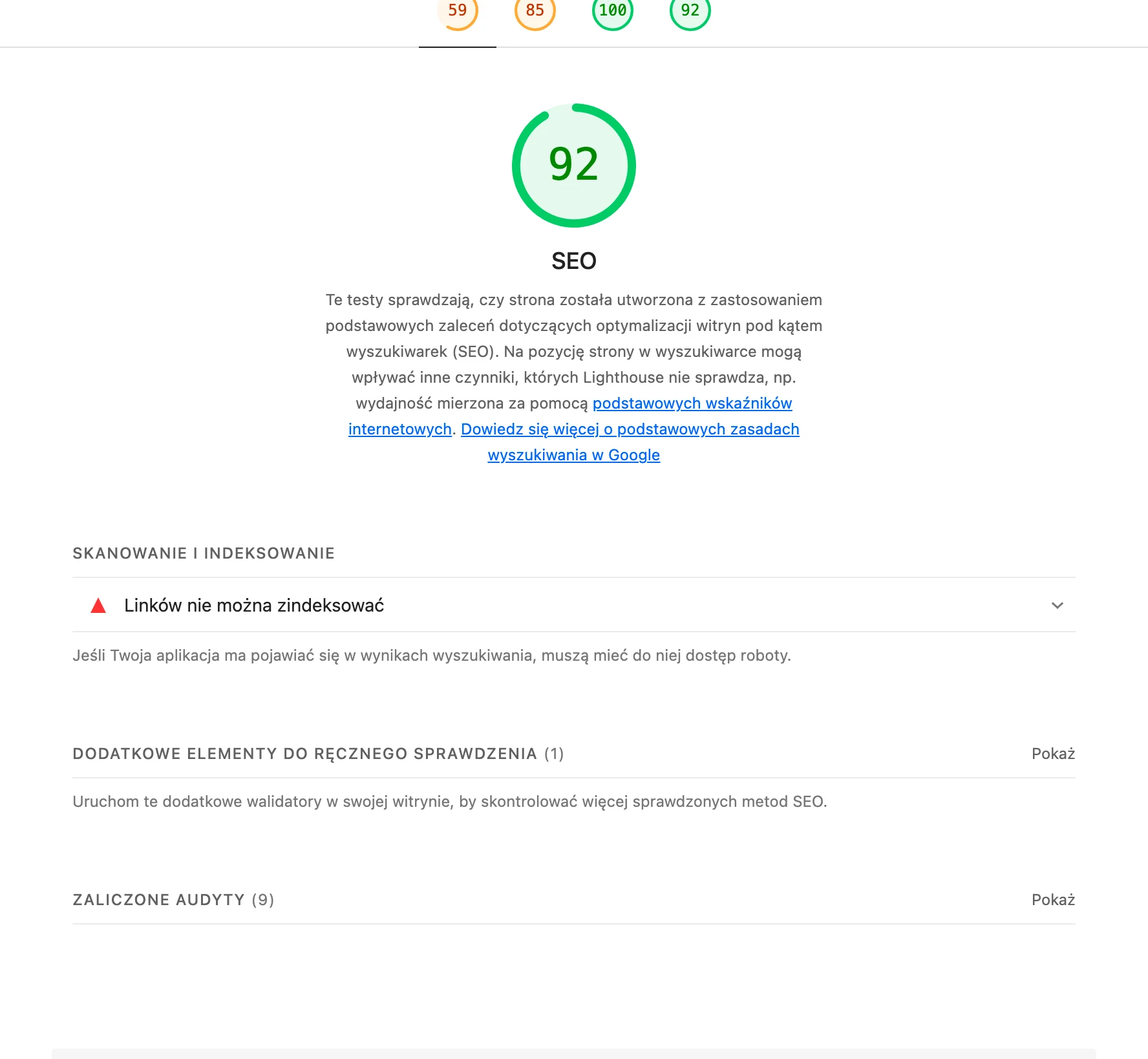
No less important is the technical analysis of the site. Loading speed, responsiveness or the correctness of the HTML code have a huge impact on the site’s position in search results and on user experience. Tools such as GTmetrix or Lighthouse help detect performance issues and suggest solutions.
An important part of the audit is also the content assessment. Unique and valuable materials attract visitors’ attention and increase the chances of gaining backlinks. It is worth checking whether the texts are properly optimised for SEO – whether they contain the correct H1-H6 headings and keywords. Regularly updating the content also affects the site’s visibility in search results.
Carrying out a comprehensive SEO audit not only improves the site’s position in Google rankings, but also increases its market value. It makes it possible to better understand the strengths and weaknesses of the site and plan actions aimed at its further development.
Assessing the link profile
Assessing the link profile is a key element of an SEO audit, having a direct impact on the value of a website. It involves analysing both the quality and the quantity of backlinks leading to the site. Backlinks from reputable domains significantly increase the site authority in the eyes of search engine algorithms, which translates into higher positions in search results.
To carry out such an analysis, it is worth using professional tools such as Ahrefs or SEMrush. They make it possible not only to check the source of links, but also to identify potentially harmful links that could negatively affect the site’s ranking. The most important indicators include:
- the number of unique referring domains,
- the quality of source sites (e.g. their authority),
- the topics of the sites from which the links come.
For example, a site with 5000 backlinks from 200 unique domains with high authority will be assessed much better than one with 10 000 links coming from low-quality sources. It is also worth paying attention to the rate of link growth – a sudden spike may be seen by algorithms as suspicious and lead to unfavourable consequences.
The next important step is removing harmful links. Tools such as Google Disavow Tool allow you to report unwanted links to Google, which minimises the risk of penalties related to a low-quality link profile.
Regular assessment of the link profile brings many benefits – it not only improves the site’s visibility in search results, but also increases its market value. This makes it possible to plan more effectively the actions aimed at acquiring new, valuable backlinks and maintaining a high site position in the long term.
Organic reach analysis
Organic reach analysis plays a key role in assessing a website’s effectiveness in search results. It makes it possible to check how well a site is performing in terms of online visibility without needing to rely on paid ads. This not only helps identify keywords generating the most traffic, but also highlights areas that need improvement.
Tools such as Google Search Console provide valuable information on impressions, clicks and the site’s position for specific keywords. For example, if a site ranks highly for low-competition phrases but performs poorly for more competitive terms, it is worth focusing on optimising content for the latter.
Monitoring changes in a site’s visibility is another important aspect of organic analysis. Sudden drops in rankings can signal technical issues, such as indexing errors or a decline in content quality. Regularly tracking this data allows for quick responses and the introduction of necessary fixes.
It is also worth paying attention to organic traffic coming from different geographical regions. If a site is aimed at an international audience, such analysis helps tailor the SEO strategy to the specifics of local markets and increase the effectiveness of the work.
Organic reach analysis is not only a tool for assessing a site’s current performance, but also the foundation for planning further optimisation activities. It can significantly improve a site’s visibility in search results and attract more valuable organic traffic.
Why is it worth consulting an expert when valuing a site?
Consulting an expert during a website valuation is an essential element that guarantees a precise and reliable assessment. Specialists, equipped with the right knowledge and tools, carry out an in-depth analysis of both the technical and content-related aspects of a site. In this way, they minimise the risk of errors in estimating value, which often result from a lack of experience or insufficient market knowledge.
Experts not only determine the current value of a site, but also assess its growth potential. They take into account factors such as:
- organic traffic,
- content quality,
- link profile,
- marketing effectiveness.
This makes it possible to estimate the market value realistically and identify areas requiring improvement – which is crucial when planning a sale or attracting investors.
A professional valuation also takes into account the specifics of the industry and the competition. Experts know the current trends and can compare a site with similar projects on the market. This gives us an objective assessment that shows both the strengths and weaknesses of the site. This, in turn, helps us better understand the site’s position among competitors and plan actions to increase its value.
Consulting an expert is also an opportunity to get practical advice on SEO optimisation or improving user experience. Specialists can suggest specific technical or marketing solutions that will contribute to increasing organic traffic and boosting conversions – which directly affects the value of the site.
It is worth noting that a professional assessment is based on numerical data and statistical analysis. Experts use tools such as Google Analytics, SEMrush and Ahrefs, which provide detailed information about a site’s performance. As a result, the valuation is more objective than in the case of self-made estimates.
Professional assessment of value
A professional assessment of a website’s value is a key element in the valuation process, allowing for a reliable and accurate estimate of its market potential. Experts, equipped with specialist knowledge and tools, carry out a comprehensive analysis of both the technical and content-related aspects of a site. In this way, they minimise the risk of errors, which often result from a lack of experience or insufficient market knowledge.
Specialists not only determine the current value of a site, but also analyse its growth prospects. They take into account factors such as:
- organic traffic,
- content quality,
- link profile,
- marketing effectiveness.
This makes it possible to estimate the market value realistically and identify areas requiring improvement – which is particularly important when planning a sale or attracting investors.
The valuation also takes into account the specifics of the industry and the competition. Experts know the current trends and can compare a site with similar projects on the market. As a result, we get an objective assessment that shows both the strengths and weaknesses of the site. This helps us better understand the site’s position among competitors and plan actions to increase its value.
Consulting an expert is also an opportunity to get practical advice on SEO optimisation or improving user experience. Specialists can suggest specific technical or marketing solutions that will contribute to increasing organic traffic and boosting conversions – which directly affects the value of the site.
It is worth emphasising that a professional assessment is based on numerical data and statistical analysis. Experts use tools such as Google Analytics, SEMrush and Ahrefs, which provide detailed information about a site’s performance. As a result, the valuation is more objective than in the case of self-made estimates.
Consulting an expert during a website valuation is an essential element guaranteeing a precise and reliable assessment. It helps you better understand the value of your site and plan actions aimed at its further development and increasing its attractiveness on the market.
How to increase the value of your website?
To increase the value of your website, it is worth focusing on two main aspects: the functionality of the site and its visibility online. The first step is to take care of technical optimisation. Loading speed, responsiveness and security are key elements. Sites that load in less than 3 seconds attract 40% more users. In addition, SSL certificates and regular CMS updates strengthen trust in your platform.
Another important element is regularly publishing valuable content. Unique articles, guides or case studies not only attract attention, but also generate organic traffic. According to research, websites with high-quality content are as much as 434% more likely to achieve better positions in search results. It is also worth remembering SEO optimisation – the right use of keywords and H1-H6 headings significantly affects a site’s visibility.
You cannot forget about building a link profile. Backlinks from reputable sources raise a site’s authority in the eyes of Google’s algorithms. Tools such as Ahrefs or SEMrush help monitor backlink quality and eliminate harmful ones. A site with 5000 valuable links can achieve even 50% better results in rankings than one without them.
An equally important role is played by traffic analysis. With tools such as Google Analytics, you can track traffic sources and user behaviour. This makes it easier to understand which elements need improvement and which actions deliver the greatest benefits.
It is also worth taking care of a presence on social media. Activity on platforms such as Facebook or Instagram not only increases brand recognition, but also attracts new audiences. Companies present on social media record on average 32% more conversions than those without such activity.
Increasing the value of a website requires a comprehensive approach – from technical optimisation to strategic marketing activities. This makes it possible not only to improve rankings in search results, but also to increase user engagement and the site’s market value.
Improving site usability
Improving the usability of a website is a key factor affecting user satisfaction and the site’s value. It focuses on three main elements: intuitive navigation, loading speed and responsiveness. As a result, visitors can enjoy a better experience.
Intuitive navigation means users can easily find the information they need. This not only reduces the bounce rate, but also encourages longer browsing. A clear content layout attracts attention and makes the site more user-friendly.
Loading speed is another important aspect. Websites that load in less than 3 seconds attract even 40% more visitors. That is why optimising page response time is so important for its success.
Responsiveness has become essential in the era of mobile devices. More than 60% of internet traffic comes from smartphones and tablets, so adapting a website to different screen sizes is crucial for maintaining user interest.
To increase site performance, it is worth applying a few proven practices:
- code optimisation,
- image compression,
- using technologies such as AMP (Accelerated Mobile Pages).
Security also plays a huge role. SSL certificates and regular CMS updates not only build user trust, but also have a positive impact on a site’s position in search results.
Taking care of usability translates directly into higher visitor engagement and increased market value of the site. This makes the site more attractive both to users and to potential investors or buyers.
Increasing online visibility
Increasing visibility online is one of the most important elements determining the value of a website. Thanks to effective SEO strategies and efficient digital marketing, it is possible to attract more visitors, which directly affects traffic growth and user engagement. Search engine optimisation includes, among other things:
- choosing keywords correctly,
- creating valuable backlinks,
- regularly updating content.
Marketing activities are just as important, such as running advertising campaigns on social media or creating engaging content marketing materials. However, the key is to regularly monitor their effectiveness using analytical tools such as Google Analytics or SEMrush. This makes it possible to adjust the strategy to audience needs on an ongoing basis and achieve even better results.
Good online visibility translates into a higher position in search results, which attracts more potential customers and increases the value of the site. Remember, however, that long-term success requires continuous analysis and flexible adaptation of activities to changing market conditions.
FAQ
Frequently asked questions
Which factors have the biggest impact on a website’s value?
The most important are credibility, loading speed, responsiveness, content quality, security and SEO effectiveness. Traffic and the clarity of the design also matter.
Why does page loading speed matter so much for a website’s value?
Pages that take longer than 3 seconds to load can lose up to 40% of visitors. Code optimisation, image compression and AMP can improve this result.
Does website responsiveness affect its valuation?
Yes, because the site must work well on desktop computers, tablets and smartphones. This is especially important because over 60% of internet traffic comes from mobile devices.
What importance does domain age have when determining a website’s value?
Older domains are usually seen as more credible and stable, which can improve how search engines assess them. However, age alone is not enough without regular content updates and attention to site quality.
What does website traffic analysis show?
It shows where visitors come from and which sources are the most valuable. Also important are metrics such as time spent on the site, bounce rate and the number of pages viewed.
What website valuation methods are available?
The article describes revenue-based, comparative, cost-based and blended methods. The choice depends on the purpose of the valuation and the nature of the site itself.